A prelude:
Scene: Connolly Station, Dublin. Rich and Robin are waiting to board the train to Belfast. Robin goes off to find a washroom. Rich waits on a bench with the luggage. The train pulls in and passengers arriving from Belfast disembark.
A man in a blue track-suit and carrying a small duffle bag does a double take as he walks by.
Man: (looks at the Canadian luggage tags sprouting from R&R’s bags). You’s from Canada?
Rich: Yes we are!
Man: (Smiles conspiratorially, mouth full of free range teeth).
Ah! I have a wee story for ya’s.
(He approaches and kneels down so he can look Rich in the eye. A big smile. He’s an old 38 or a young 48. Probably the former).
I’m Niall.
Rich: (Slightly taken aback) Ah! Ok! Rich!
Niall: My sister lived in Canada! She used to run a Costa coffee shop here. In Ireland. She had to go to Canada because of the taxes.
Rich: Less tax in Canada?
Niall: No. Government wanted her to pay the tax on the money she made but she did’na, no nae. So she had to move to Canada and stay there until government forgot about her. And the taxes.
Rich: Ah! Of course.
(As if there was no other option. Awkward pause).
…Did she like Canada?
Niall: Ay, sure it was grand sure it was! She lived in the city near an office block where she worked. One day a fella got shot near the block. So company came cause they knew she was from north Ireland. They offered her counselling cause of the shootin’. She said she didn’t even know there was a shootin’: it was just one bullet, sounded like kids with a defective firecracker. Where she’s from a shootin’ is a lot of bullets.
(At this point Robin returns from the washroom, takes in the situation and walks on to the far end of the train where she diligently inspects the engine for signs of wear and tear)
Rich: (Stating the obvious)
So she didn’t take the counselling?
Niall: Nae no she didn’t no. She is from north Ireland. If she took counselling there she’d never get anytin done! But she loved Canada. It was grand. She had to leave when she overstayed her welcome, course.
(Pensive pause, then Niall brightens up)
But she had a mattress that she had for only the four years or so she was there, and she gave it to social services and was glad she was able to do that she was. To help someone out you see.
Rich: (Slightly confused)
Ah!
Did she come back to Ireland?
(Robin walks past, eyes firmly fixed on the extreme opposite end of the train. She continues her maintenance check).
Niall: Sure she did, yes but she is goin’ back to Canada. She’s not supposed to as she overstayed like, but she is goin’ to sneak in from Florida.
(Winks, nods wisely).
She already had her passport stamped with the Canada stamp you see, and she looks nice- professional like- so sure they will just wave her in sure they will.
(Robin wanders past, still fascinated by Irish rail infrastructure. Niall looks at the bags and then at the train.)
Goin’ to Belfast?
Rich: Yes!
Niall: Where you’s stayin’?
Rich: (unwisely) The Moxy
Niall: Don’t know it. Sounds posh like.
(frowns)
Make sure they don’t rip you’s off. Be careful. Belfast isn’t Canada.
(Niall smiles, shakes Rich’s hand and walks away)
Belfast isn’t Dublin and it certainly isn’t Canada. But we loved it.
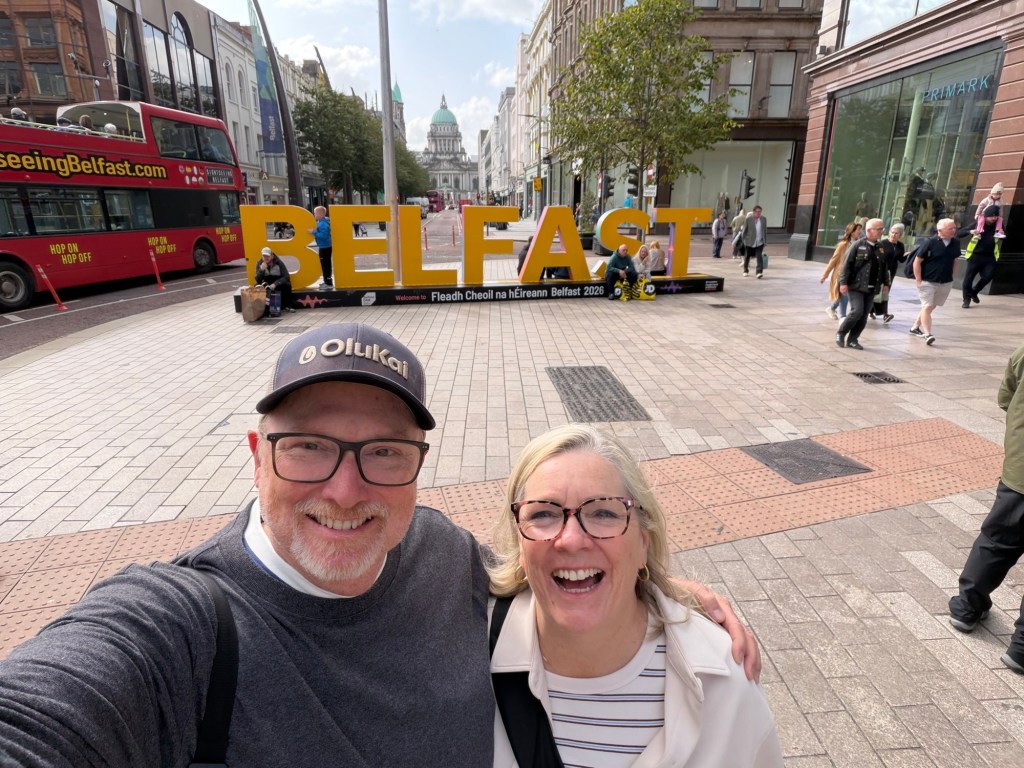
We arrived at Grand Central Station in the heart of Belfast, a convenient 10 minute walk to The Moxy, which, as Niall feared, proved to be slightly poshy with its complimentary “Moxy Cocktail”. A great location though and the staff were very helpful.
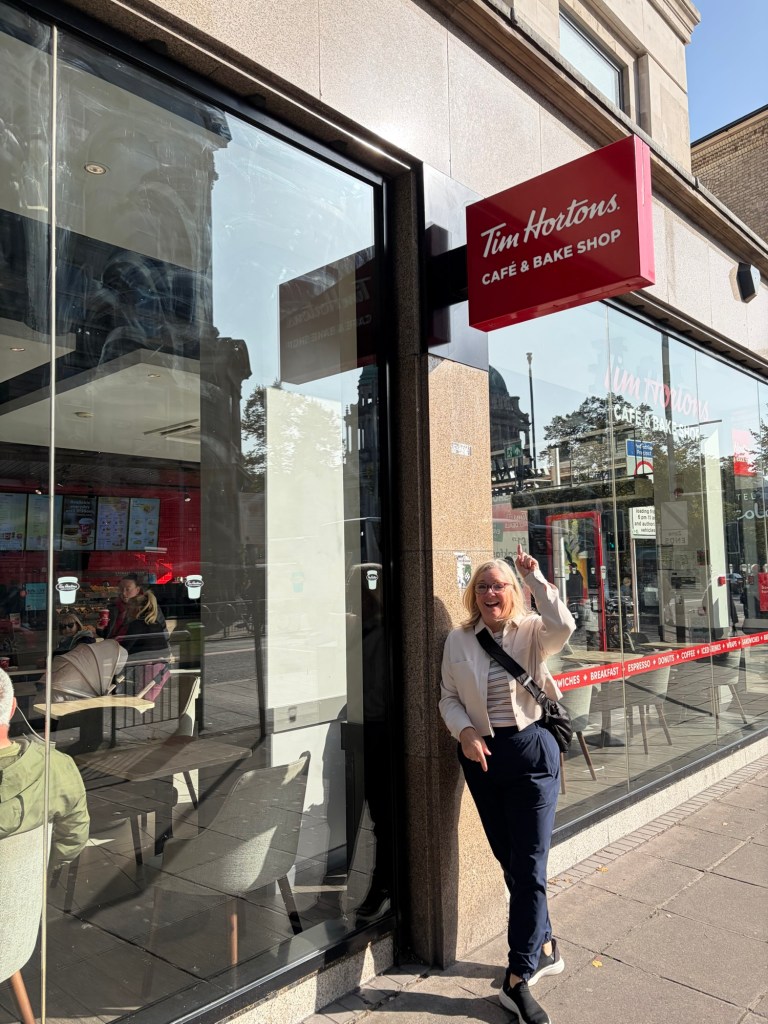
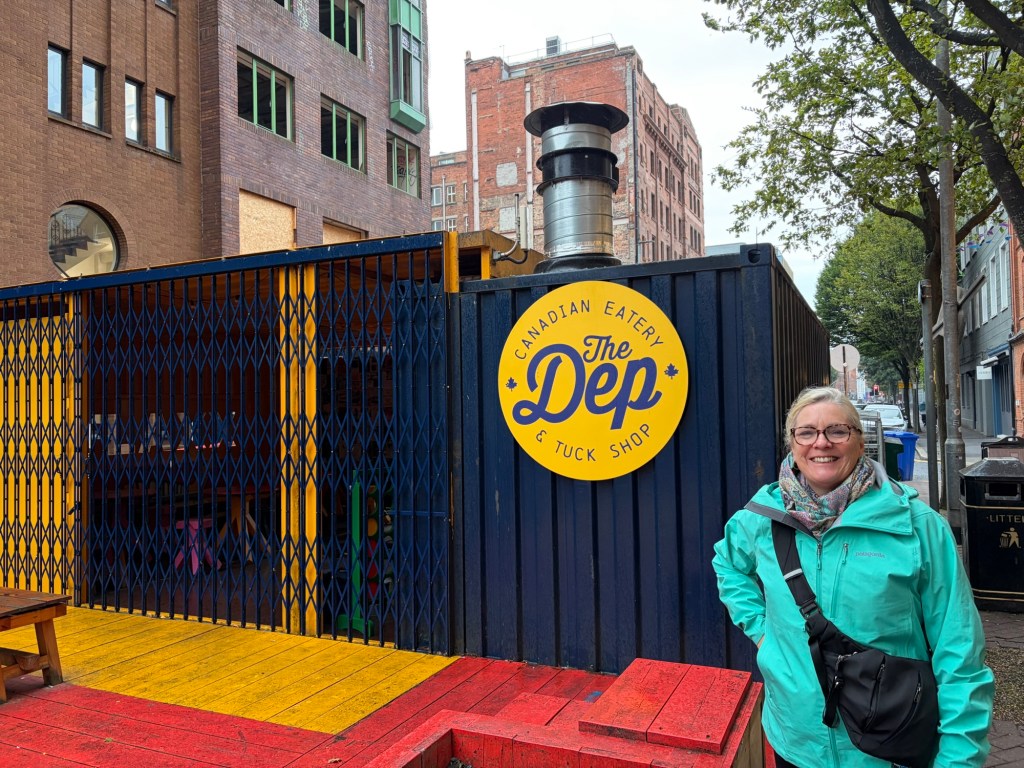
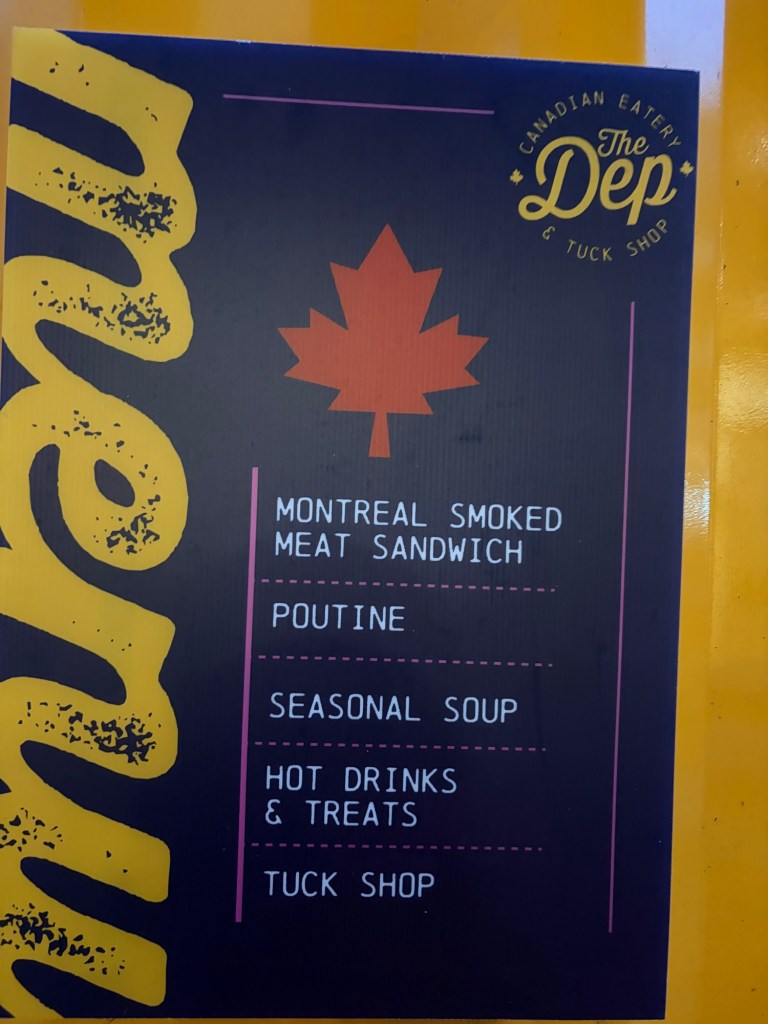
We ventured out for something to eat, and found most of the interesting spots packed full, and the less interesting spots offering the same pub food we’d been eating for weeks. We did uncover a weirdly Canadian food scene, but the Tim Horton’s didn’t appeal and we weren’t feeling Poutine.
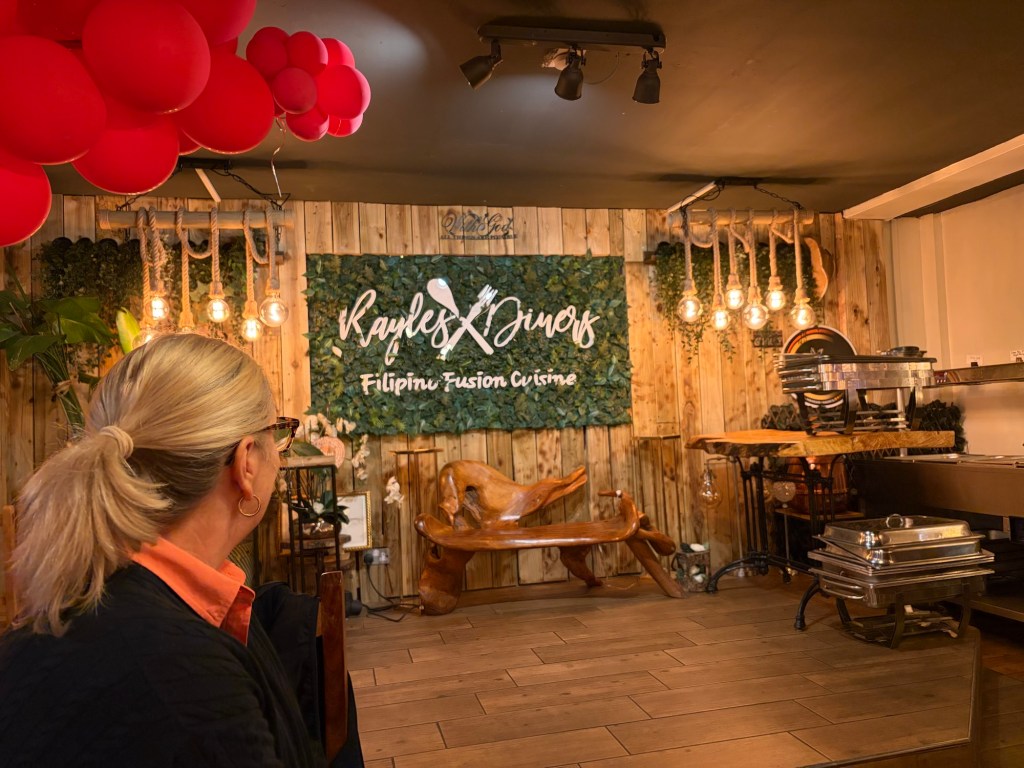
Robin found a Filipino restaurant named Rayles Diners just around the corner so we took a chance. Great discovery: you have to climb up to the second floor and the food is prepped on the third floor but it’s a wonderful family run spot with good food at very reasonable prices. The two of us were full and happy for 20 pounds.
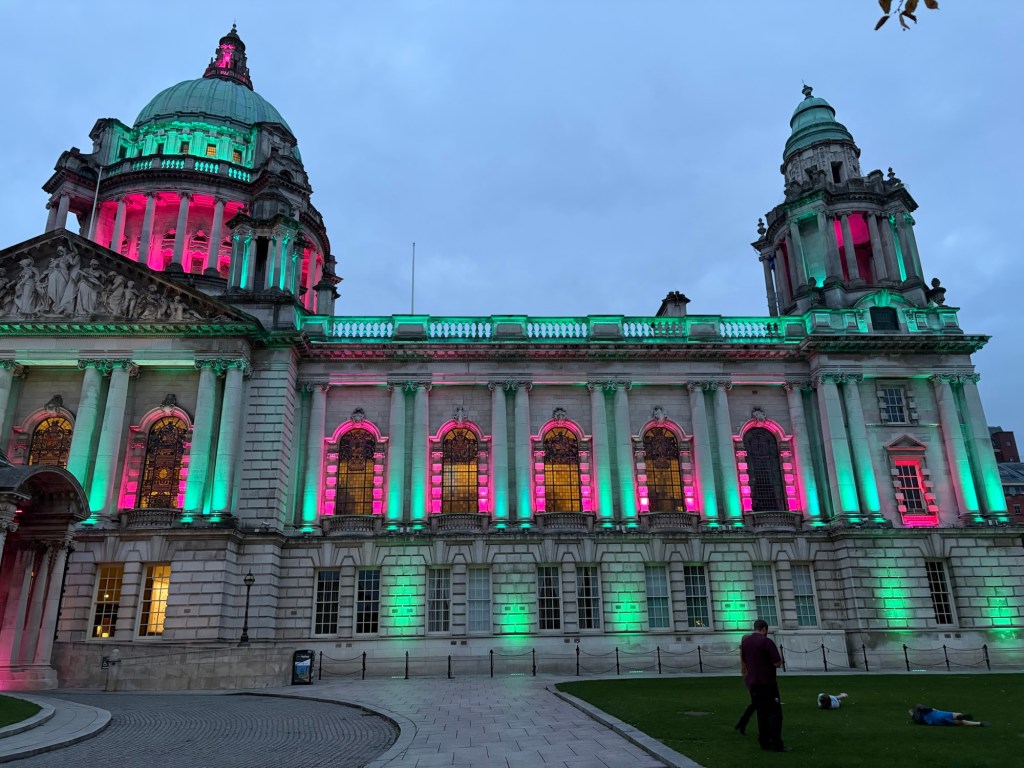
Our next stop was the Cathedral quarter, the heart of the entertainment district in central Belfast. We walked past the imposing edifice of Belfast City Hall and headed up towards Commercial Court.
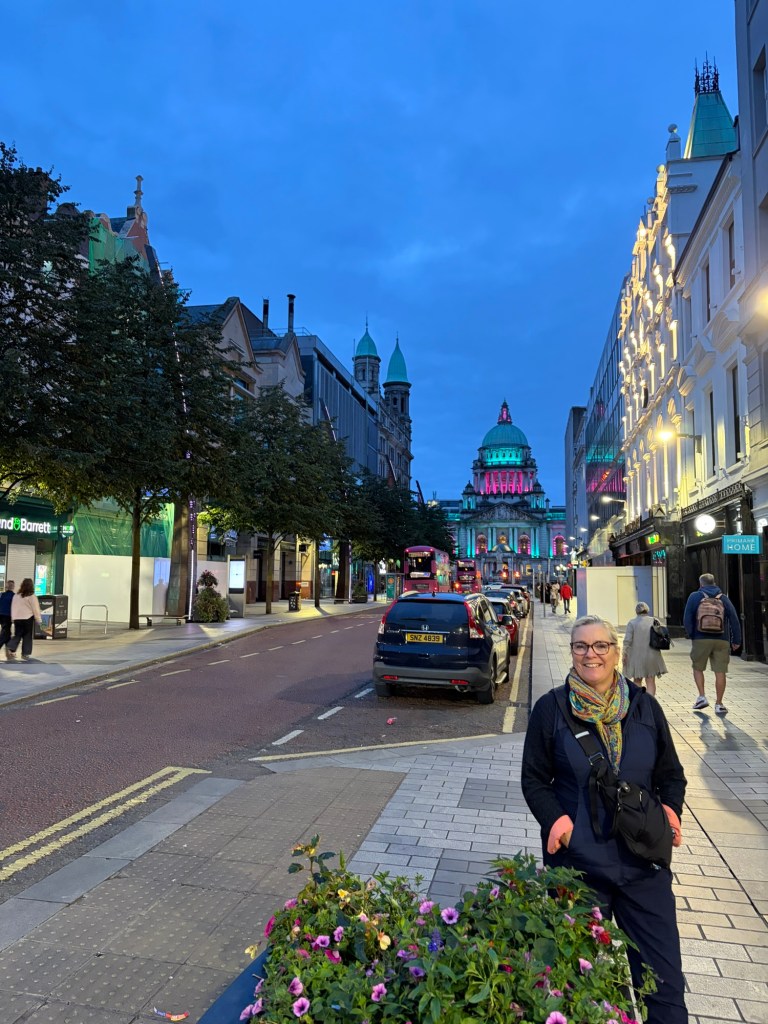
The city seemed half empty compared with the packed streets of Dublin, and definitely had an edgier feel. The unhoused community are a little more present and the bands of bored teens stand out a little more as well. But there is also a local energy that feels genuine.
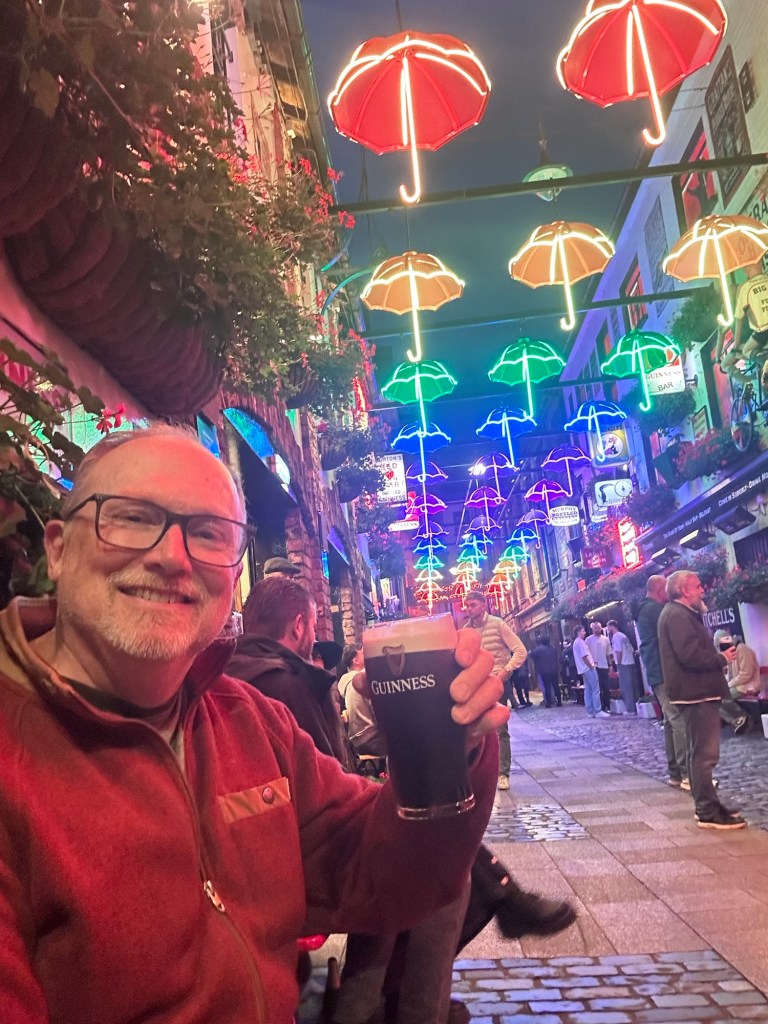
Commercial Court was great fun. It’s a charmingly revitalized area in the Cathedral quarter filled with buzzing pubs, restaurants and trendy shops. We spent some time at the Duke of York, which is a spectacular pub, and enjoyed a pint on the public seating outside under the neon umbrellas.
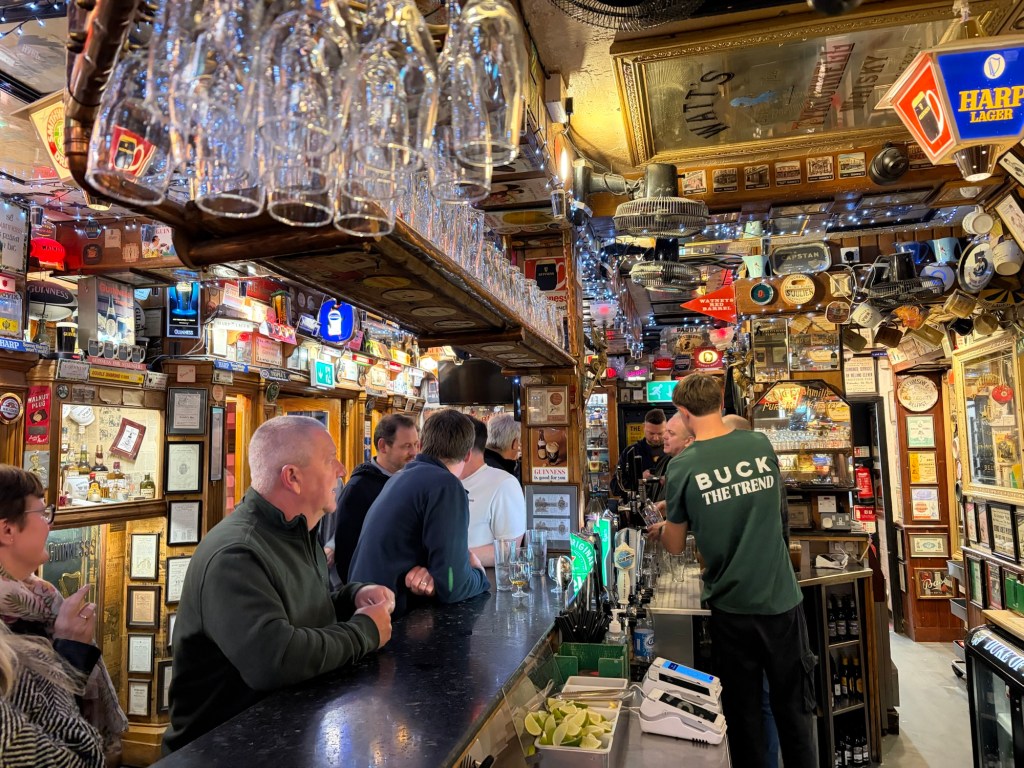
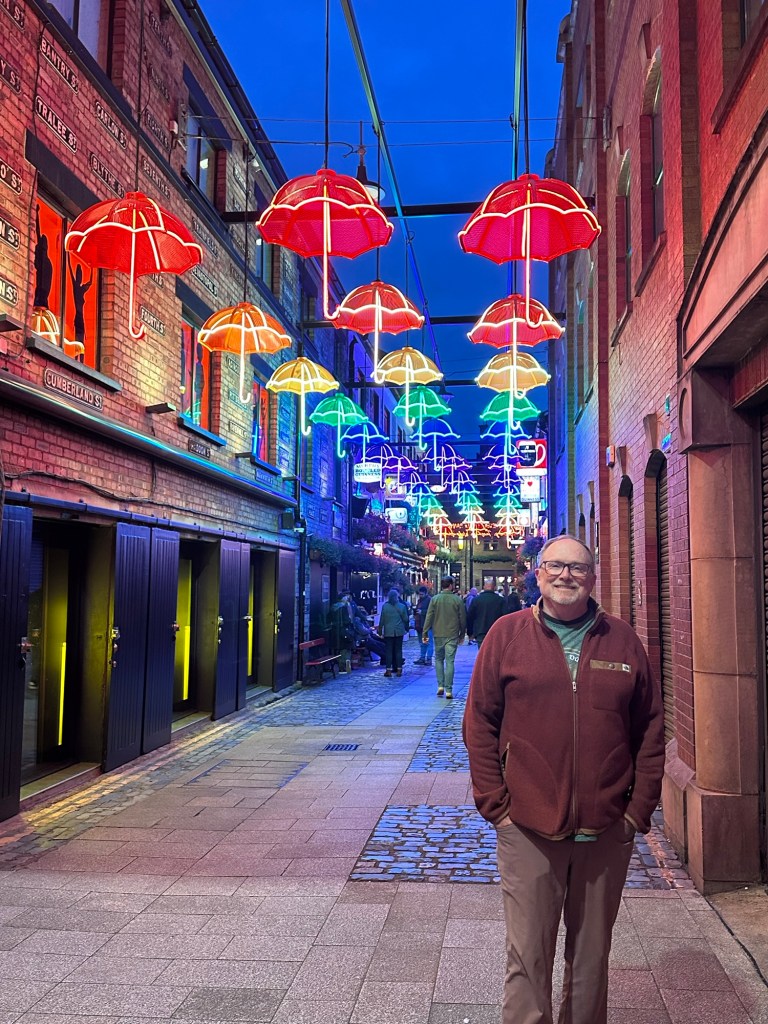
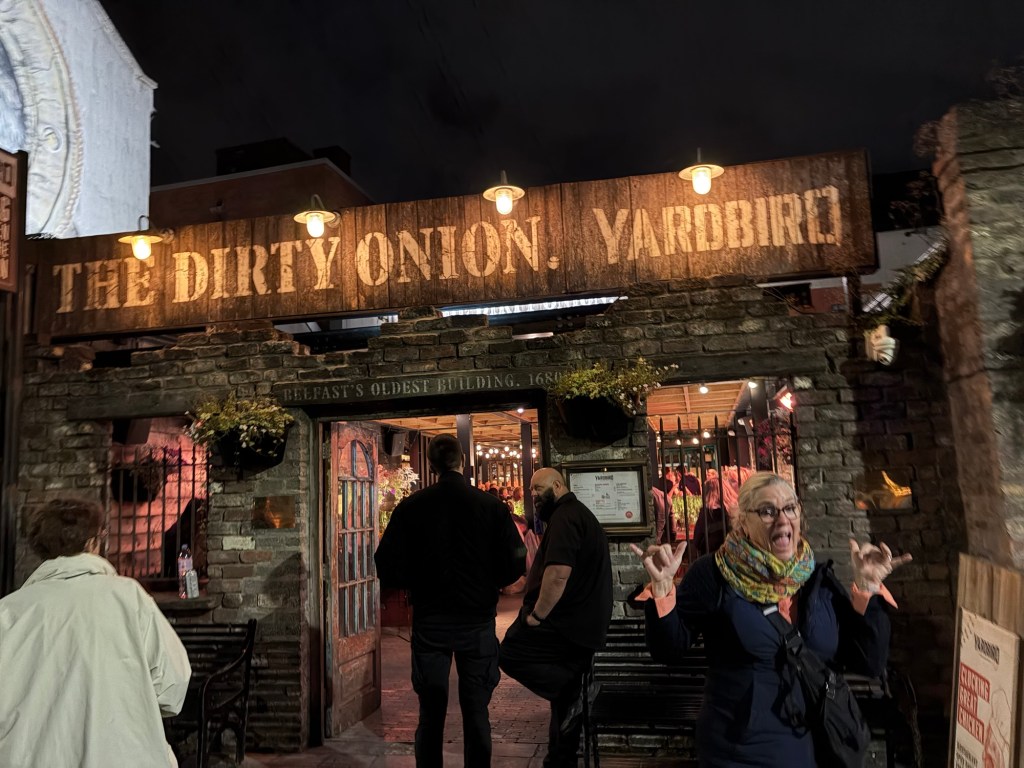
We then ventured down to The Dirty Onion, a pub that is a warren of connected rooms and courtyards, stretching well back from the street. There was live music with a space to dance in the middle room, and they piped the music through the pub at a lower volume if you didn’t want to dance or jostle for a place to stand near the band. It was a great spot, with a really warm and friendly vibe from staff to patrons.
As my encounter with Niall at the train station foreshadowed, we kept running into Belfasters, young and old, who engaged us in conversation, genuinely curious about where we were from, what we were doing in north Ireland, and full of well meaning advice. This warmth towards visitors continued the next day when we had the pleasure of taking a black cab “political history tour” of West Belfast.
The black cab tours are a Belfast institution. They are driven by mostly men and some women who lived through the troubles, and focus on visiting some of the touchstone parts of West Belfast on both the Catholic and Protestant sides of the giant “peace walls”, originally erected by the British army following the riots of 1969.
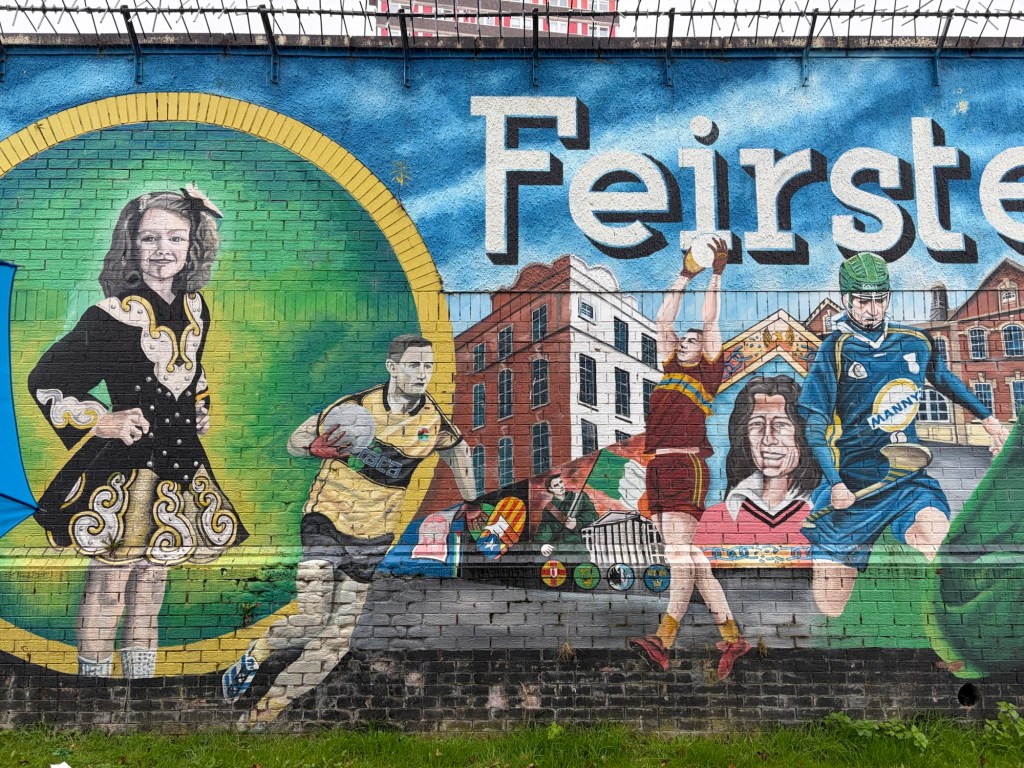
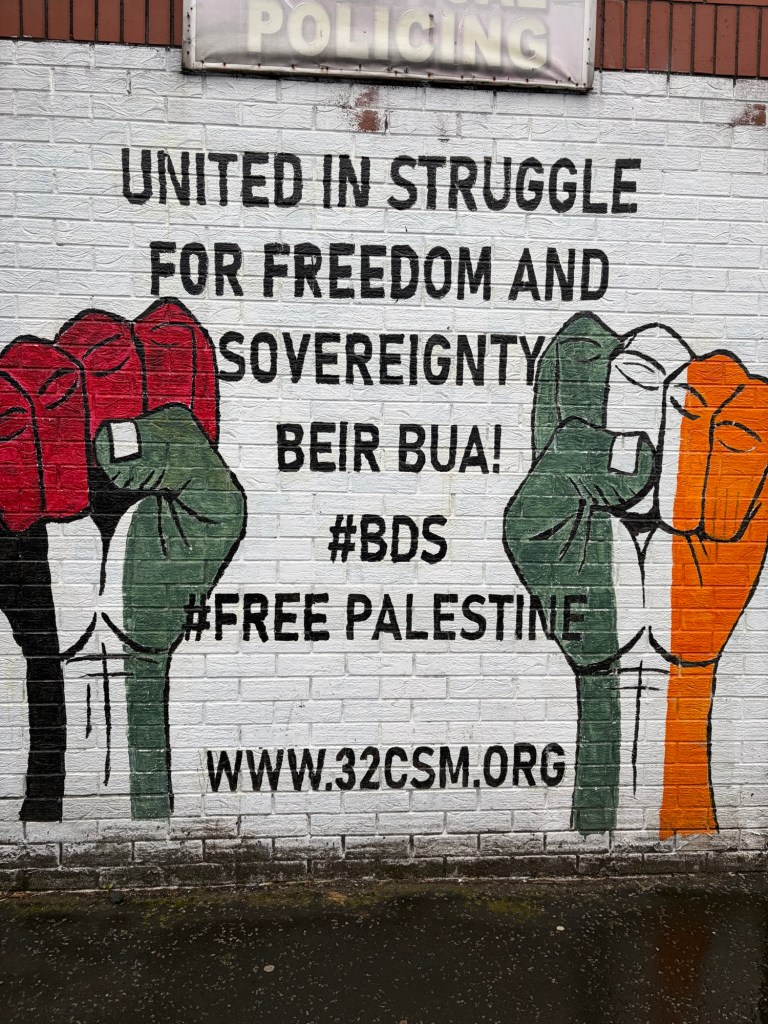
The tour is well worth it and I think a “must do” for anyone visiting to have a more personal and immediate connection to the city and its complex and traumatic history. Tommy, a former bricklayer, and only a few years older than Robin and me, grew up in the Catholic neighbourhood in West Belfast, lost his home when it was burned down in the riots, saw a friend’s brother killed on his mother’s front lawn, and readily admits that it will be a few more generations before Belfast fully heals. He also shared a little about why the plight of the Palestinian people in Gaza is a cause that resonates strongly with many Irish people. While there are many murals supporting the Palestinian cause on the Catholic side, there are none on the Protestant side, where those who identify as British and not Irish have erected murals in support of Israel. There are obviously many more complexities at play here than that simple juxtaposition, but it was certainly interesting to see this contrasting perspective.
Despite the seriousness of the topic, Tommy was also typically generous in sharing spots to eat and drink, places to visit, and even invited us to attend his youngest daughter’s Camogie match later that evening (female version of Hurling, which I imagine is what Ringette is to Hockey).
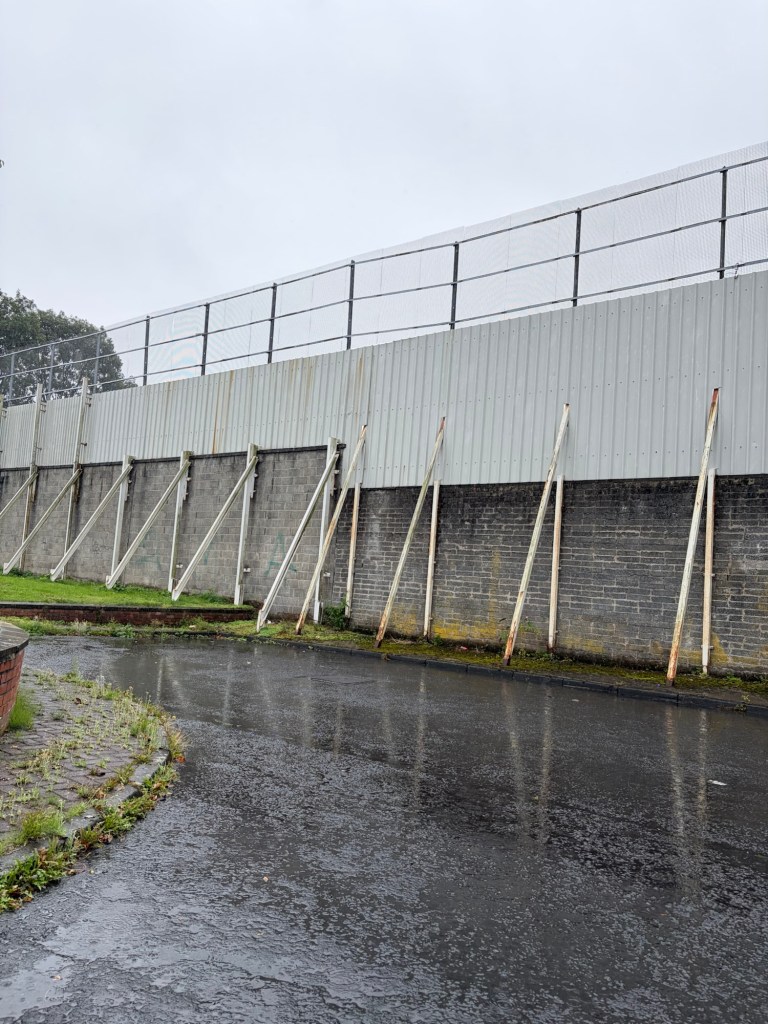
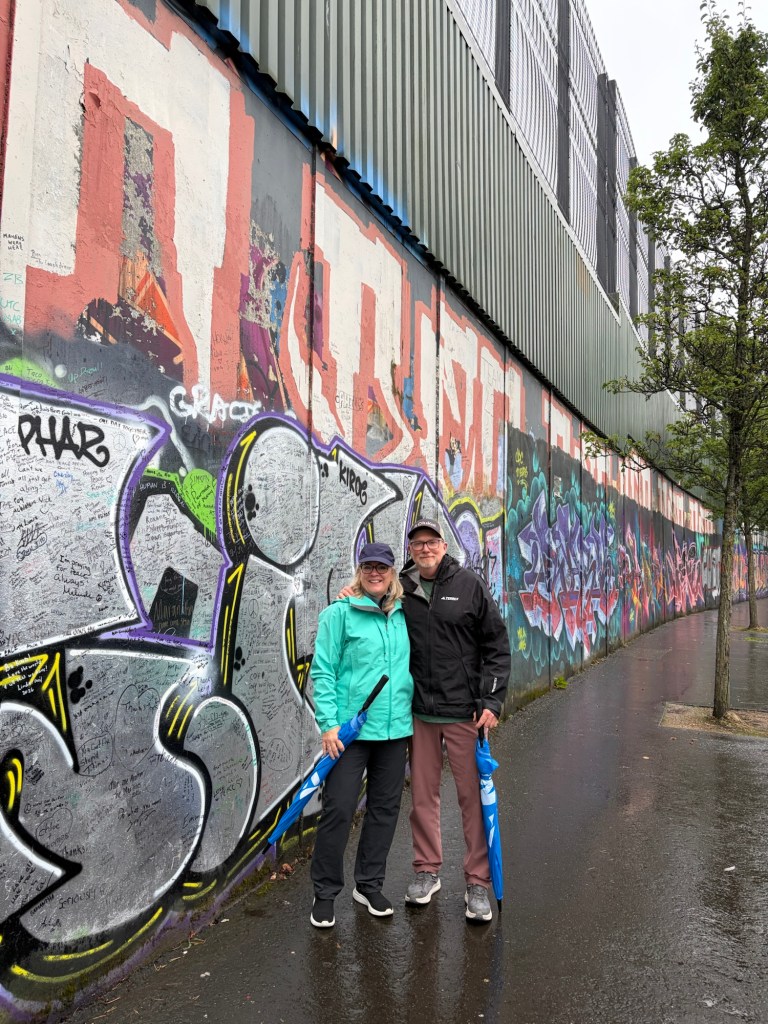
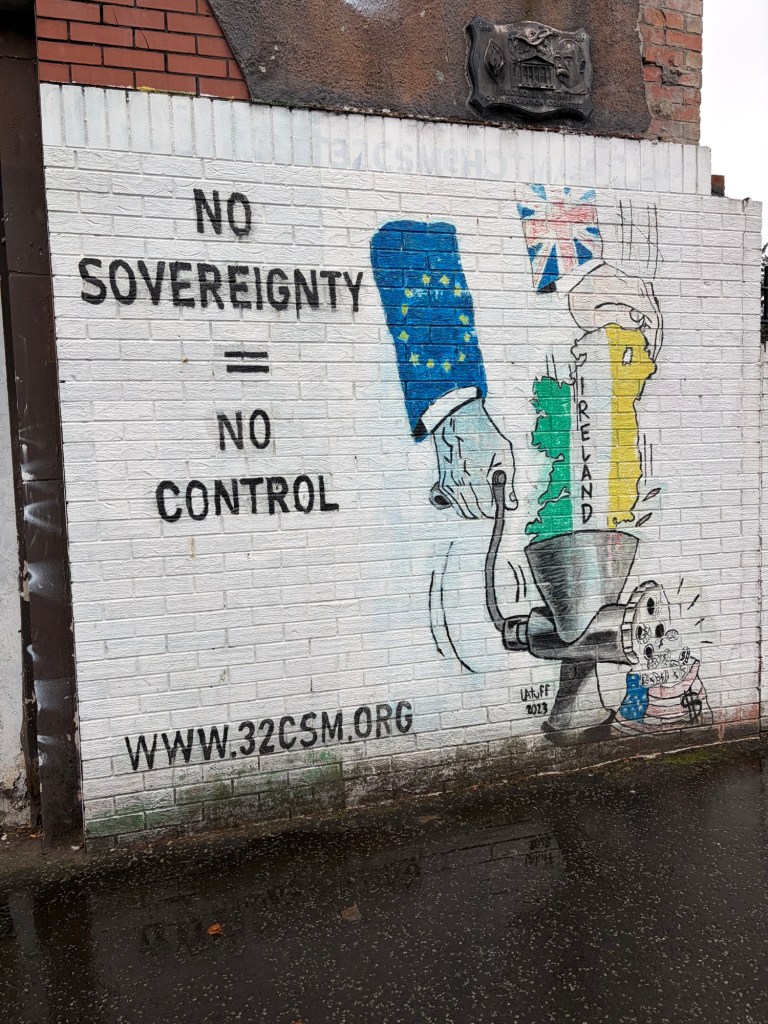
The giant walls are still there and many of the gates between the Protestant and Catholic neighbourhoods are still closed at night. They are imposing structures, up to 25 meters in height, and are covered with graffiti and murals that are, for the most part, hopeful in spirit.
Tommy said that while much of Belfast, and indeed the “north of Ireland” (if you are Catholic and identify as Irish) or Northern Ireland (if you are Protestant and identify as British) has become much more integrated, the council estates of West Belfast are still rigidly divided culturally and physically.
There is a walking tour my cousin Tim told us about which covers the same subject, but is led by victims of the troubles from both sides. You begin the tour on one side of the gates with one guide and continue it with another on the other side. We chose the black cab tour primarily because of the weather, and were glad we did as it rained most of that morning.
While Tommy certainly had a bias (how could you not) he was careful to share the difference in perspective as thoughtfully as possible. Ultimately, he left us with the sense that while there is still a long way to go, things are so much better than they were, and he has great hopes for fuller reconciliation as younger generation assume more and more political leadership in both Ireland and the north of/Northern Ireland. He shared a story about the city of Derry/Londonderry: it’s Derry if you are Catholic and Londonderry if you are Protestant. He said the younger generation refer to it as Slash City, in reference to the punctuation mark that divides the cumbersomely “safe” name, “Derry/Londonderry”. It’s obviously a bit tongue in cheek, but perhaps it’s also a move towards finding common ground.
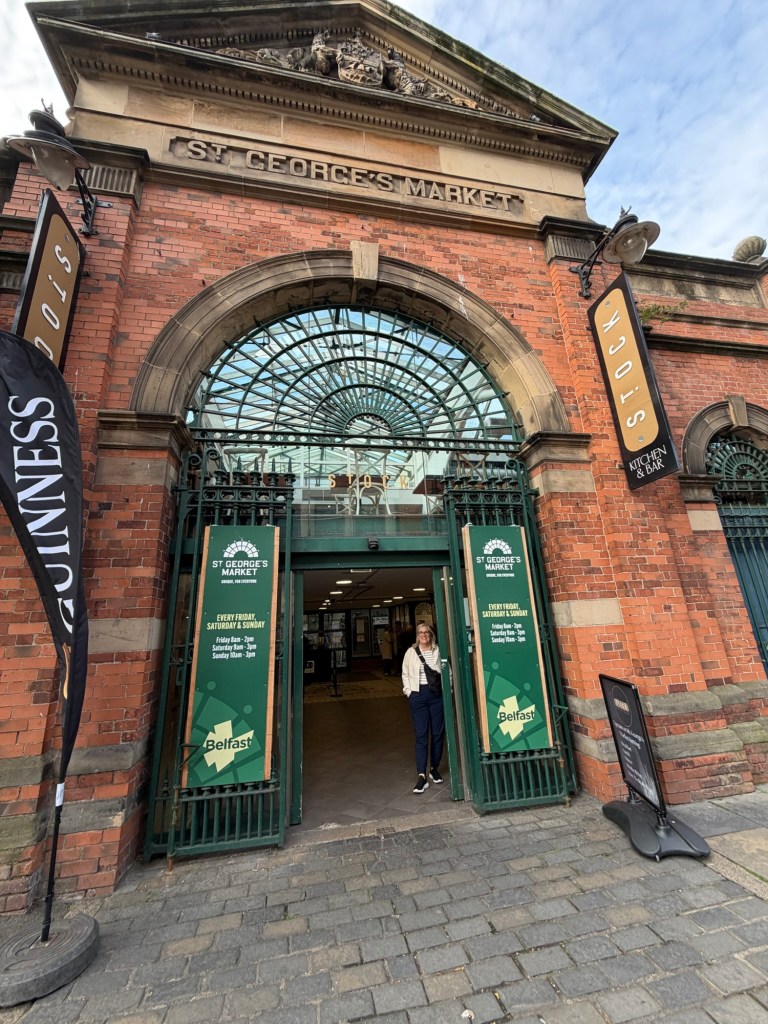
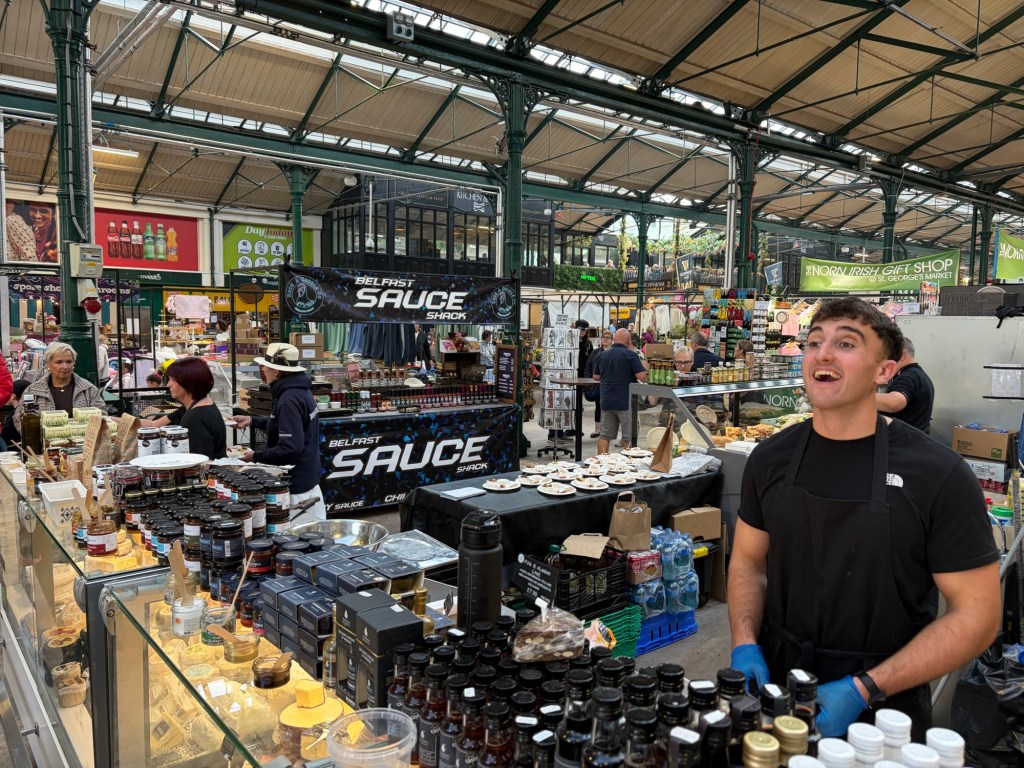
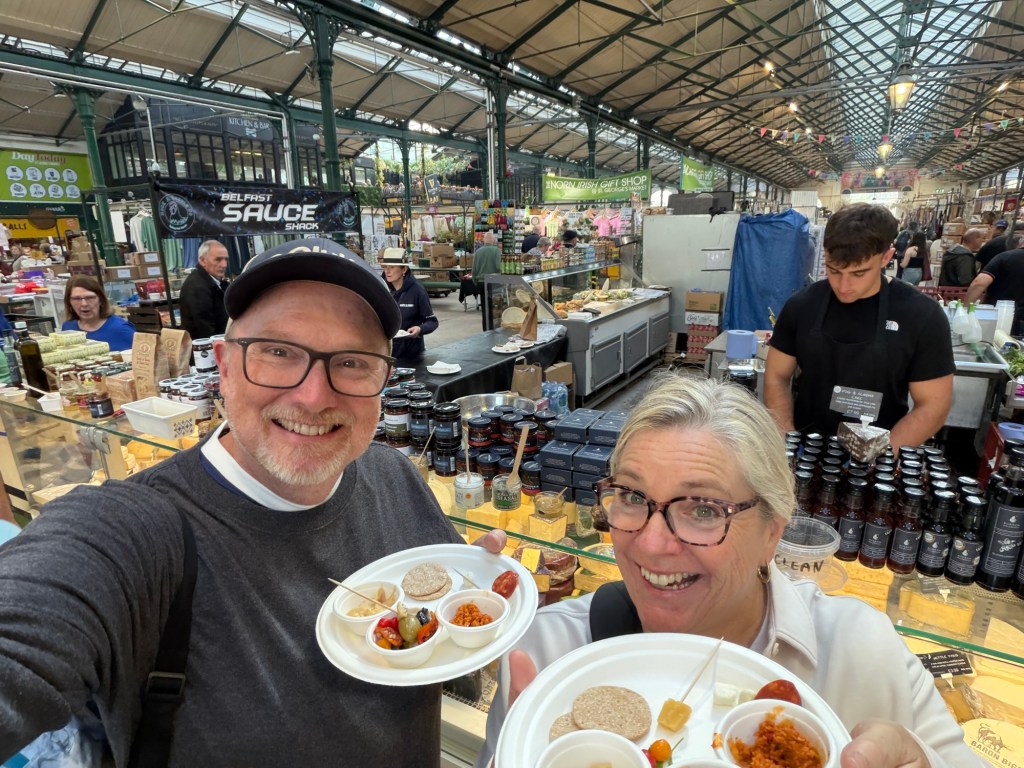
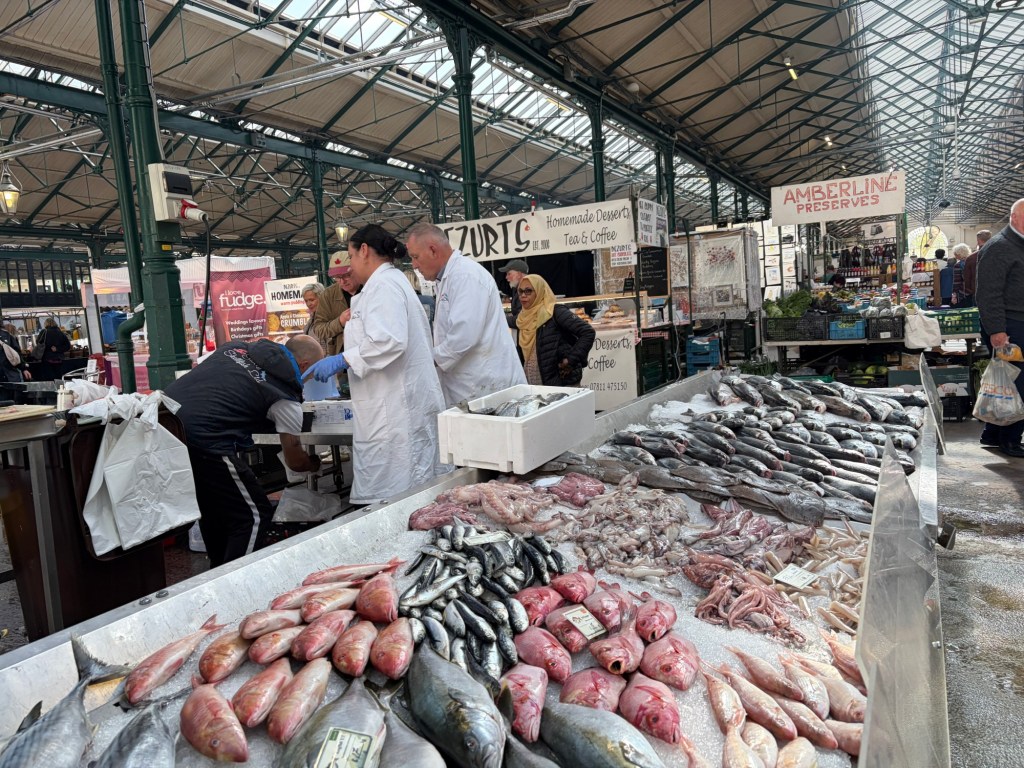
The next day we had a food tour booked, and we met our guide Maye and 20 other people at the entrance to St. George’s Market, which is open Friday through Sunday each week.
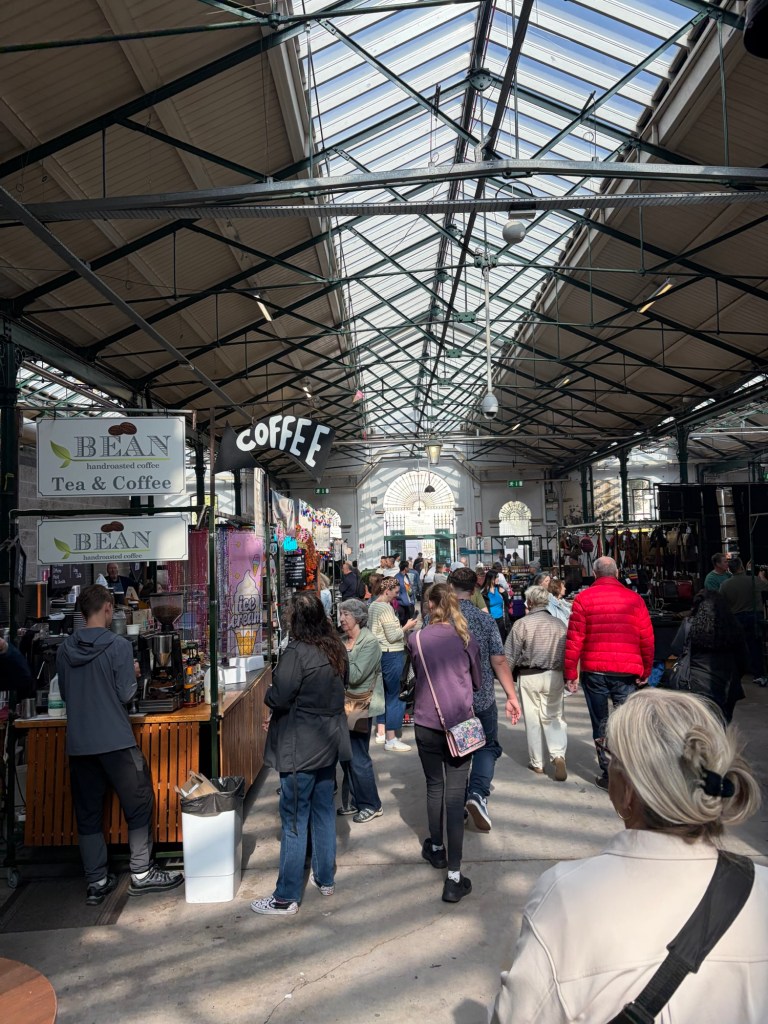
I was worried about the size of the tour but the whole group were from Belfast with the exception of one couple from Newcastle. When they found out we were from Canada there was some scattered applause, which was a little odd but appreciated. Half the group were from Queen’s University in Belfast’s finance department out on a team building afternoon. The whole group was great fun.
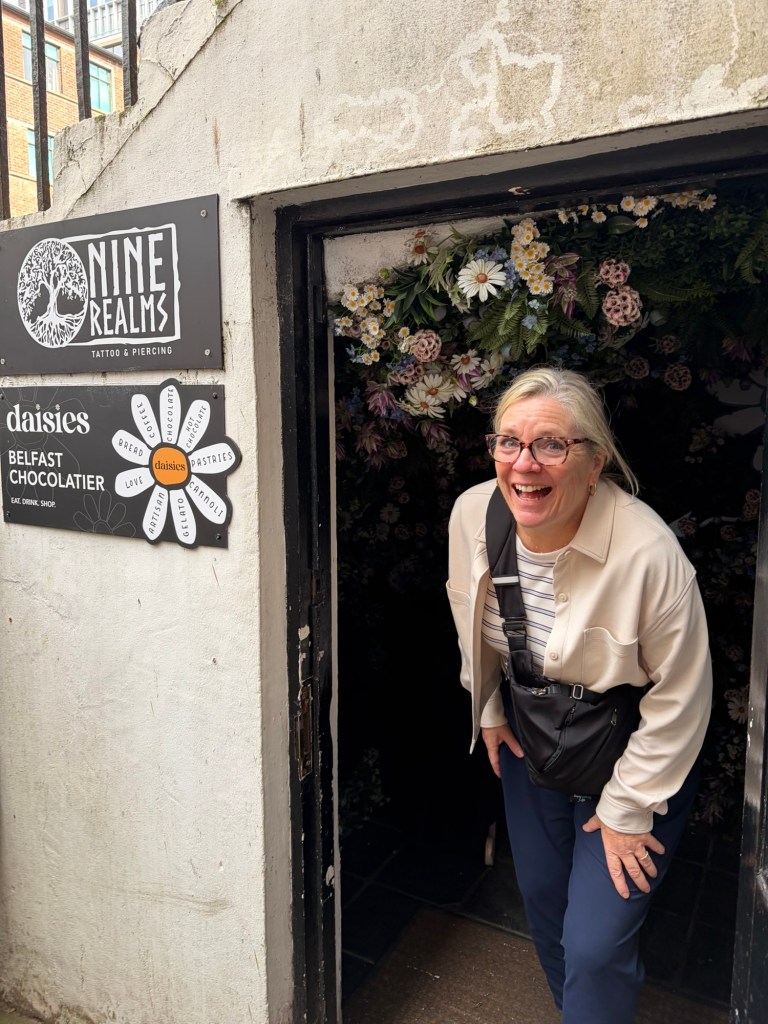
It was a beautiful sunny day and the city centre really shone. We snacked our way through the market and then throughout the town, stopping for hot chocolate at Daisies, smoked salmon and charcuterie at Sawer’s Deli, flank steak and chips at The Morning Star pub, a light cheese course at Mike’s Fancy Cheese shop in the Titanic district, and finished with an odd rum and brown lemonade concoction at a neighborhood pub.
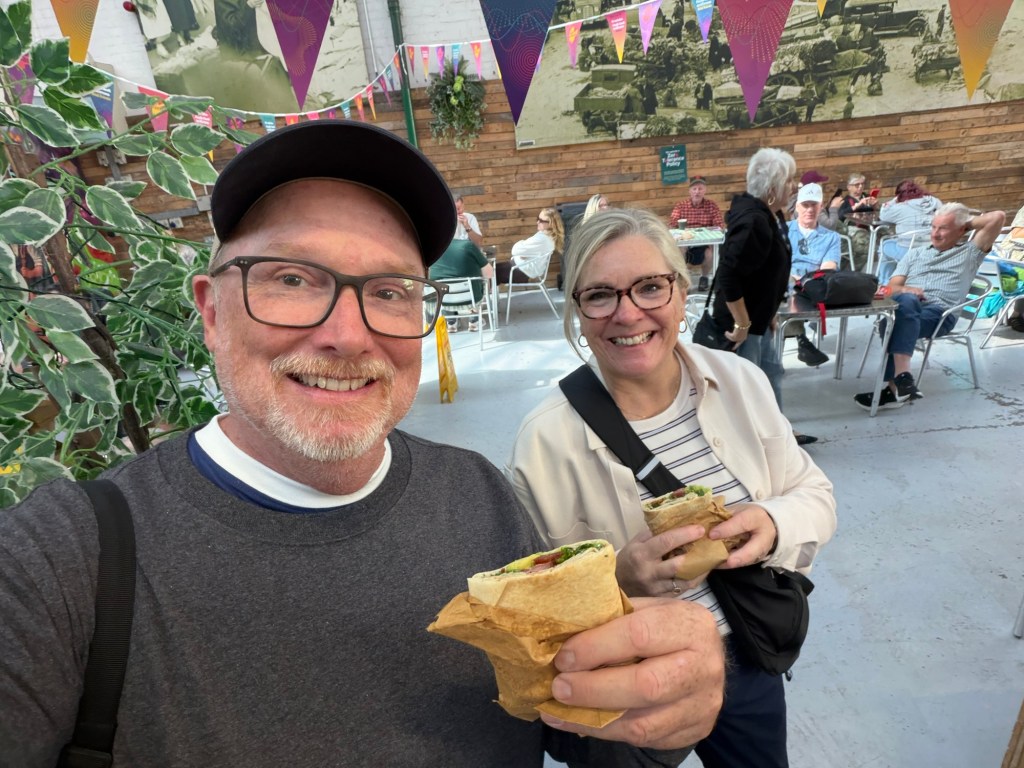
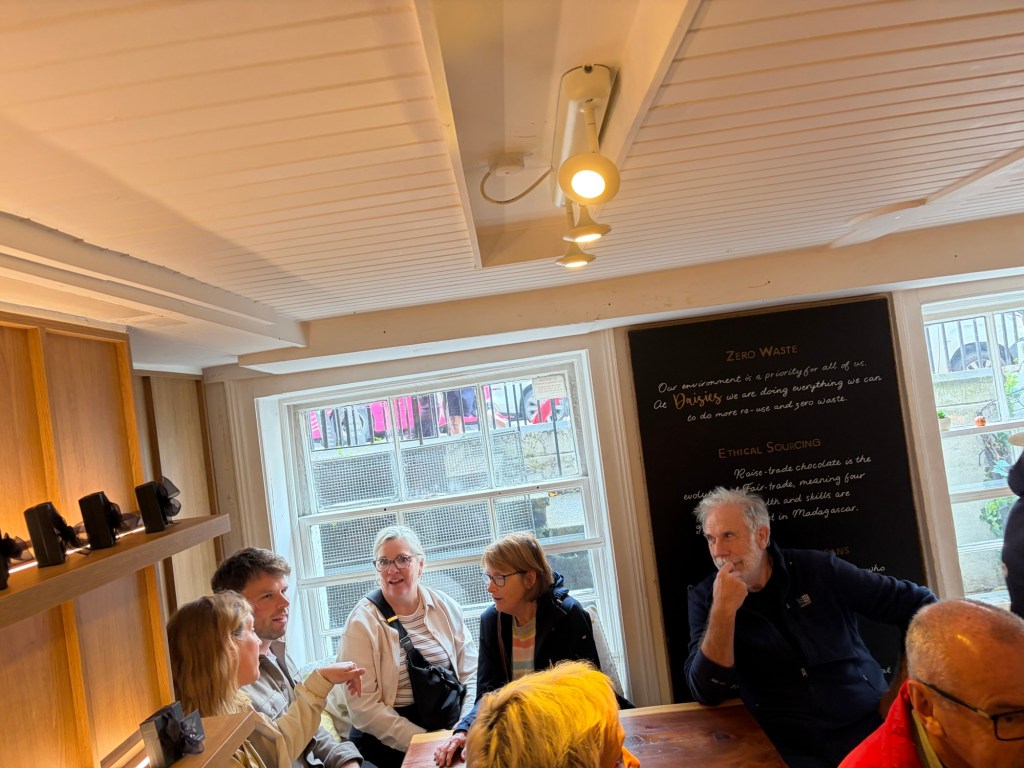
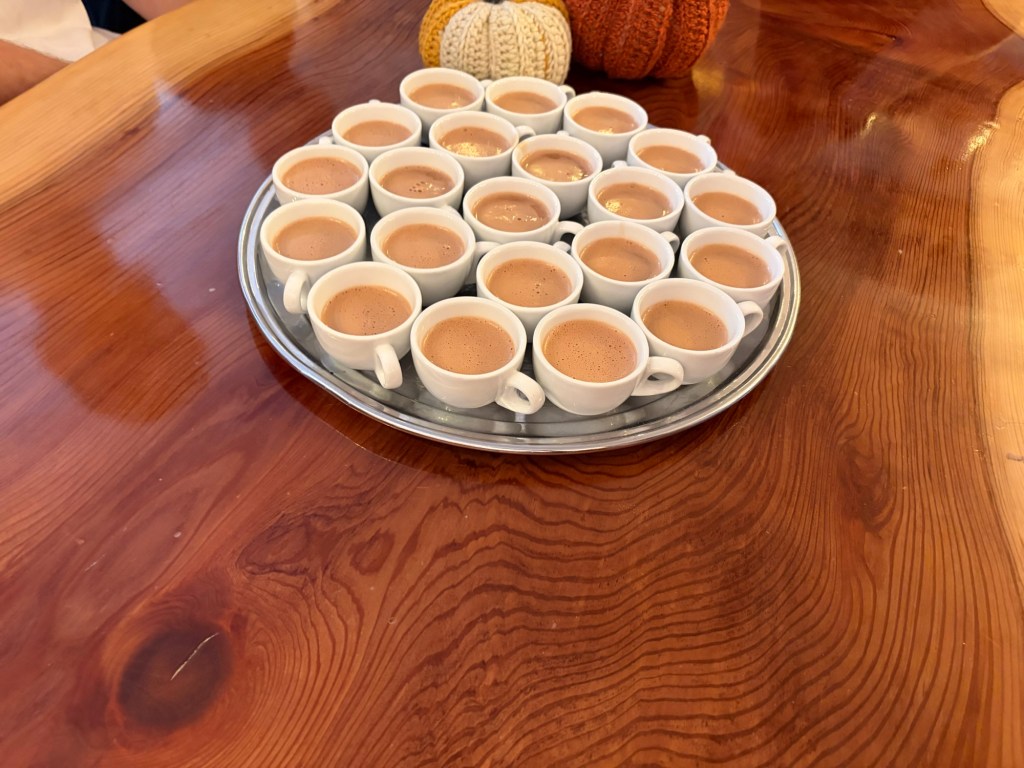
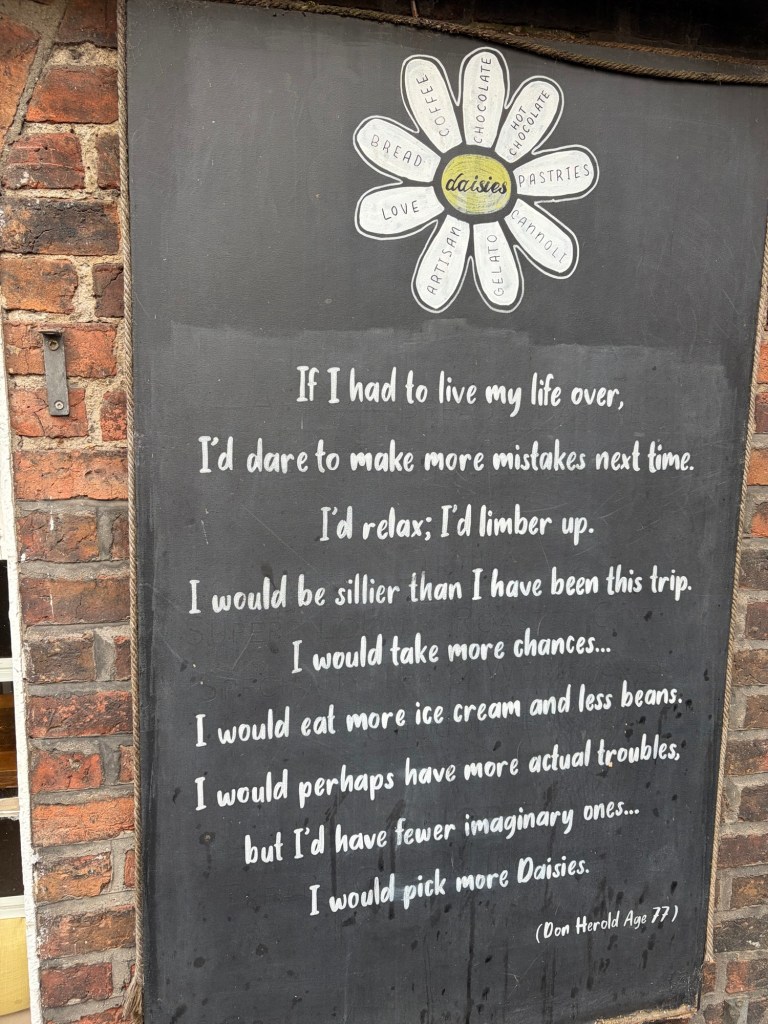
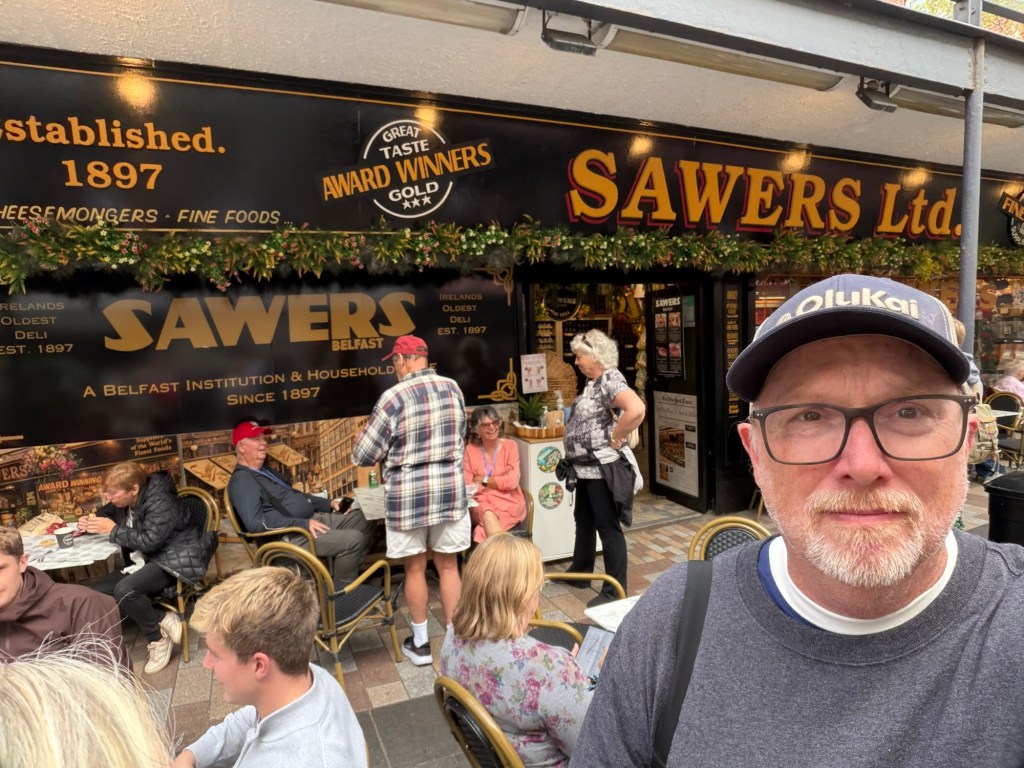
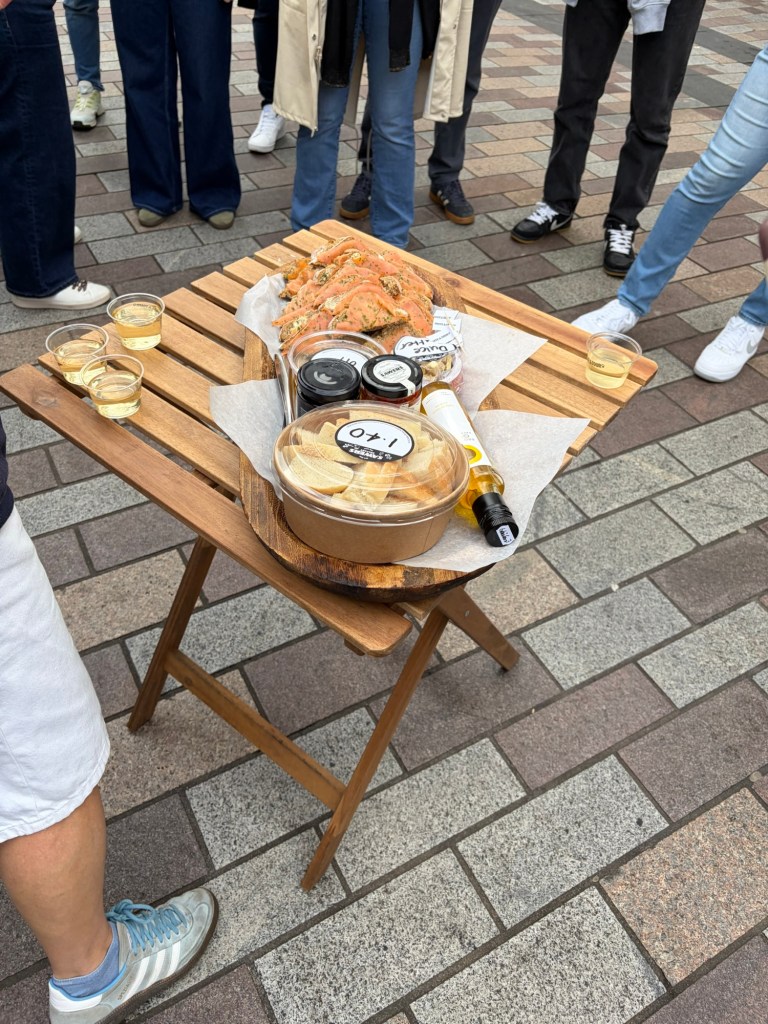
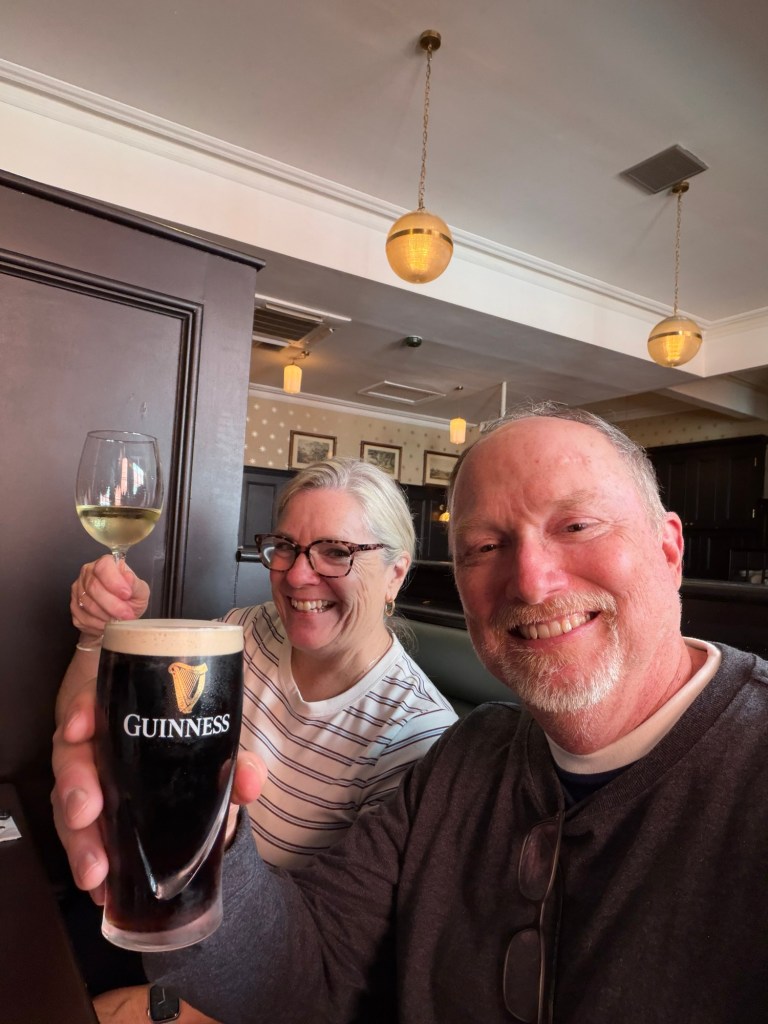
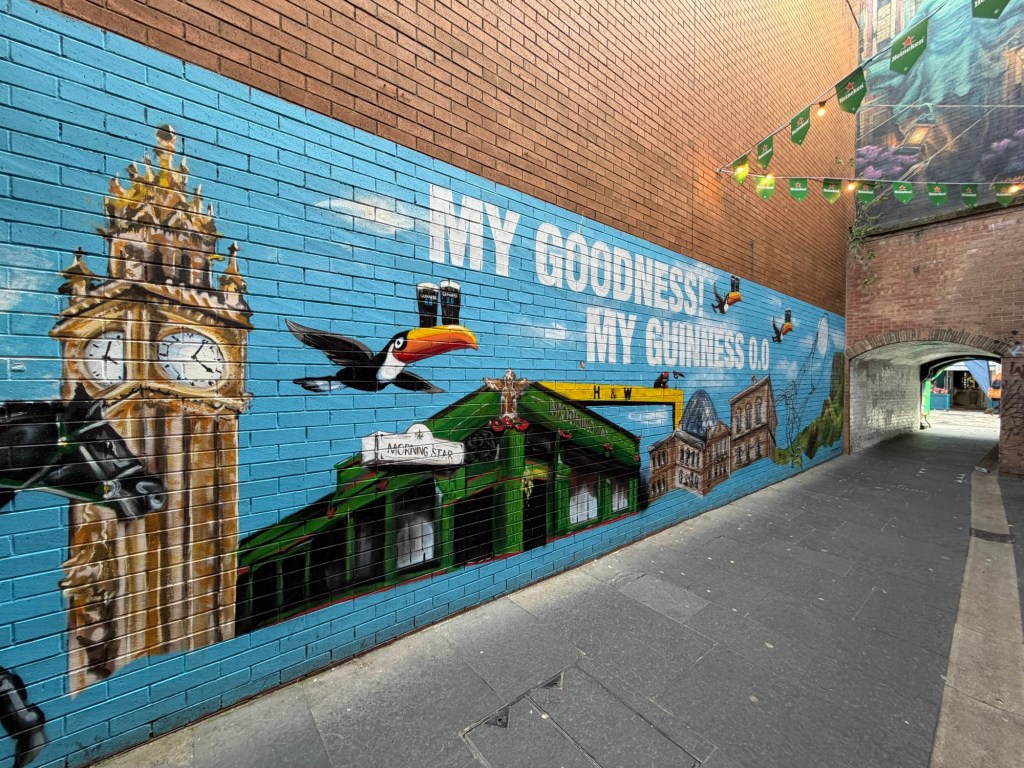
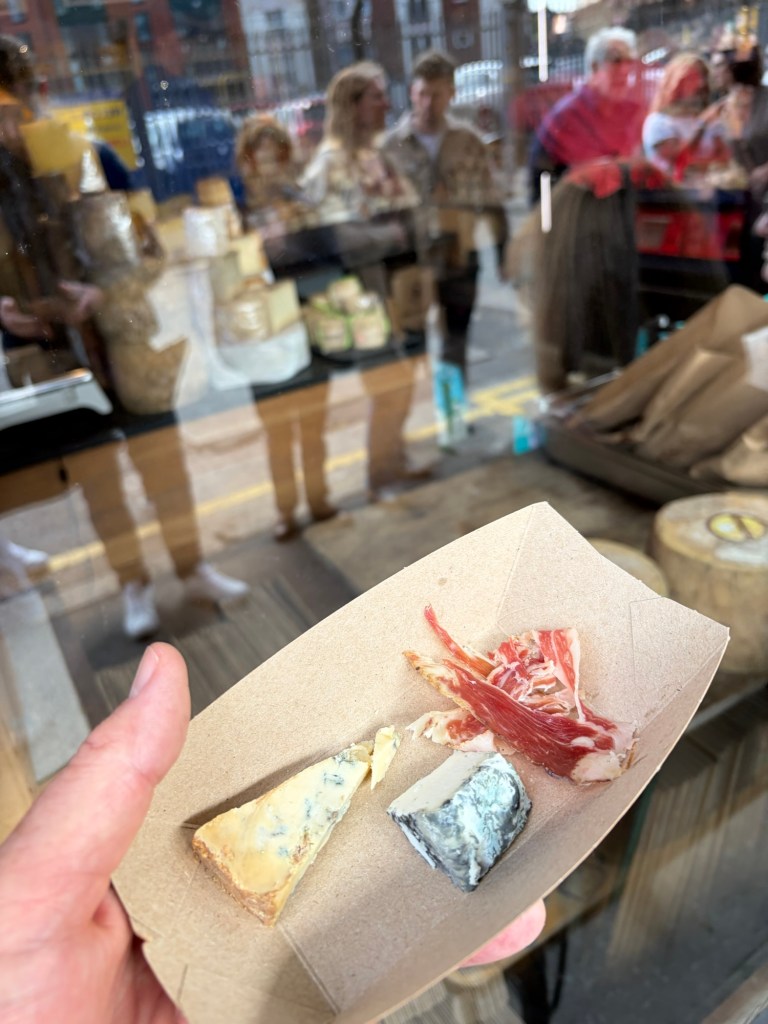
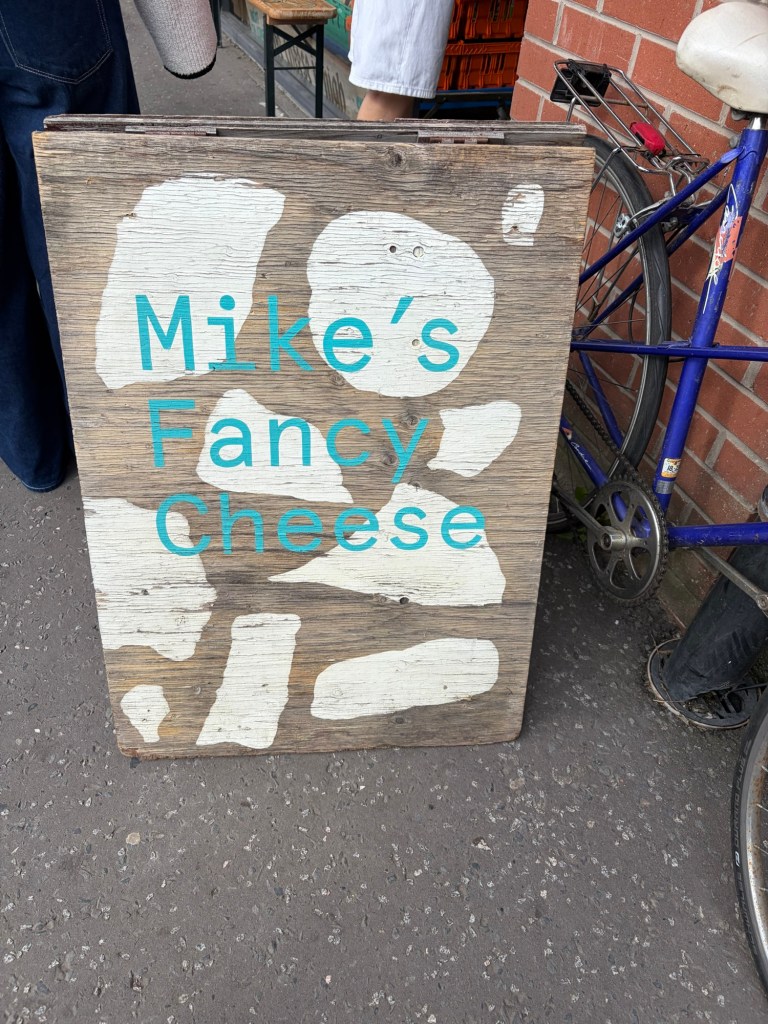
It was four hours of walks and nibbles- a great way to spend the afternoon.
We really loved the authenticity of Belfast, with its cosy laneways known as “Entries” that connect the larger streets in the city centre and which house so many of the city’s many atmospheric pubs, big and small.
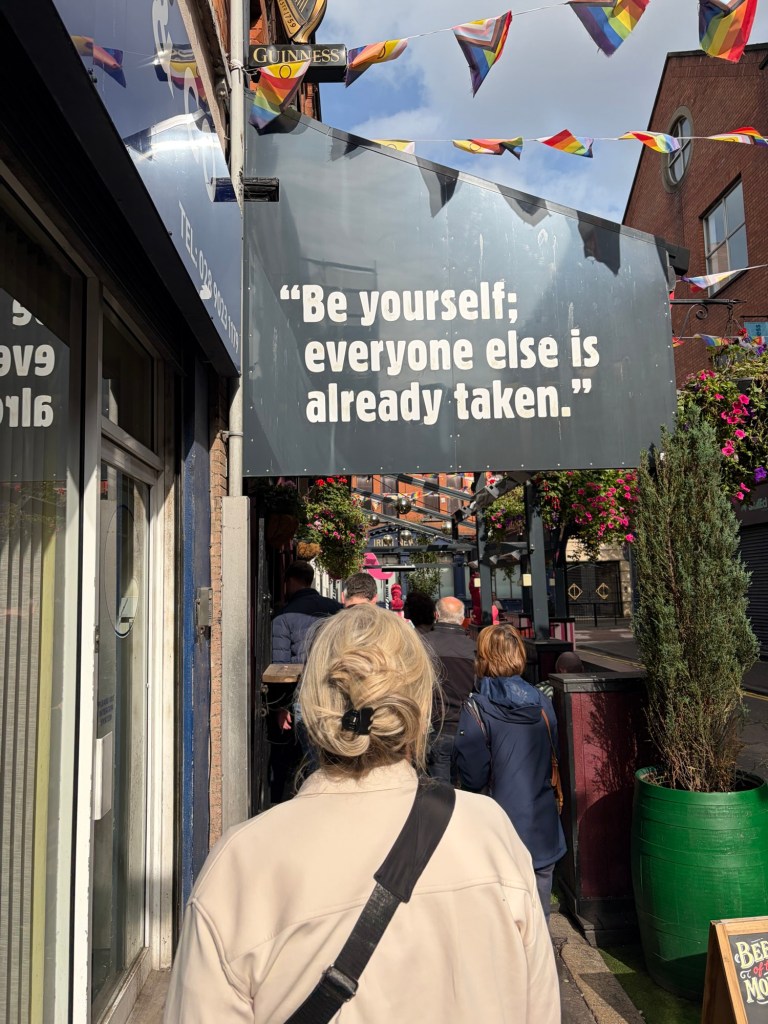
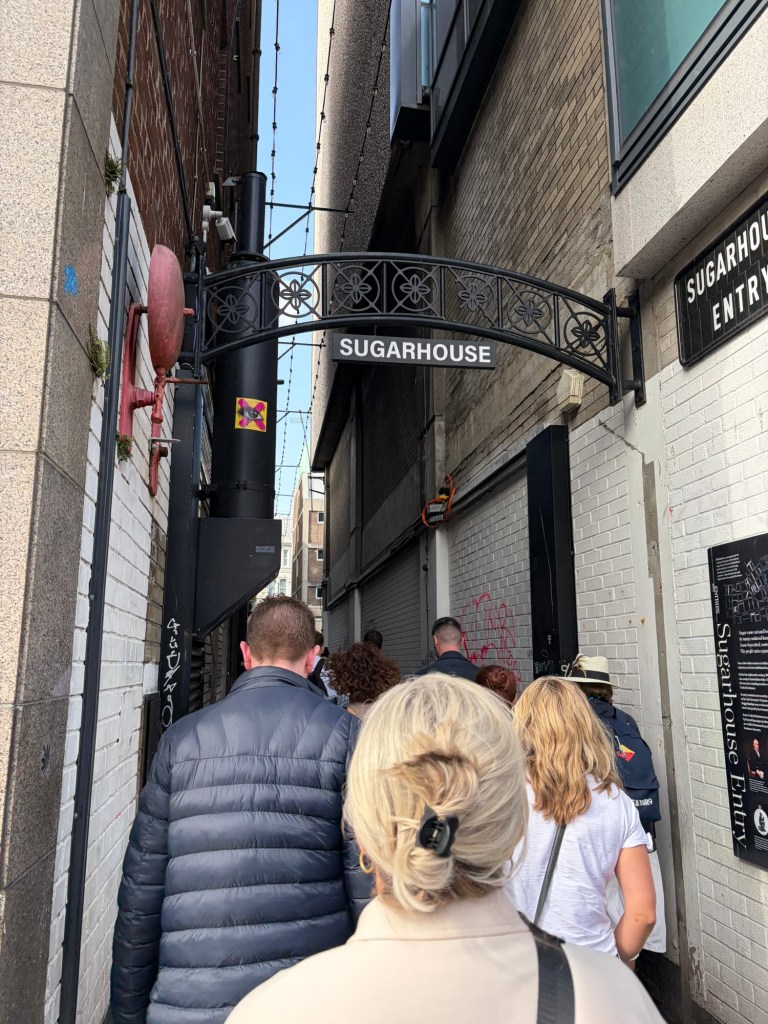
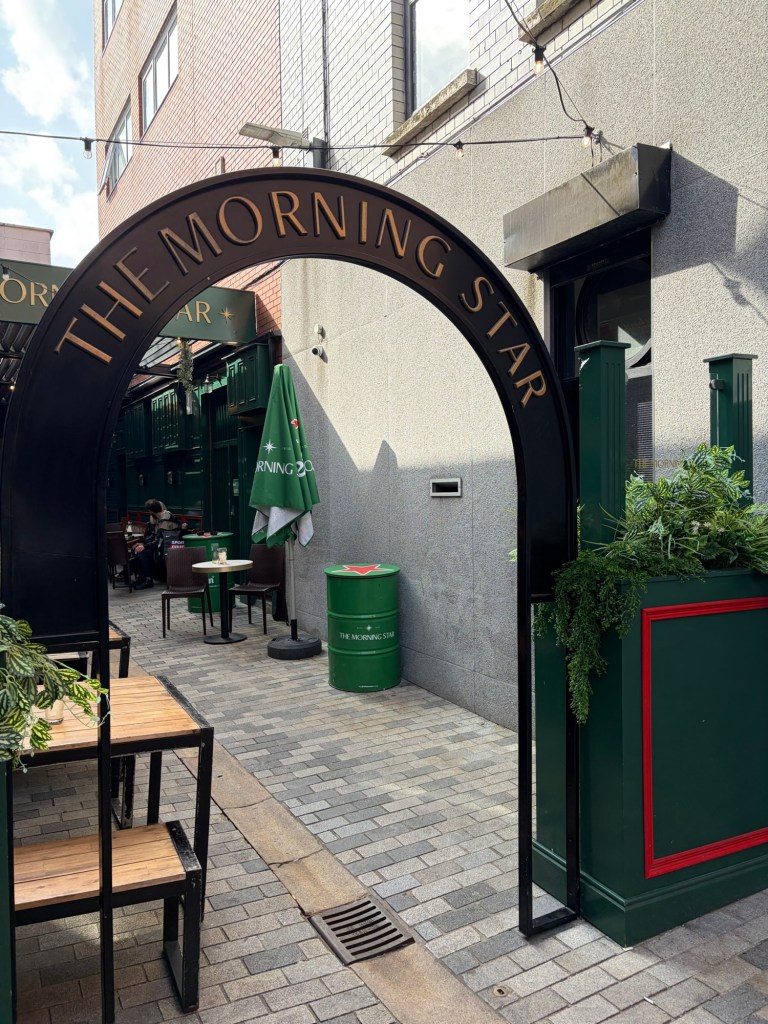
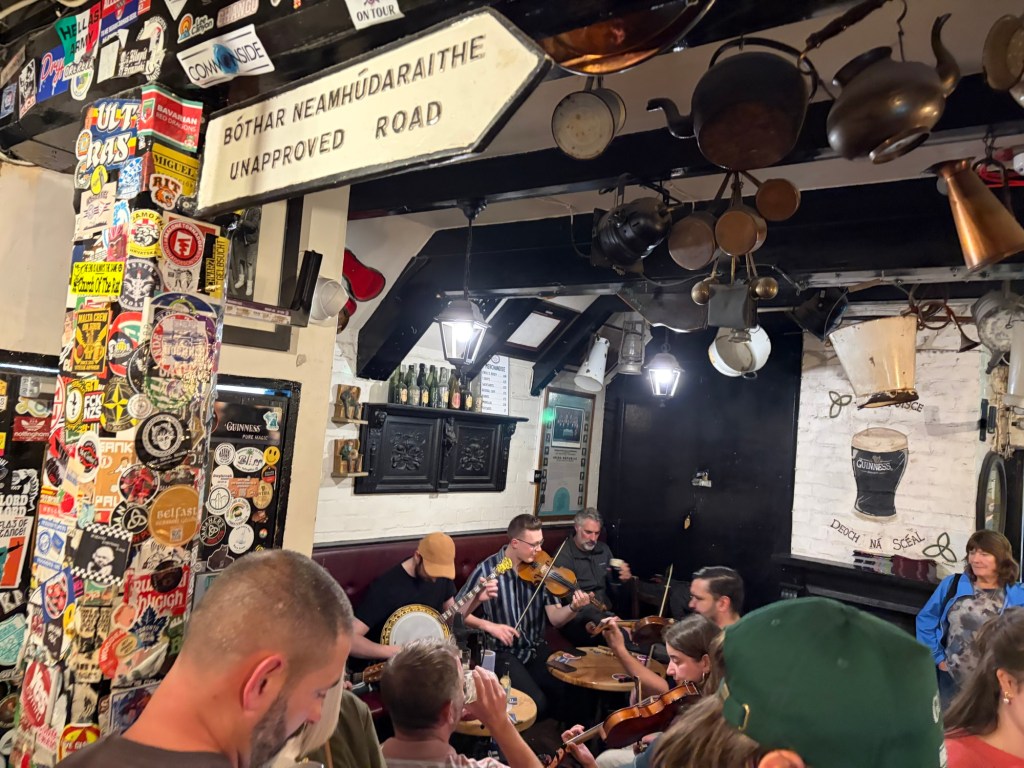
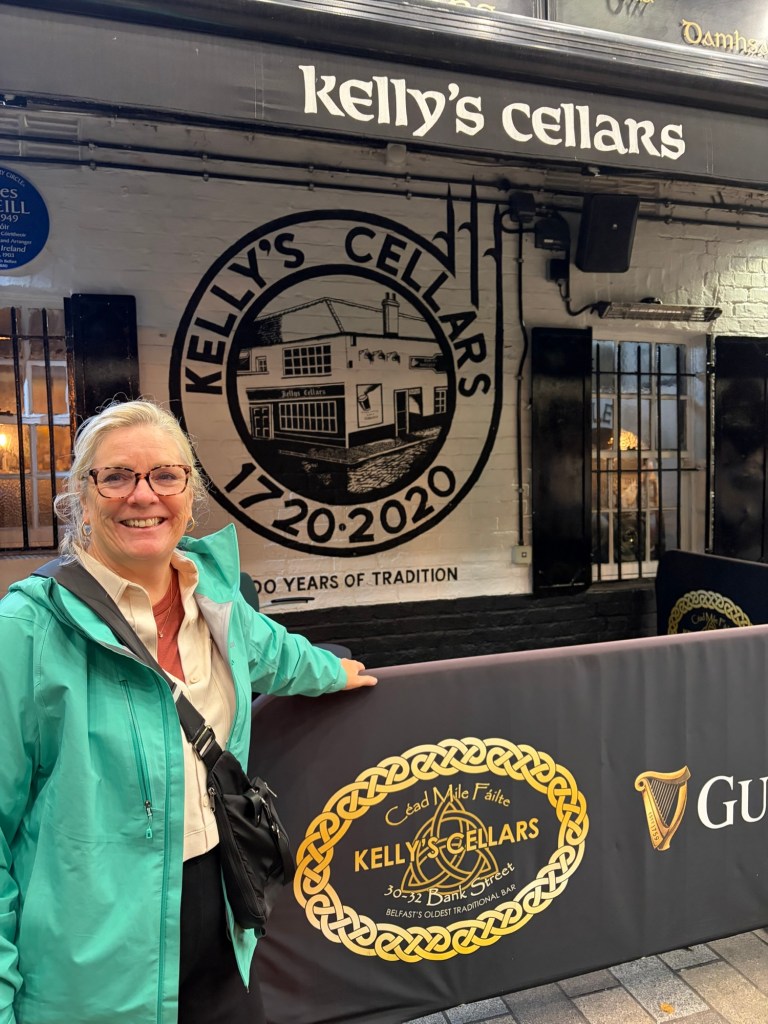
Belfast was full of surprises, some sobering but most lovely. We would definitely come back.


Leave a Reply