“La Dotta, la Grassa, la Rossa”
-motto of the city of Bologna
In English, “the learned, the fat, and the red”, this motto sums up this quirky and charming city, the capital of Emilia Romagna. It also fits as a motto for our reunion with our university friends in Tuscany, but that’s a tale for another day.
We started our vacation with a short stay in Modena then heading north to see Lake Garda and Verona before wrapping up the solo portion of our visit to Italy in Bologna.
We had a drama free two hour drive down the toll road from Verona. A few quick things about driving in Italy:
- The toll roads are great and relatively inexpensive. Do Not get the transponder with your rental car: they charge a crazy amount. Just grab a ticket when you enter the highway and pay for it with cash or card when you exit (choose the cash lanes rather than the transponder lanes). A two hour drive will cost about 10 €.
- Italians drive quickly but they know how to drive. Use the left lane to pass and then get out of the way. The speed limit on the highways can get up to 130 km/hr – and lots of drivers are going faster than that.
- Trucks cannot use the outside lane to pass on a highway, so you spend a lot of time driving past long lines of trucks when the highway is only two lanes. It’s much safer and quicker than driving on, say, the 401!
- If you can drive a manual, it’s much cheaper, and it’s fun (for the driver, if not the passenger).
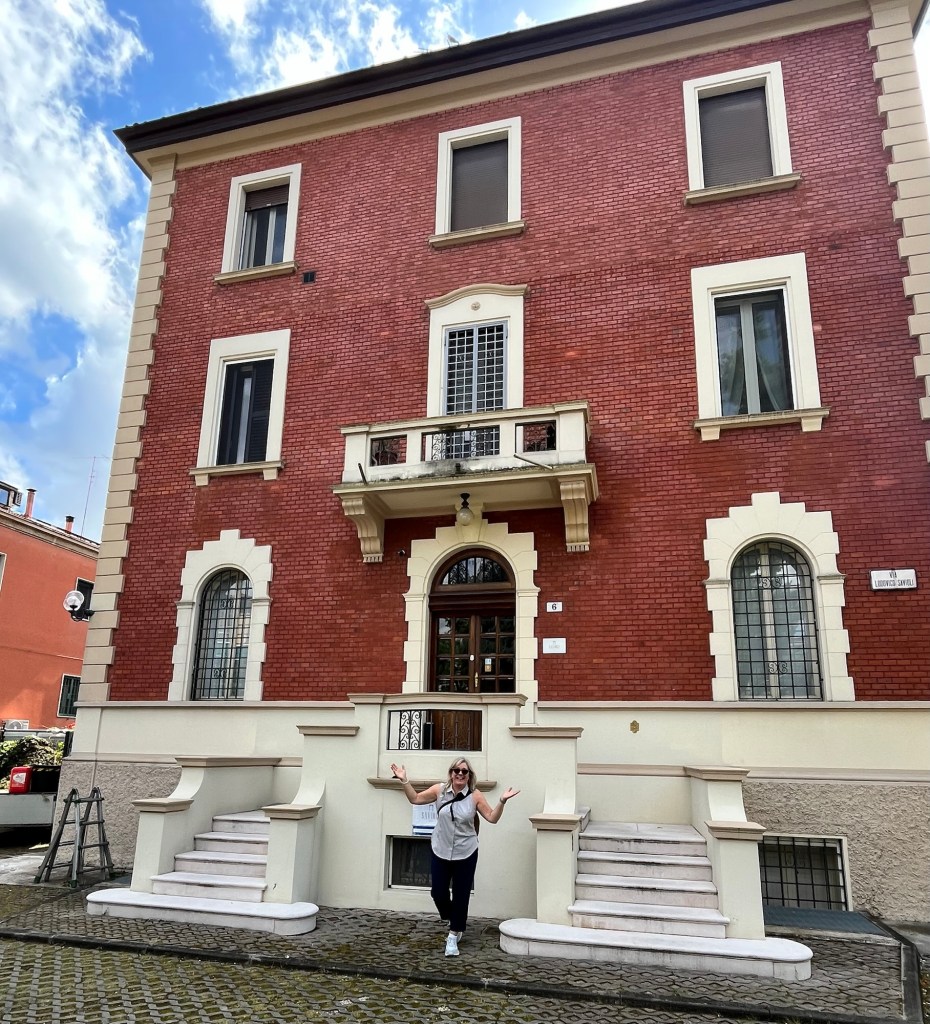
We arrived at our rather stately looking B&B and after checking in our host took us on a tour of all the locks we would have to access with our key: the room, the hall, the bathroom, the gate, the side gate….. Unlike the prison guard style ring of keys I had for our apartment in Verona, a single key seemed to open all of these locks, which didn’t really make it feel more secure. At any rate, we freshened up, and headed out to explore the city.
In many ways, “La Dotta, la Grassa, la Rossa” sums up our visit to Bologna quite nicely. So in no particular order:
“La Dotta” (the learned)
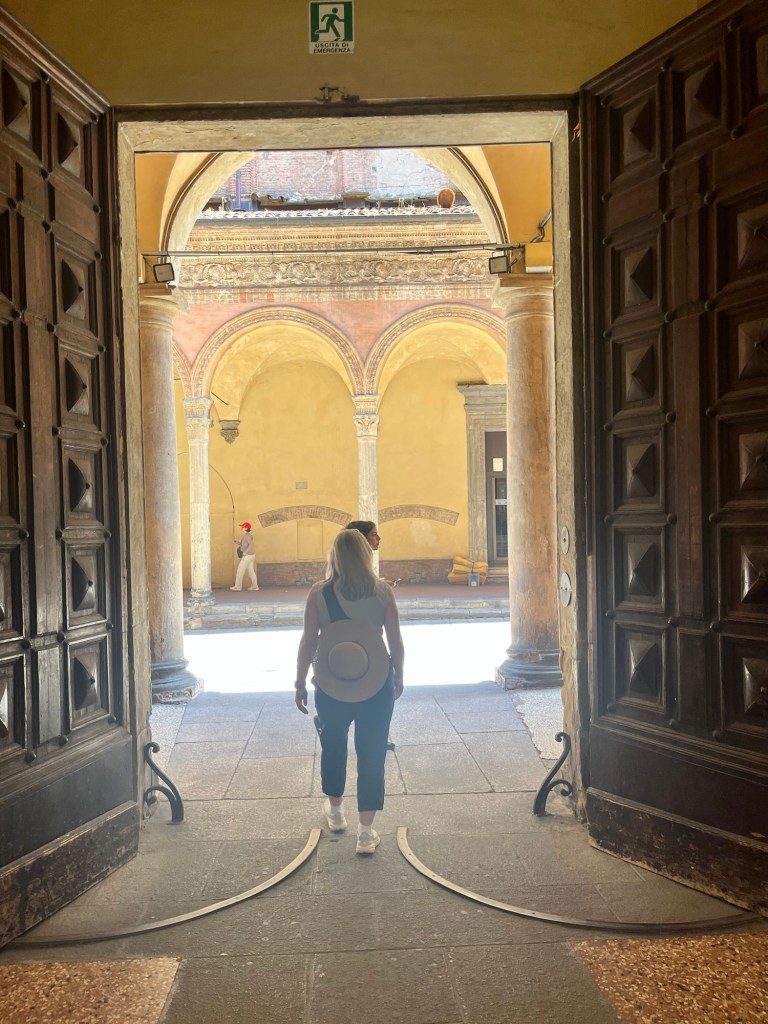
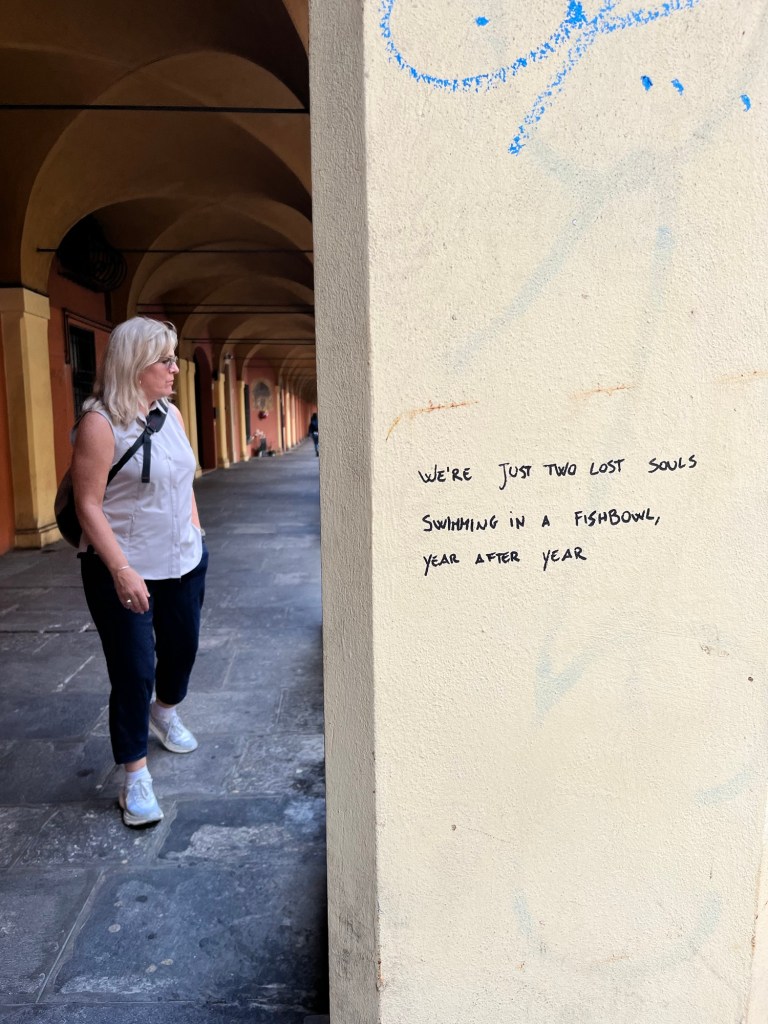
Your first impression as you walk into the historic centre is that Bologna is a city of porticoes. There are over 40km of these gracefully covered sidewalks in the city centre alone, sometimes lining both sides of a street. They have been a feature of the city since the early days of the university, the oldest in Europe (1088!) and one which predates my own alma-mater by some 800 years. Some accounts speculate that the university’s need for spaces for scholars and students to gather sparked the original incorporation of porticoes into the city’s landscape.
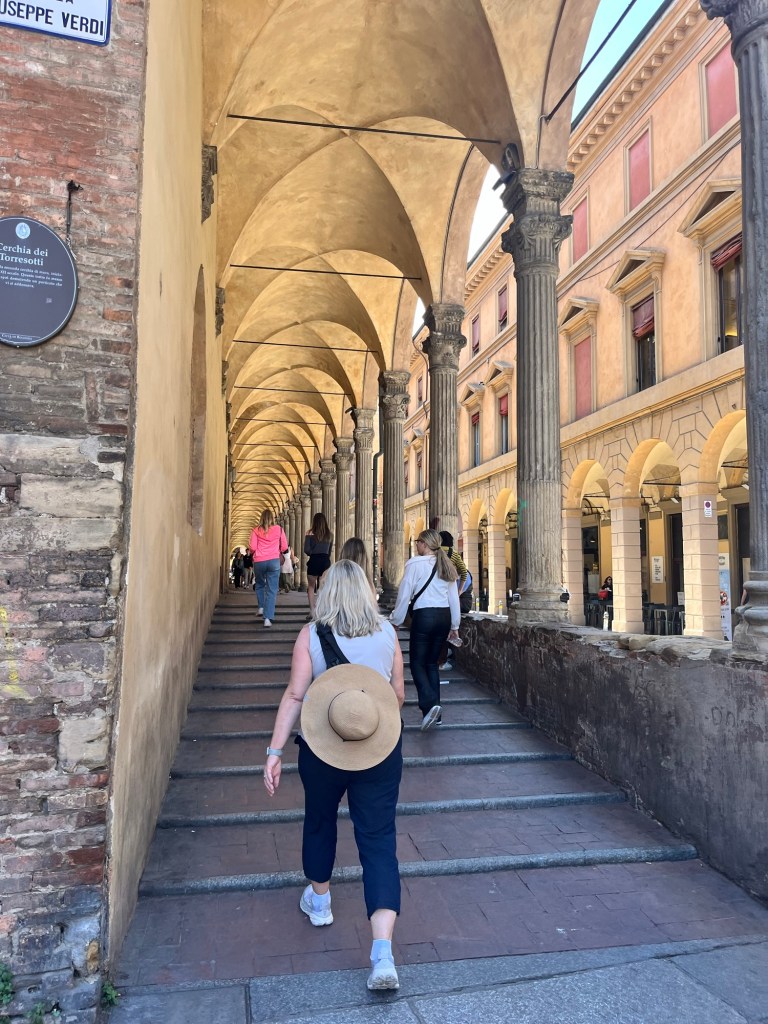
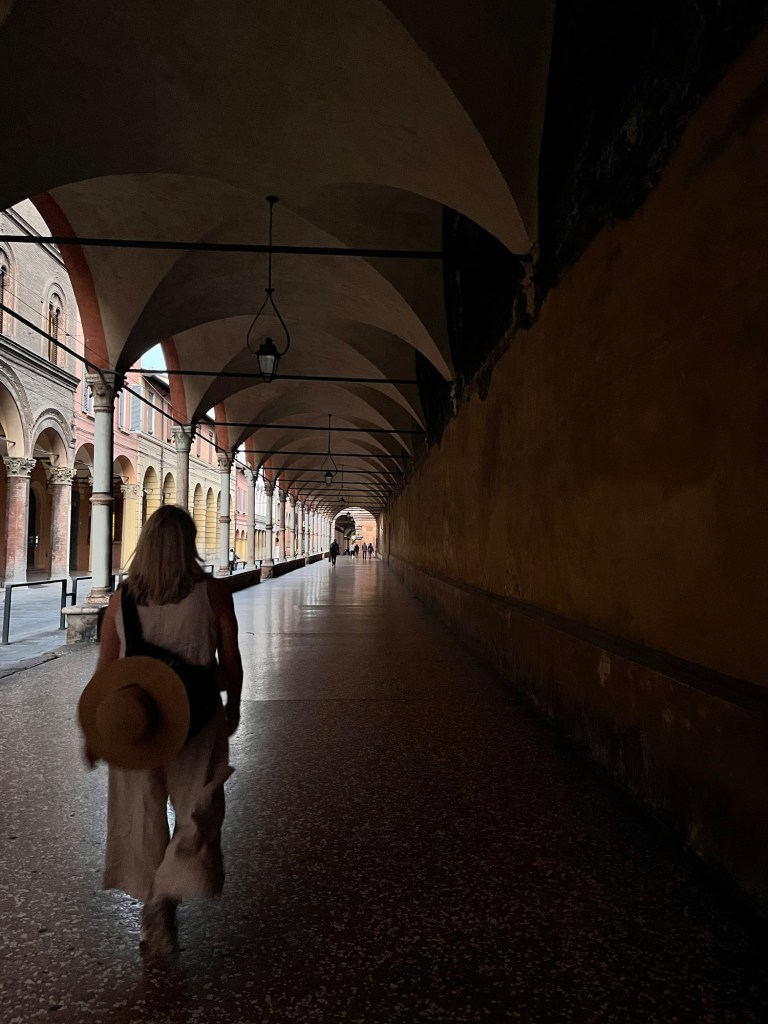
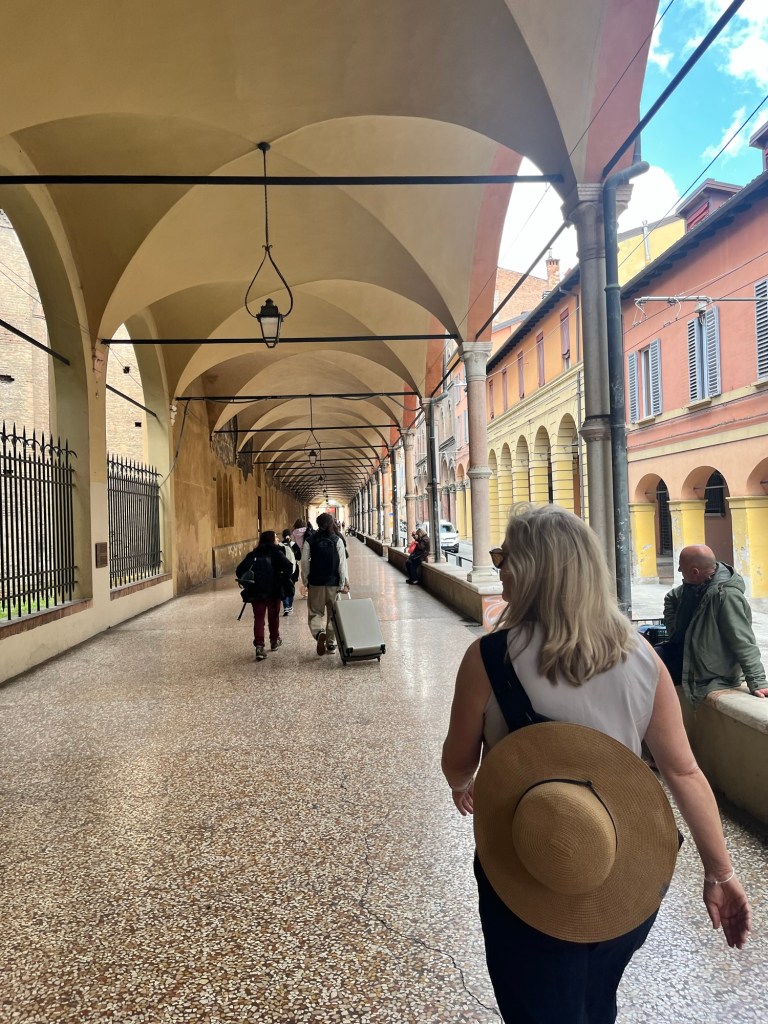
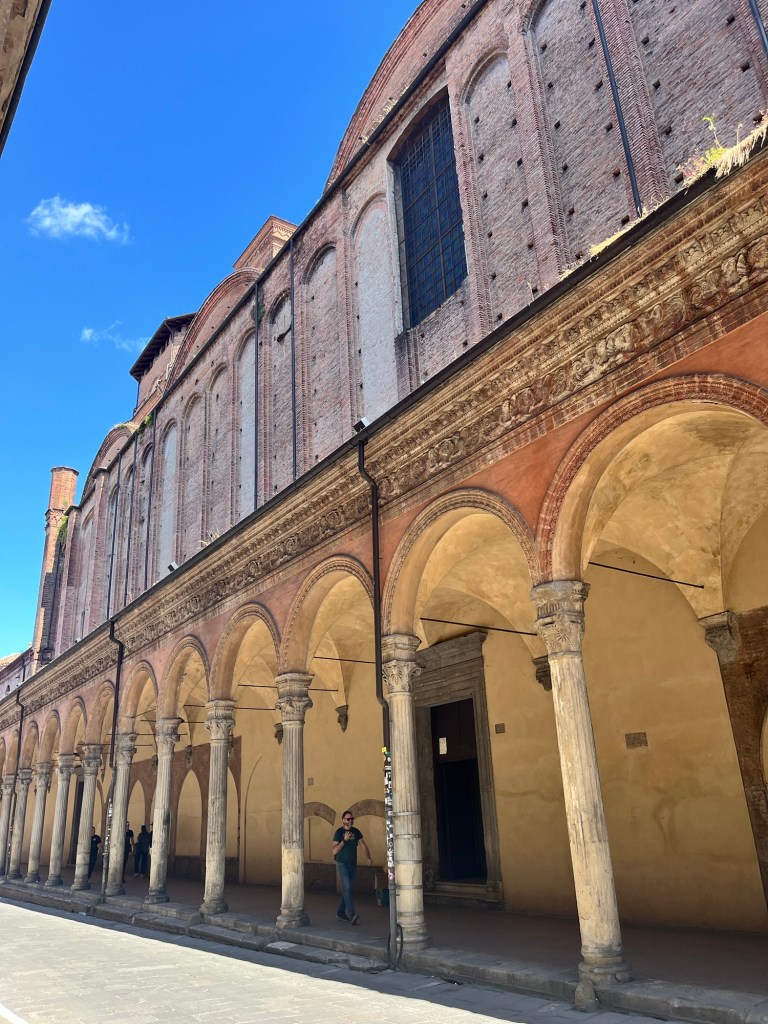
While the porticoes are omnipresent through the city, the most impressive ones are the 666 arches which run almost four kilometres from the city walls at Porta Saragozza to the Sanctuary of the Madonna Di San Luca. The final two kilometres of this mini pilgrimage are straight up a steep hill for over two kilometres. Given we only had two days in Bologna, Robin talked me into taking the tourist train from Piazza Maggiore in the centre of the old city to San Luca. Our compromise was that we would walk down.
I hated the idea of the tourist train: like most this one was accessorized to look like something Donald Duck might drive.
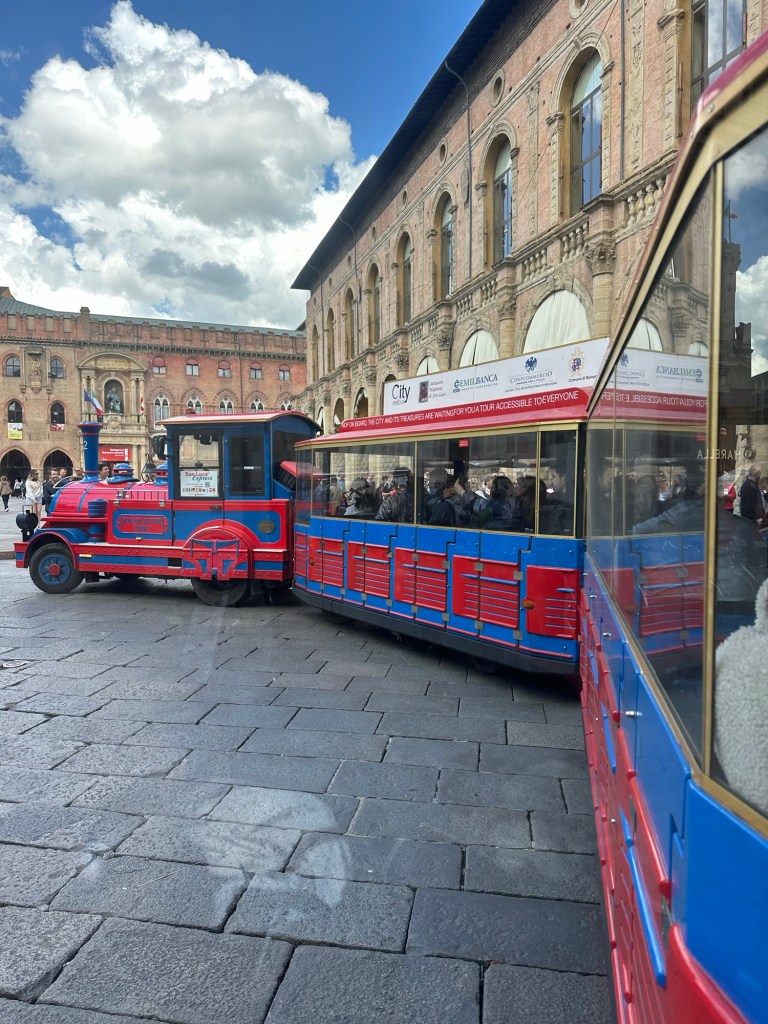
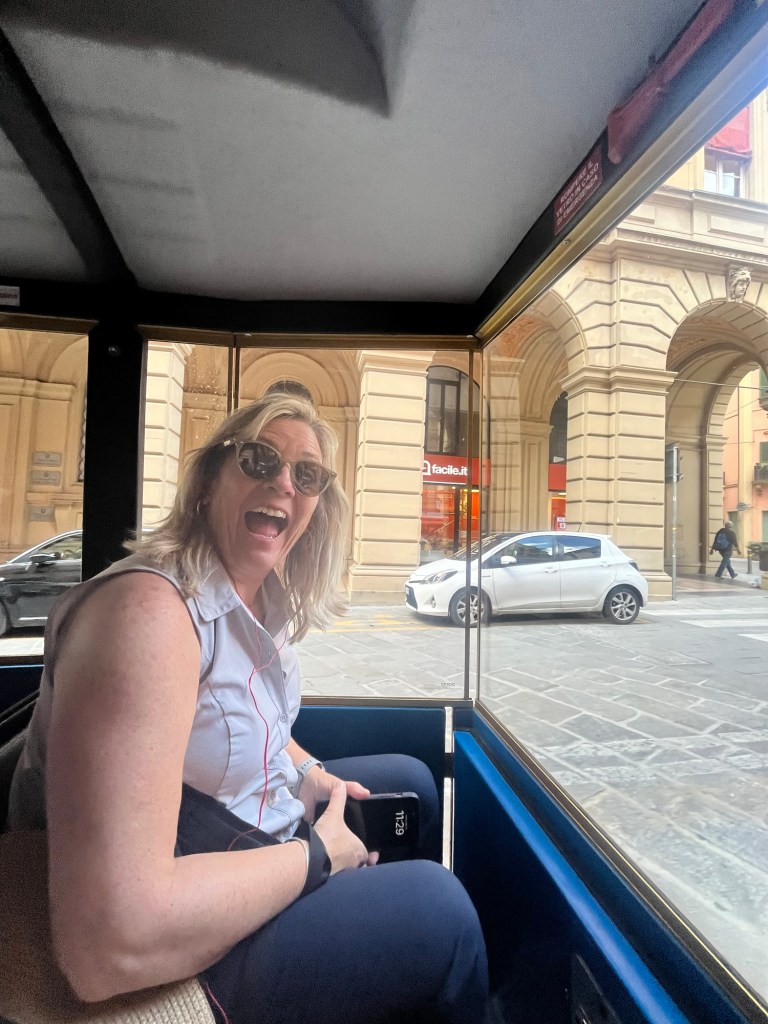
However I have to say that it worked out very well and the pre-recorded audio was actually very informative!
Visiting San Luca is a must do. The walk back to Piazza Maggiore is about 45 minutes, and well worth it so you can have a full appreciation of the porticoes.
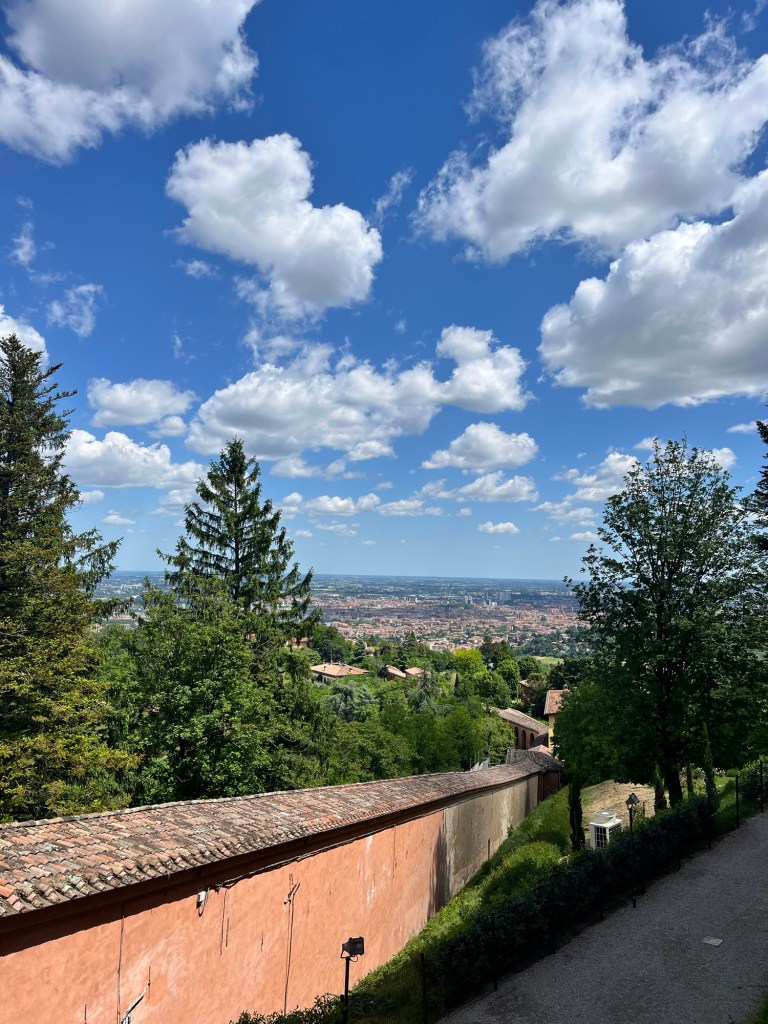
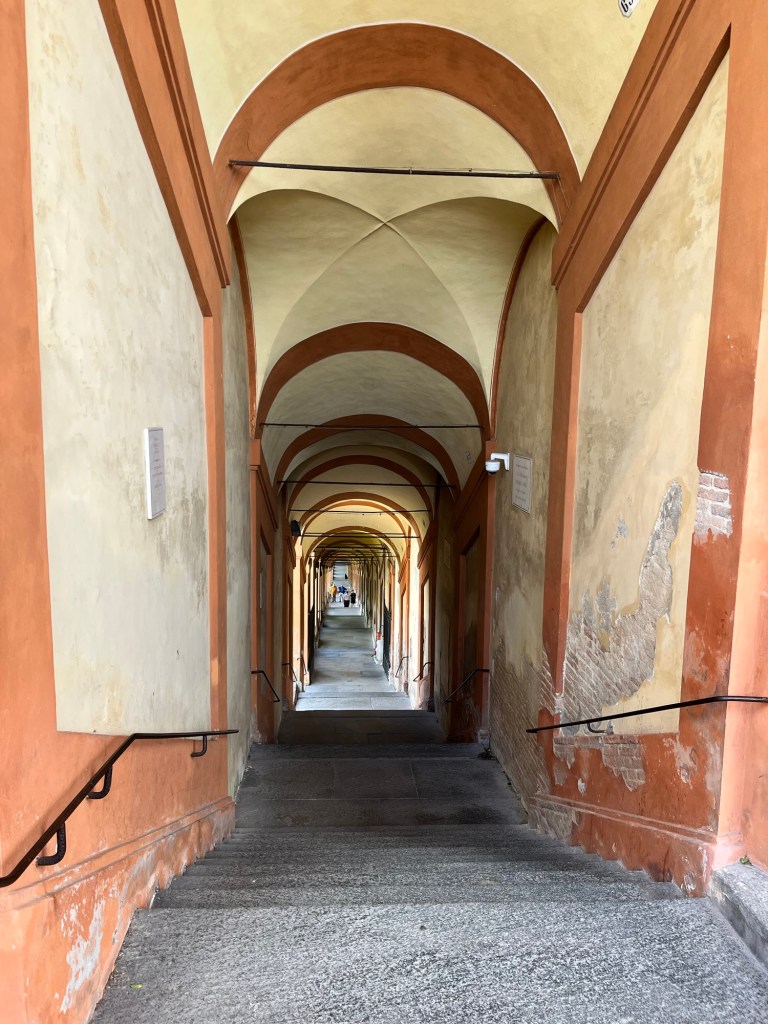
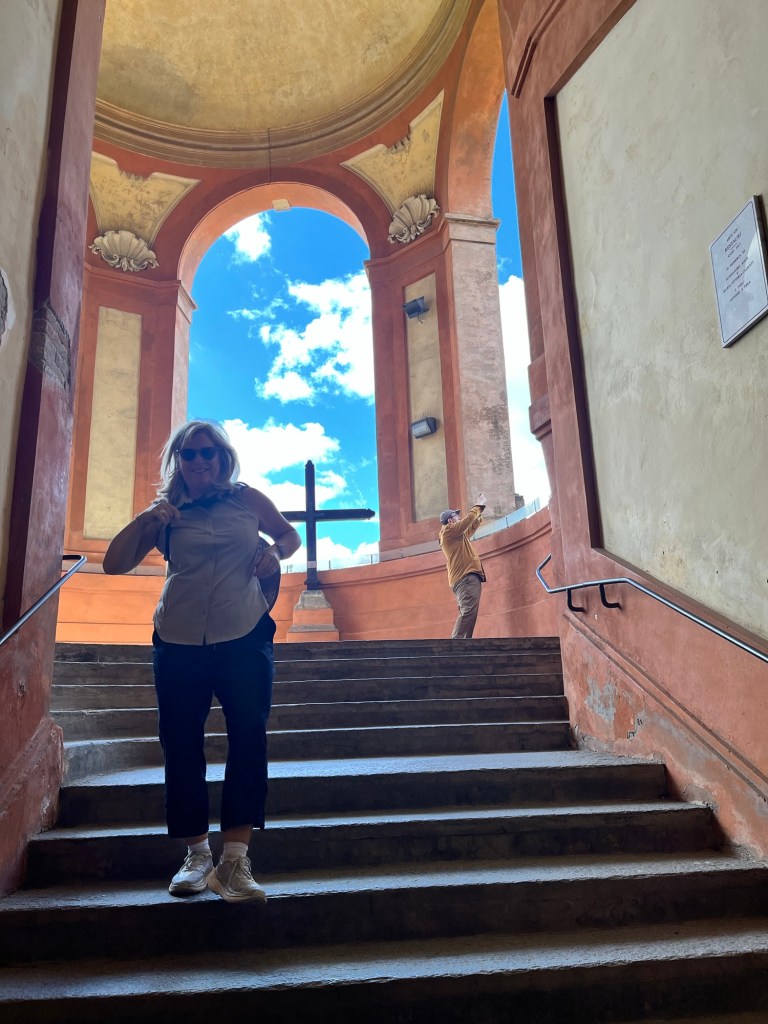
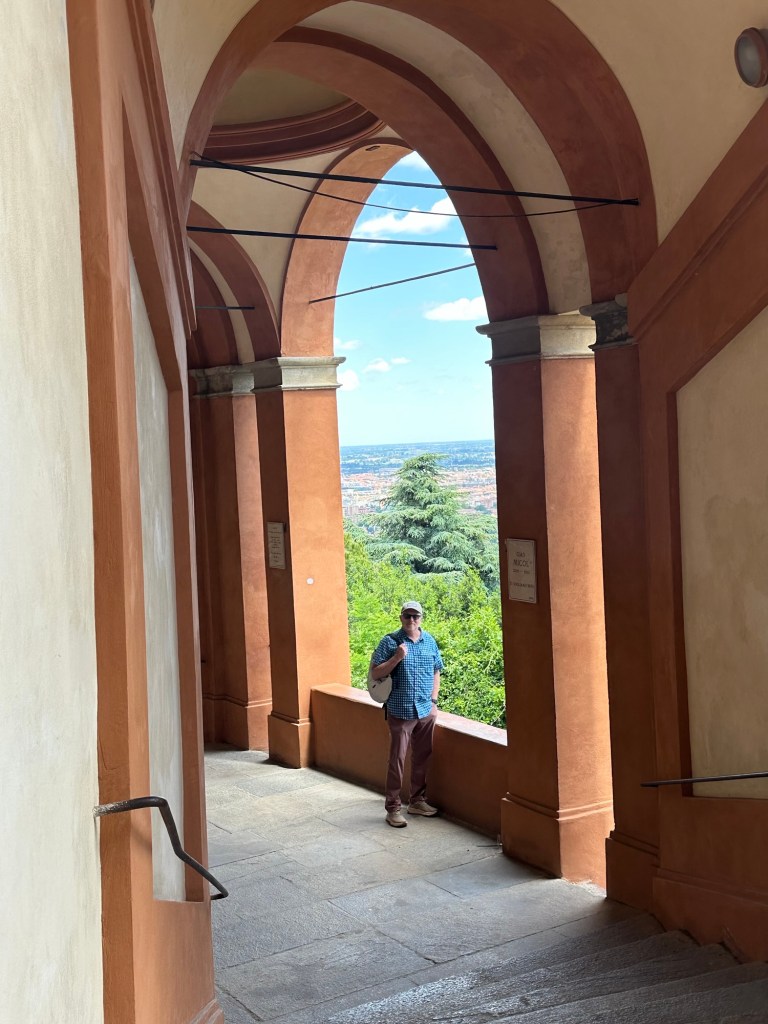

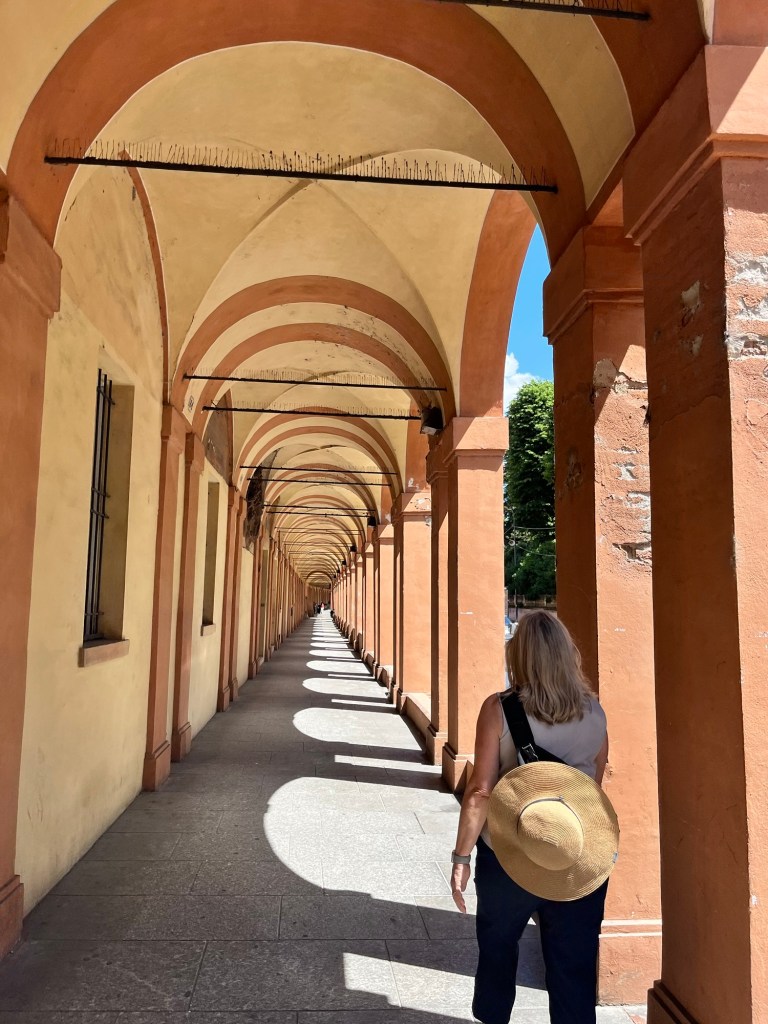
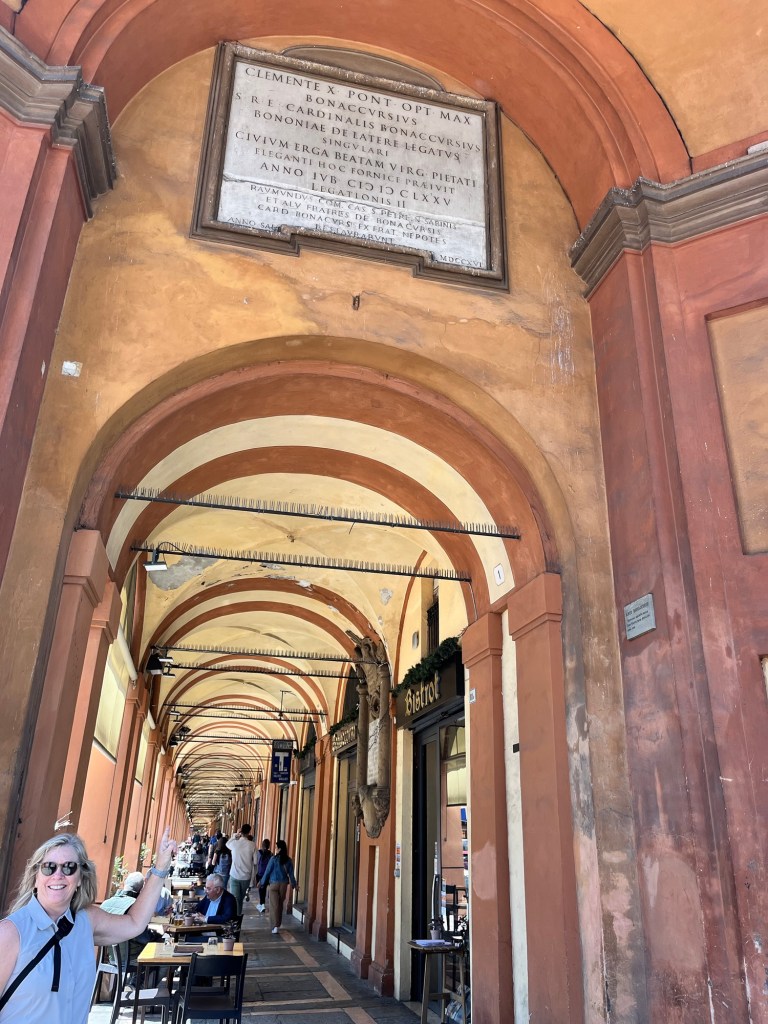
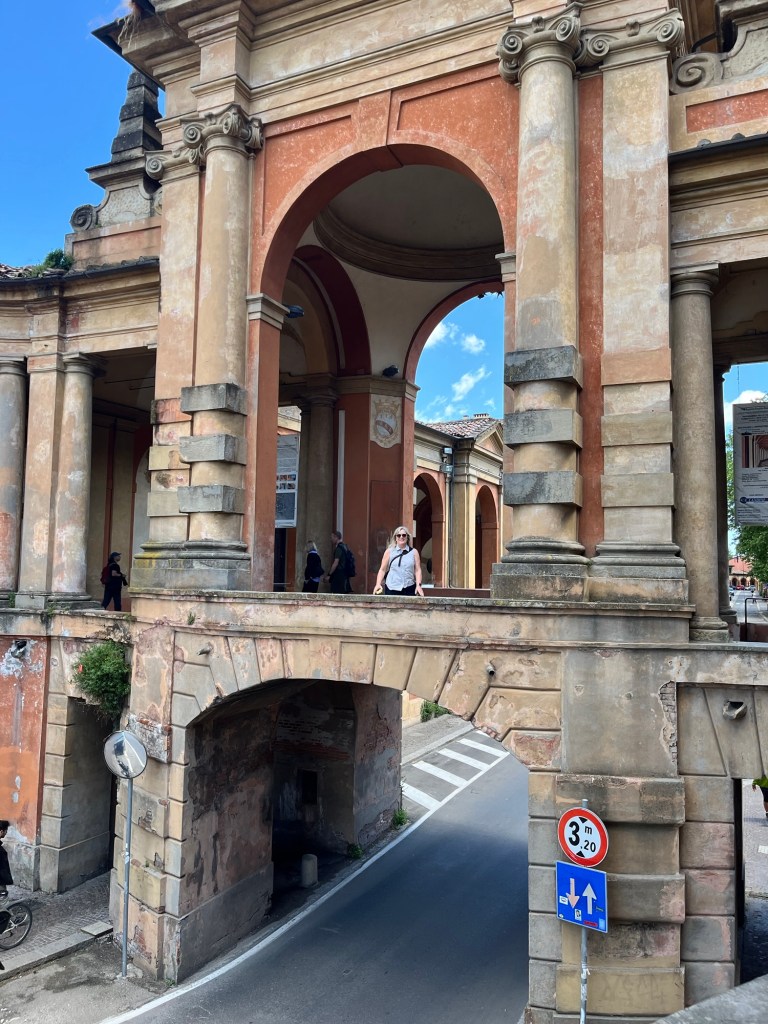
But before heading down, spend some time exploring the sanctuary (free) or climbing up to the top to enjoy incredible views of Bologna and the countryside.
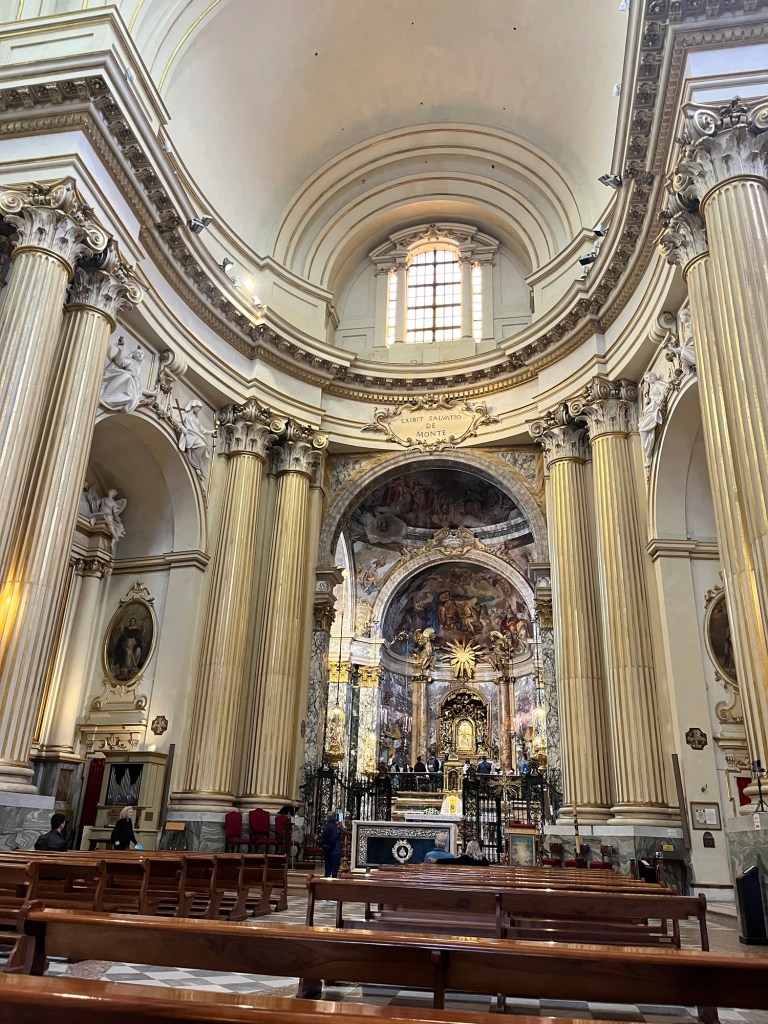

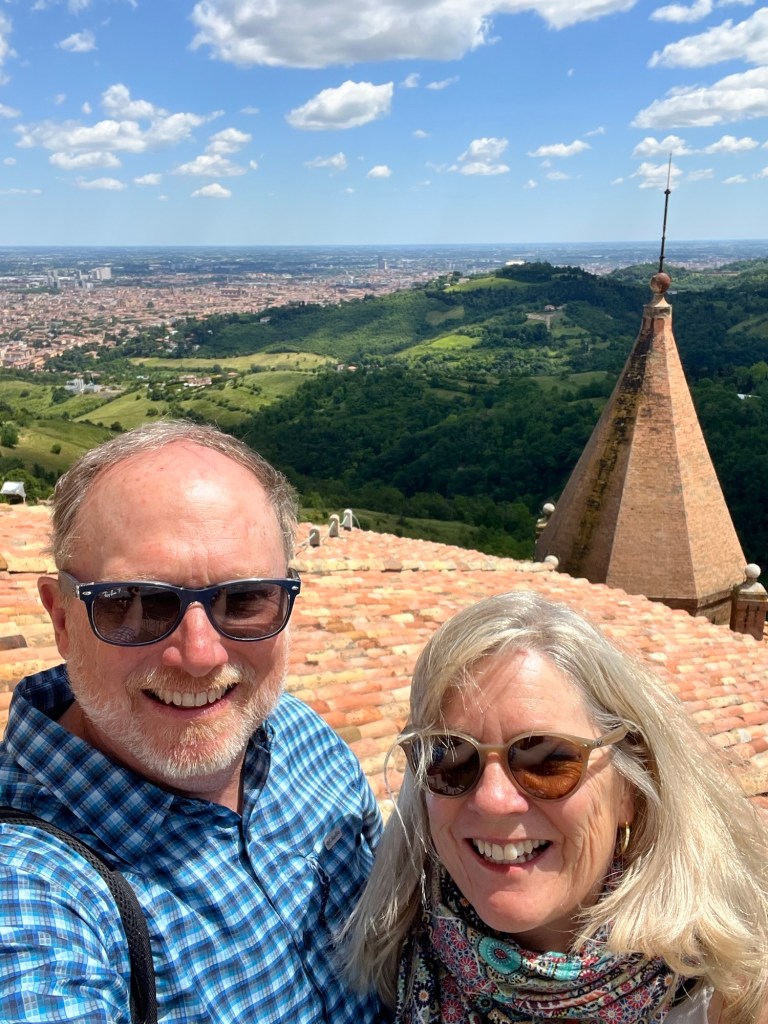
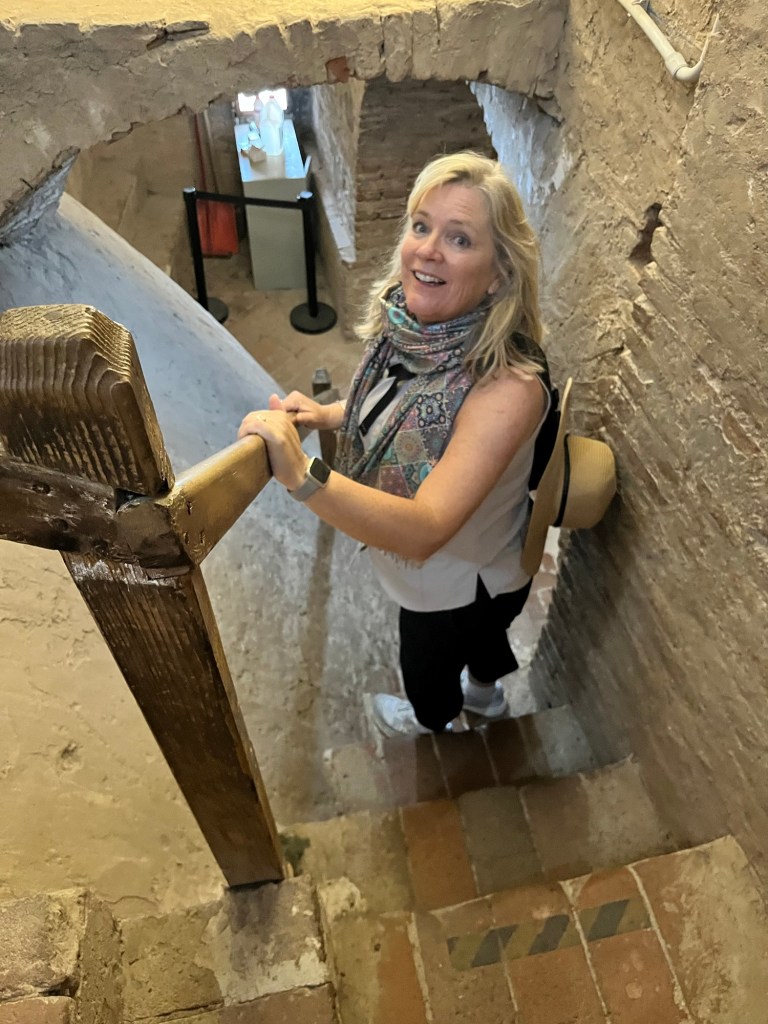
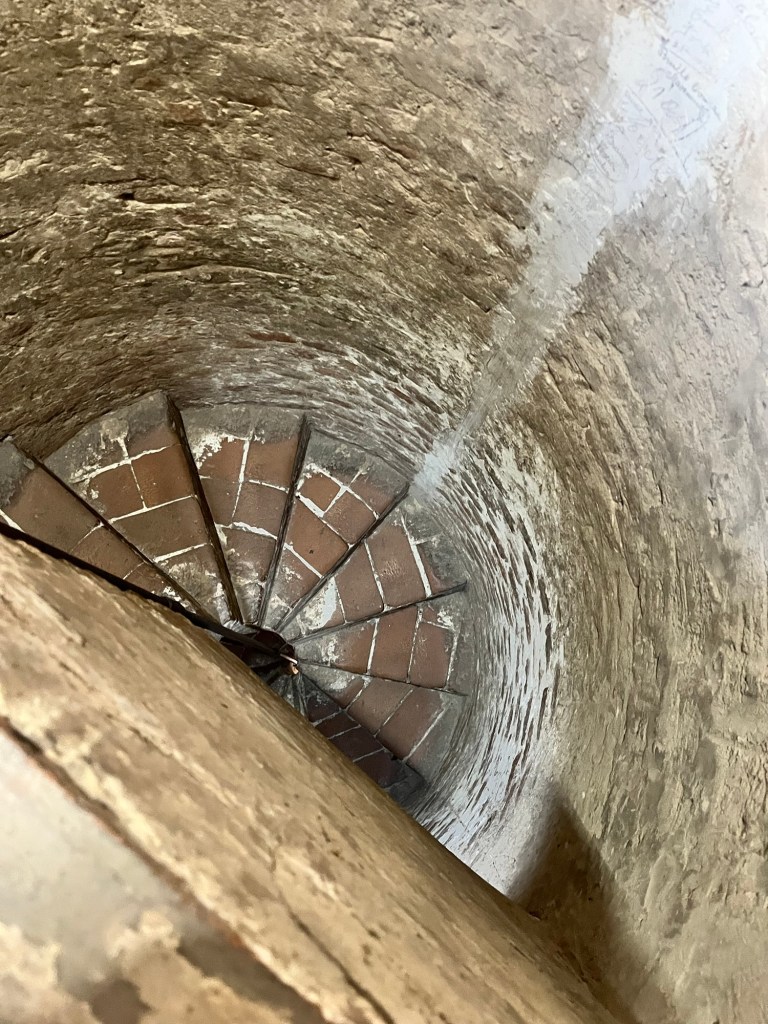
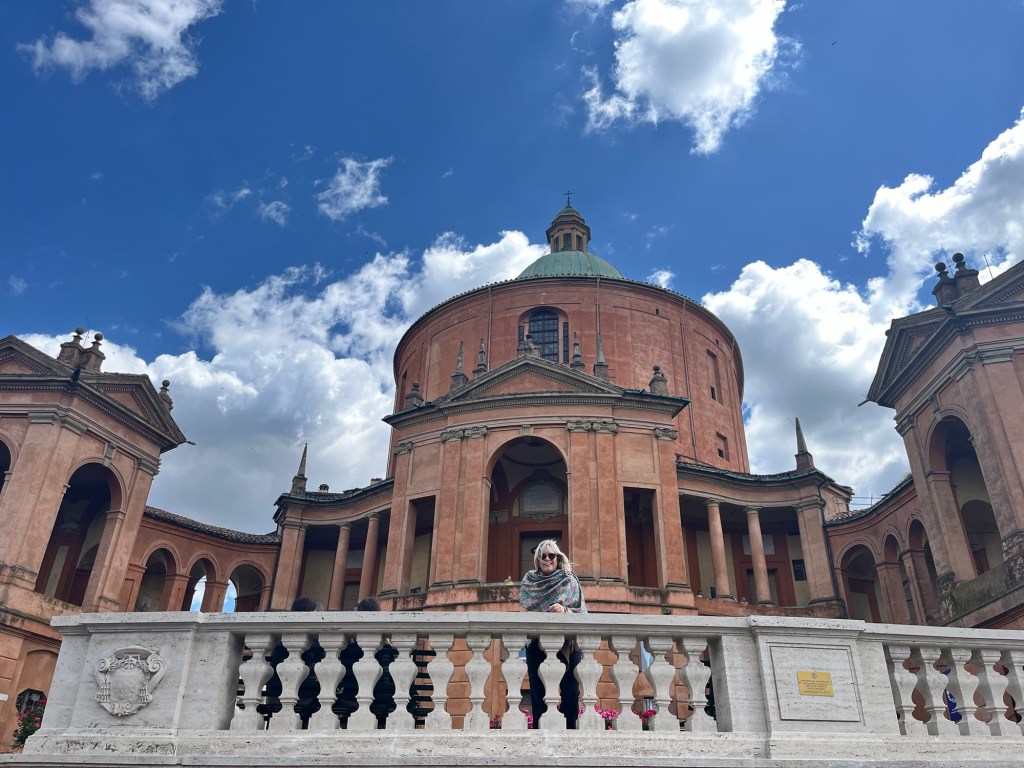
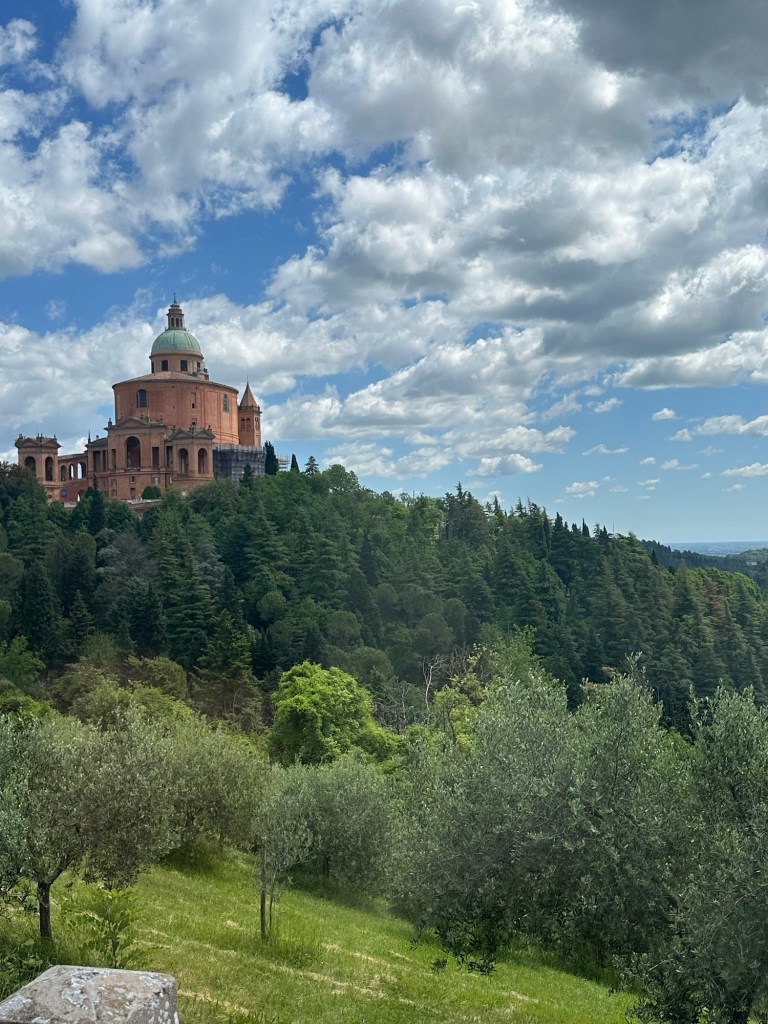
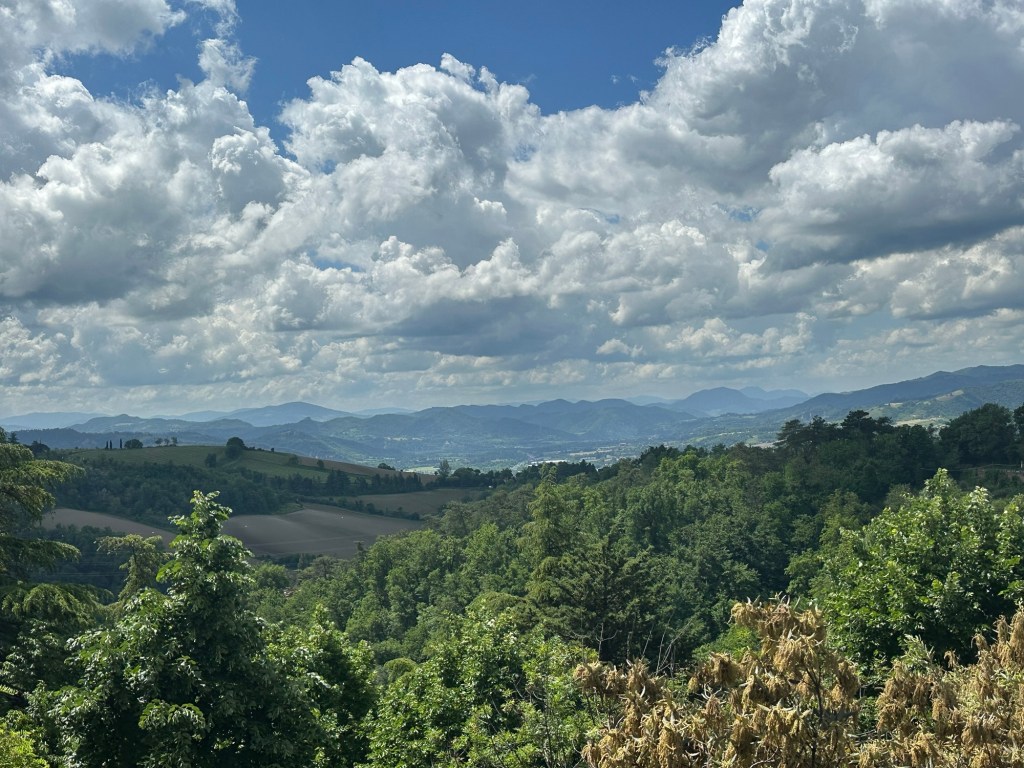
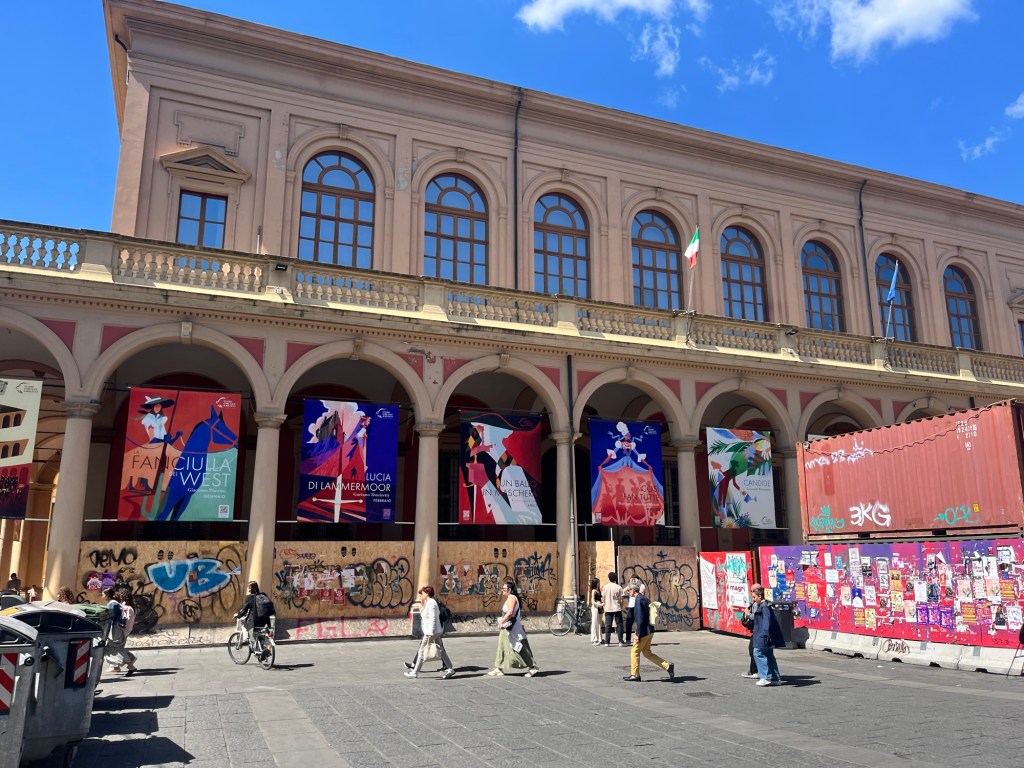
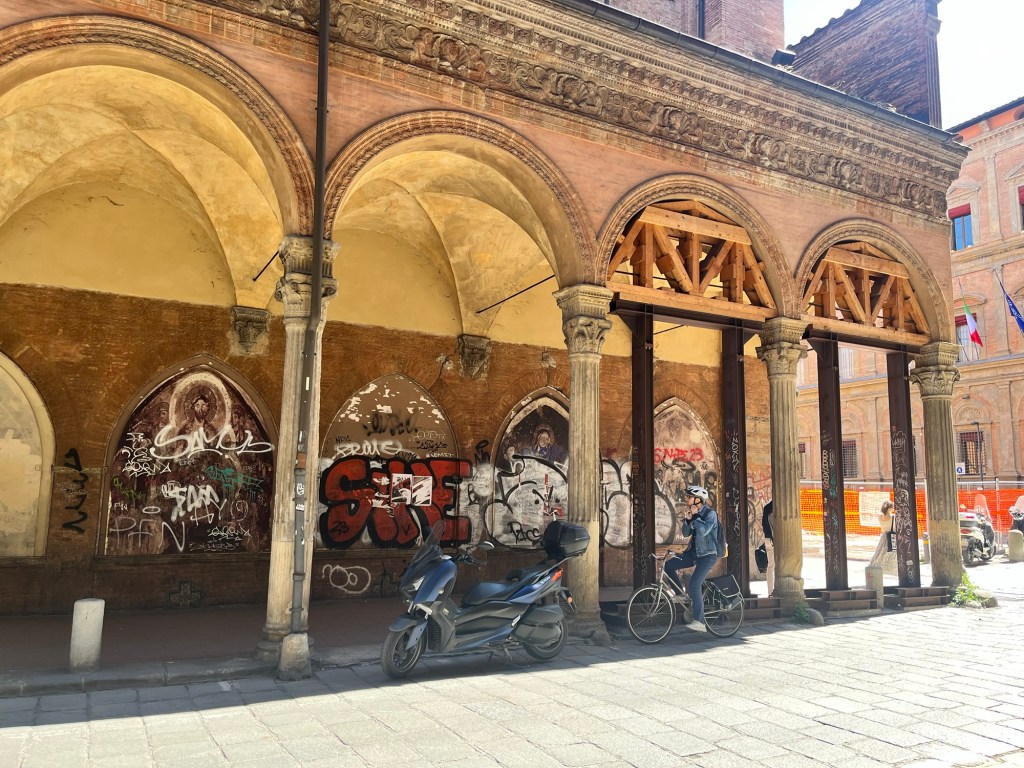
One of the things that strikes you is that many of the public monuments and spaces are named after prominent academic figures, rather than rulers or religious figures. This has resulted in Bologna becoming a very left of centre bastion in Italian culture and politics. The gritty, graffiti covered street scape is more a product of the student culture than anything else.
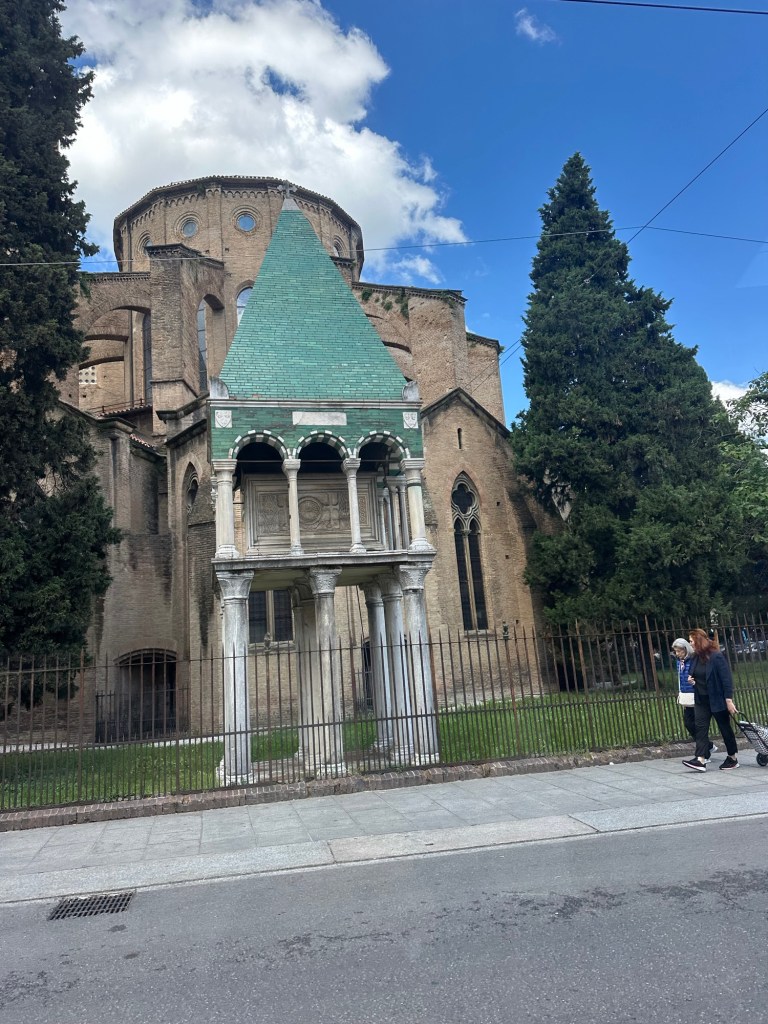
Speaking of student culture I always enjoy visiting the university district when I’m in a university town. Fortuitously, this coincided with my desire to visit the legendary sandwich shop I Panini di Mirò in Piazza Aldrovandi in the university district.
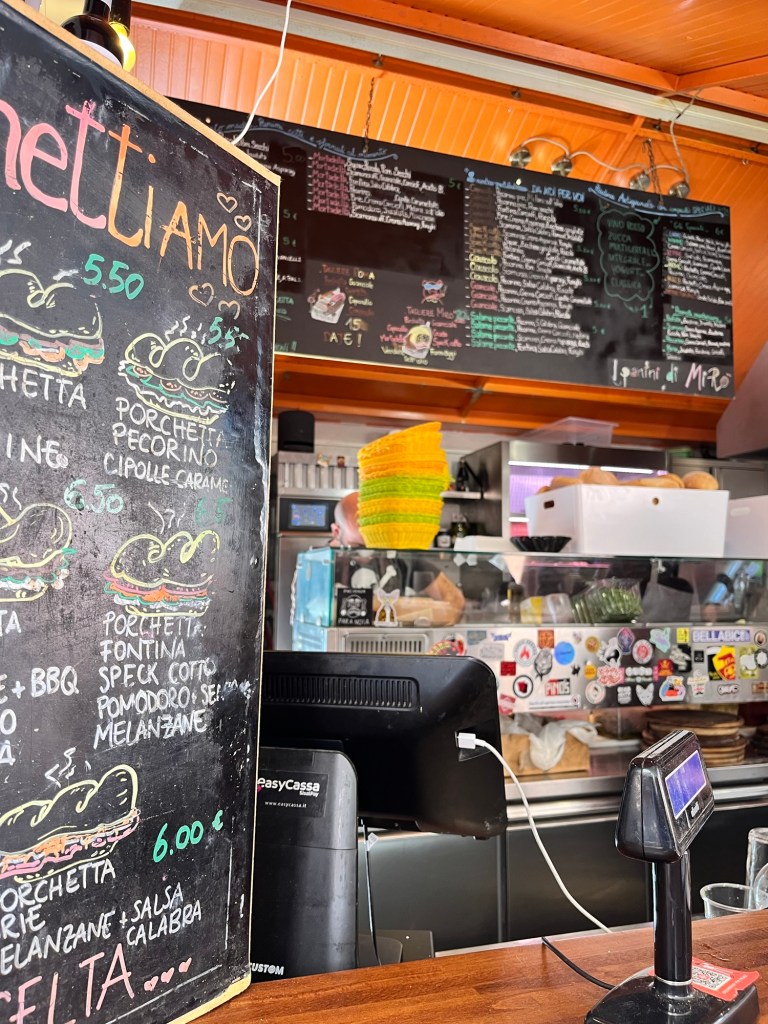
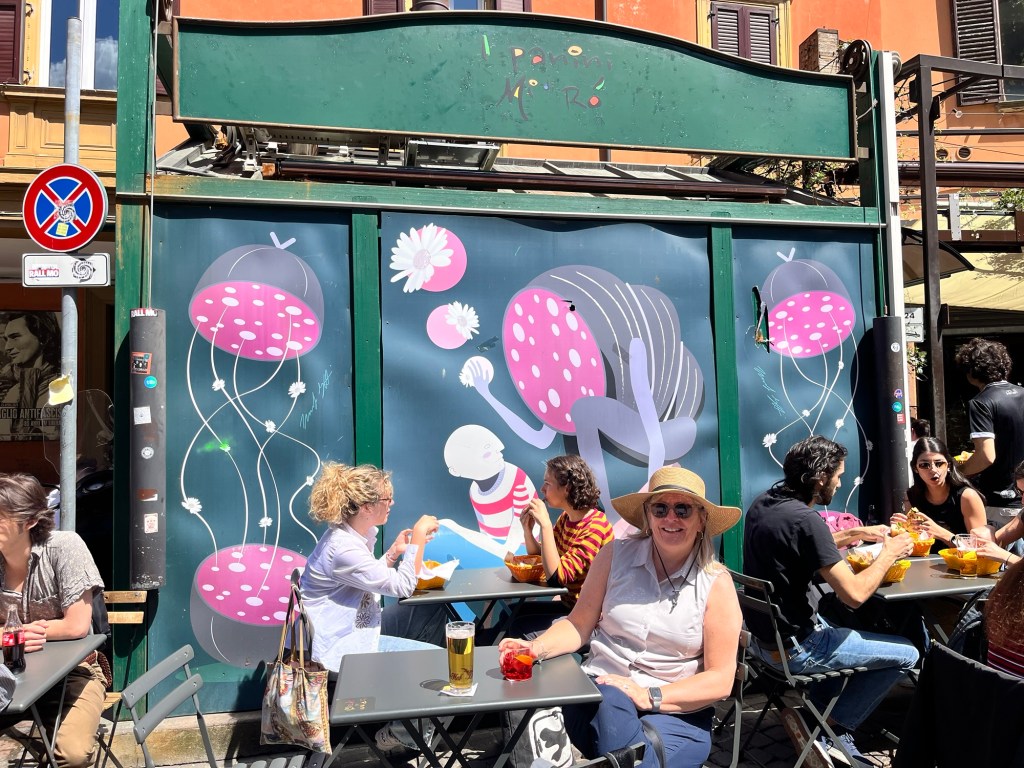
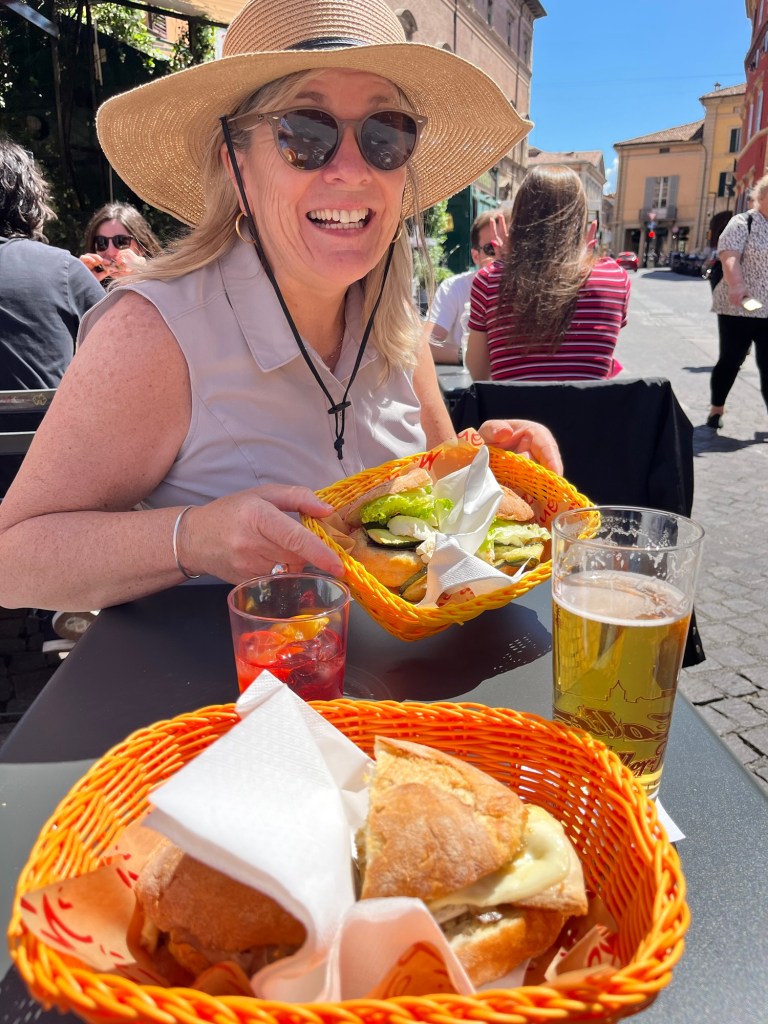
I Panini di Mirò is one of a series of street stalls in the piazza offering cheap and tasty food and drink. It has all the qualities I admire in a street food stop: fresh ingredients, quirky personality (you scribble your order out on pieces of notepaper), charismatic staff (lots of singing to music while cooking) and a great spot to sit and enjoy your food (checkmate in this case).
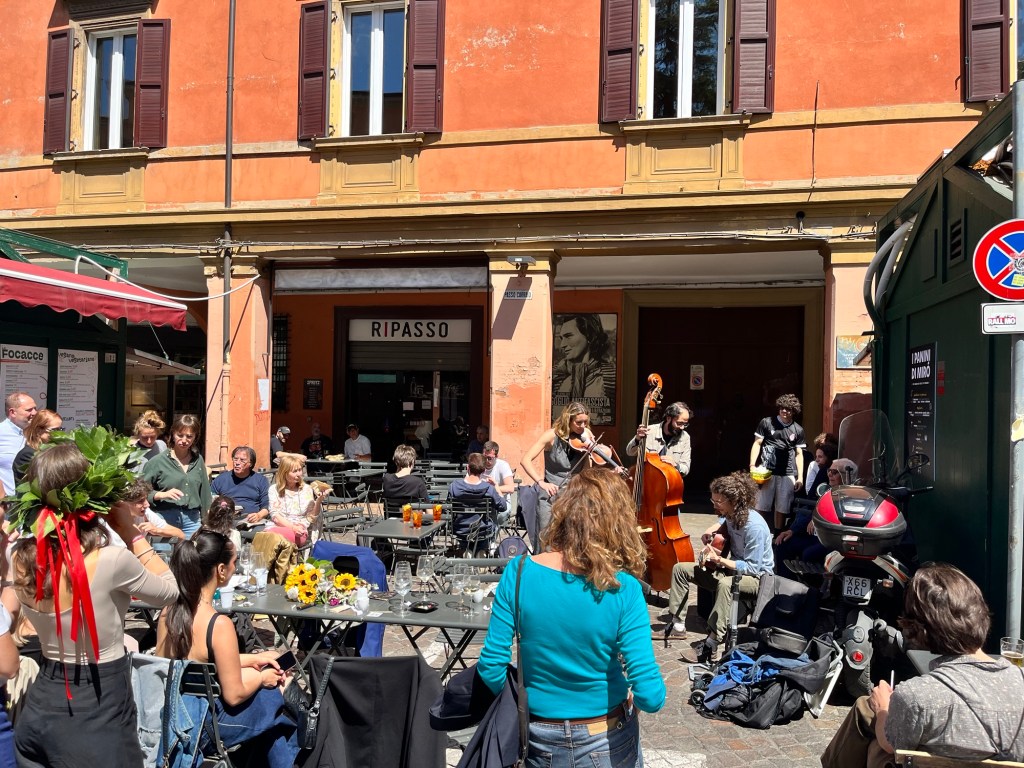
One of the wonderful graduation traditions in Italy is the wearing of a laurel crown and ribbon. As university students in Italy can retake exams until they are satisfied with the results, students are finishing up their graduation requirements at any given time. The tradition is to celebrate with friends in the streets, and we got to witness a lovely celebration outside I Panini di Mirò as a happy graduate and her friends and family were serenaded by a talented jazz trio to mark the occasion. It was a great afternoon. For the graduate and for us.

“La Grassa” (the fat)
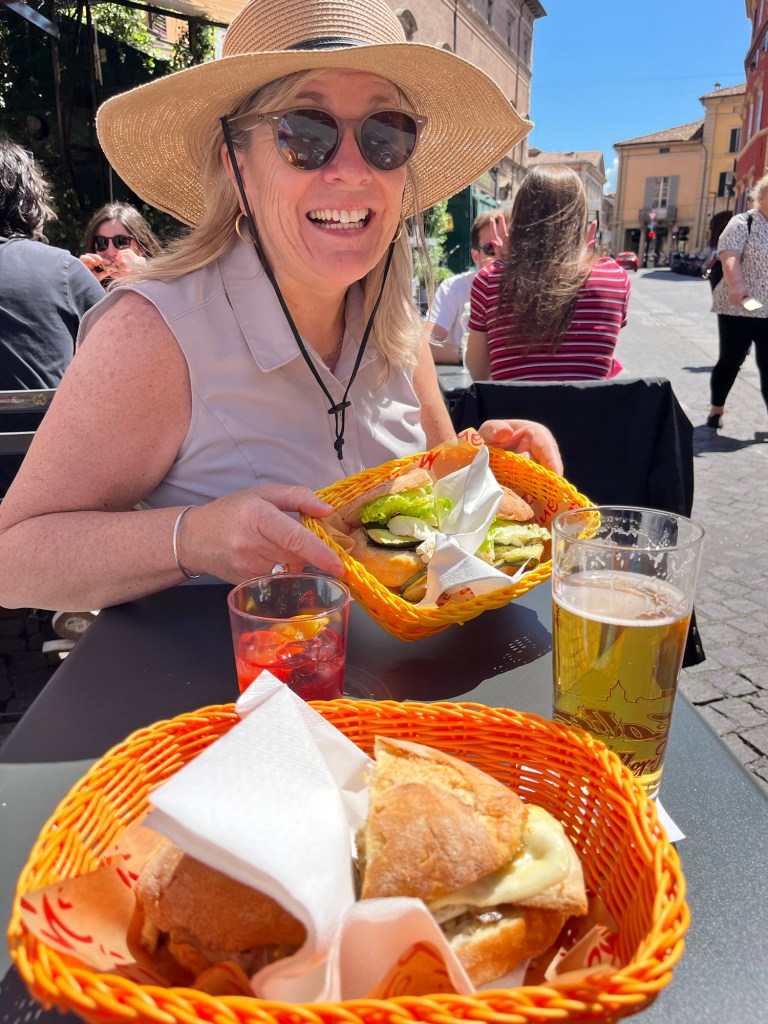
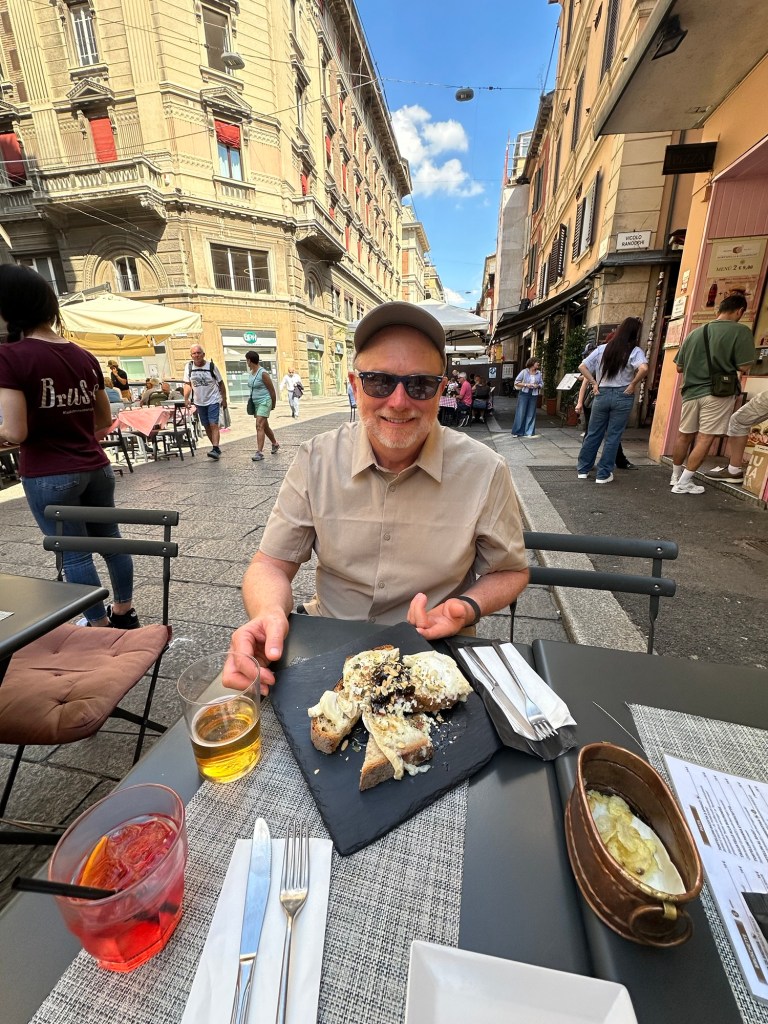
We’ve already touched on “La Grassa” with our visit to I Panini di Mirò: I had a fantastic porchetta sandwich with pecorino and Robin had a lame vegan substitute (it actually looked great!).
We actually started our visit to Bologna with a 3 hour food tour the day we arrived, a go to “hack” (as the kids say). It’s a great way to taste some great food, get oriented with the city, and to get some recommendations from the guide (Roberta, in this case, who was great) and the other guests on the tour (two Brits, two South Africans, one Turkish woman and three apologetic Americans from Houston (all lovely).
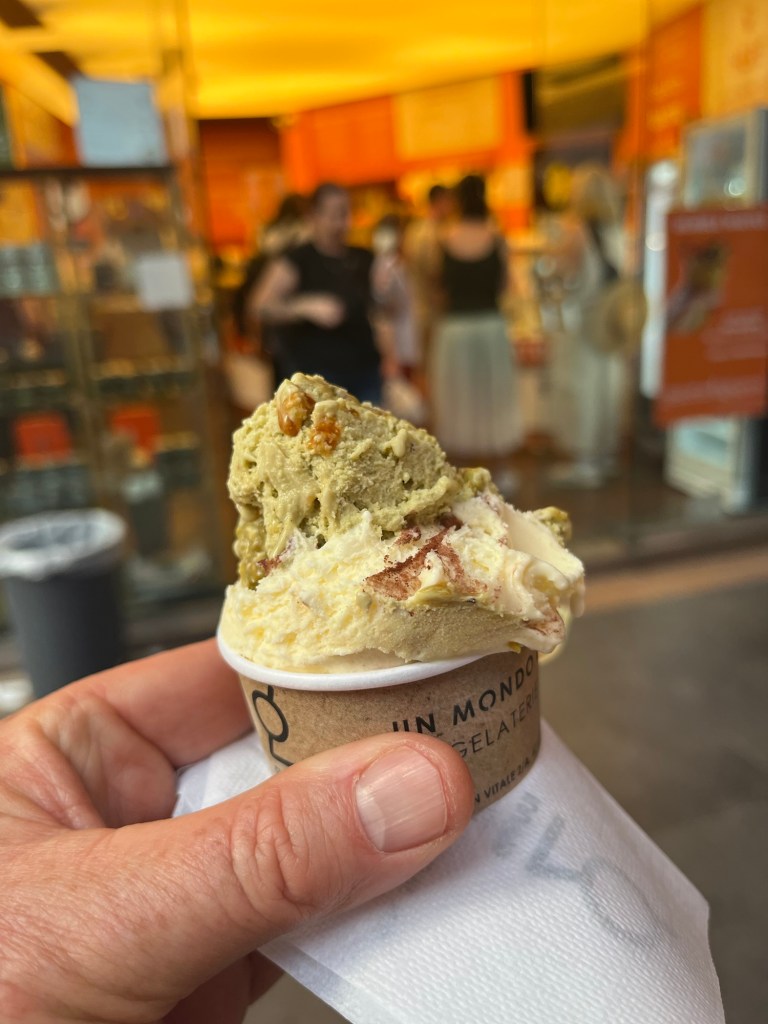
We had a great experience as we toured the old market district and ventured further out to the university district. We sampled lots of bread, cured meats (mortadella is the king of Bolognese meats), bread and pastas (tortellini and tagliatelle are the two famous Bolognese pastas) and finished the evening off with some gelato.

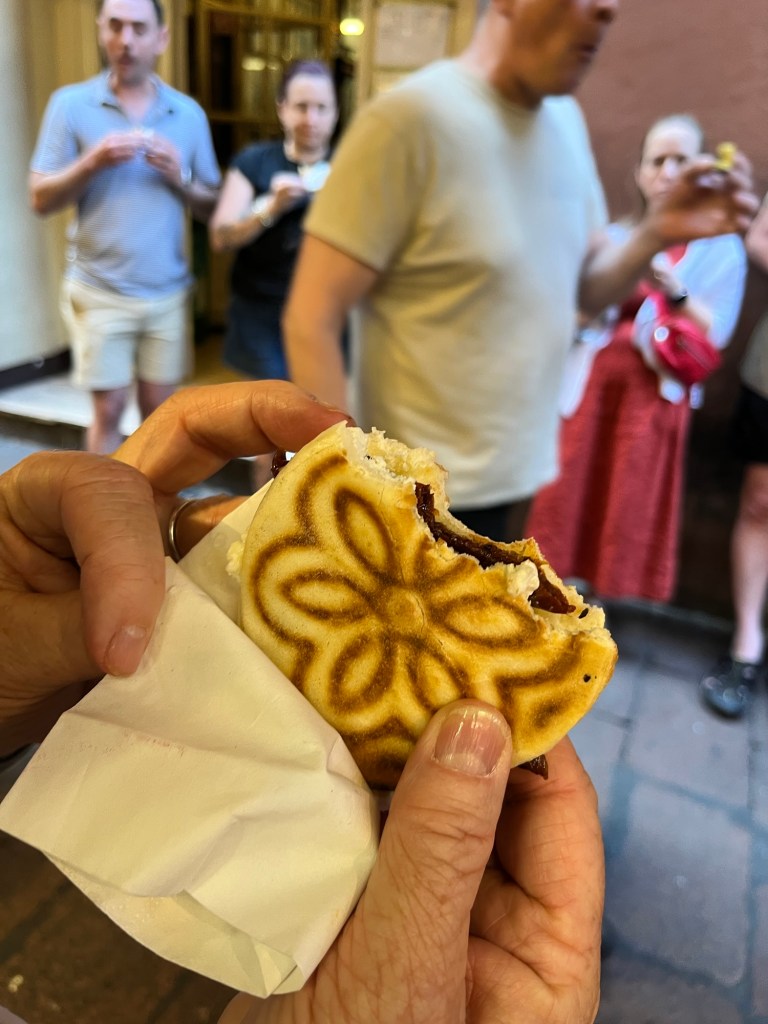

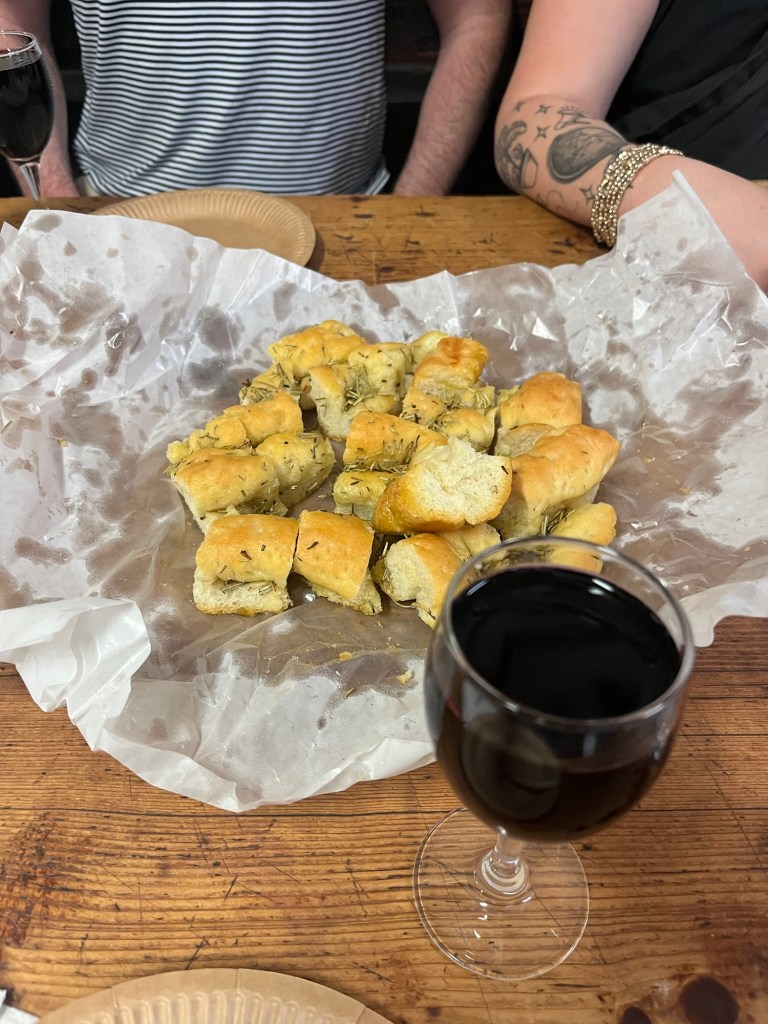
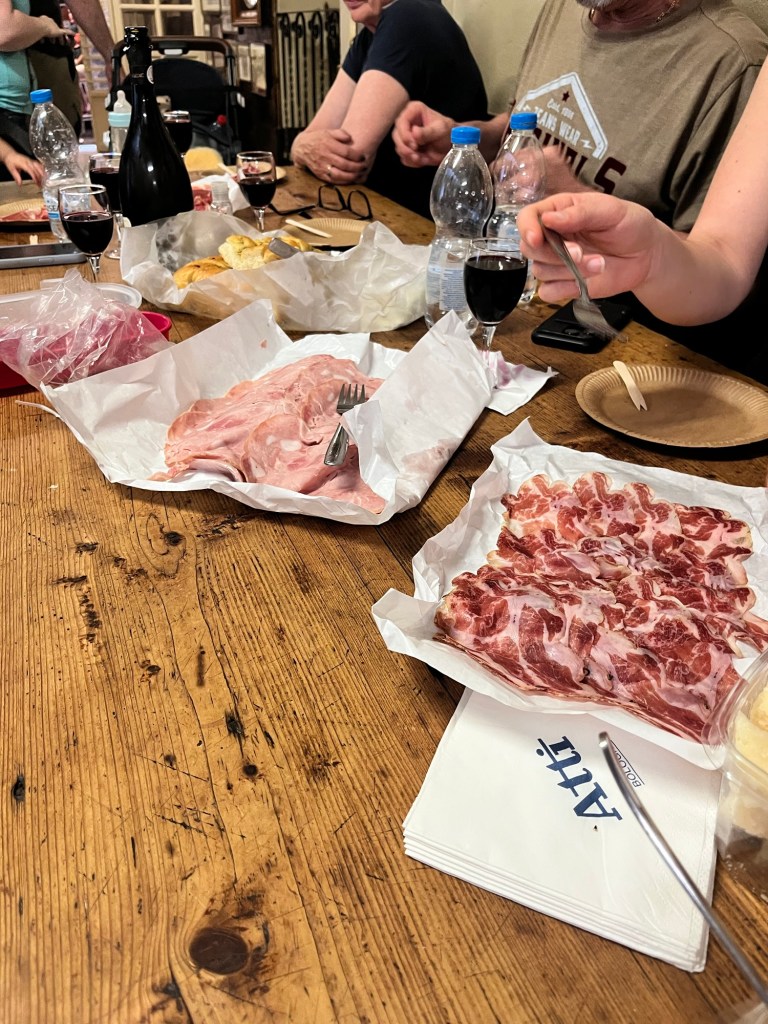
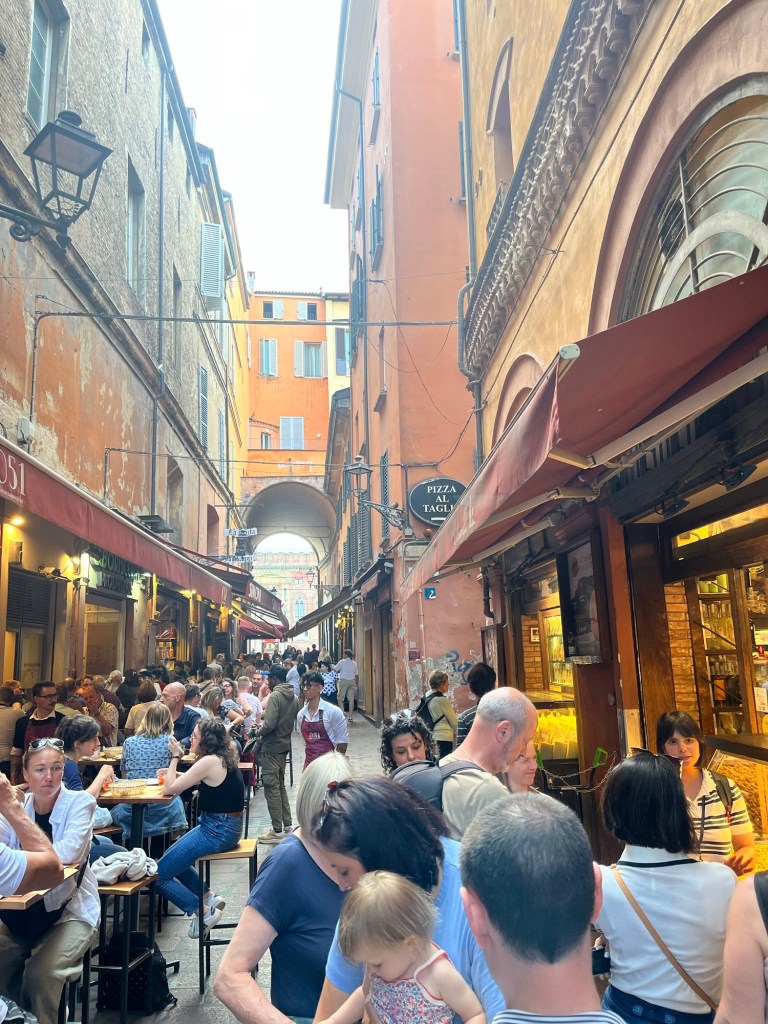
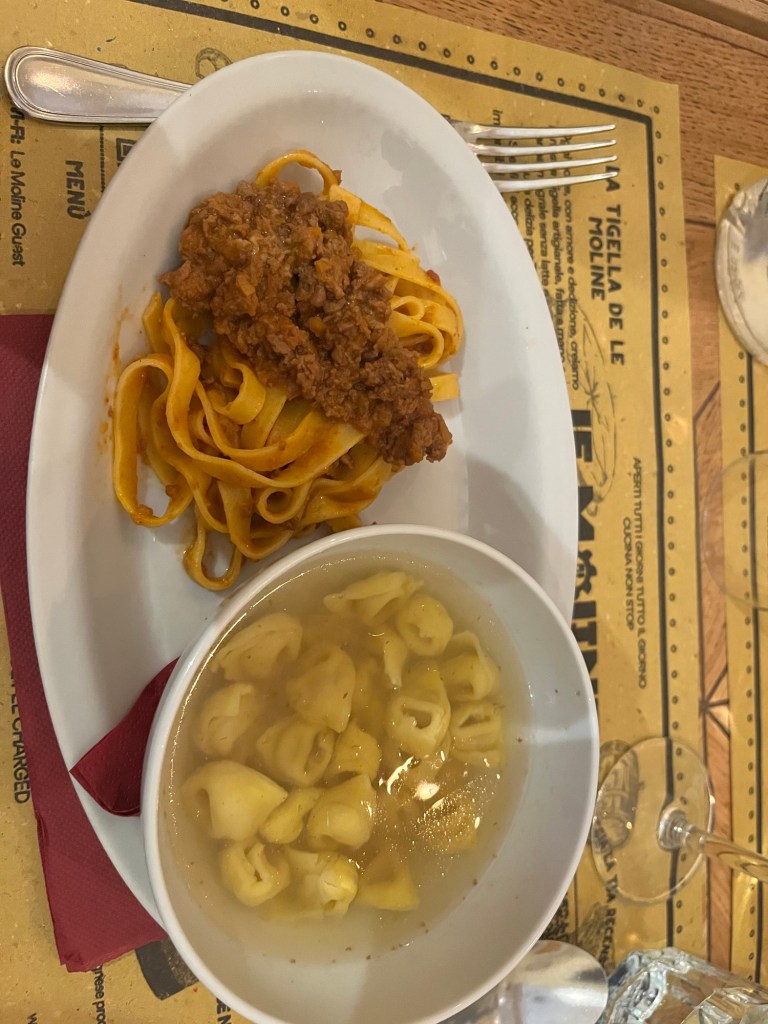
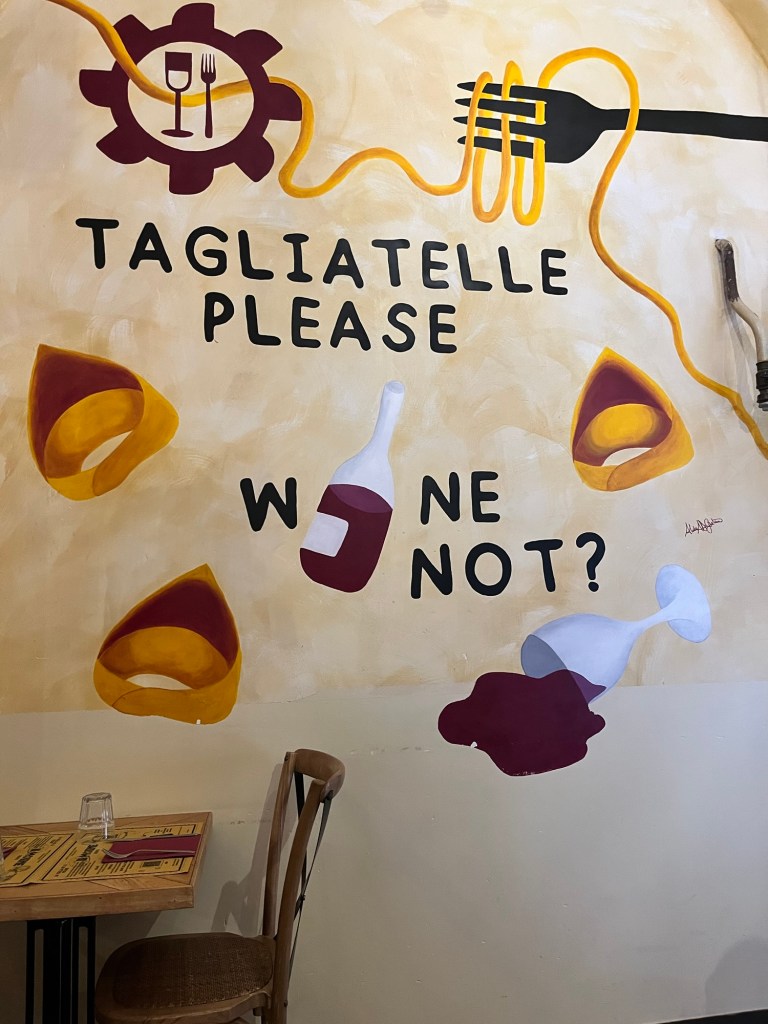
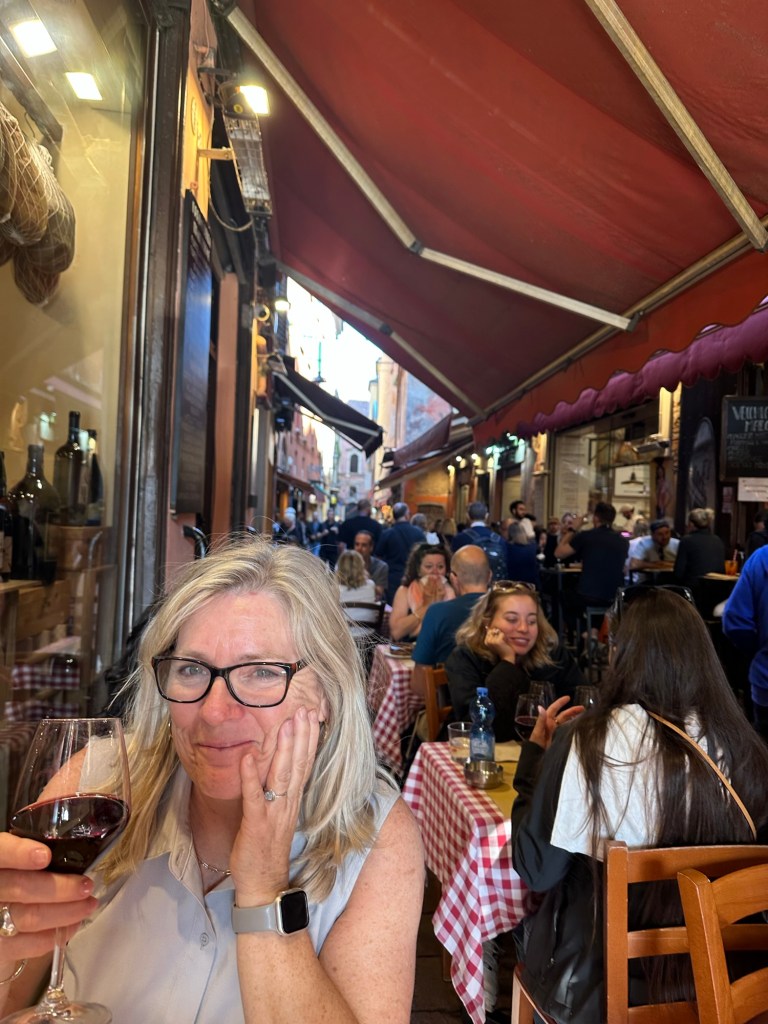
While there are lots of high end places to eat at in Bologna, you can do very well sticking with osterias. They all seem to have homemade pasta or sandwiches and a house “ragu”. We didn’t have a bad meal the entire time.
“La Rossa” (the red)
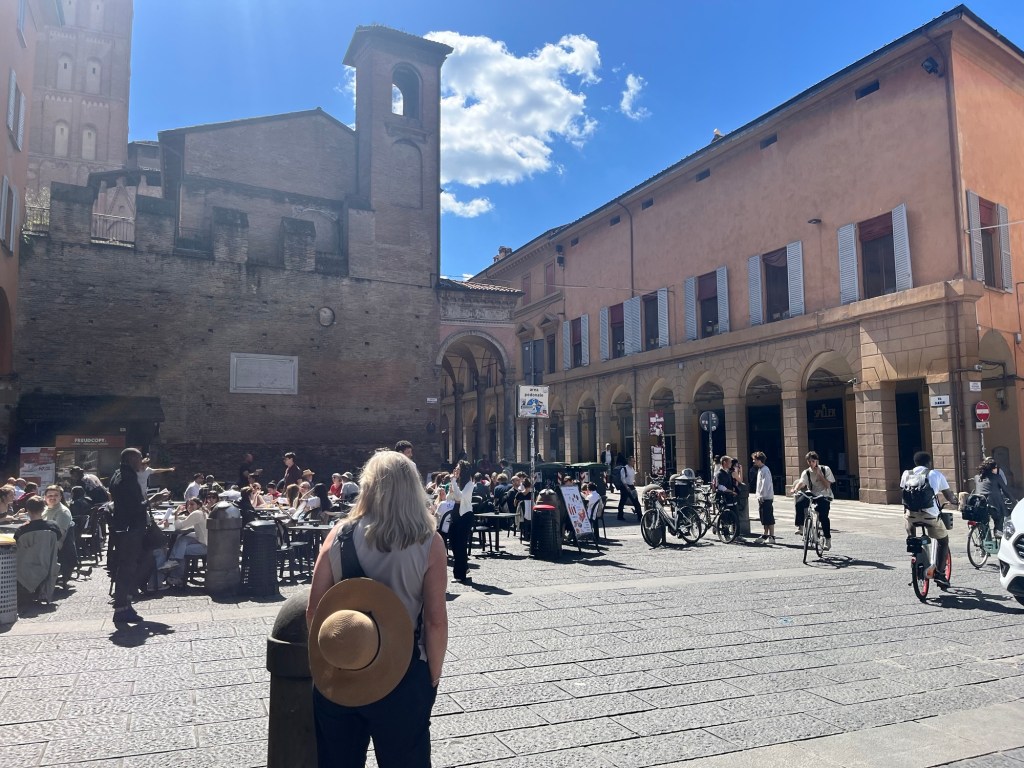
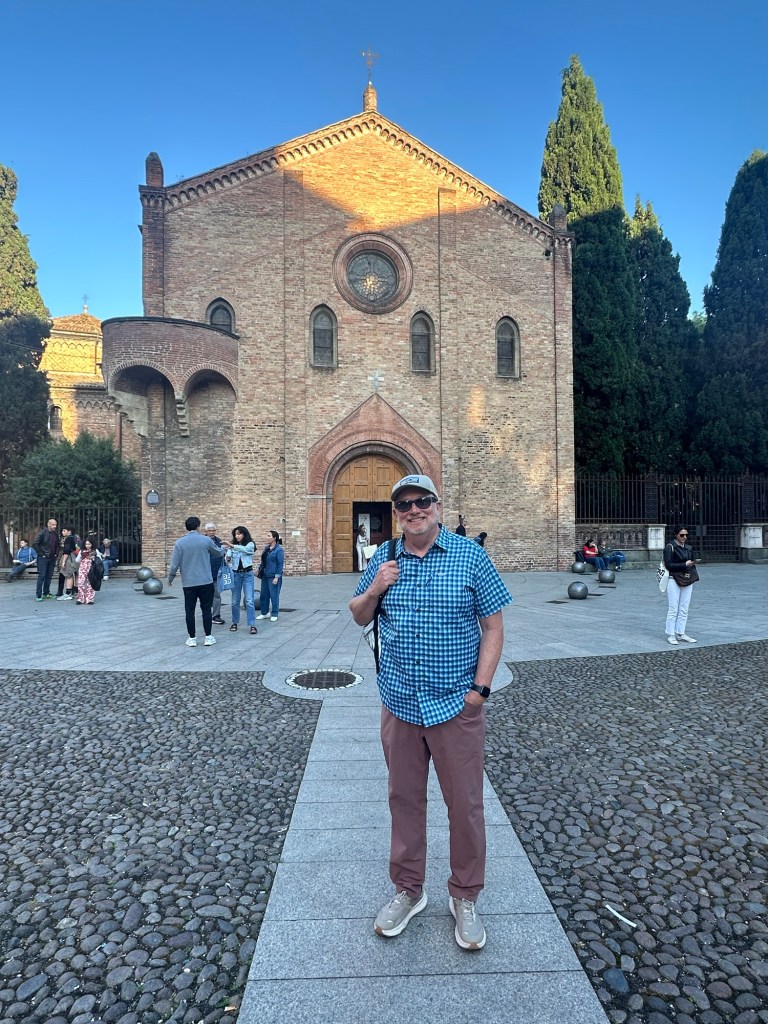
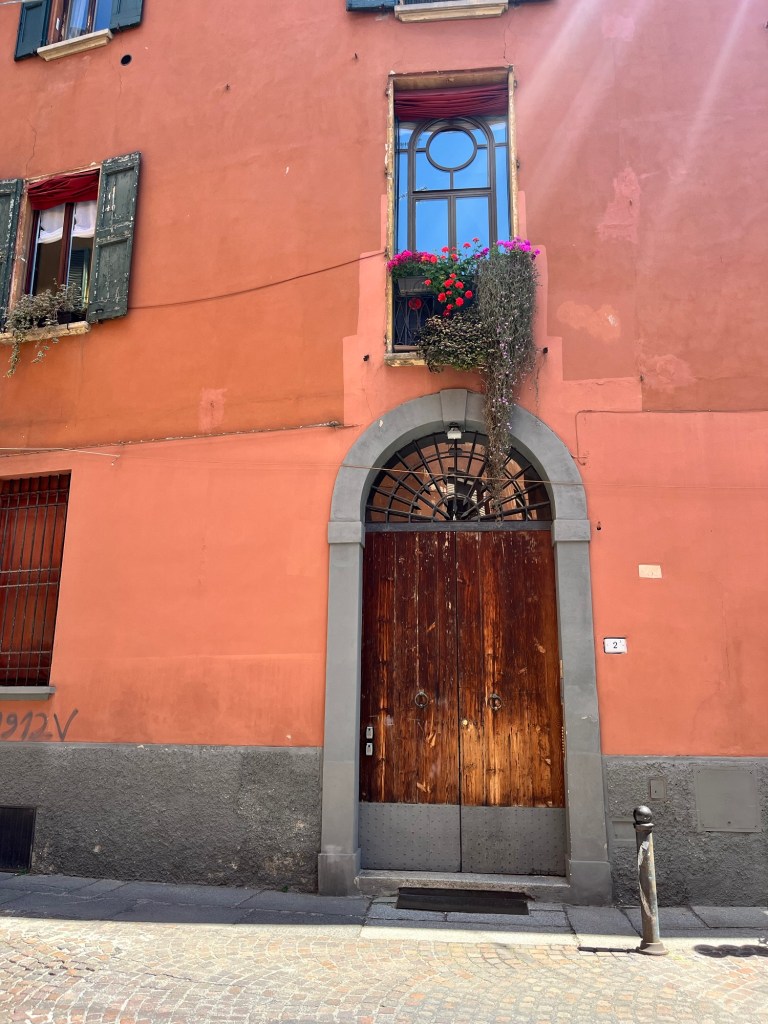
“La Rossa” doesn’t refer to an Italian sunburn but rather to the brick colour of the architecture. It’s a pretty spectacular city in many ways. A few highlights below:
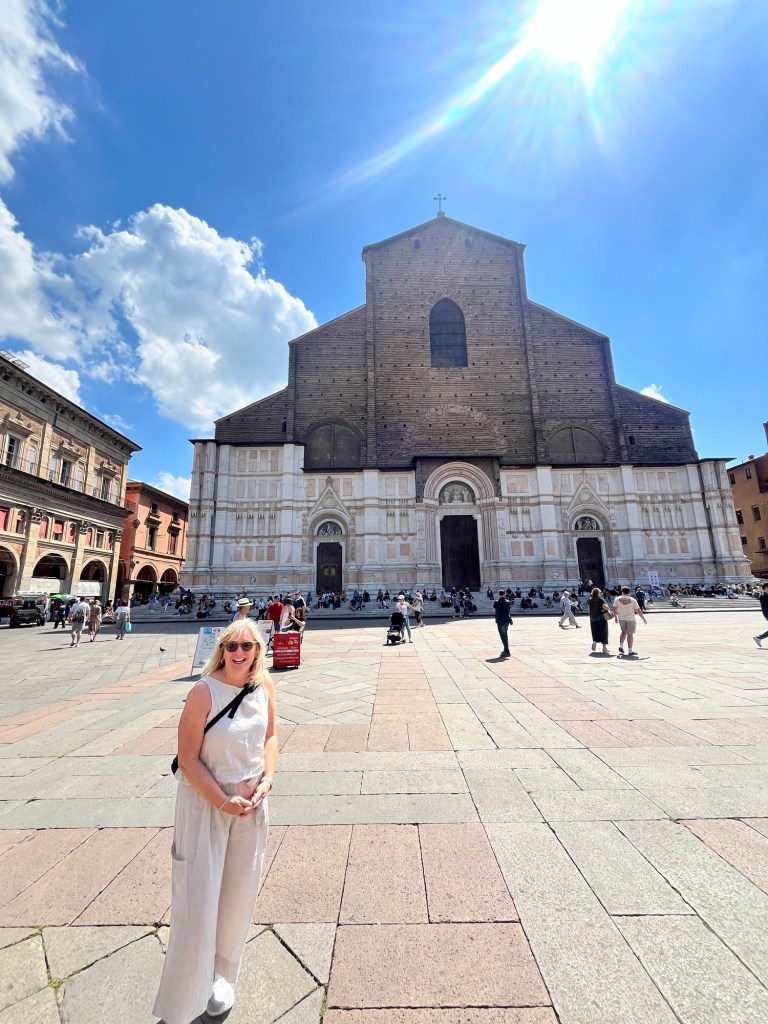
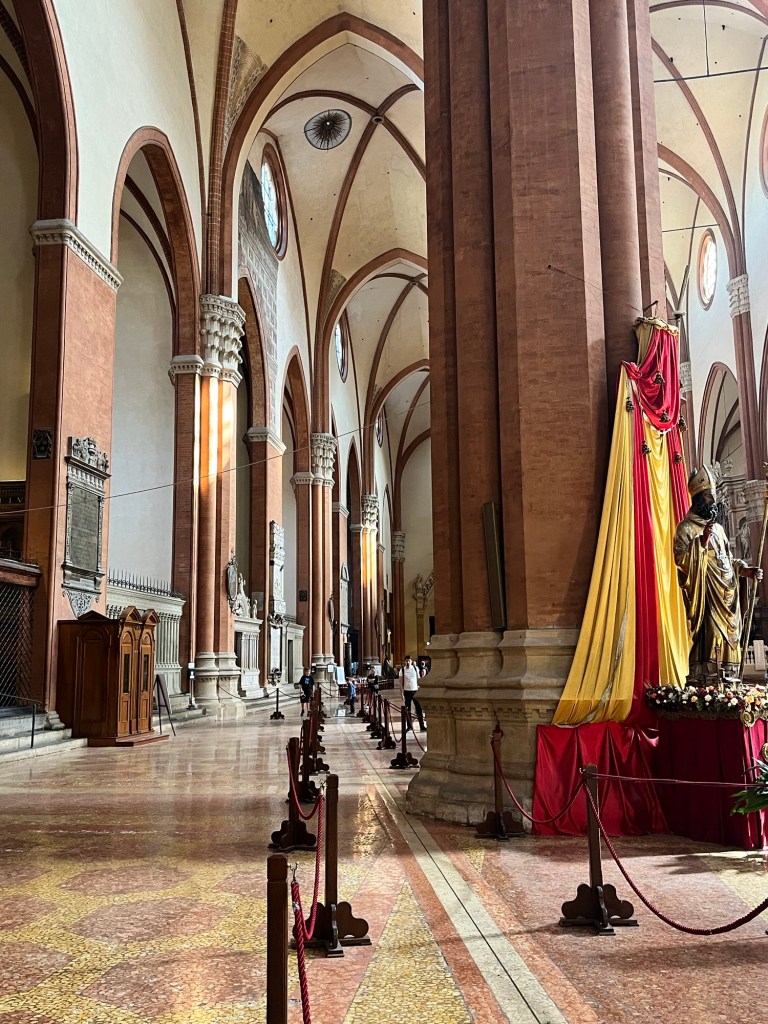
The Basilica of San Petronio in Piazza Maggiore is an incredibly impressive and massive structure. Although unfinished (check out the attempt below and covering the massive red brick exterior in marble) it still has an amazing presence, including the world’s largest interior meridian line or “sundial, a scientific detail that I’ve never seen in any other cathedral.



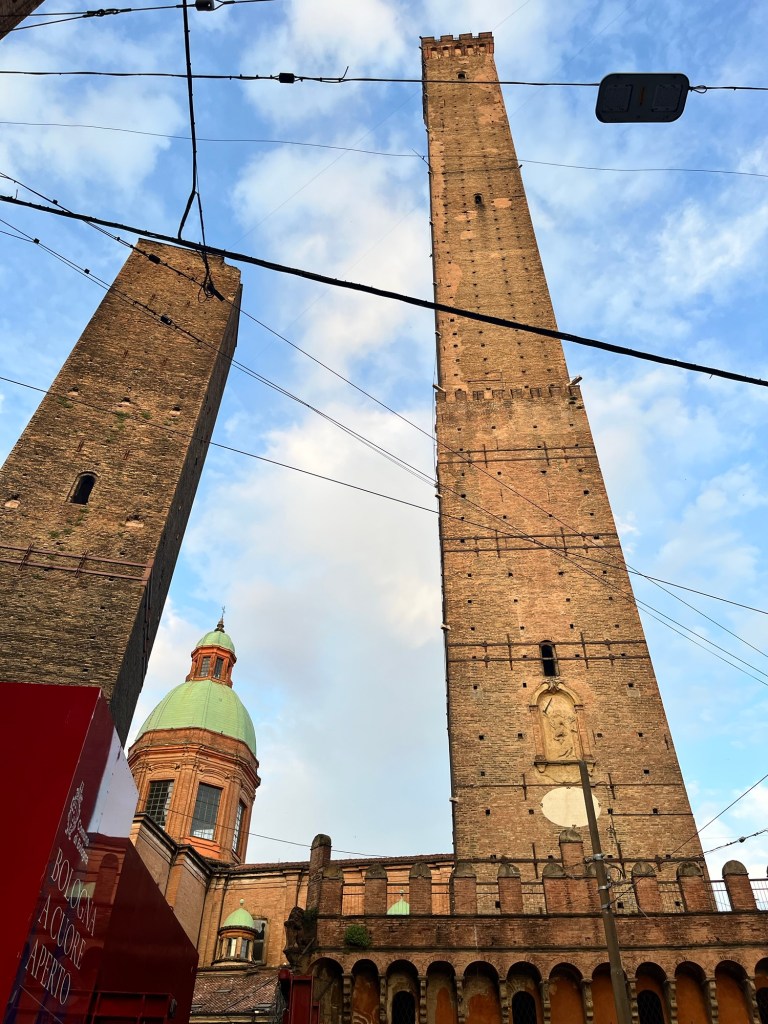
The towers of Bologna are its most famous landmarks and again feature red brick. They also feature an alarming lean in many cases, putting that “try-hard” tower of Pisa to shame for degree of difficulty and danger.

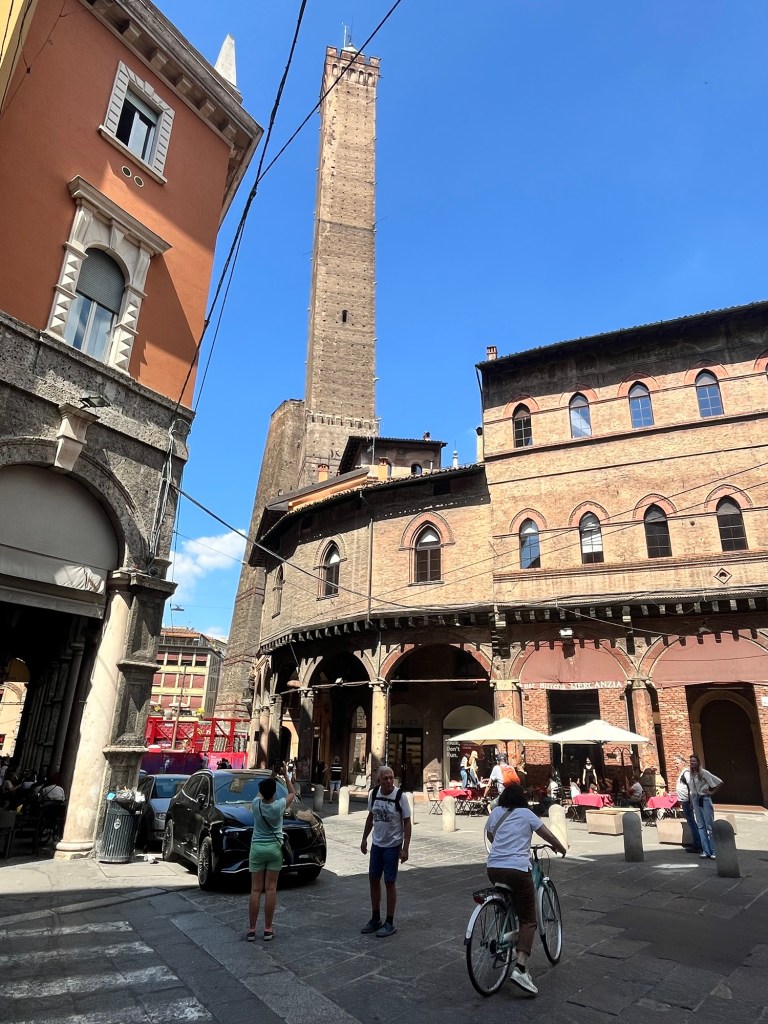
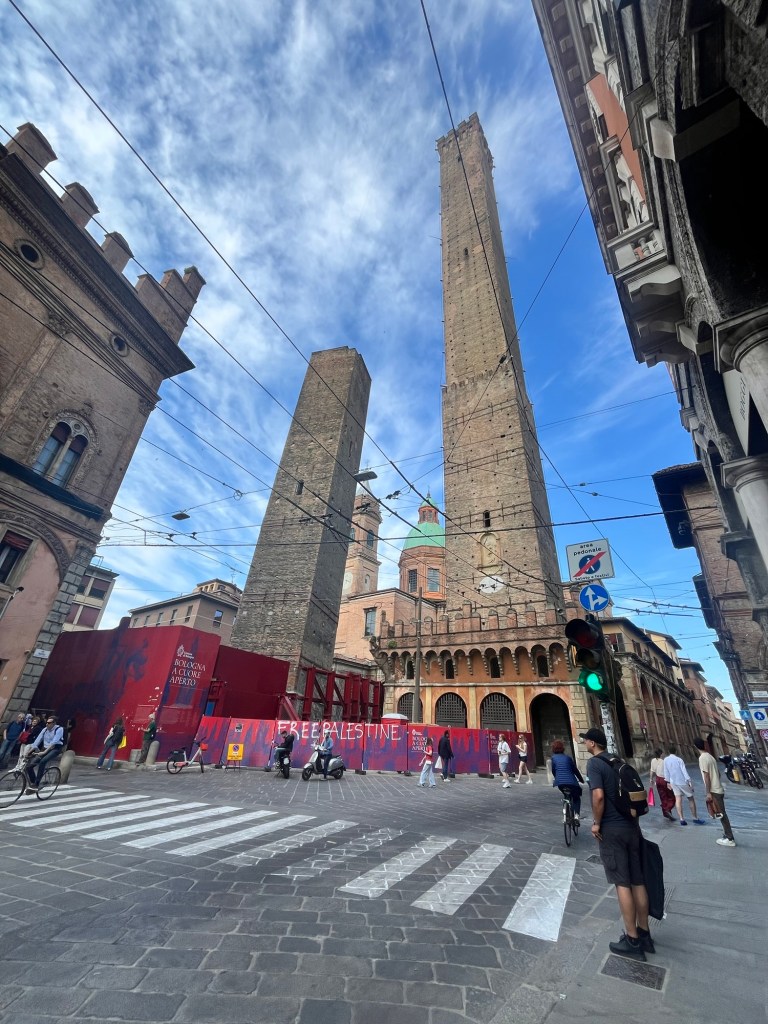
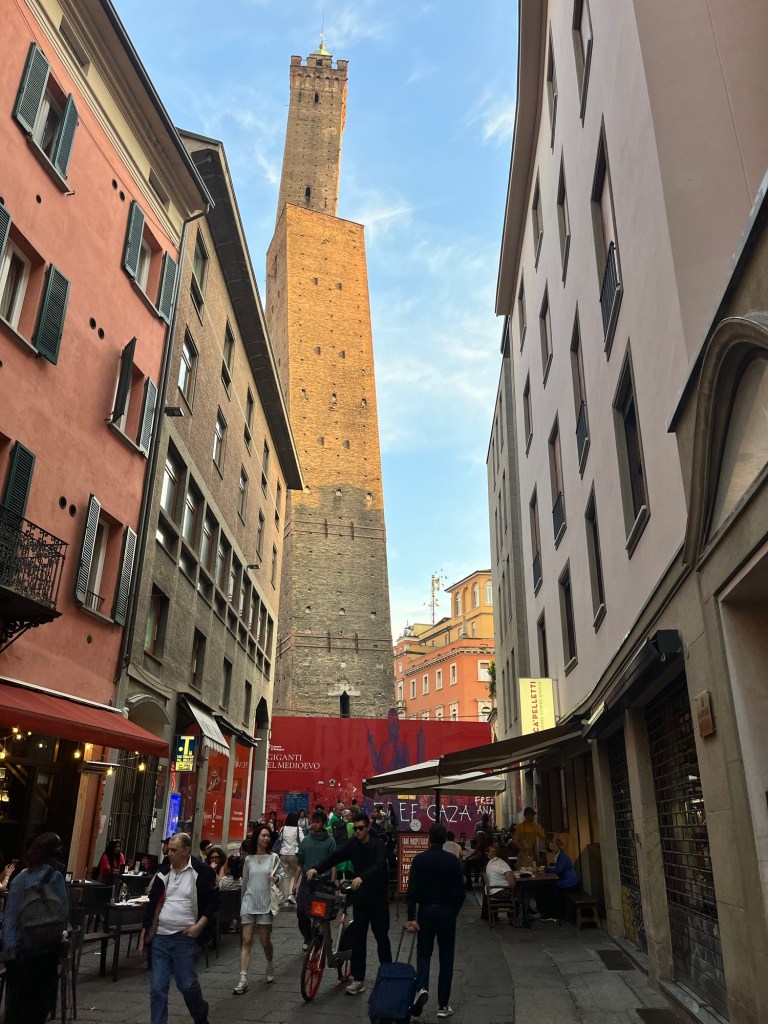
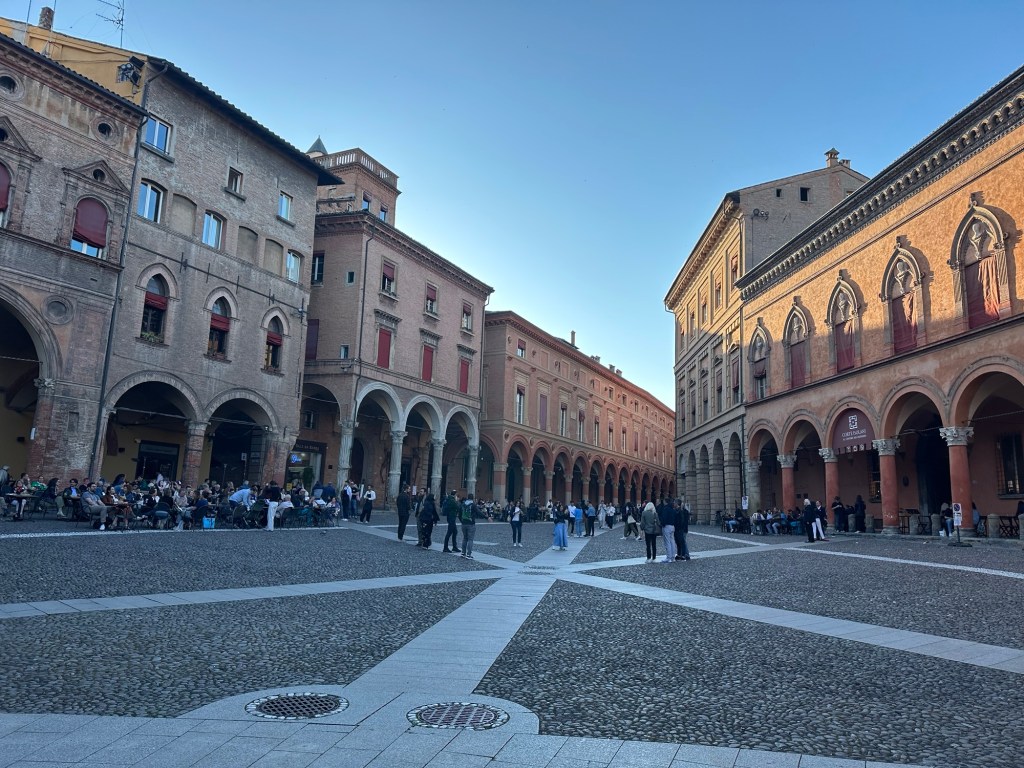
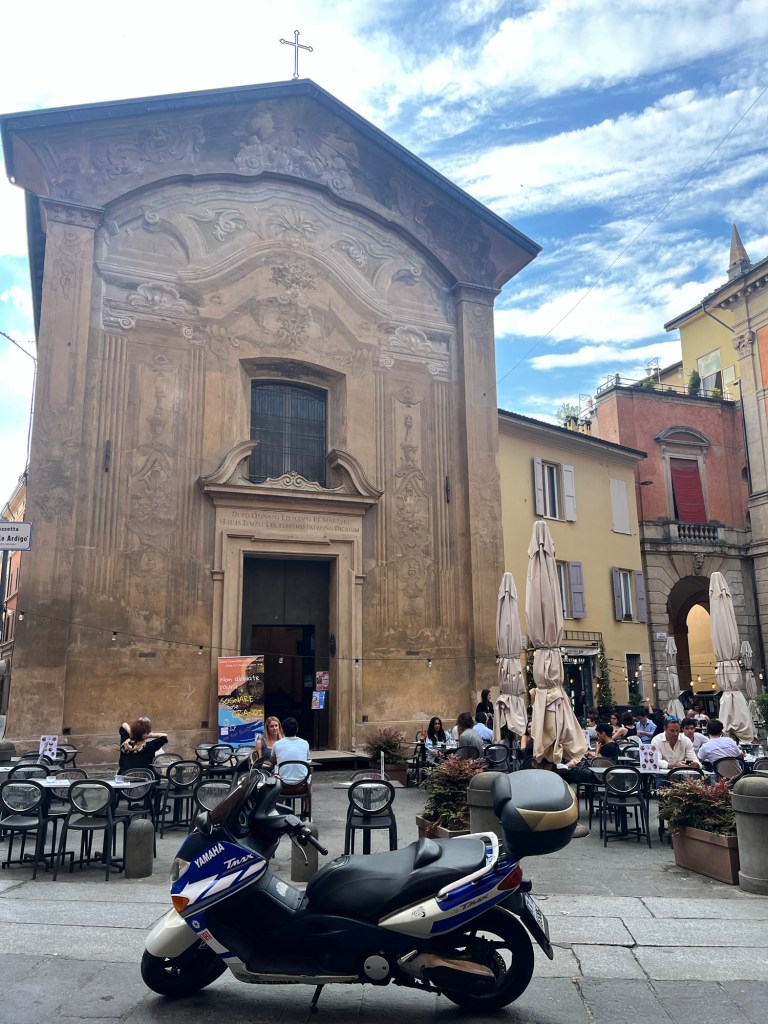
The piazzas of Bologna feature incredible public spaces.
Piazza Maggiore
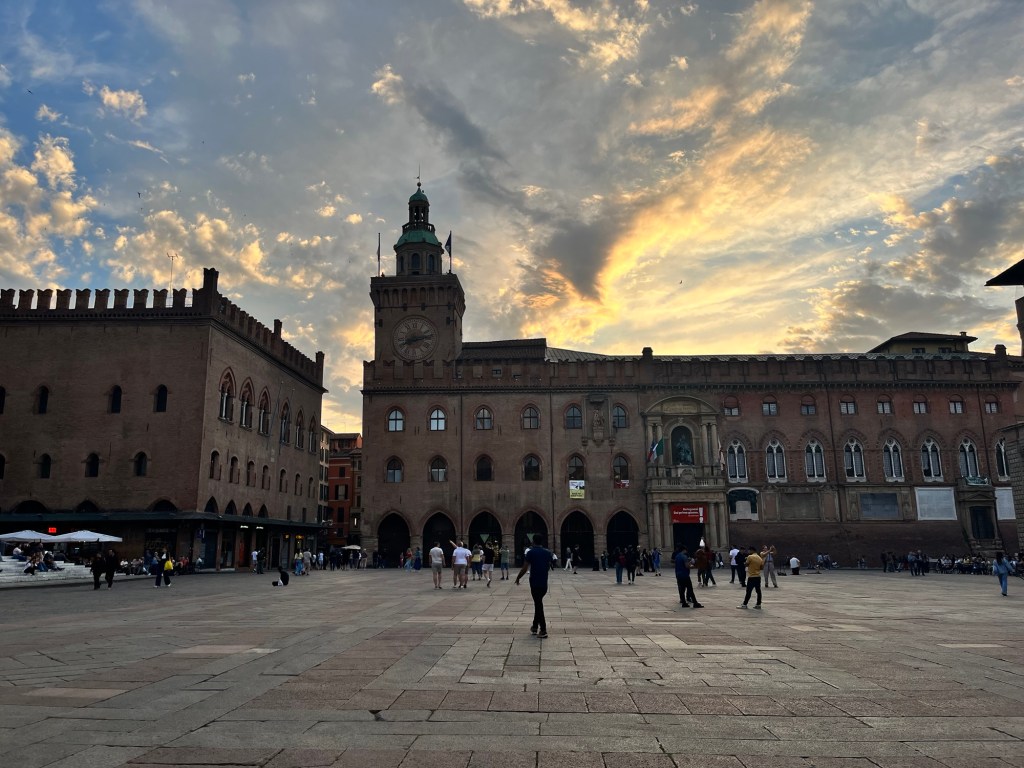
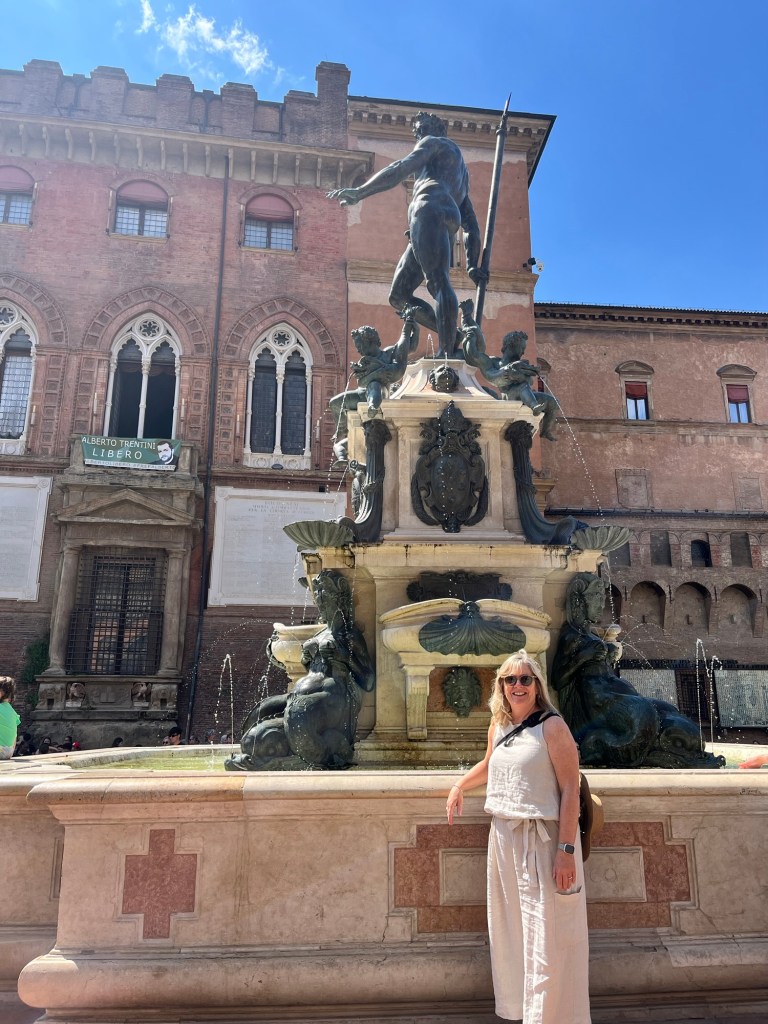
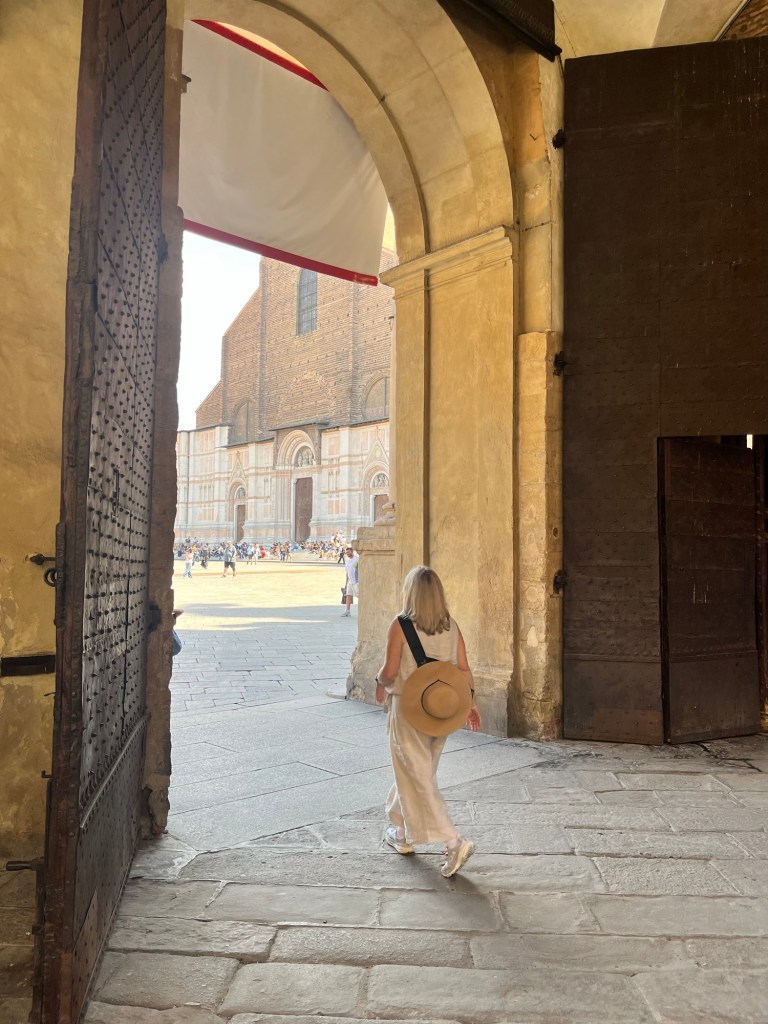
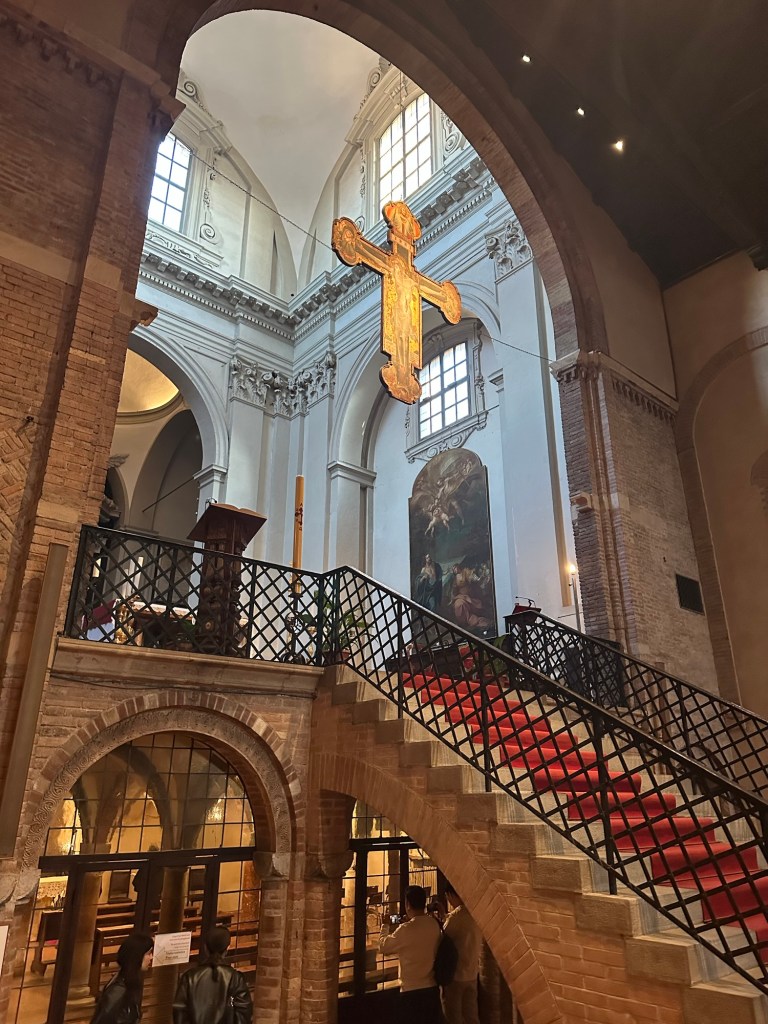
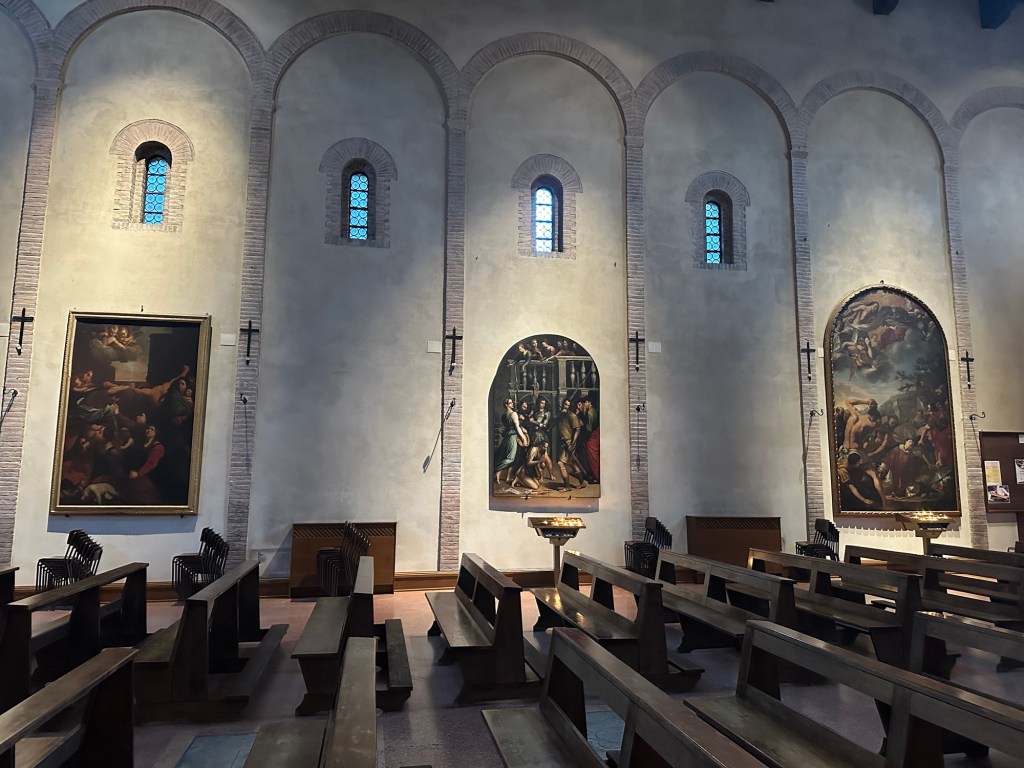
Santo Stefano Square (and basilica)
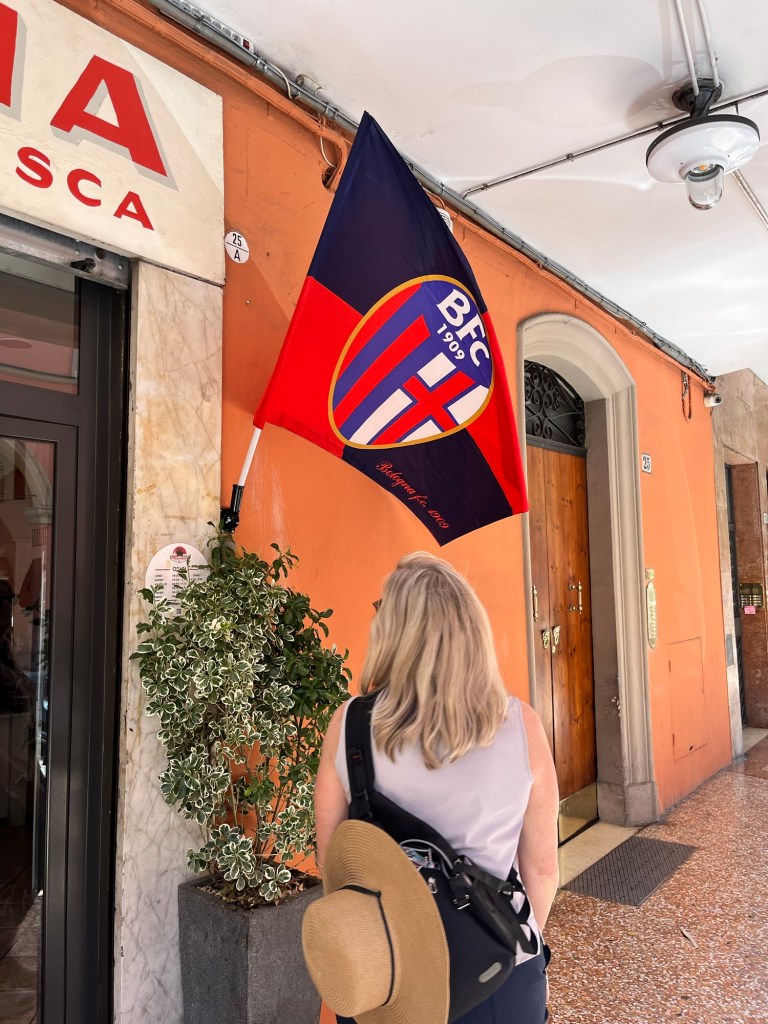
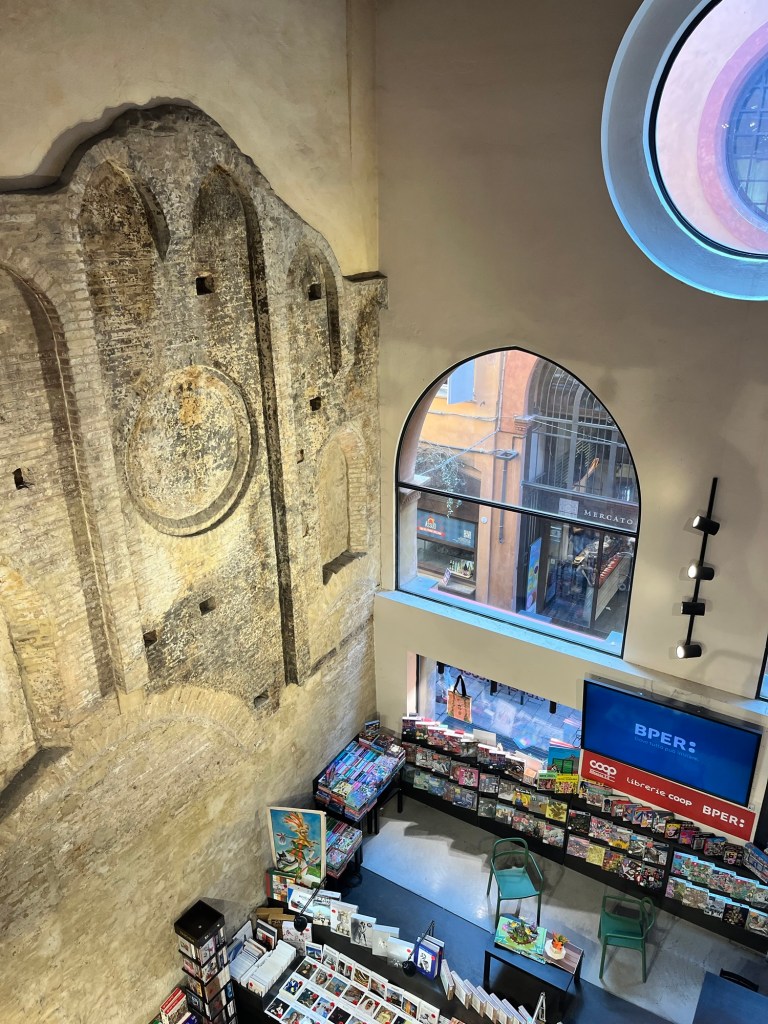
But some of the most beautiful spots can be found in the streets and lane ways of this wonderful city.

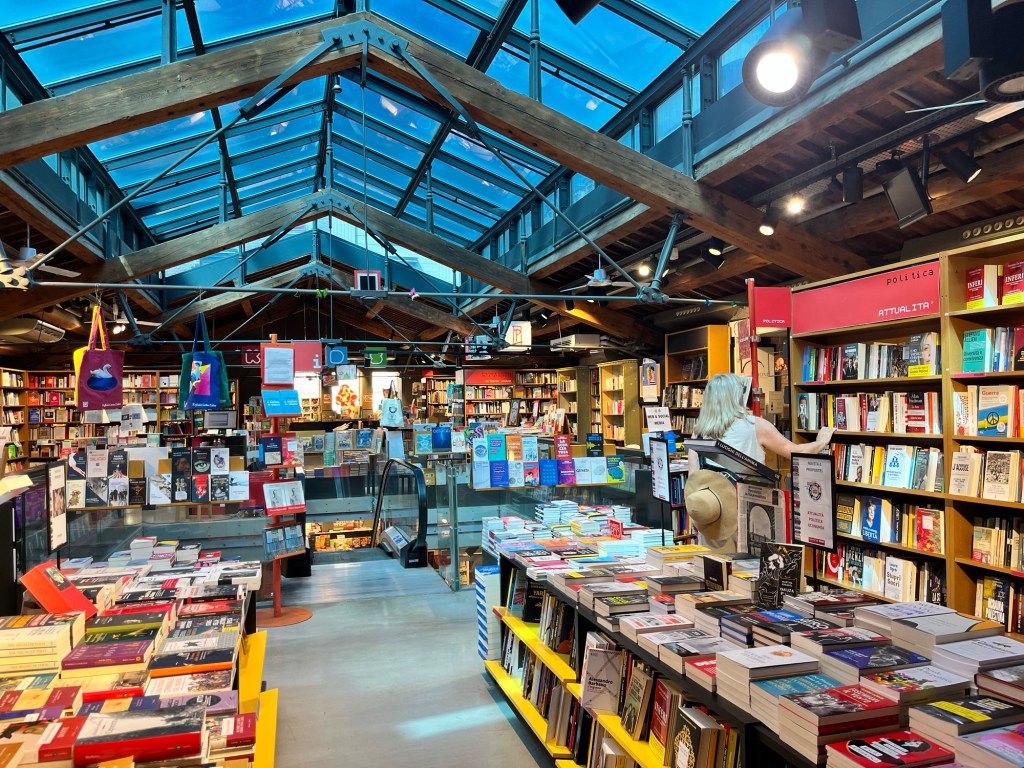
Although Bologna is not on a lot of typical tourist itineraries for Italy it certainly deserves to be. We were charmed by this gritty and personable city, and would love to make a return visit.
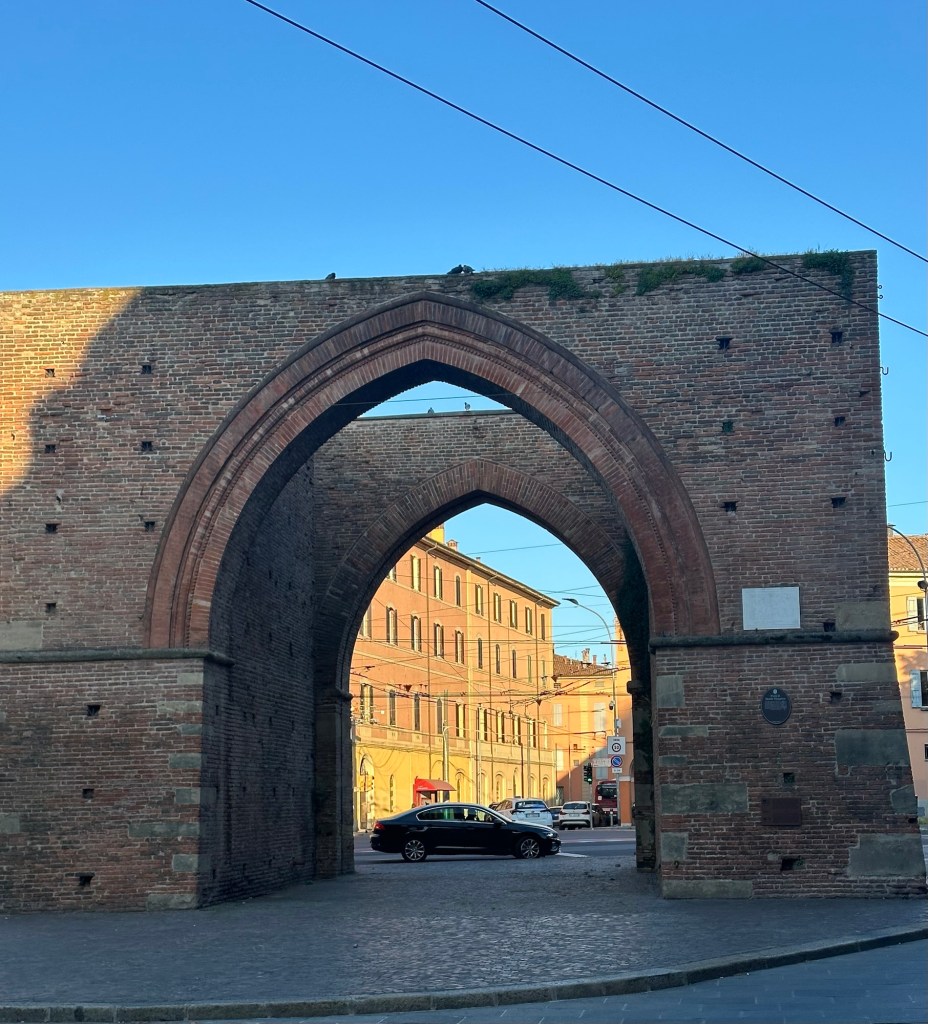
Tomorrow we start the reunion portion of our trip to Italy as we pick up Lisa and Pete in Florence and meet up with Anne and Scot in The Cinque Terre. We can’t wait.


 MacsTravel Blog
Leave a comment