While much of this trip to Spain was to be dedicated to relaxing on the Costa del Sol, we did want to explore a few places that we had missed during last year’s visit to Andalucia. High on that list was the city of Cordoba.
Cordoba’s roots in Roman and Moorish history are as deep as any city in Spain, but for reasons of size and geography it is often designated as a “day trip” for travellers who are prioritizing time in Madrid, Sevilla, Granada and the Costa del Sol. The incredible Mezquita is the “must do” stop, but, as we discovered, there is much more to this city than that one line on the checklist.

We had decided to spend two nights and three full days in Cordoba, and had arranged to stay at Hotel Selu, a recently modernized hotel right on the edge of the historic centre. The roads in Cordoba are not busy, so to make up for that they introduced a complex system of one way streets and roundabouts. The hotel thoughtfully provided parking, which is code for a car closet in a tiny underground lot accessed through a metal gate that was flush against the narrow one way street (maybe 10 feet across?), nestled into a hairpin turn. Fortunately I had figured out how to put the car in reverse, and, even more fortunately, we didn’t have to take the car out again for the duration of our stay.
Cordoba is a very walkable city. After checking in we decided to explore the area to the north east of the hotel before heading to a local wine shop for a tasting event that we had signed up for. While still full of imposing churches this area of the city is more modern, featuring wider streets lined with pleasant, art deco styled buildings with attractive wrought iron work framing windows and the street lights.

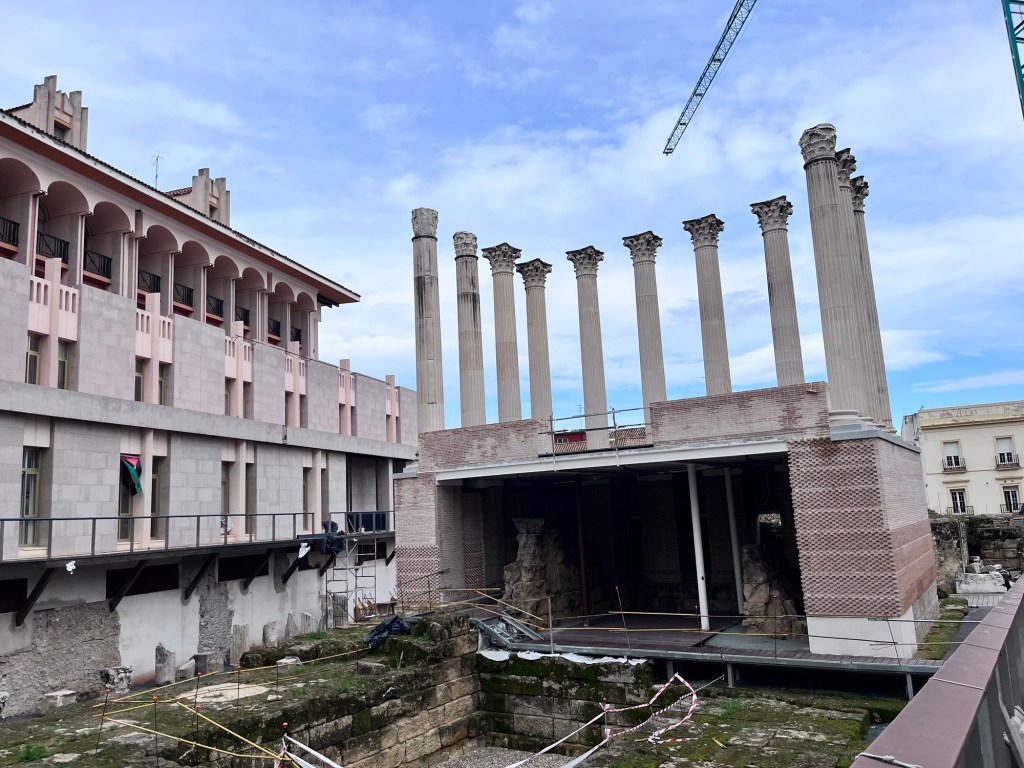
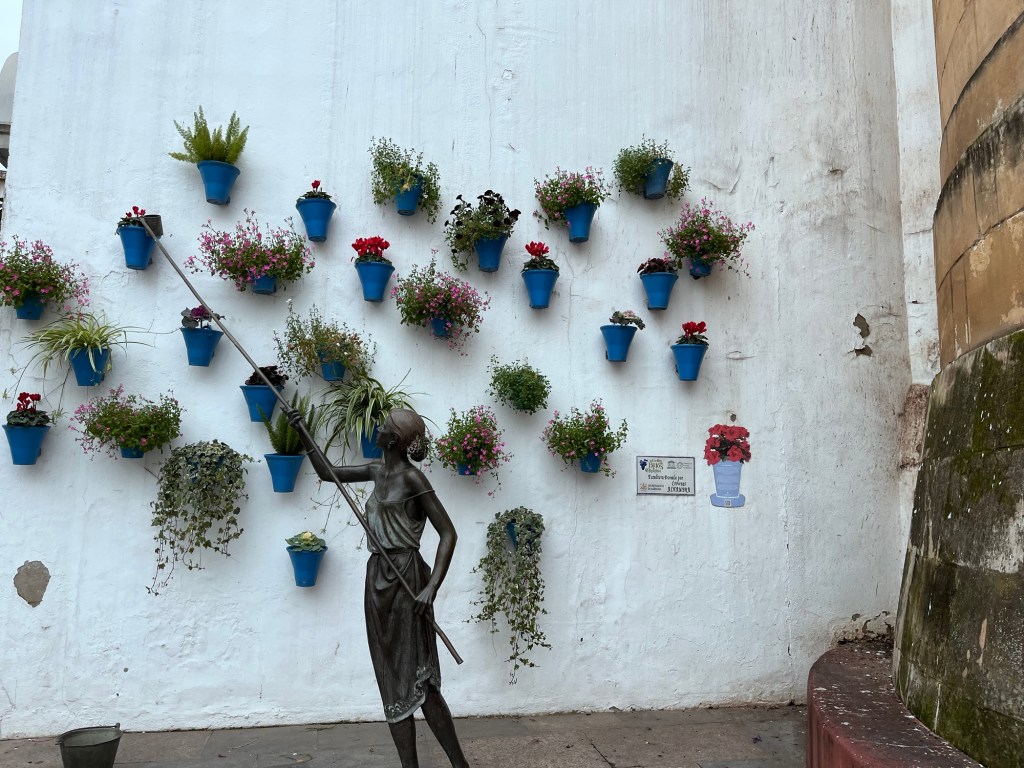
Still, even here you stumble across, Roman ruins, ancient city walls and playful street art.

All roads here seem to find their way back to Plaza de las Tendillas, a wide open square with lovely fountains and outdoor restaurant seating lining the side streets.

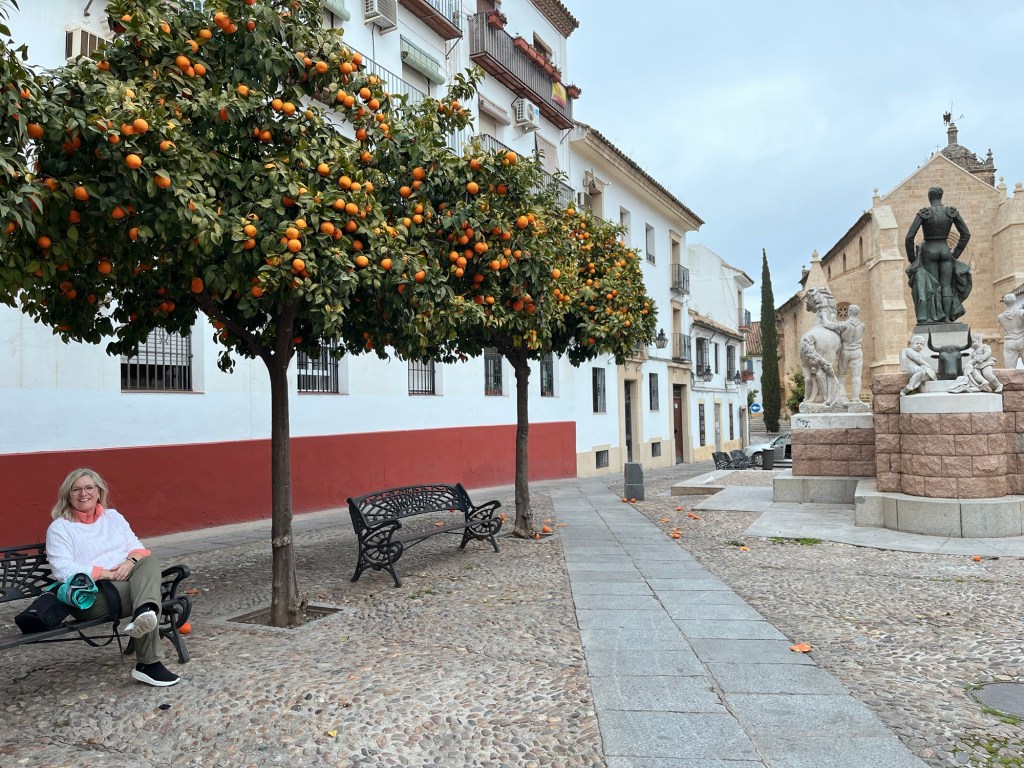
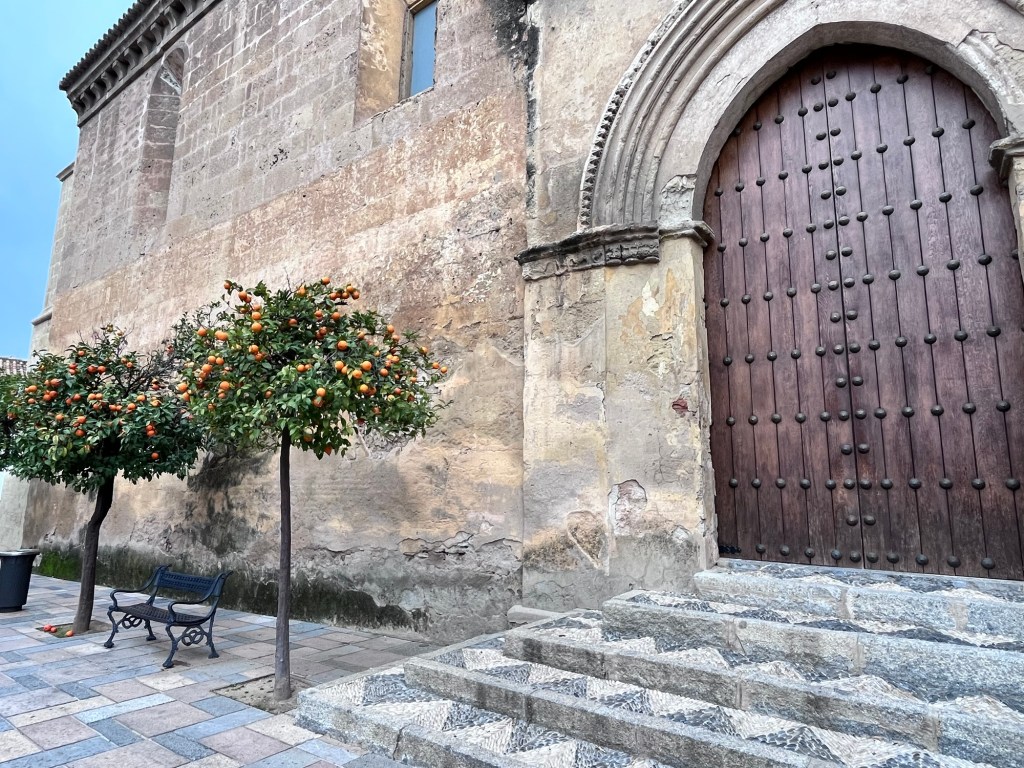
We eventually found ourselves in the warren of streets by the Church of Santa Marina, a beautiful area that is not on the typical tourist route. The smell of oranges fills the air.
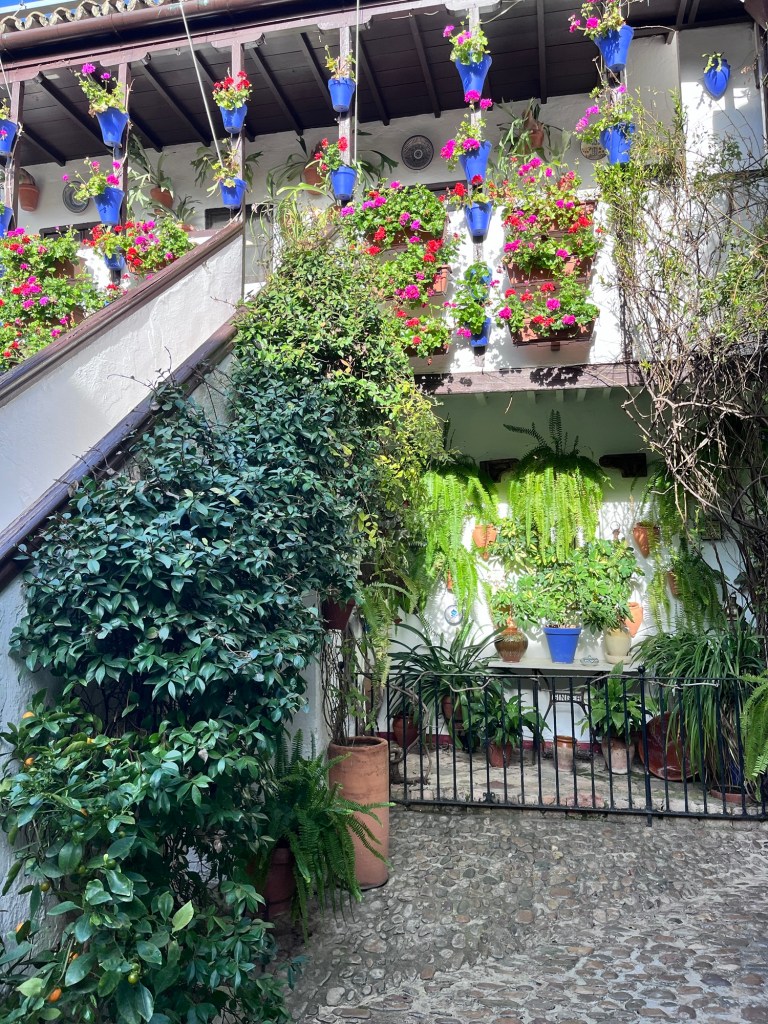
We found the Palacio de Viana, a 500 year old estate that is now a museum. As we would discover throughout our visit here, the architectural aesthetic is very much about the interior, not the exterior. Palacio de Viana provides a glimpse into the “inner” life of “patios”, those interior courtyards in the Roman and Moorish tradition that create a cooling, private oasis to help the citizens of this place combat the oppressive summer heat. While these are featured throughout Andalucia, Cordobés treat patios very seriously to the point of having a yearly competition (the Concurso Popular de Patios Cordobeses) to determine which are the most beautiful.
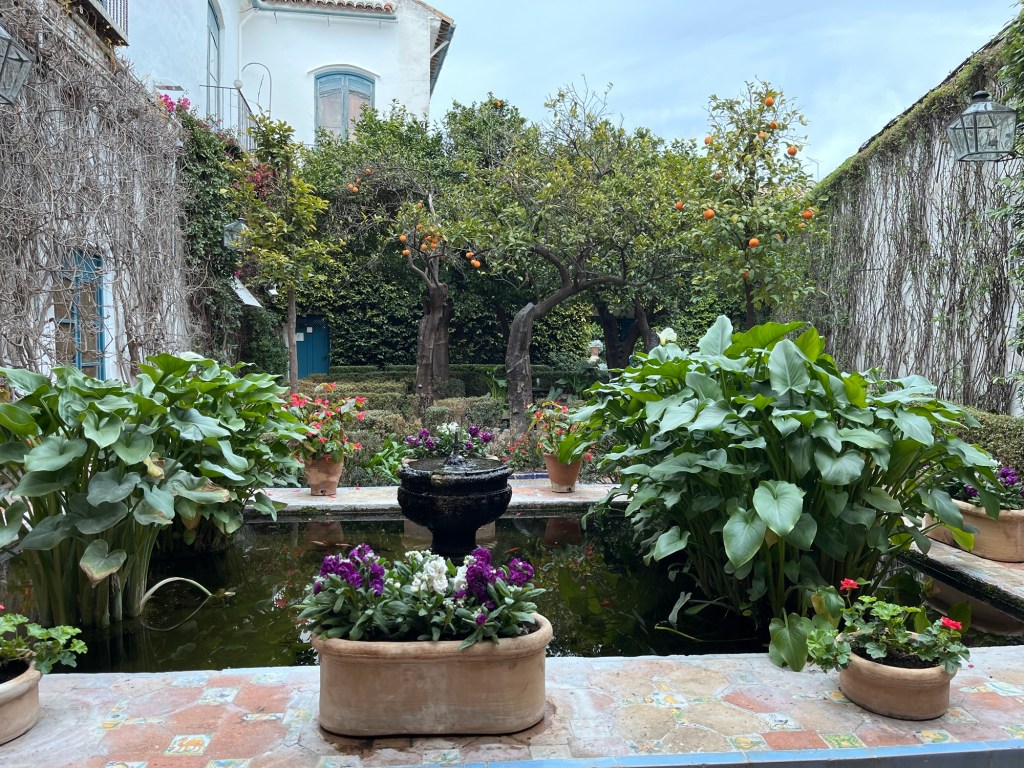
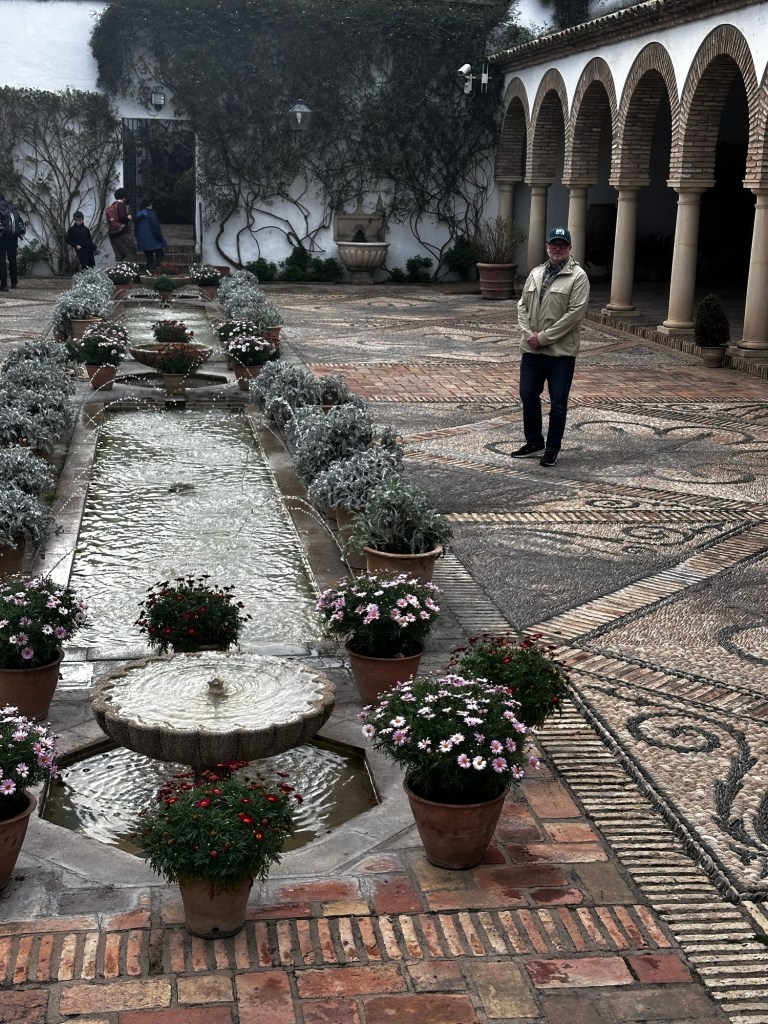
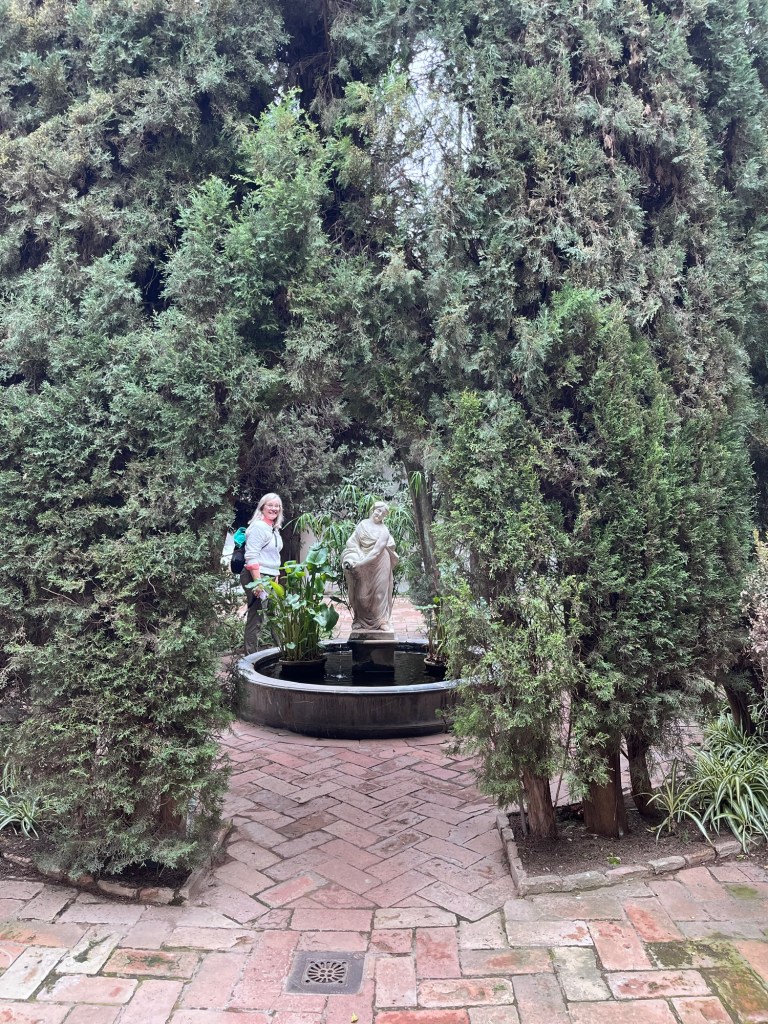
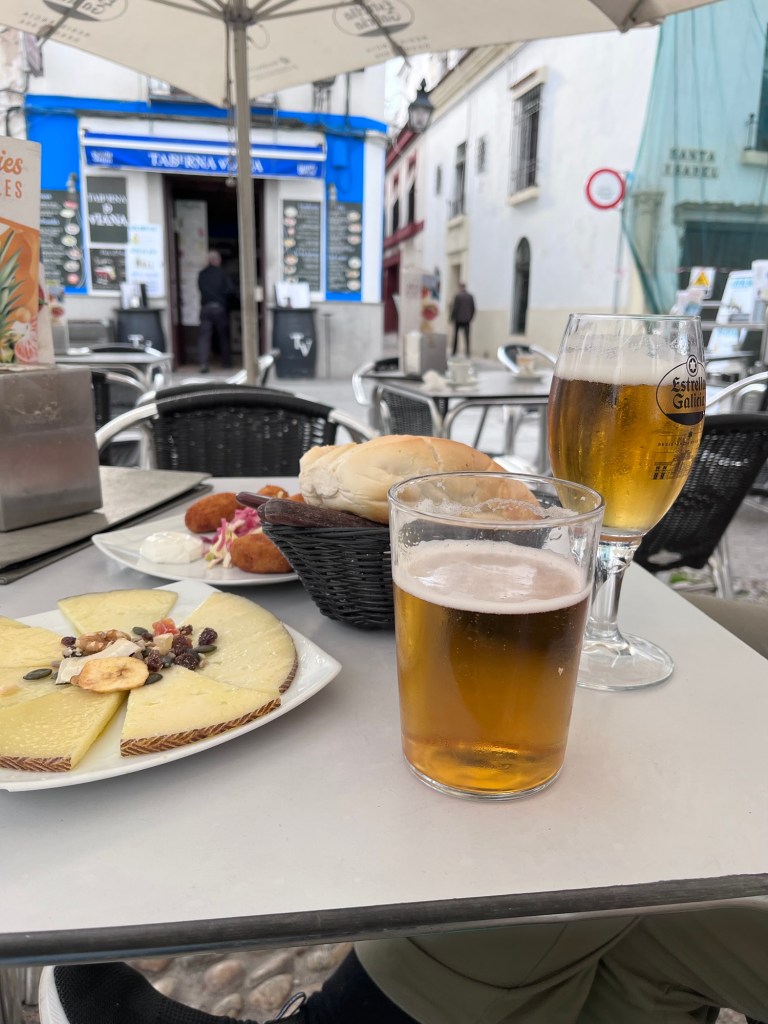
After a great tour of the Palacio de Viana, we stopped outside for a drink and some tapas.
We continued on to the little wine shop, Descubre Cordoba, where Francisco was waiting to lead us through a wine tasting and history lesson on the gastronomy and viniculture of Cordoba.

As we would discover throughout our time here, the people of Cordoba are very proud of their city, and have an enormous collective “chip” on their shoulders as they are quick to tell you that Cordoba and Cordobés are superior in every way to those unfortunate enough to be from Granada, and especially Sevilla. In fact, all agree that Cordoba is the best place to be, except in the summer when it is “hell on earth” and “You should never come here then!”
Francisco bristled at any attempt to make comparisons between the four wines made in the Montilla-Moriles DOC from the Pedro Ximenez grape as being “like Sherry” (which it was). These are fortified wines, very sweet, with a sharp almost bitter taste that improved measurably when thoughtfully paired with a series of tapas that Francisco provided.
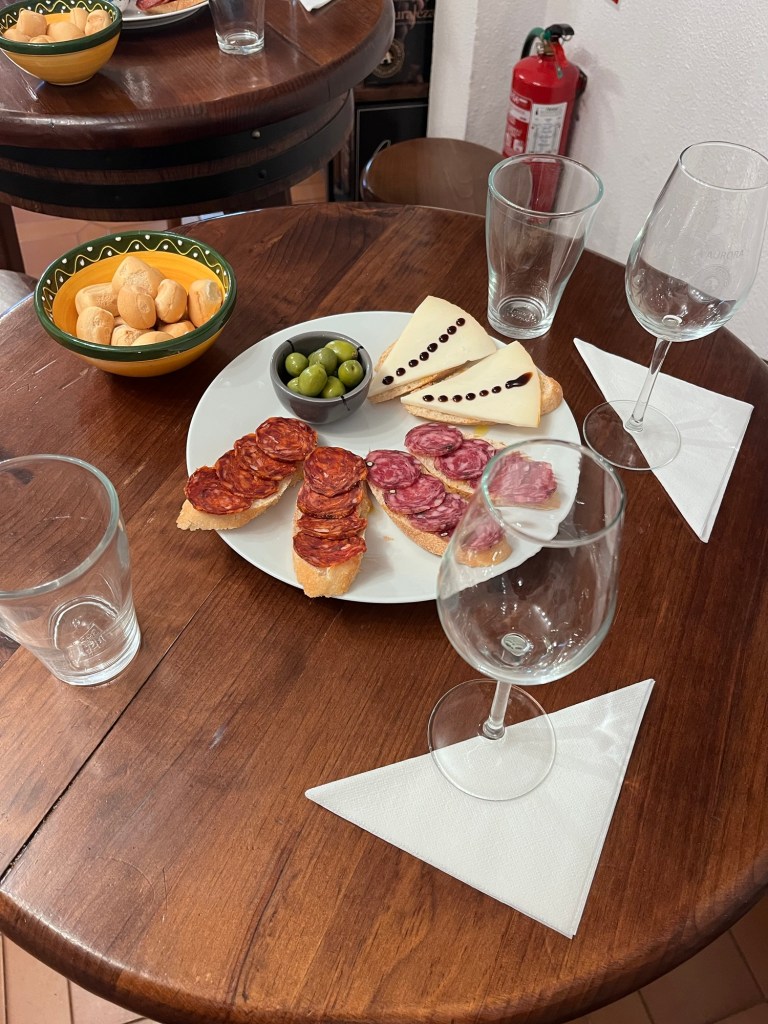
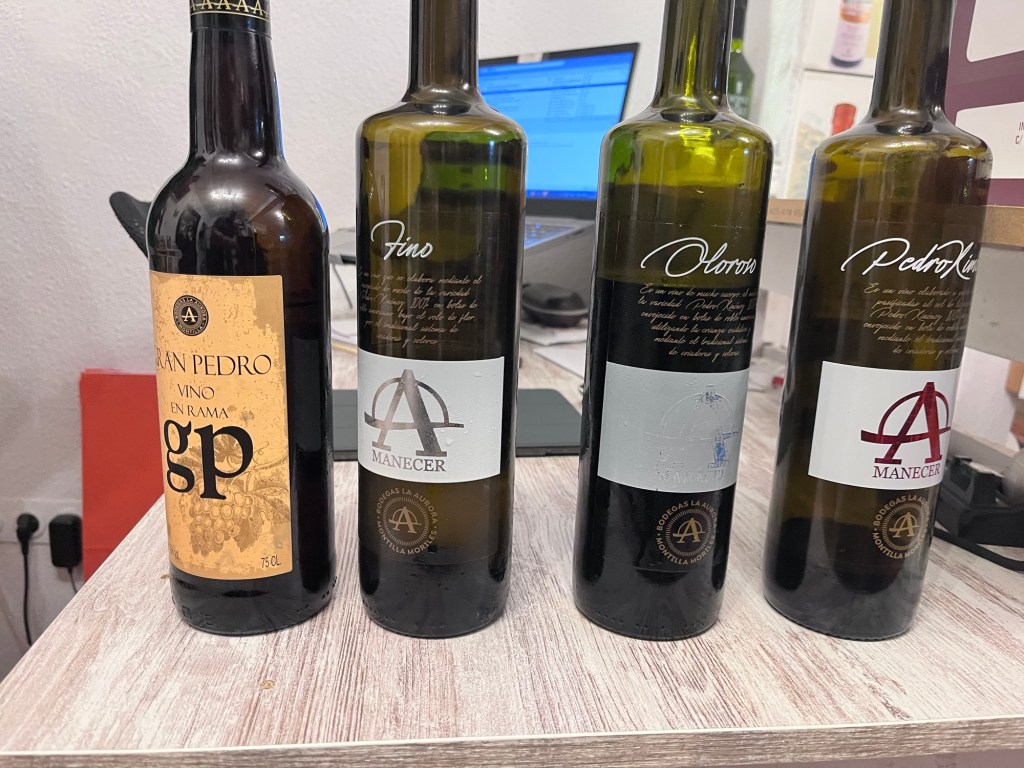
It was a very interesting tasting and certainly gave us a much broader perspective on not only the wines of the region but their place in the culture.

The focus of the next day was a tour of the Mezquita followed by a walking tour through the old city and the Alcazar (the old fort/palace).

The Mezquita is the reason most people come to Cordoba, and it is “1B” to Granada’s “1A” Alambra as the most impressive remaining historical site in the history of Islam and Moorish culture in Europe. It is a remarkable place to visit.

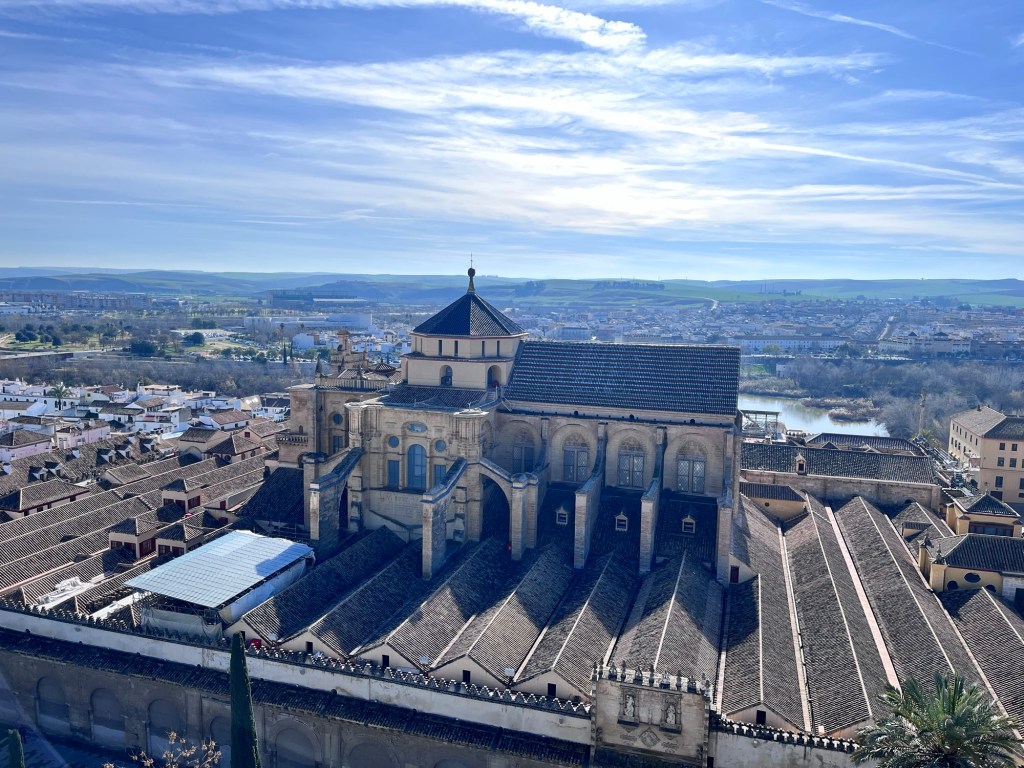
There are essentially four features of the Mezquita: the huge courtyard (now known as the Patio de los Naranjos) which sits between the 8th century mosque and minaret (now the bell tower), and the 16th century Gothic church which rises from the middle of the mosque.
When you enter the mosque you are immediately struck by the scale of it: over 800 columns supporting candy striped double arches reveal what our guide called the “lasagna” history of this place: Visigoth foundations, Roman columns and Moorish arches combine to support a vast space that is both intimate and disorienting.
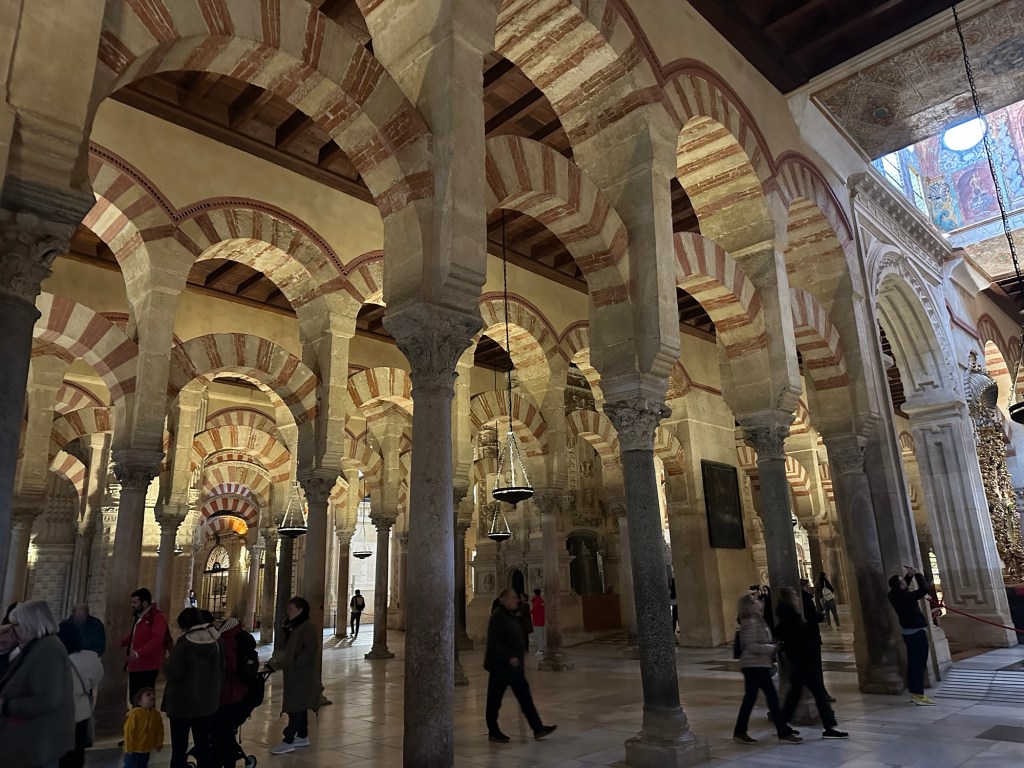


Our guide told us that up to 40,000 people were able to gather in this space when it was used as a mosque. The arches very much remind you of the supports for a Roman aqueduct, and indeed they function that way as well, diverting rainfall into wells in the courtyard.

While the initial footprint of the mosque was built very quickly, it was expanded by a succession of Muslim rulers over three centuries. Unusually, they kept to the same design. If you look at the various columns closely you can see names in Islamic script of the stonemasons who hewed these giant columns from nearby quarries and who transferred them to Cordoba. It brings a real human element to the whole endeavour, and makes it all the more impressive.
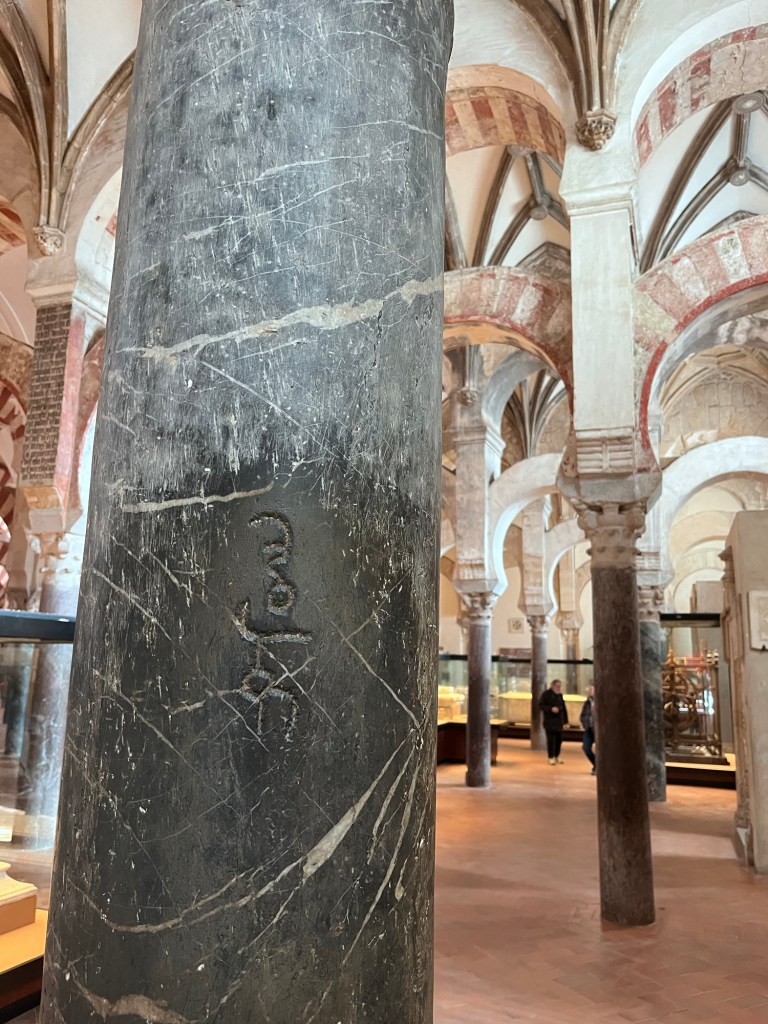
Unusually (and fortunately!) many of the original Moorish elements were kept by the new occupants after the Christian Reconquista in 1236. Chief among these elements is the giant Mihrab, a mosque’s equivalent of a “high altar” in a Church, which dominates the southern wall. It is spectacular.
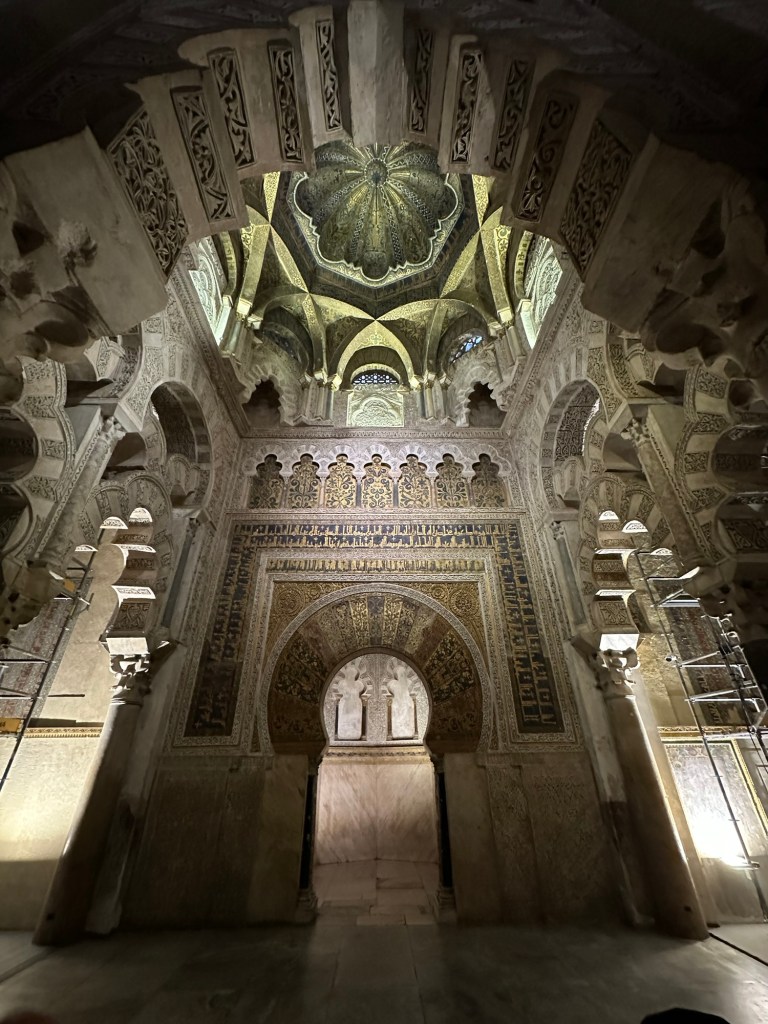
Once the Mezquita came under the control of the Christians, it was gradually transformed into a more conventional Christian Church, which included the creation of many smaller chapels to mark the death and burial of prominent figures.

Of course the biggest addition was the development of a great church in the middle of the mosque’s footprint.

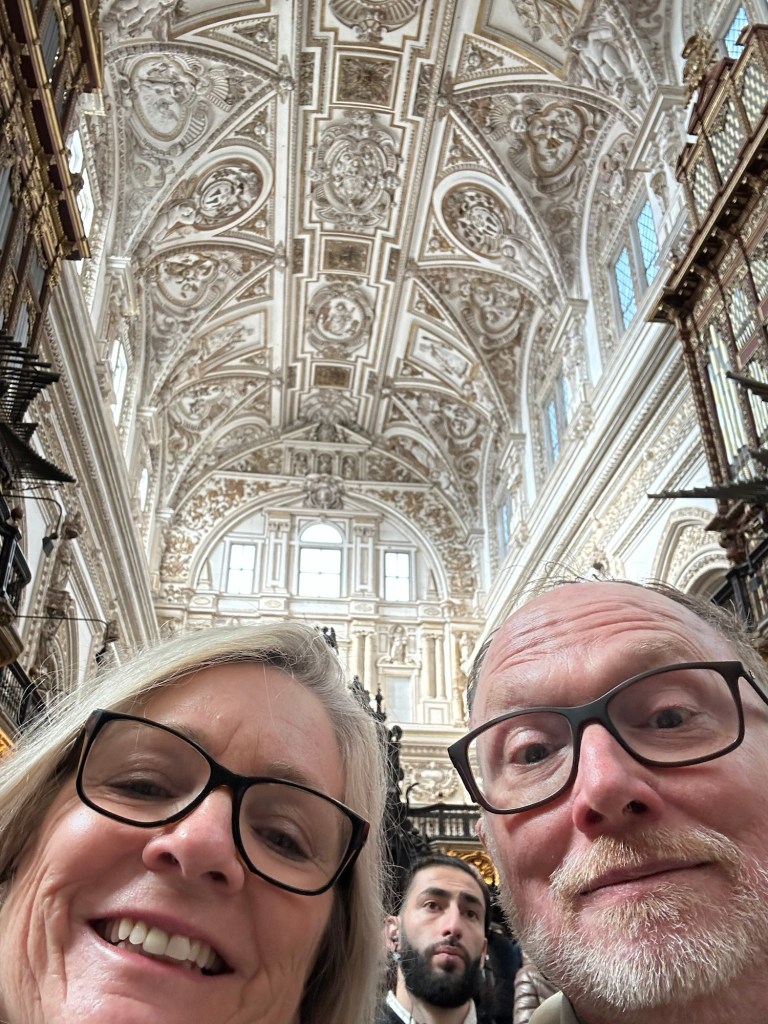

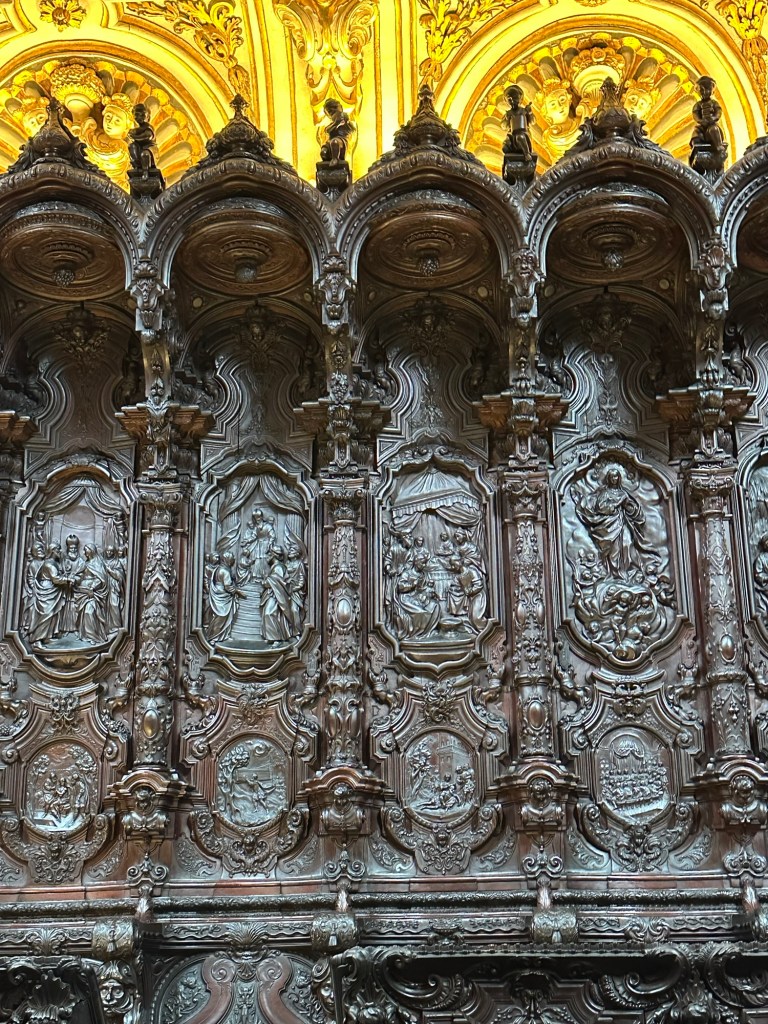
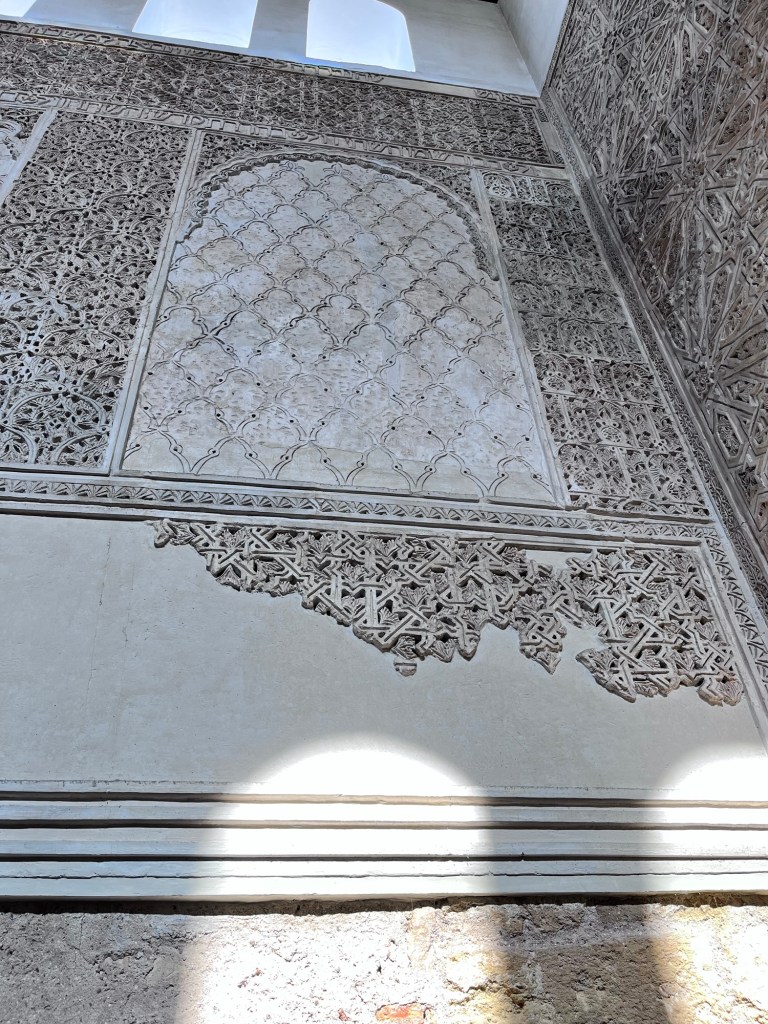
The rest of our day was taken up with a tour through the old city, largely the Jewish Quarter, where we explored tangled laneways, the former synagogue, and a series of small plazas and patios lined with orange trees.

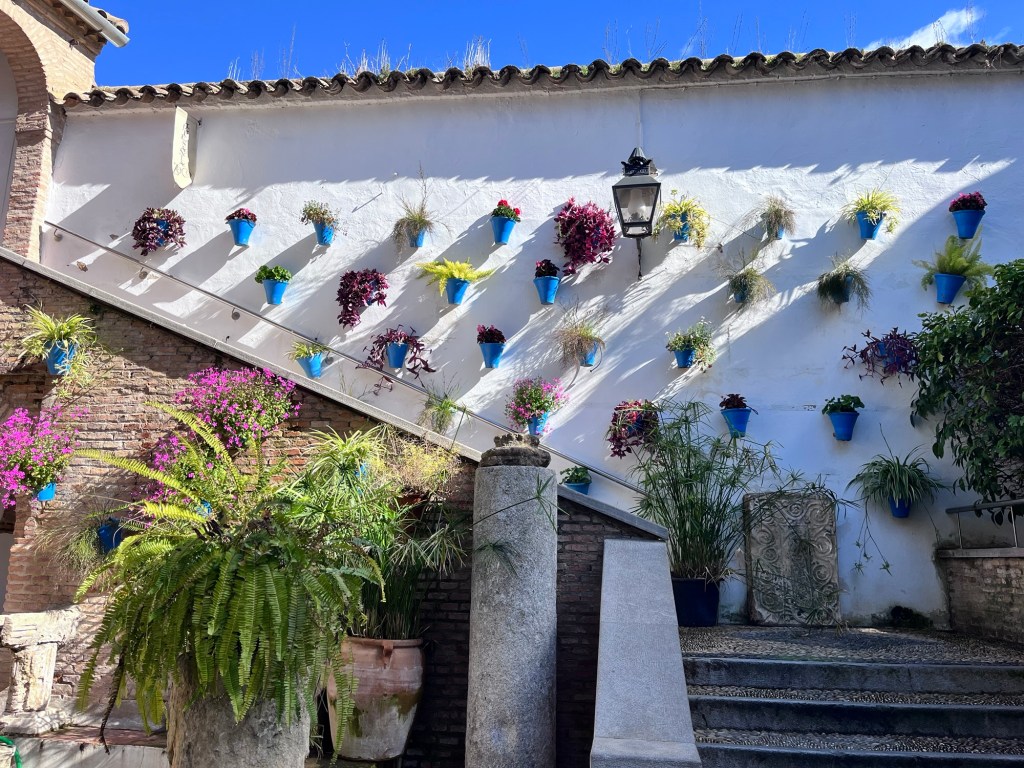


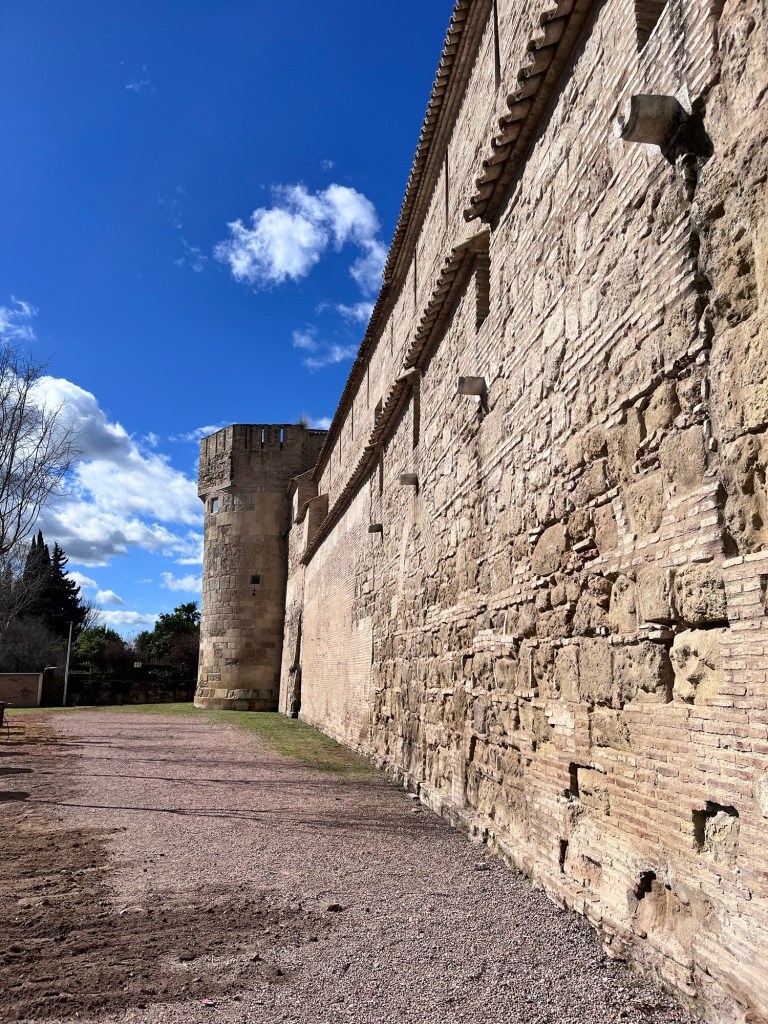
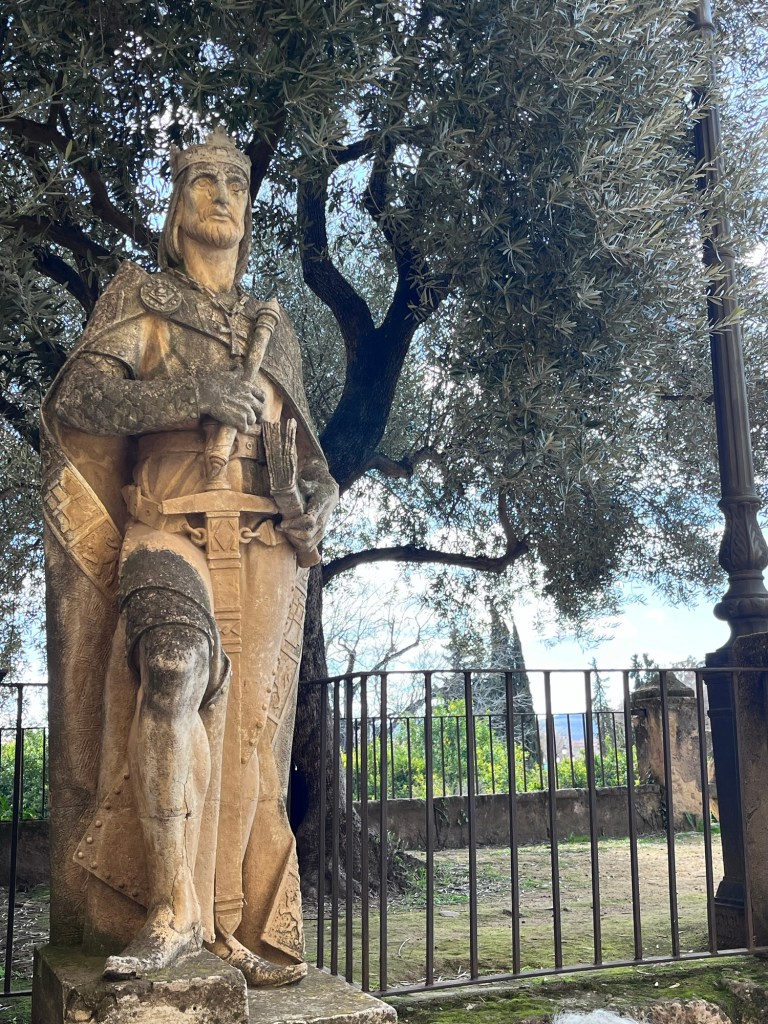
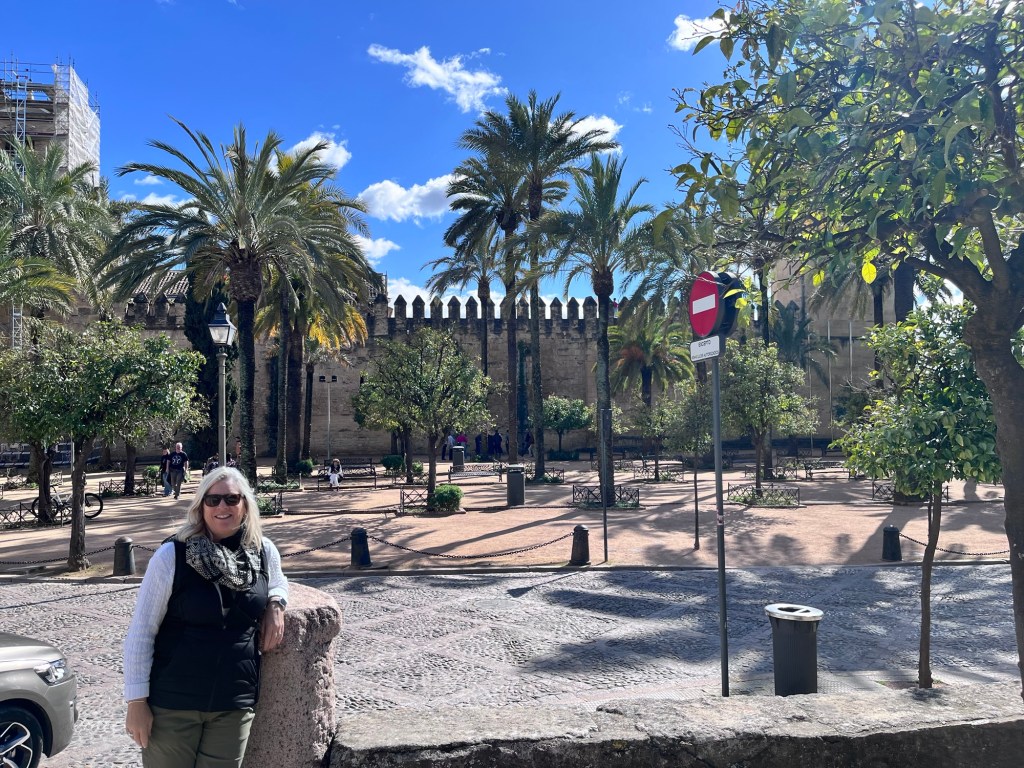
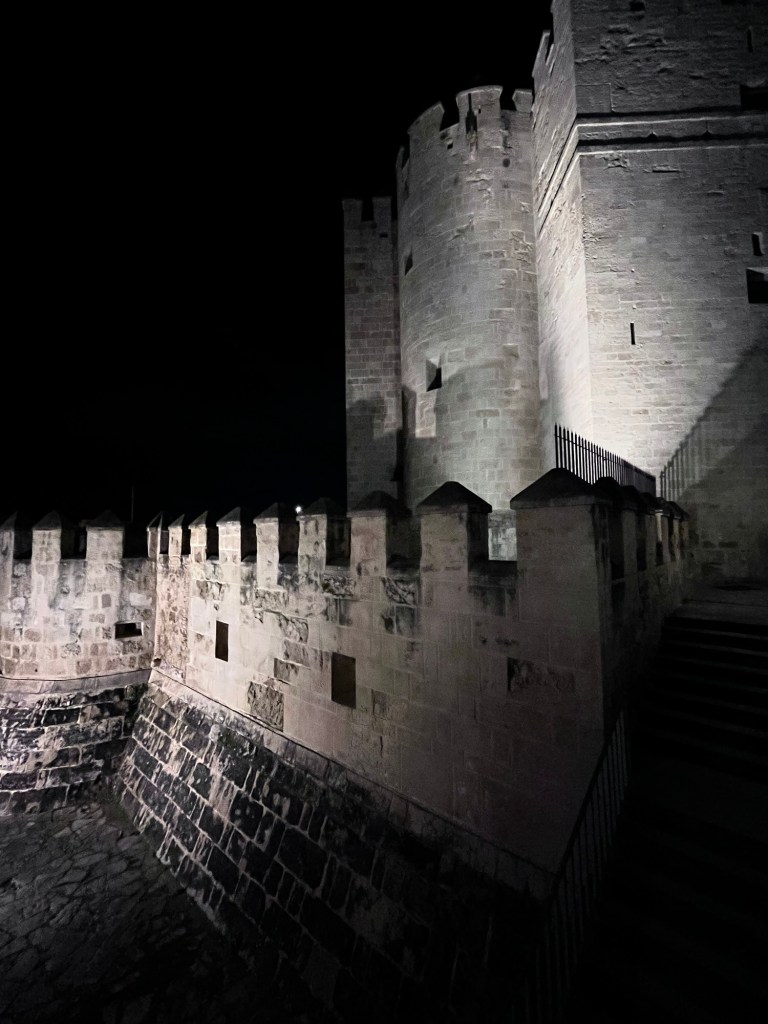
We ended up in the Alcazar, the fort along the Guadalquivir River. While it shares the name of the Alcazar in Sevilla, it is less impressive, but it does have a series of beautiful gardens and certainly provides lovely views back over the old city.

After a traditional lunch near the river bank, we returned in the evening to walk over the Roman bridge and view the Mezquita from the other side of the river.
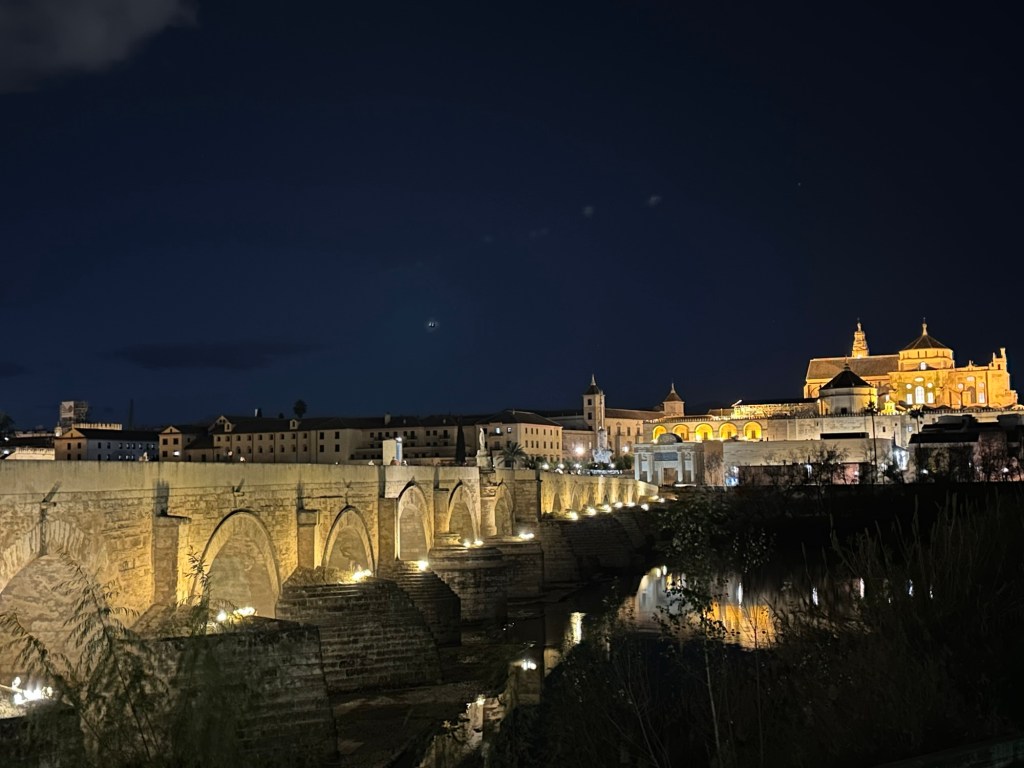
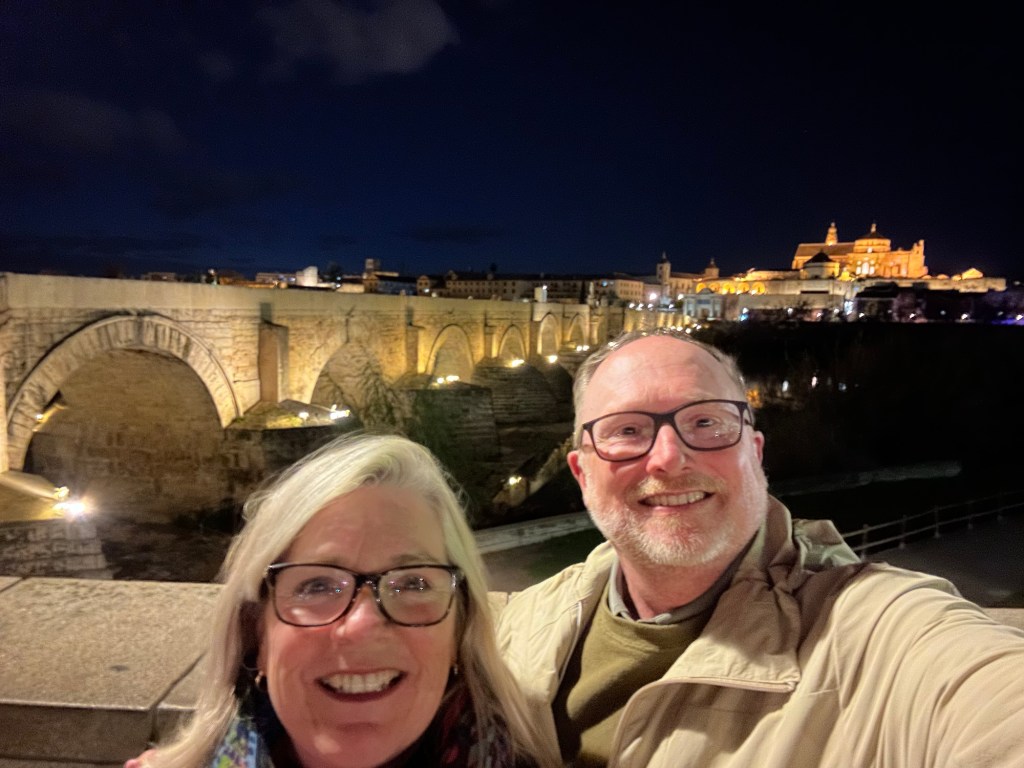
The evening stroll is a huge part of life in Andalusia, and Cordoba is no different. The restaurants start to fill up at 8:00 pm and the streets are filled with families enjoying the cool of the evening, and being part of the scene.
We spent our last day in Cordoba wandering around the small bario of San Basilio, where most of the private patios can be found. This is a wonderful little neighbourhood which lies just past the Alcazar, and which is relatively quite compared to the busy and touristy streets near the Mezquita.
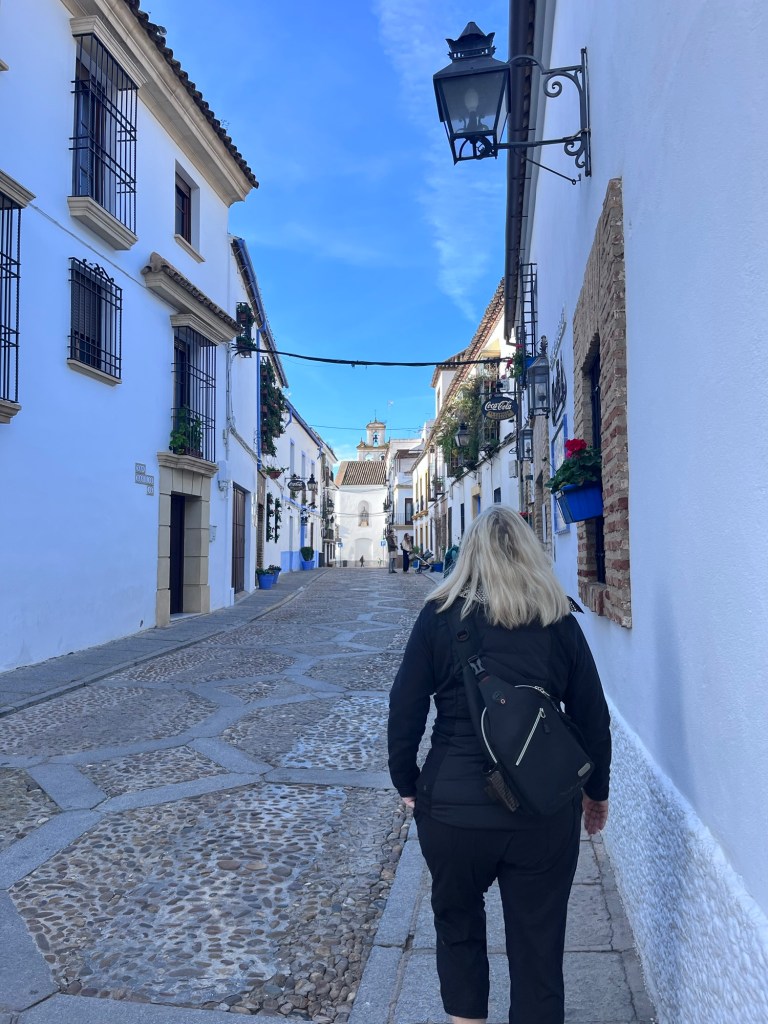
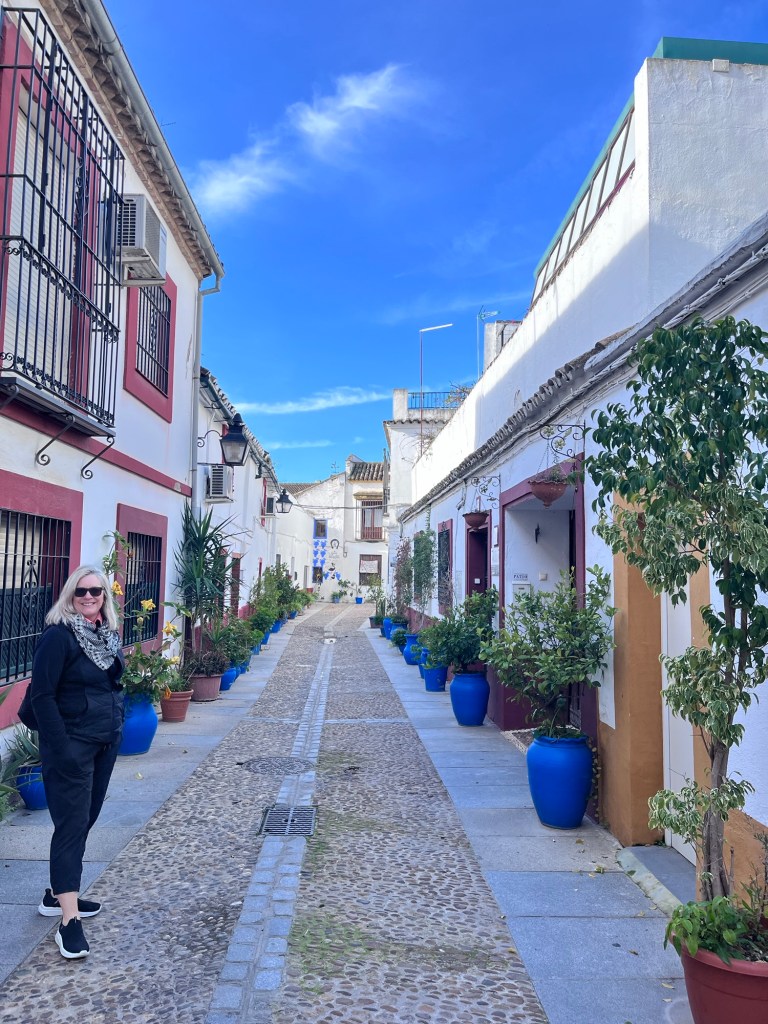
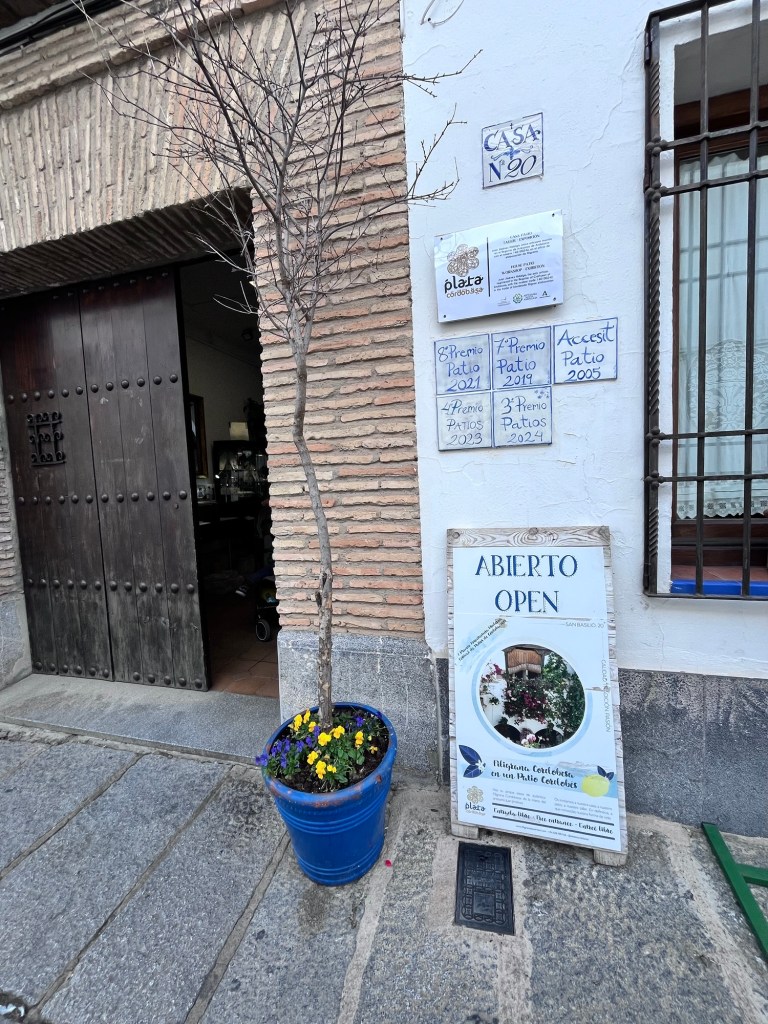
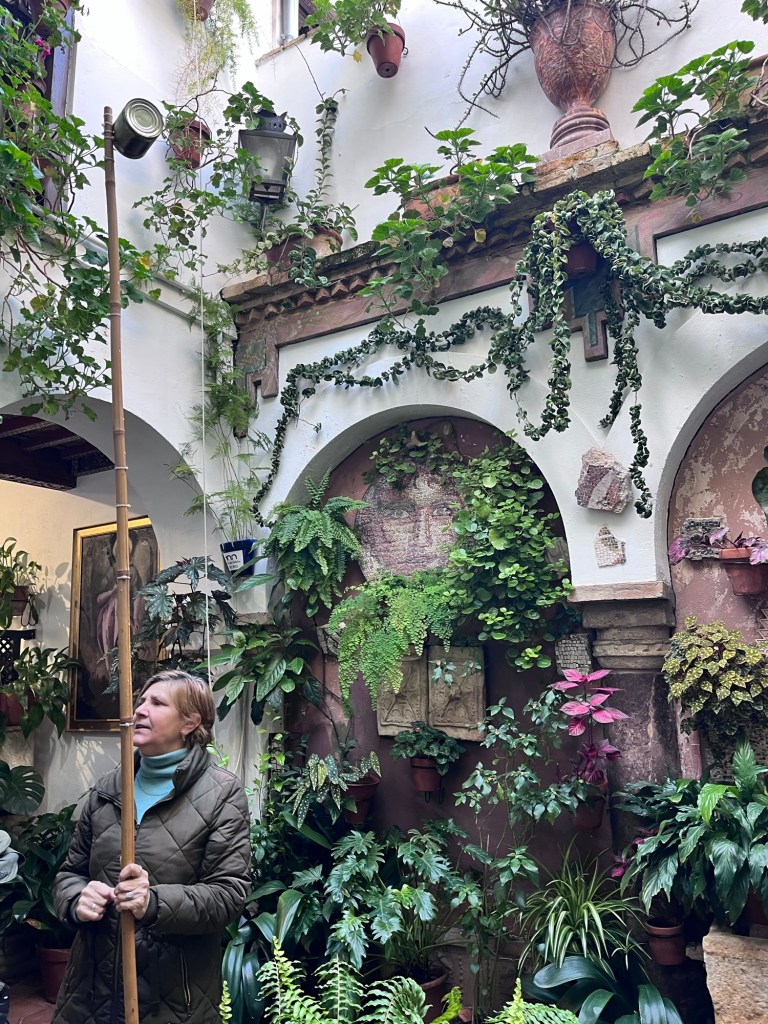
A number of the private patios were open to the public, and we got a quick “tour” of these tiny green oasis at a couple of stops. Again, we were told over and over that no other place in Andalusia has patios like Cordoba, and certainly not Sevilla. There is no admission cost, but a small donation box is visible at each stop. The pride and care of their caretakers is clearly evident in both the patios and in the display of signs next to the doors announcing previous triumphs in the annual competitions.


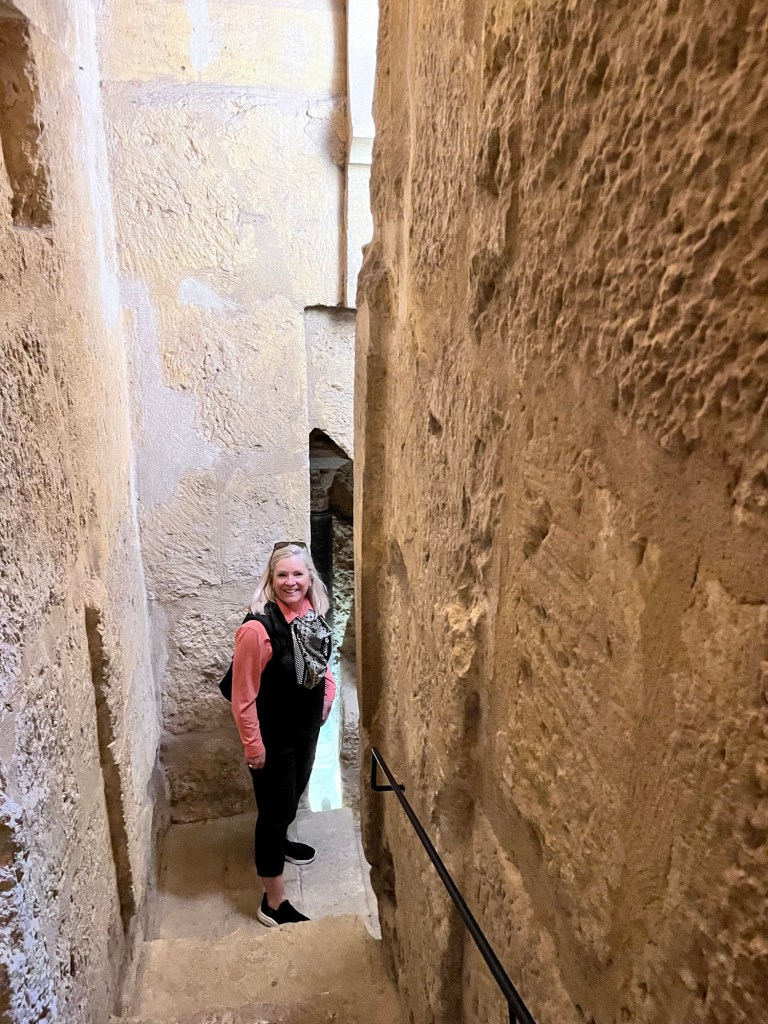
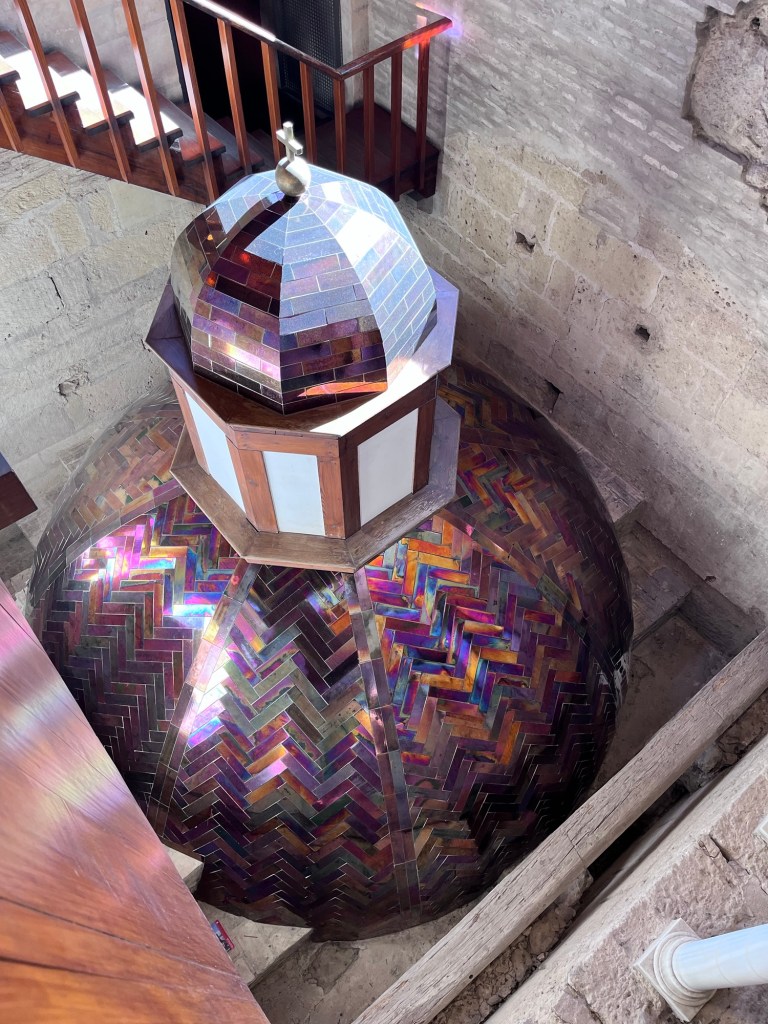
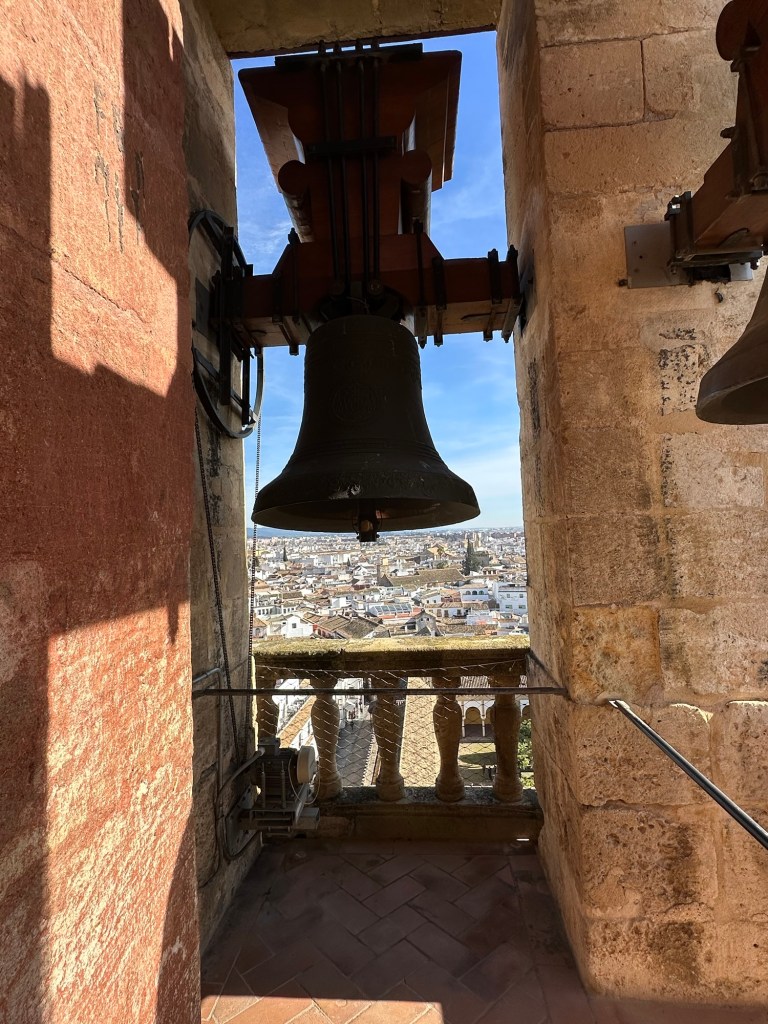
We finished our day with a return to the Mezquita, this time to climb up the bell tower. This structure (Christian bell tower clad around the original minaret) is the tallest in Cordoba and provides commanding views of the city.

We had a great time in Cordoba and found two nights and 3 days just right for a pretty thorough visit.


Leave a Reply