Lisbon (Lisboa) is a city that feels lived in and authentically local. Despite the influx of visitors and its growing popularity with cruise boats, it has a gritty beauty rather than a glossy sheen of tourist polish.
We had four nights and three full days in Lisbon and used one for a day trip to Sintra. We sandwiched Sintra between a jam packed first day with two small group tours (a walking history tour in the morning and a “foodie tour” in the evening) and a “free range” wandering day where we did a little shopping and further explored the major neighborhoods of Alfama, the Bairro Alto, Chiado and Baixa. We could have used two or three more days in this amazing city.
Lisbon is the third oldest city in Europe after Athens and Rome. Architecturally, the old city is split between the tangled and narrow streets of the Alfama and Bairro Alto neighborhoods: the former in particular very much reflects the road plans of Medieval Lisbon (and earlier). The rest of the old city was devastated by the triple threat of the earthquake, tsunami and fires of 1755 and consequently has a different look and feel.
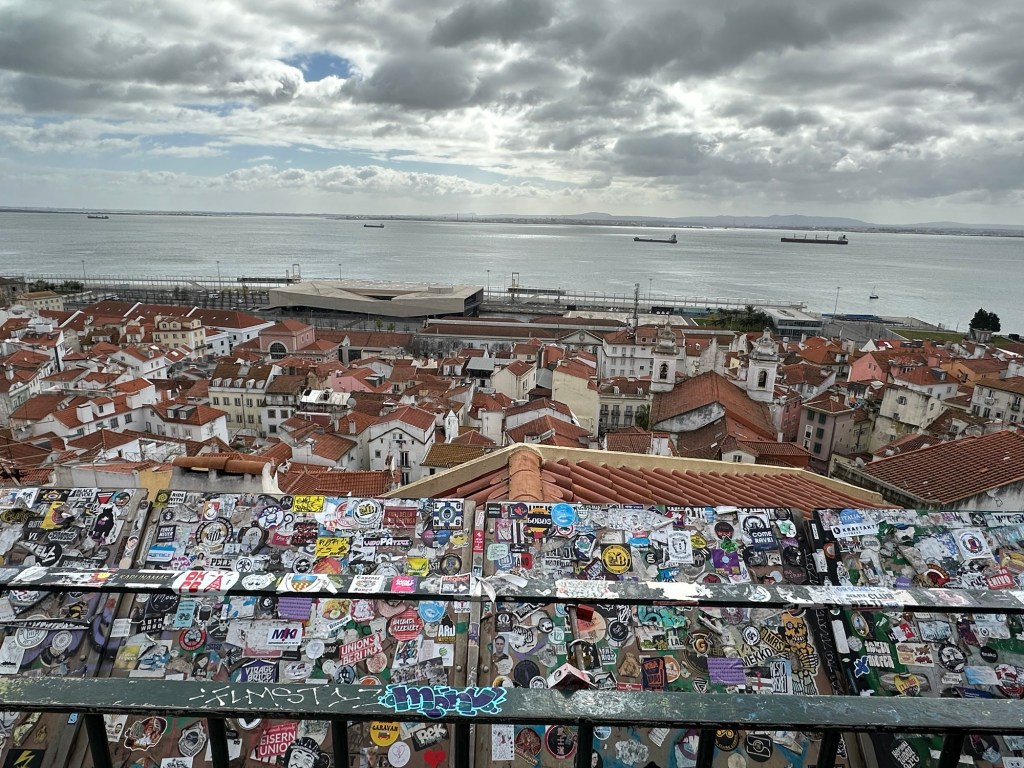
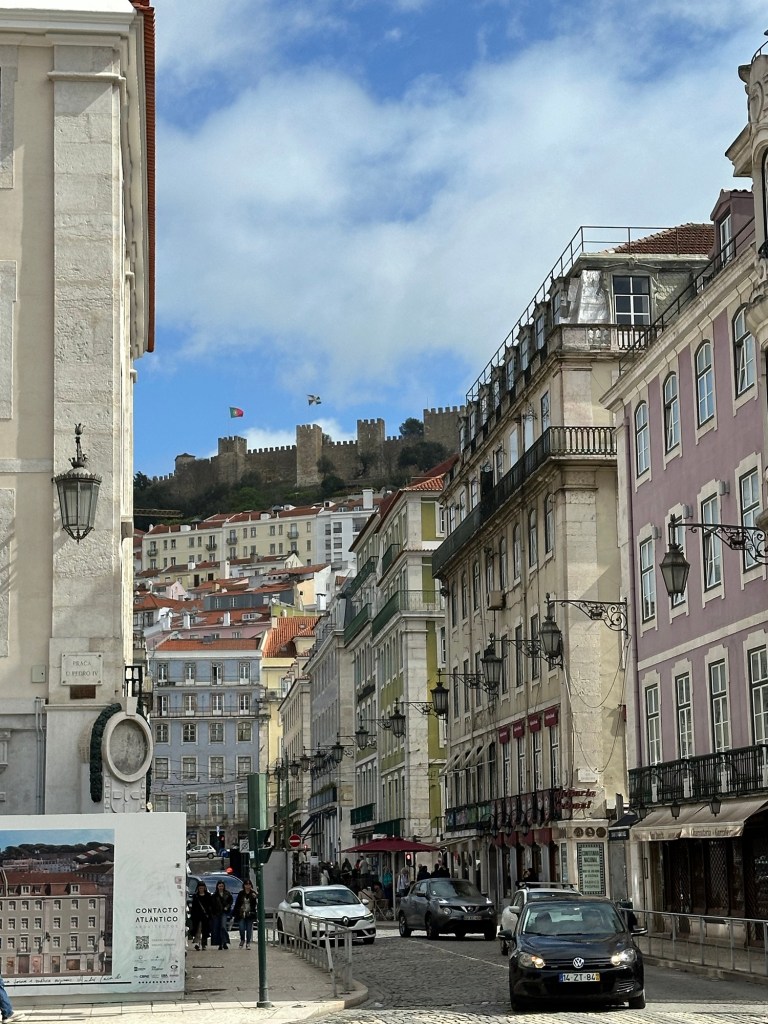
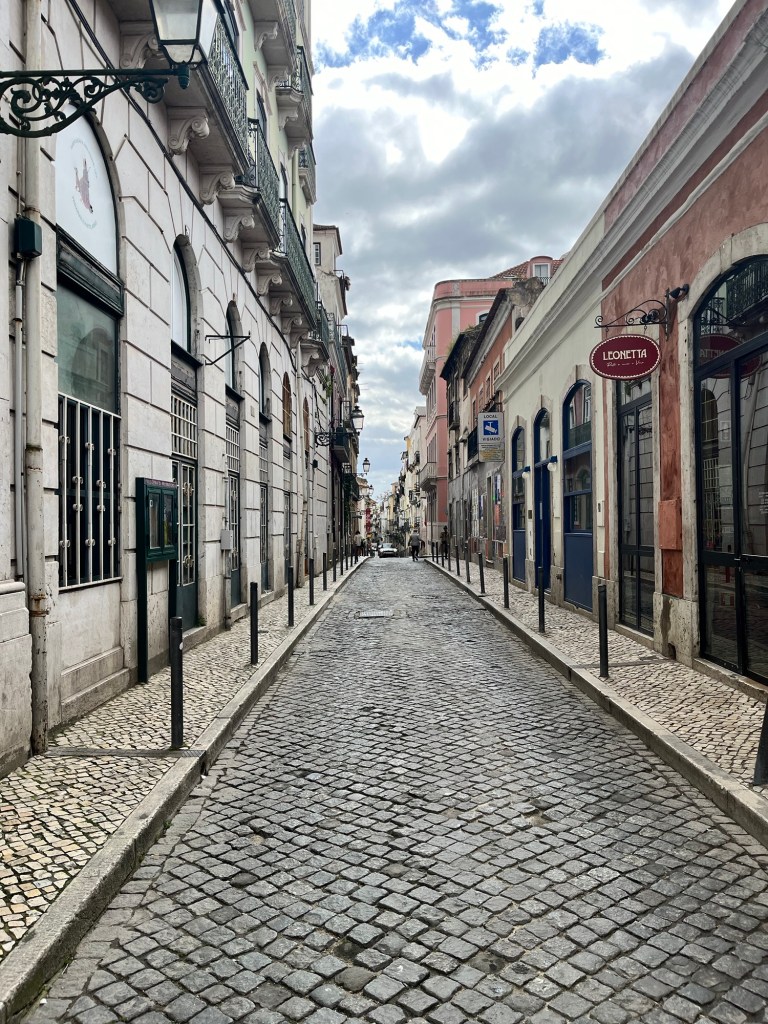
The resulting rebuilding of Lisbon was spearheaded by Marques de Pombal, whose “Pombaline” template featured wide avenues and squares arranged in a grid pattern and filled with red, yellow, green and blue buildings with characteristic iron balconies.
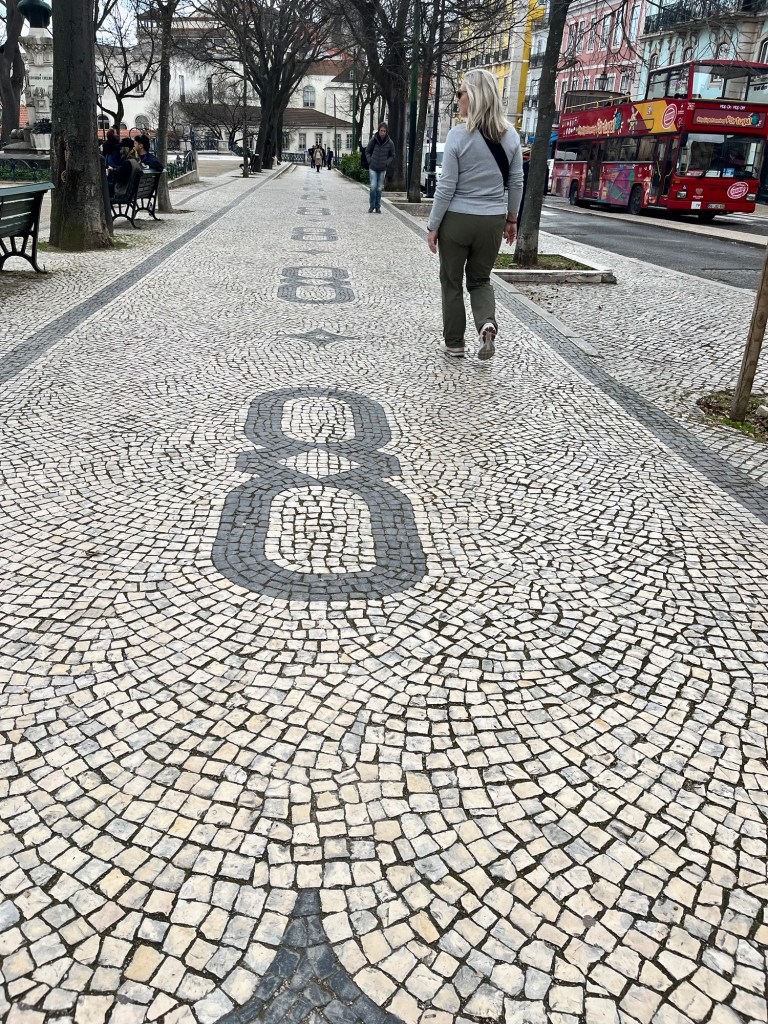
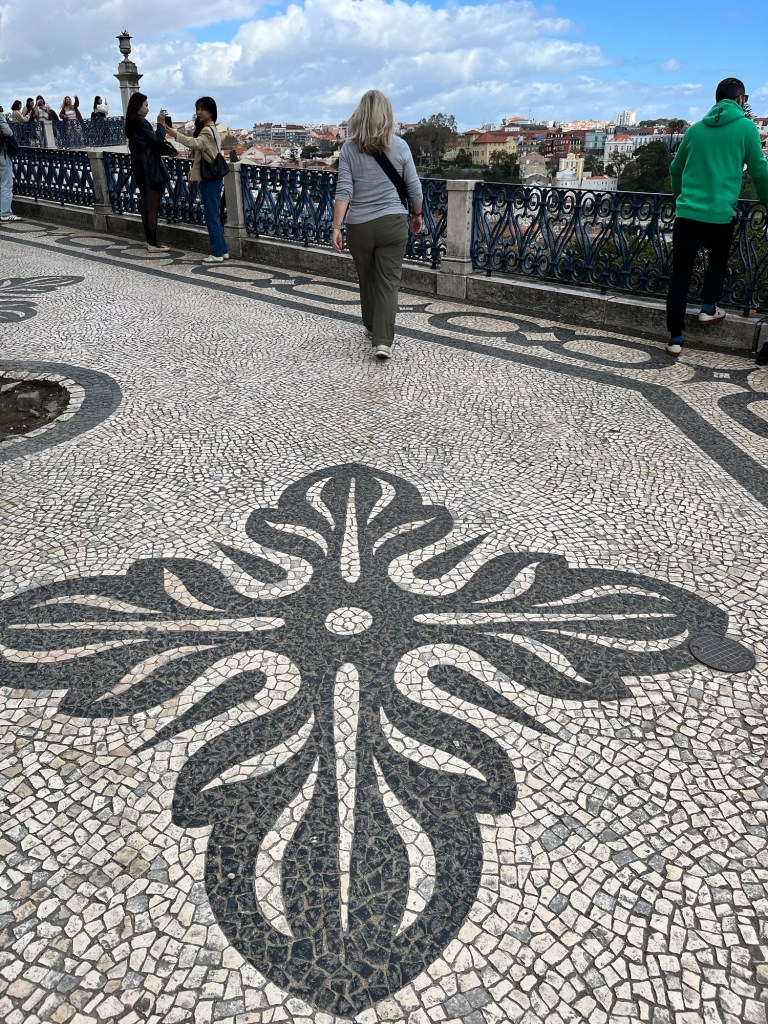
Most of the streets are still cobbled and the sidewalks feature elaborate tile patterns that date from this time. In fact if you want to put new tile down you must choose from the original Pombaline tile book provided by the city.
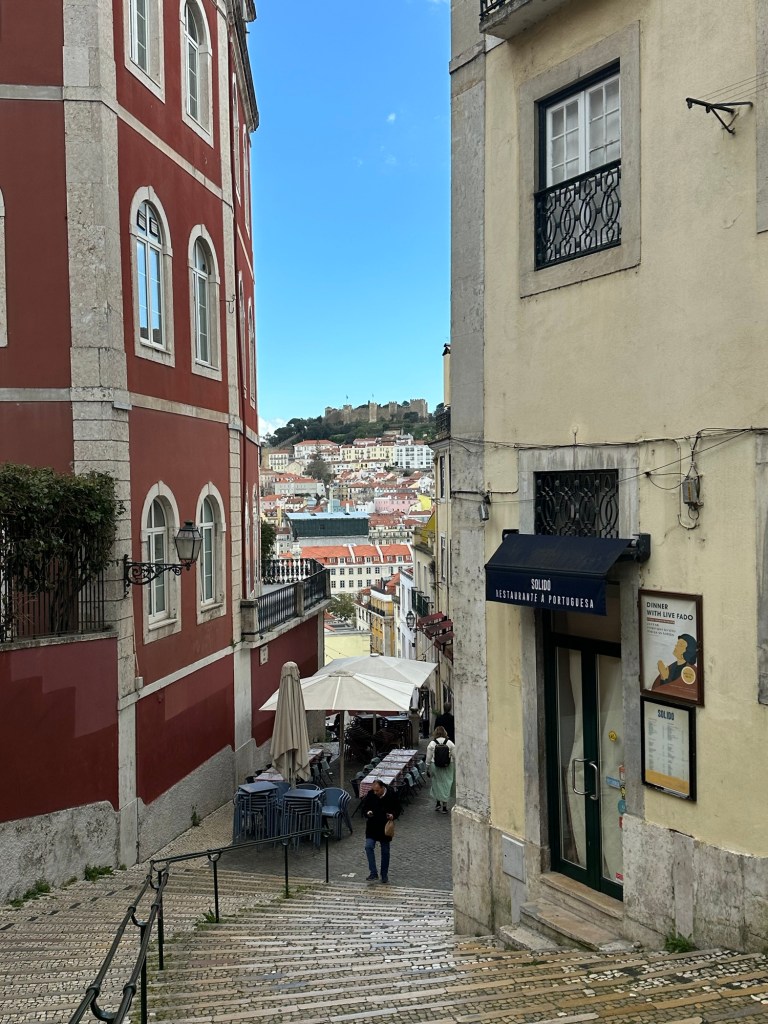
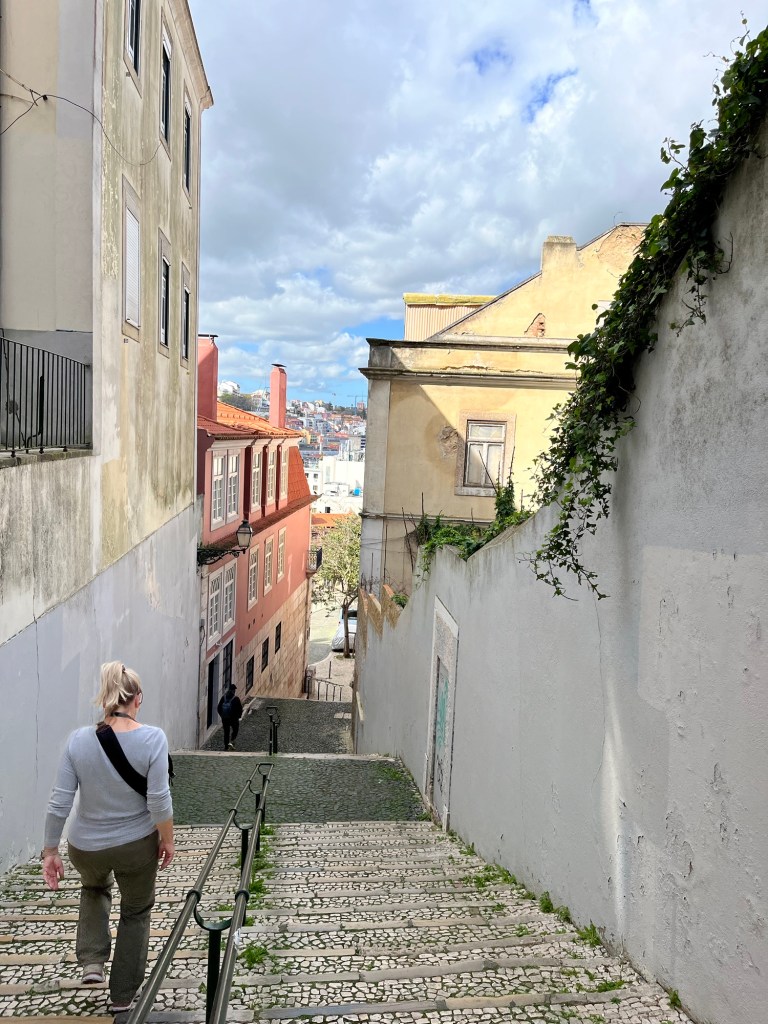
The other geographical features of Lisbon are its location at the mouth of the Rio Tejo (the Tagus River) where it flows into the Atlantic and its very hilly terrain. We spent a lot of our time walking uphill or downhill: with the exception of the Baxia neighborhood which is relatively flat (and which was virtually destroyed by the tsunami) all of the other areas are challenging to navigate.
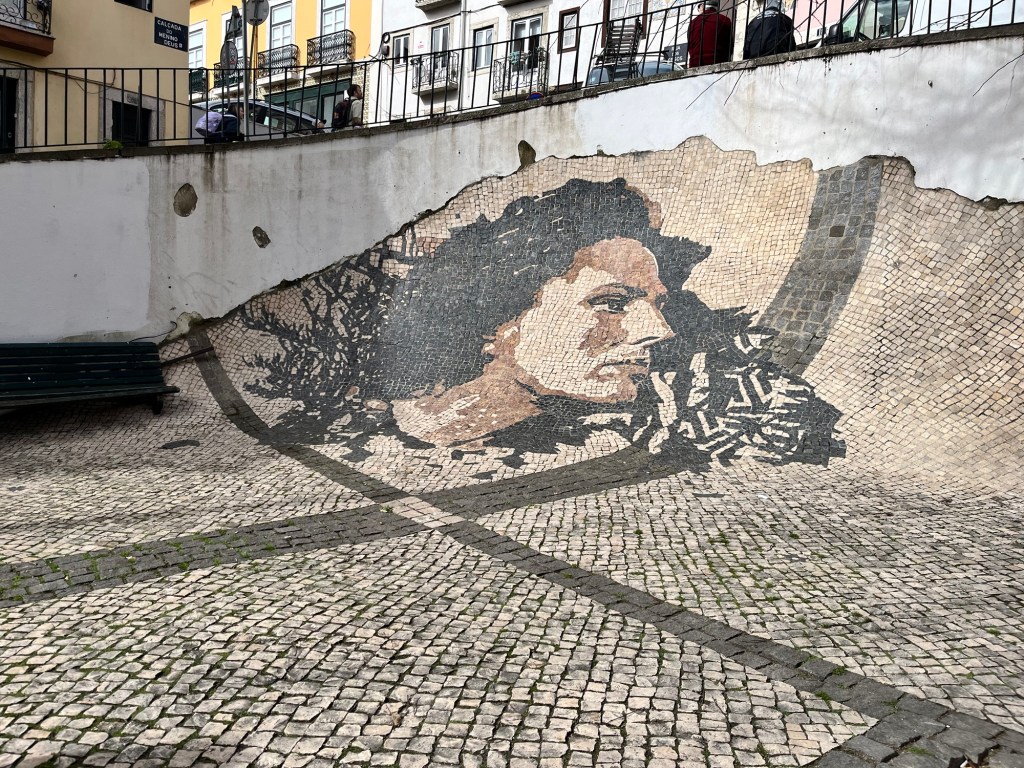
Lisbon is a very cultured place. Fado music reigns supreme and legends of that art are memorialized throughout the city.
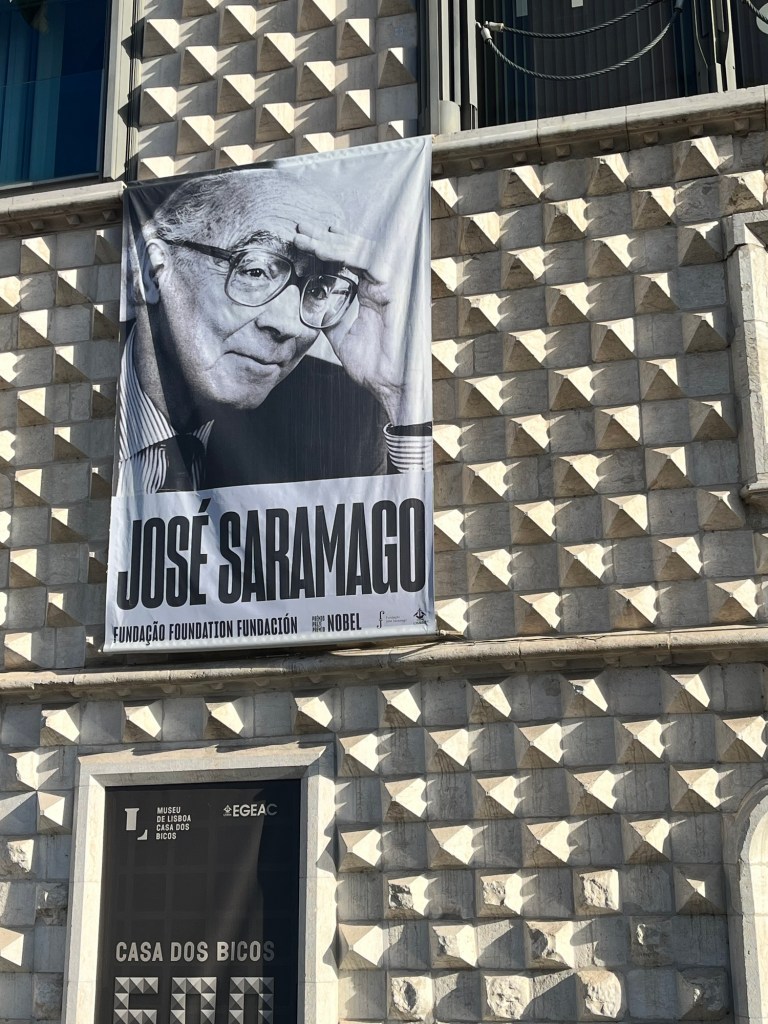
Portugal has a rich literary tradition as well. It was cool to see a centre for the study of Jose Saramago.
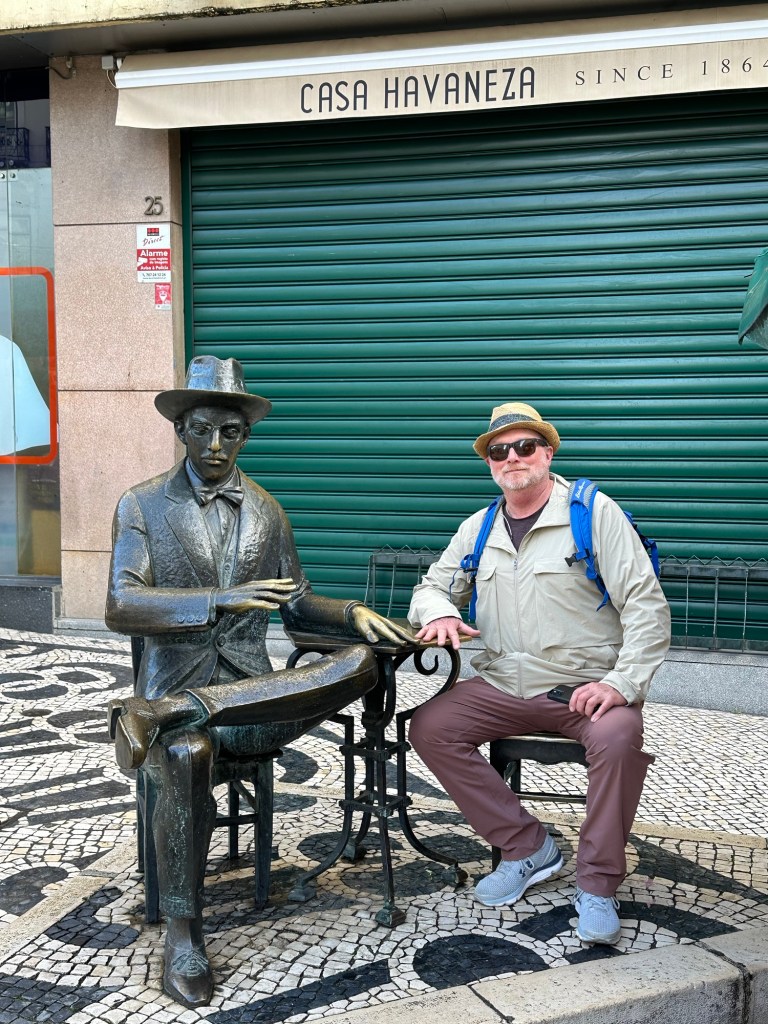
I also discovered that the famous poet Fernando Pessoa is a fellow hat guy.
Lisbon has an impressive range of transit options including excellent regional train service, the Metro (subway), streetcars, trolley cars, funiculars and elevators, the latter two designed to help you move up or down the snakes and ladders street plan in parts of the city.
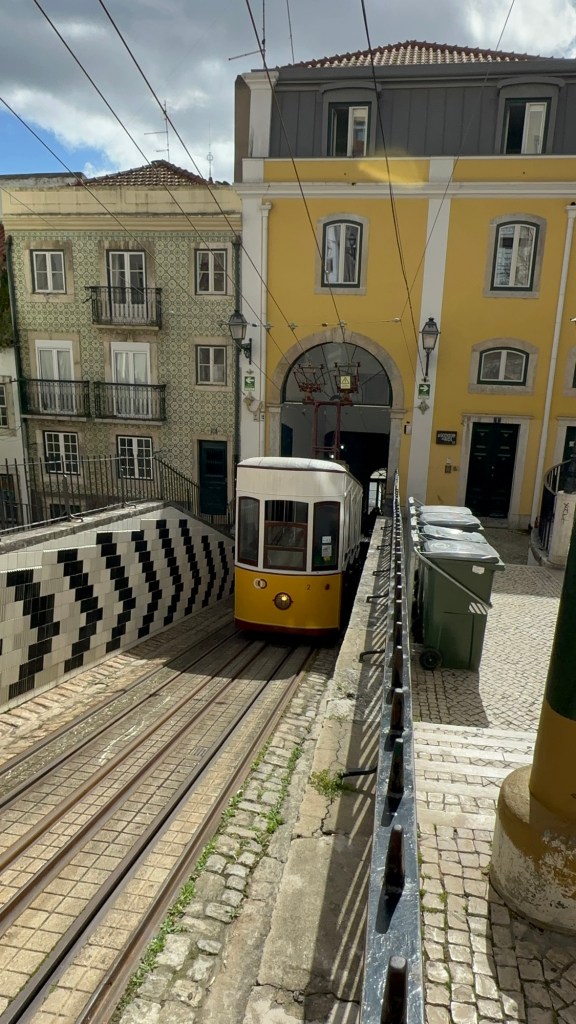
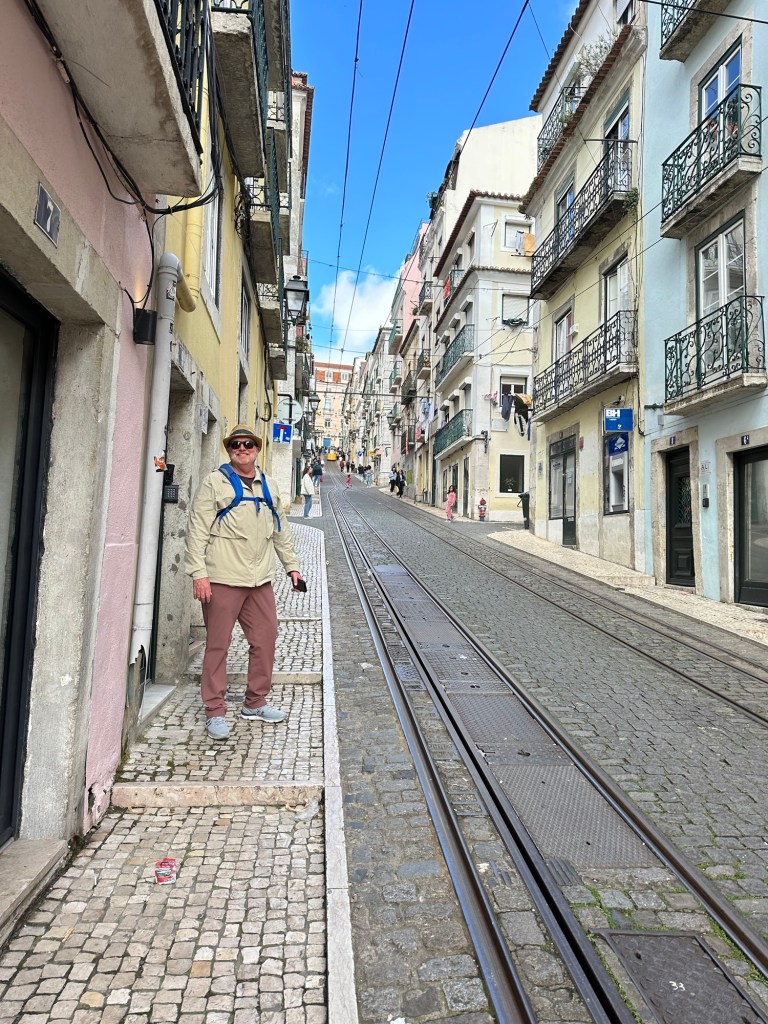
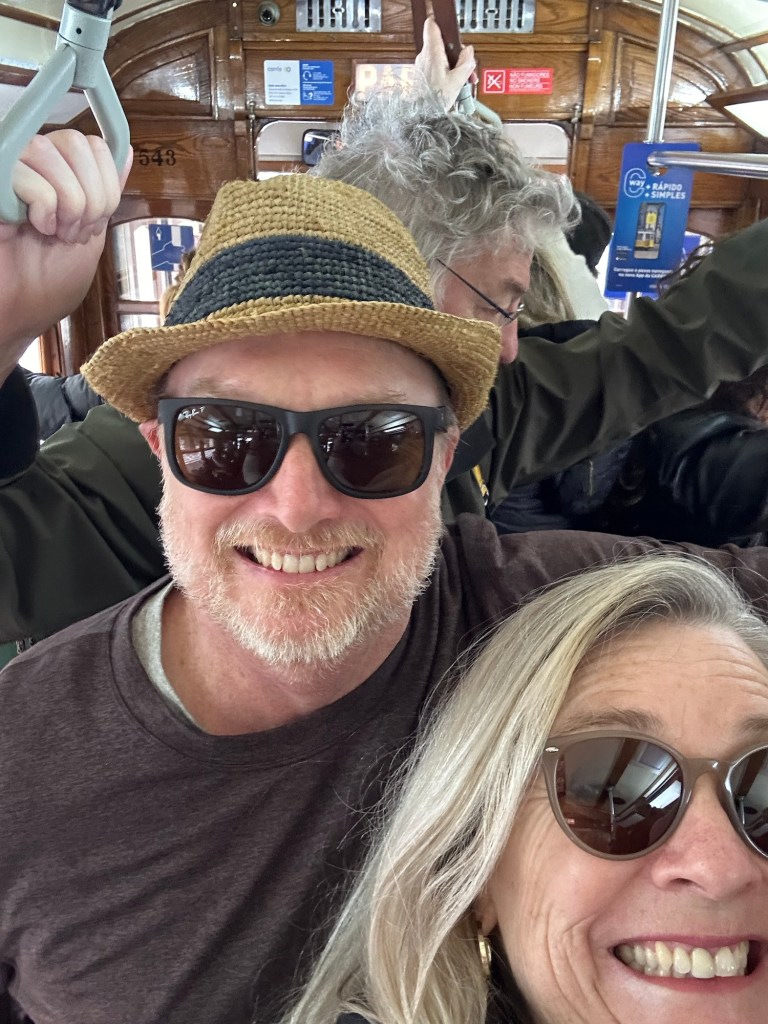
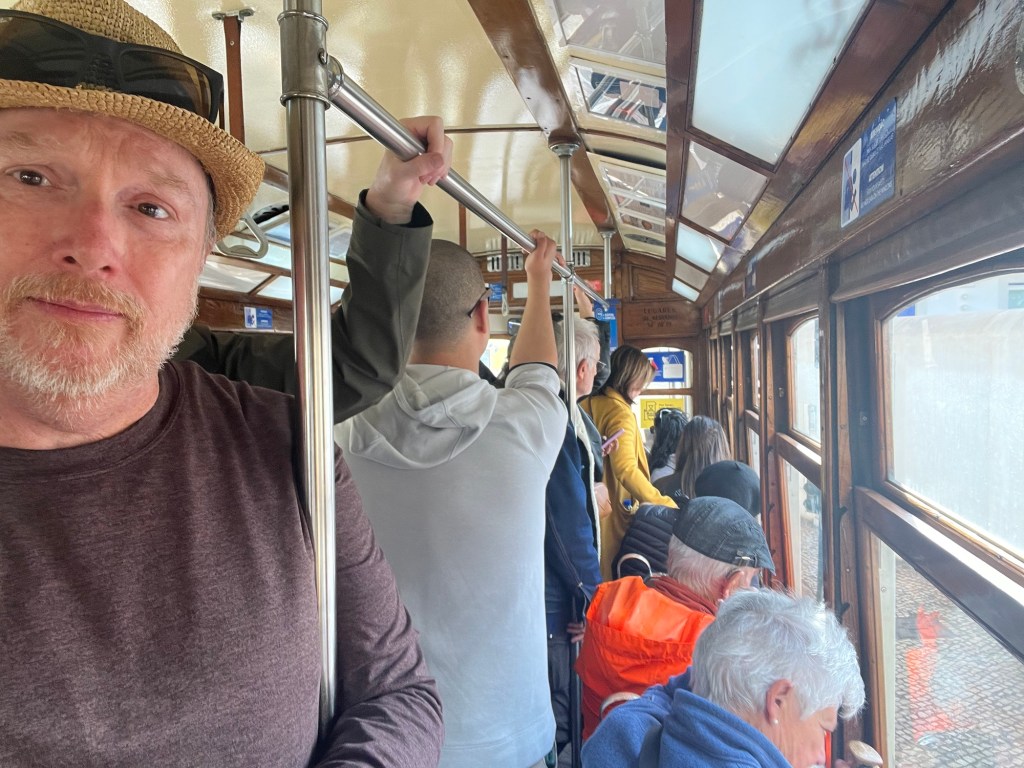
The trolleys have a retro vibe and are very popular. We jammed ourselves on to the famous 28E trolley which was quite the experience.
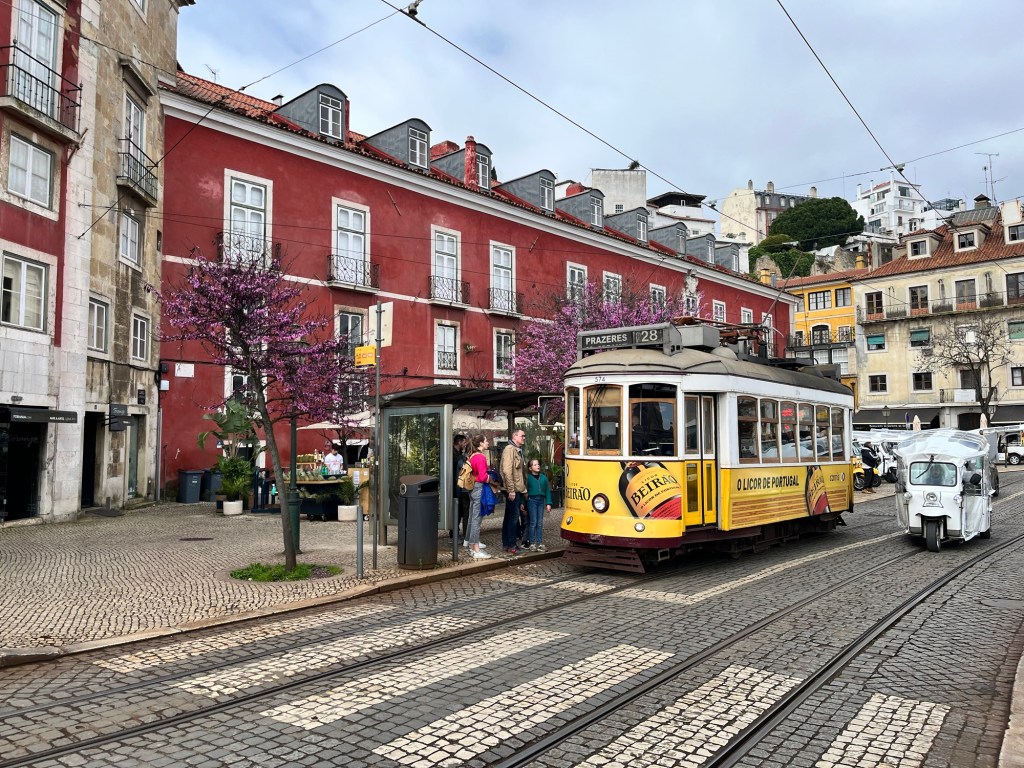
Not for those who are claustrophobic!
While many of the street elevators are purely functional, the Elevador de Santa Justa stands out in terms of both popularity and appearance.
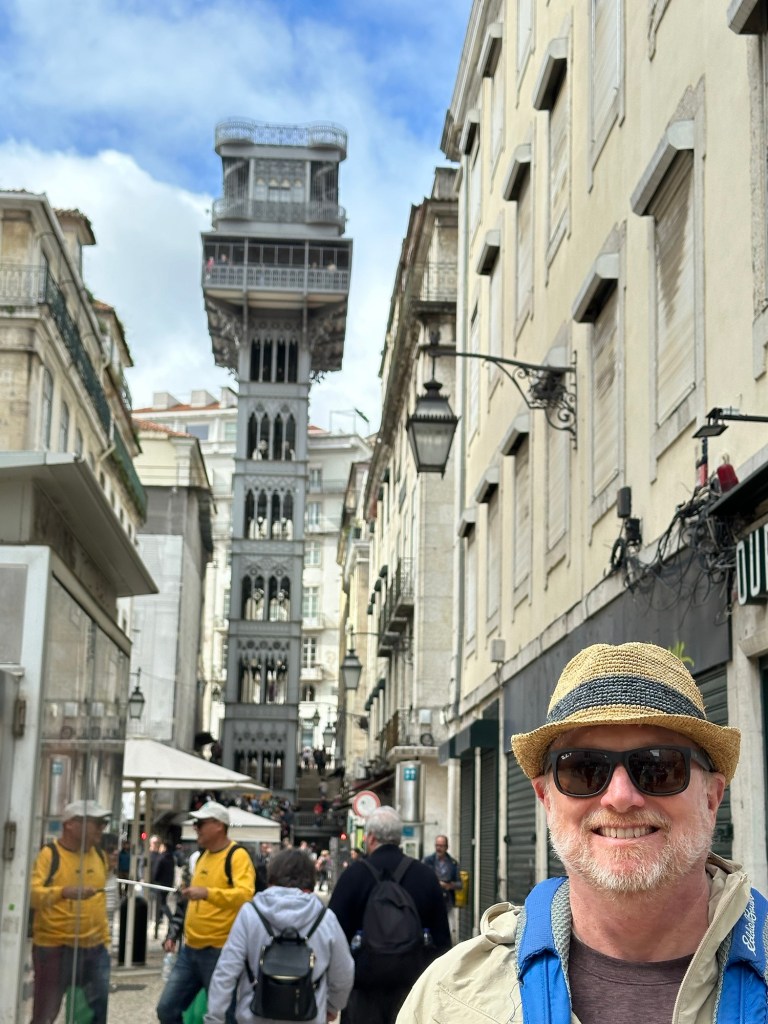
Built in 1902 it functions to connect the lower, flat area of Blaxia with the higher areas of Bairro Alto and Chiado. It costs 5 euros if you don’t have a transit card. Architecturally it is a wrought iron wonder, somewhat reminiscent of the Eiffel Tower which predates it by only a few years. You can take a series of stairs rather than ride the elevator (that’s what we did) and access to the viewing platform at the top is free.
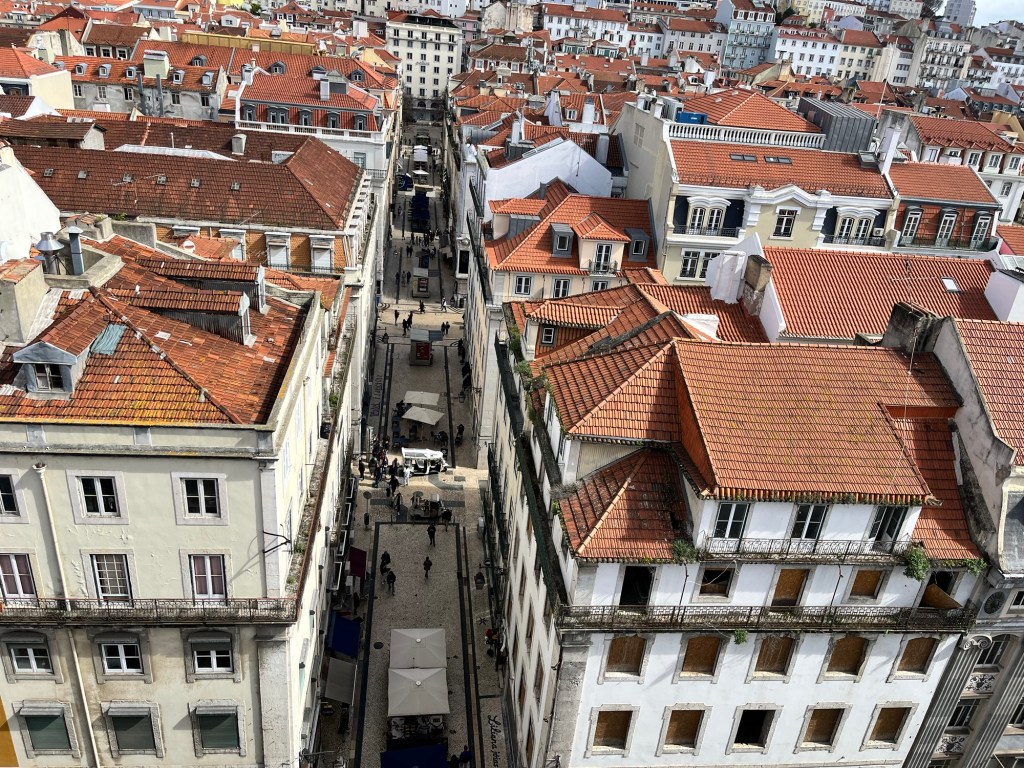
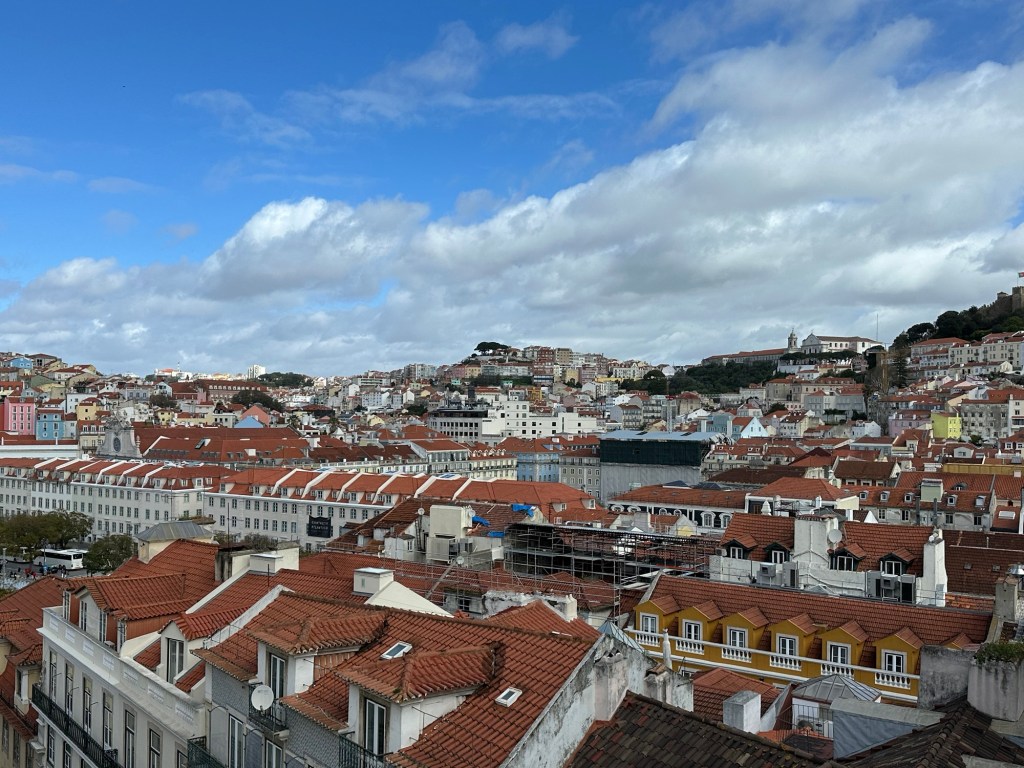
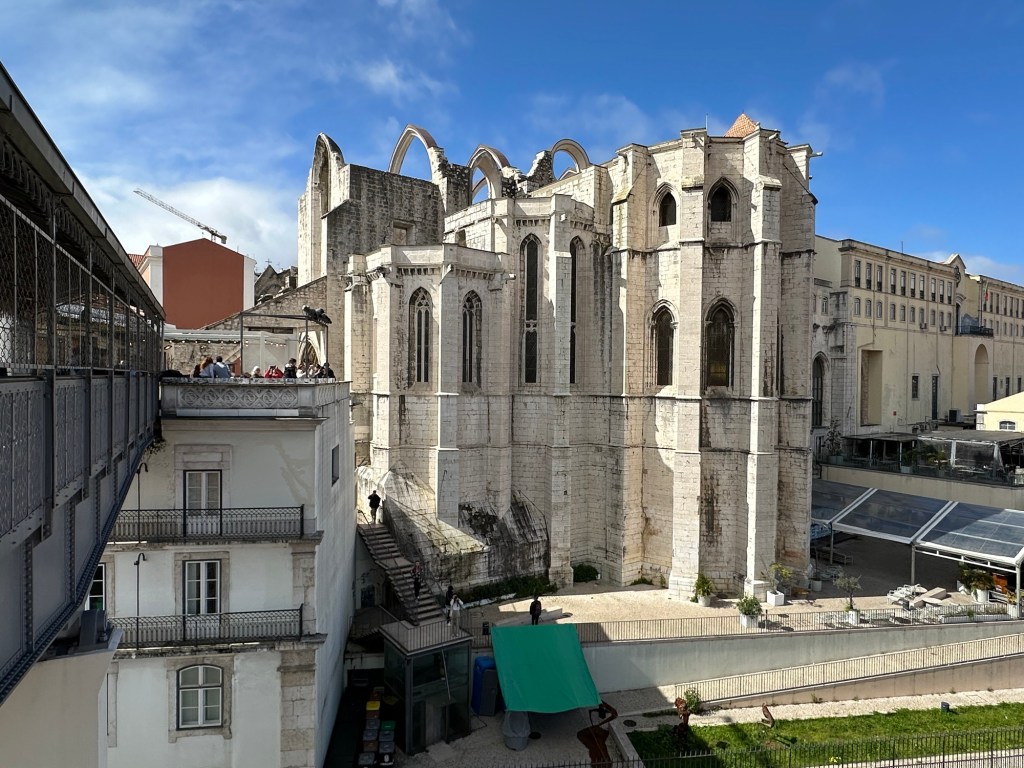
Of course if you have never ridden an elevator then the 5 euros is probably worth it.
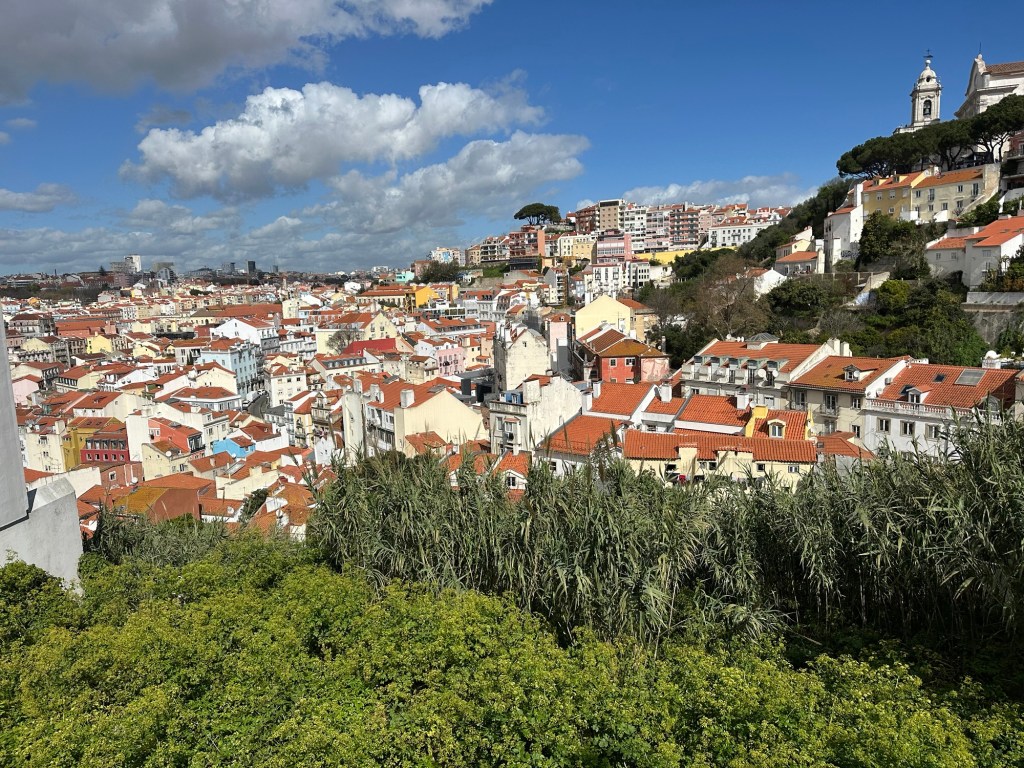
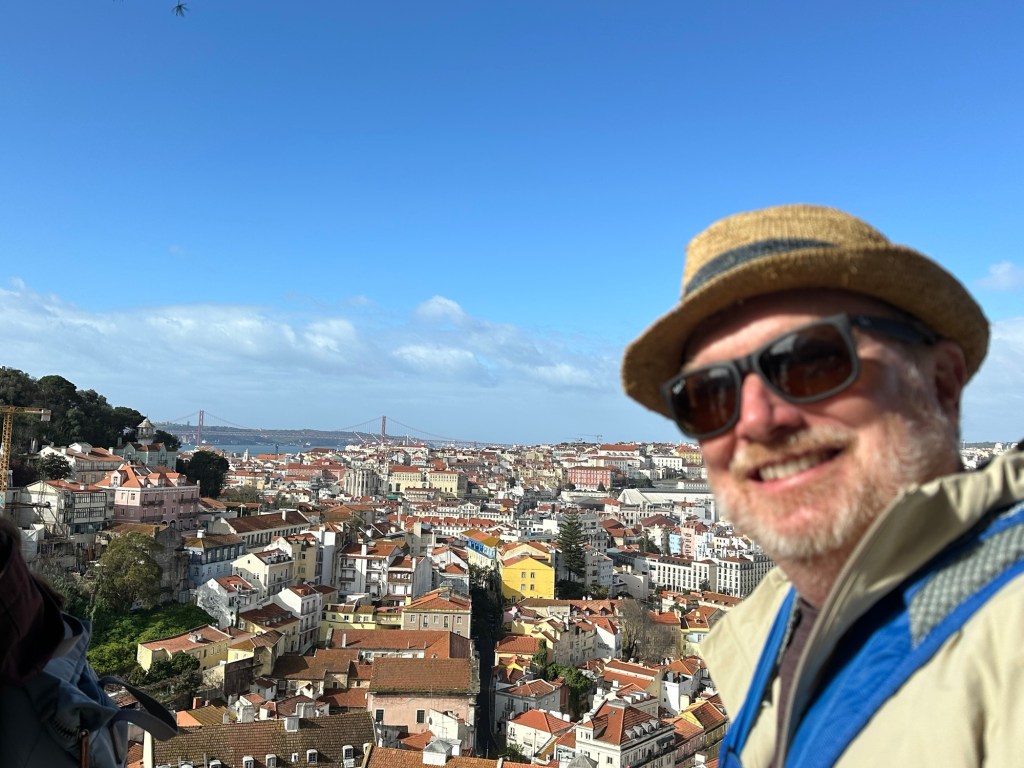
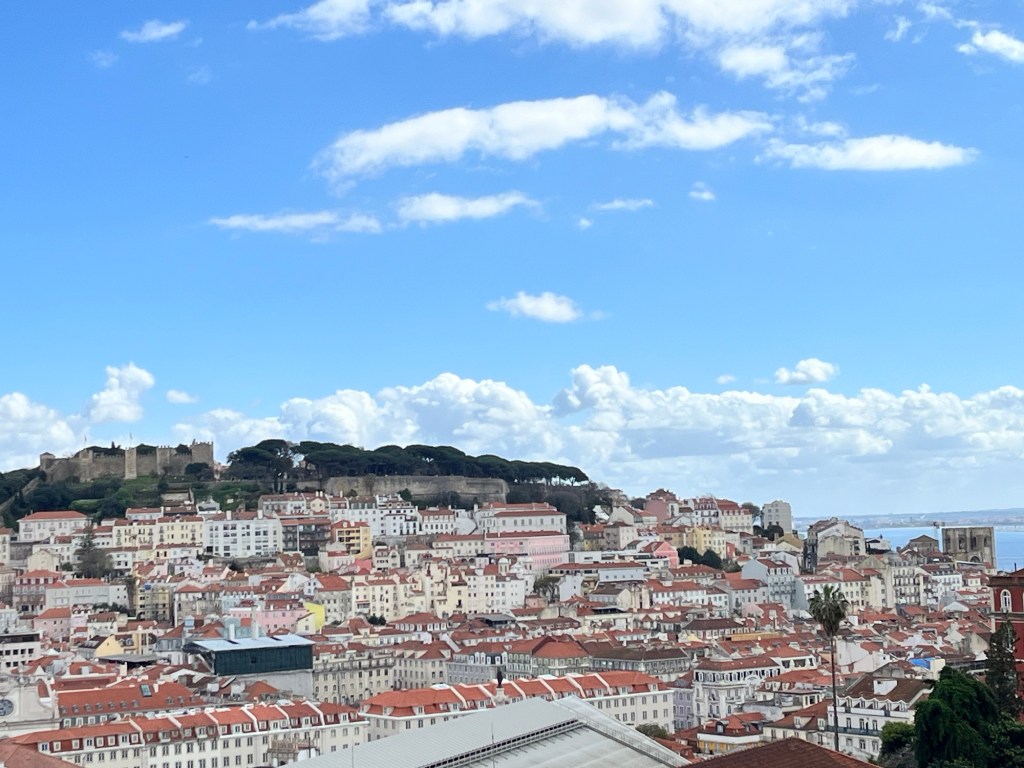
Speaking of views, Lisbon is full of breathtaking vistas and wonderful viewing platforms, or “miradouras”. On our first day we enjoyed the panoramic view from the balcony outside the Convento de Graca which overlooks the original fortifications in Lisbon (or at least the fort built on the original Moorish footprint), the Sao Jorge Castle, which is officially the highest point in Lisbon.
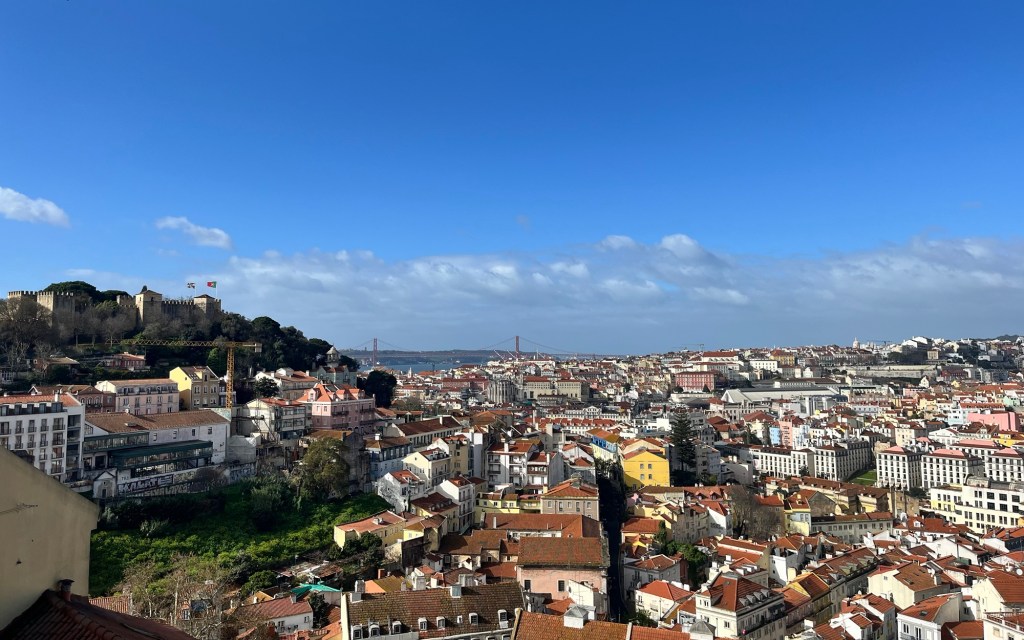
We discovered the Miradouro de San Pedro de Alcantara on our last day as we strolled through Chiado. What an incredible spot, with two tiered terraces offering breathtaking views over Blaxia to the hillside of Alfama and down to the river.
A few other highlights of our time in Lisbon:
Lisbon’s Squares
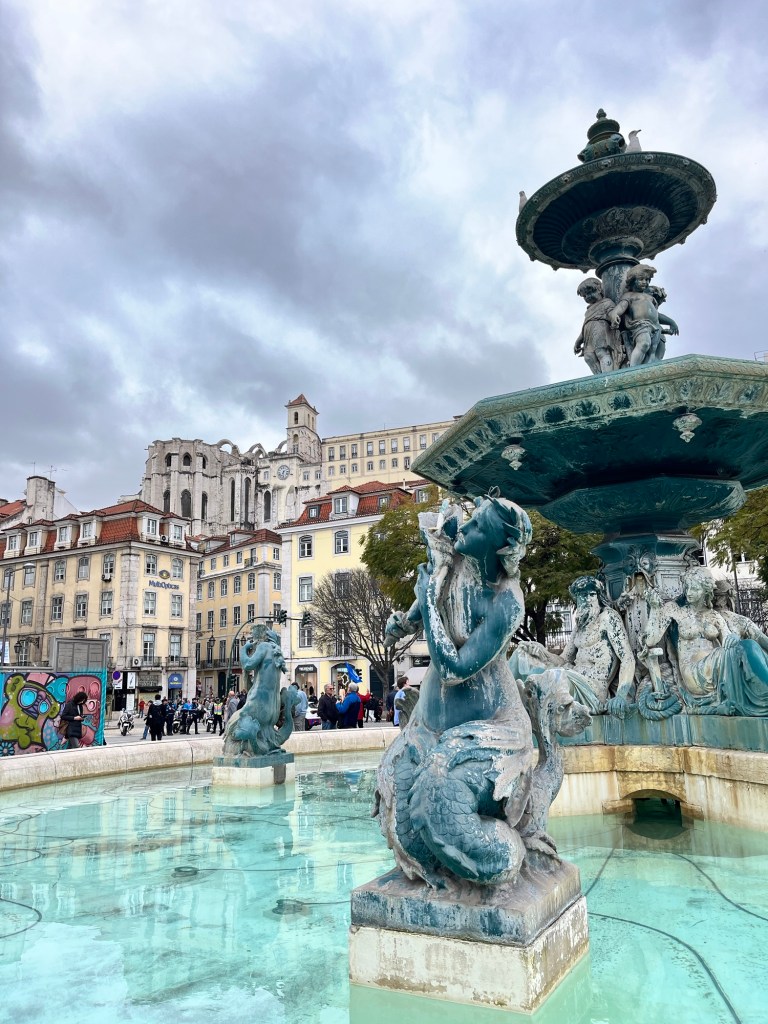
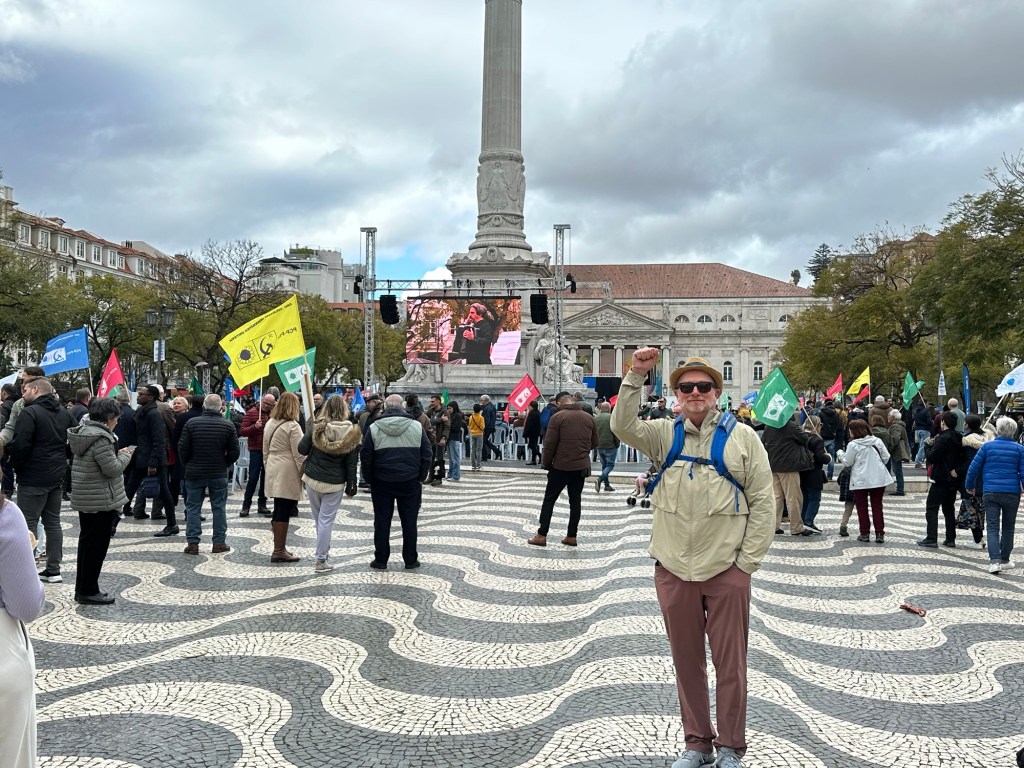
There aren’t many positive takeaways from a tsunami but one good outcome for the future citizens of Lisbon following the disasters of 1755 was the inclusion of a large number of squares in the city plan. Some, like Rossio Square already existed. This square is a huge oval, and is the centre of the old town. Its shape is probably due to its former function as a Roman racetrack. It features fountains, beautiful wavy tiles, the National Theatre at one end and a column in the middle with a statue of the vainglorious Pedro IV, who was both King of Portugal and Emperor of Brazil. Pedro was so vain that he ordered the statue he commissioned of himself replaced by one of an Austrian prince that he thought was more attractive.
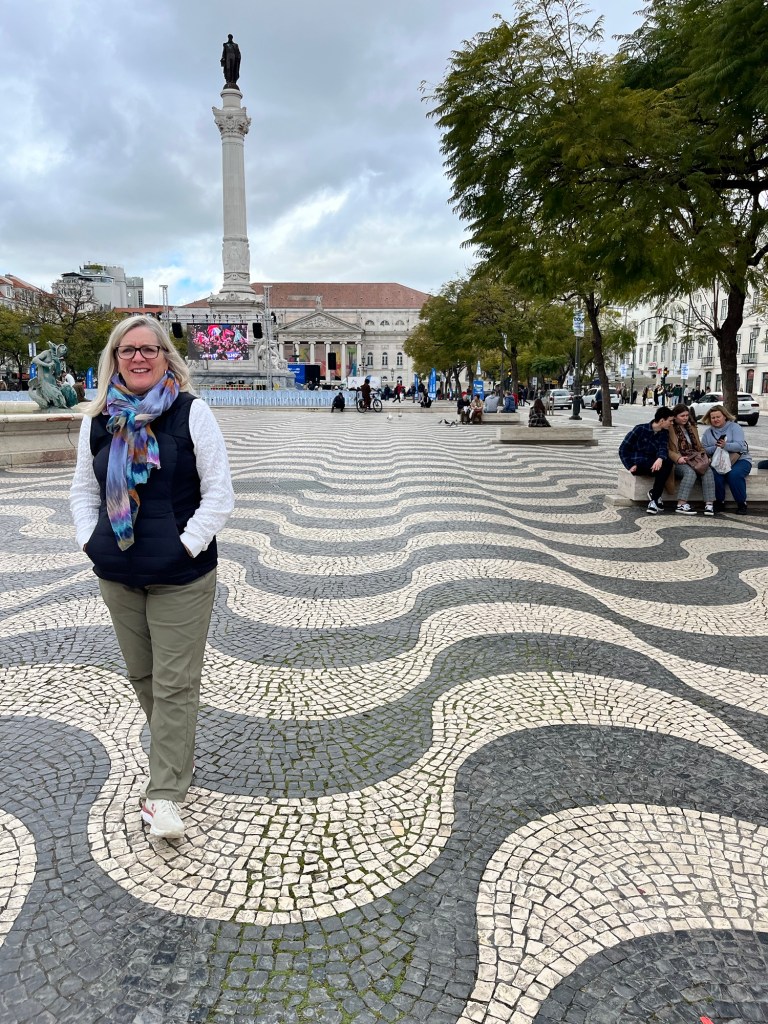
While we were there the local socialist party was having a lively rally to mark 50 years of Portuguese democracy (the peaceful revolution was in 1974) and to pump up voter support for the upcoming election.
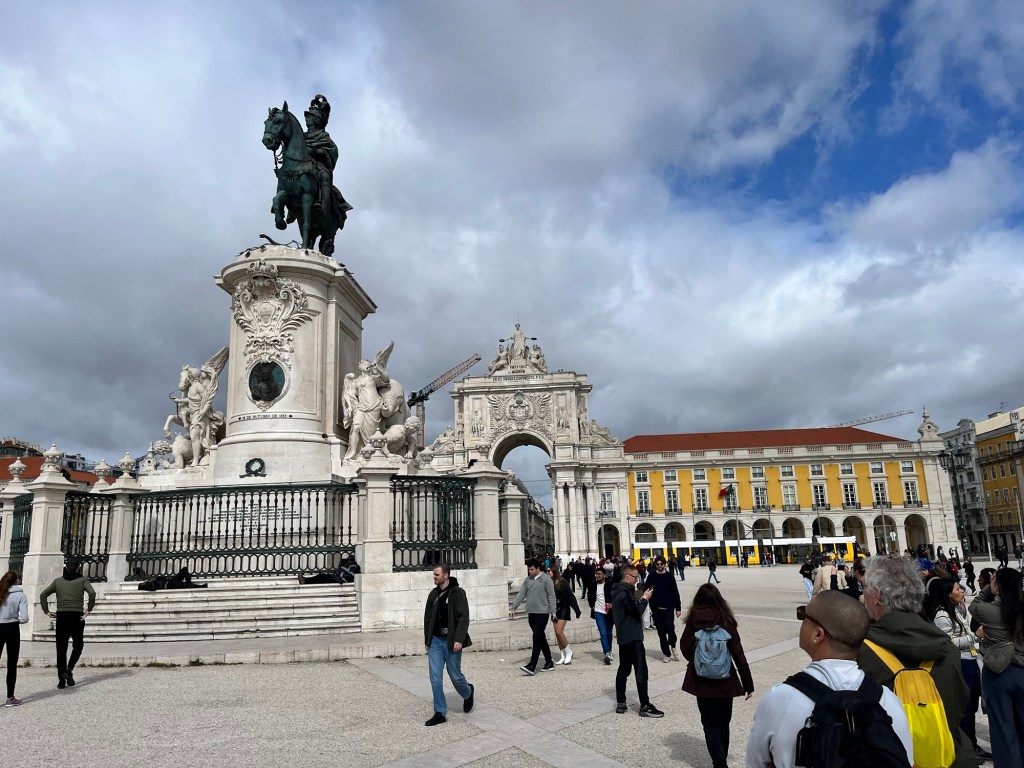
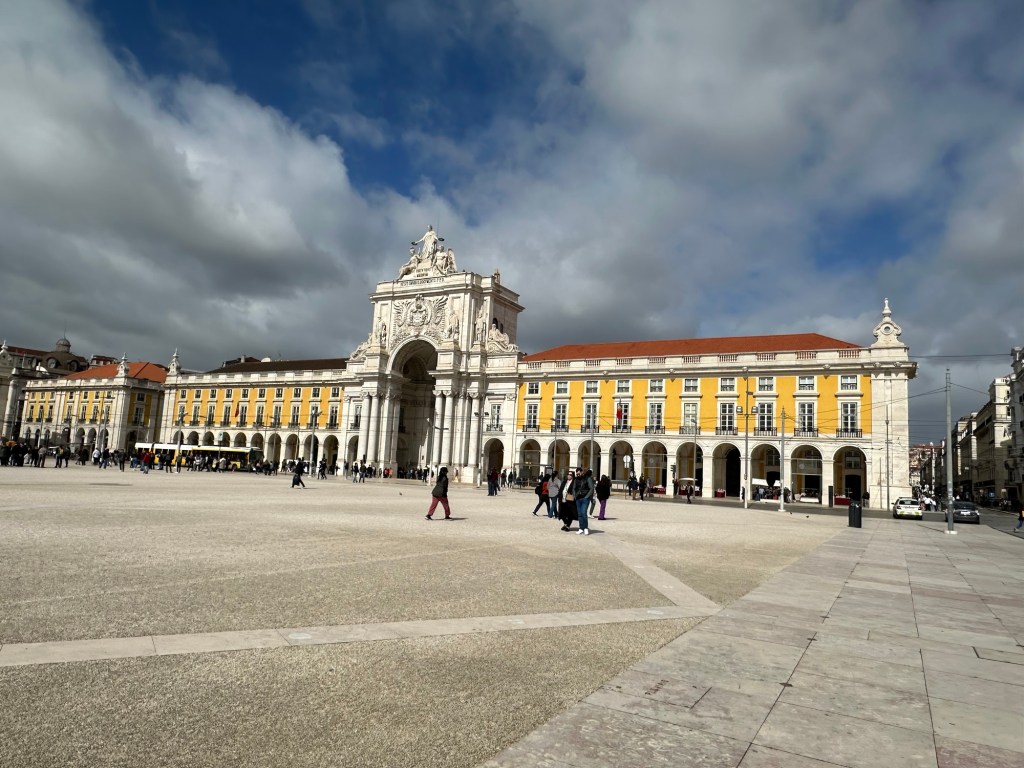
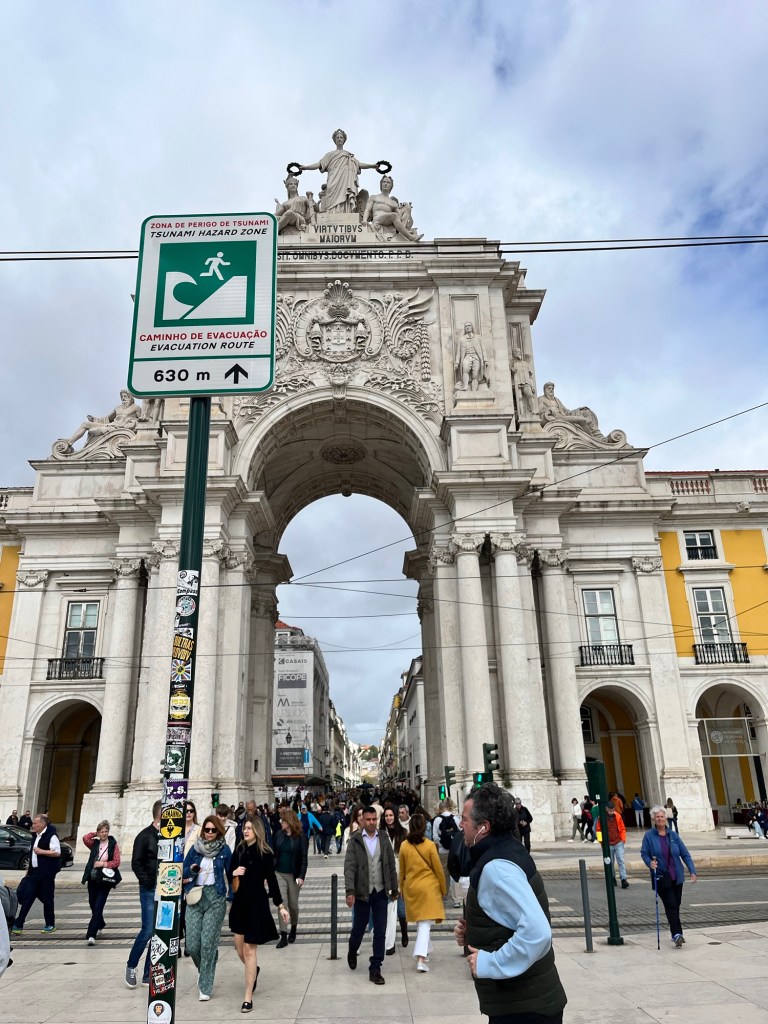
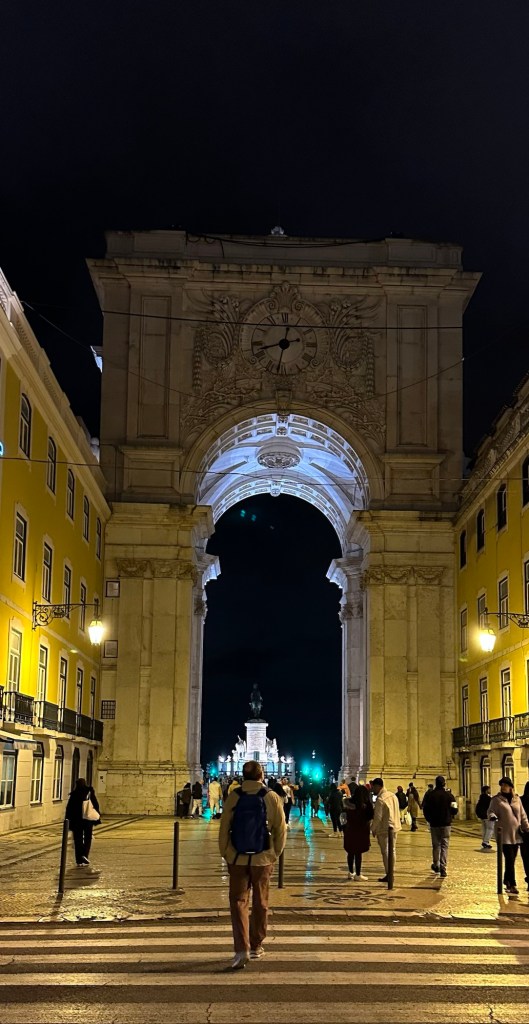
The Praca de Comercio (Commerce Square) is right between the river and Baixa, and its monumental Arch of Triumph marks the entrance to Baixa via Rue Augusta. This square was designed by Pombal as the front porch of the city. Ironically, the figure on top of the statue in the middle of the square is that of King Jose I, who was so freaked out by the earthquake and tsunami and fires (who can blame him really) that he effectively ceded control of the government to Pombal and left Lisbon for good.
Many of the squares feature trendy and popular little kiosks that serve refreshments and often provide some outdoor seating. They are particularly popular with locals.
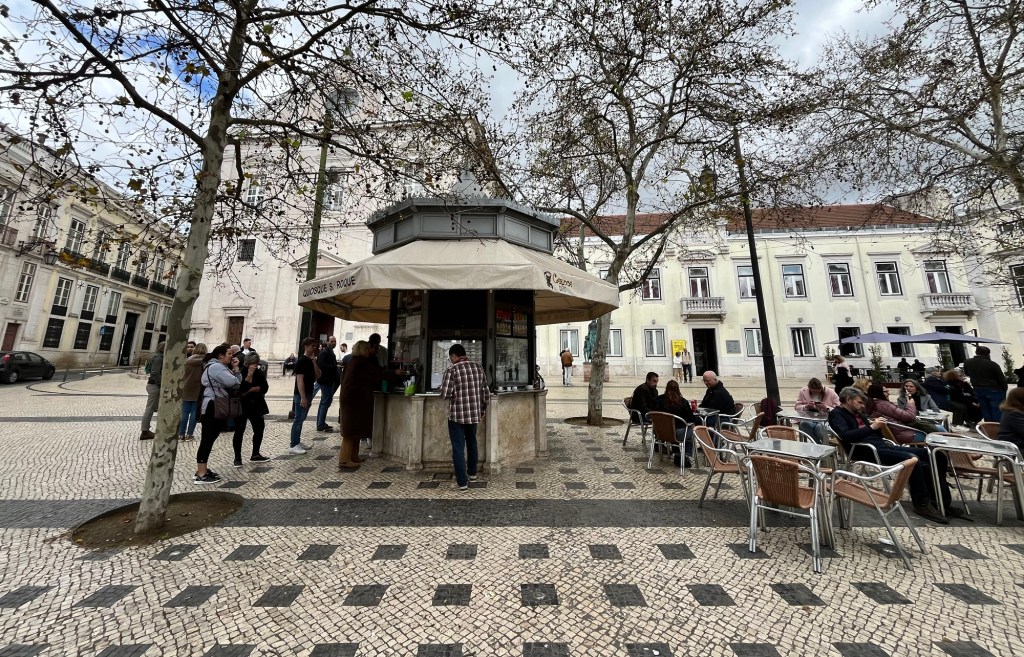
Praca da Figueira is another lovely square which features a food vendor market several days a week. Which brings me to the topic of….
Markets
The Mercado de Baxia is located in Praca da Figueira and features a number of food and drink vendors which surround a central eating area. It’s a great spot to stop for a snack and take a break.

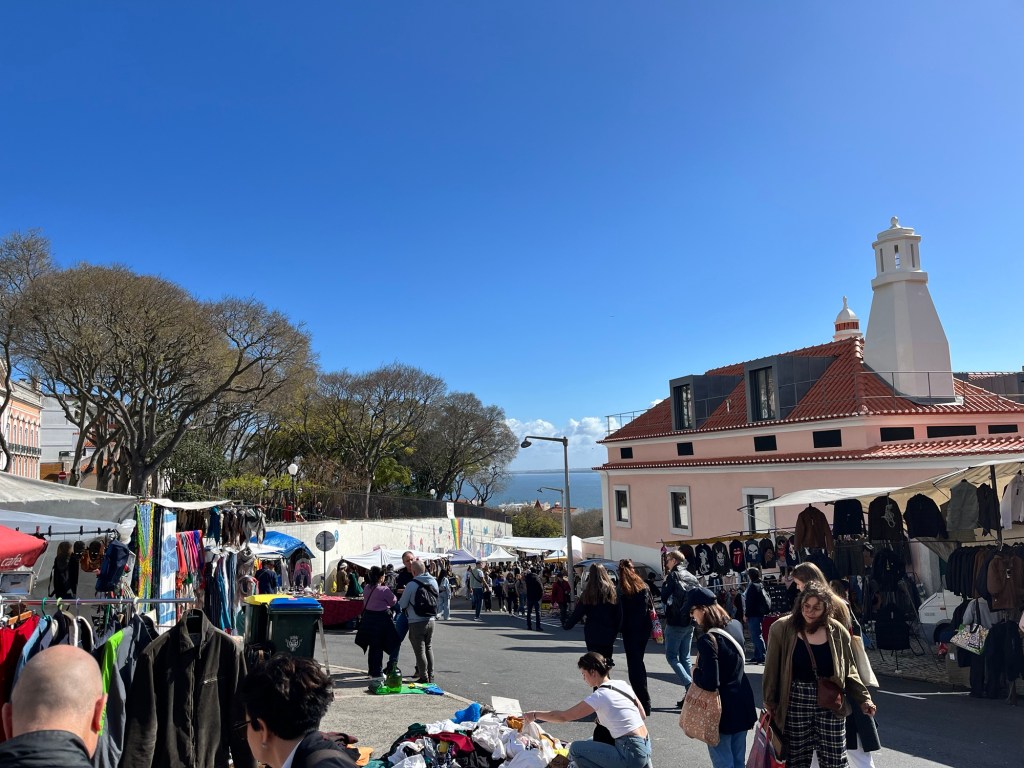
The Feria de Lara flea market can be found Saturdays and Tuesdays in Alfama, and like its host district it meanders in and around Campo de Santa Clara in a charmingly haphazard way. Like every other spot in Alfama, it takes work to get there!
The Mercado da Ribeira hosts both the traditional market (fruit, veg, fish, etc…) and a giant food hall, branded the “Time Out Market” and featuring outposts of some of the top chefs and restaurants in the city.
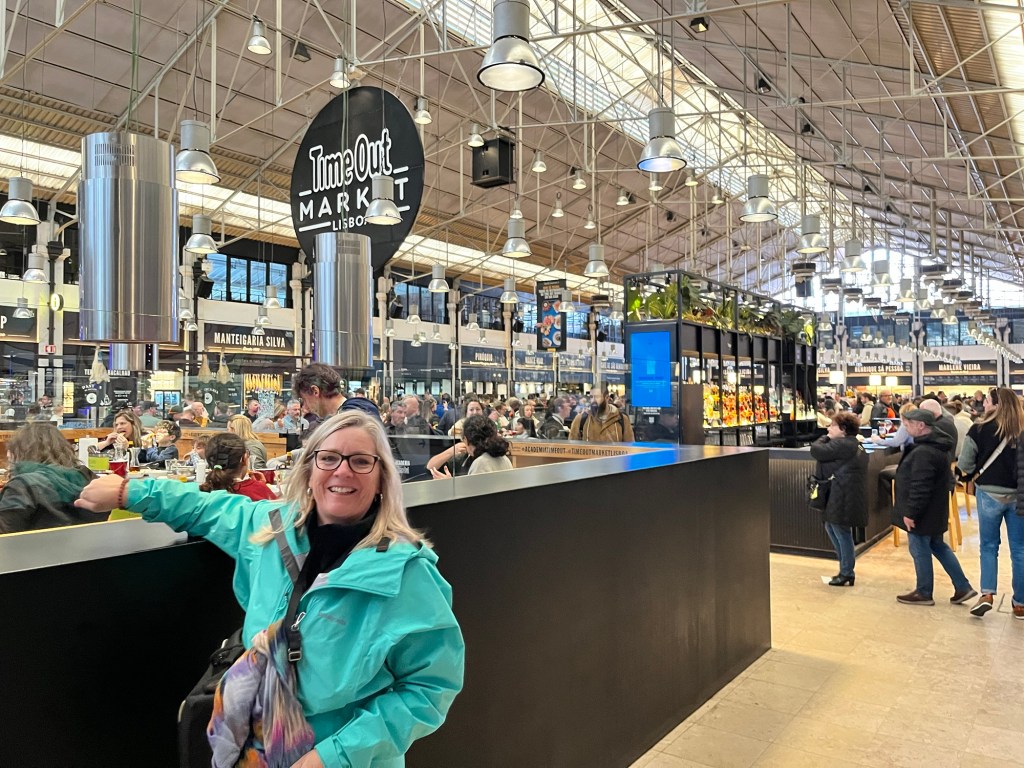
It is crowded and a little more expensive but given the quality of the food, a pretty good deal. You wander around, order your food and take your buzzer with you while you try and find a seat. You go pick up your food when the buzzer goes. We’ve been to some fun food halls, notably in Amsterdam and Christchurch, and this one is worth a visit.
Food and Drink
We were really impressed with the range and variety of the food scene in Lisbon. While a little pork heavy, there seemed to be a more permissive attitude towards pushing the boundaries than we found in Andalusian cuisine, for example. Not to say that the Portuguese don’t have their iconic favourites.
One of those favourites is the pastel de nata, a custard tart with a crème brûlée like top sprinkled with sugar and cinnamon and, ideally, served warm. These are a must have at least once but there is a great deal of debate over which ones are the best in Lisbon. Fortunately, Beatrice, the art history major who led us on our morning walking tour our first day ended the tour by taking us to Frabrica da Nata, for our introduction to this delicious treat.
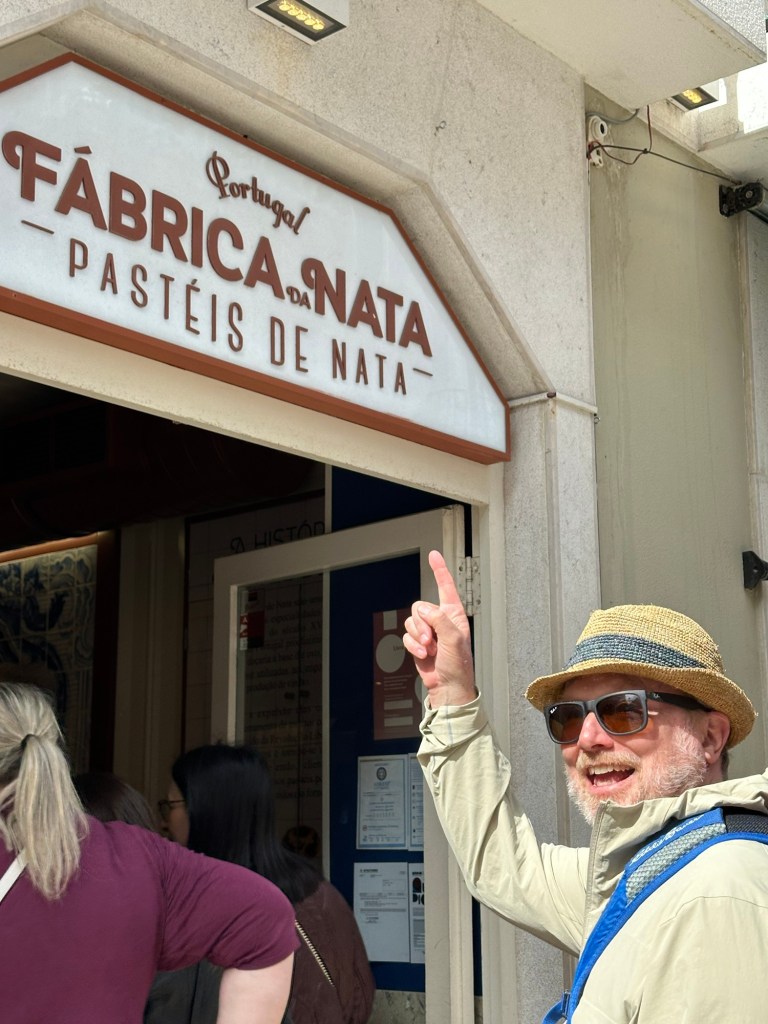
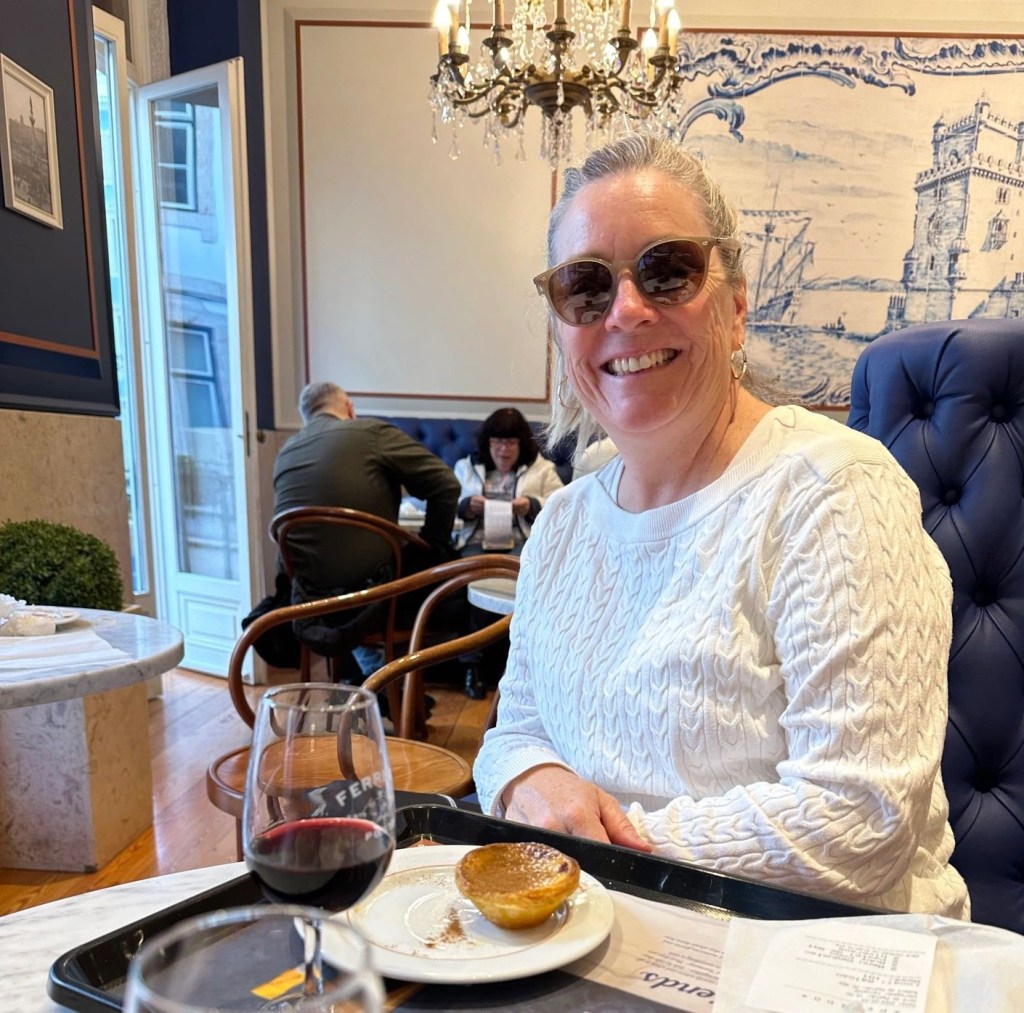
After the morning tour and several hours of wandering Lisbon, we were looking for a quiet spot to have a coffee and wait for our evening “foodie tour”. We thought, “Pastel de nata!” and returned to Frabrica da Nata for coffee and a second tart.
The food tour was fantastic, although we had second thoughts about that second tart. We were led by Joanna from “Tipsy Tours”- an unfortunate name for the tour but probably accurate. We were joined by a fun couple from Dublin (I now know that’s redundant), a professed “Trump hating American” from Seattle (I think that’s the American traveller’s go to “share” when in Europe -it’s replaced pinning a Canadian flag on your backpack), two hilarious German- Swiss business students (an oxymoron but accurate in this one case) who were in town for the weekend and a lovely woman from Taiwan working in Los Angeles and in Lisbon on business (not a teacher, for those wondering).
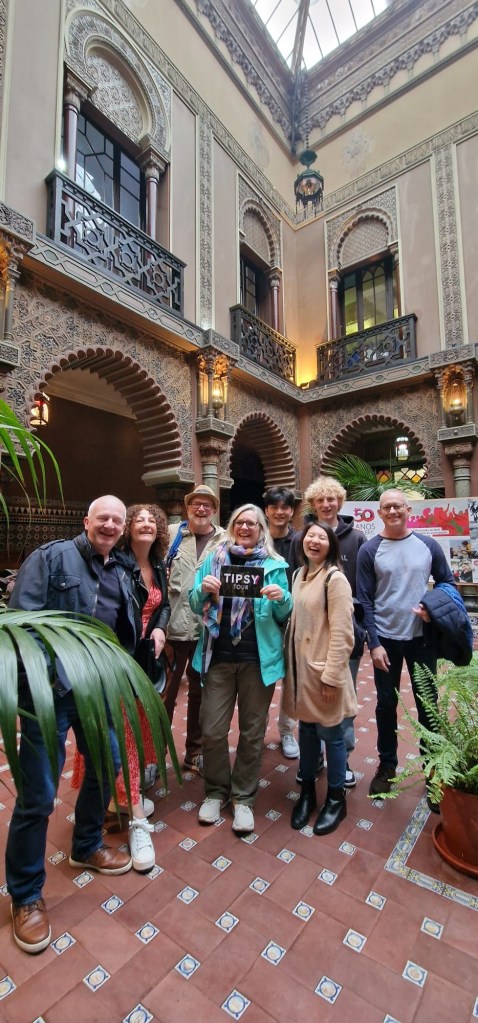
We spent four hours together and tried all sorts of interesting dishes and beverages at a series of eateries. I’m sure at this point you know where we finished.
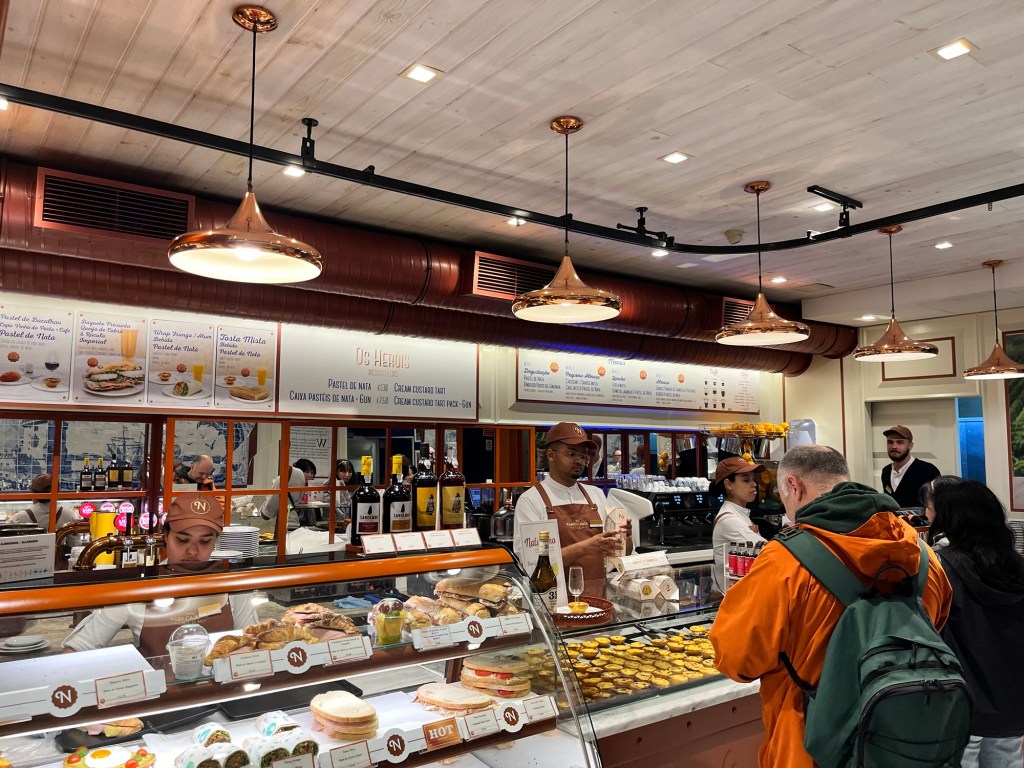
Frabrica da Nata.
Tart number three was a struggle.
One of the things we learned on the food tour was that everyone had been approached at some point to buy drugs, which apparently is a bit of an issue in Lisbon. We had been told the same thing by our daughter Andie’s boyfriend Matthew, who had recently been in Lisbon on business and had the same experience. Our guide said that in most cases this is a tourist scam involving fake “cocaine” (baking soda and aspirin) and fake “pot” (oregano). While we weren’t in the market for drugs or cooking ingredients, our feelings were a bit hurt that we were the only ones who had not been approached. While this was eventually remedied in my case, Robin sailed through our time in Lisbon without a single attempt at a pitch from a would be dealer. There goes her street cred.
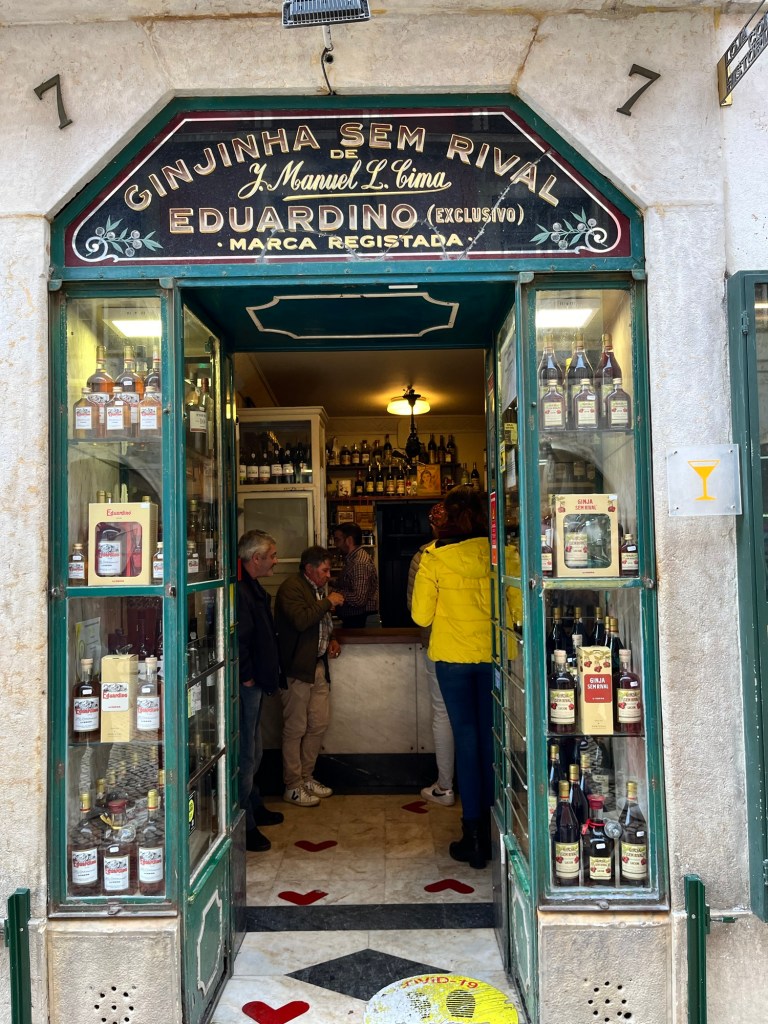
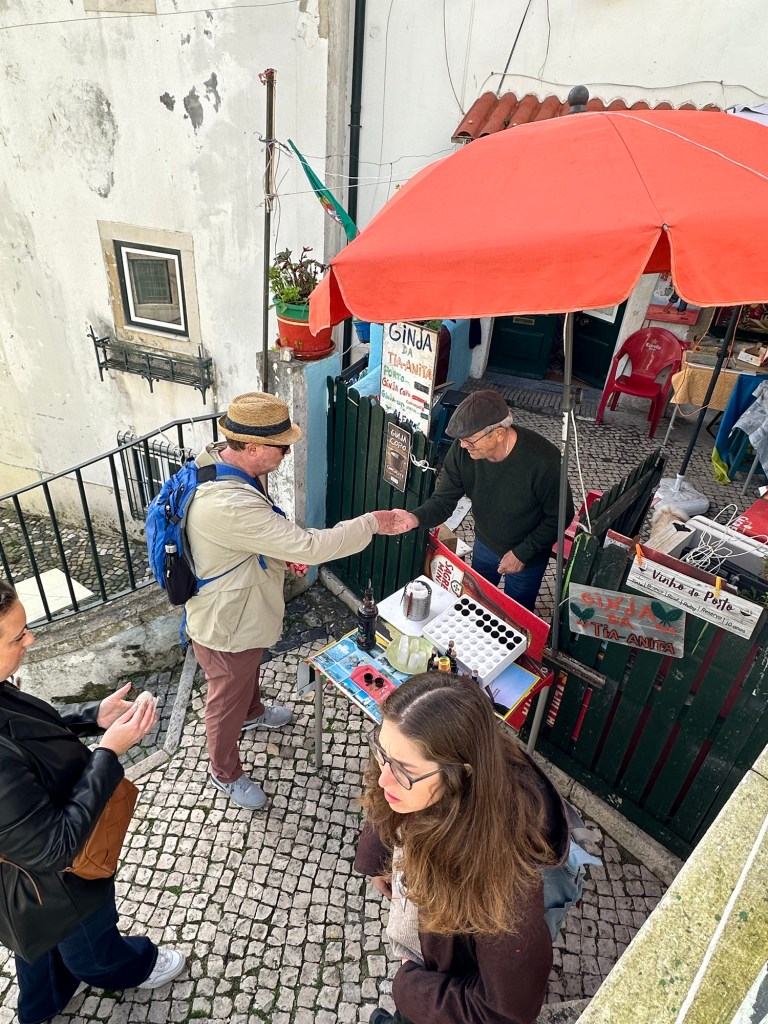
What’s even more ubiquitous than drug dealers are the Ginjinha bars and stands. Ginjinha (zheen-ZHEEN-yeh) is a sour cherry tasting liquor made from ginja berries, typically served with a cherry and sometimes served in a little chocolate cup. It’s a sipper not a shooter, and actually quite pleasant: very popular with the locals.
The River
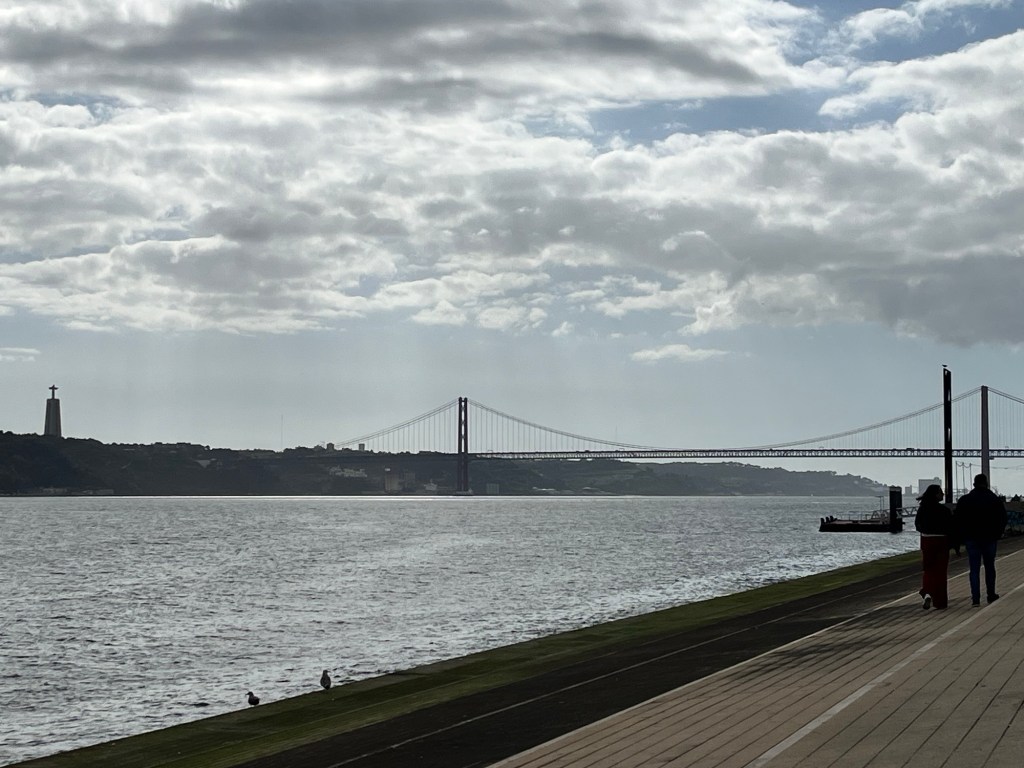
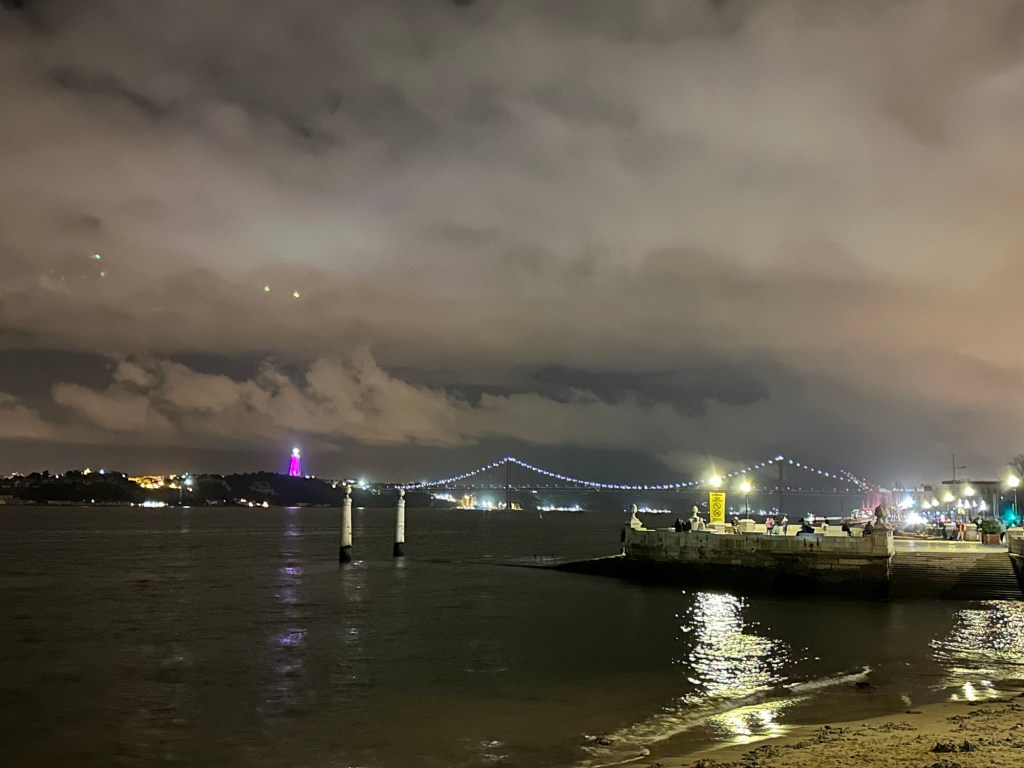
I mentioned that Lisbon sits on the Tagus River and there is a nice boardwalk that runs along the side of the old city.
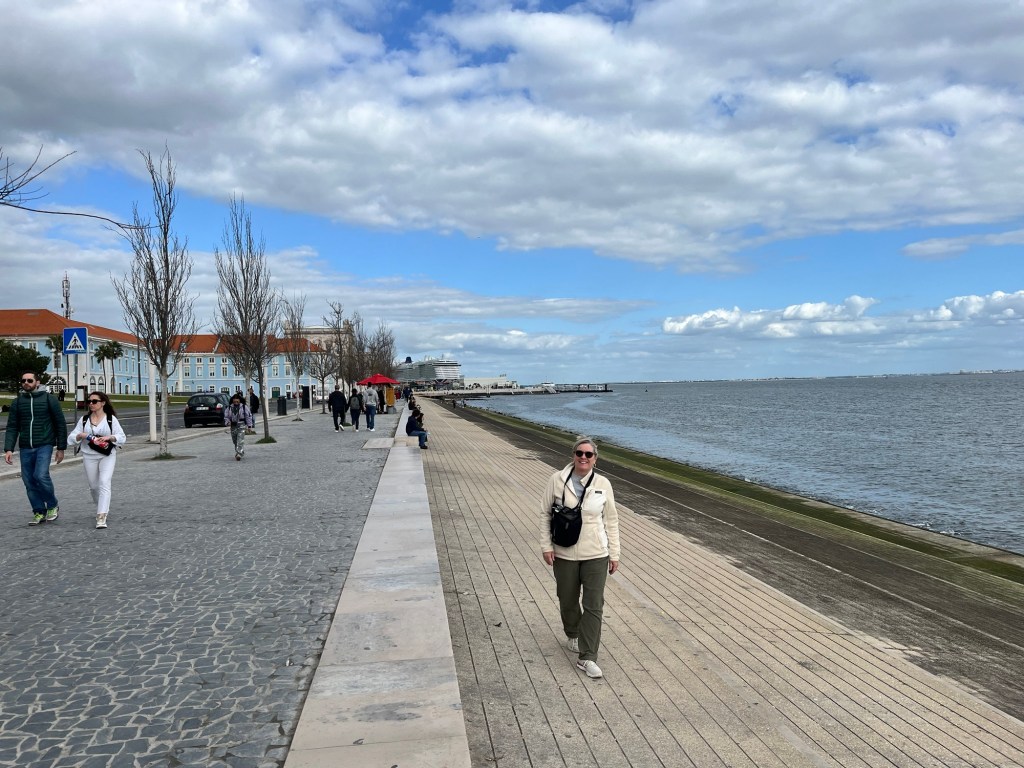
If you look down towards where the river begins to run into the ocean you will notice two peculiarly familiar things. One is the Ponte 25 de Abril (25th of April Bridge), a name which replaced its former namesake, the Dictator Salazar, to mark the liberation of Portugal from fascism. It was built by the same company that built San Francisco’s Golden Gate Bridge, which explains the sense of deja vu. The other item is the 100 meter statue on the far bank, Cristo Rei Statue (Christ the King), a gift from Brazil and a smaller version of the famous statue in Rio de Janeiro.
We are nearing the end of a trip and wearing down a little I think. I had hoped to go out for an evening of Fado in Lisbon, but when we returned to the apartment on our last night we were just too tired to head back out. Our apartment was in the heart of the Alfama district, the birthplace of Fado. We were across from the Fado museum. It seemed like such a shame.
But soft, what music through yonder window drifts?(apologies for the embellishment)
Fado! From a nearby restaurant! A perfect soundtrack to our last night in Lisbon!
I mentioned earlier that we could have spent another few days in Lisbon. There were more neighborhoods to explore, museums to check out, music (Fado in particular) to listen to. We will definitely be returning to Lisbon.
Tomorrow we head to the Algarve for what appears to be four days of rain by the ocean. Hoping for a change in the forecast!

 MacsTravel Blog
Leave a reply to Darren Philip Climans Cancel reply