We are big fans of guidebooks when trip planning, and the Rick Steves series of travel books are typically some of the best. They are heavy on information and logistics and light on images and pictures, so they tend to be more comprehensive than many others. So it was a little odd to leaf through his book on Spain and find no mention of the city of Cadiz. No mention of the city that is often cited as the first city in Western Europe, founded by the Phoenicians (shout out to the history buffs in our Dinner Club). No mention of the city that was ruled by the Romans, then by the Moors, and that was central to the expansionist dreams of Catholic Spain in the 16th and 17 the centuries.
Swing and a miss Rick. Cadiz is a fabulous place to visit for a few days.
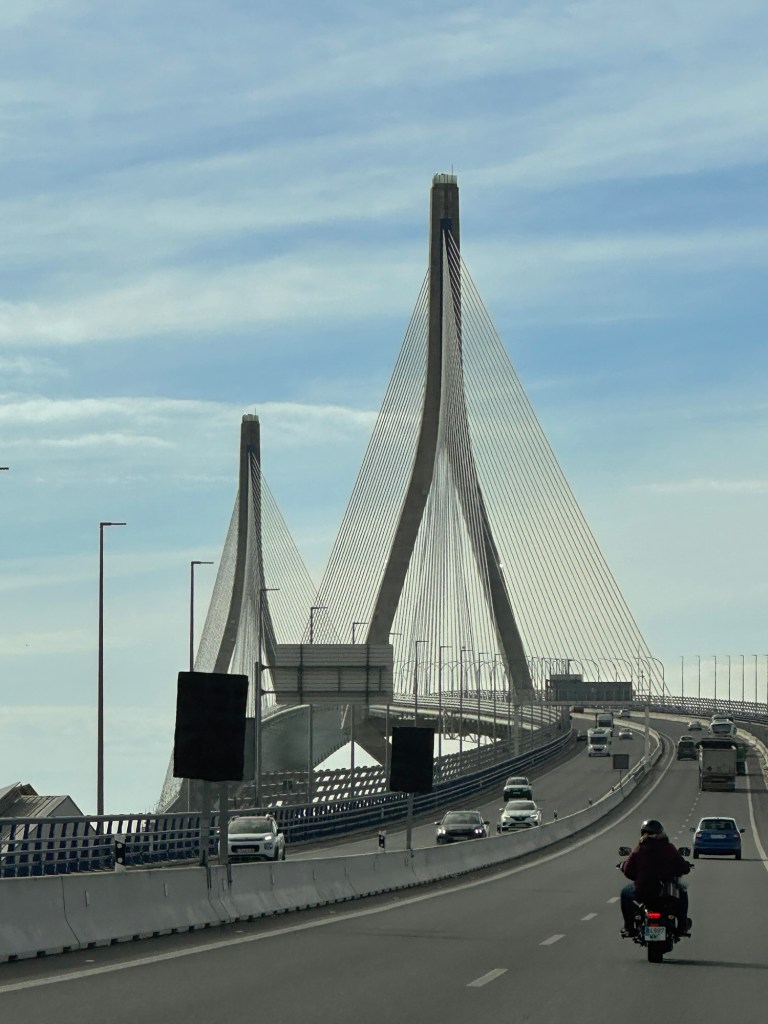
The old city of Cadiz sits at the tip of a peninsula and is characterized by its proximity to the Atlantic Ocean and the twists and turns of its narrow medieval streets. It is an extremely walkable city and we were fortunate to stay in a spot that was both central and somewhat accessible by car as we drove to Cadiz from our stay in Ronda. One you cross the distinctive three km long 1812 Bridge into the city (named after the year of the signing of the Spanish Constitution, not the year it was built) you weave through a series of roundabouts along the coastline until you suddenly turn into the heart of the old city, down a very narrow street and into the Plaza de San Antonio.
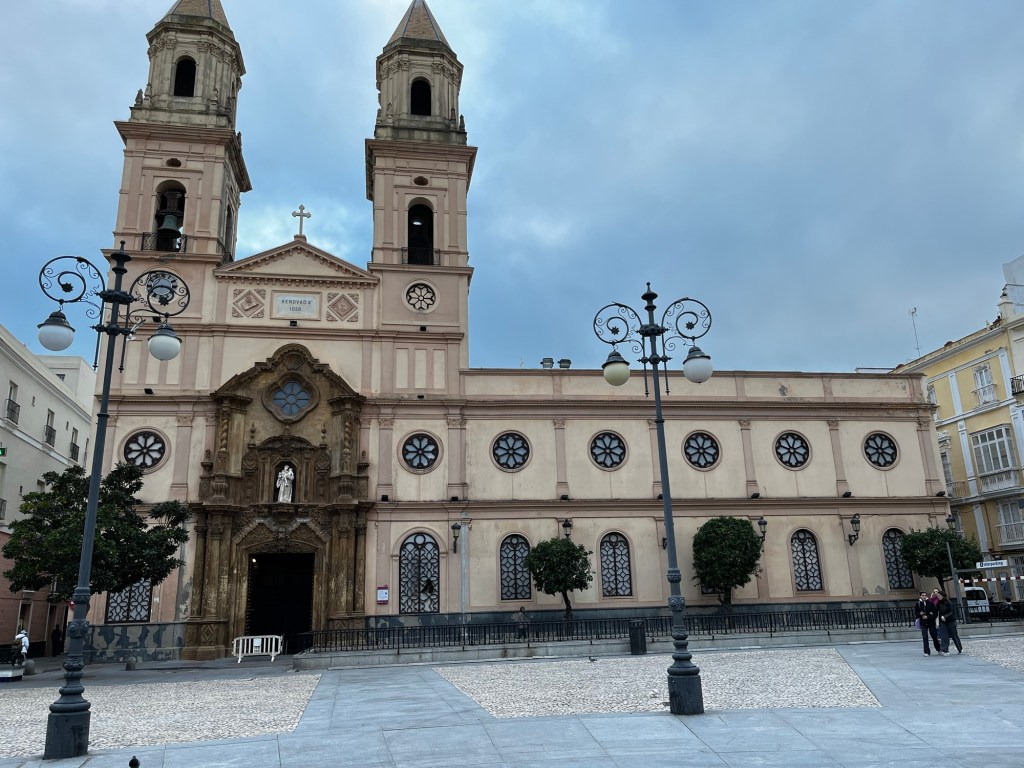
The underground parking lot is here, cleverly buried under a beautiful public square, and it’s a short walk down the cobbled streets into the town. Although we took the car out once for our day trip to Jerez de Fontenera, it was a pleasure to leave it parked for the remainder of the visit.
We had a number of highlights on our visit to Cadiz:
The ocean
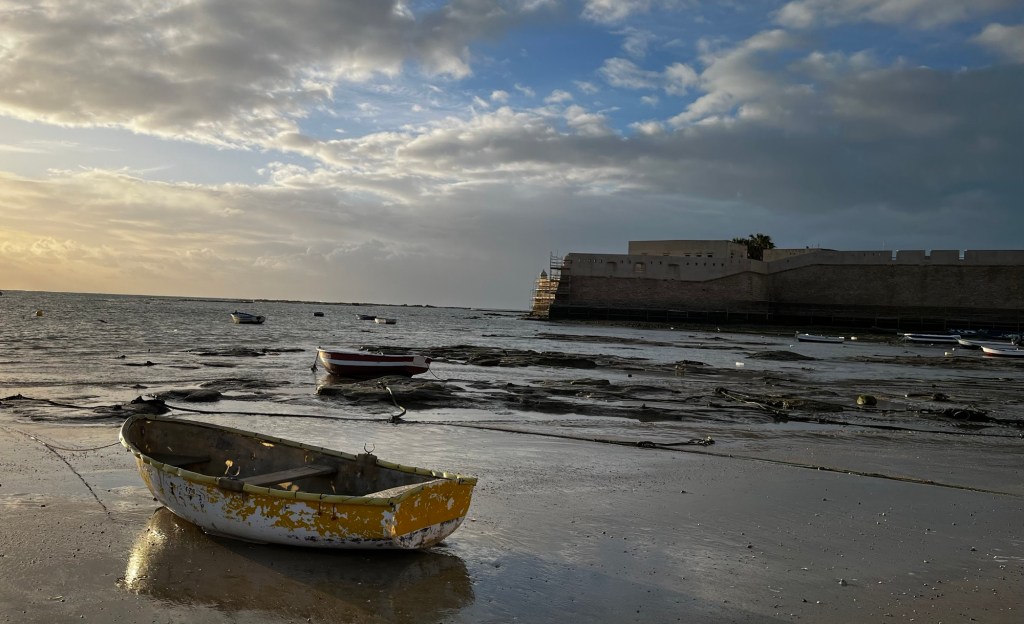
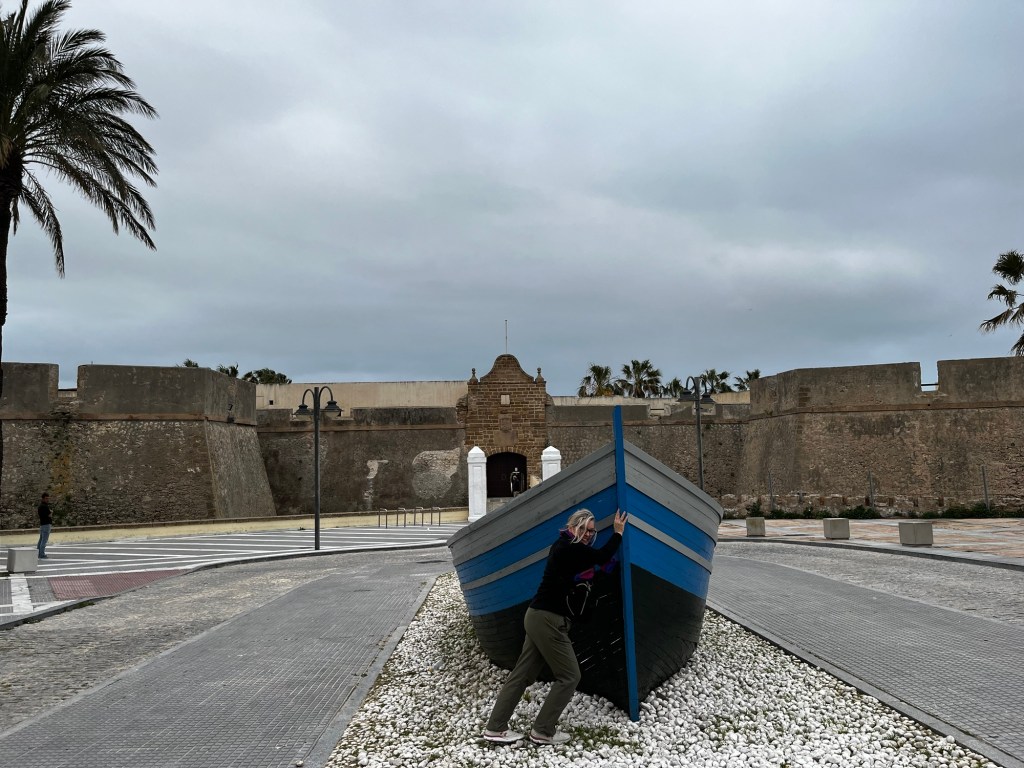
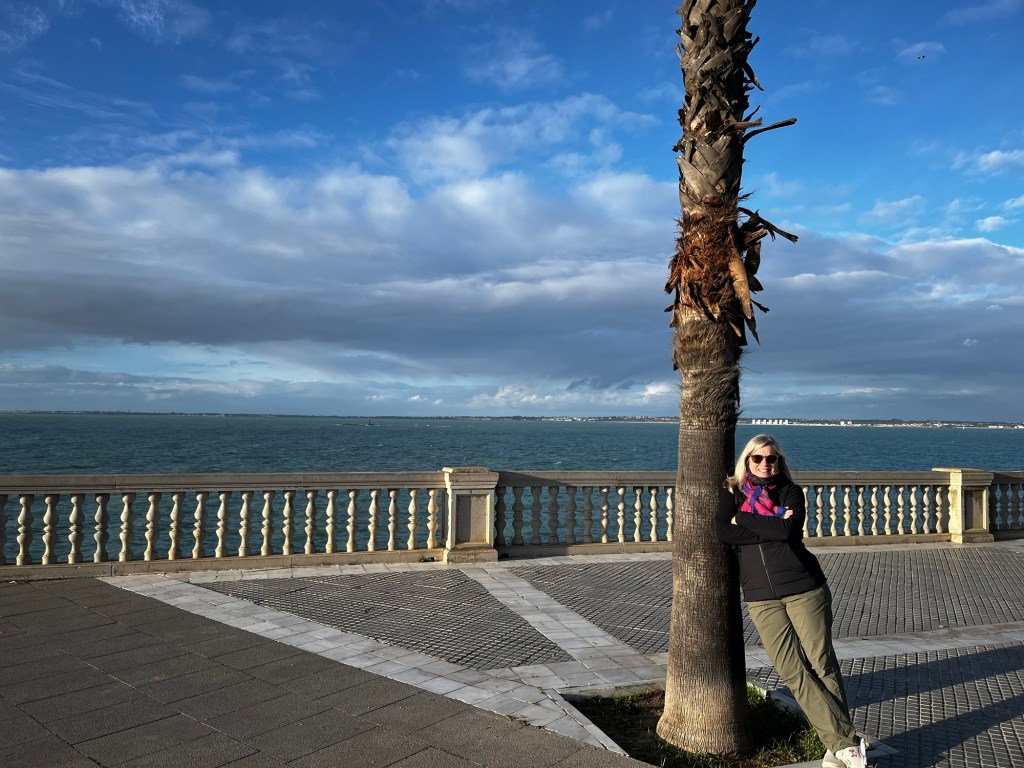
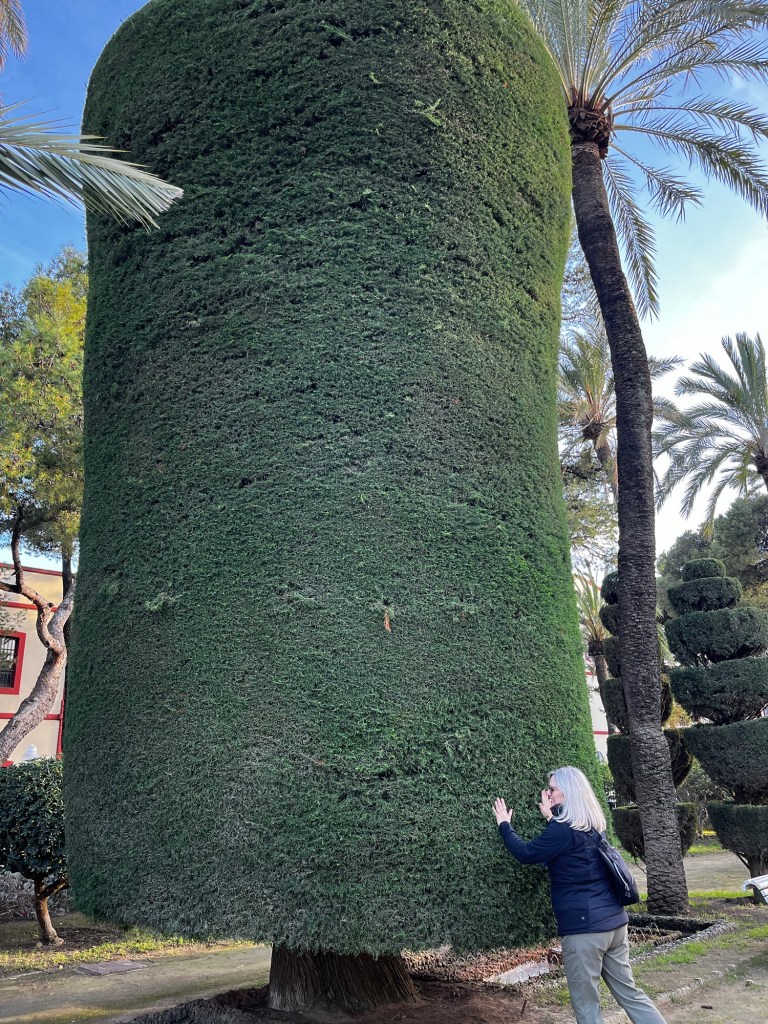
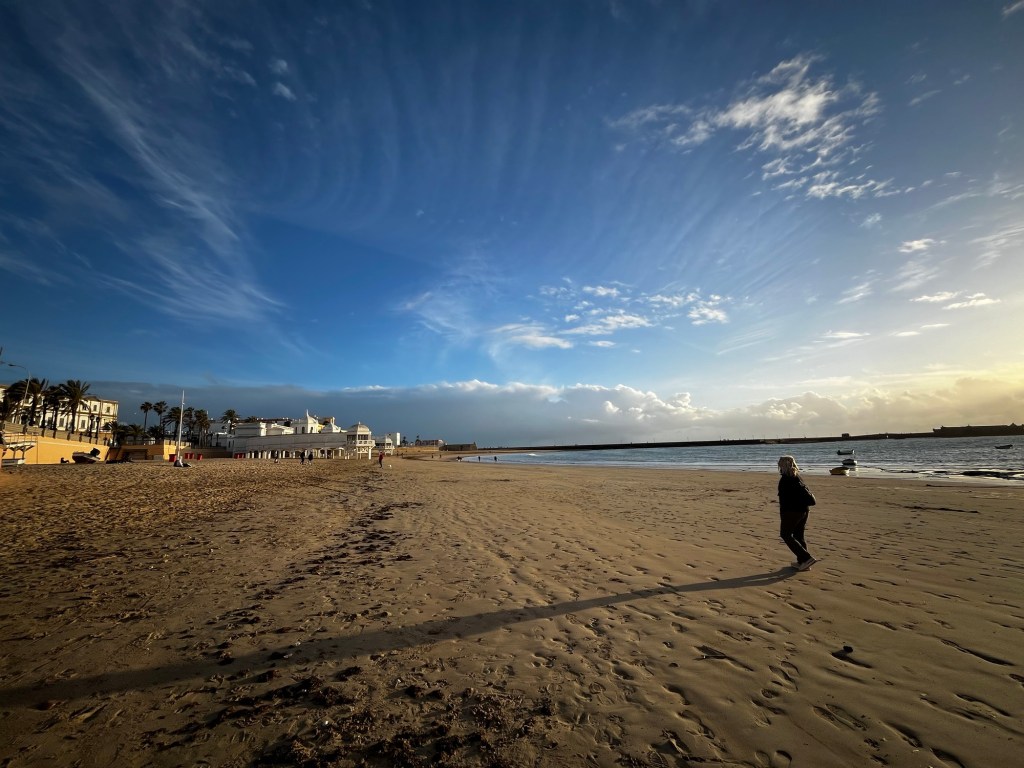
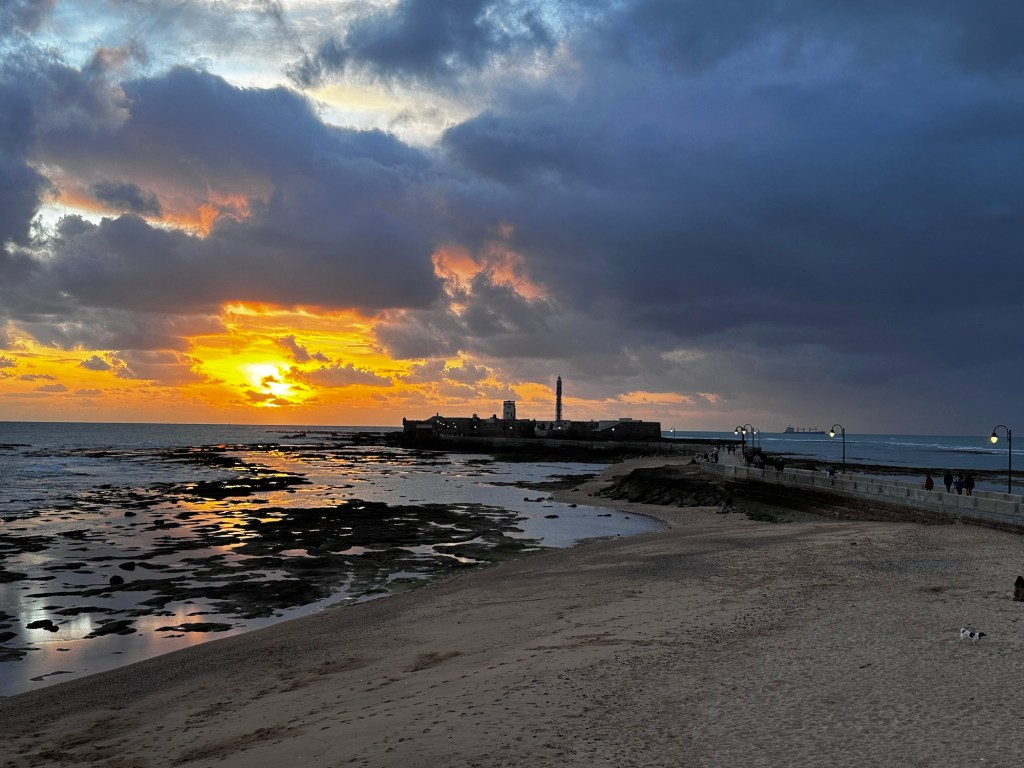
The old city of Cadiz is surrounded by water on three sides, although you’d never know it when wandering the narrow streets. Fortunately there is a terrific boardwalk you can stroll, and you can nip down to La Caleta, which is a great urban beach at the edge of the old city. It is framed by two historic forts, and its harbour is full of fishing boats anchored or beached in low tide. The boats are a great reminder of the fishing culture and the western sunsets here off the shire of the city remind you that you are on the Atlantic Ocean, not the Mediterranean. There is also a lovely botanical gardens that stretches along the western boardwalk.

A Roman Theatre
Near the shoreline and by the Cathedral is a partially excavated Roman Theatre! It has been beautifully preserved and the information and access is first class. And it’s free!
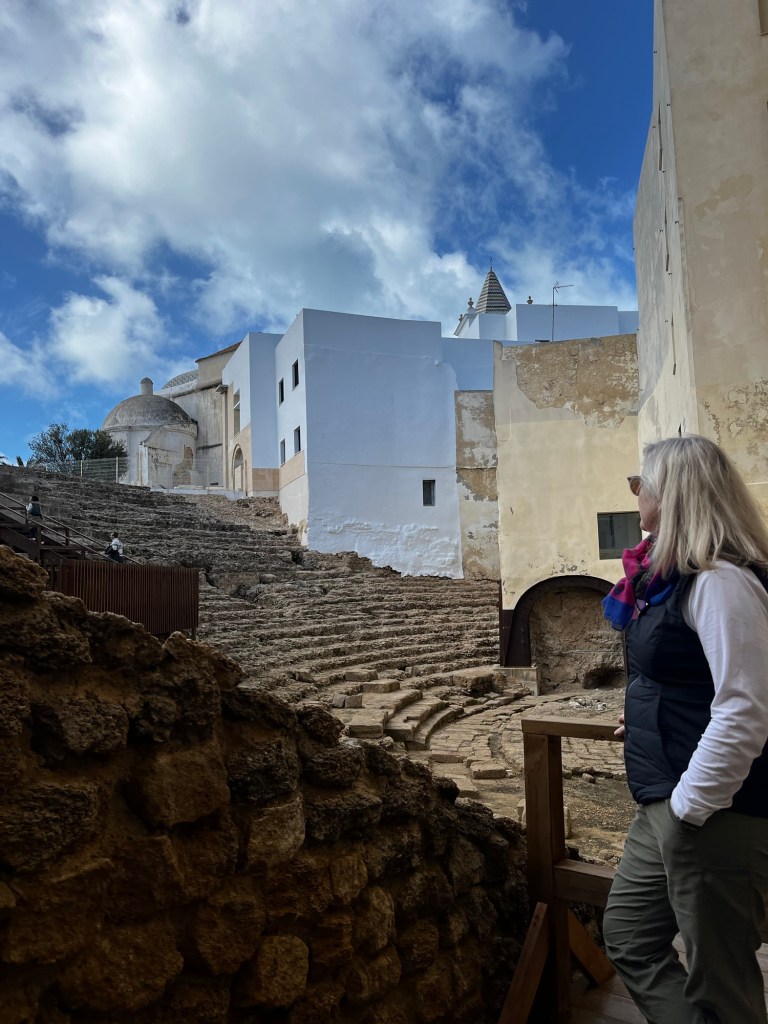
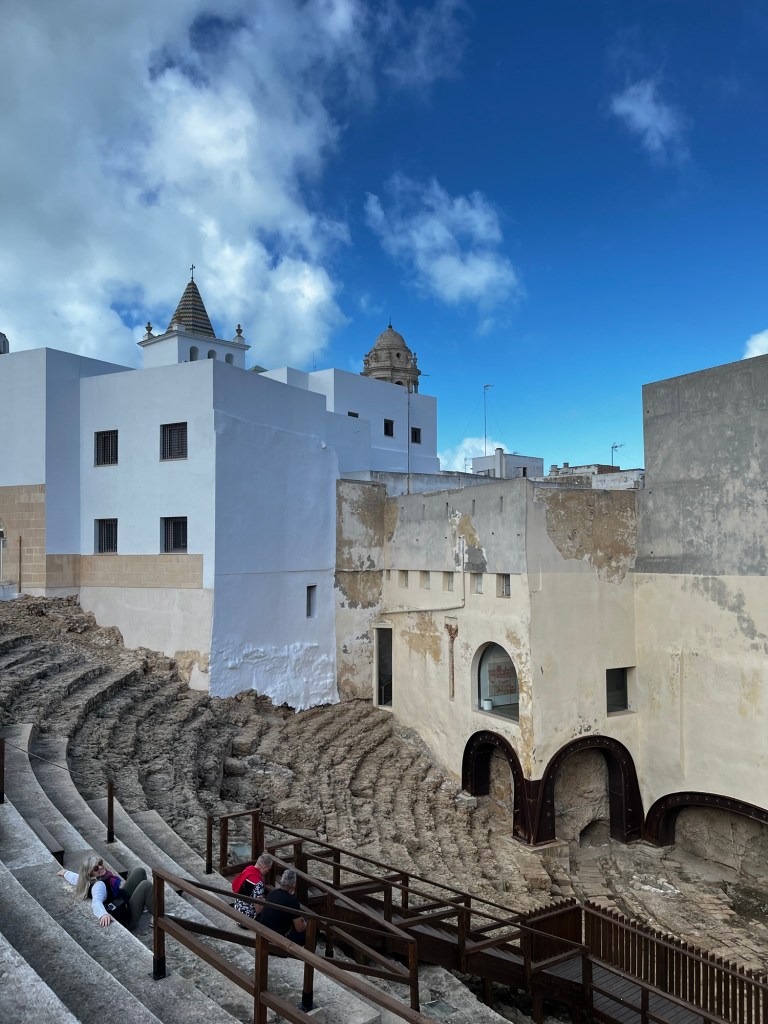

The cathedral
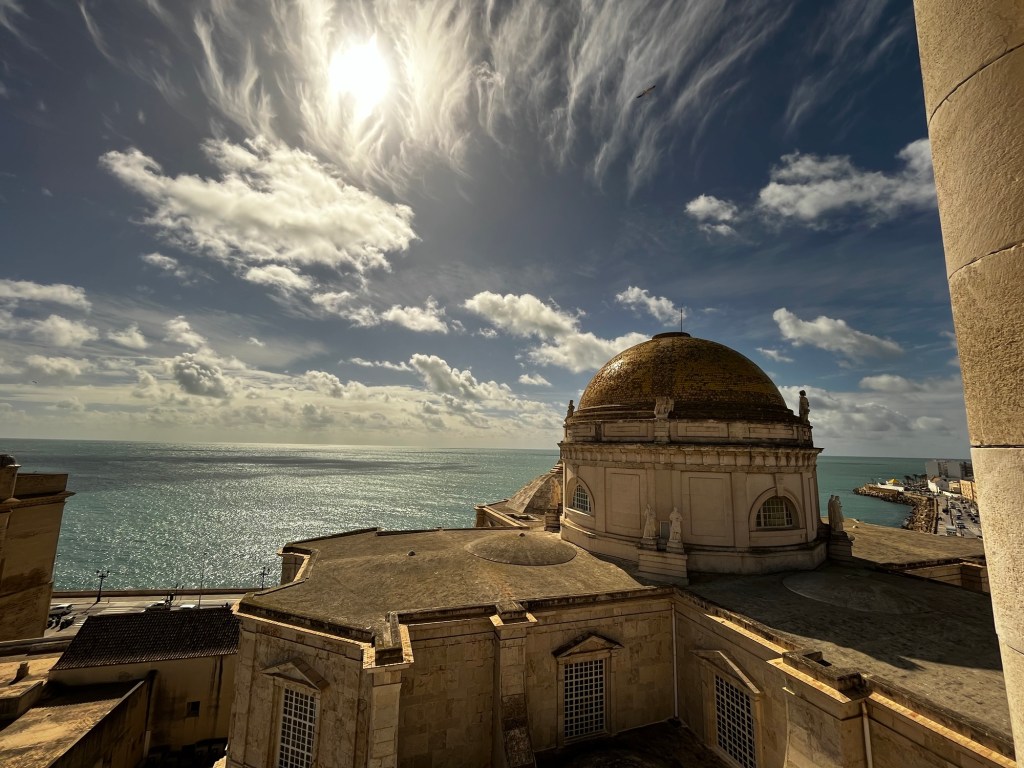
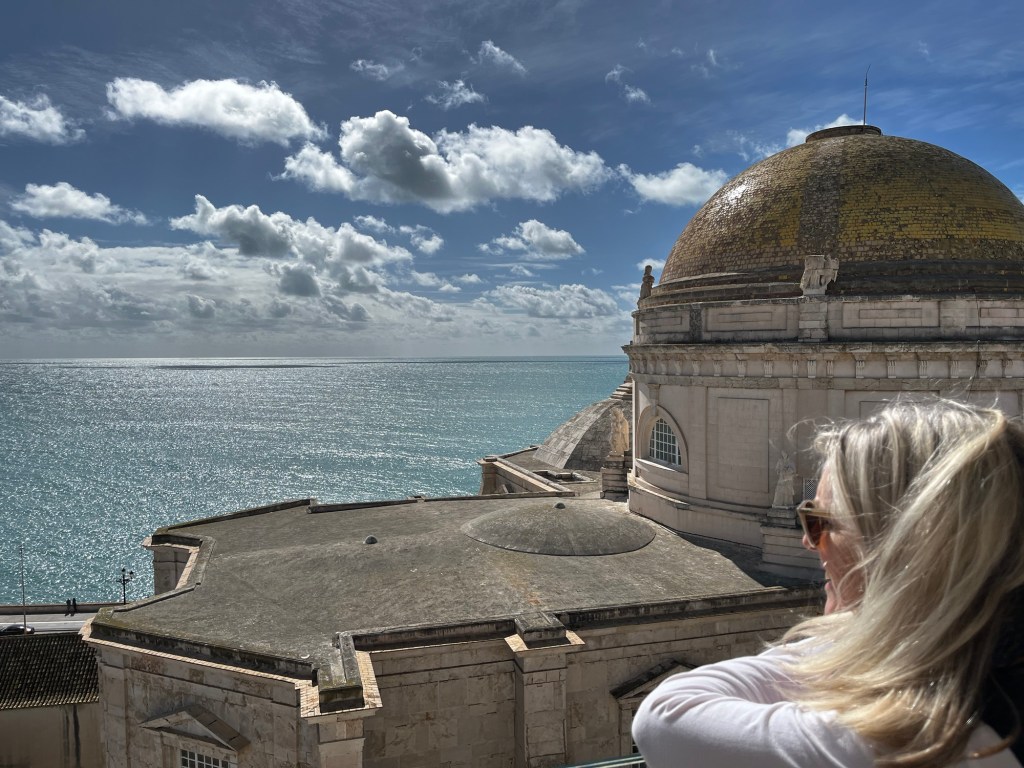
Another Andalusian city, another giant cathedral. While the interior was certainly impressive, I think we had more appreciation for the views of the cathedral from the boardwalk and the square. It feels like a giant ship moored on the edge of the city.
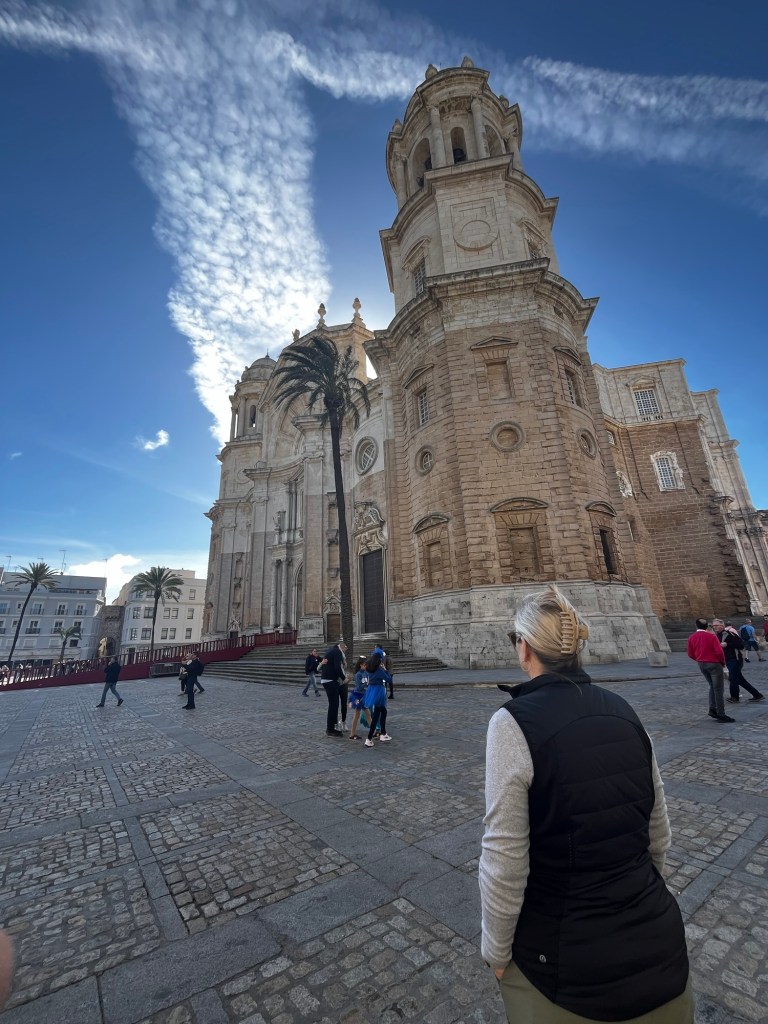
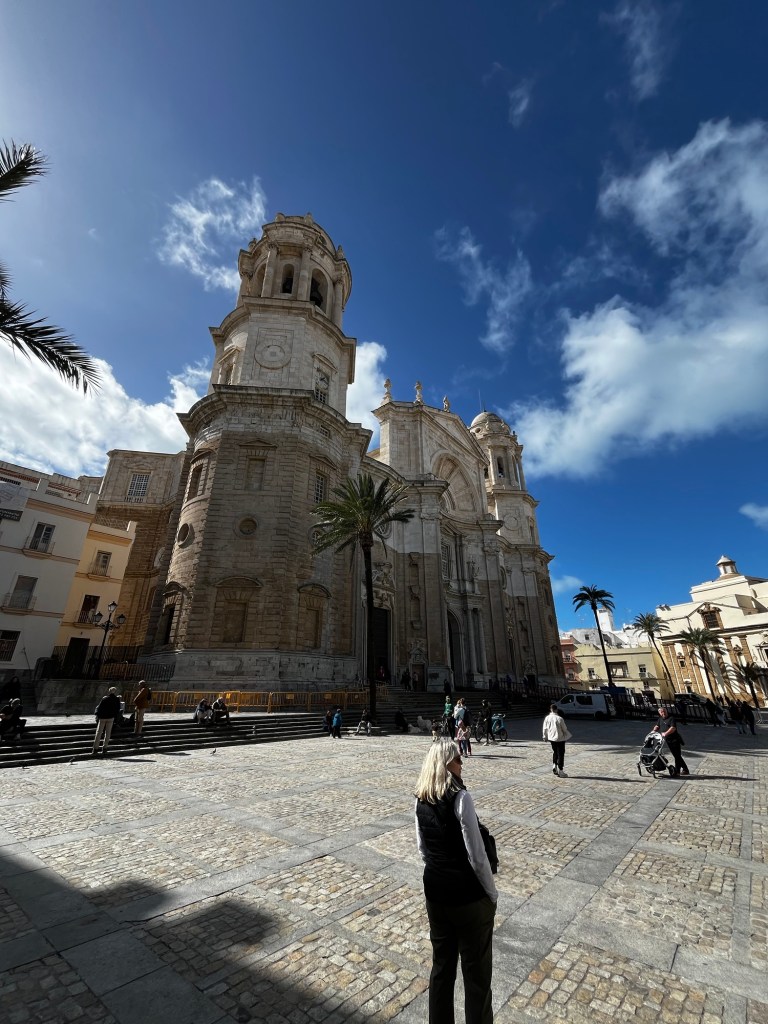
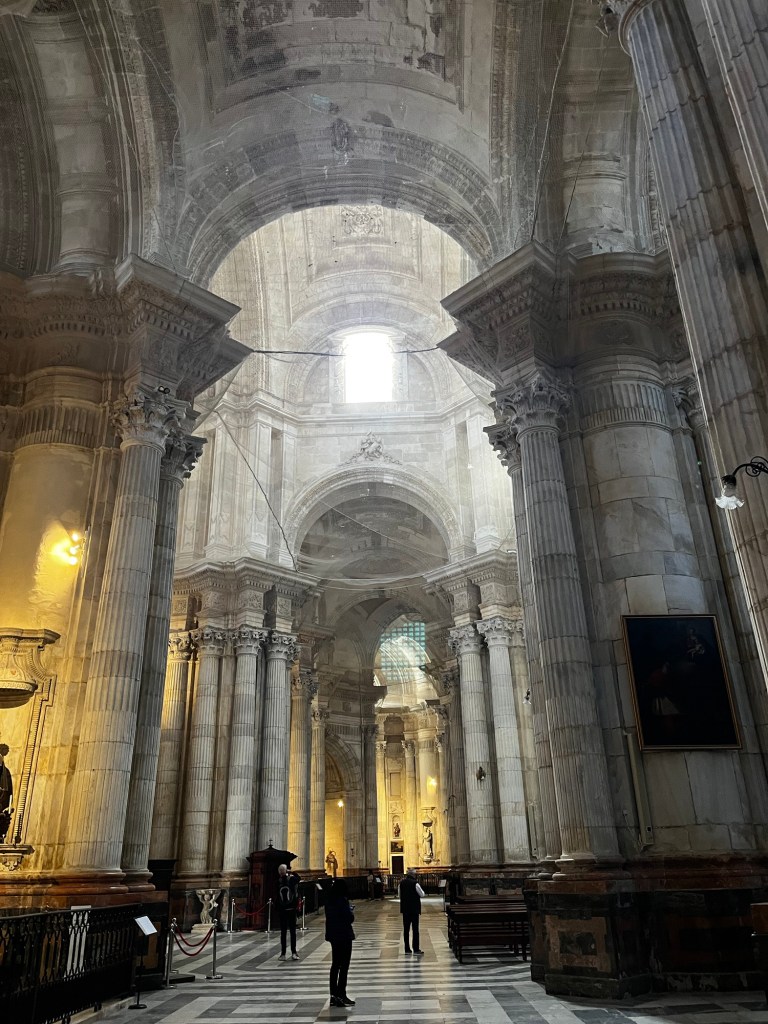
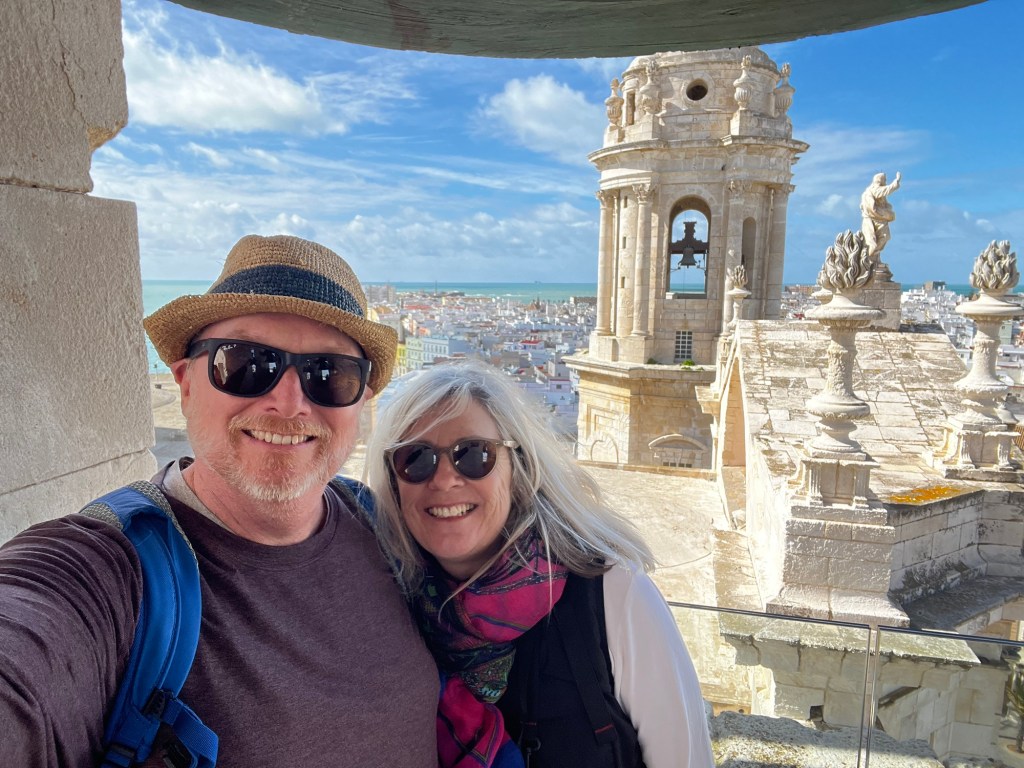
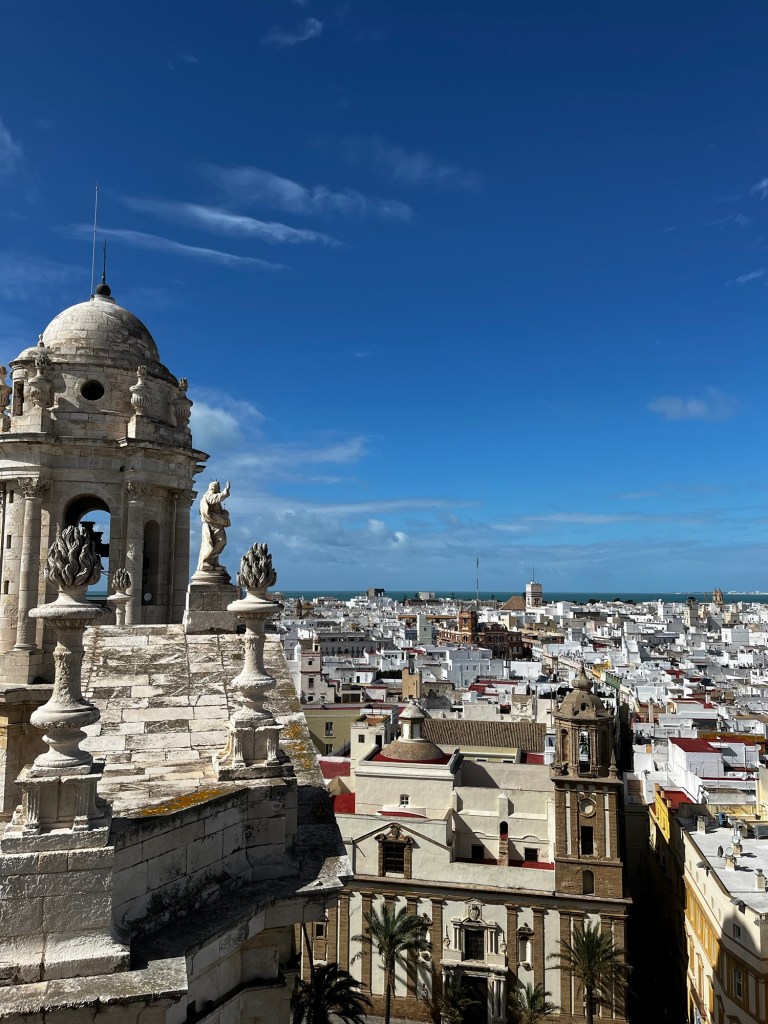
The only views better than the views of the cathedral are the ones from the cathedral. You can climb up one of the bell towers (70 plus ramps!) and be rewarded by spectacular views of Cadiz in four directions.

The Central Market
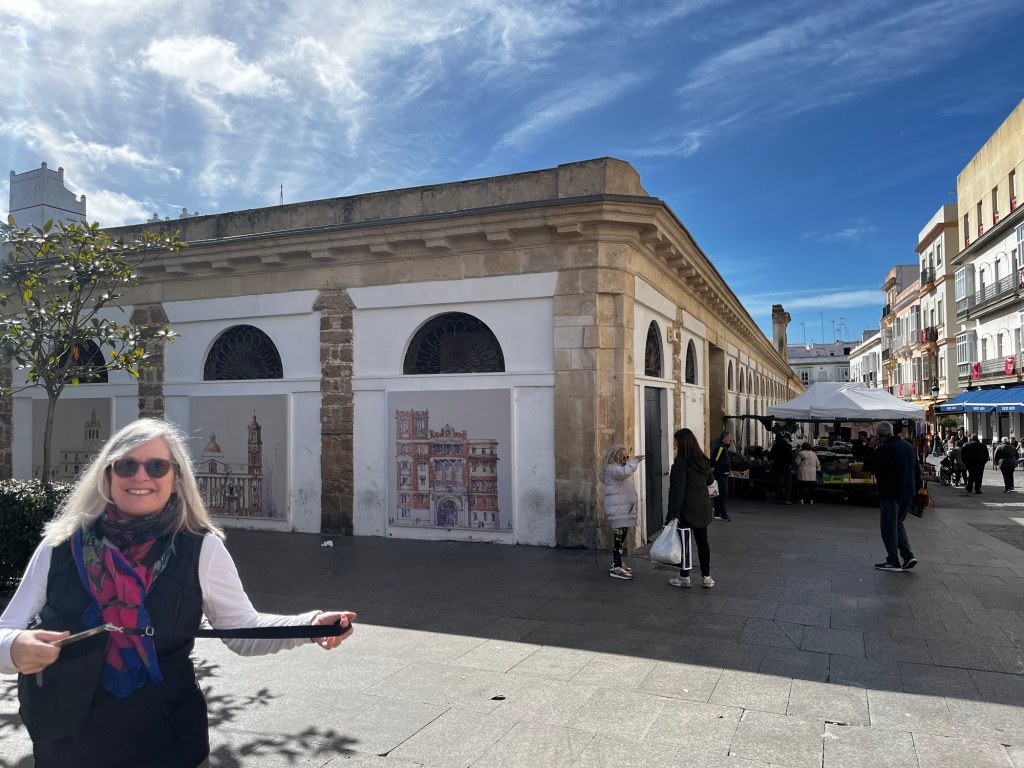
I’m a sucker for a good markets and the Cadiz Central Market is fantastic. It is dominated by seafood vendors down the middle, fruit and vegetable venders along the perimeter and a cluster of meat and cheese shops liberally sprinkled throughout.

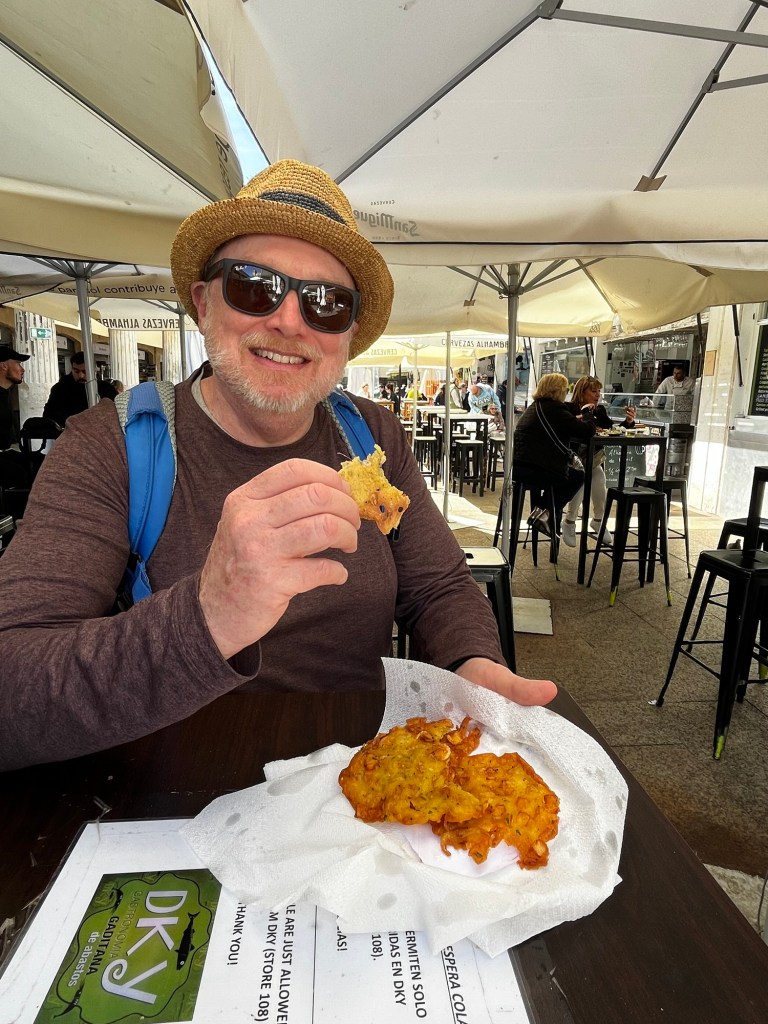
It also has a number of food stands where you can order delicious treats. I highly recommend the tortillitas de camarones (shrimp fritters).
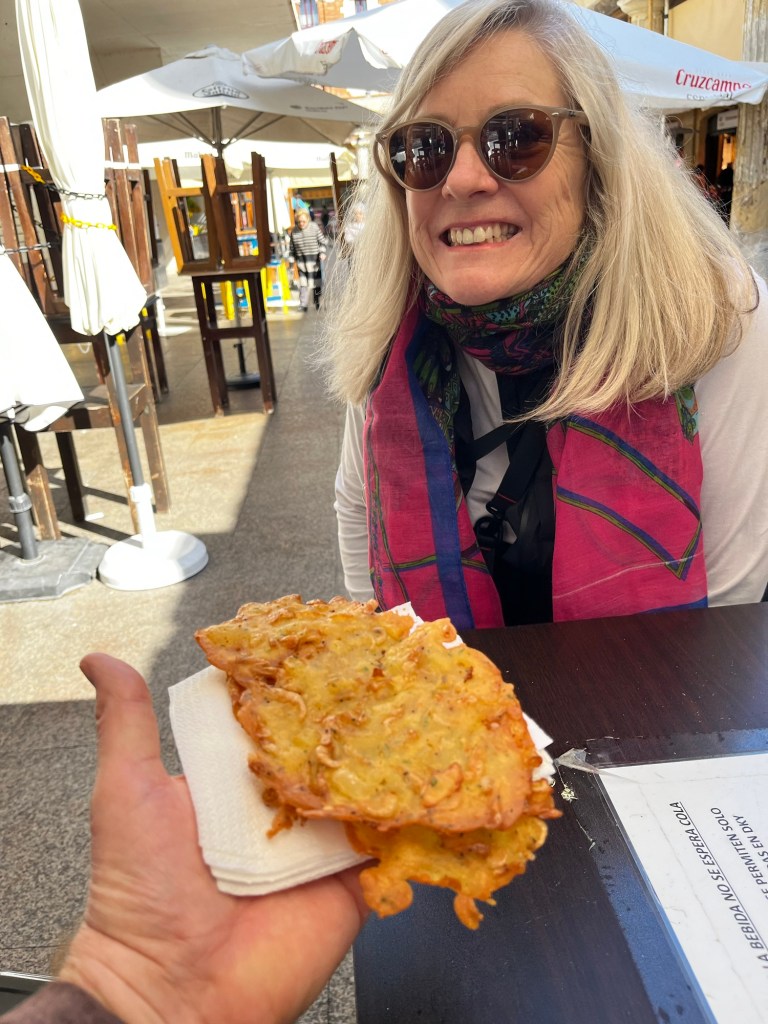
Robin does not recommend them.
The streets and squares
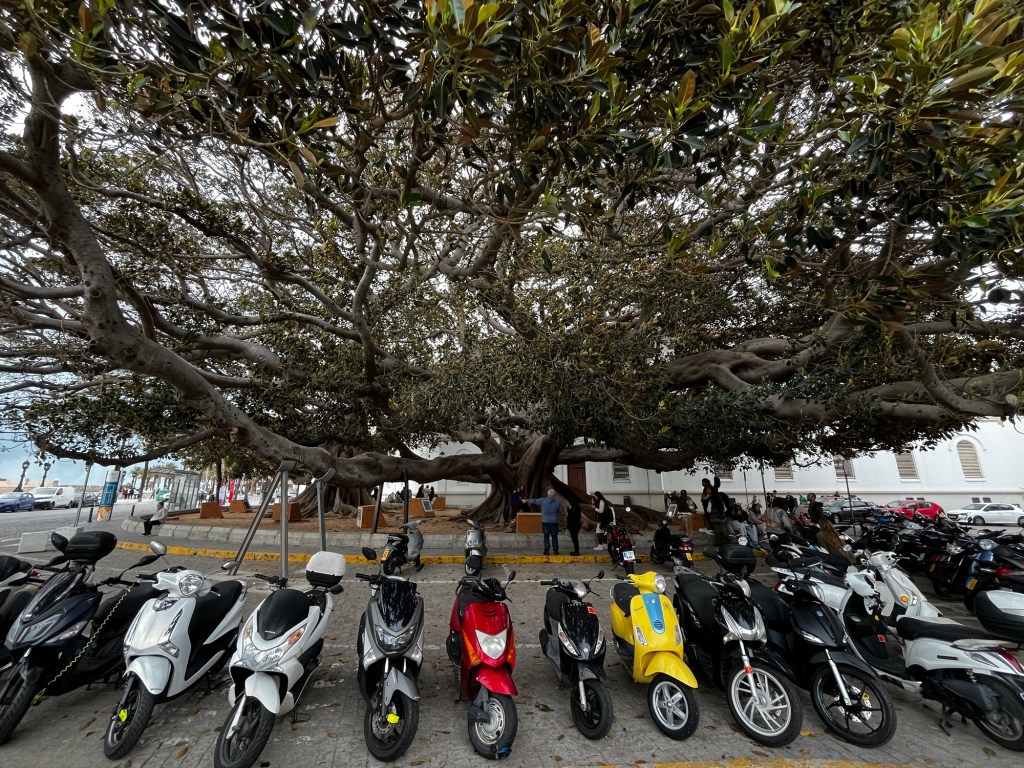
The old city is not very big-only about 4 square km- so it is an ideal place to wander around without worrying about getting lost. And you will get lost. The streets are narrow, the buildings are multi story, there is sporadic use of street signs and the street layout is more pretzel than grid like in pattern. It doesn’t seem to matter the time of day or type of weather, these streets just exude charm and character.
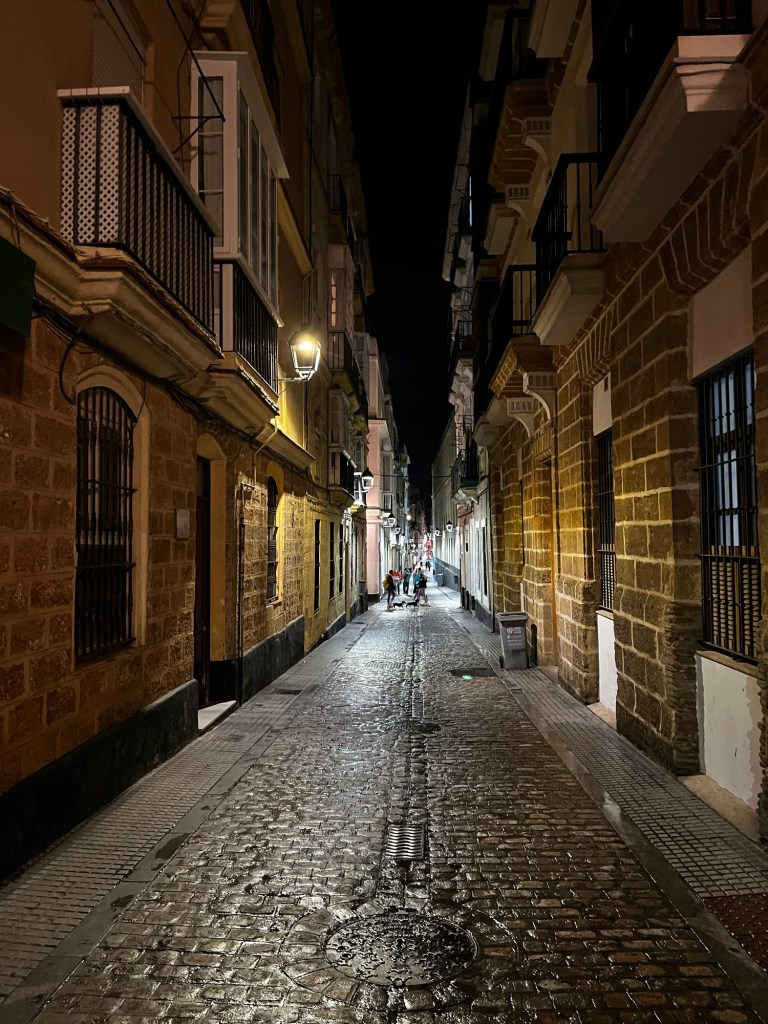
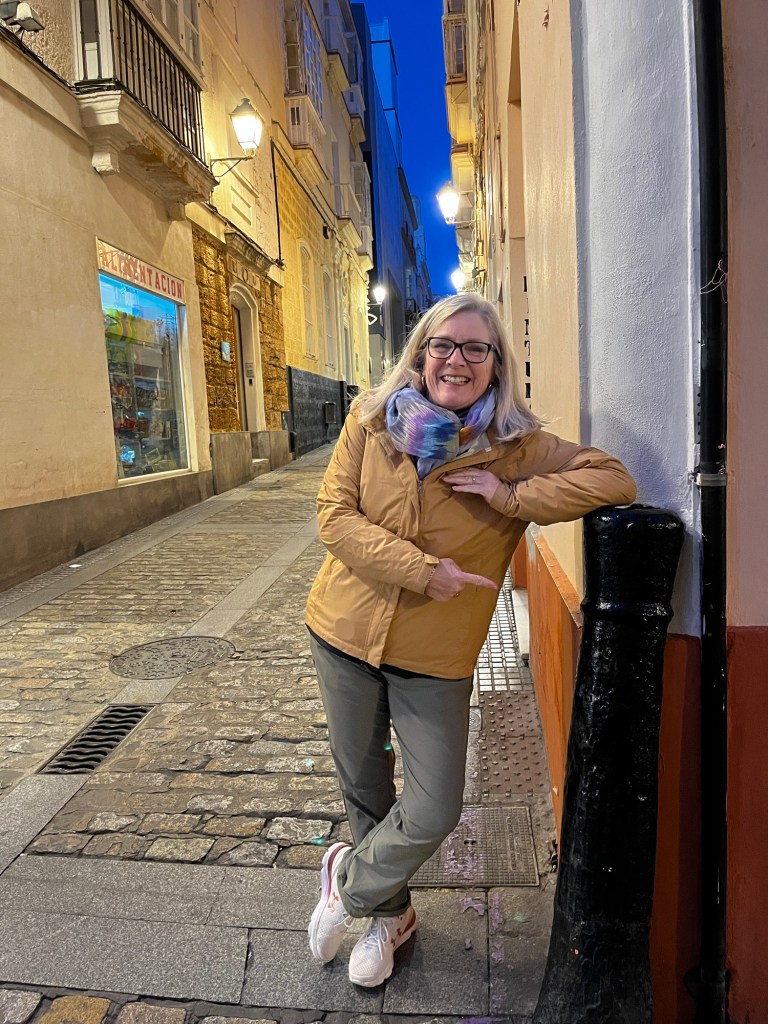
The imperfect grid make the sudden appearance of plazas and squares all the more surprising and charming. They are invariably ringed by patios and cafes, and are a lovely spot to pass some time.

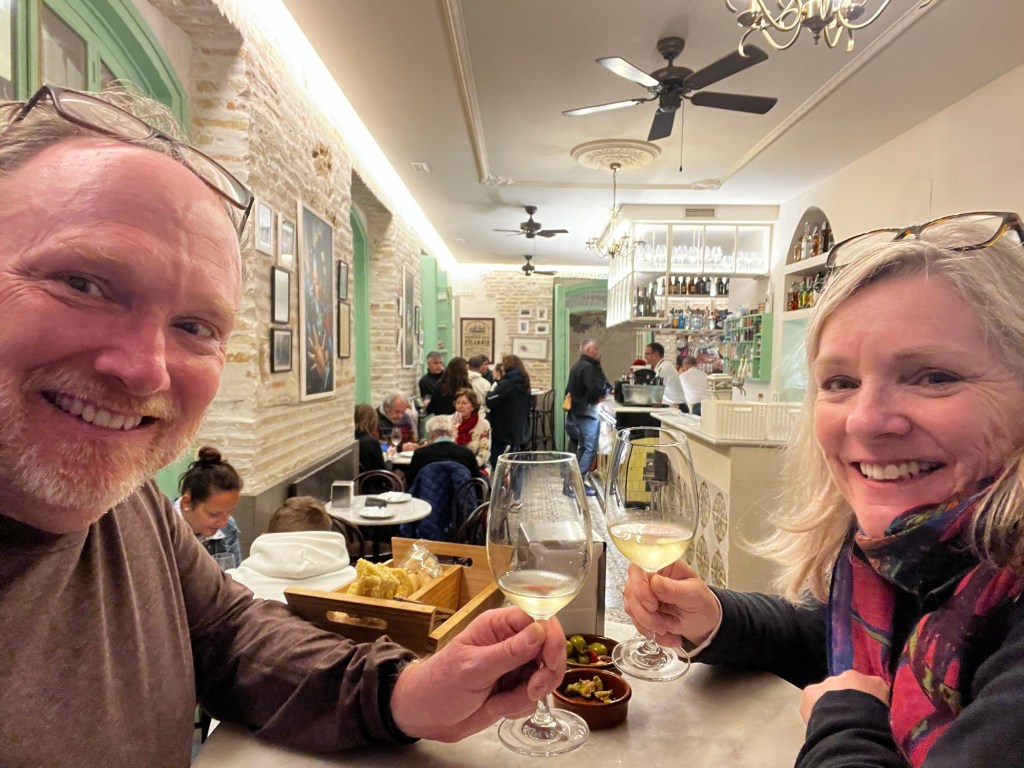
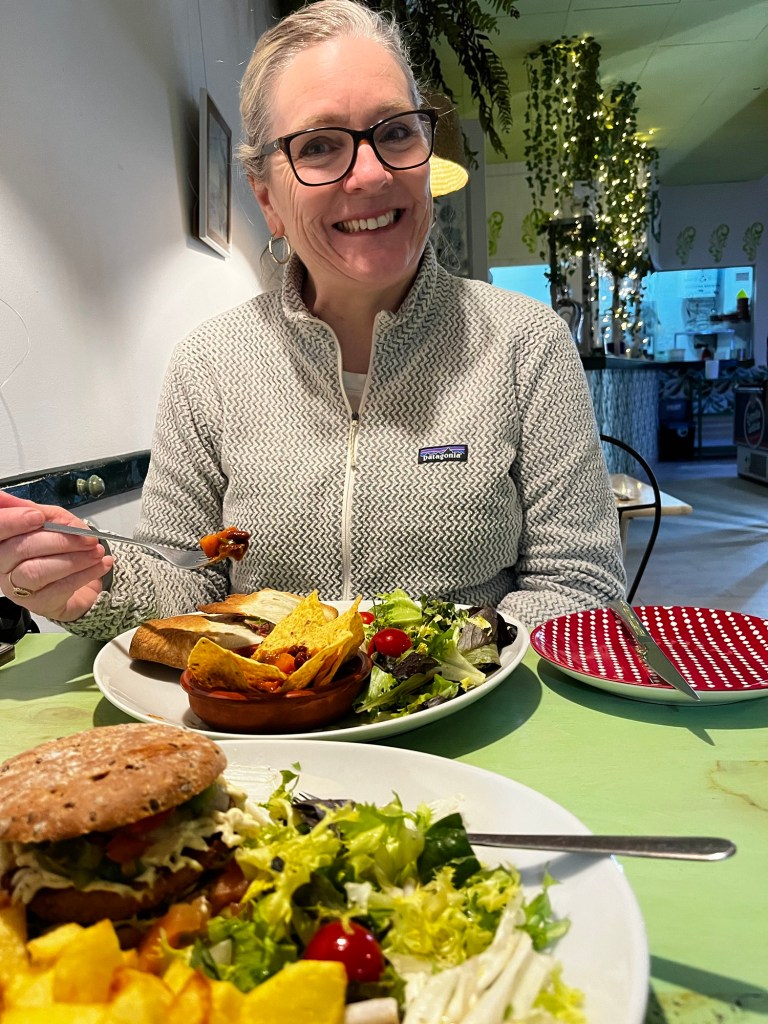
As are the restaurants!
Carnaval Chiquito
Well this was an unexpected bonus! The Cadiz Carnival is a legendary event, and is the largest in mainland Spain. It runs for 10 days, starting the weekend before Ash Wednesday, and is famous for its singing groups and their humorous and satiric songs and costumes. We arrived a full week after the end of Carnival, but discovered that there is a bonus carnival day in Cadiz known as Carnaval Chiquito! This event started in the 1980s as an unauthorized and underground affair, a protest against the strict rules of the church and their carnival timelines. While it still has the vibe of being more spontaneous many of the same singing groups come back for this event.
We weren’t sure what to expect when we wandered down towards the squares that are near the cathedral. We decided to follow the group dressed as Sesame Street characters (never a bad decision) into the market area which was teaming with people.
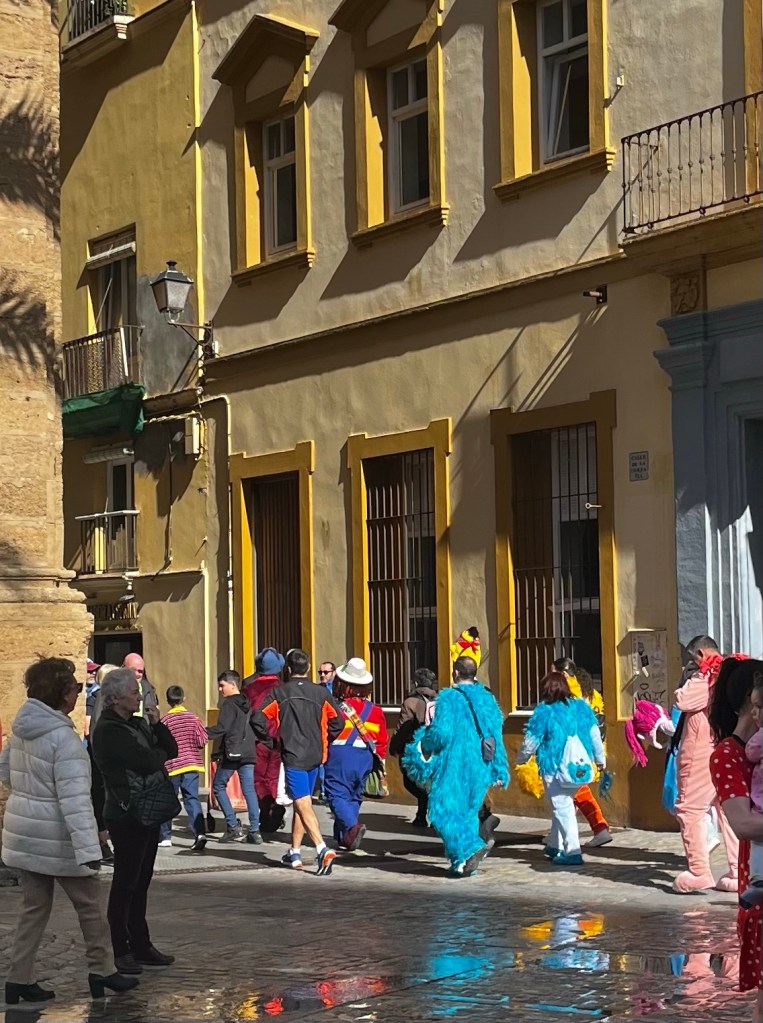
Throughout the afternoon and evening impromptu performances sprang up all over the city: in squares, and on side streets. Depending on the popularity of the act you could turn down a street and find it virtually impassable until the group performing moved on. In most cases groups were dominated by singers with some percussion and a couple of guitarists. In many cases, the sound of the carnival kazoos blasting indicated the start of the next song. In every case, the costumes were eccentric and elaborate.
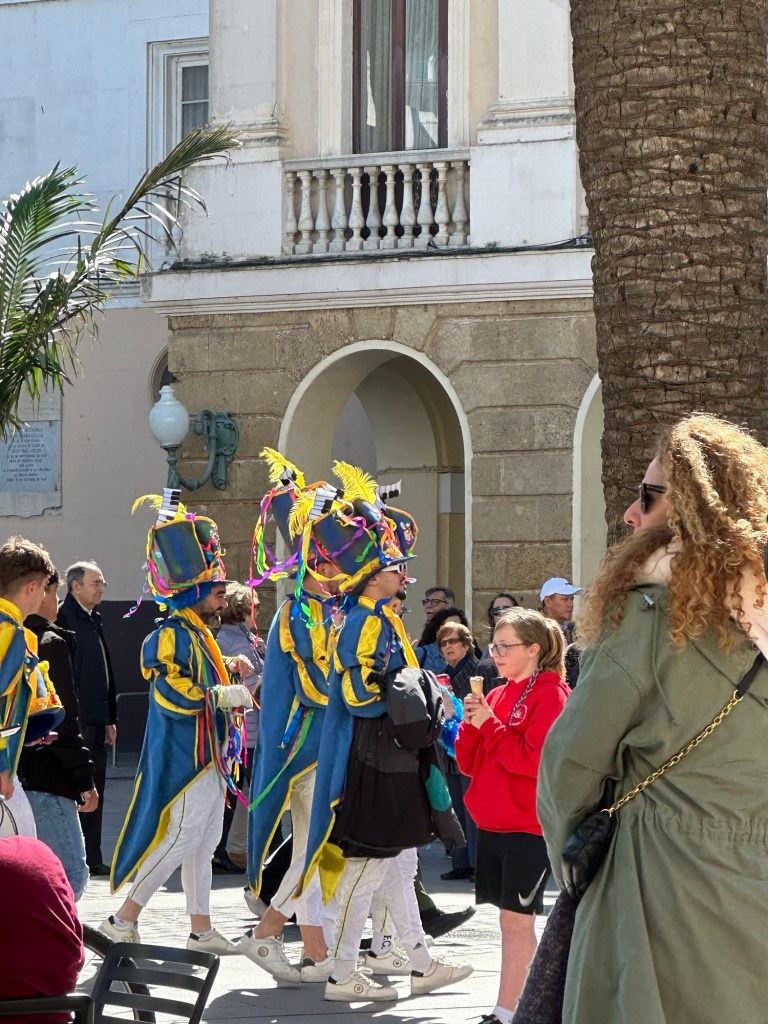
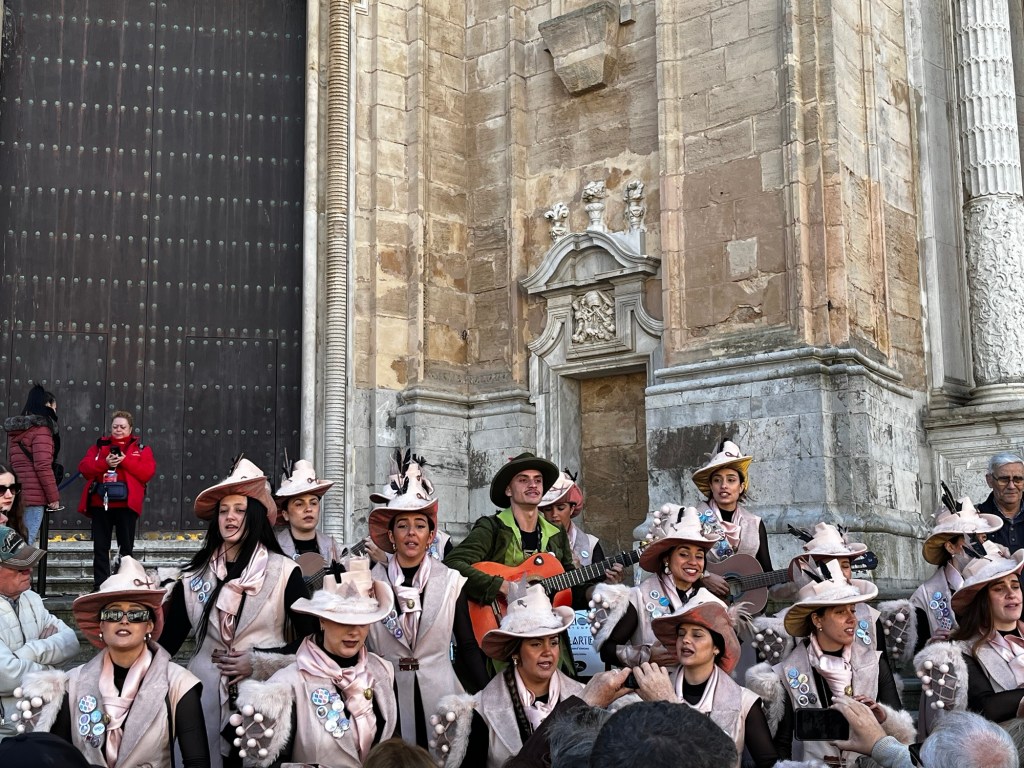
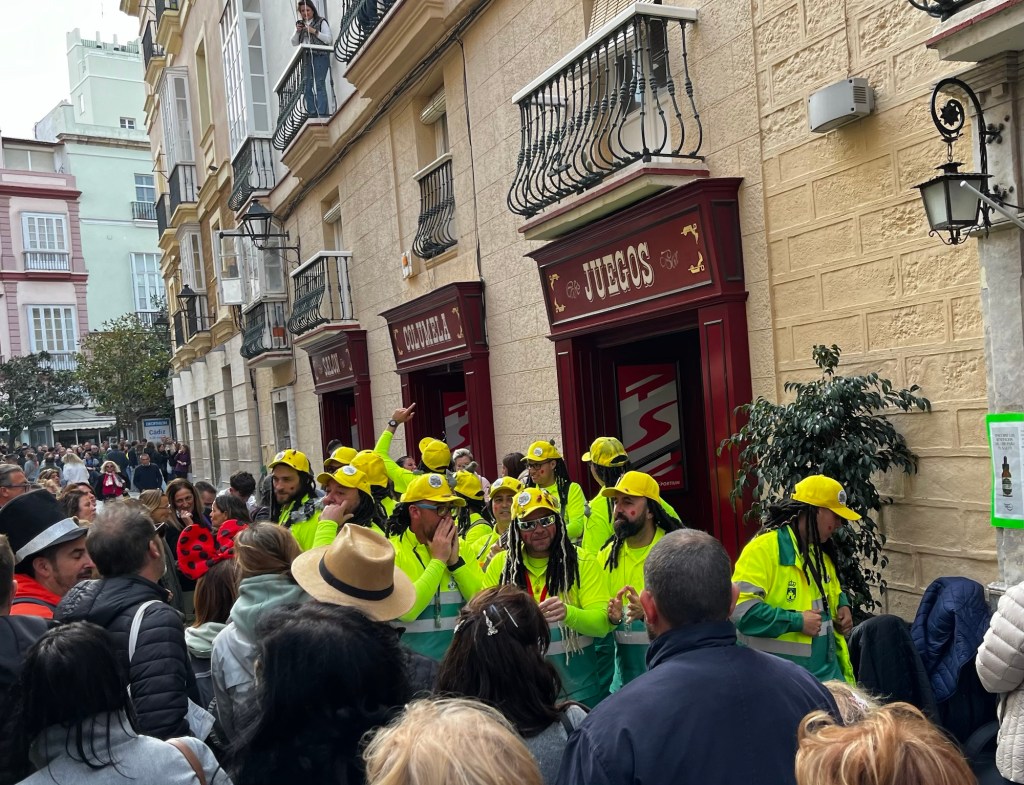
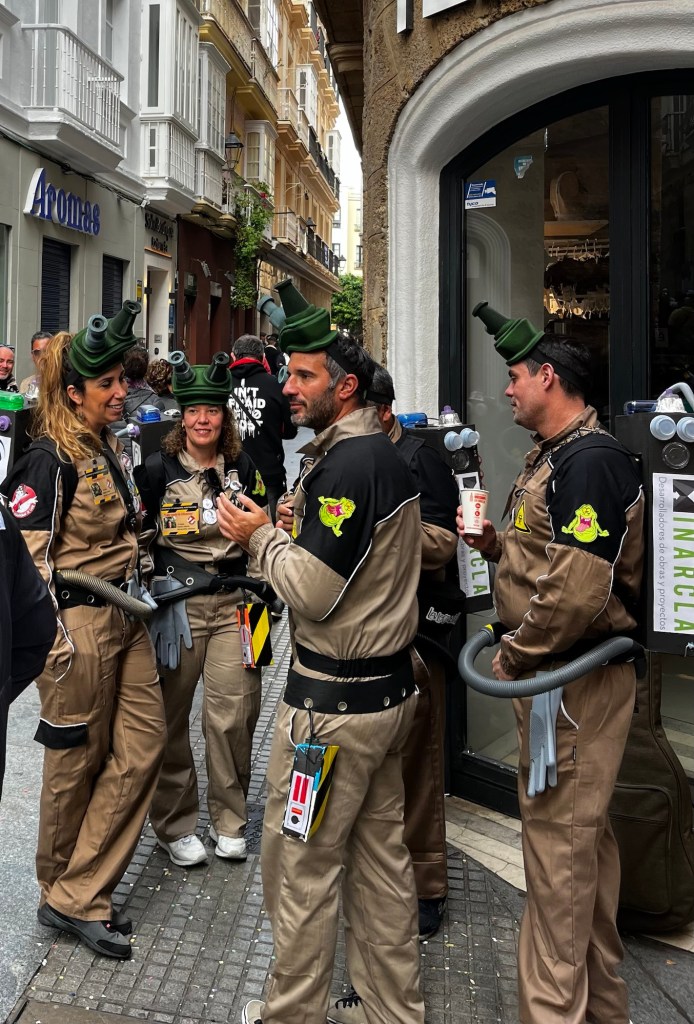
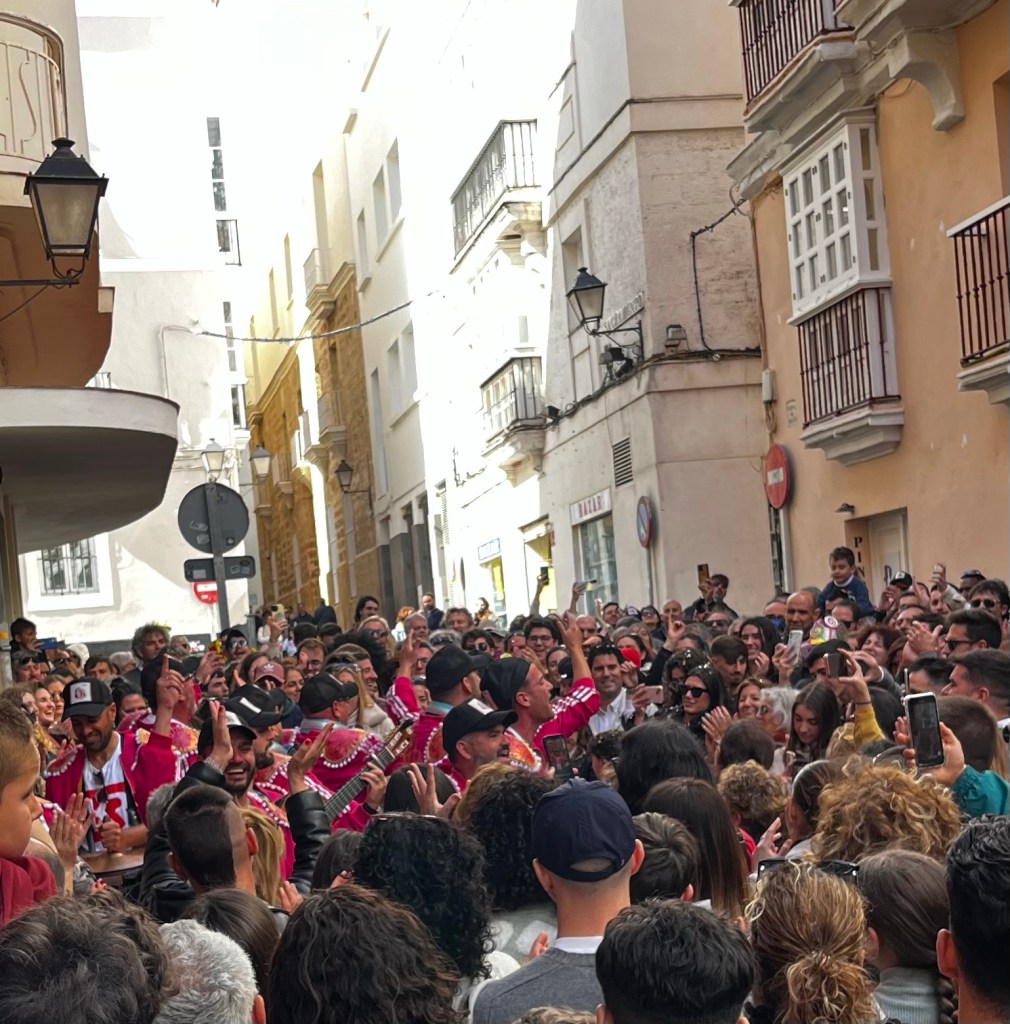
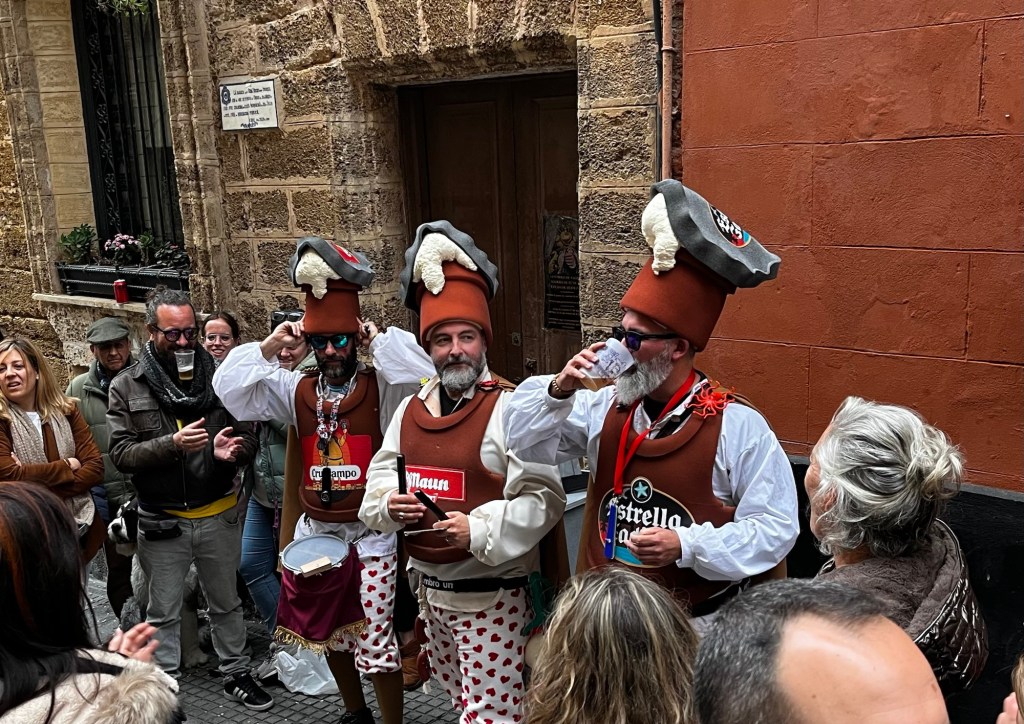
In the spirit of Carnival there was quite a bit of access to alcohol and no shortage of people enjoying themselves. At one point Robin asked me to pop into a corner shop that appeared to be selling beverages to get her a gin and tonic.

We jostled our way through the line and Robin, apparently under the assumption that we were consulting a Spanish gin sommelier, began to deliberate over which variety of gin she wanted. This involved a lot of back and forth with the woman serving us pointing at a series of bottles until a particular brand was agreed upon. Robin then asked for tonic.
“No tonic. Coke?”
“Oh. No. No Coke.”
“Coke?”
“No. No Coke.”
“Coke?”
At this point I turned to see the back of Robin’s head beating a hasty retreat from the shop. I turned back to the proprietress, who I now knew wasn’t much of a mixologist, to find her beaming at me.
“I know! I will get it.”
She disappeared into the back of the shop and returned moments later with a two litre bottle of sugar free Seven-Up and two glasses. I had flashbacks to my ill-fated decision to purchase 7-Up in Ronda for Robin when she was battling a stomach issue, but as Robin was nowhere to be seen I managed a nod of approval. She then asked if I wanted ice. Fantastic! I said sure, guessing that cold 7-Up and gin could only be better than warm 7-Up and gin.
At this point she grabbed a grocery bag and stuffed it full of two plastic glasses, the bottle of gin, the giant bottle of 7-Up and about 10kg of ice. It was only at this point I realized I wasn’t getting two drinks, I was provisioning a frat party. I looked wildly around: no Robin. Just a long line of very impatient look Carnival goers.
When I exited it was without the ice. As for the Gin and 7-Up combo? Not recommended. Warm or cold.
Cadiz, however, is fantastic.


 MacsTravel Blog
Leave a reply to Richmac Cancel reply