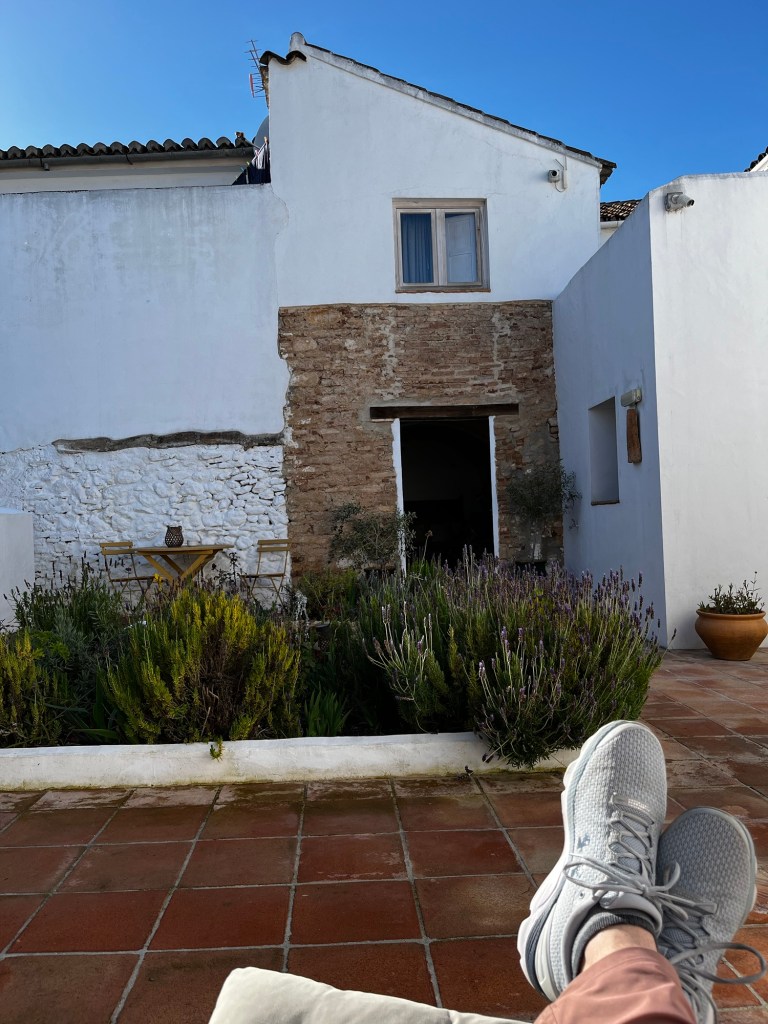
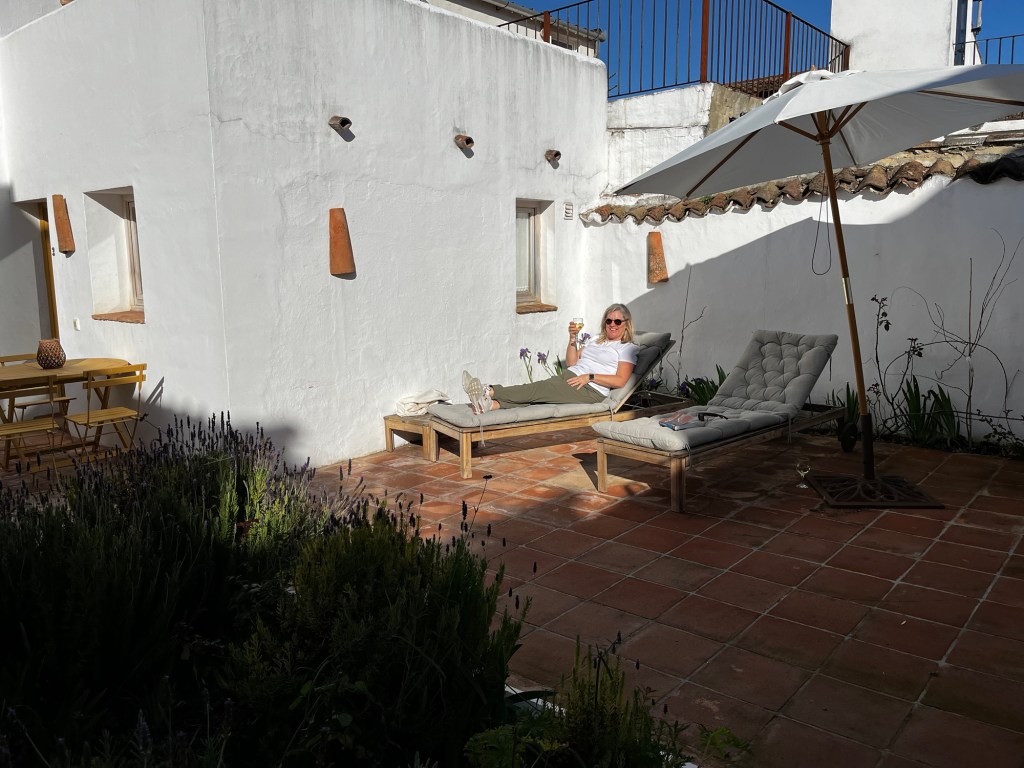
The trip from Granada to Ronda was surprisingly seamless: a two hour bus ride to Malaga, a painless pick up of our rental car, a decent lunch (!) in the Malaga train station where the car rental place is, followed by an hour and a half drive into the mountains. We arrived in Ronda around 4pm, navigated the virtual check in and relaxed for a while in the charming courtyard.
Full disclosure#1: Robin navigated the frustration of downloading an app and uploading passport information with a calmness I do not possess. Why you have to register using your passport at every place you stay in Spain is beyond me!
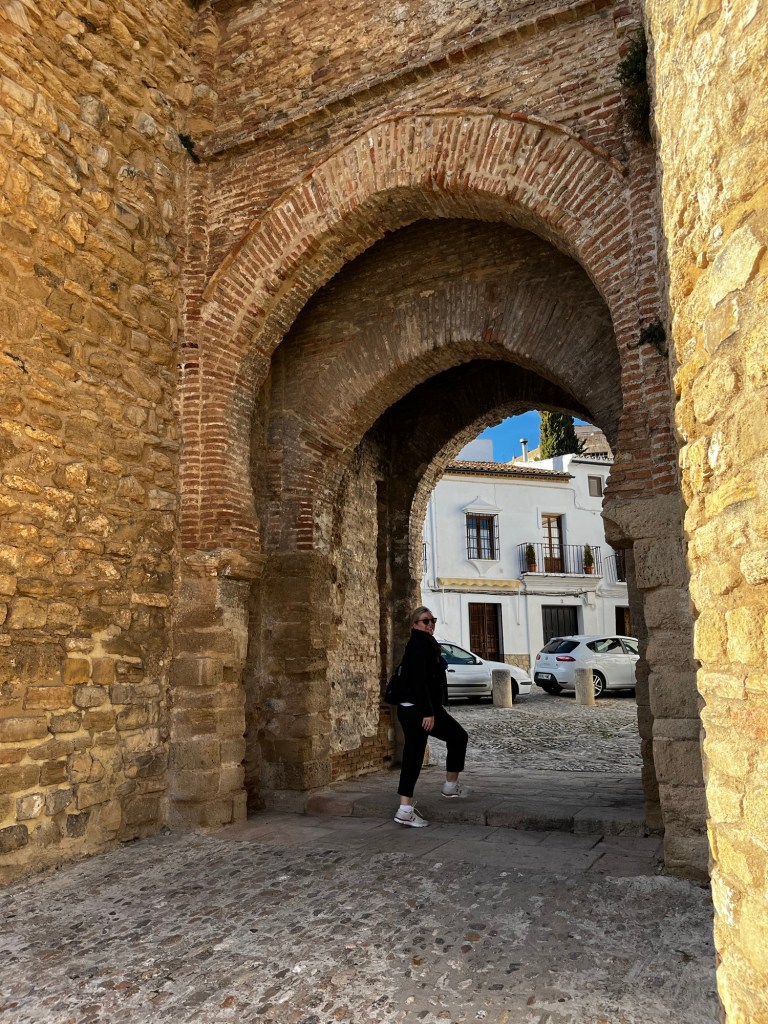
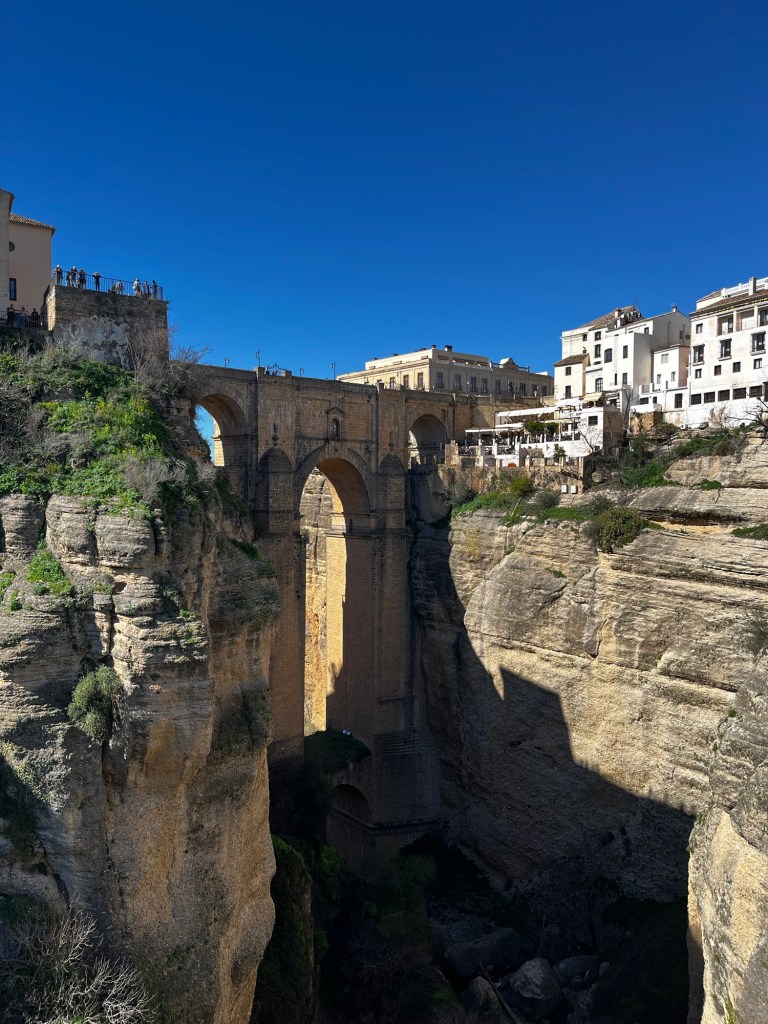
After getting our bearings we headed out, through the Almocabar Gate and up the hill from our apartment in the San Francisco neighborhood (thanks Truus for the recommendation) to check out Ronda’s most famous landmark, the Puente Nuevo (New Bridge).
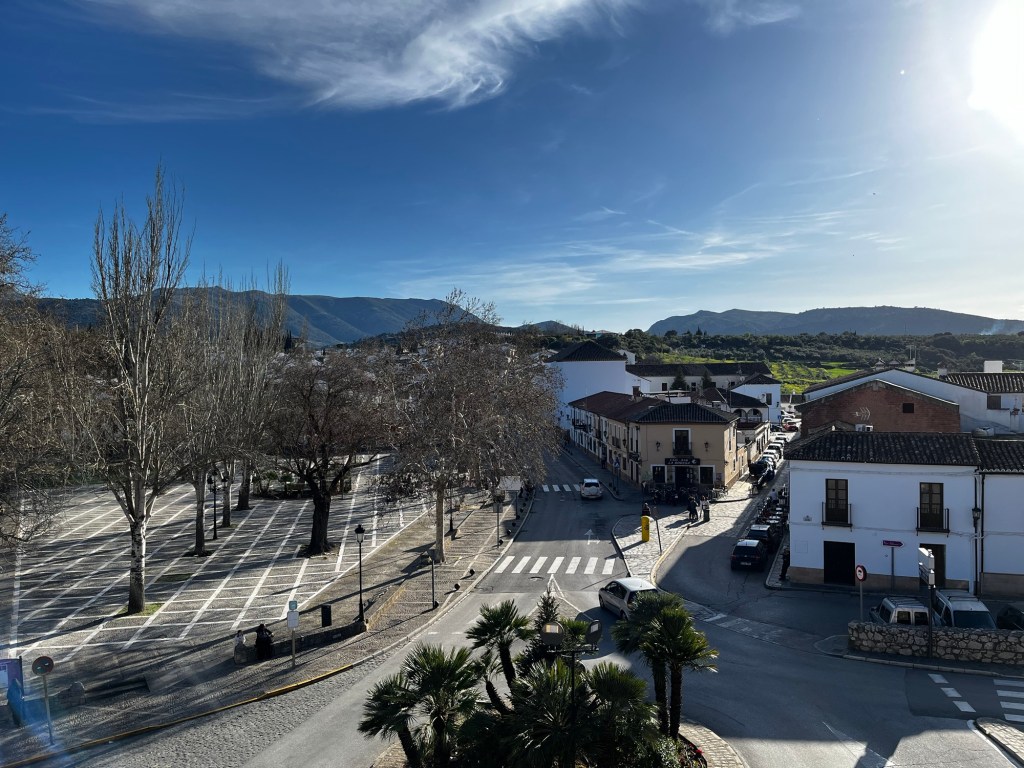
Ronda is one of the largest of the White Hill Towns, so named because of the preponderance of whitewashed buildings in this area which help provide some relief in the summer sun. It was originally a Moorish stronghold, and then an important strategic position for the Spanish.
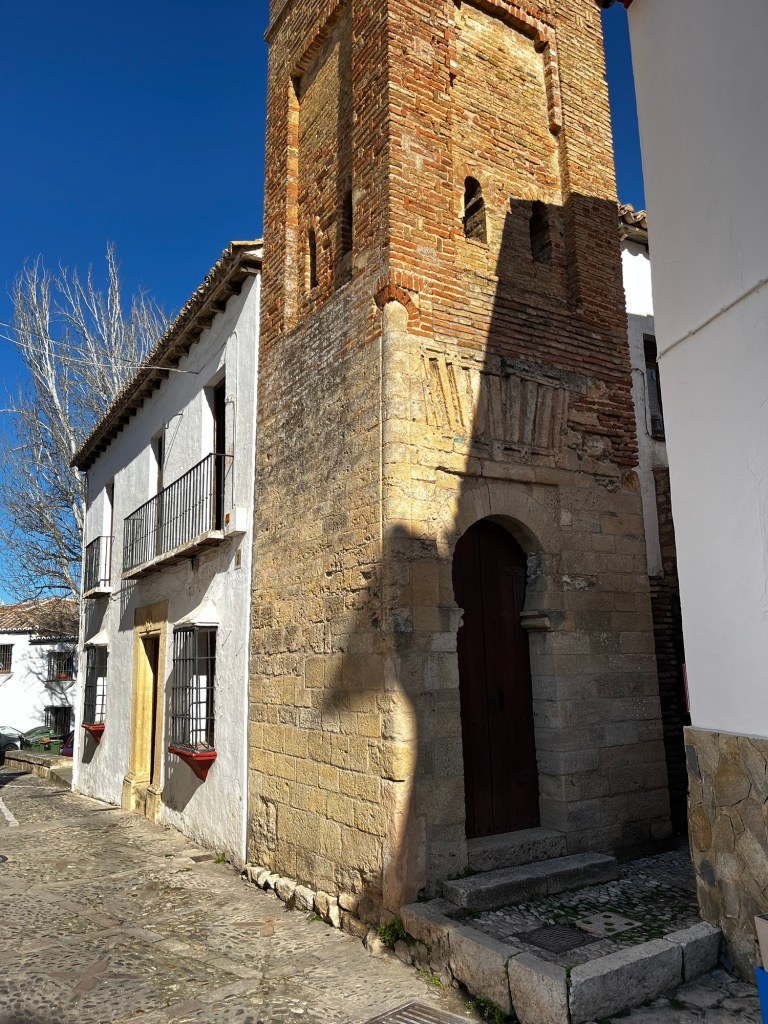
Now it is a popular tourist attraction primarily for its incredible gorge-spanning bridges and its famous 18th century bullring.
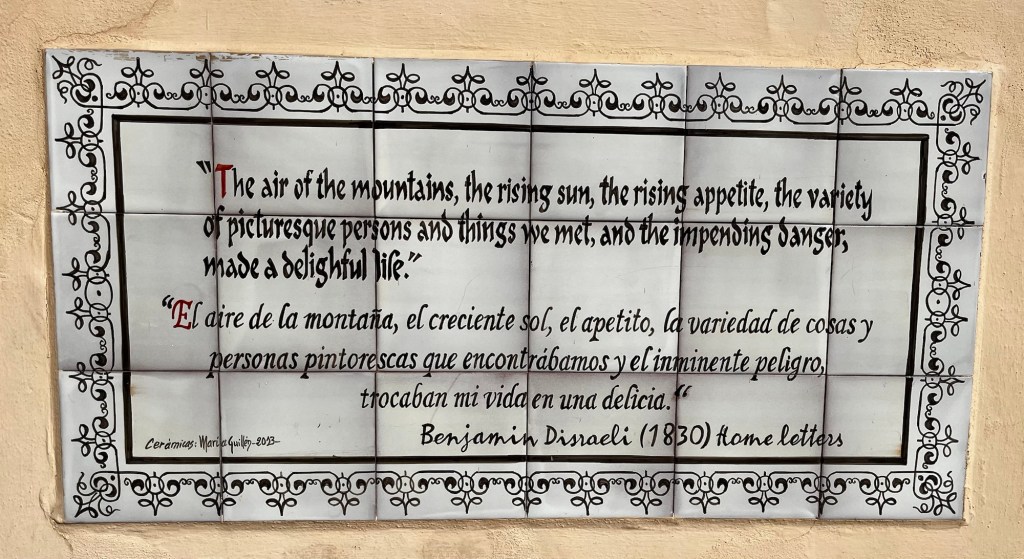
While the streets are busy with tour bus crowds from Sevilla and Malaga in the middle of the day, the majority of the tourists leave in the evenings which brings out the locals, young and old. It is a great place to wander and take in the evening paseo on the pedestrian boulevards and through the expansive cliff side parks and pathways.
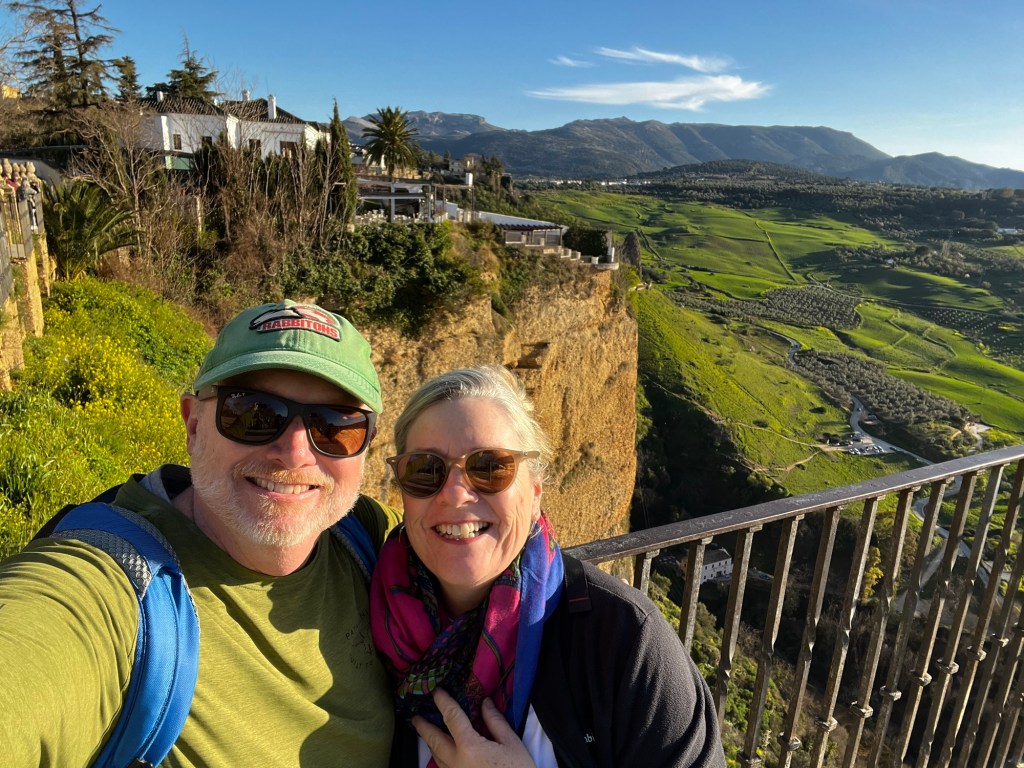
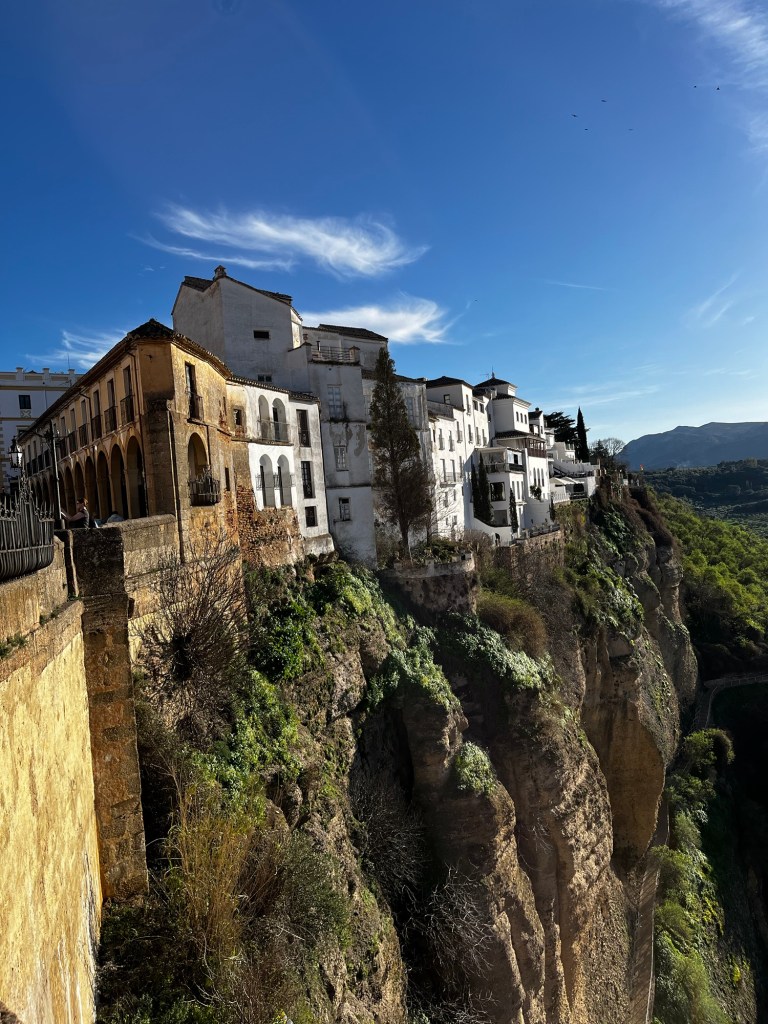
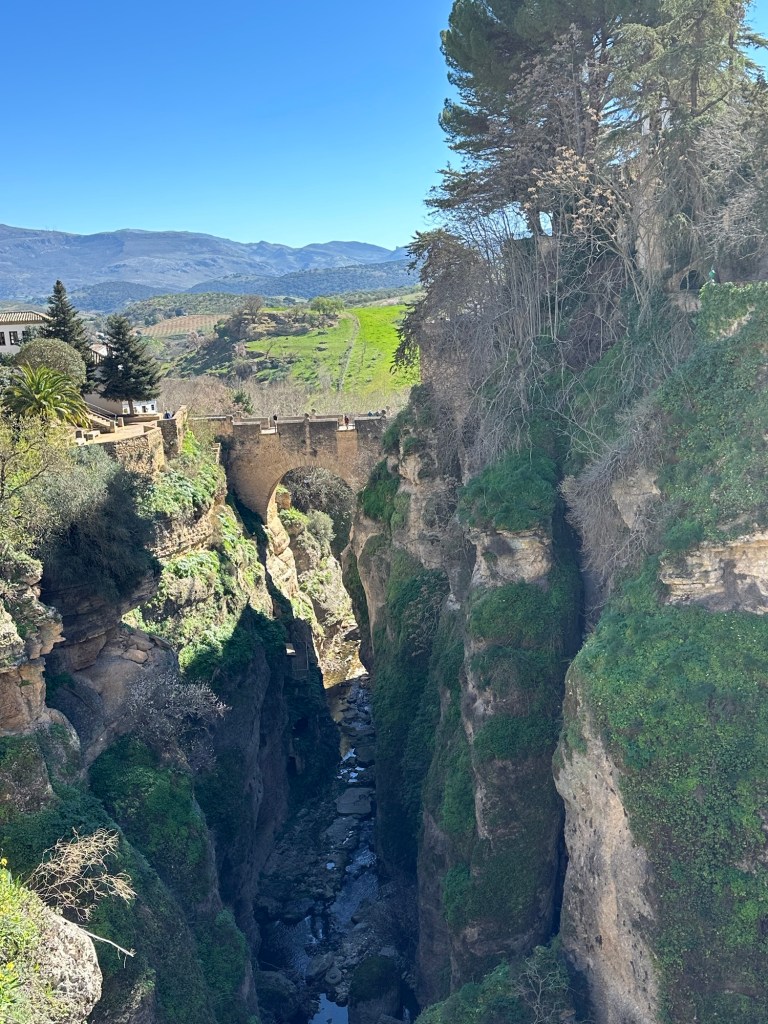
The New Bridge, built in the mid 1700s, connects the original Moorish town (near where we stayed) to the new town that was built following the Christian conquest of Ronda in the 1480’s. It provides incredible views of the El Tajo ravine, which drops 300’, and of the “Old Bridge” and the beautiful countryside surrounding Ronda.
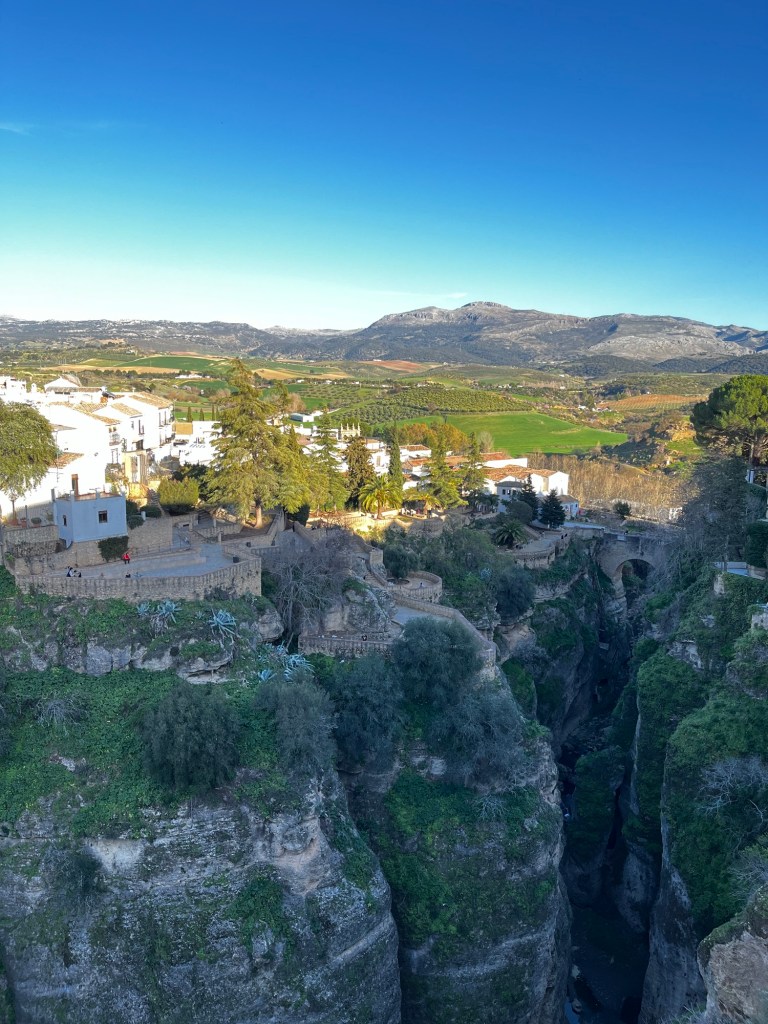
We made a great decision in choosing the Hotel Don Miguel restaurant patio for dinner. The food was ok, but the views of the New Bridge were outstanding.
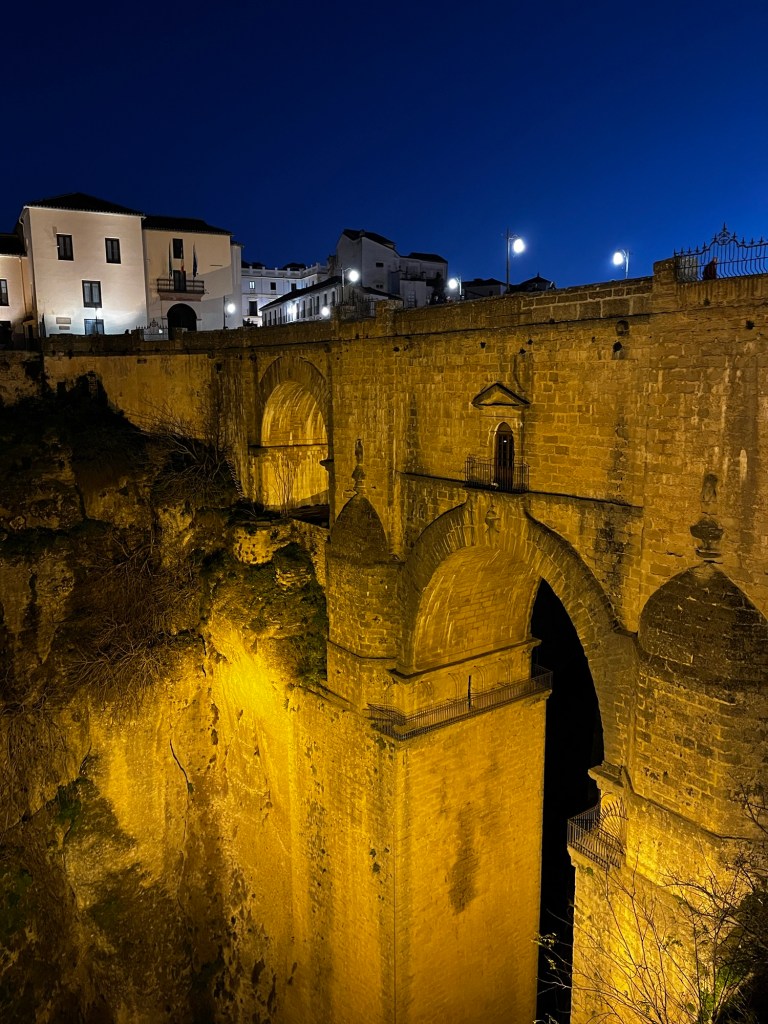
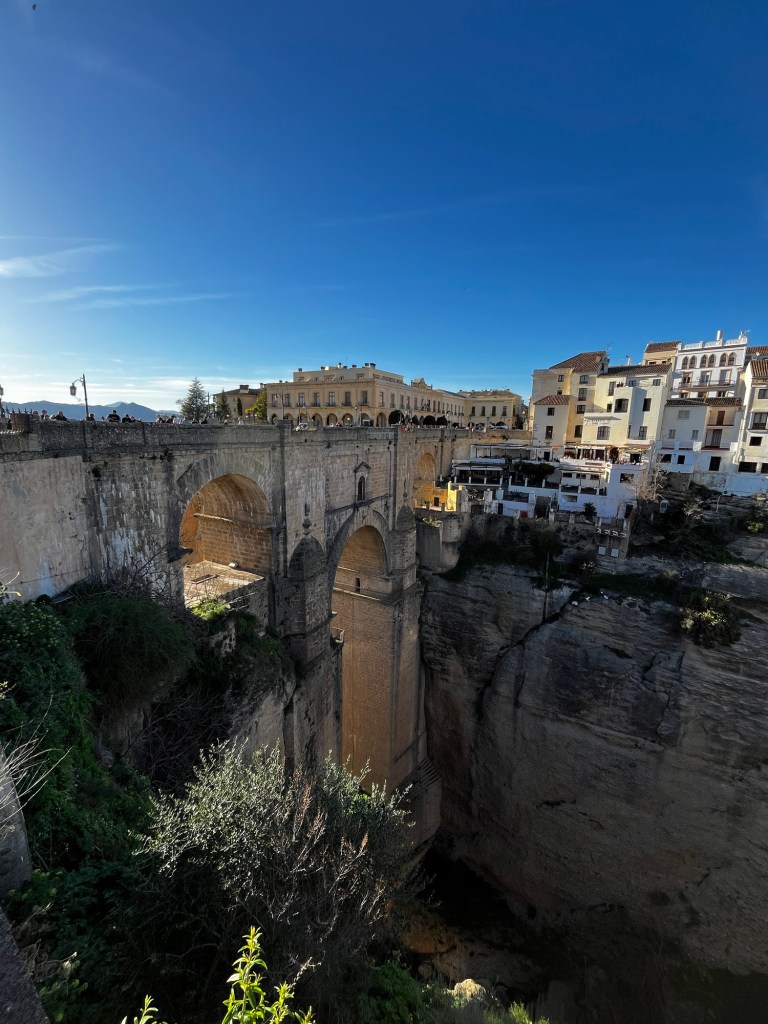
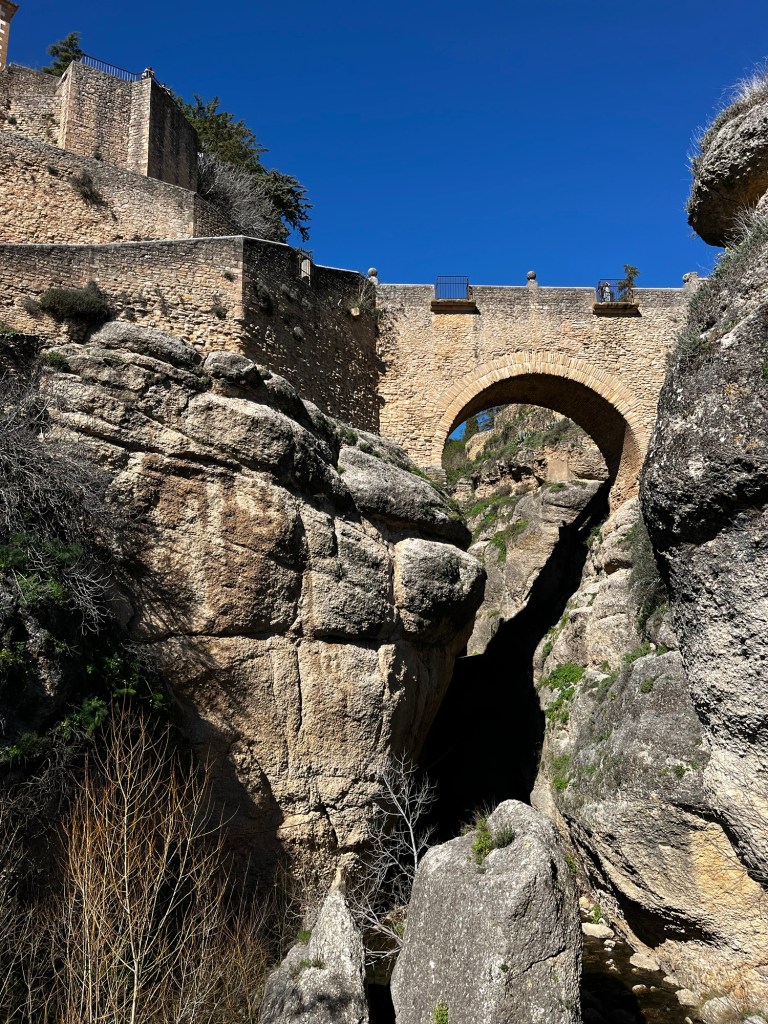
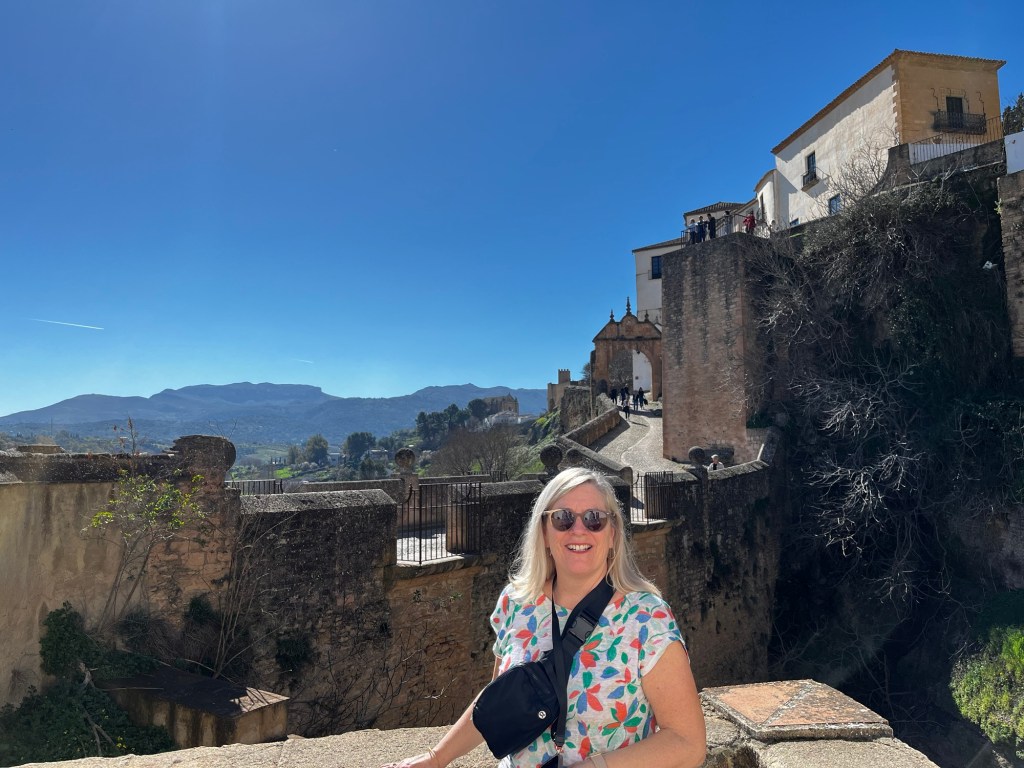
The next day we took a walk along the face of the town wall to investigate the Arab bridge (built on the ruins of the original Moorish bridge) and the Old Bridge (Puente Viejo– built in the mid 1600’s), before climbing back up the pathways into the new town.
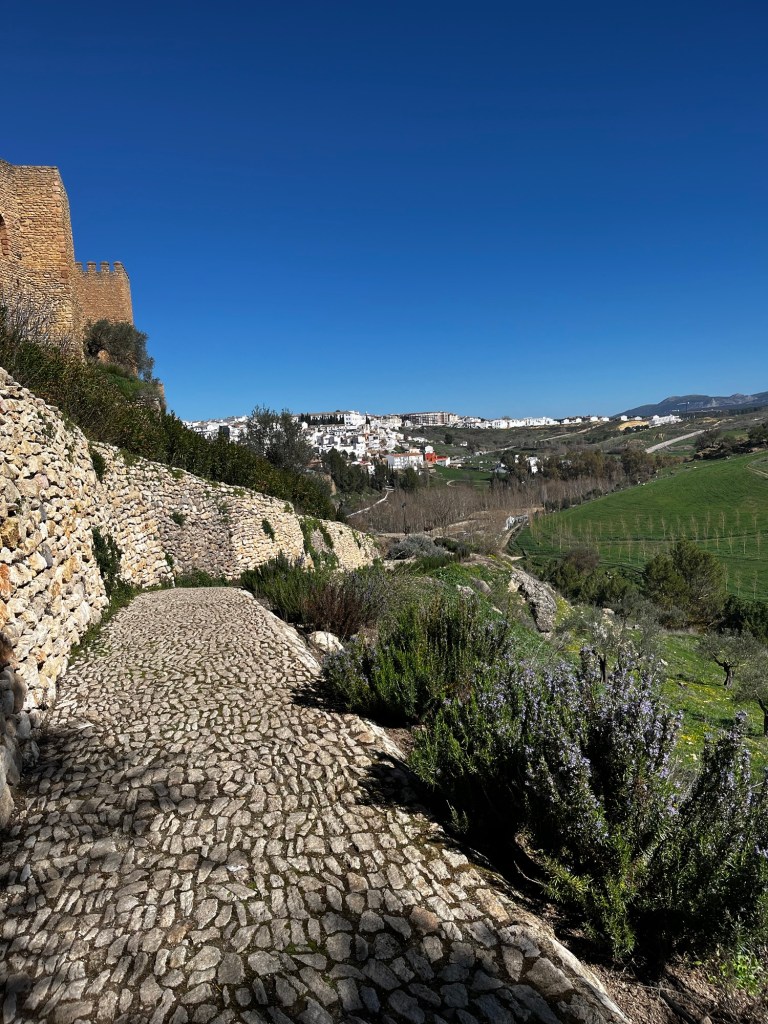
The pathways lead to a series of progressively higher terraces, which give the walker a chance to rest and provide spectacular views towards the town and out into the countryside. The closer you get to the ravine the more you notice the many birds, particularly the swifts, who have nested in the cliff sides and who dart up and down, riding the wafts of air high into the sky before plunging back into the gorge. They are quite a sight.
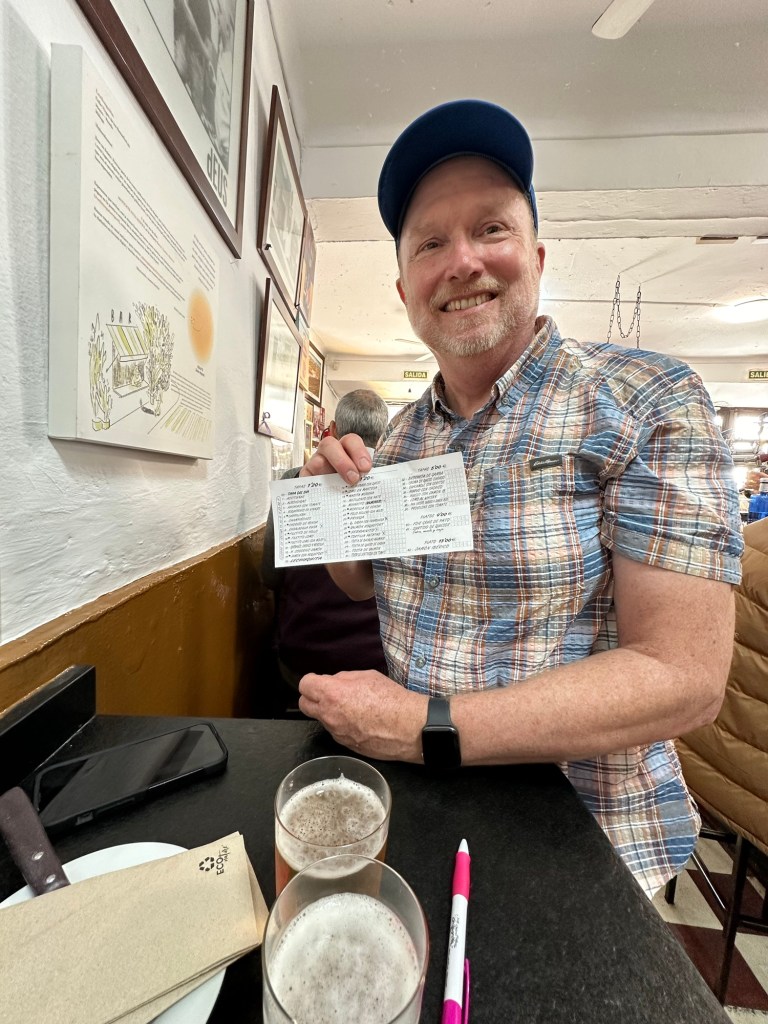
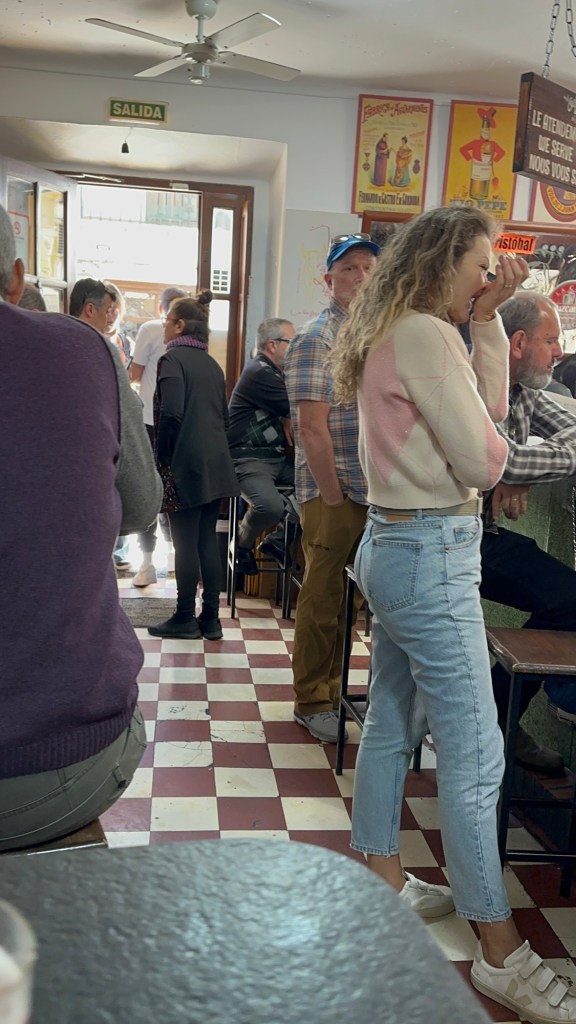
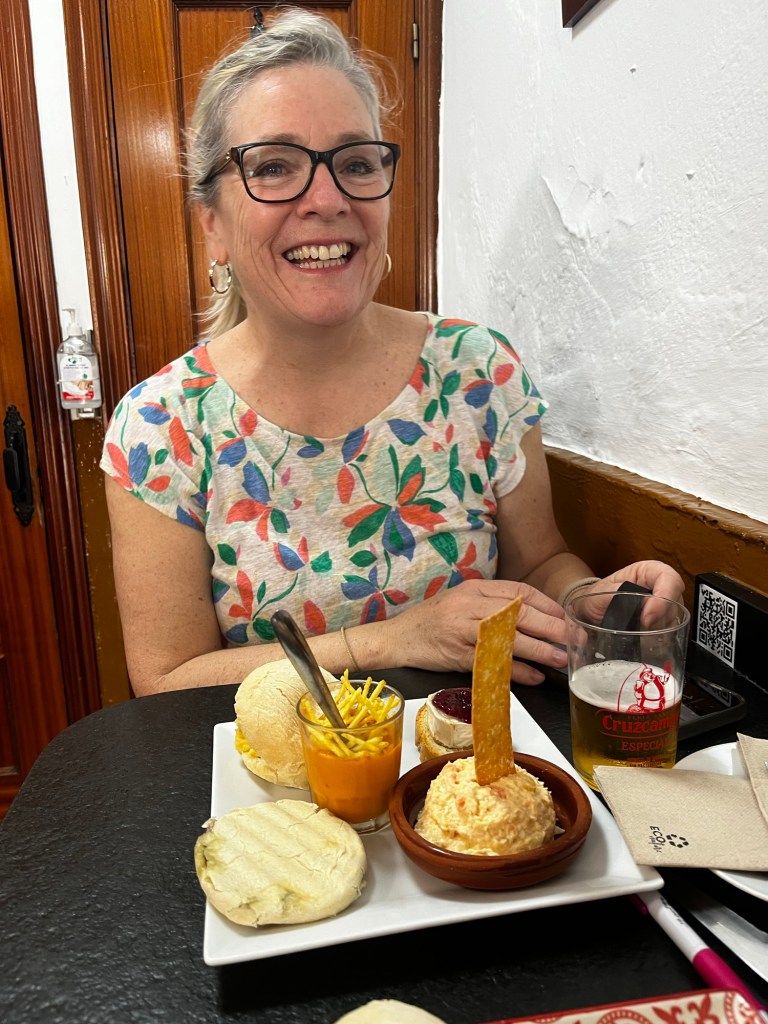
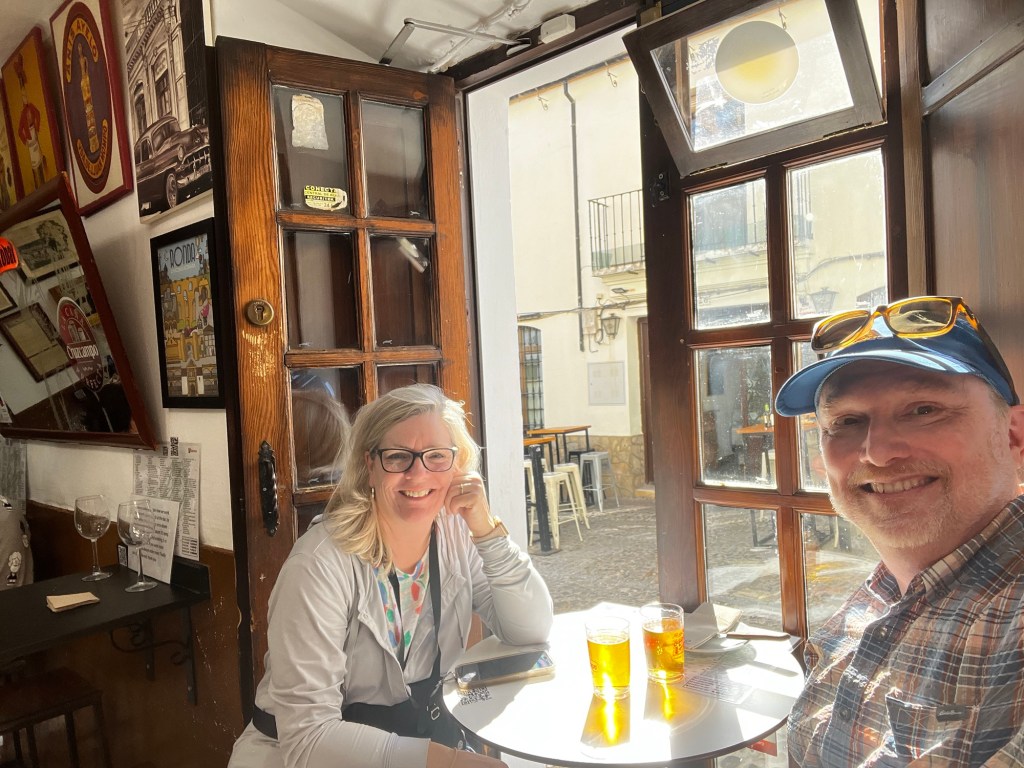
Ronda is also well know for its tapas bars and we found a gem in the Bar El Lechuguita, a local favourite that tolerates tourists with a menu that provides English translations. It is a tiny place, and it’s jammed from the moment it opens. You use a checklist to indicate which tapas you want, then find a seat and wait. The tapas are very reasonably priced: we each had a small draft beer (a caña) and shared six tapas plates. The bill came to 11€. It was so great we went back again later in the afternoon for an early (and cheap) tapas dinner!
We spent some time touring the Real Maestranza de Cabelleria de Ronda, the first great bullring in Spain.
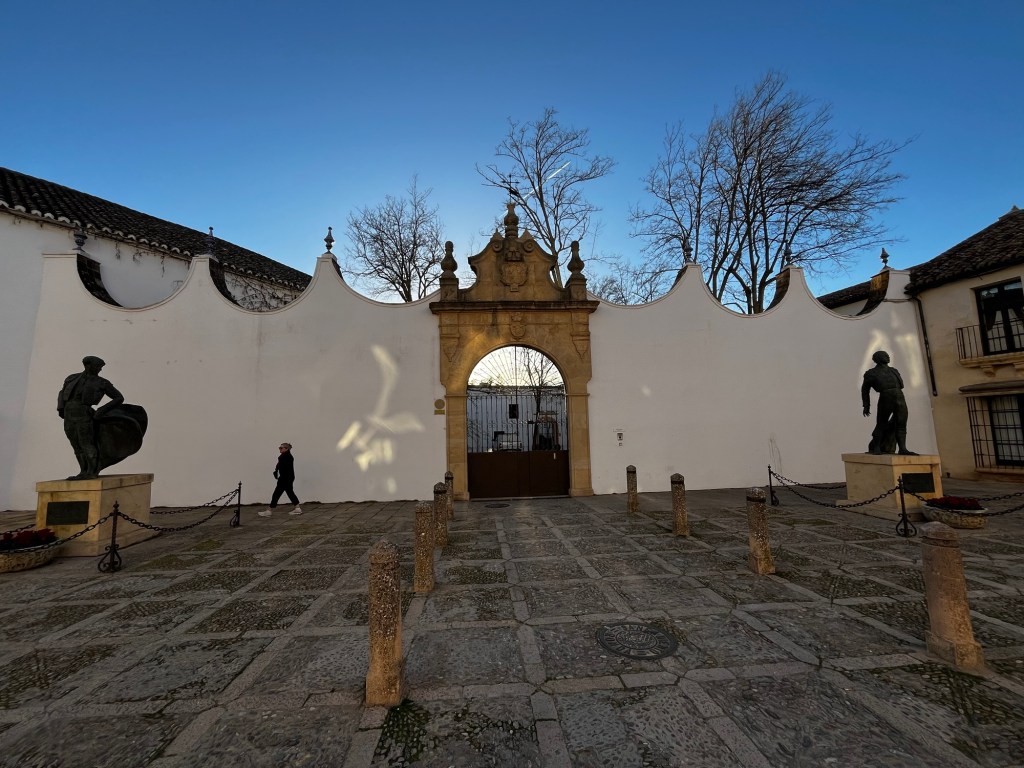
We made good use of the audio guide which helped bring the various parts of the building and the displays to life.
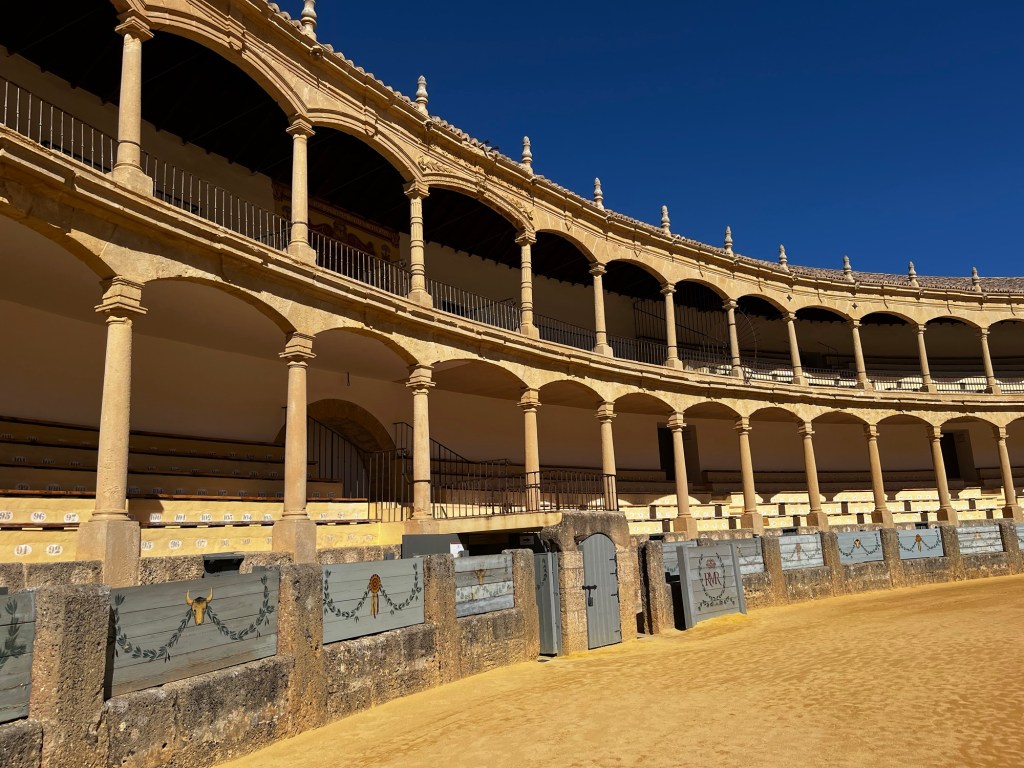
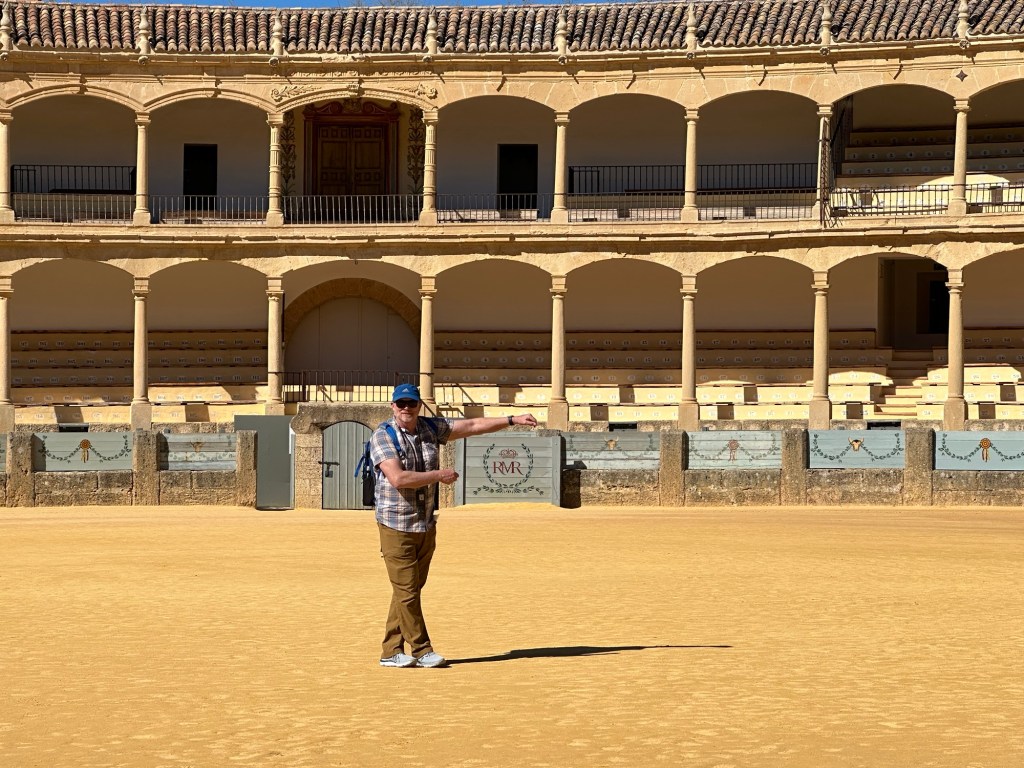
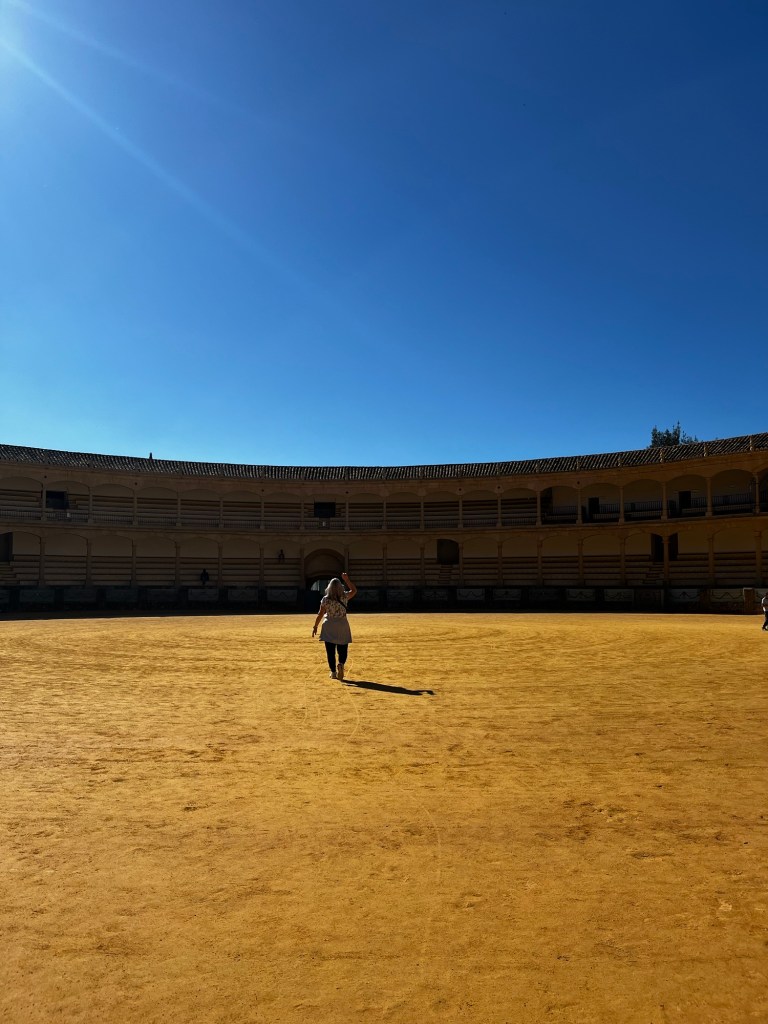
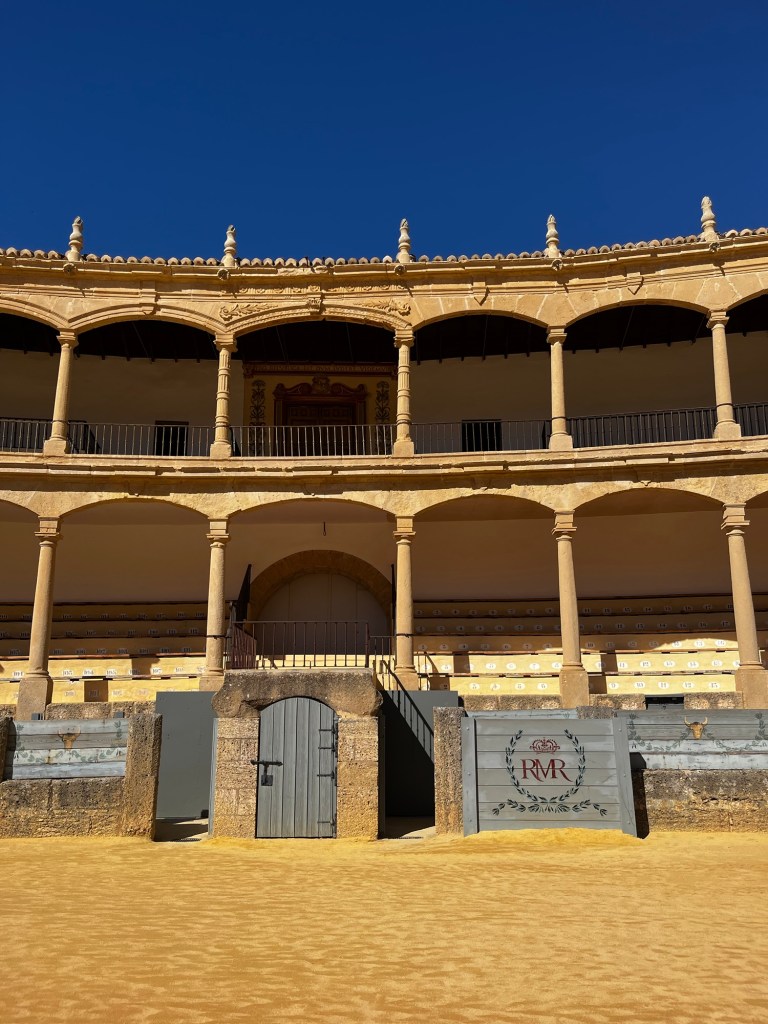
While it certainly didn’t convert us to fans of this “sport”, it did provide a very insightful look at the origins and place of bullfighting in Spanish history and culture.
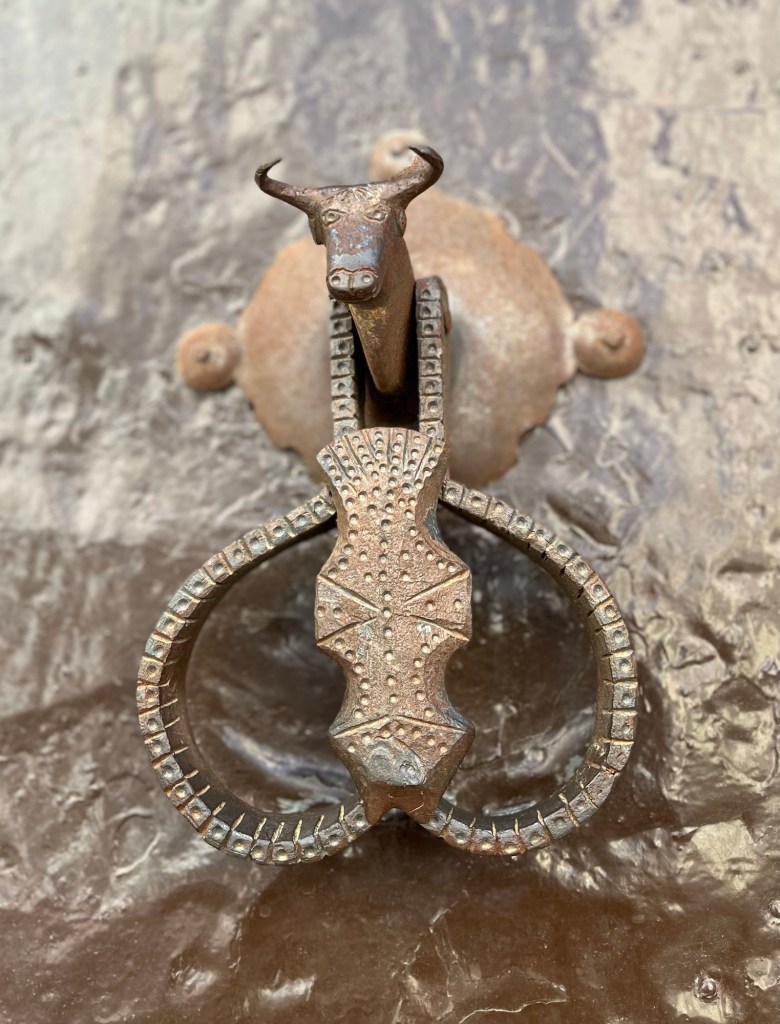

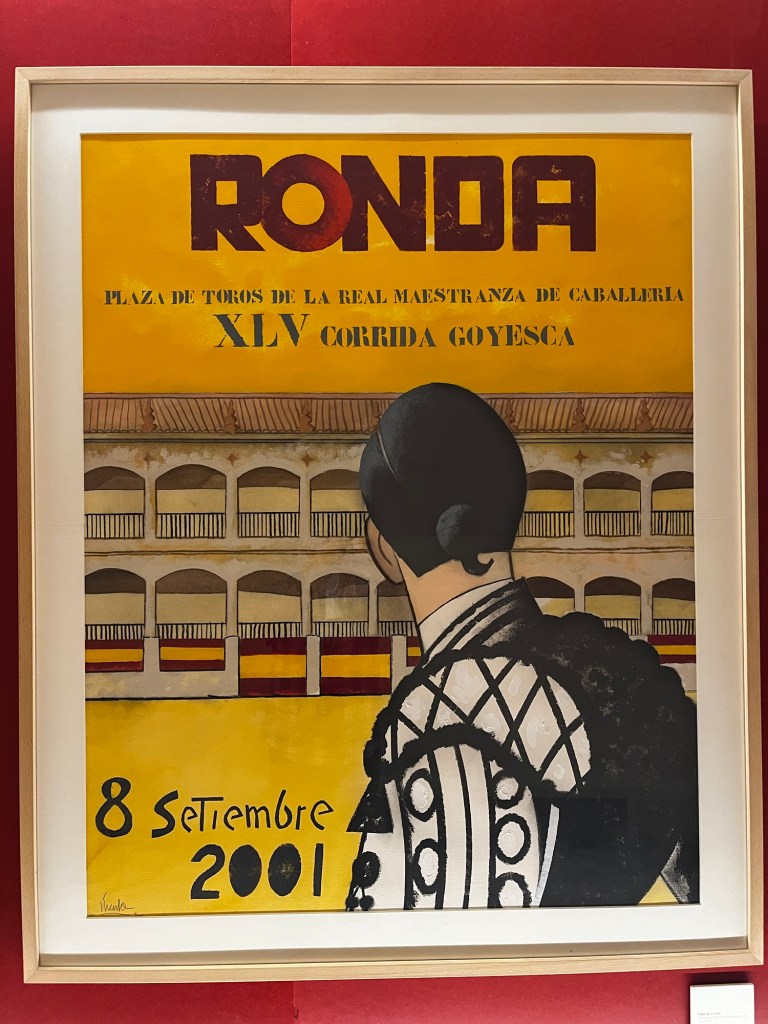
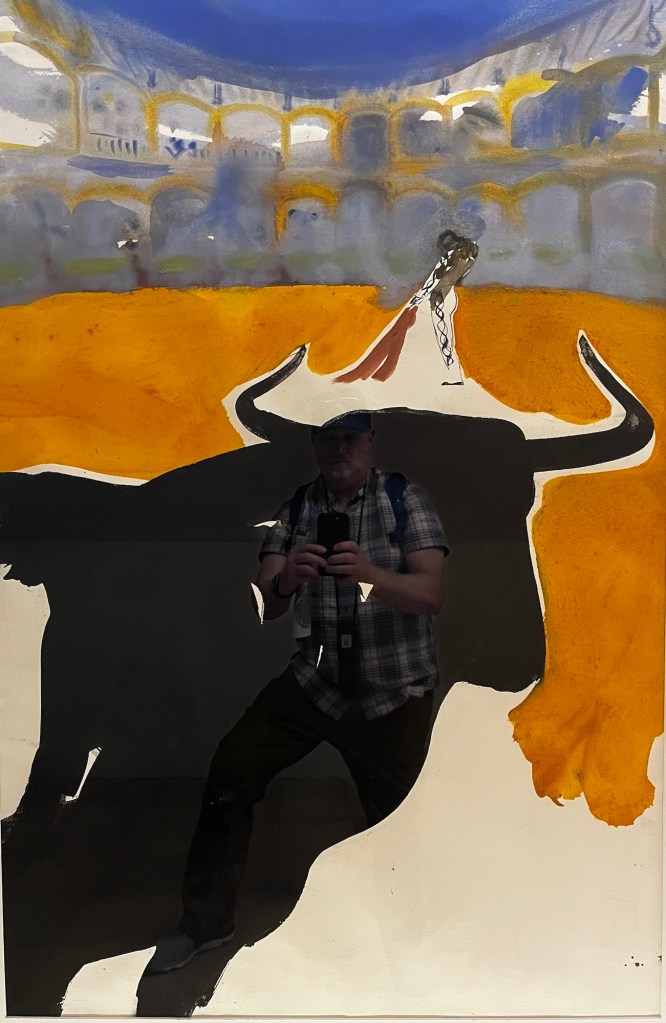
The bullring is still used for bullfighting, but also for horse shows, music and theatre productions, and other cultural events. It’s a very worthwhile visit. Apparently Hemingway thought so as well.
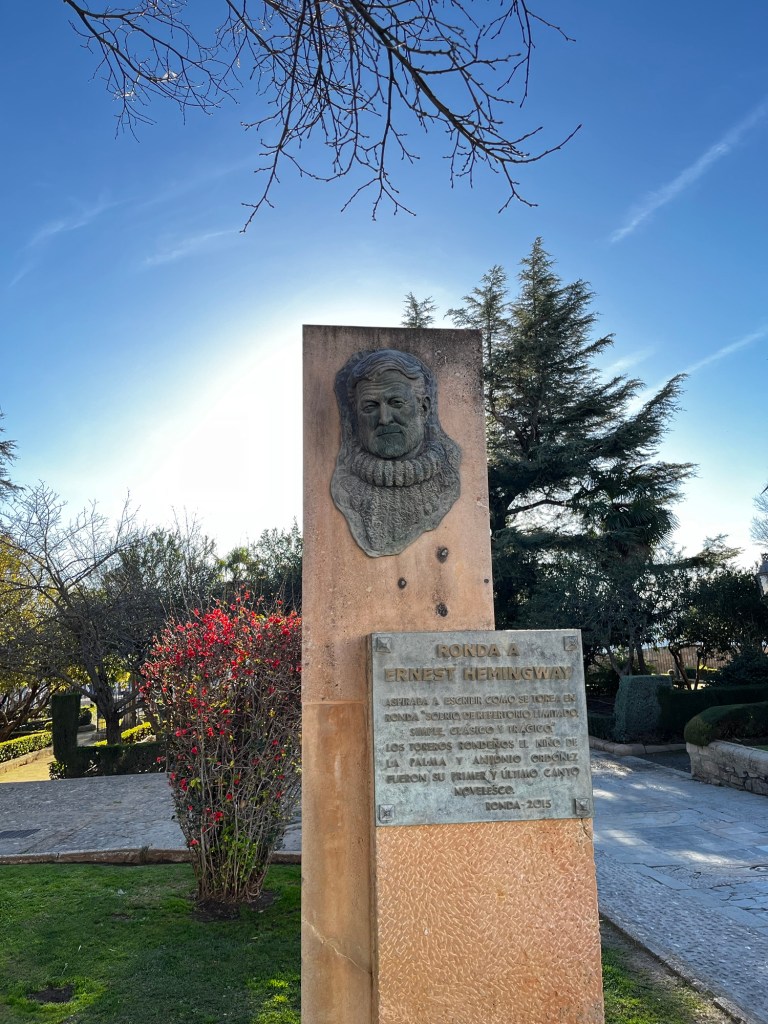
Full disclosure #2: while Hemingway loved the scenery and the bullring, he also loved the gory stories of local vigilantes rounding up fascists and pitching them into the scenic gorge from the city walls. He used these anecdotes in his novel, For Whom the Bell Tolls. This detail doesn’t appear on any plaques.


 MacsTravel Blog
Leave a reply to Darren Cancel reply