Th Alhambra is the greatest remaining Moorish palace and was the last stronghold of Moorish civilization in Spain. It is the primary attraction in Granada, with more than 8000 visitors a day. Reservations are required well in advance and if you are ever going to splurge for a small group tour, this is the place to do it. It is certainly one of the most impressive sights that Robin and I have ever visited in Europe.
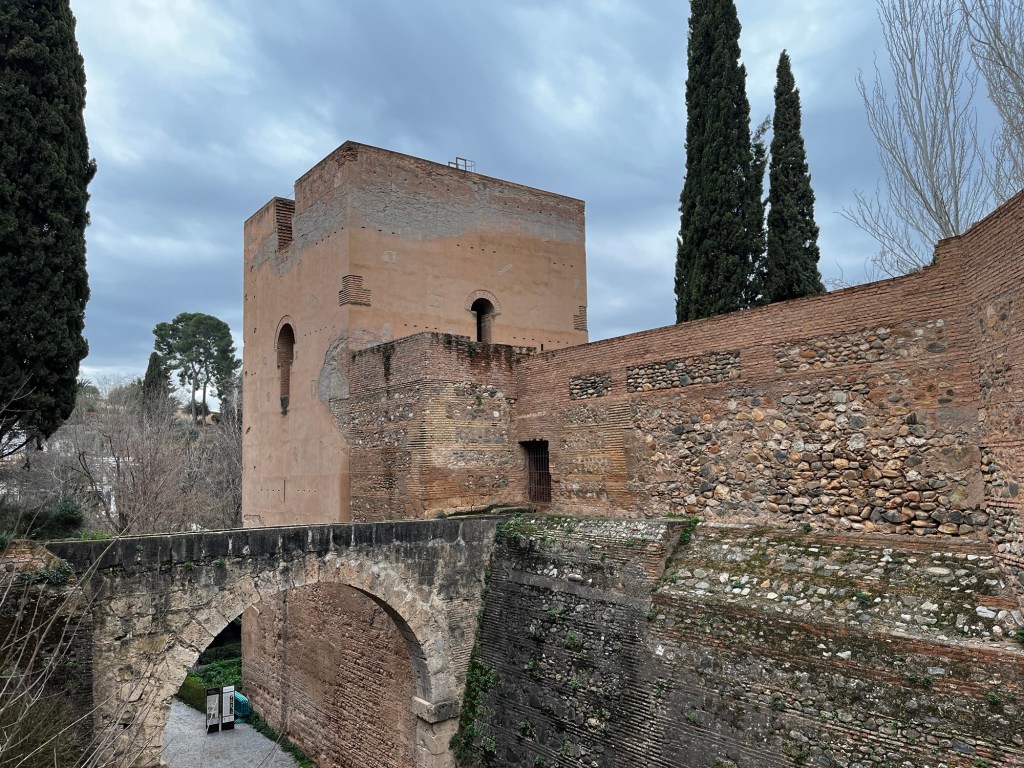
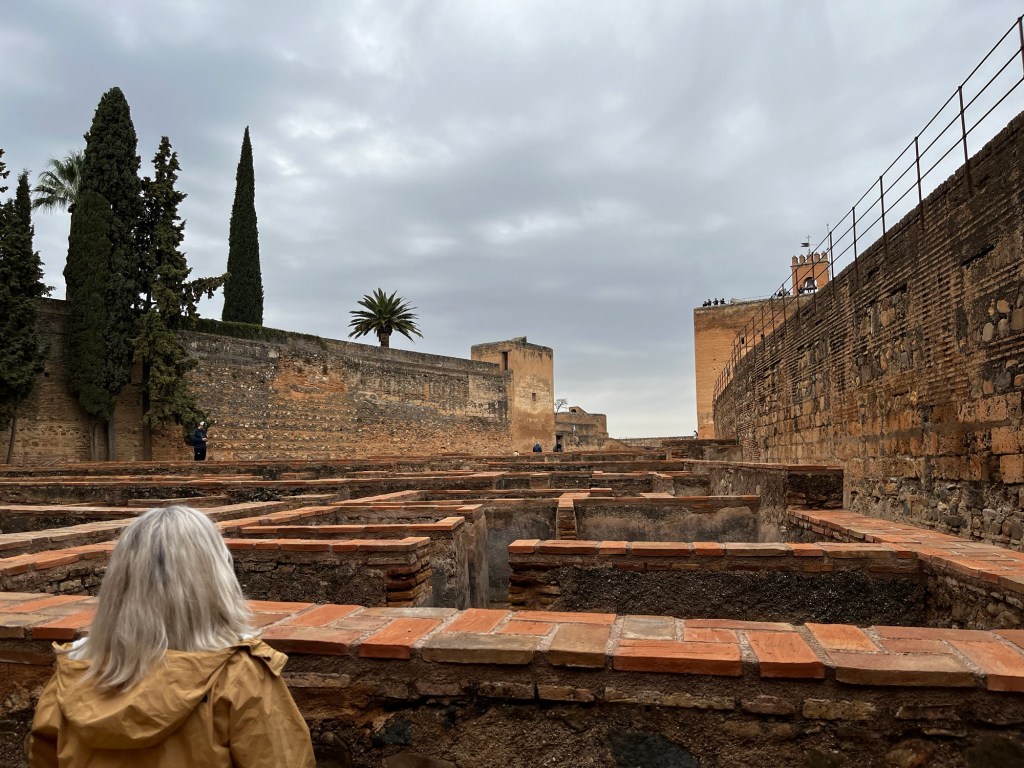
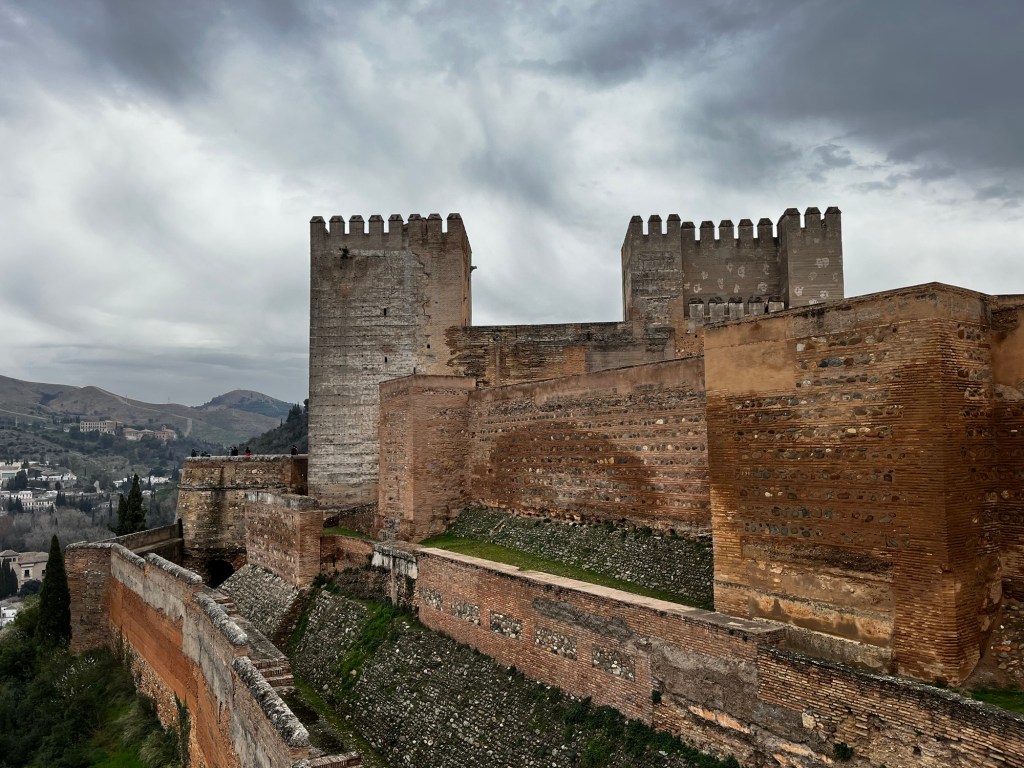
The Alhambra was built on the ruins of a small Roman era fort, which is where the Alcazaba portion of the complex is located. Like most forts, it is built high on a hill: the walk up certainly provided some morning cardio!
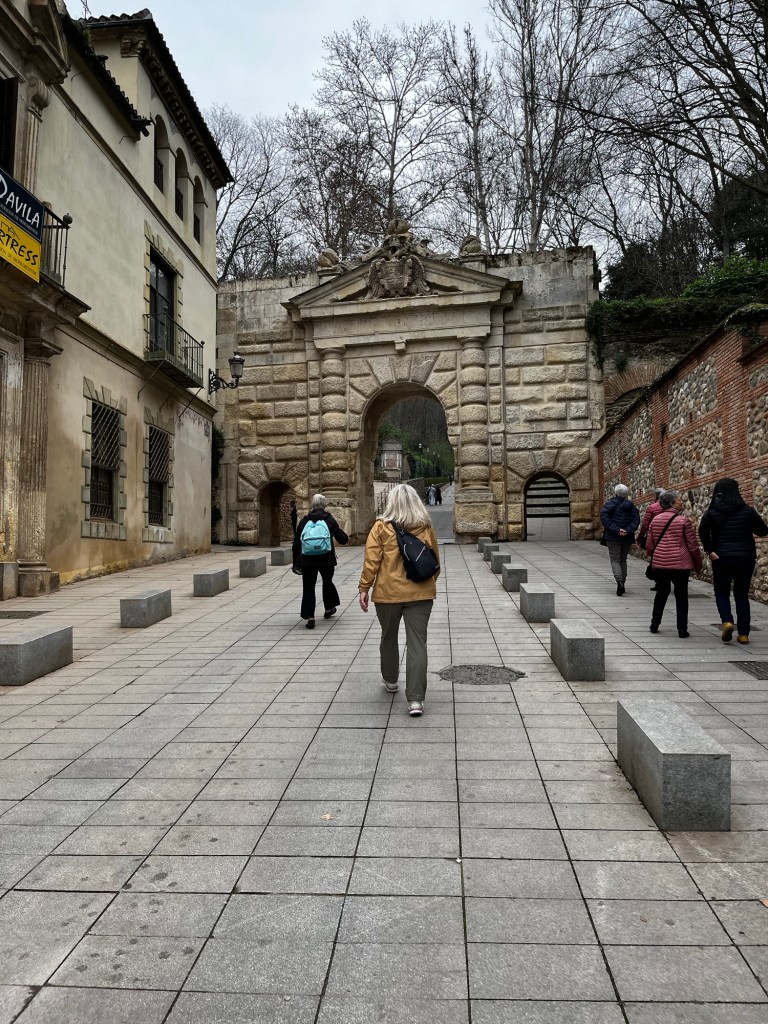
Most of the work on the Alhambra occurred in the 13th and 14th centuries as the Moors gradually retreated in the face of Christian forces. Granada was the final Moorish kingdom, surrendering to Ferdinand and Isabella in 1492.
If you have ever had the opportunity to learn much about life in Europe in the Middle Ages you will no doubt have come away with the impression that this period known as “The Dark Ages” was a grim time. In contrast, the Alhambra is a symbol of a sophisticated civilization with an advanced understanding of math, architecture, infrastructure (including complex underground aqueducts) and an appreciation for art and beauty that far exceeds anything found in the European countries of the time.
We started our tour exploring the Generalife Palace and Gardens which occupy the ridge above the fort and below the Sierra Nevada Mountains. The gardens were formerly farmed terraces, providing food to the palace. The views over the Alhambra and the city of Granada are breathtaking.
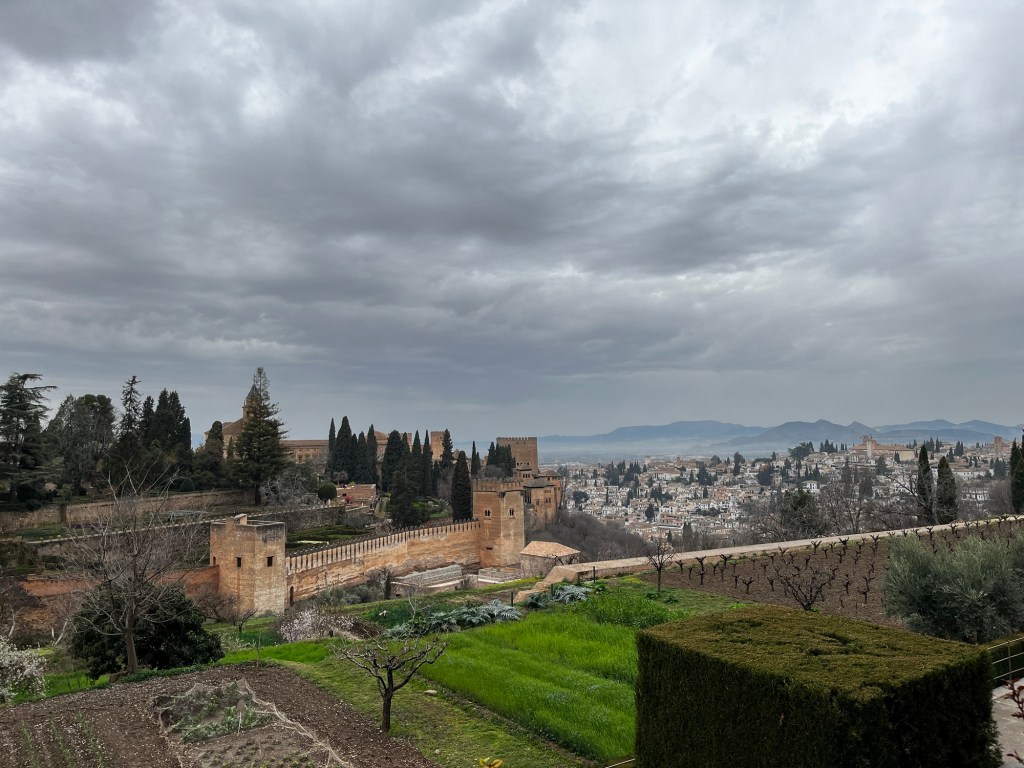
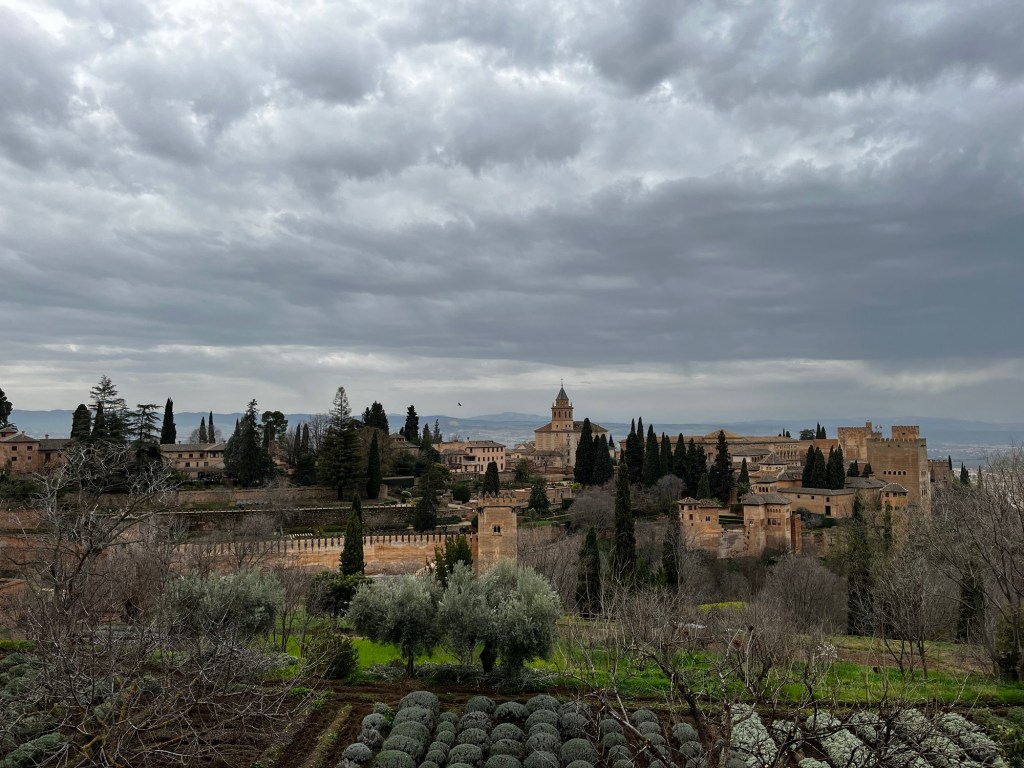
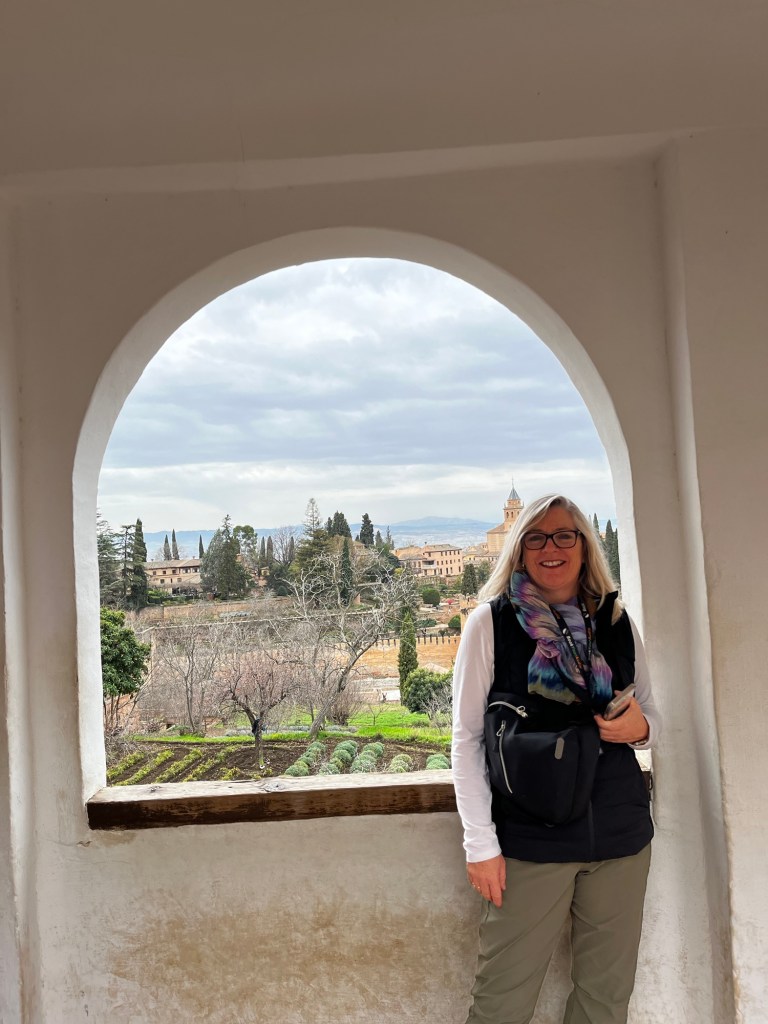
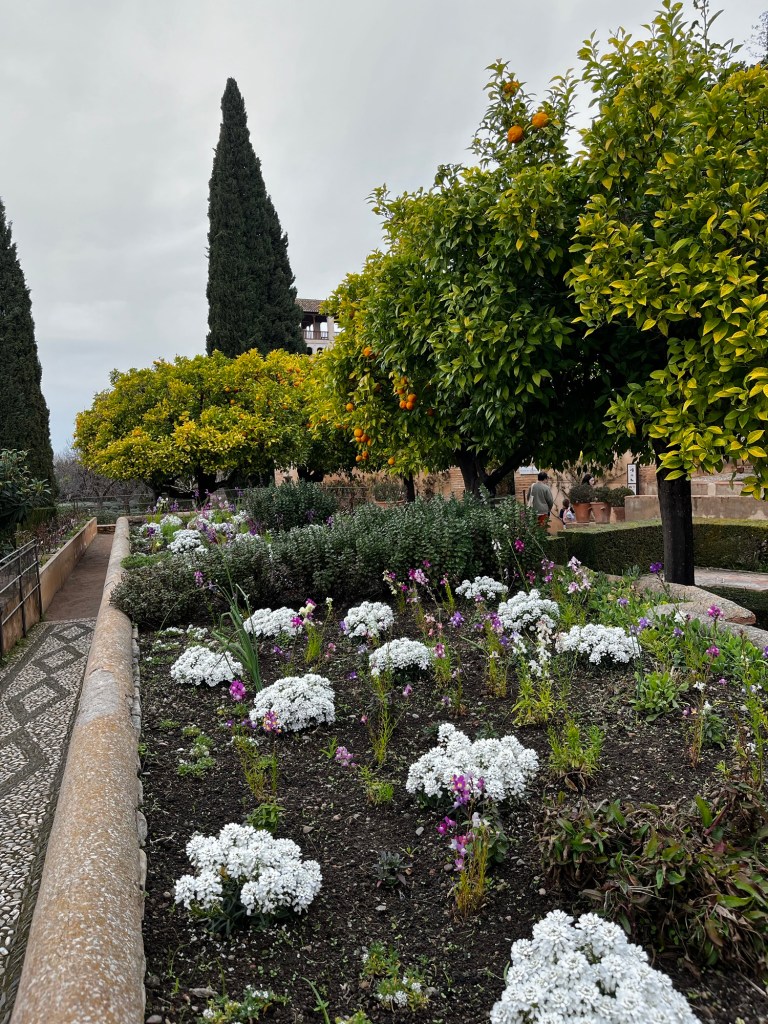
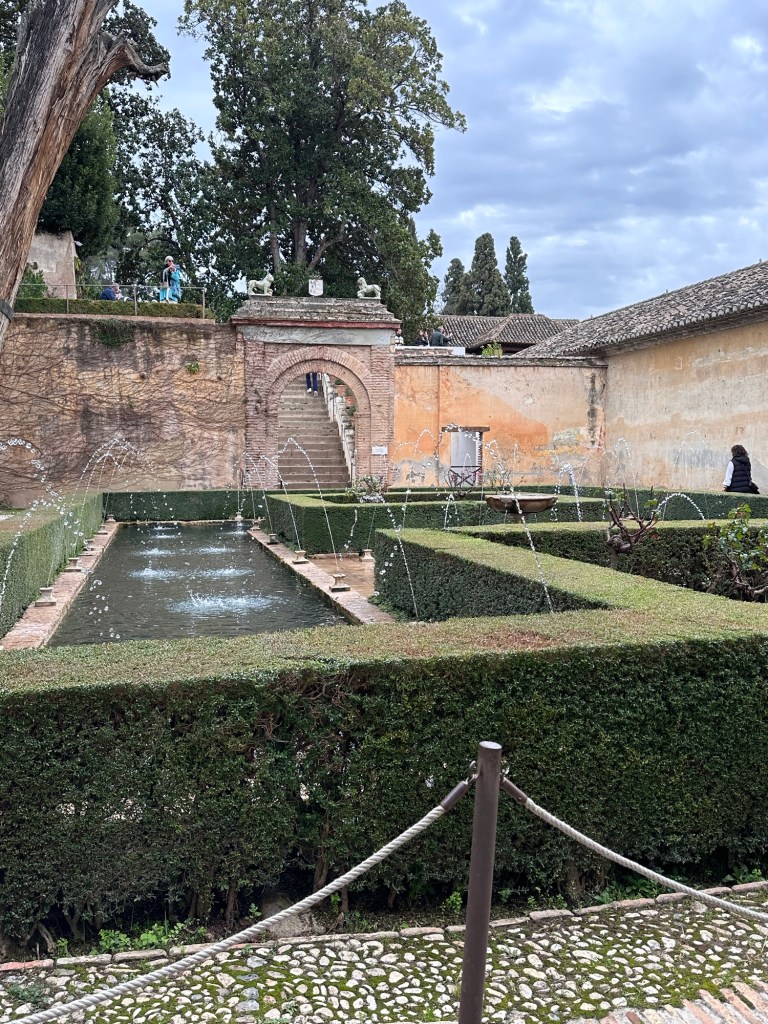
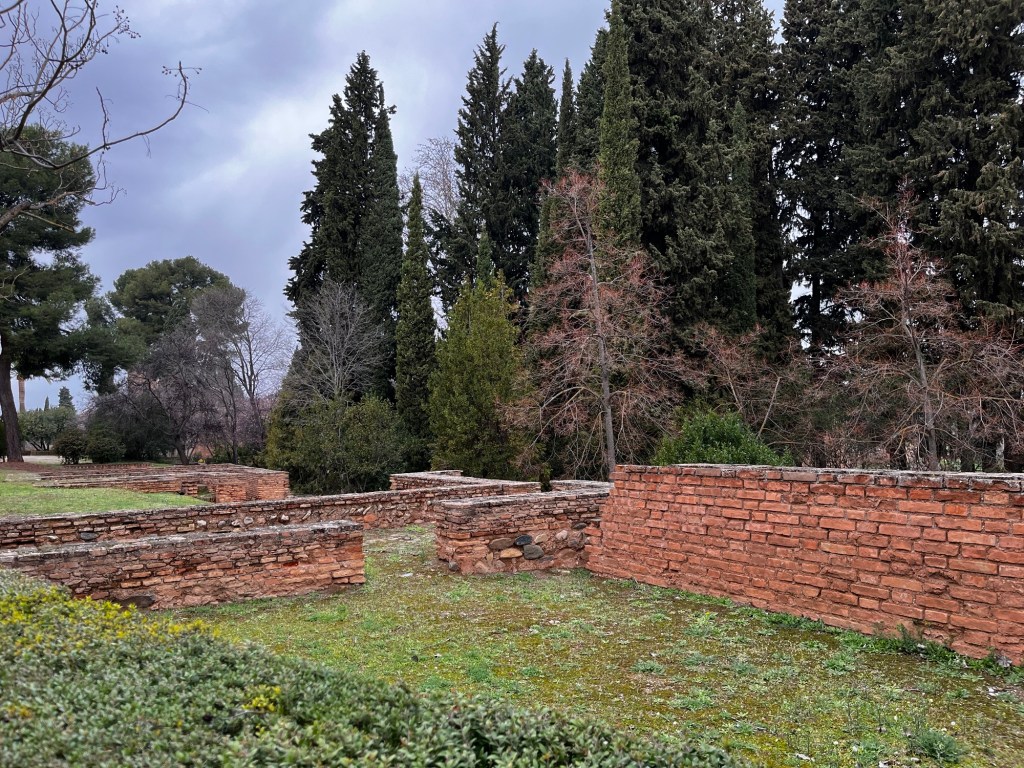
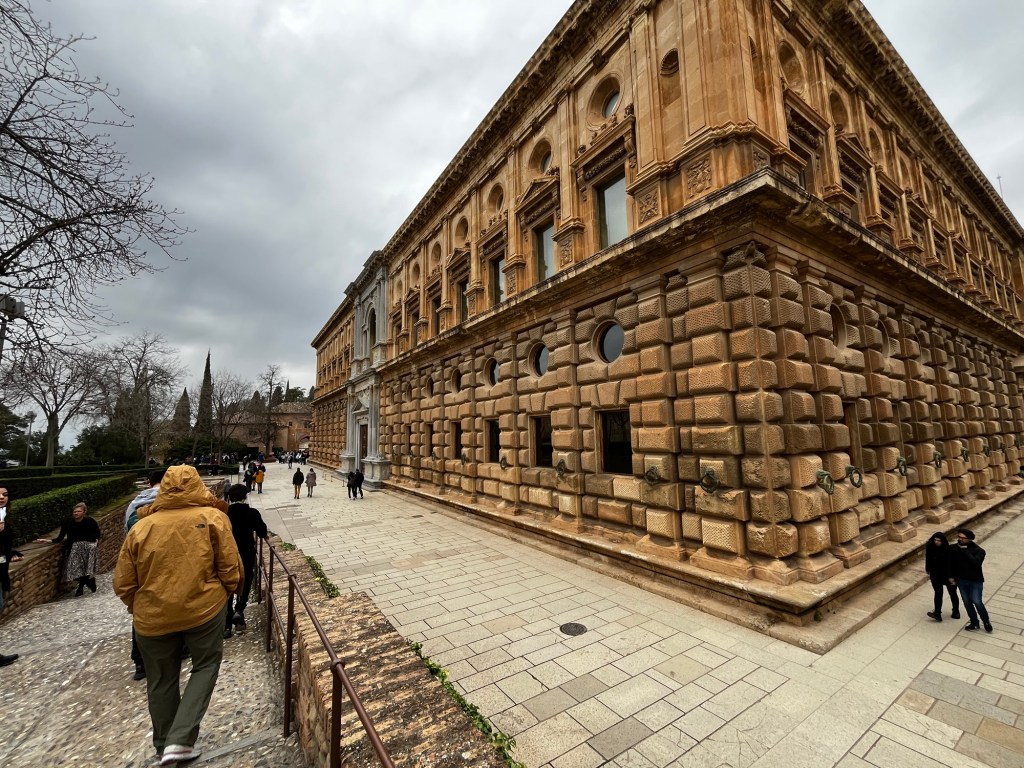
We then walked back down through the gates of the outer walls, past the incongruous Christian Renaissance Palace of Charles V.
From there, we moved into the interior walls of the Alcazaba Fort. The complex of the Alhambra is enormous, and the site on the hill feels impregnable. It was never breached by the Spanish armies; rather, the Moors eventually chose to surrender as the armies of Ferdinand and Isabella picked off town after town before arriving in Granada. Coping with an influx of refugees and limited resources, the last Moorish King, Boabdil, surrendered, and Isabella apparently guaranteed favourable treatment to those who decided to stay. While many Moors joined Boabdil in exile in North Africa, others remained until the reign of Charles V, where they were forced to convert to Christianity or leave the country. Today, however, there are over two million practising Muslim in Spain and the Islamic community in Granada is a vibrant one.
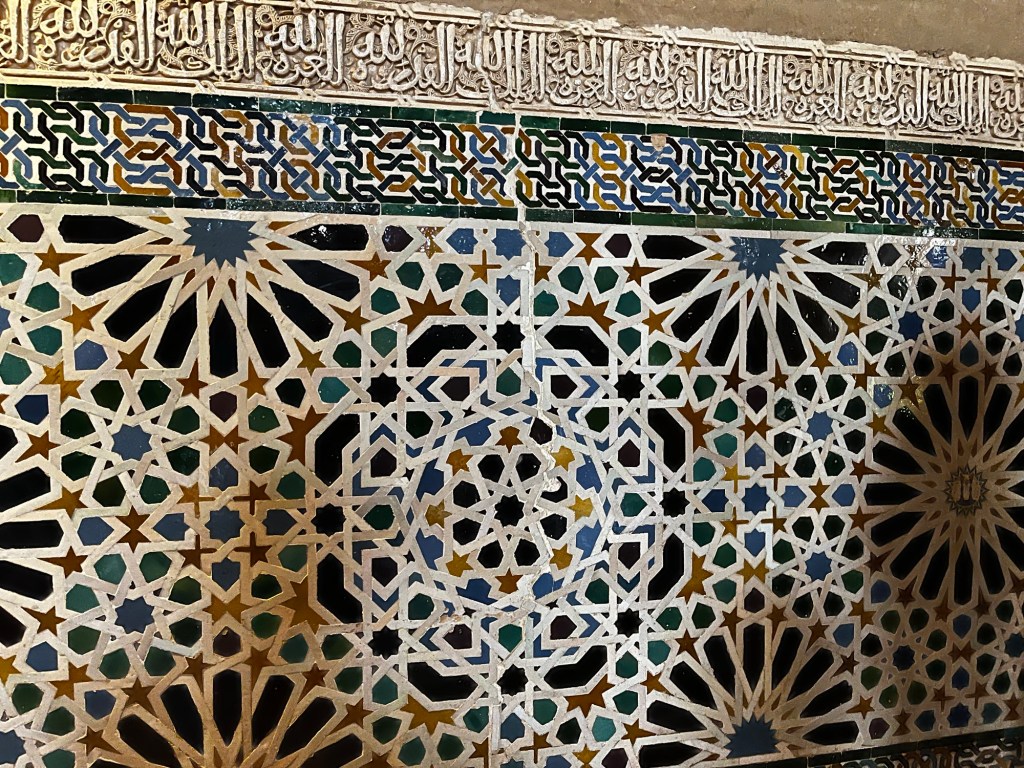
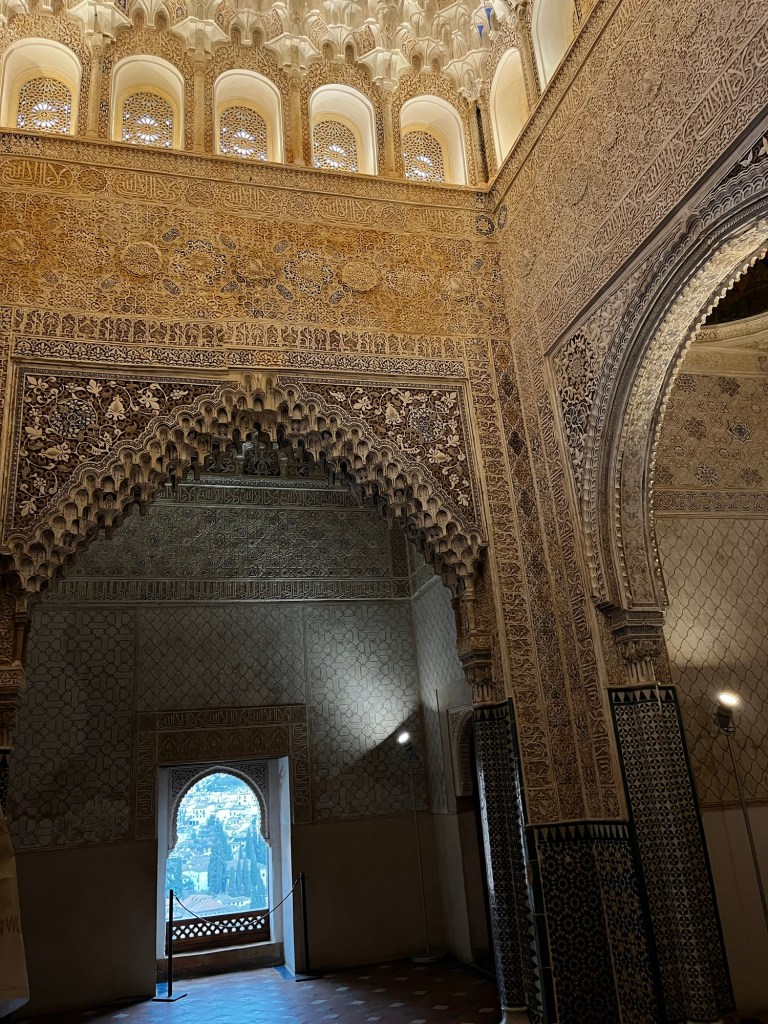
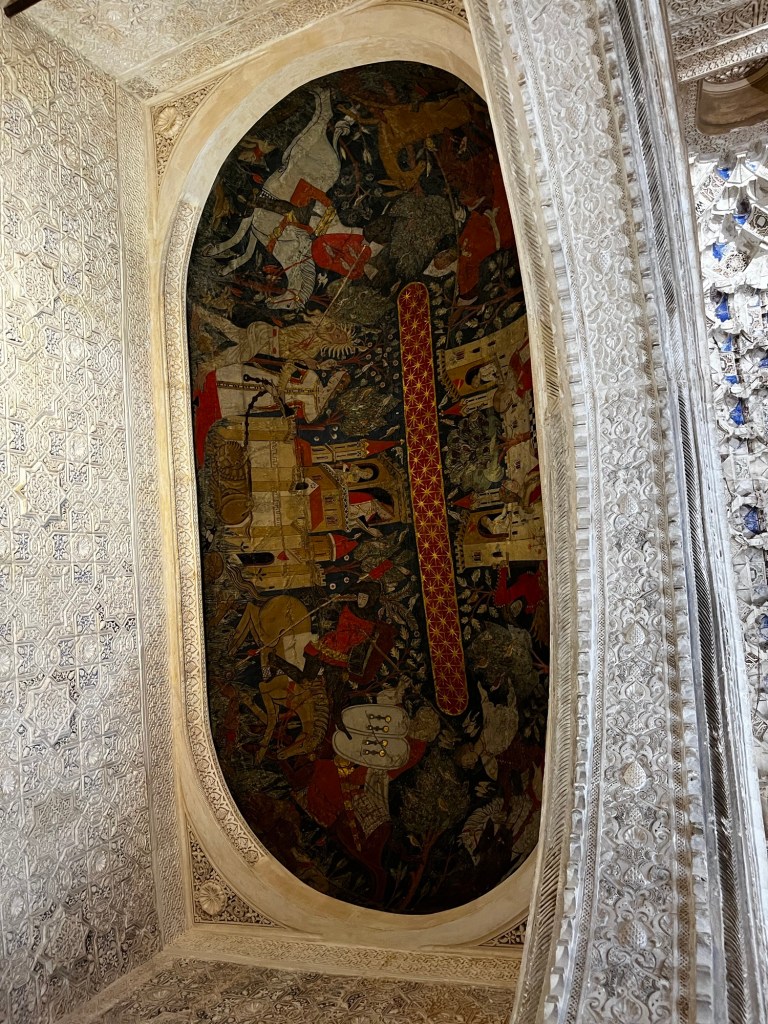
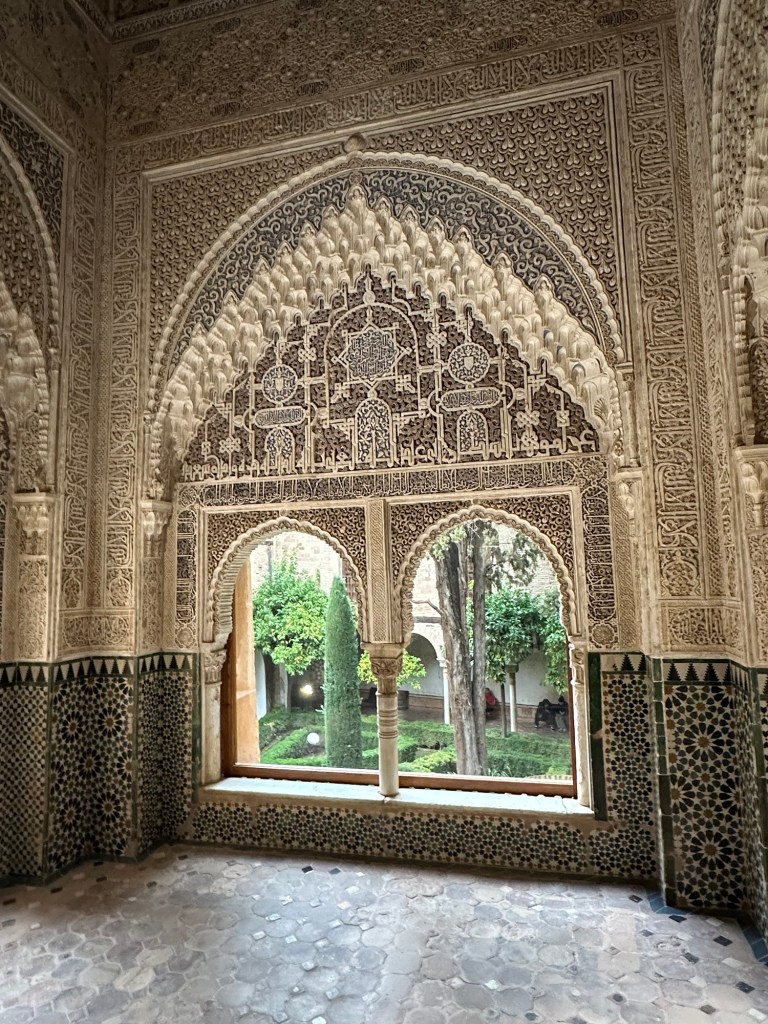
The star of the Alhambra is the Palacios Nazaries, the royal palace of Granada. It is an incredible complex to walk through. You weave through hallways that turn into offices, ceremonial rooms, beautiful courtyards and private rooms. The architectural details are incredible: marble columns, soaring and elaborately carved wooden ceilings, colourfully intricate tile mosaics, stucco stalactites, walls covered in moulded plaster and intimate and delicately designed windows. And everywhere the sound of water from the cooling courtyards.
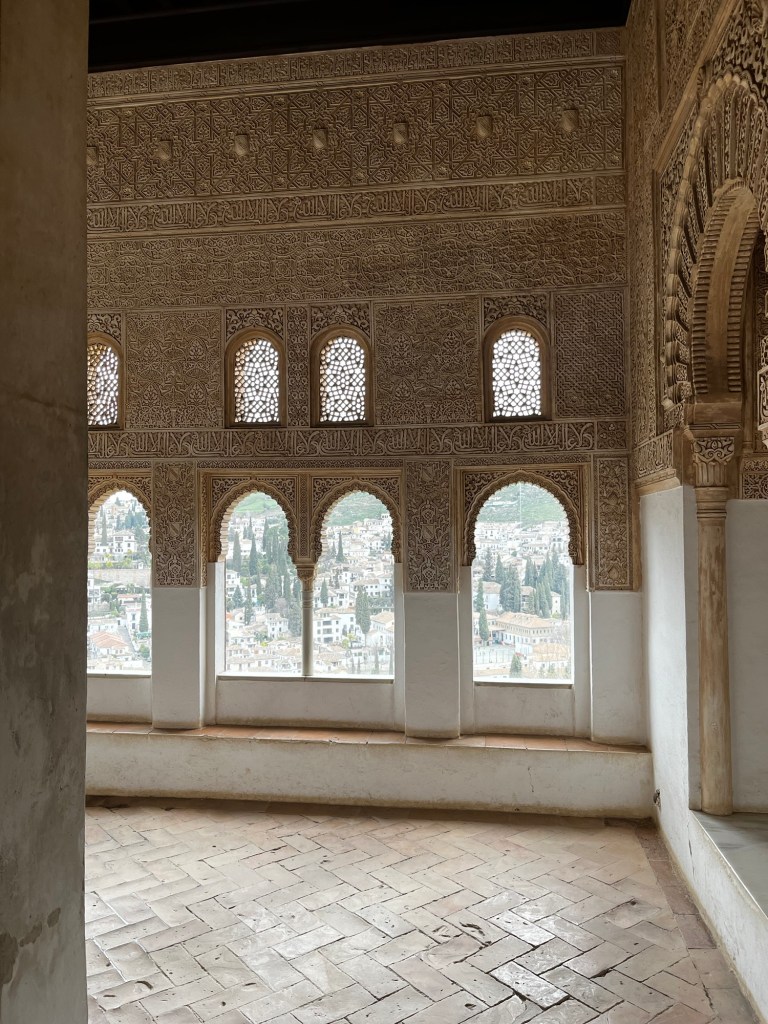
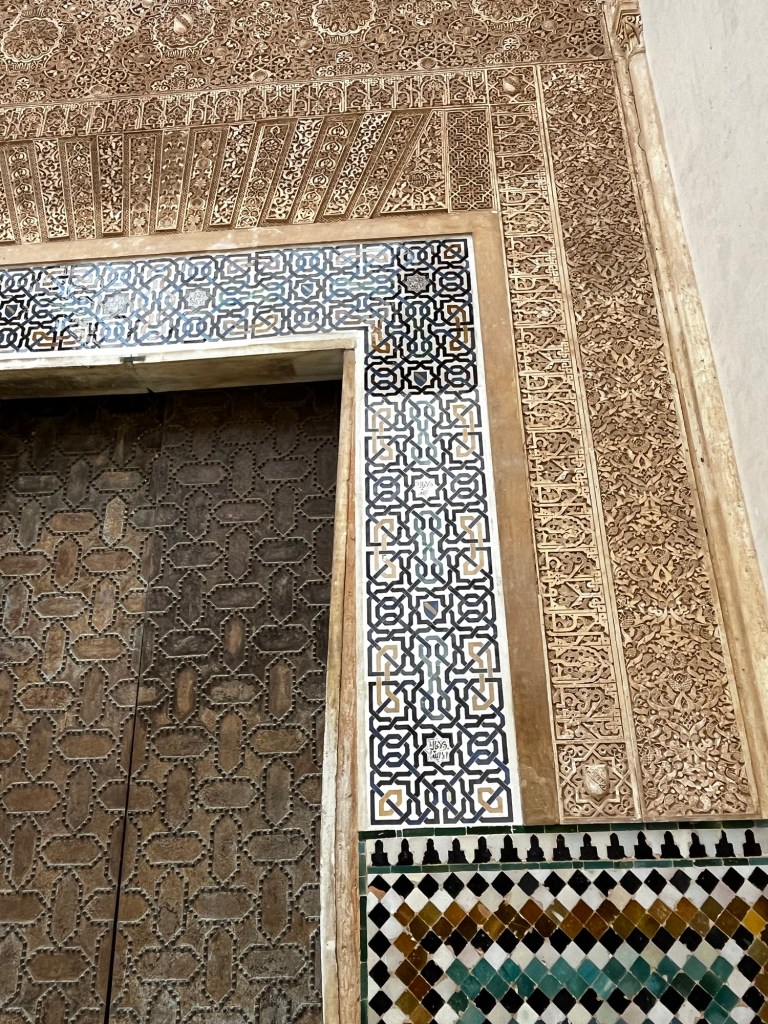
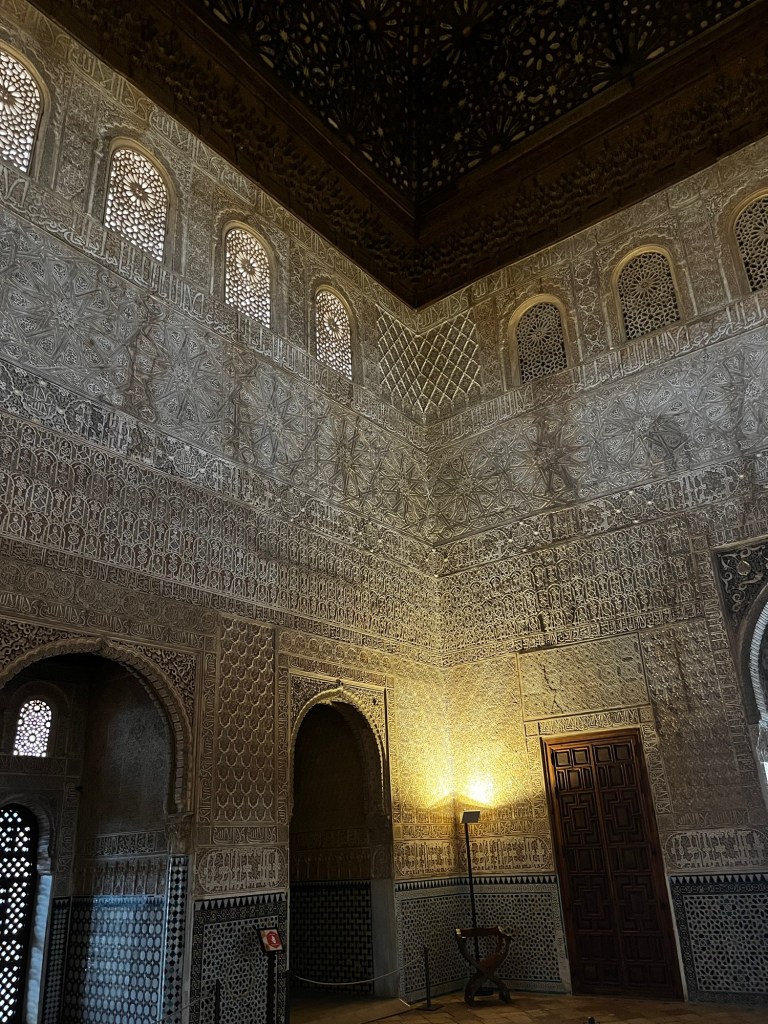
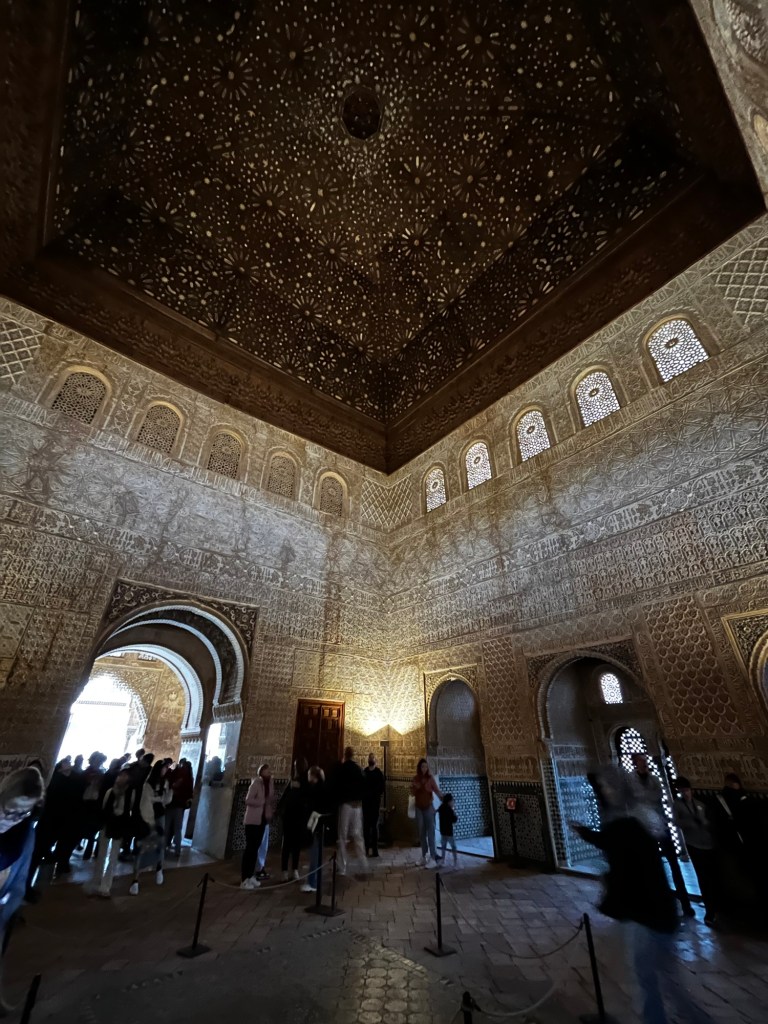
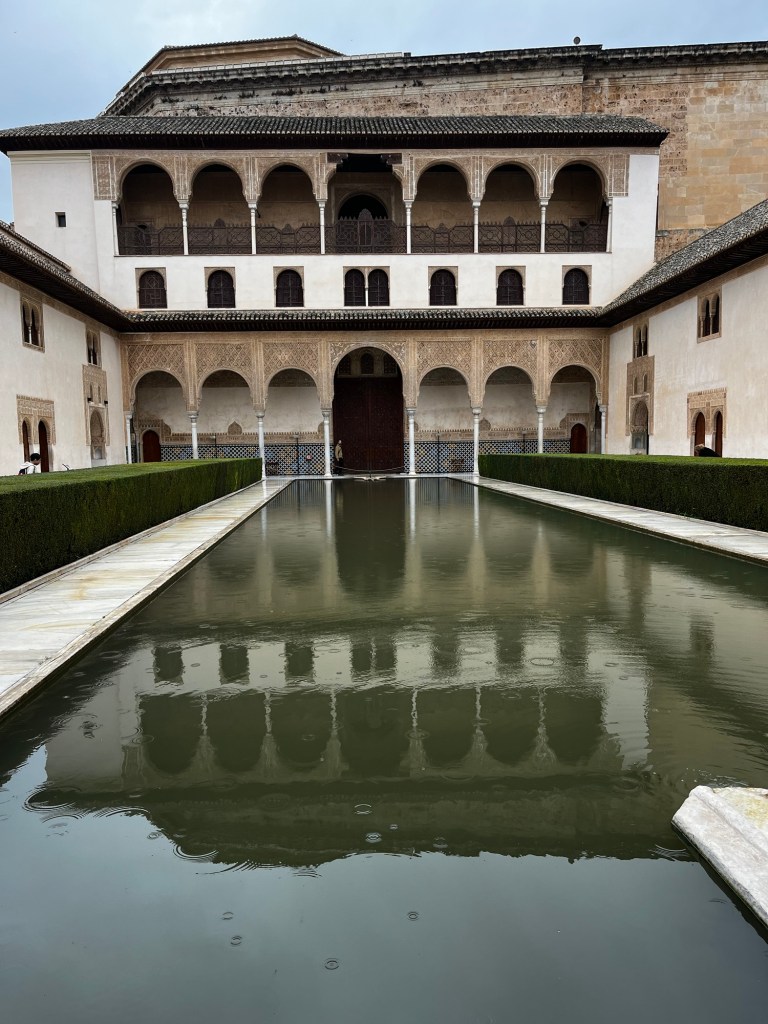
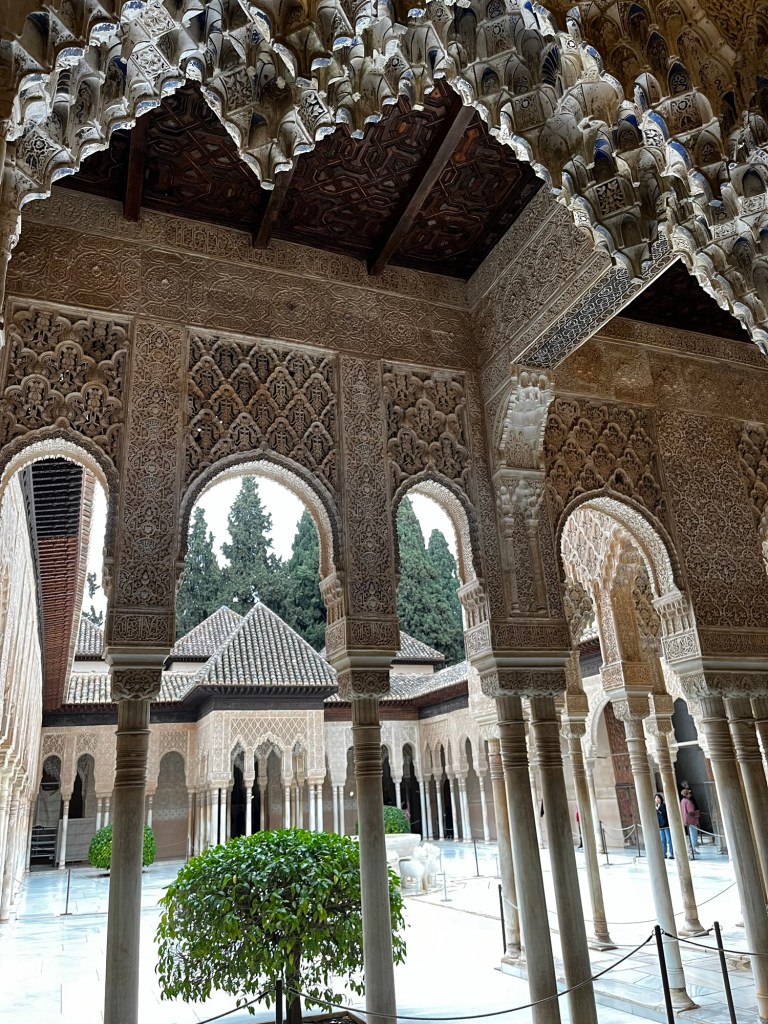
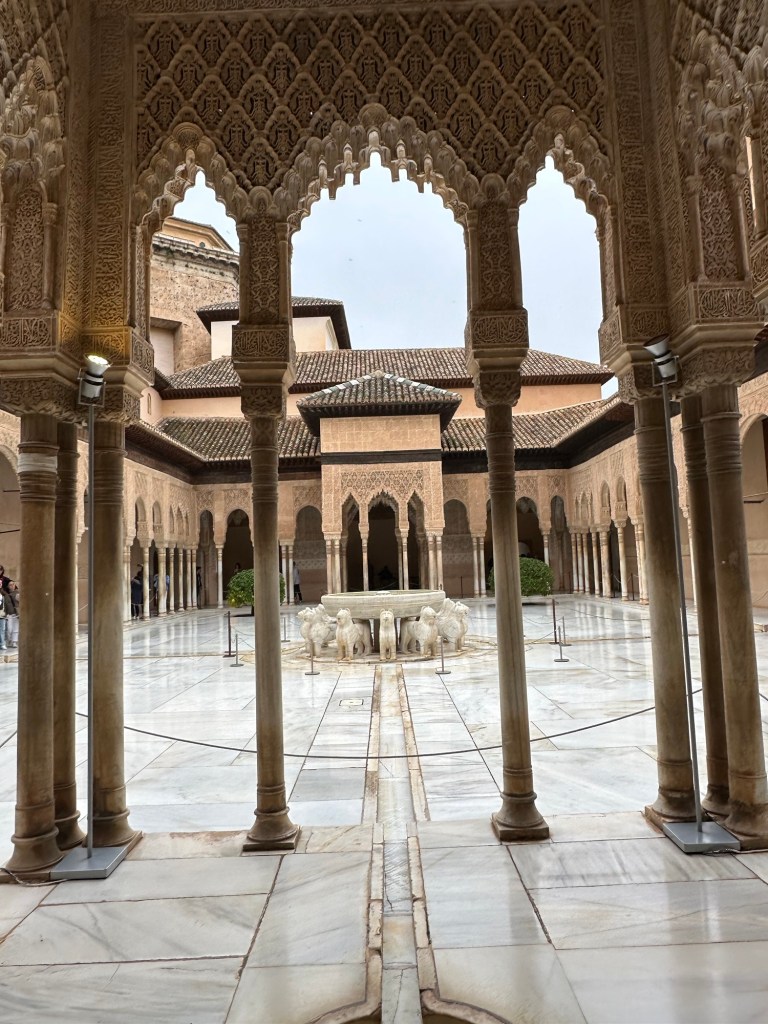


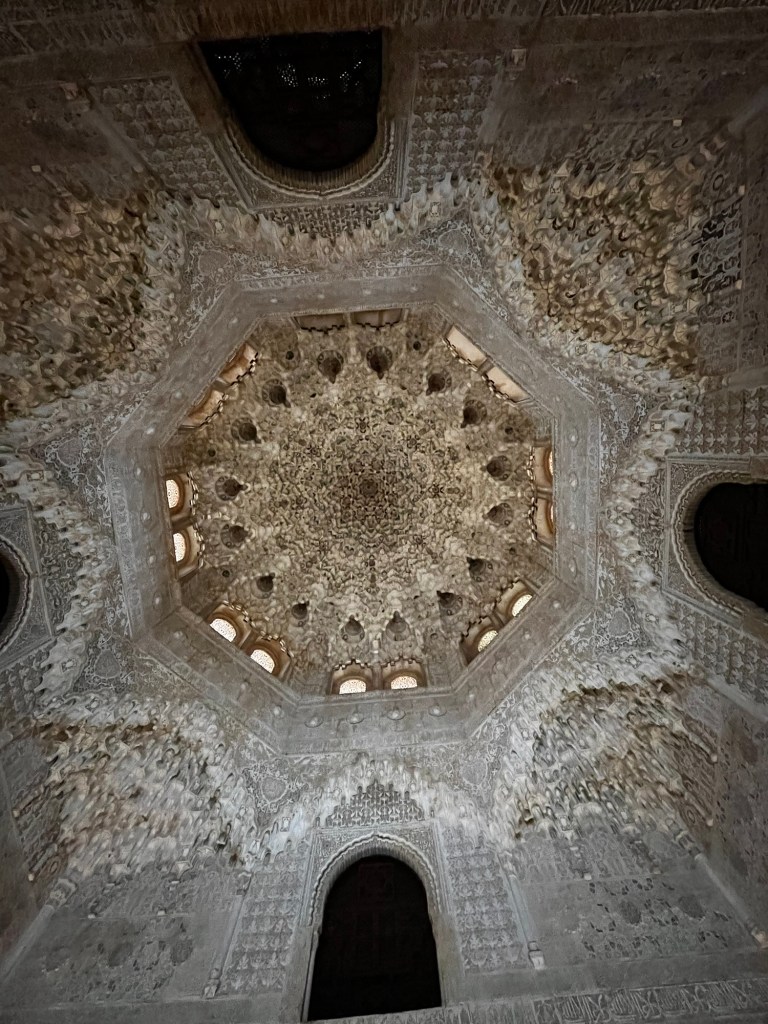
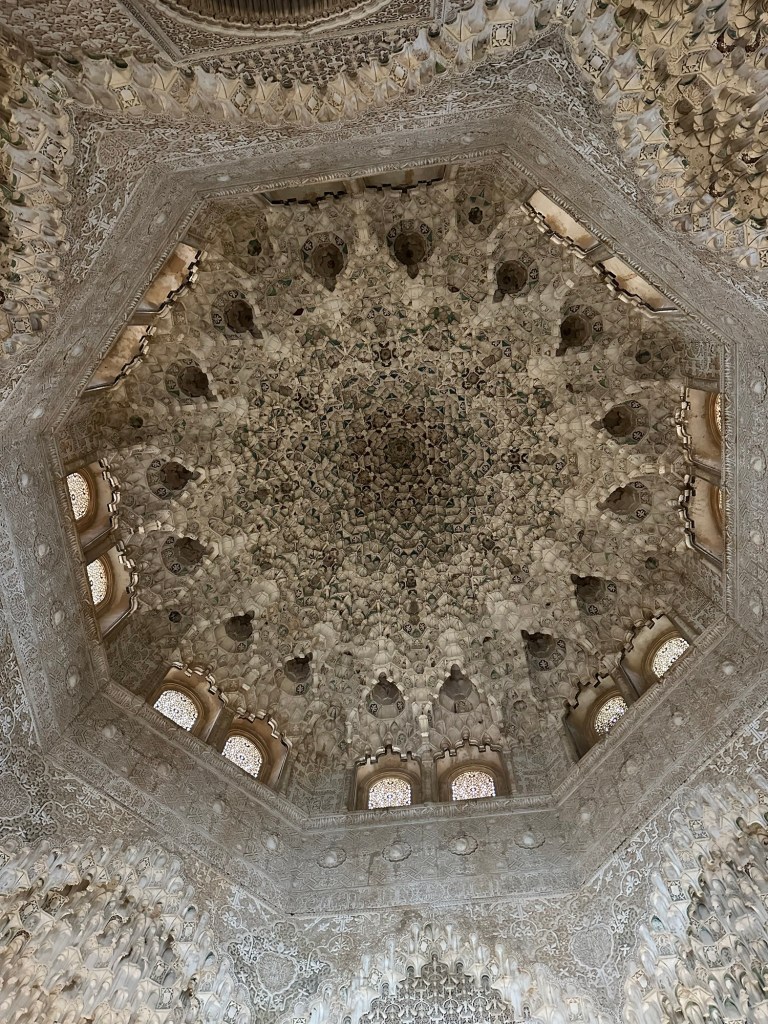
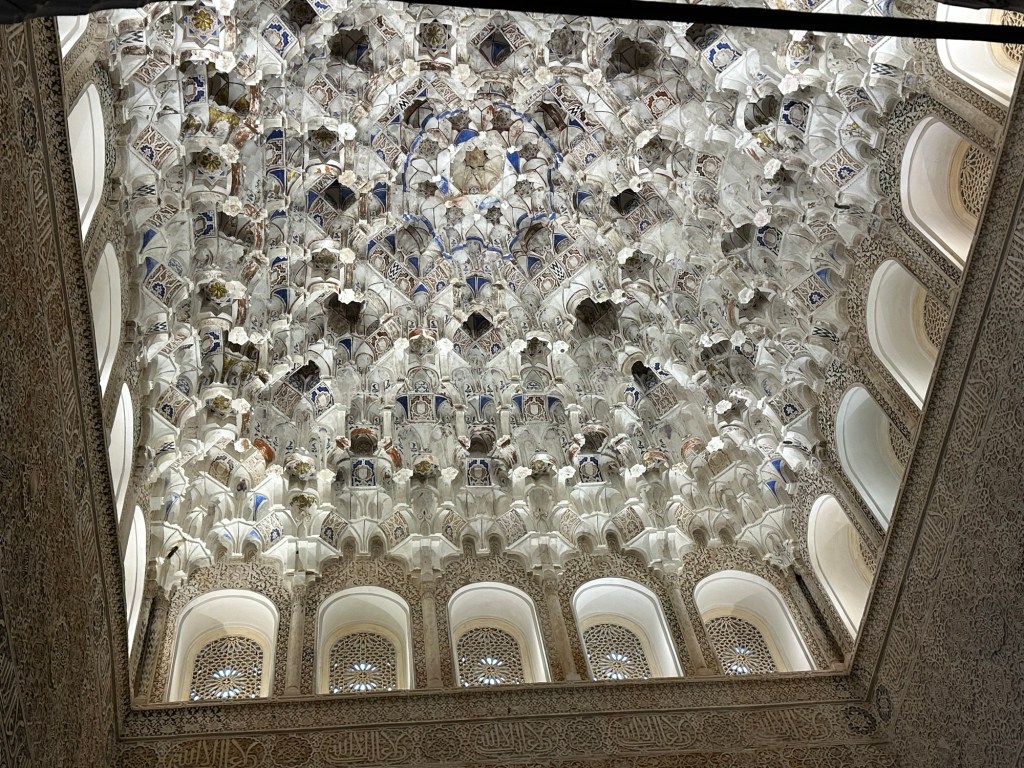
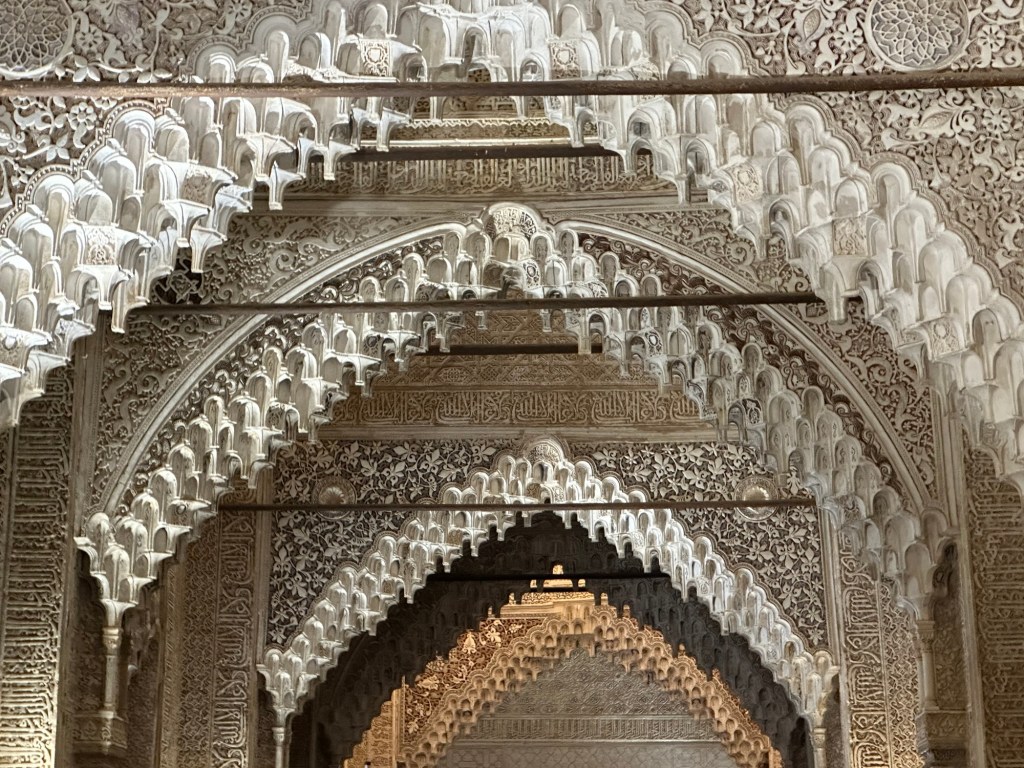
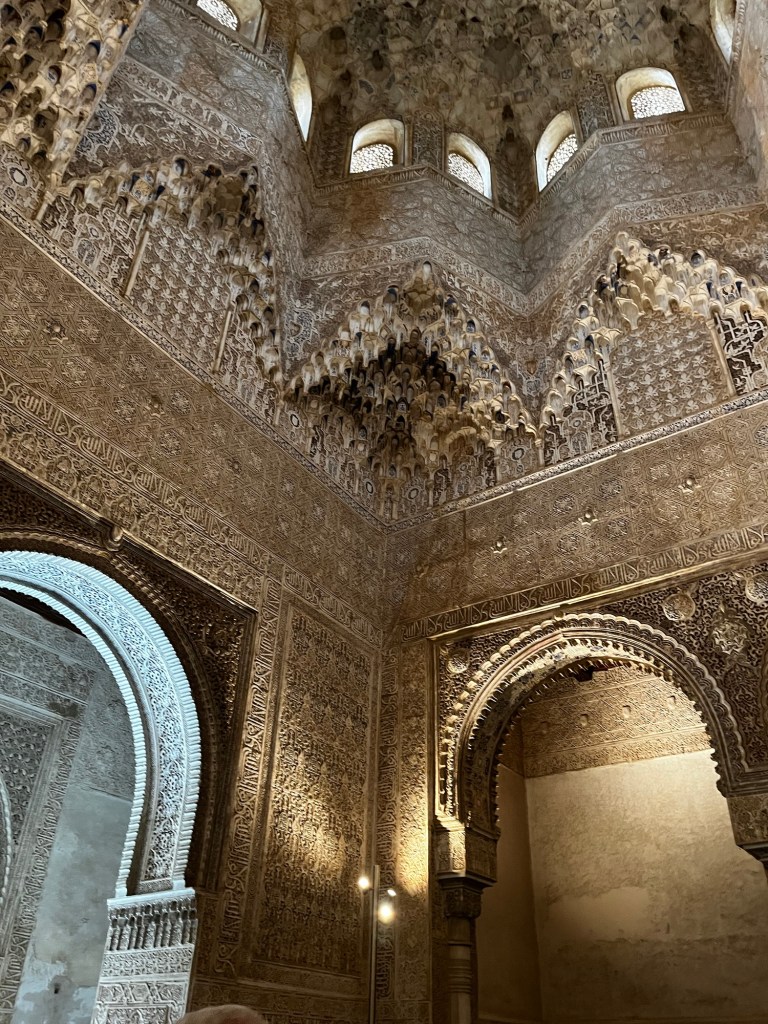
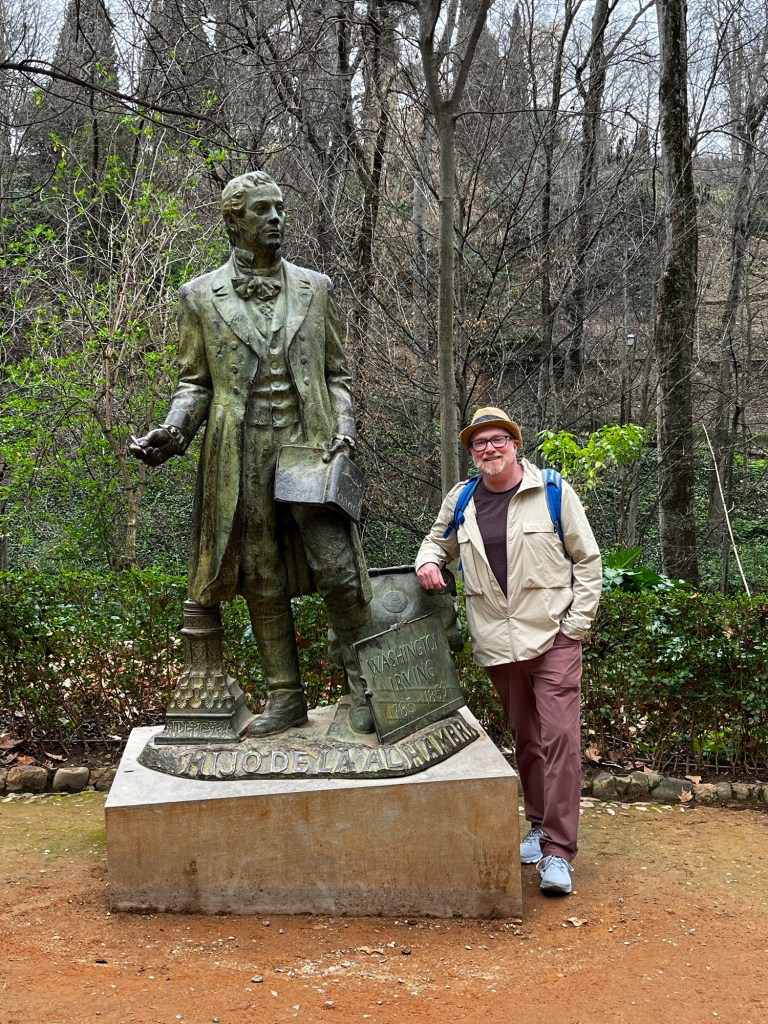
It is a little odd to see the name of Washington Irving splashed around on rooms, hotels and souvenir shops. The American writer visited the Alhambra when it was falling into ruin in the early 1800s and was the residence of Roma peoples and their farm animals. He was struck by the romantic elements of the place, and his popular and completely fictional Tales from the Alhambra was a turning point in the Spanish government’s decision to try and protect the complex and capitalize on the interest in visiting it.
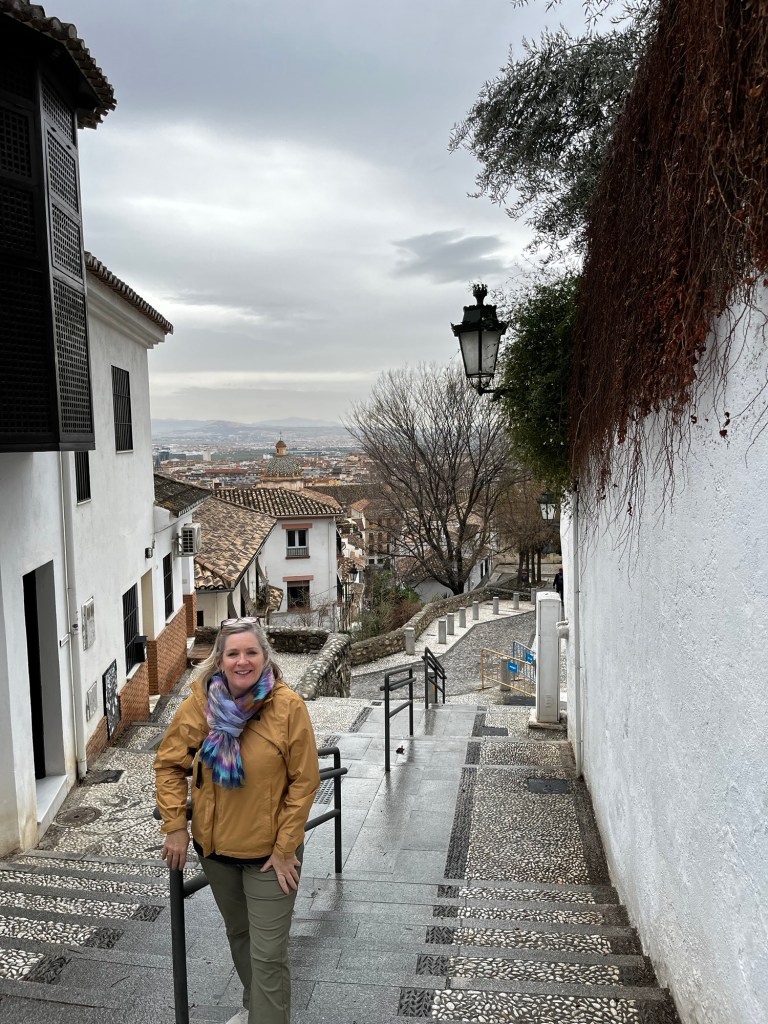
It was a fascinating but tiring three plus hour tour through the Alhambra. We took a different route down through the hillside community and back into the city centre.
We had planned to eat dinner at the apartment and decided to pop into a bar for a drink and a snack before heading off in search of a supermarket. Paco had recommended a few places and we settled on La Gran Tabera, a hole in the wall spot near our apartment. It was filled more with locals than with tourists and, like many bars in Granada, still followed the custom of serving complimentary tapas with your drinks.
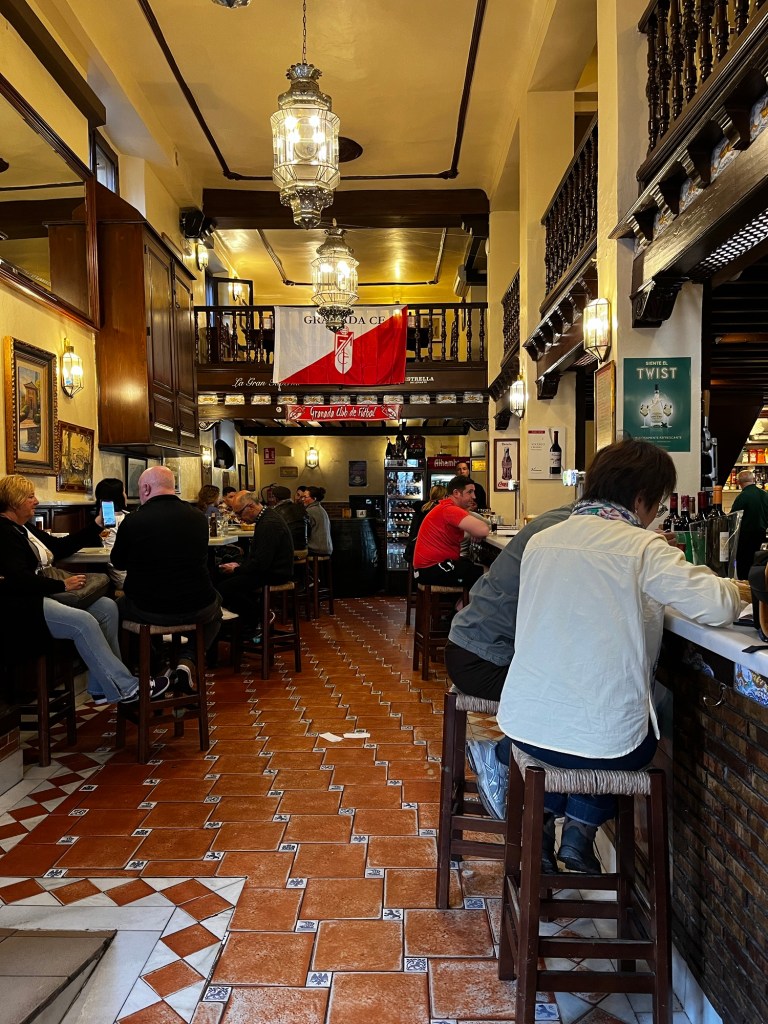
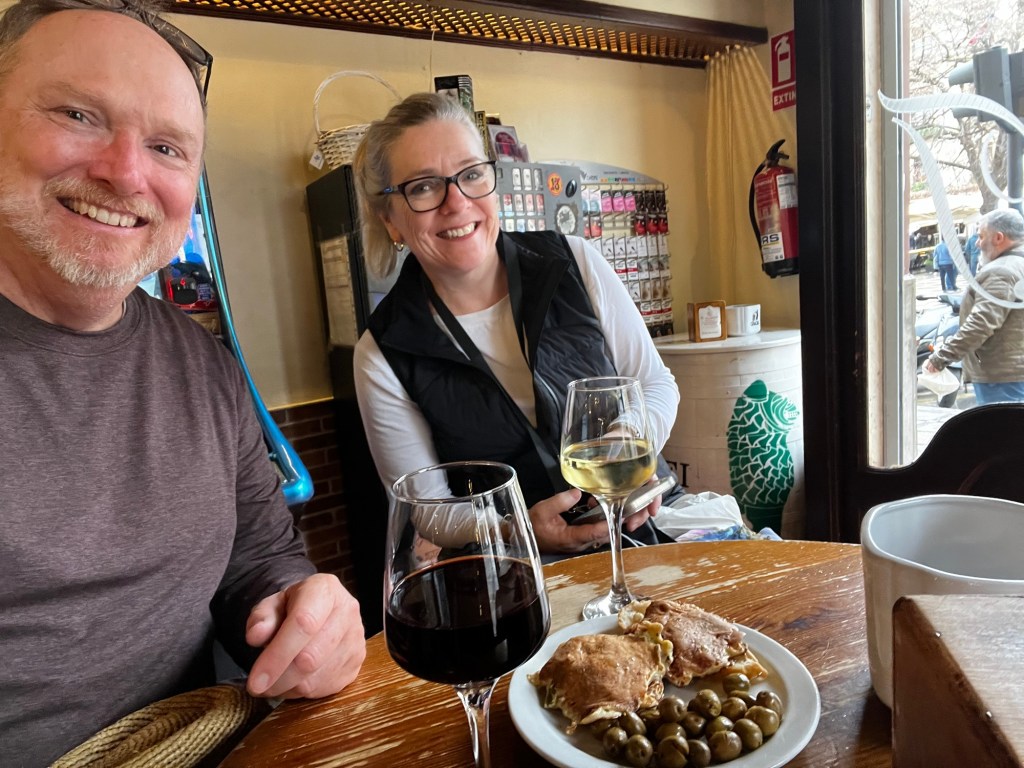
We lingered for over an hour, absorbing what we’d seen and heard today and enjoying the comings and goings of the regulars in the bar. Four glasses of wine and four tapas: 11€.
Another fantastic day.


 MacsTravel Blog
Leave a reply to Darren Philip Climans Cancel reply