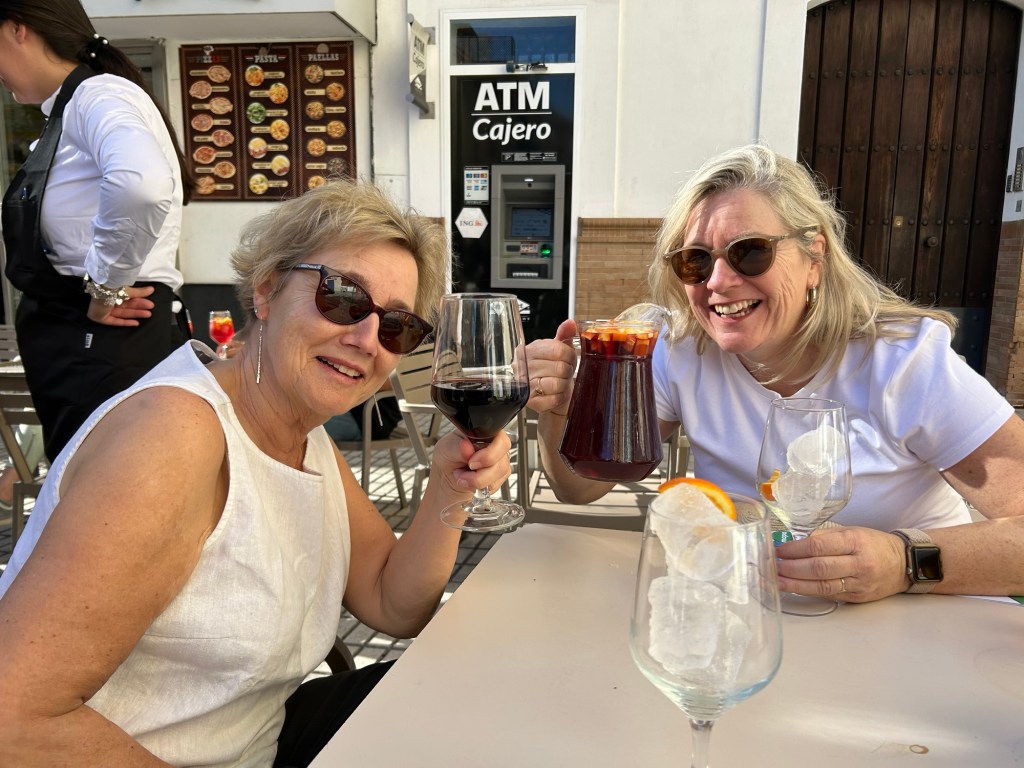
One of the charming aspects of Sevilla are the distinctive barios (neighbourhoods) that are within a short walk of the historic centre. Over the course of a few days we had the great pleasure of exploring a variety of areas with Darren and Truus, pausing in plazas (squares) big and small, wandering through markets, churches and shops, and lingering over coffee, wine or beer on patios, ringing up the step count on our smart watches. Essentially, we were participants in the paseo, (the habitual daily walk taken by the residents of Sevilla) which is the very heartbeat of the city.
Riverside
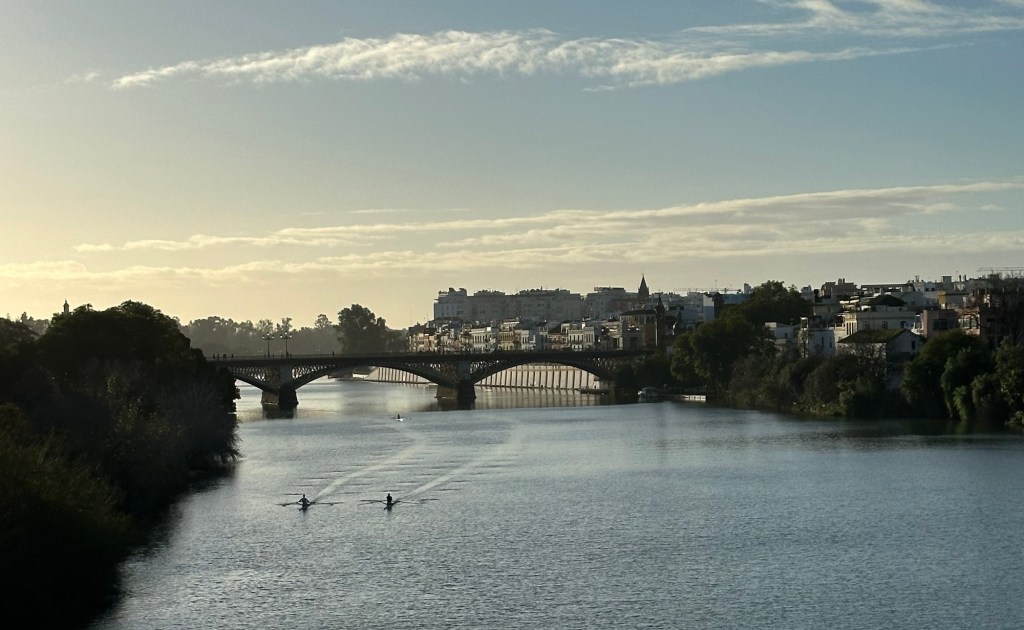
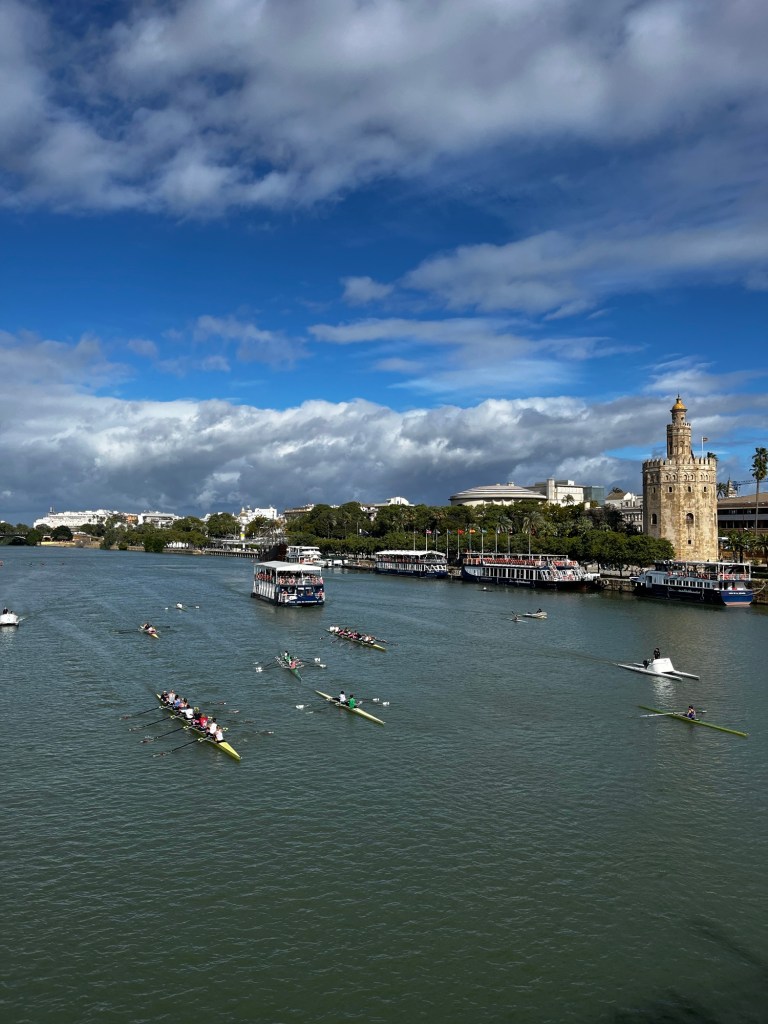
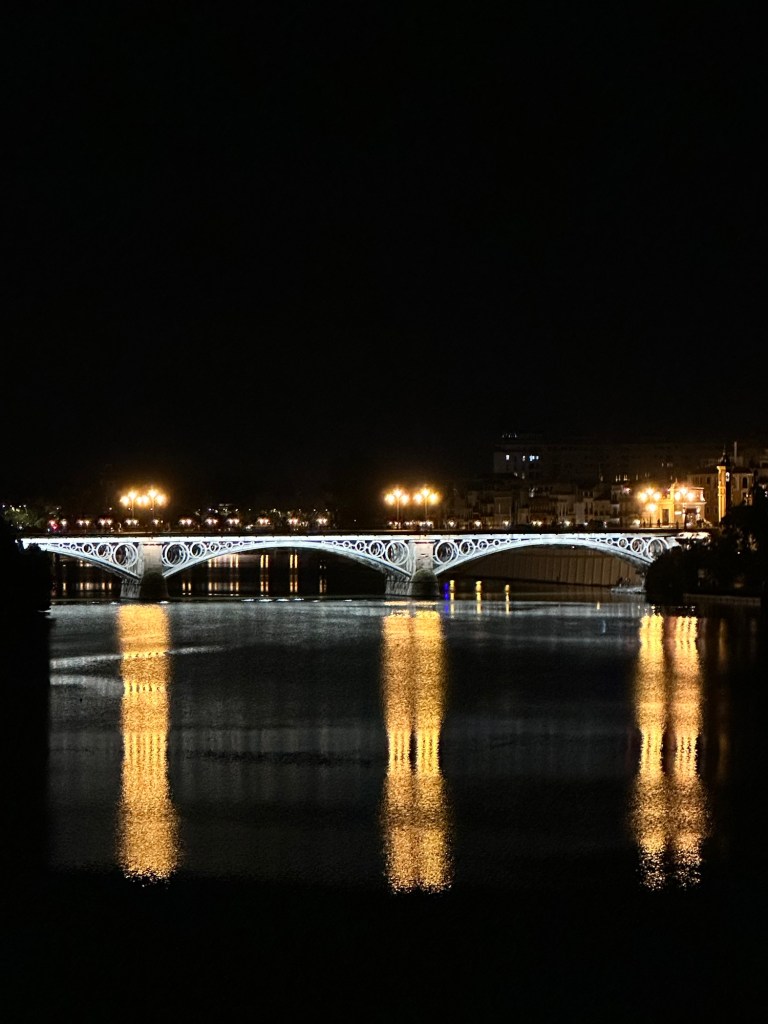
I’ve mentioned the canal that runs along the shoreline, dividing the historic centre of Sevilla from Triana. It is a wonderful feature of the city: criss crossed by a series of bridges, ringed by historic architecture and followed by pathways, it functions as a recreational artery. At times the traffic on the water seems as busy as the traffic on the roads.
Triana
Triana is a funky area across the river from Sevilla proper which has a working class background and independent vibe. It is characterized by narrow streets, tile and ceramic shops, flamenco shows and a church aesthetic that skews heavily towards the Virgin Mary.
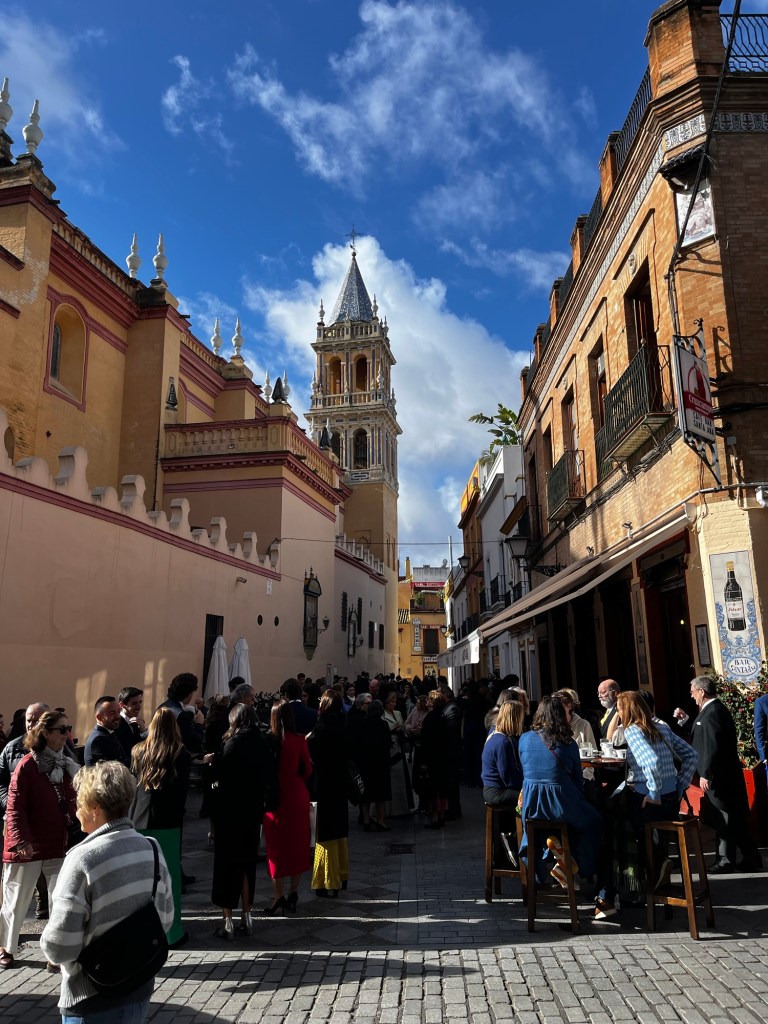
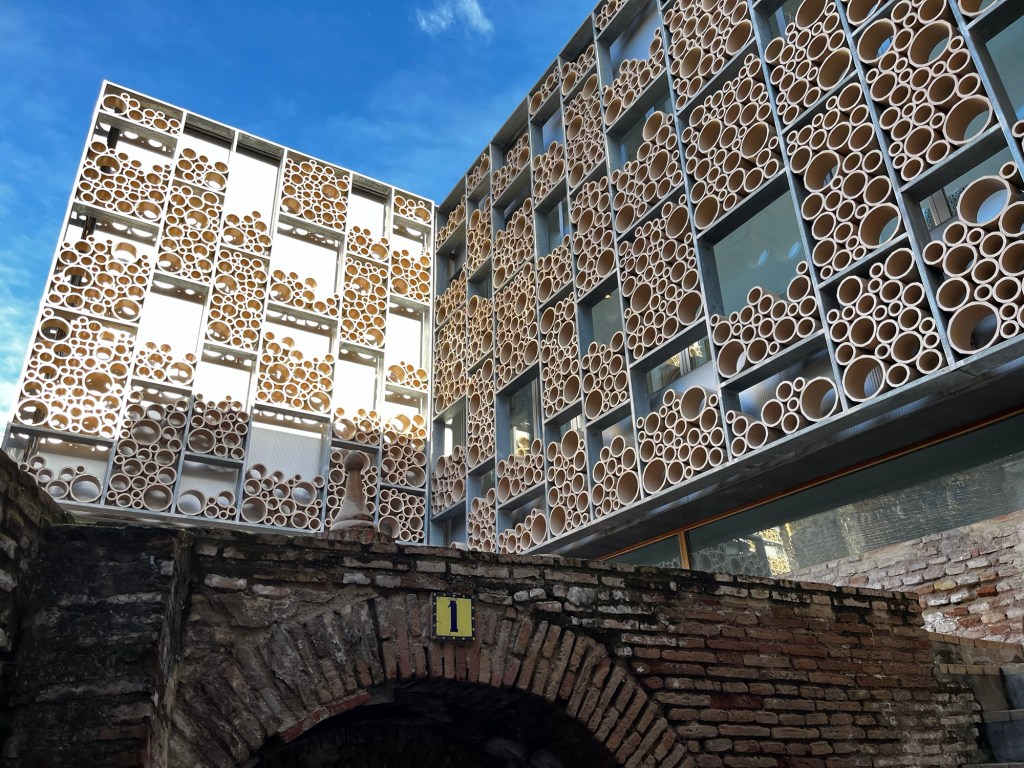
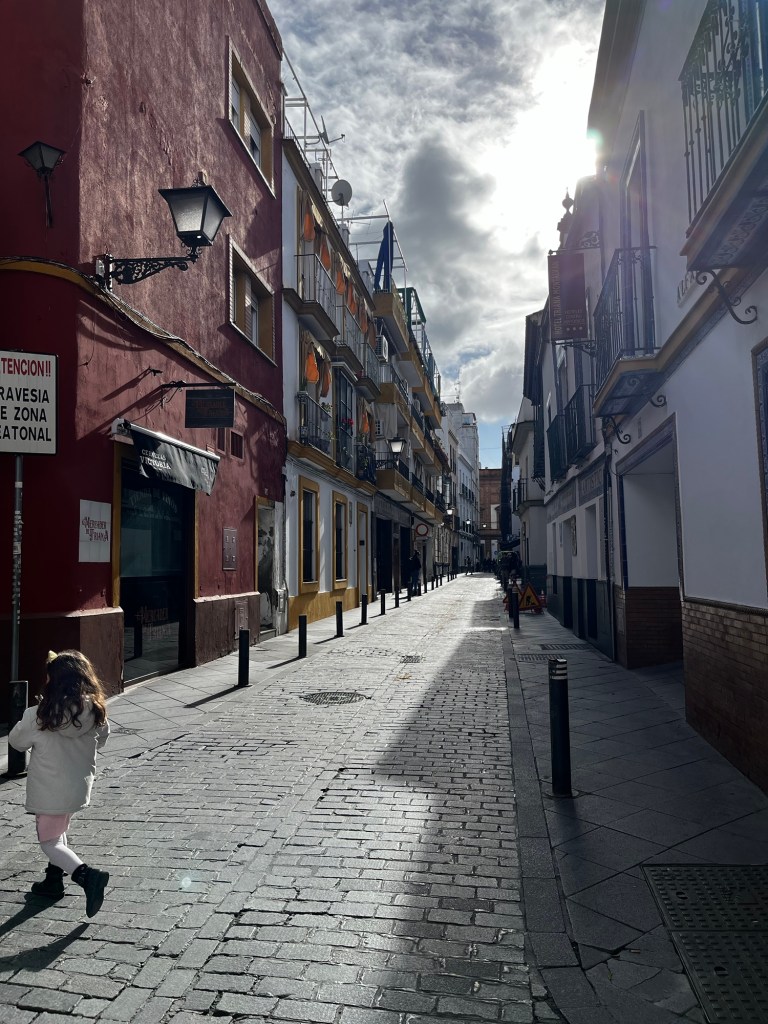
One of its more famous destinations is the covered market, which itself sits in the remains of a 12th century Moorish castle. The market is full of vendors specializing in pork, beef, chicken, cheese, fish and vegetables, and there are a number of spots to take a break and enjoy a drink or some tapas.

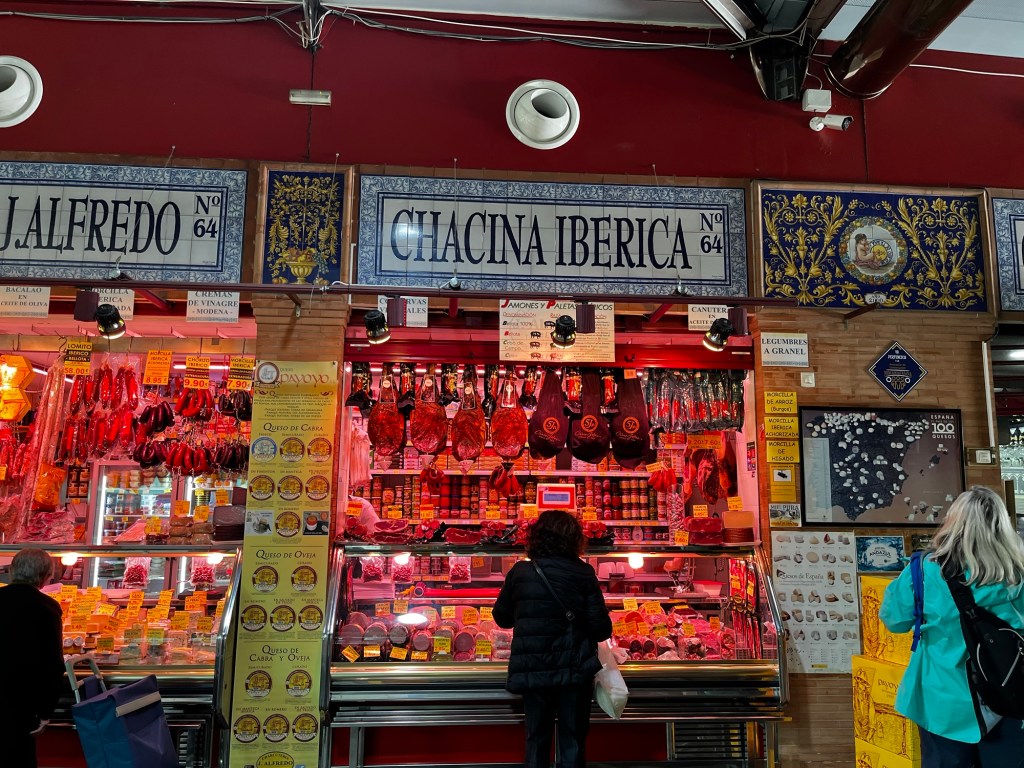
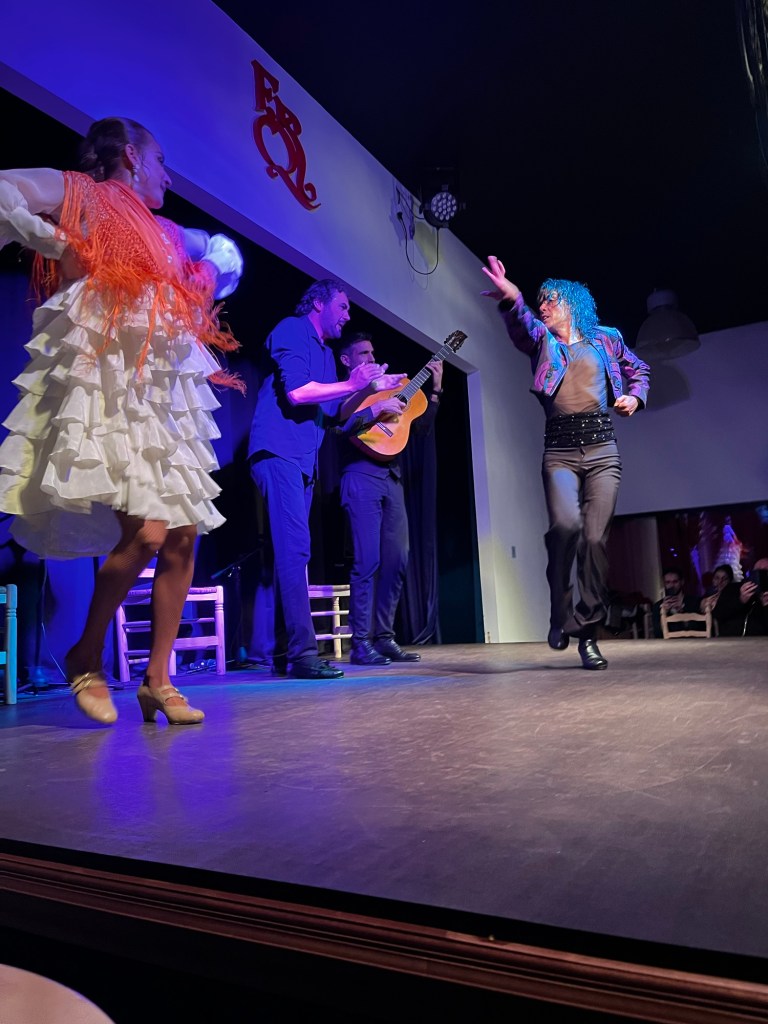
We had one particularly busy day that started in the Triana market at 9:00 am and finished at a Triana flamenco show (which was fantastic) at 10:00 pm. We were wiped, but it was an exhilarating day.
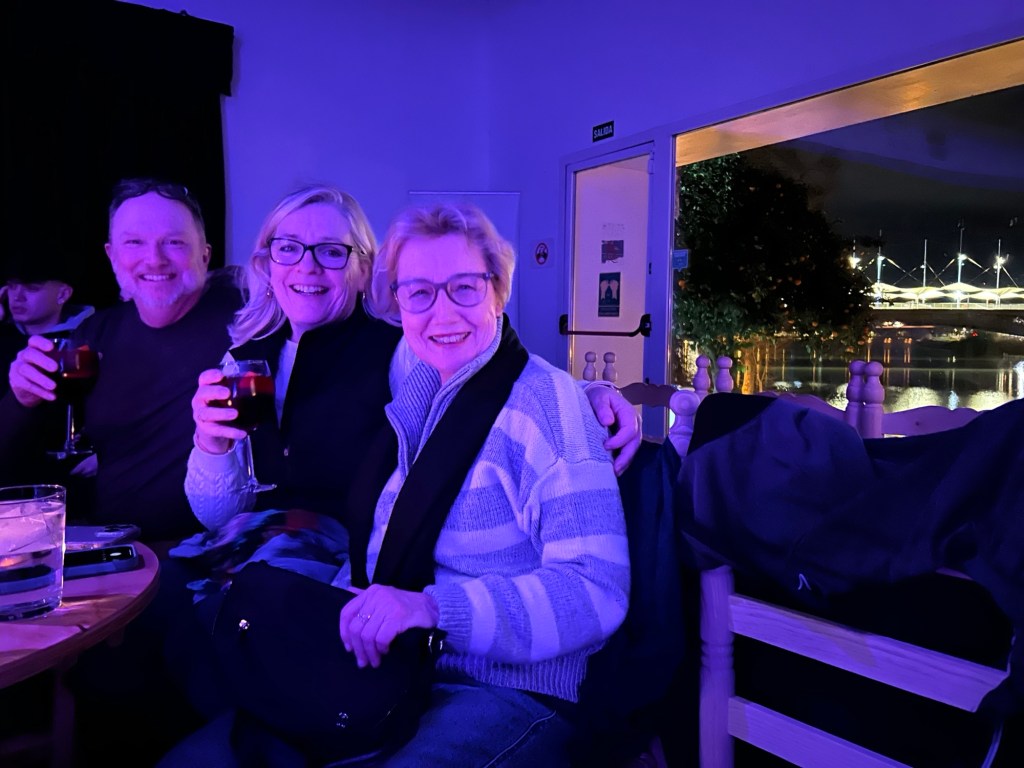
El Arenal
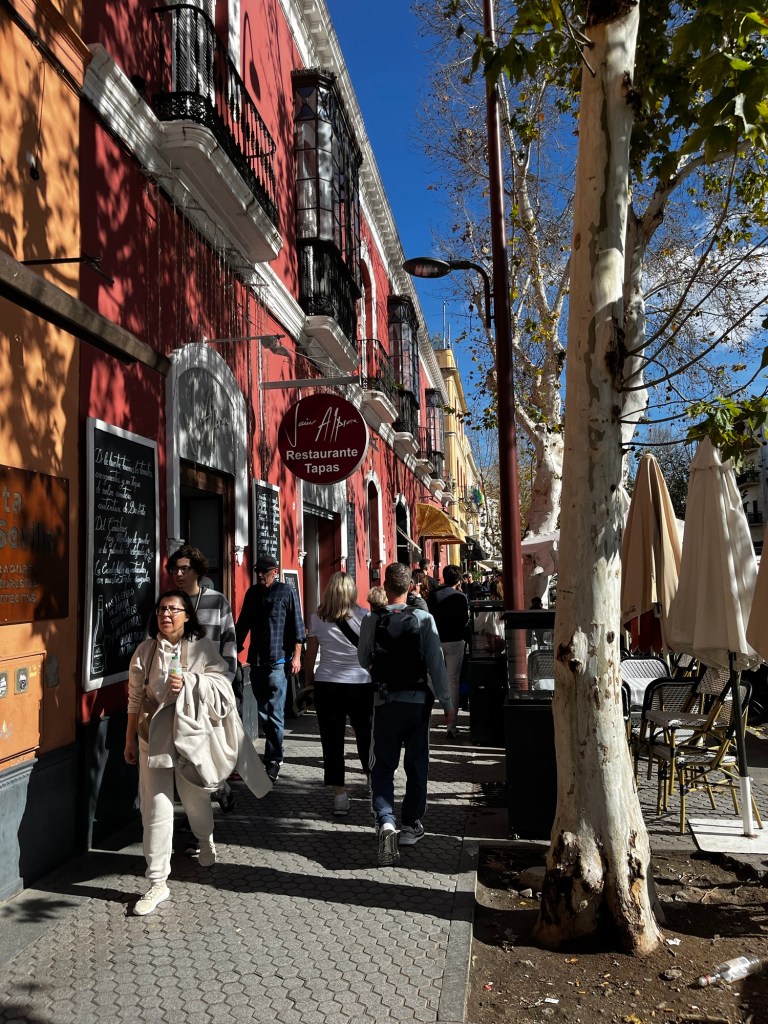
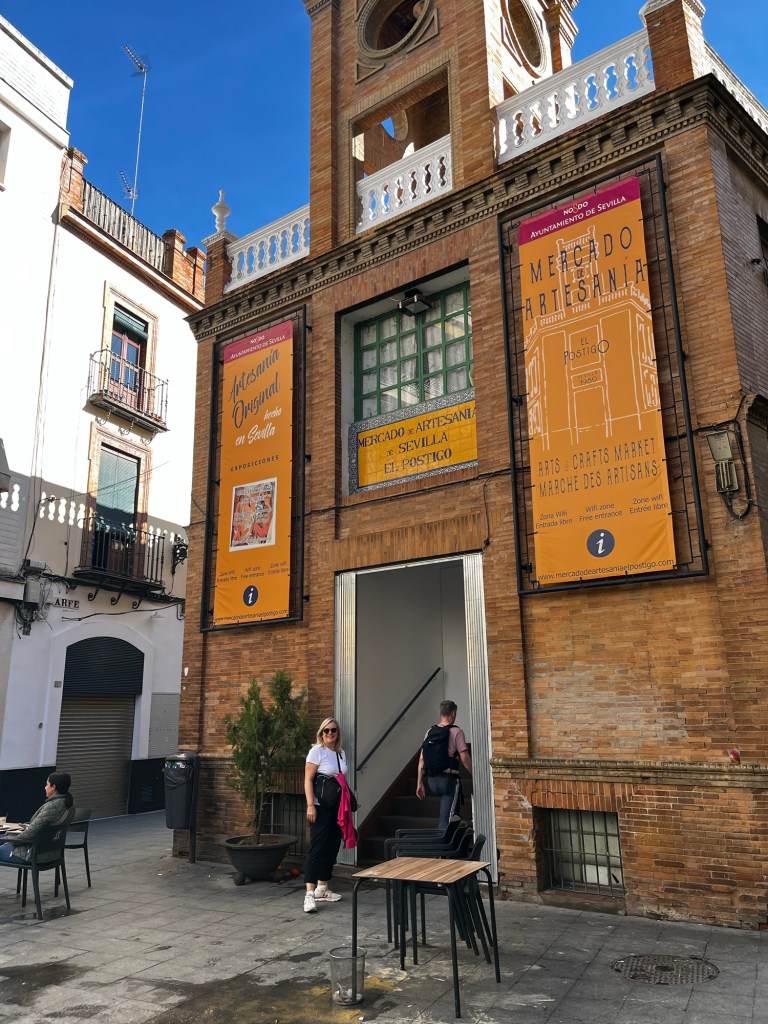
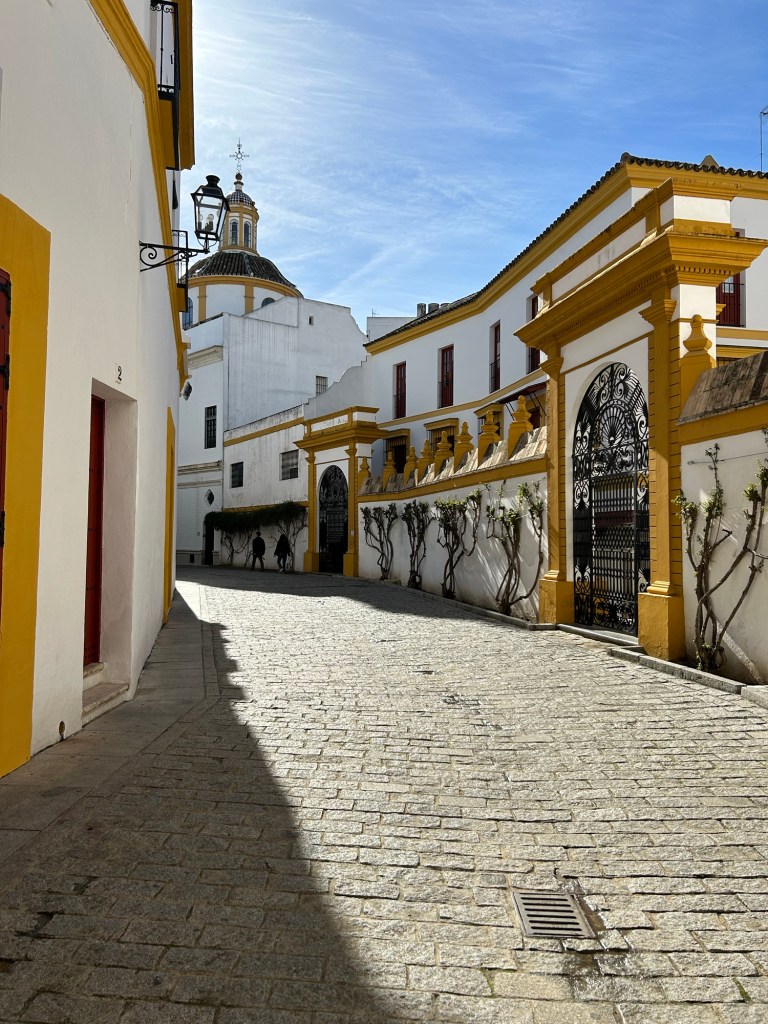
Located just north-east of the bull ring, Arenal is a bustling area, popular with tourists, adjacent to the Cathedral district and the historic centre of Sevilla. It is jammed with patios and contains the Mercado del Arenal (a beautiful open building with wrought iron and glass ceilings) and the Mercado Artesania, which features artisans selling ceramics and other local crafts.
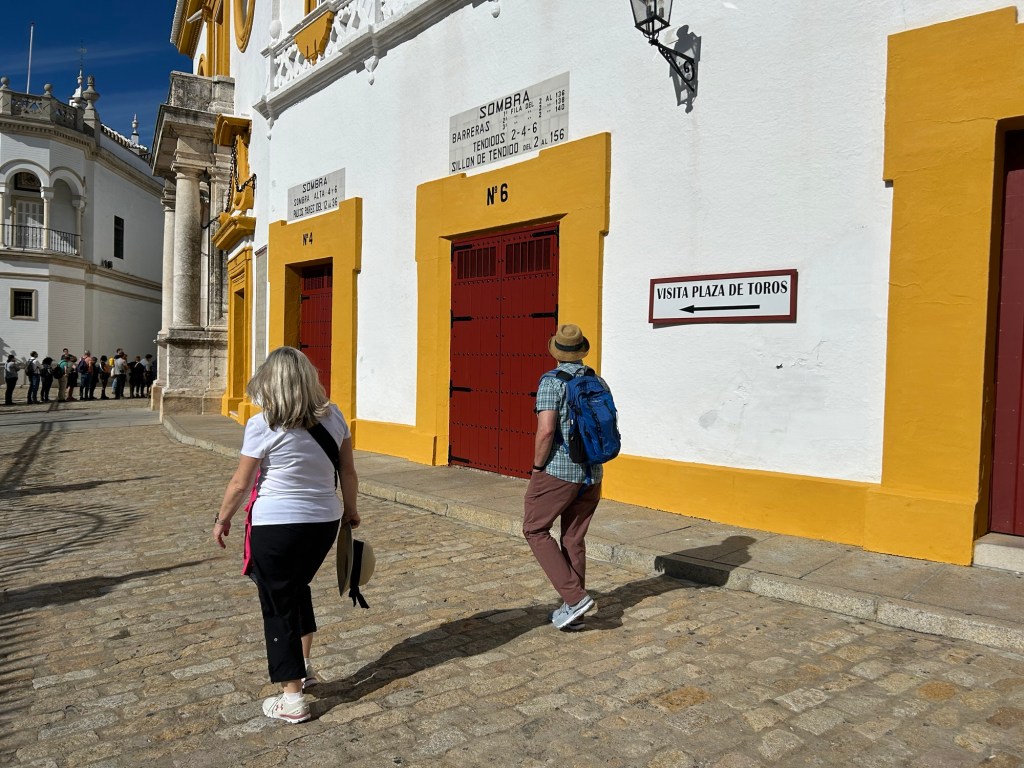
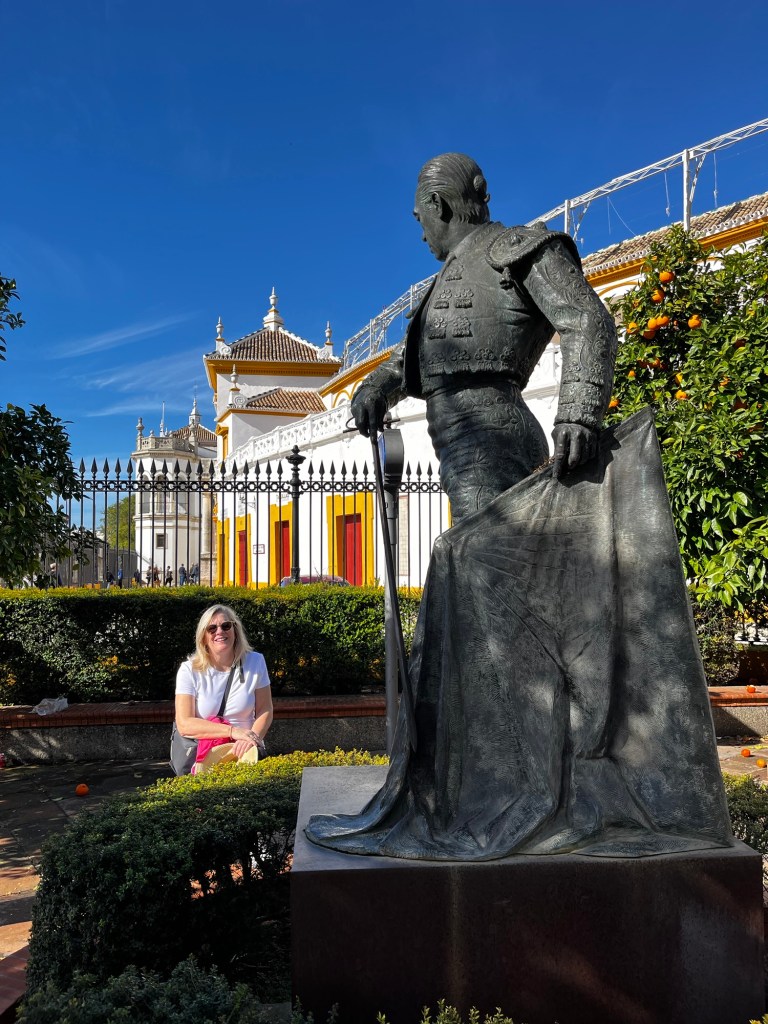
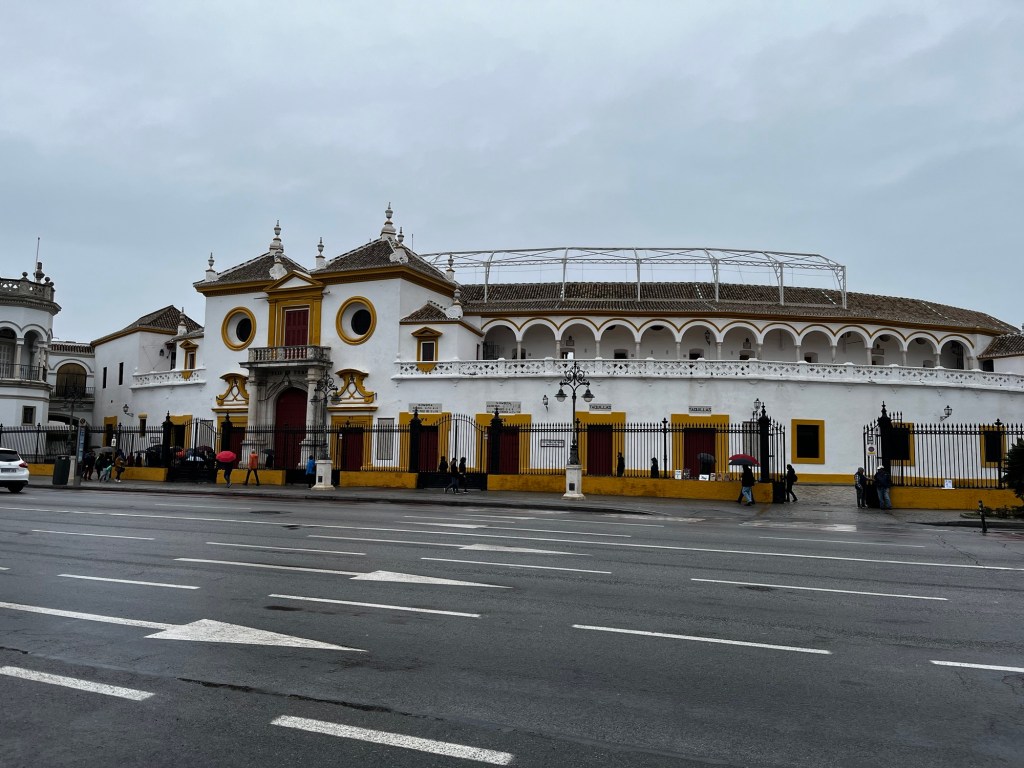
Plaza de Toro and the bullring anchor this area. The bullring seats 14000 people in its ancient stands and hosts over 40 bullfights a year. It is very much part of the local culture, as I mentioned in a previous post, and statues and plaques commemorating matadors can be found all over the city.
Alameda and the Alameda de Hercules
The Alameda is the broader area directly east of Darren and Truus’ apartment, the centre of which is the Plaza known as the Alameda de Hercules. A rough and tumble area 30 years ago, this is now a vibrant and trendy neighborhood dominated more by local residents than it is by tourists.
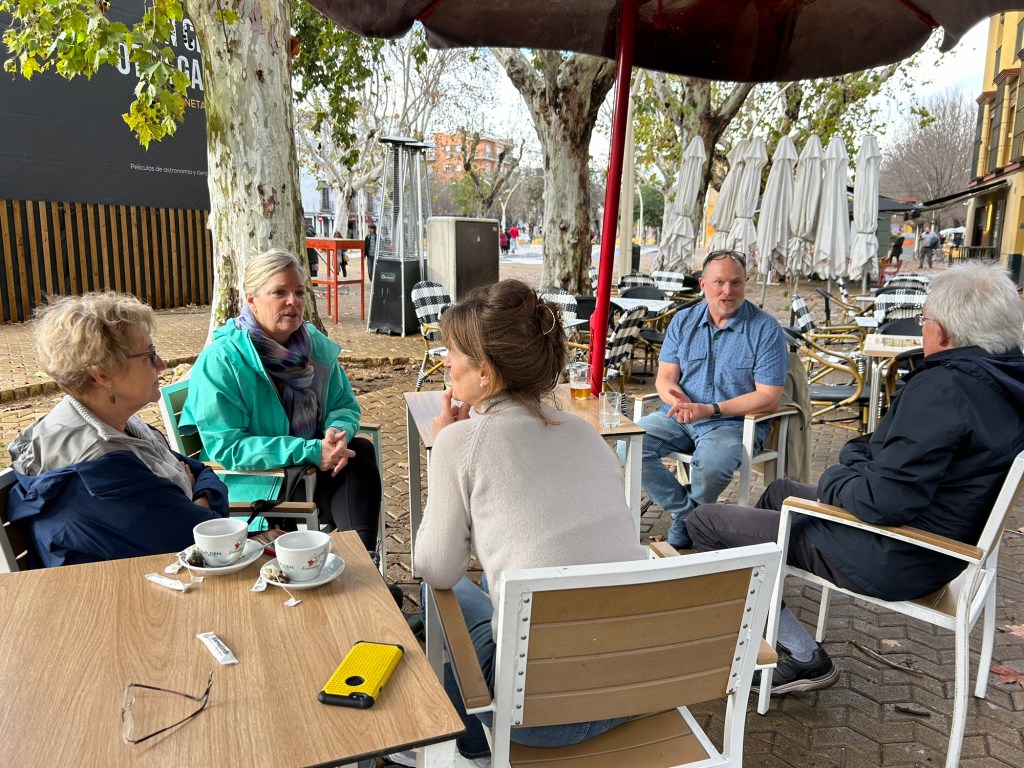
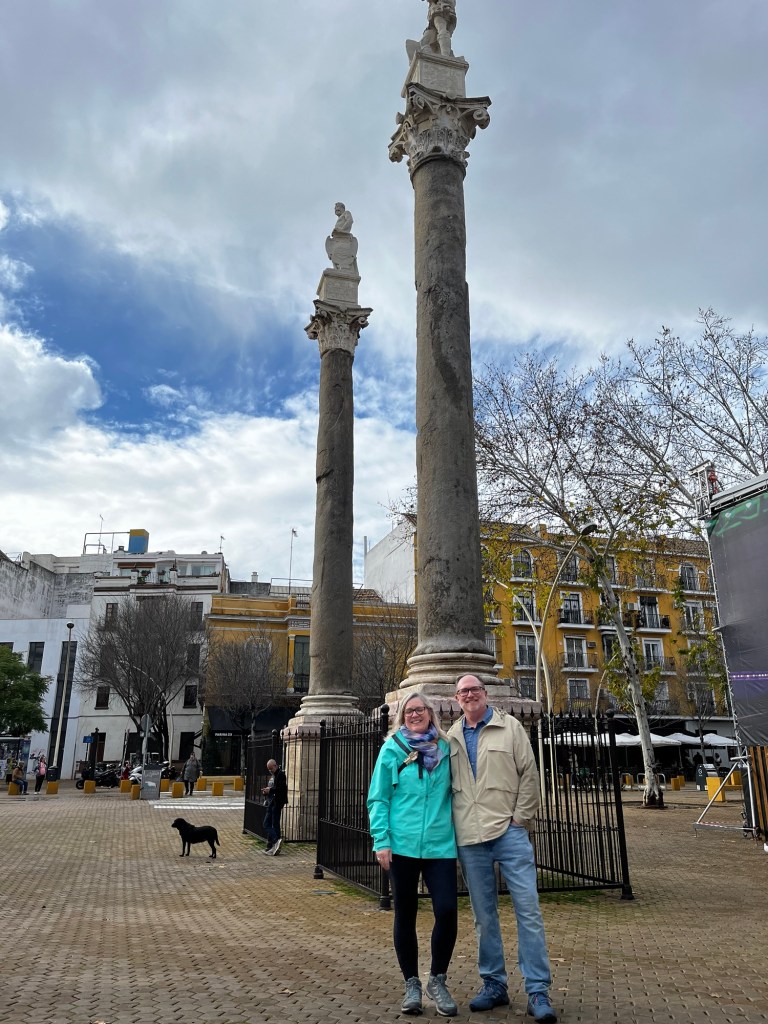
It is a wonderful spot to wander in and out of shops, markets and churches, where one gets a fuller sense of how deeply the institution of the Catholic Church is intertwined in the community. Easter in Sevilla is dominated by the procession of floats on Good Friday, and many churches feature their floats in side-chapels or as part of the alter at the front of the church.
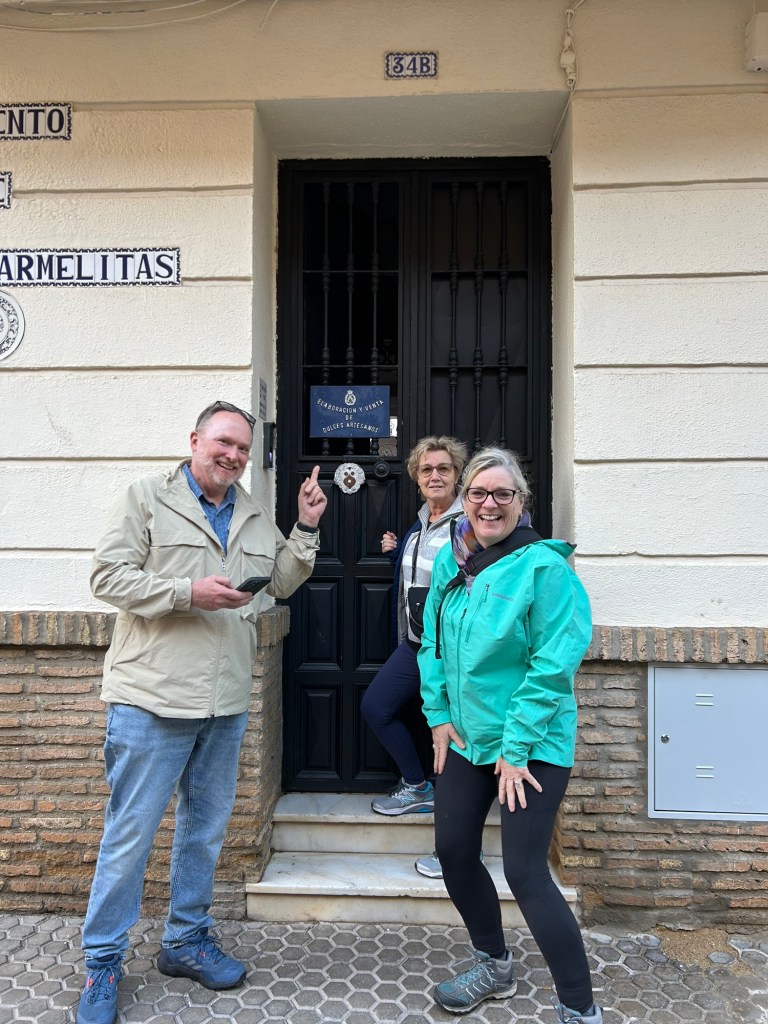
One interesting feature of the many convents that can be found in the city is that they sell baked goods, colloquially and cheekily referred to as nun buns. Depending on the degree to which a particular convent is cloistered, you are often required to buzz in through an intercom before you are admitted through a series of gates. Payment happens through a lazy Susan type of device: in most cases you don’t actually see the nun selling the buns. This was not the case when Darren and I entered the Carmalite convent in our neighborhood after a series of garbled intercom exchanges and buzzing gates. We were thrown off considerably when we were greeted by a younger nun who clearly had an excellent dental plan. She smiled disarmingly and told us that they were sold out. Darren mumbled something incompressible in Spanish, and I think I may have bowed before we literally backed away and took our leave. Clearly, neither one of us is cut out for Catholicism.
Feria and Macarena
Just to the east of the Alameda de Hercules, these areas are populated with small bars and cafes that seem tucked in along every side street. And yes, the Macarena district is the origin of the notorious ear-worm.
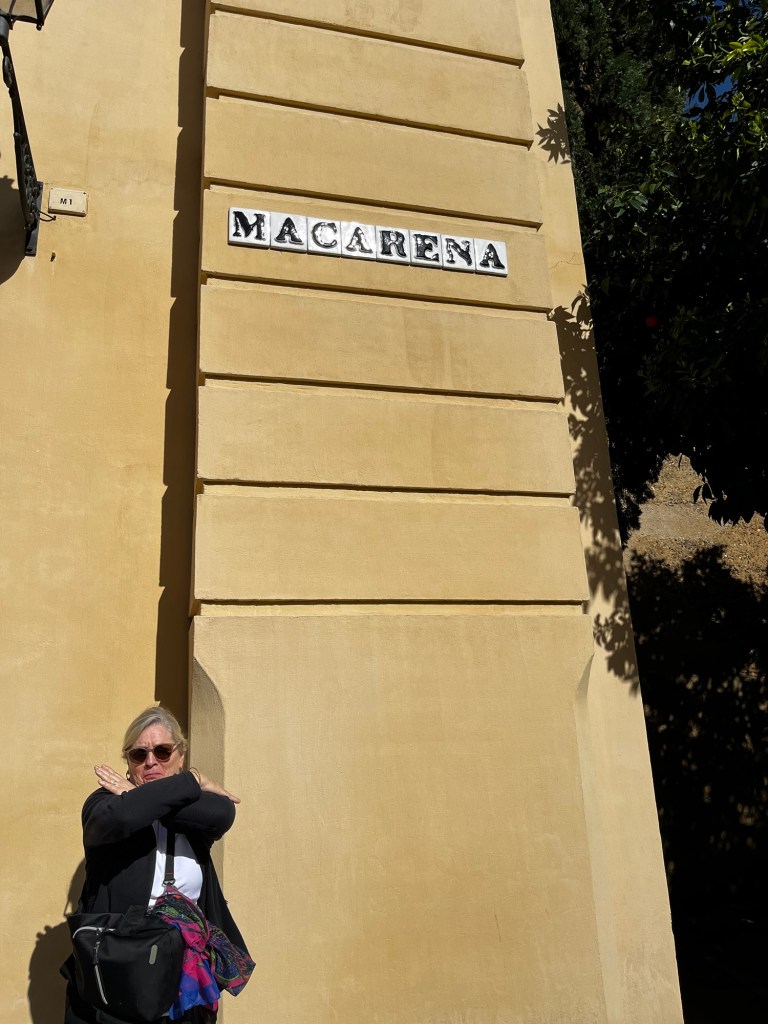
They make wonderful places to while away an hour or two in good company. Both areas are littered with a range of impressive churches ranging from Gothic to Baroque to Renaissance in style and structure.
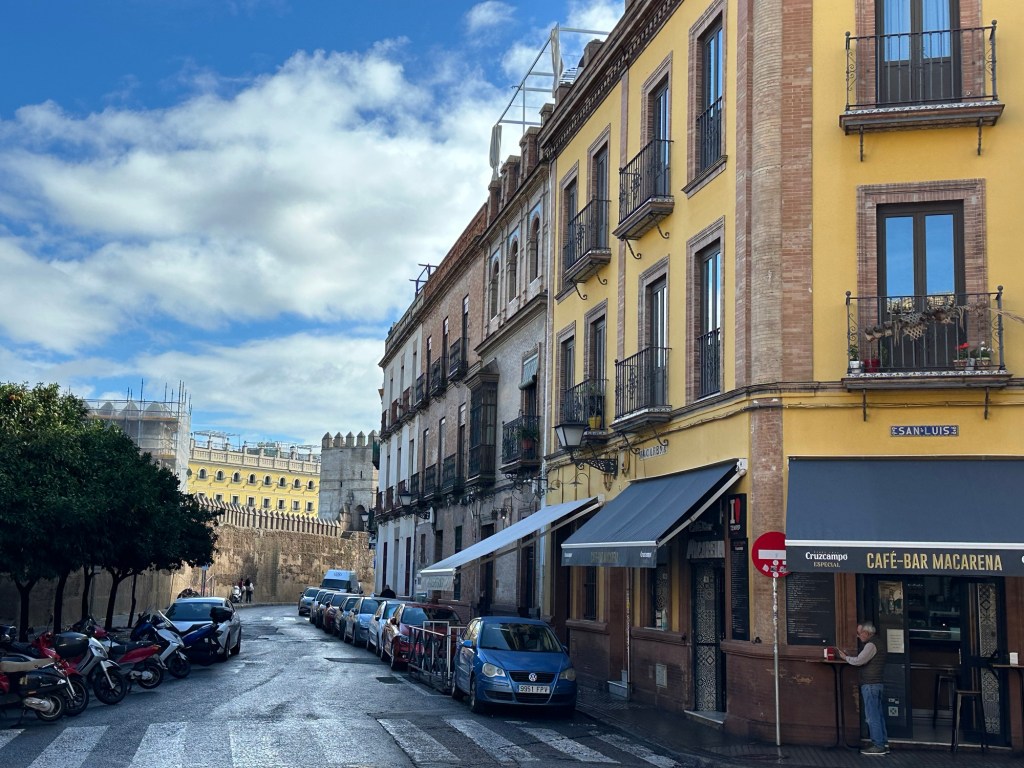
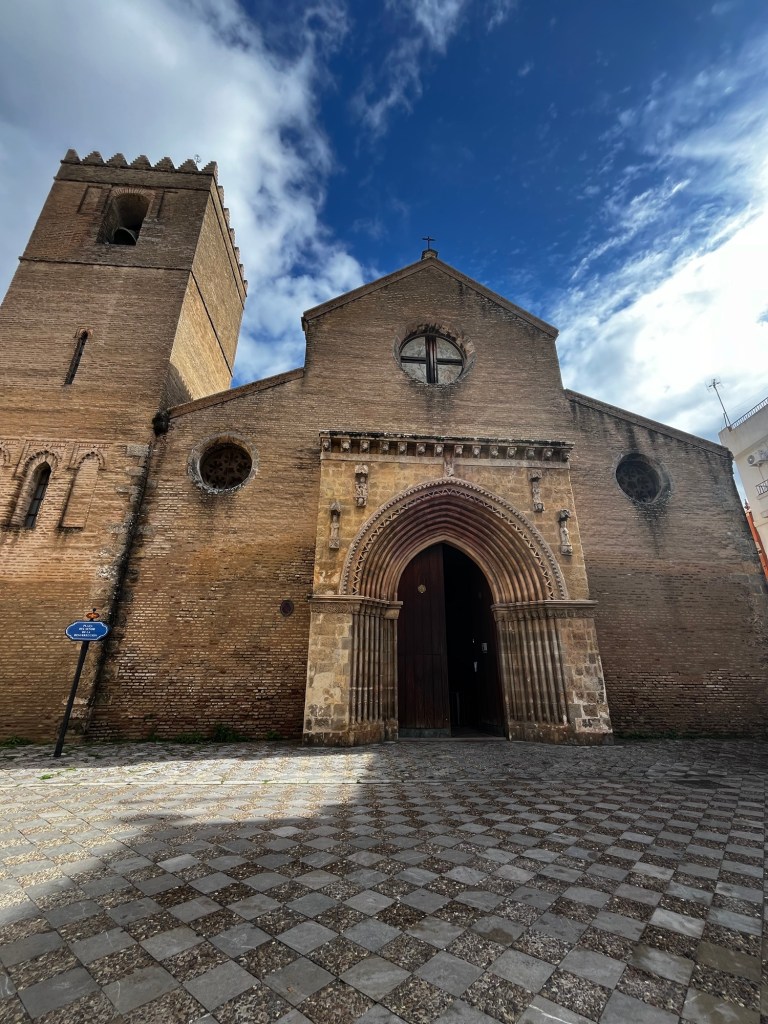
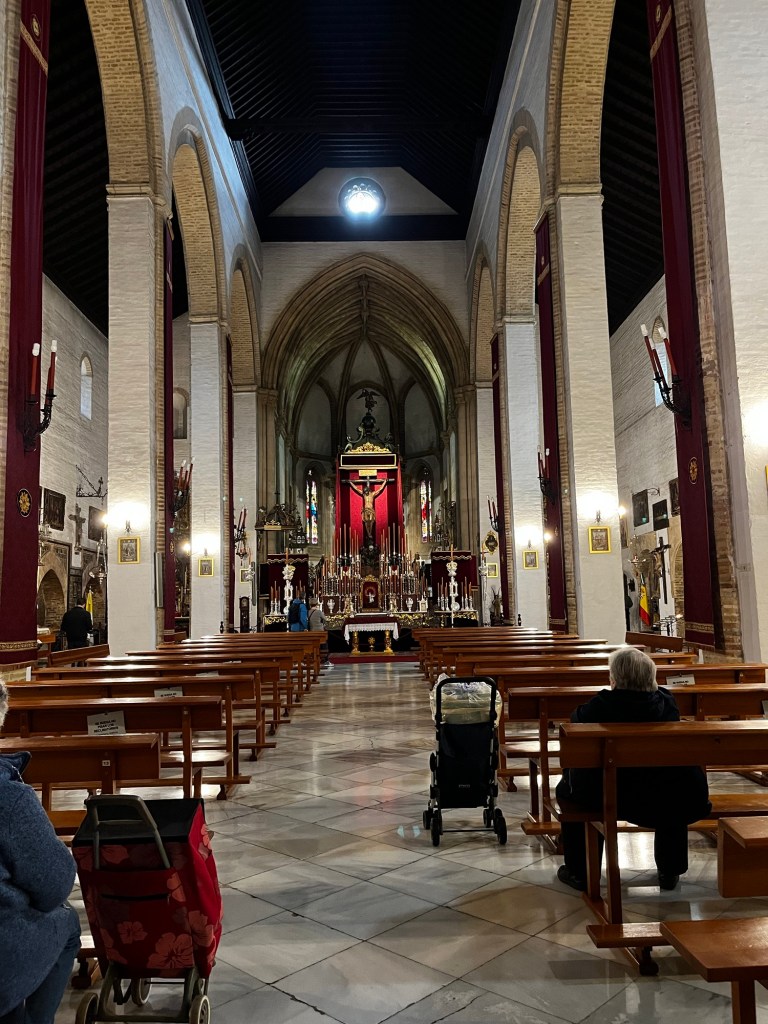
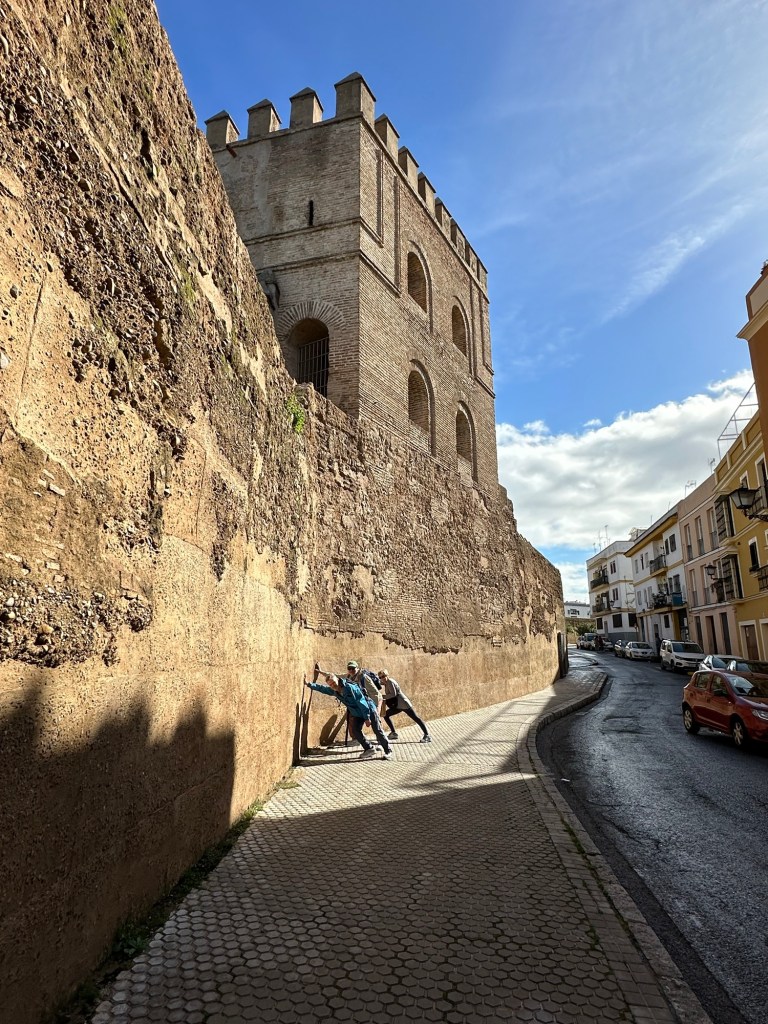
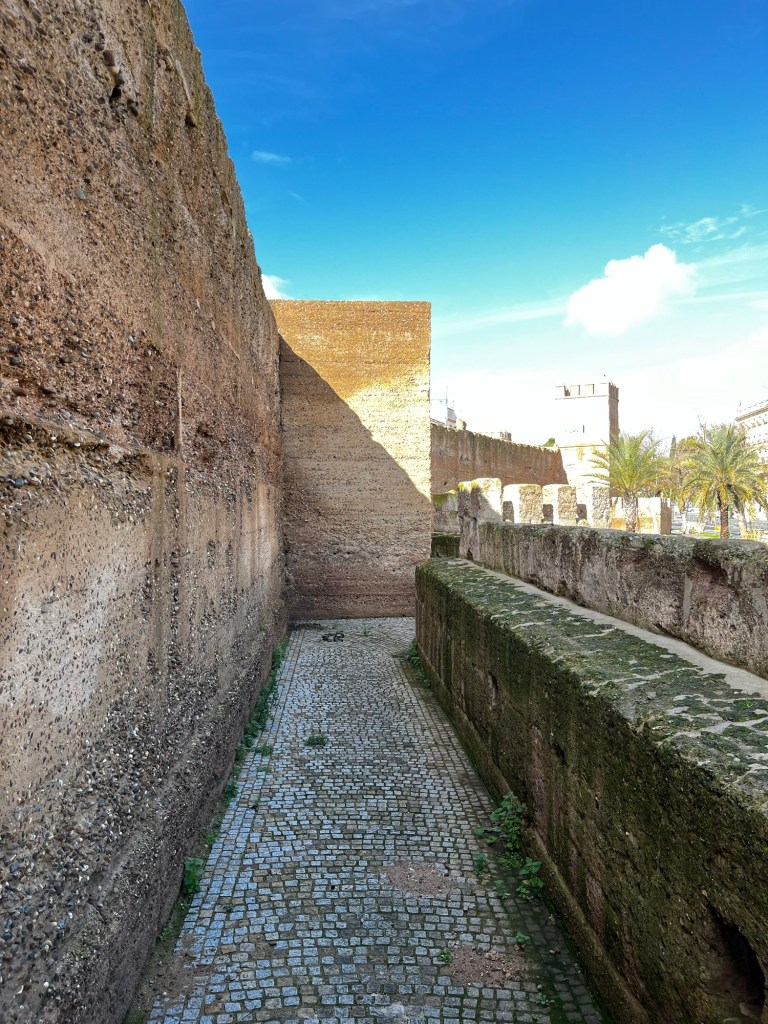
Along the edge of the Macarena district runs the largest and most continuous section of the original Moorish walls.
The University District and the Plaza de España
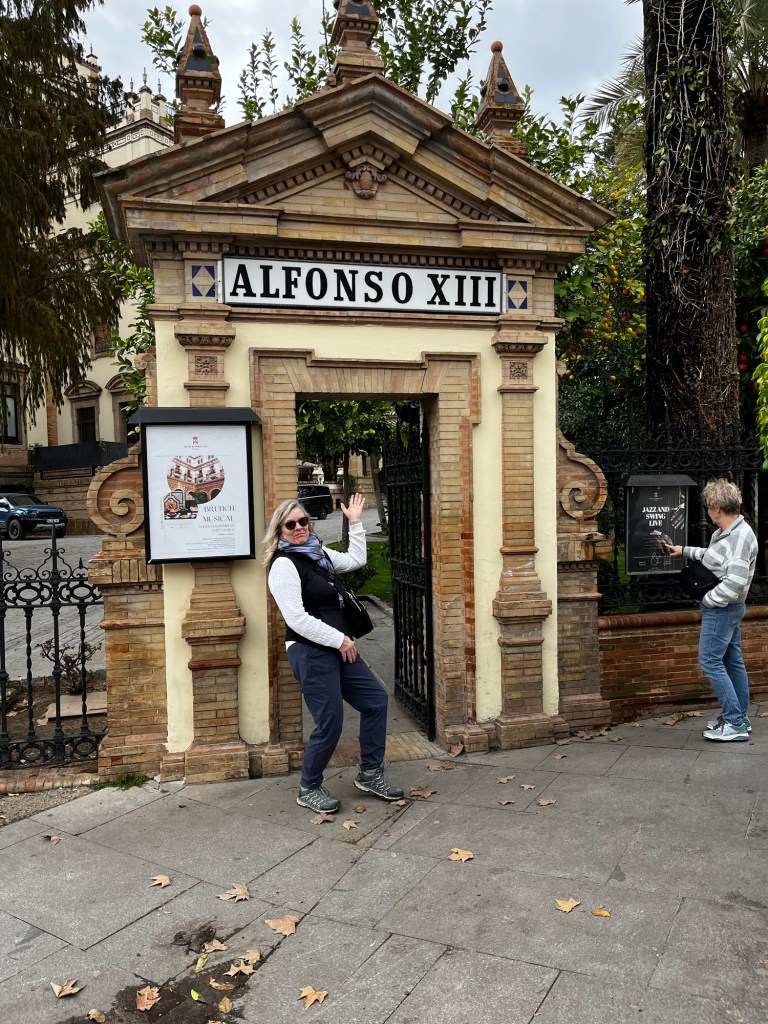
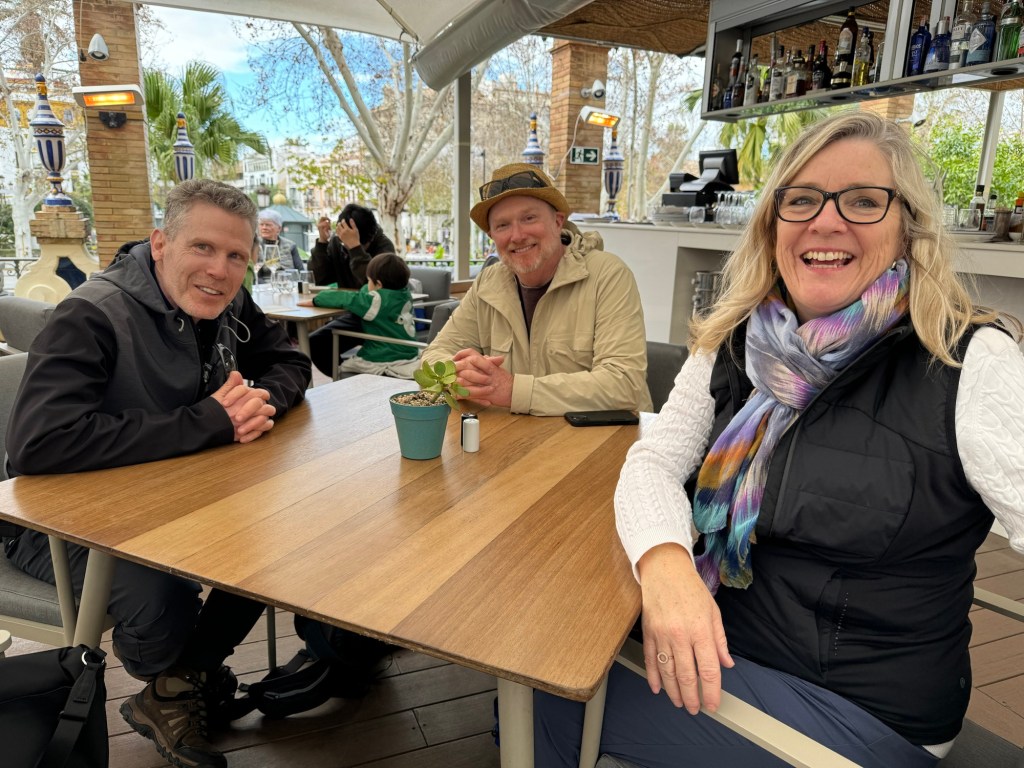
This district south of the Cathedral district leads from the University area towards the Plaza de España. It features the broad Avenida de La Constitucion along which the tram lines run. It his heavily populated by popular and expensive street side cafes and ritzy hotels, including the Hotel Alfonso, which features a secluded patio at the side. While expensive, it is worth a few extra euros to treat yourself to drink for the people watching opportunities that are presented.
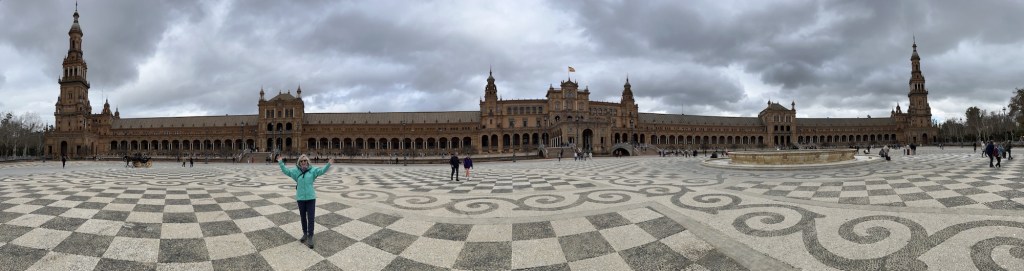
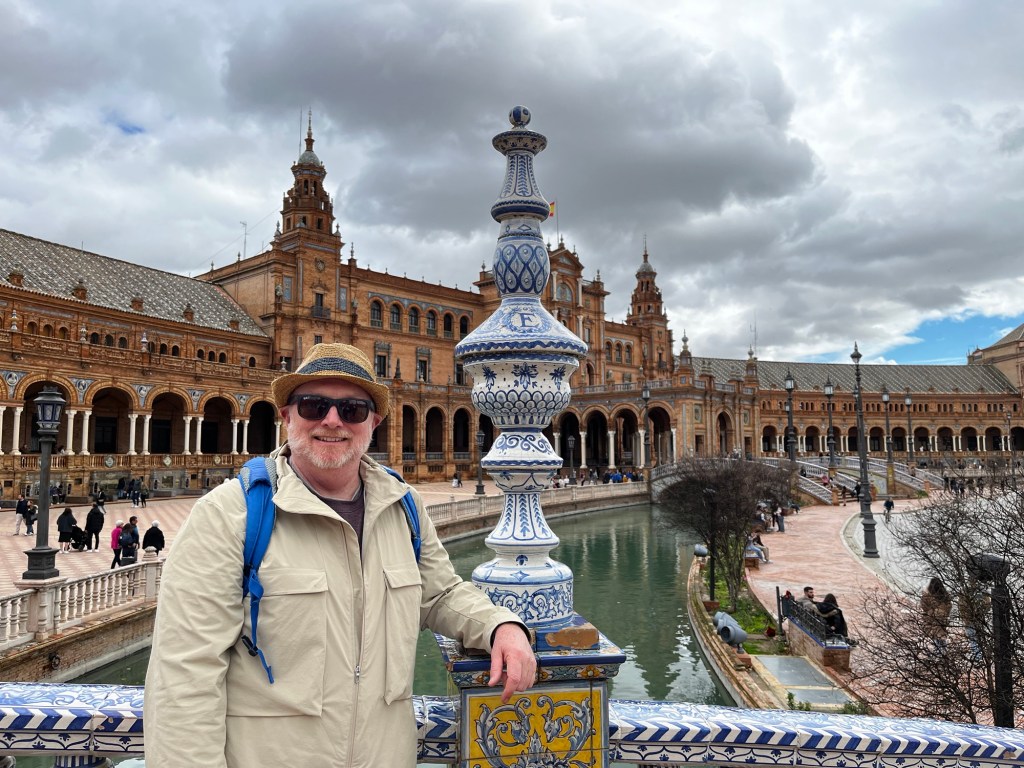
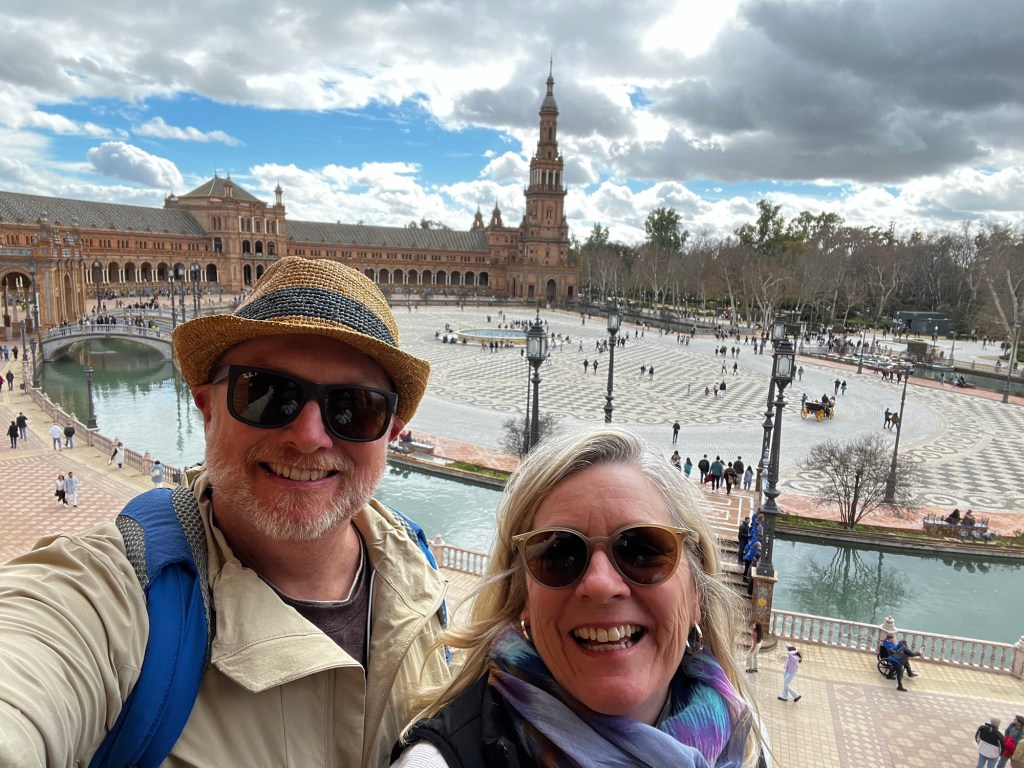
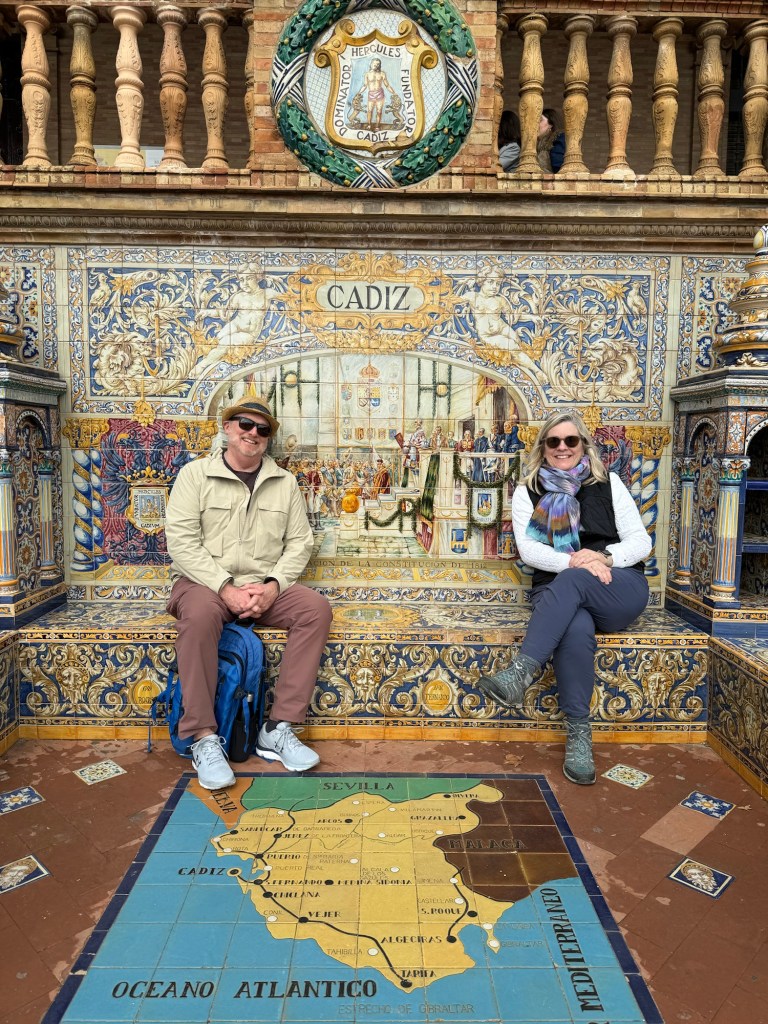
The Plaza de España was constructed for the 1929 world’ fair. It is a grand, open space with fountains and bridges that are ringed by the former Spanish pavilion. Tiles feature maps and images from every province of Spain (except Sevilla itself!). It’s a great spot to explore and take pictures.

Las Setas de Sevilla
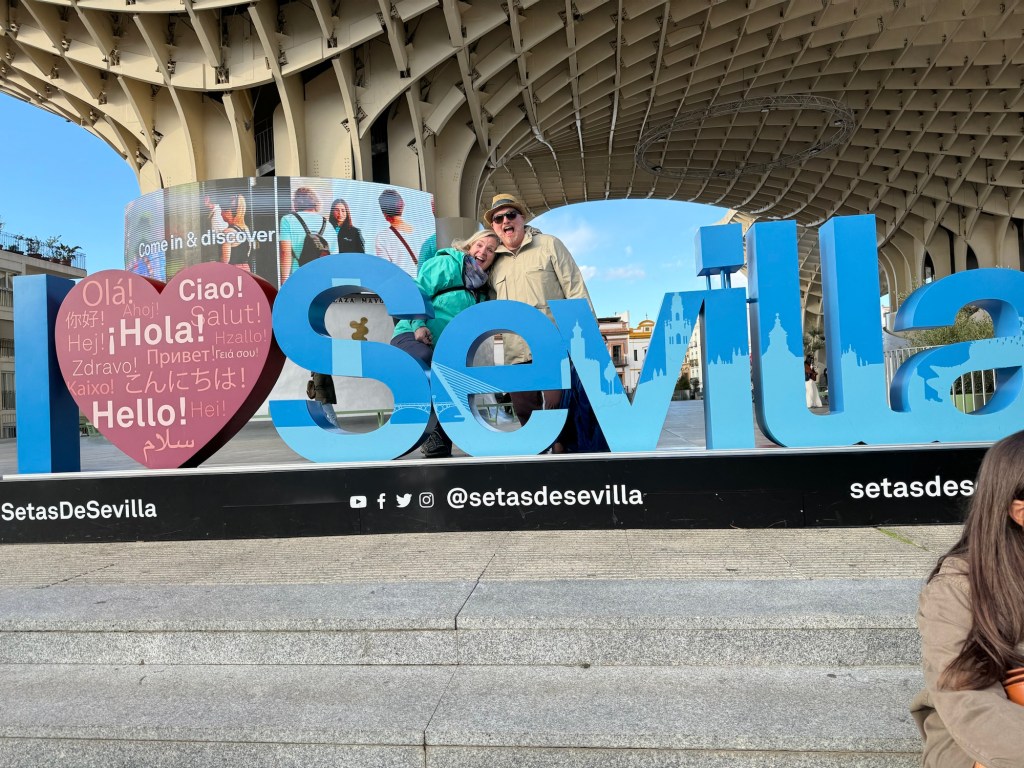
“Las Setas” (the mushrooms) are six enormous wooden mushroomy structures that fill an expansive square to the north of the Cathedral district. They playfully echo the soaring interiors of Sevilla’s Churches and provide an interesting frame to the streets that surround them when you stand underneath. While still somewhat controversial (you love them or don’t), they are certainly dramatic. We visited during the day and again in an evening after a day or rain.
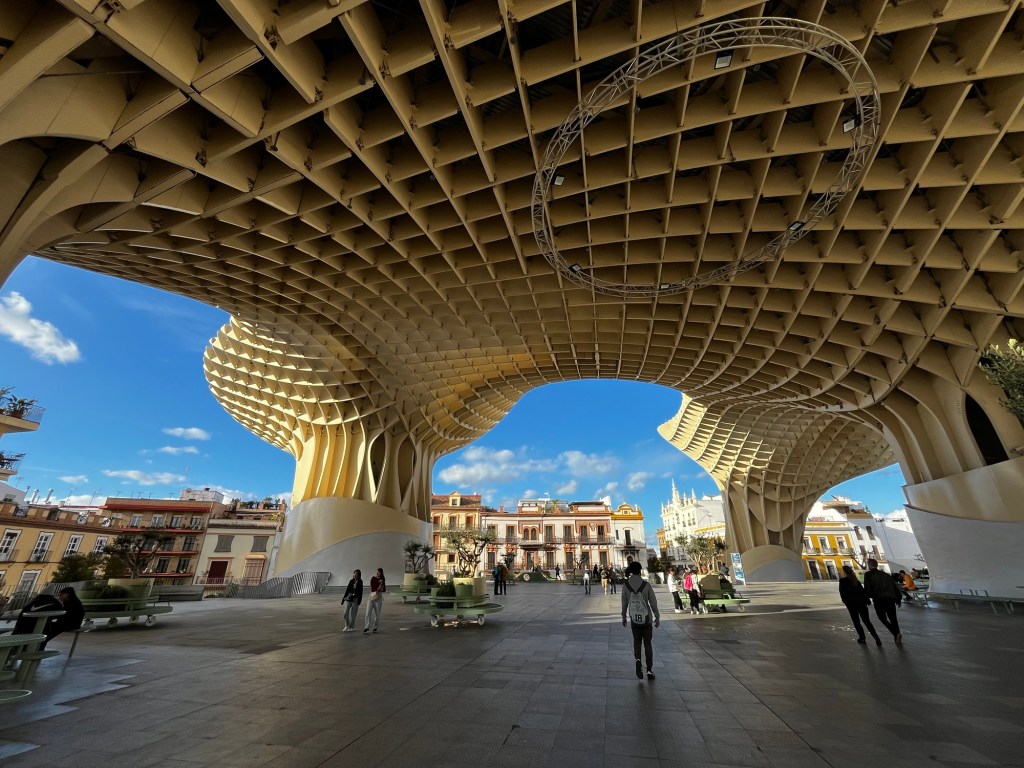
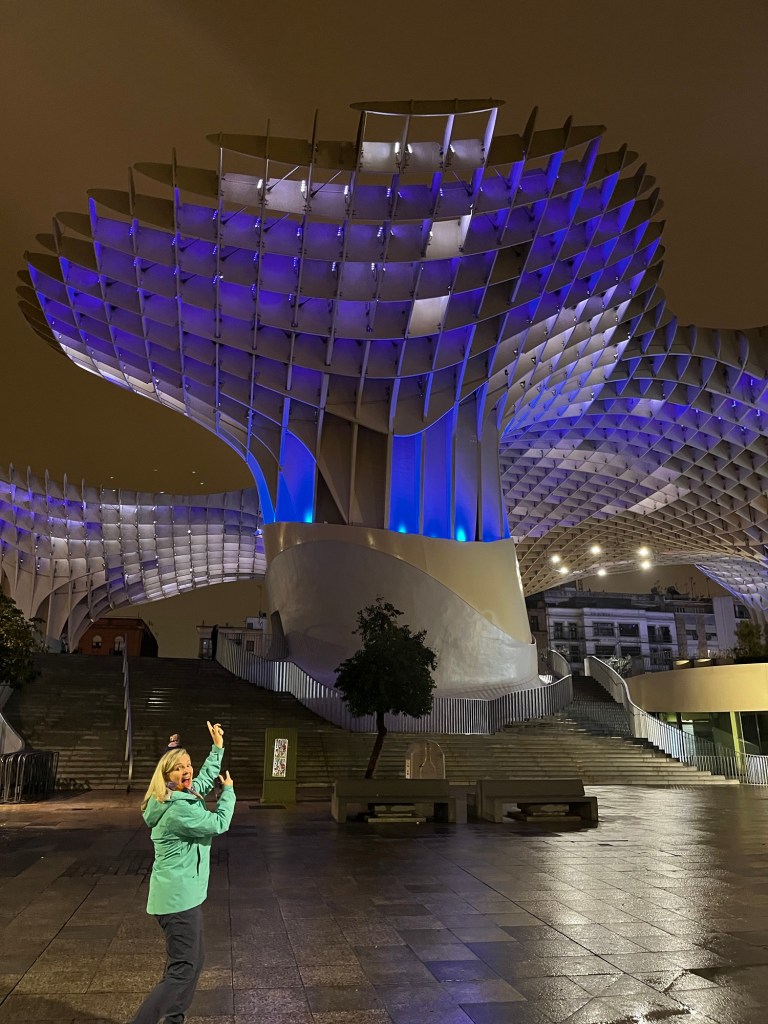
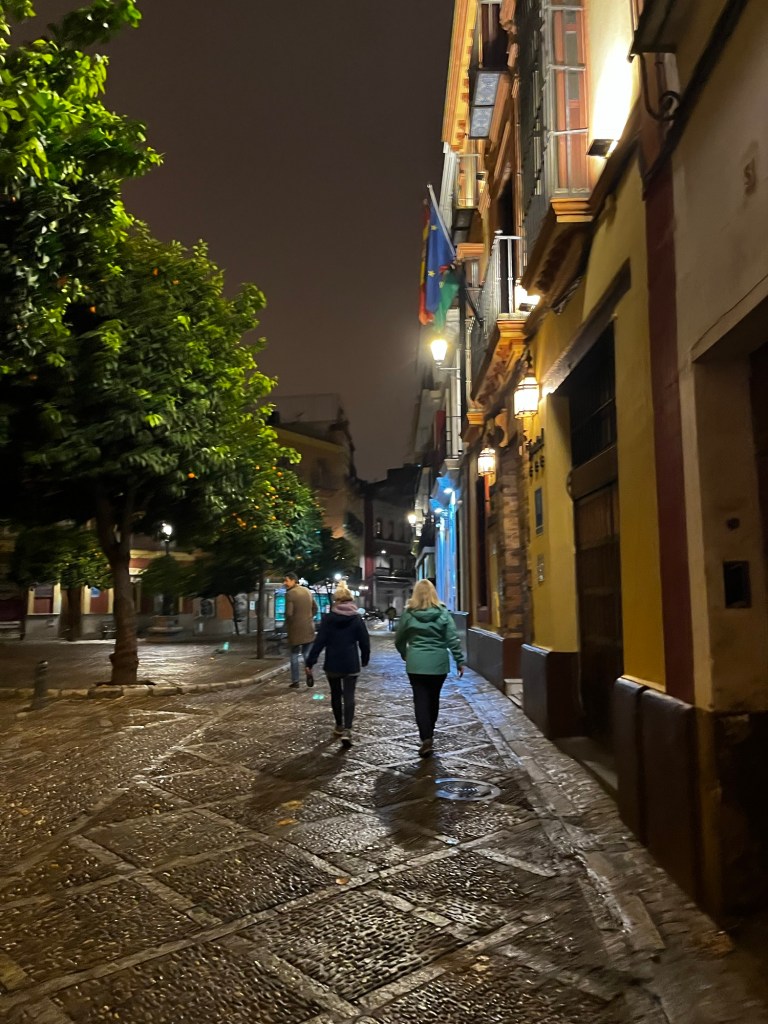
We amble away from the centre in the evenings as we make our way home to the apartment; the city streets are somehow even more charming at night. Tomorrow is another day in Sevilla, in Spain. We are very lucky.


 MacsTravel Blog
Leave a reply to lifeisbettergreen Cancel reply