Truus and Darren’s apartment is located on Calle Torneo alongside the canal, which features a lovely, long multipurpose pathway filled with walkers, cyclists and runners, and a waterway full of rowers and paddlers from the nearby rowing club as well as teams from across Europe that come here to train. The apartment backs onto the warren of streets and alleyways that make up the historic city centre. The streets are narrow and crisscross indiscriminately: no grid pattern here!

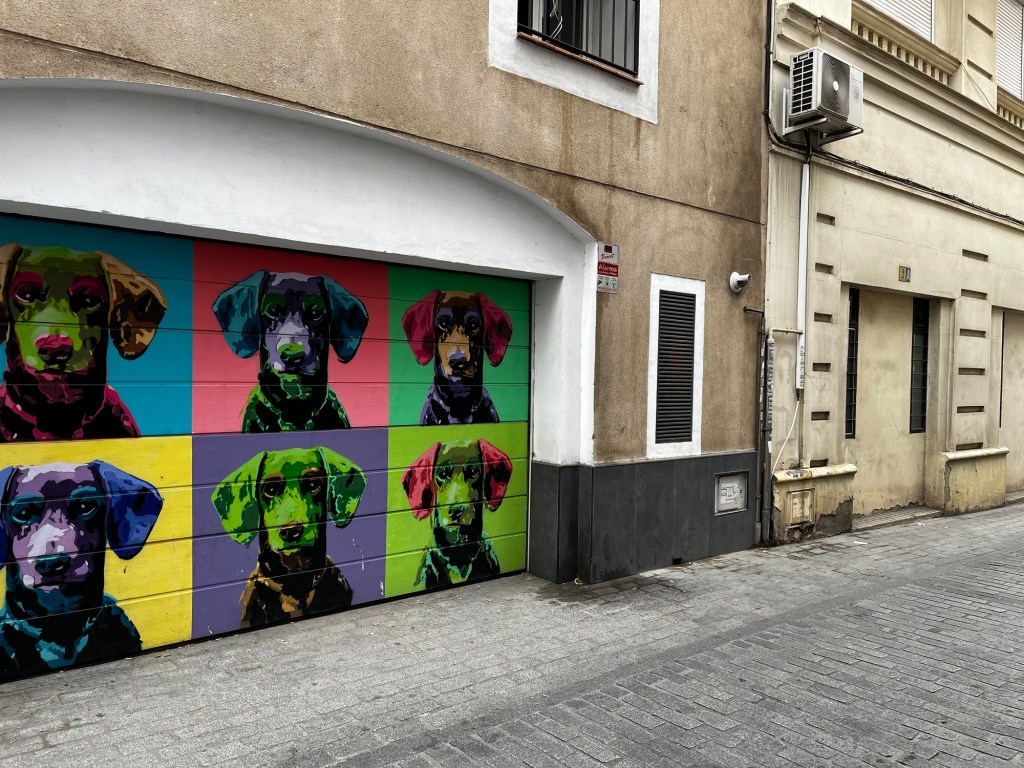
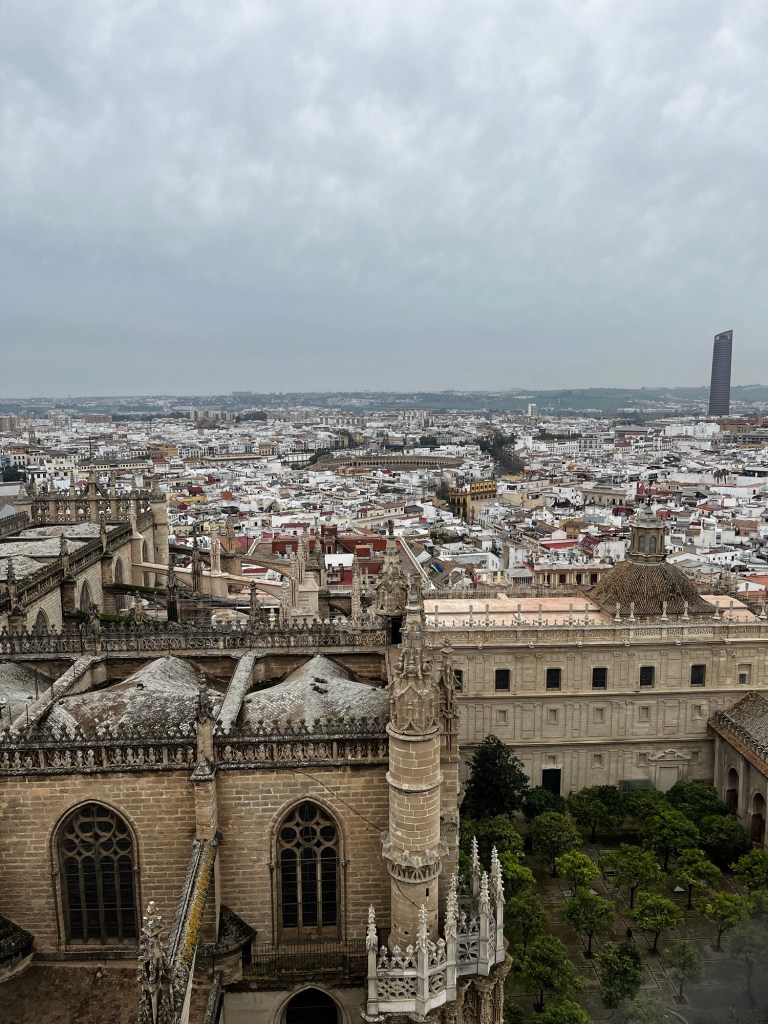
It takes about 30 minutes to wind your way into the very core of old Sevilla which is dominated by the Royal Alcazar (the palace complex), the Giralda Bell Tower (the former minaret from the time of the Moors), and the giant Cathedral, built on the foundation of the former mosque. While Darren and Truus were in their morning Spanish lessons we headed out for a “three hour tour” (no Gilligan’s island reference intended) of these three iconic landmarks.
As we approached the cathedral and the meeting spot for our tour we heard a clamour of horns, drums and sirens, and soon spotted a large knot of protesters alongside the cathedral. It was one of a series of protests by public sector workers against local government austerity measures.
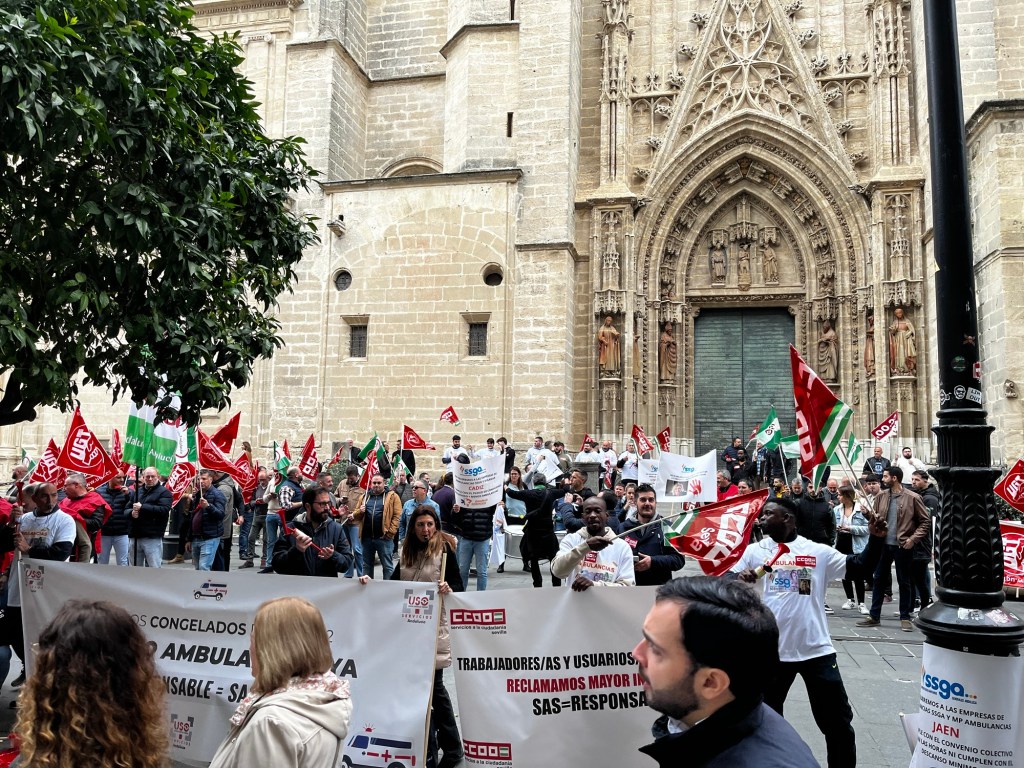
Fortunately for us the protests did not impact our tour and our small group of 10 were shepherded by the competent and knowledgeable Maria for the next three hours through these incredible buildings.
Sevilla has a long and complex history, being successively settled and conquered by the Phonecians, the Romans, the Visigoths and the Moors, before the “reconquista”in 1248 and the “return” of the Christian monarchs. This history is heard in the Spanish language itself (roughly 10% of Spanish words are Arabic in origin) and it’s certainly visible in the ancient buildings of the city. The walls and halls of the Alcazar, for example, feature recycled Roman blocks, Moorish brick and arches and Gothic and Renaissance architecture.
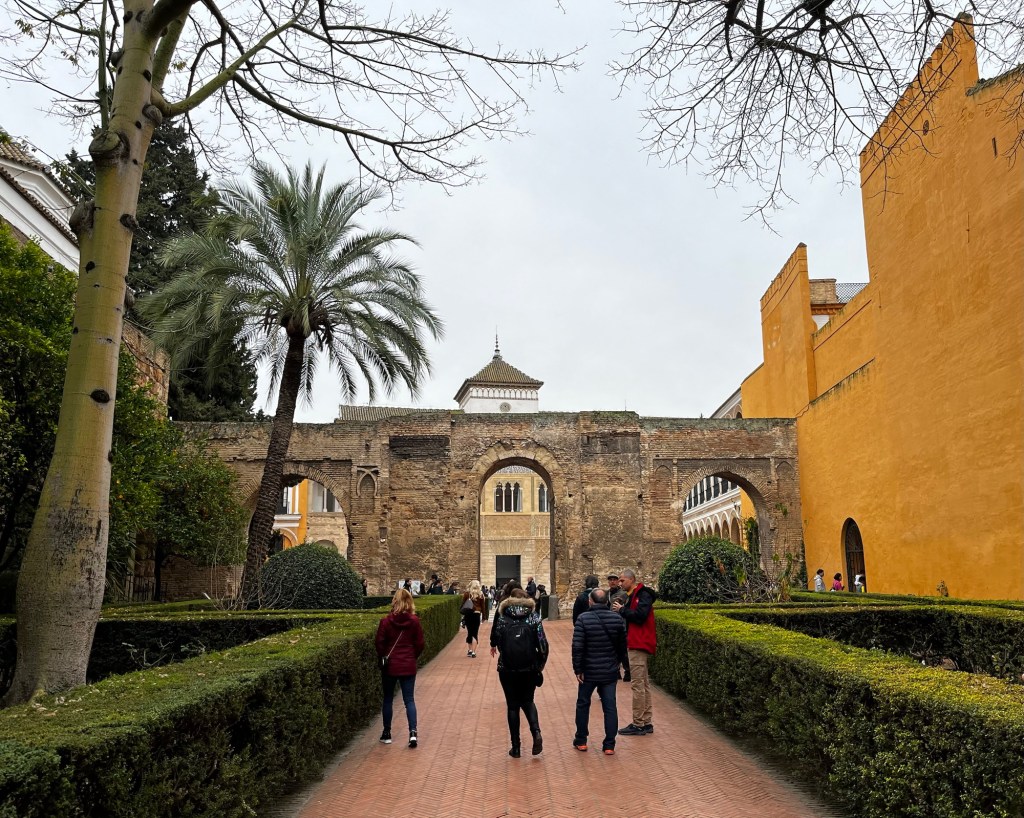
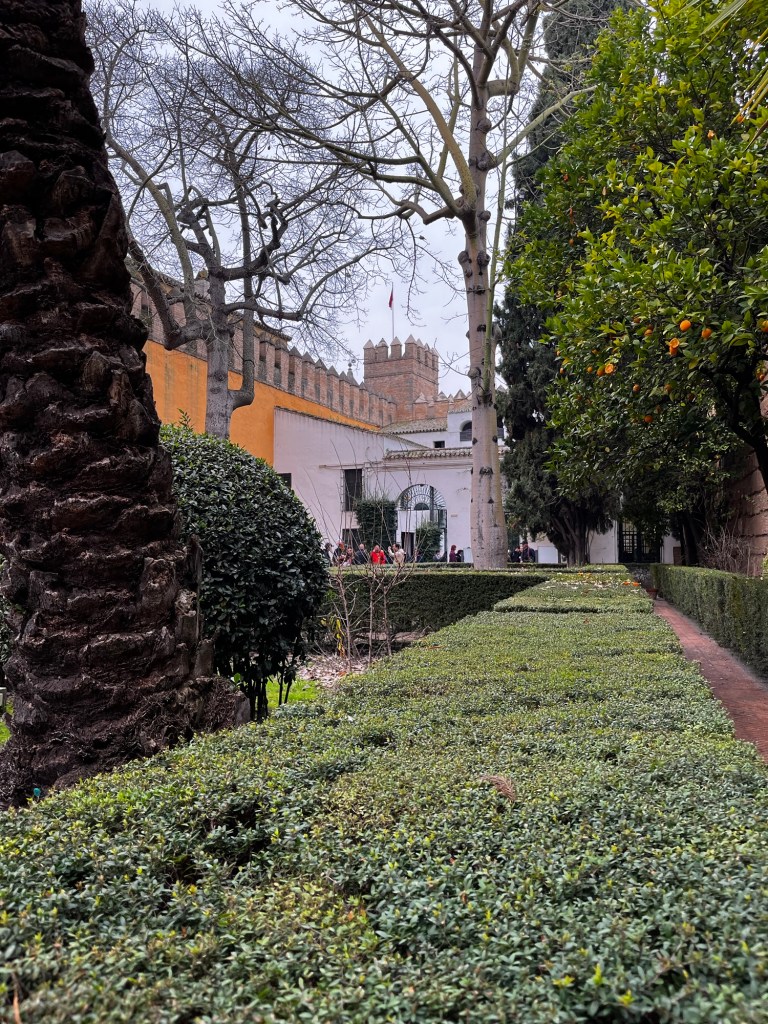
The Alcazar (literally “fort”) is a huge, rambling structure dating from Moorish times and was the seat of the Monarchy in Spain during the early years of Spanish global conquest and colonialism. Our guide, Maria, did a great job of reminding the group that art and architecture serve as marketing and propaganda tools, and that much of what we were seeing were the products of the spoils of the Americas.
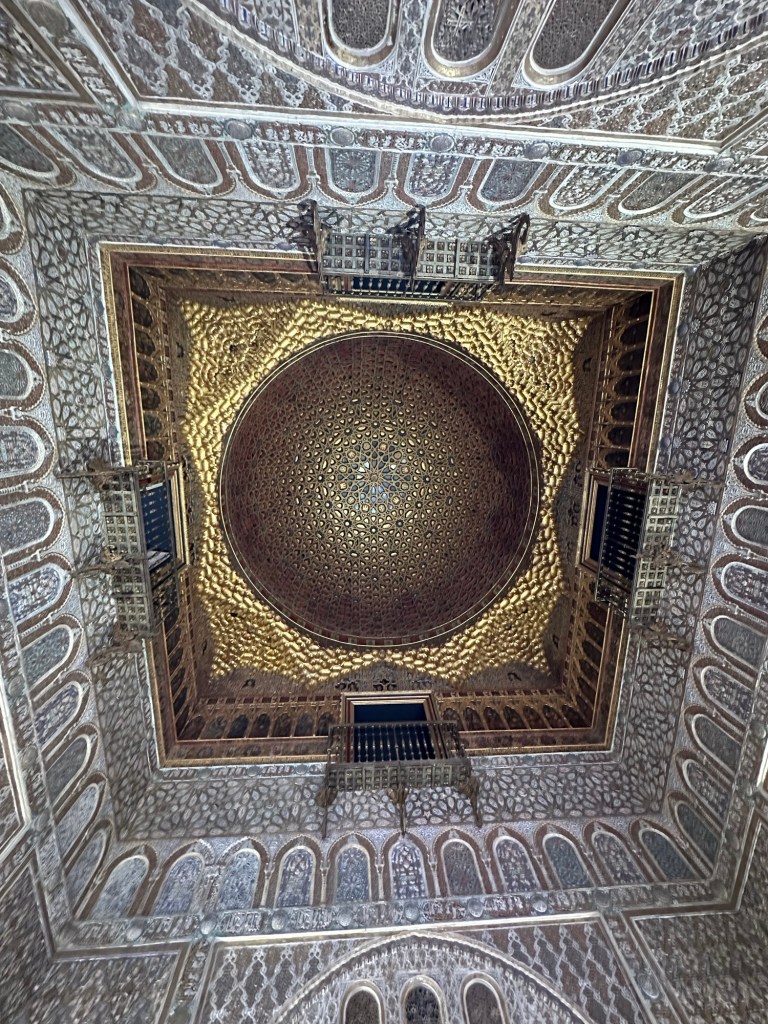
The structure is clearly Moorish in design and inspiration, even though very little of the original Moorish structure remains. It illustrates the lasting influence of the Moors and their 400 plus years in Spain on Spanish culture.
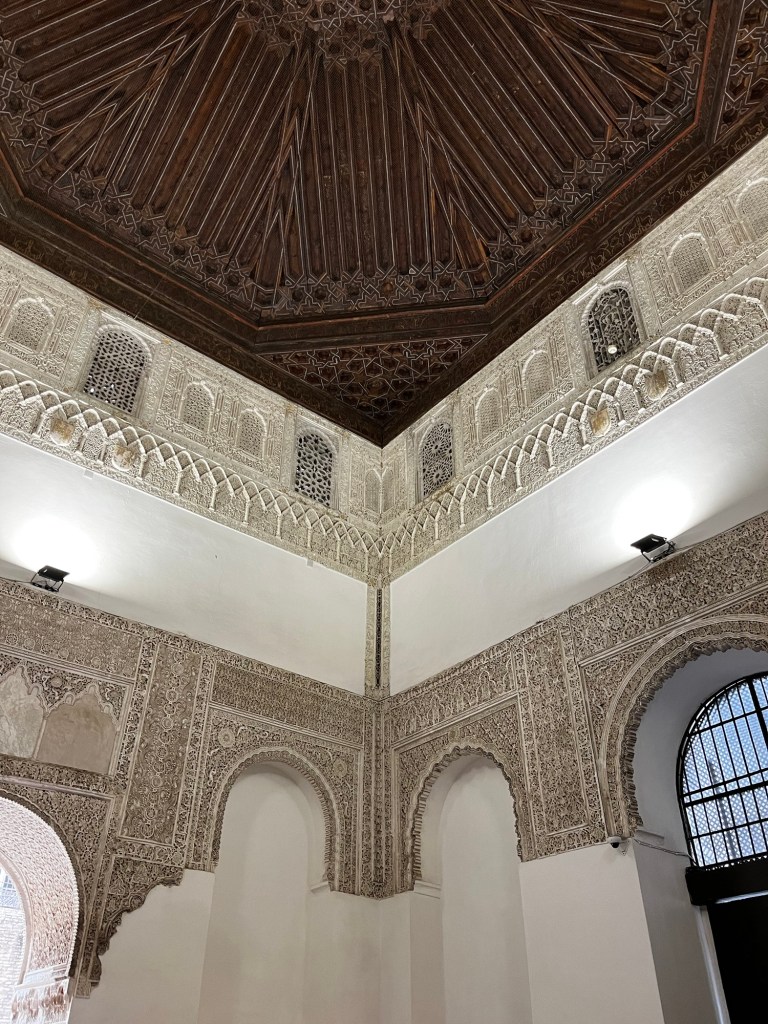
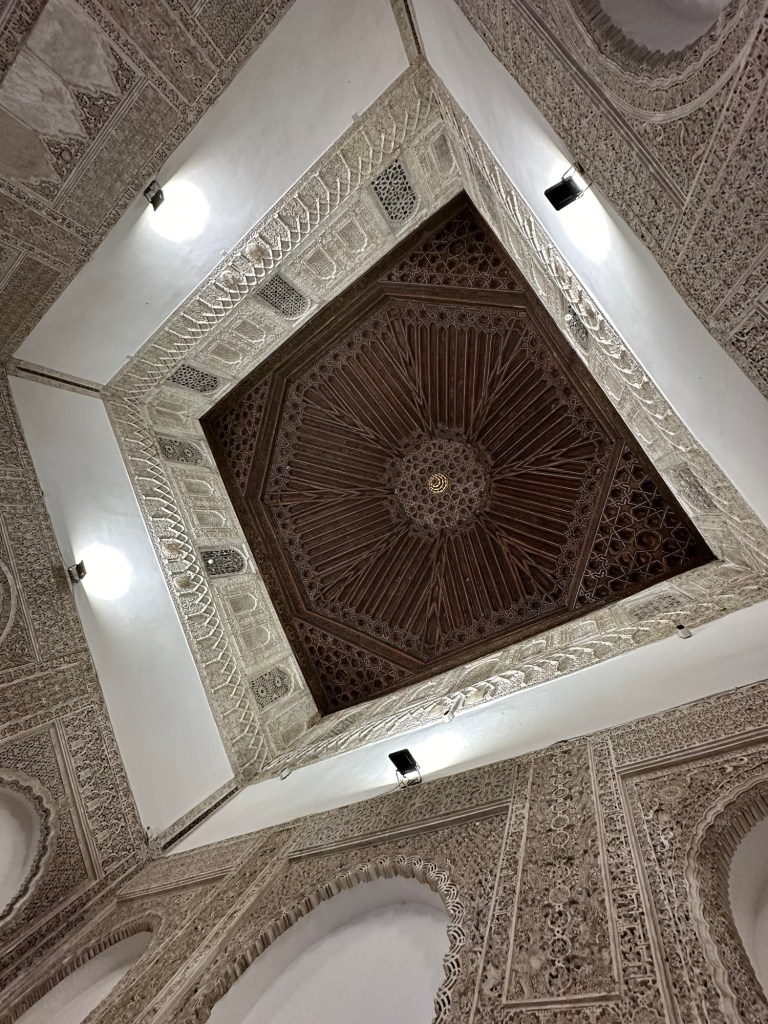
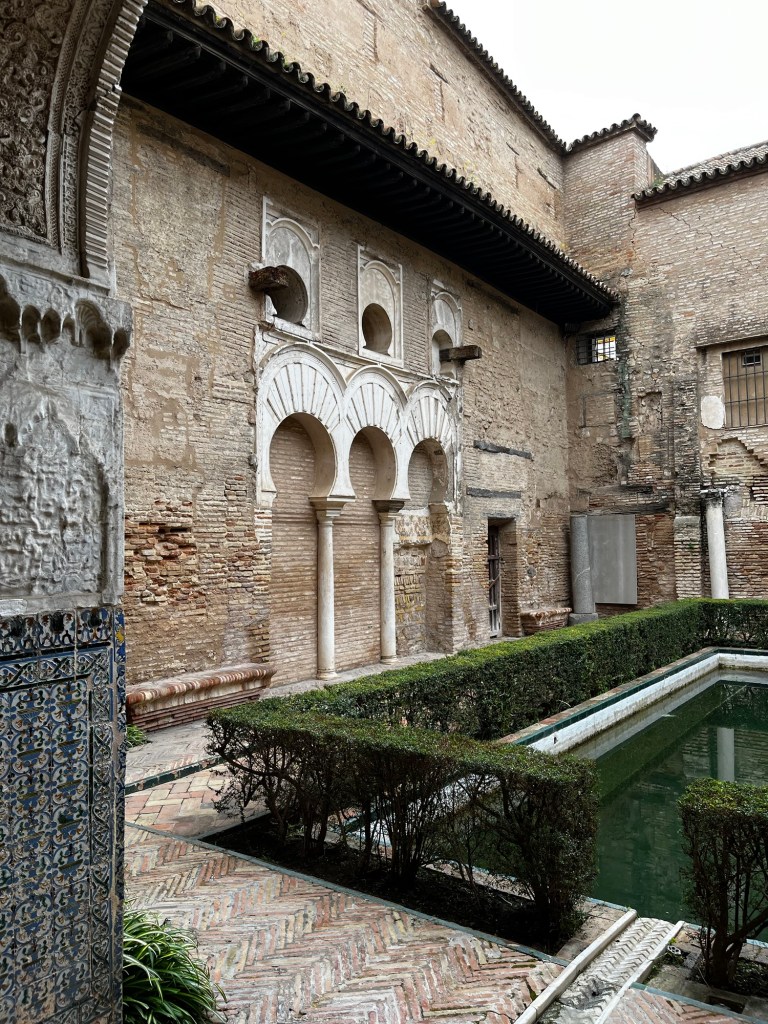
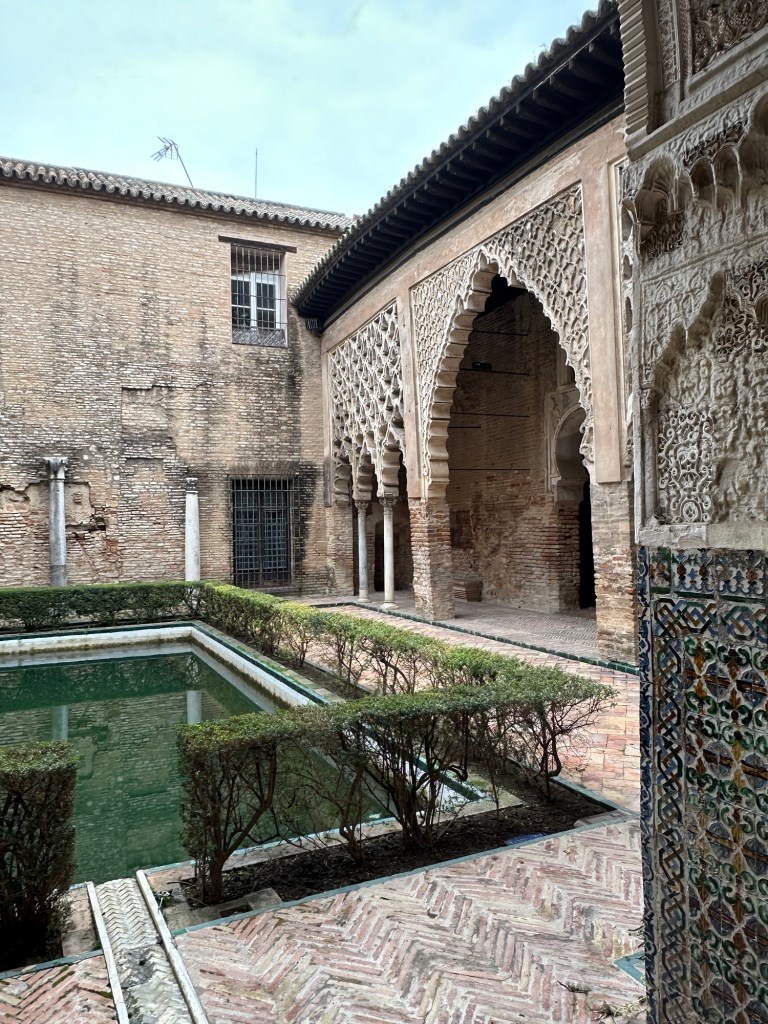
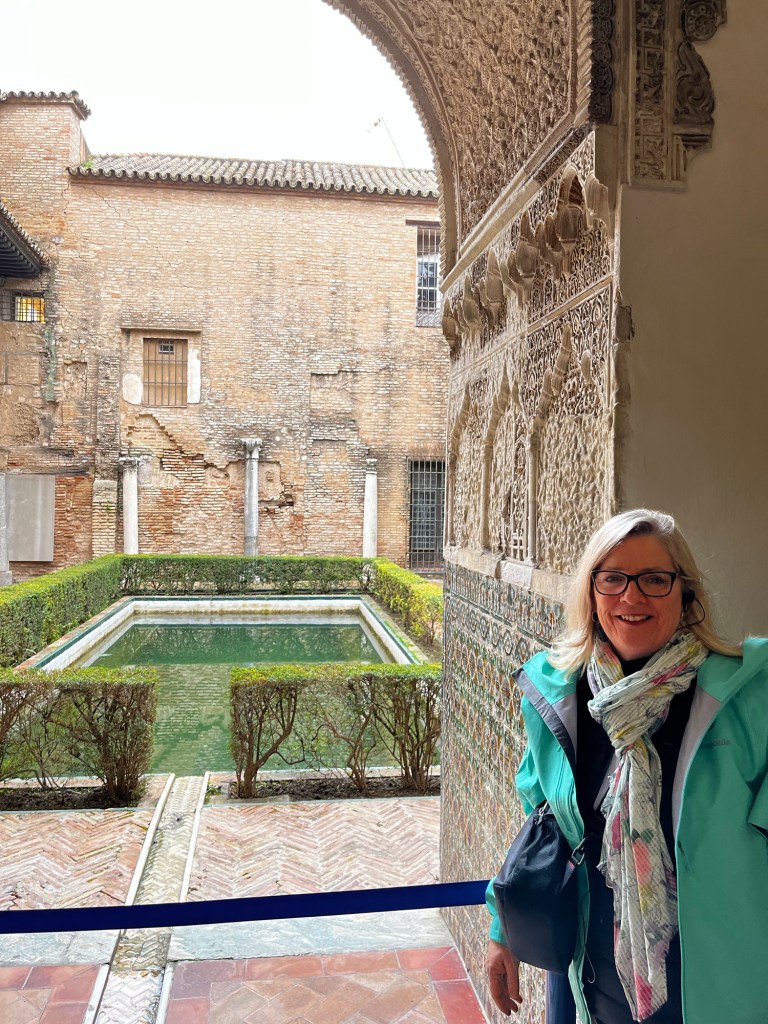
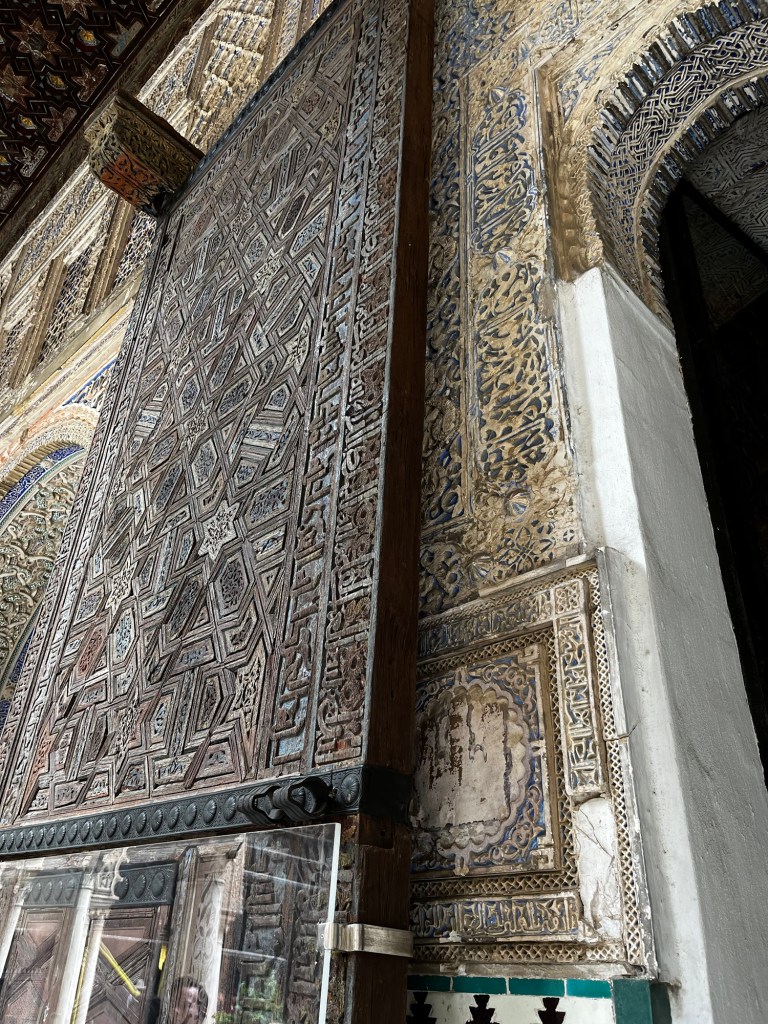

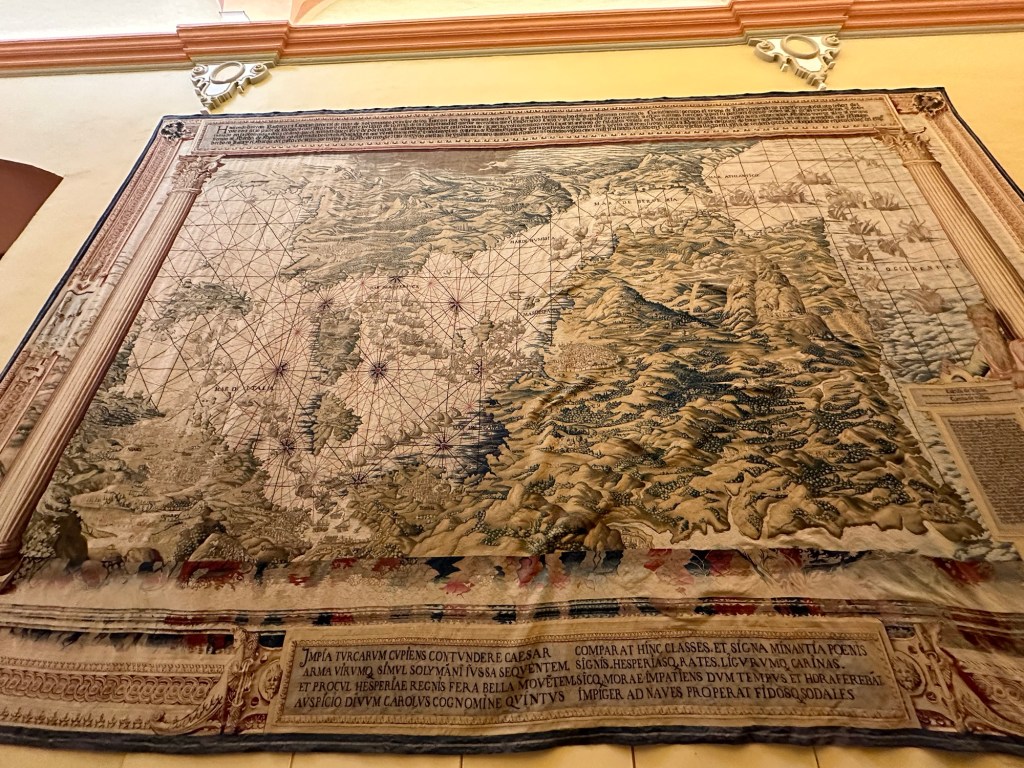
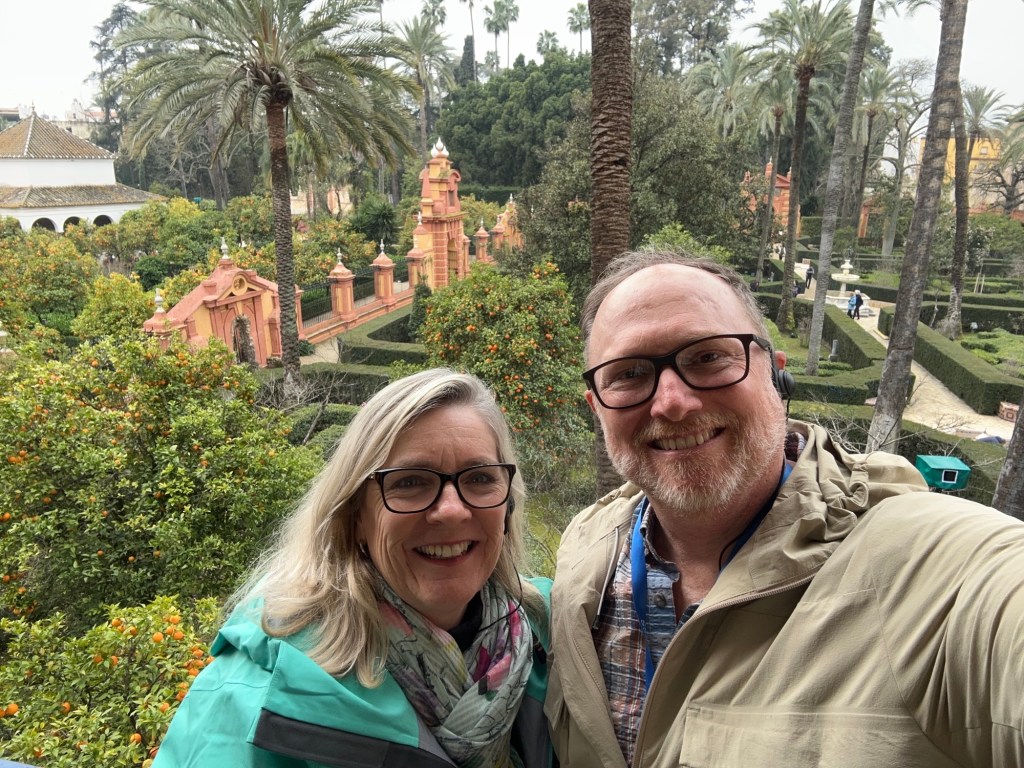
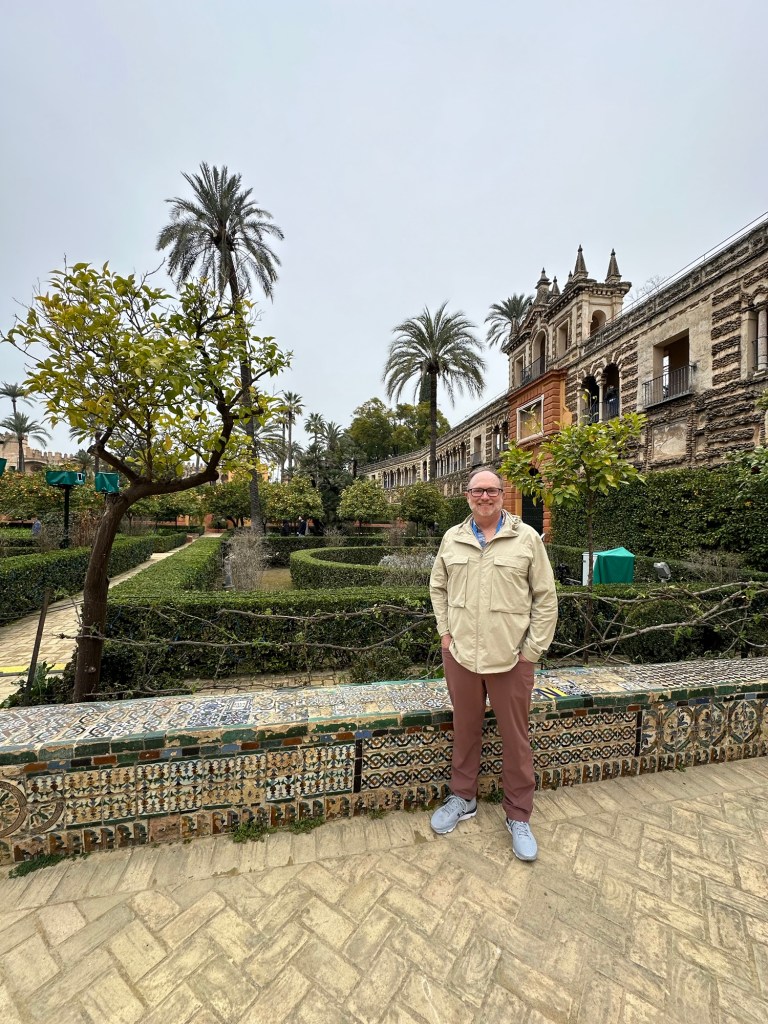
The Royal Alcazar is “royal” because the royal family still keep apartments in the building, although these are used more for formal events than as residences. The property is managed by the municipality and hosts functions throughout the year. It is a popular filming location and many viewpoints are recognizable to fans of Game of Thrones.
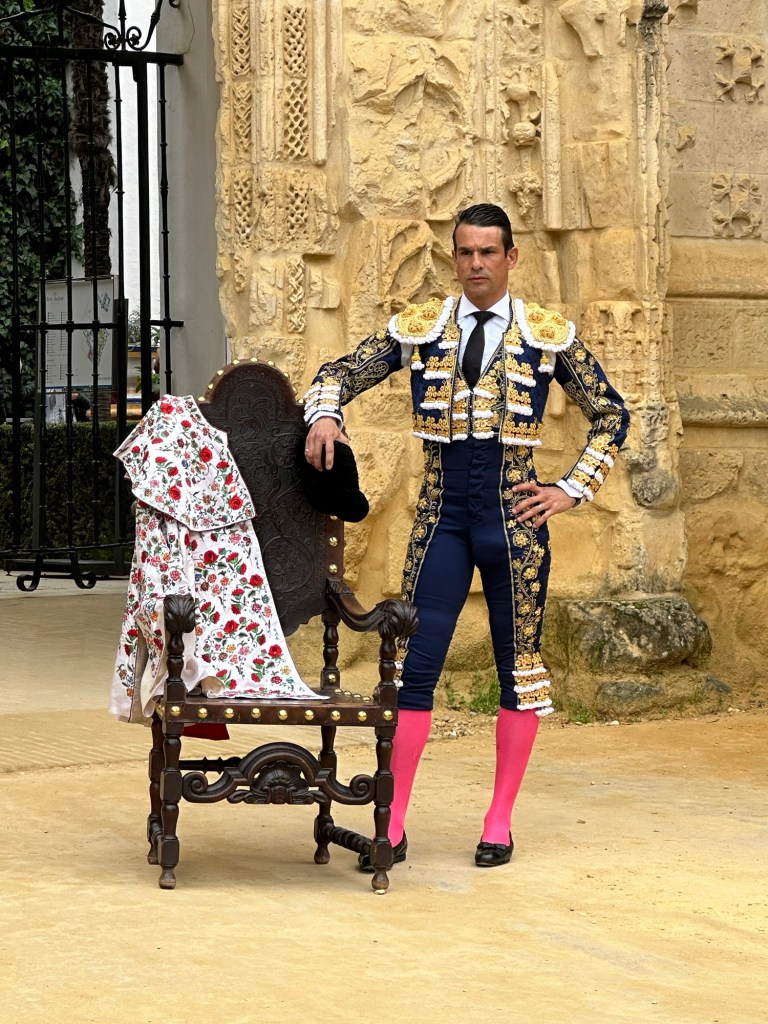
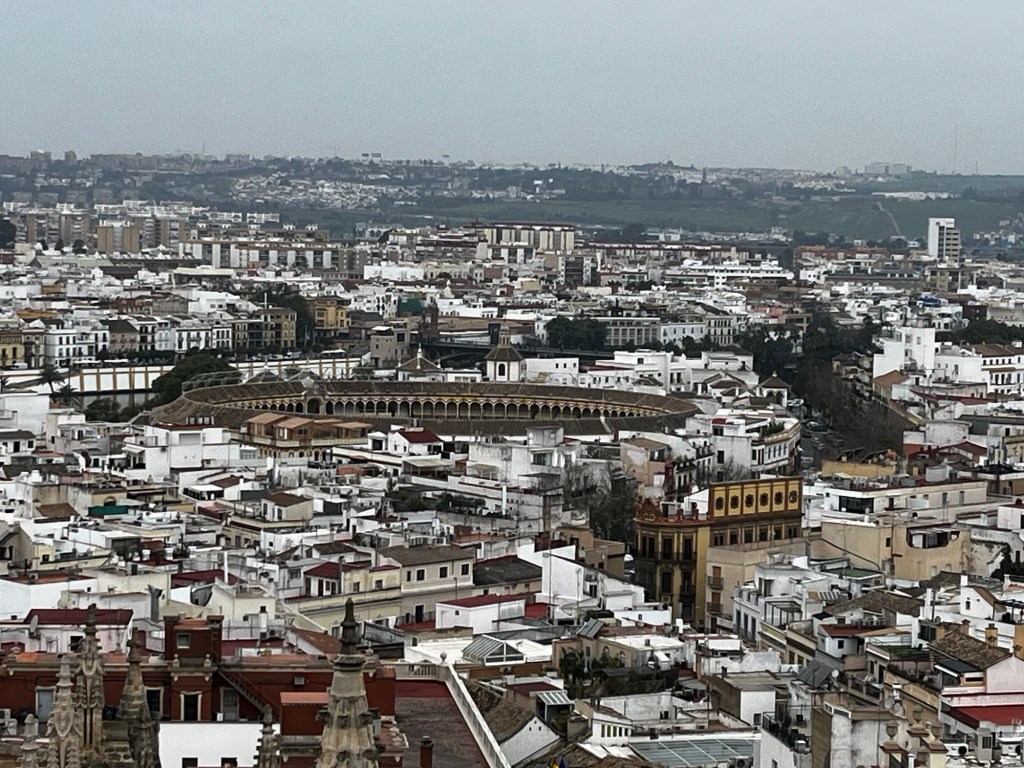
While touring the building we noticed a few spots where photographers seemed to be readying for a formal shoot. This turned out to be a campaign for the upcoming bull fighting season which starts after Easter. Robin snapped a few illicit pictures: the “handlers” tried to prevent folks from recording the matadors who have a celebrity status in this part of Spain approaching the most megalomaniacal Hollywood star. Maria thoughtfully shared her opinion that bull fighting is a dated and barbarous tradition. This is certainly a debate that rages on in Spain.
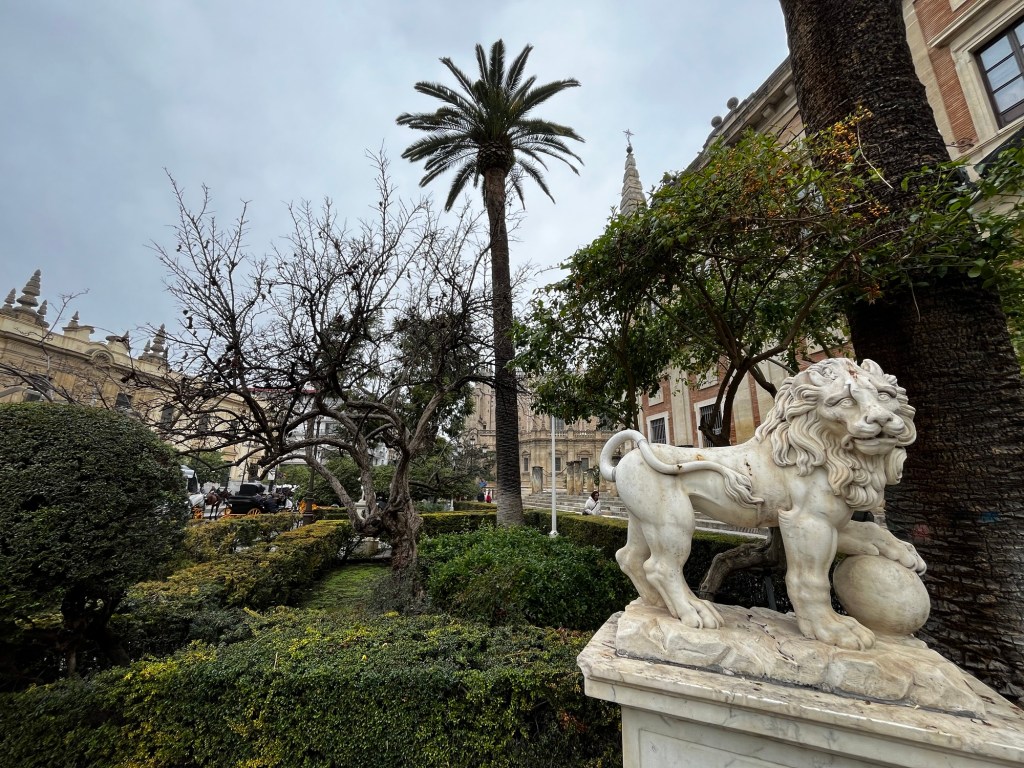
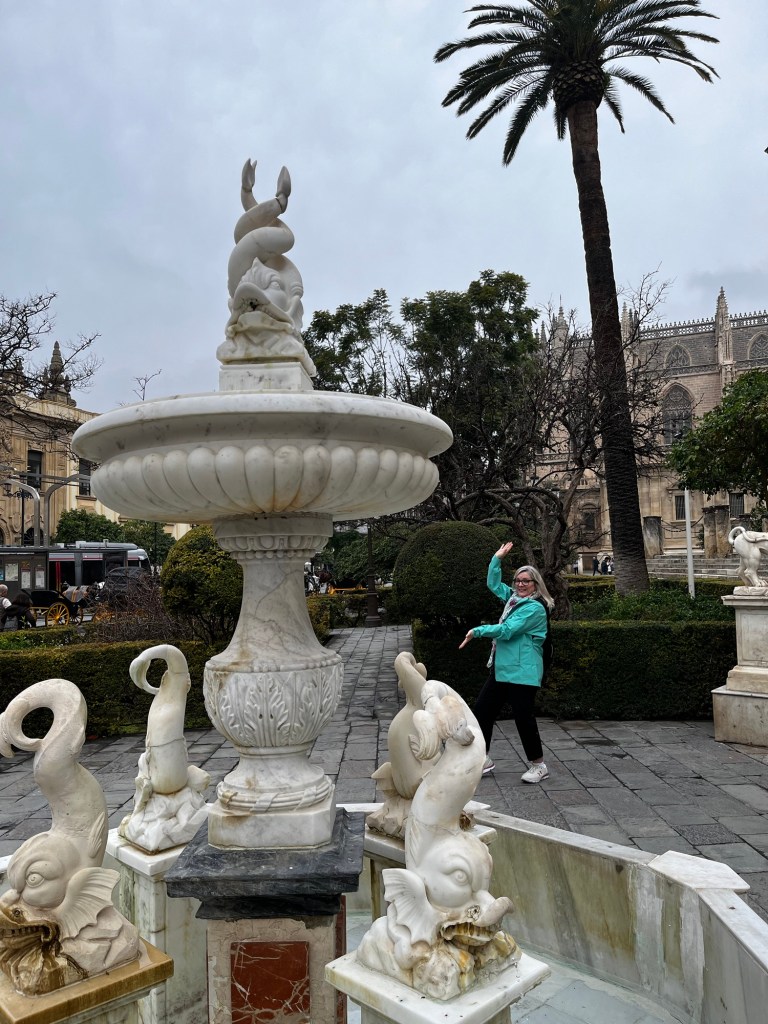
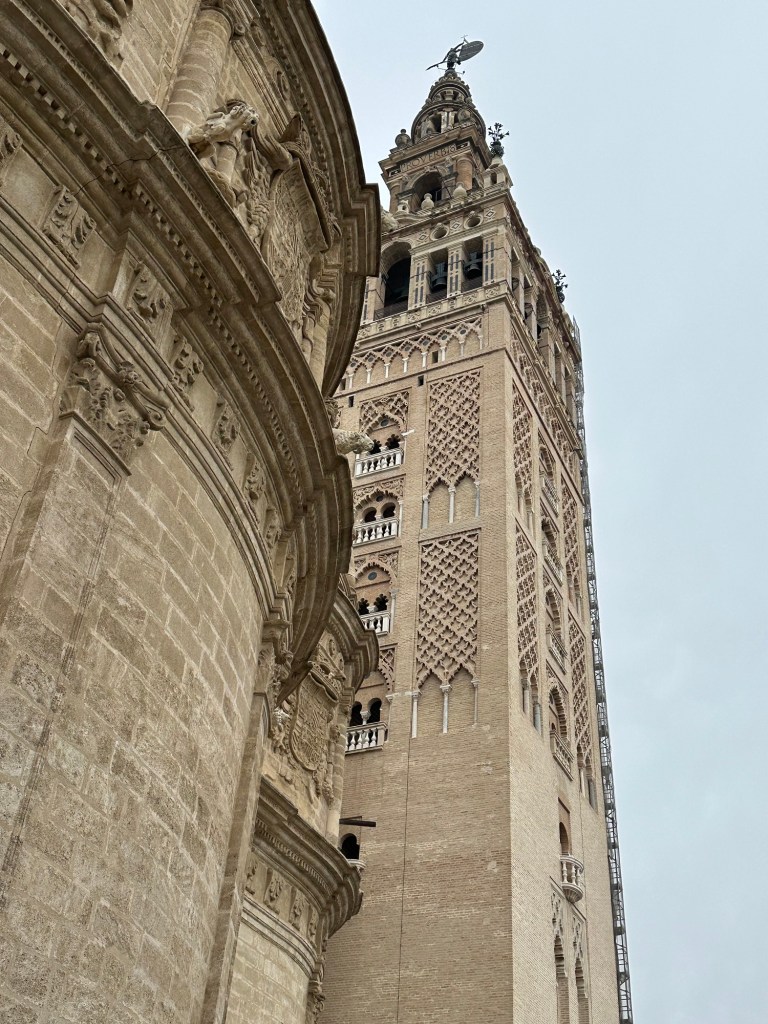
Upon leaving the Royal Alcazar we crossed over to visit the Cathedral and the Giralda Bell Tower. The Cathedral is an enormous structure built over the foundations of the former Mosque in an act of cultural and religious obliteration. Fortunately they ran low on money over the 100 plus years it took to build the Gothic structure and plans to tear down the minaret were abandoned and it was adapted into the bell tower for the Cathedral.
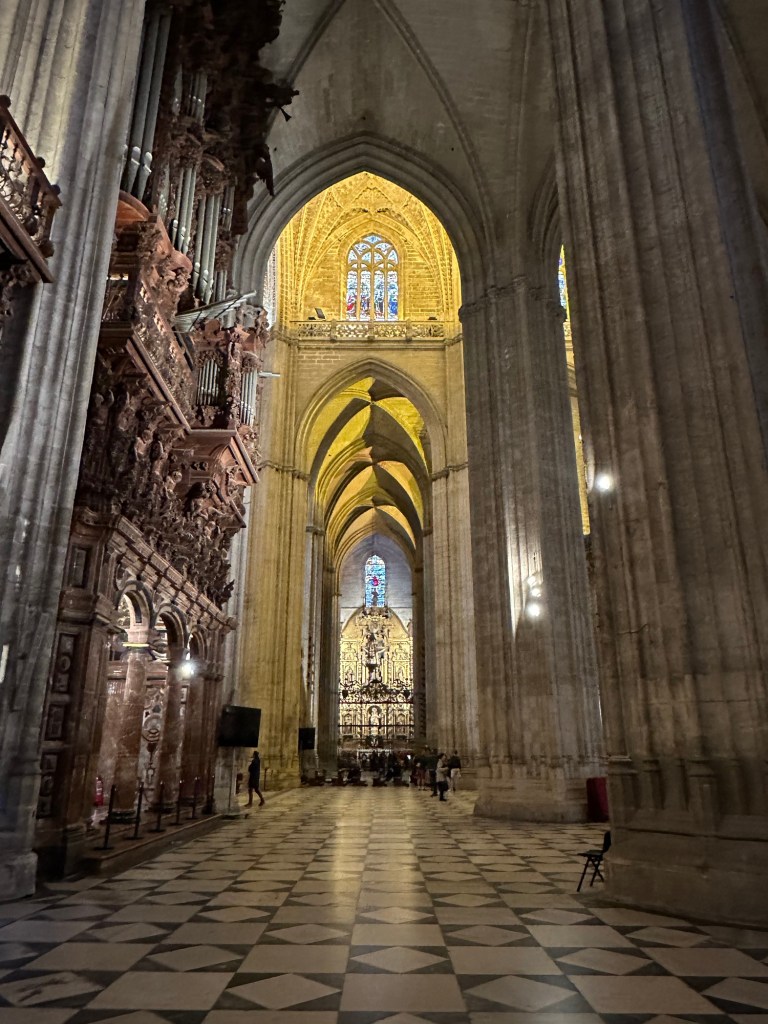
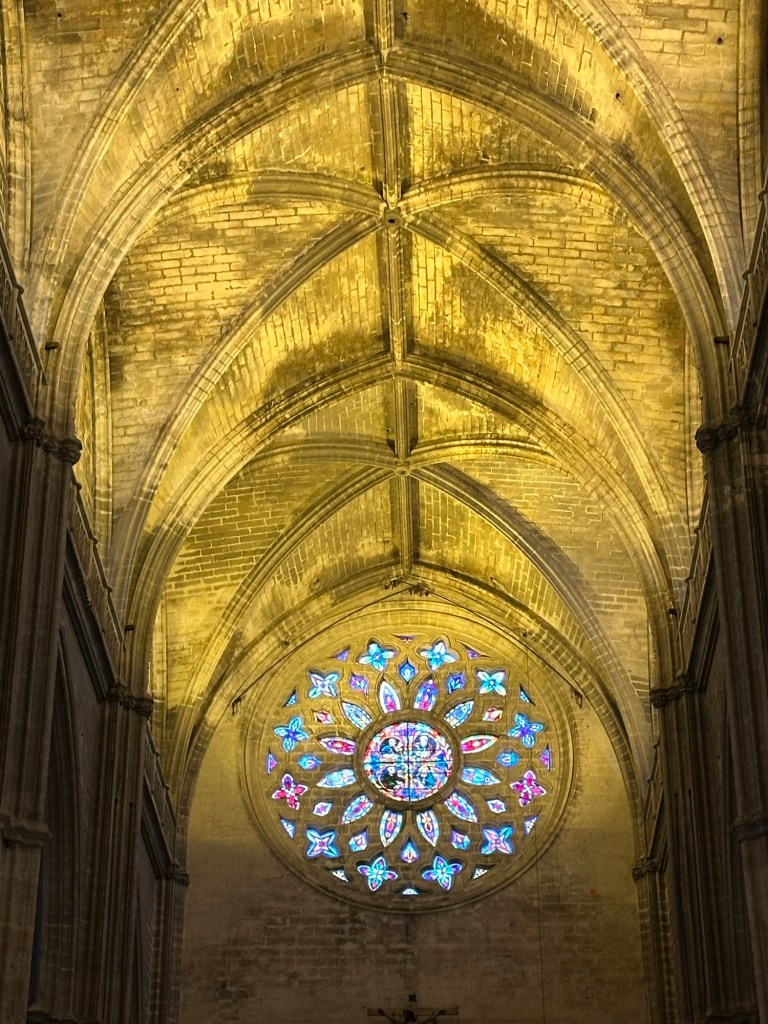
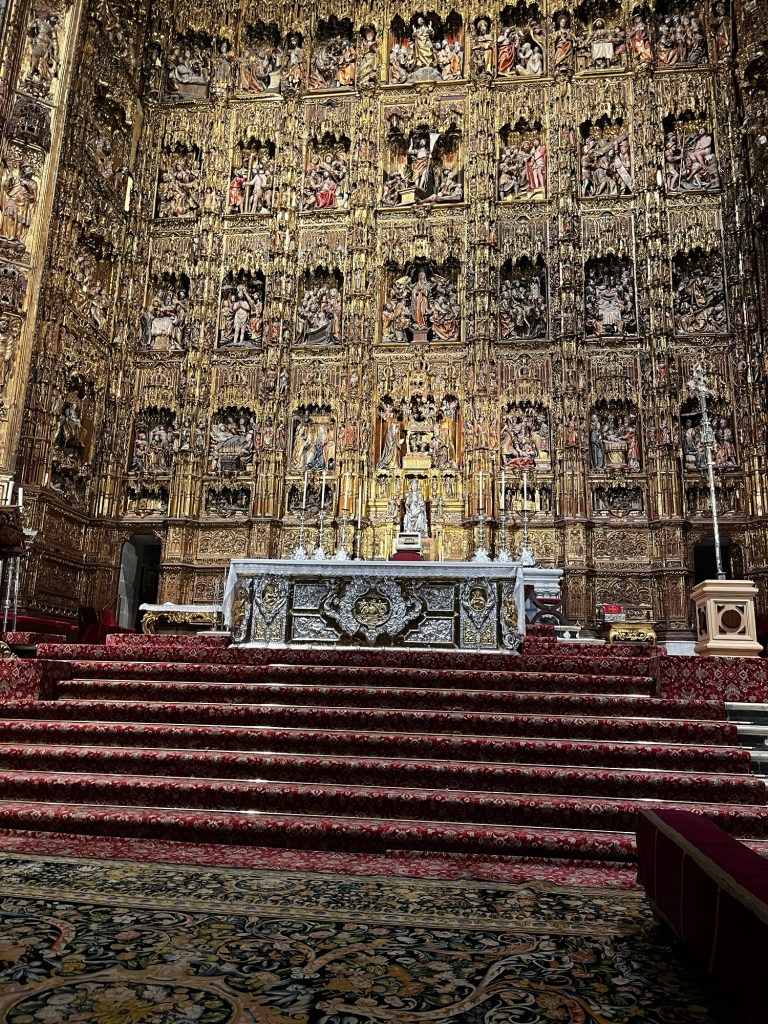
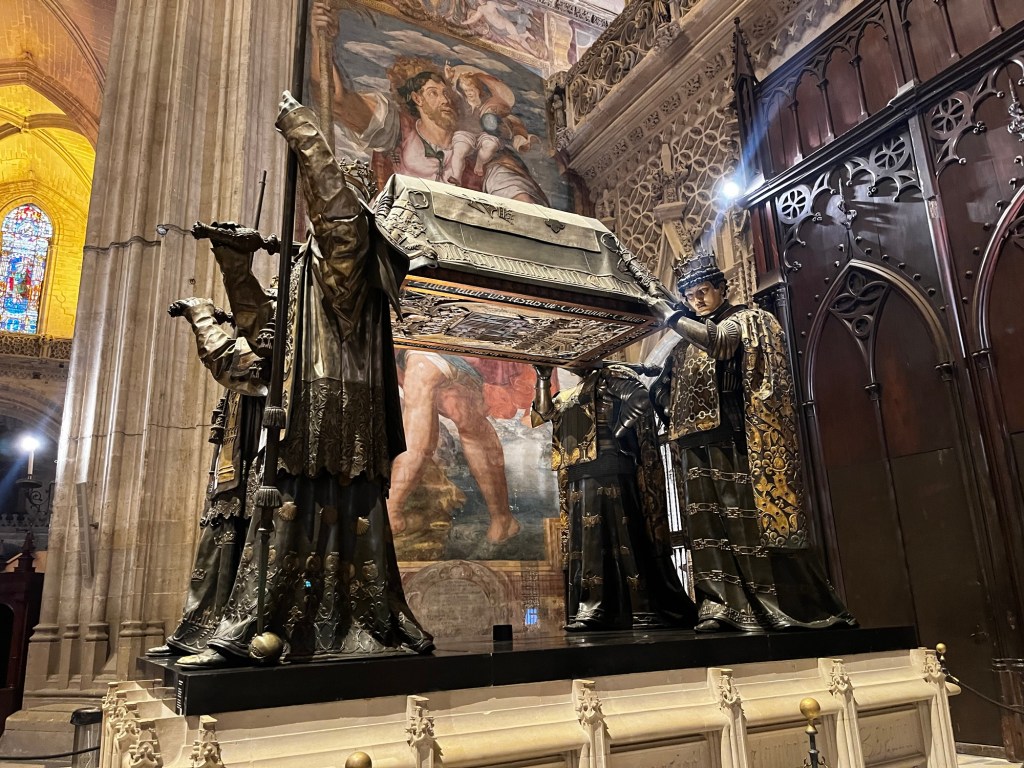
The massive scale of the building’s interior is richly decorated in a veneer of silver and gold and displays of artistry meant to generate the Church and its symbols and overwhelm those who enter. It is sobering to realize that these precious metals were looted from the Americas. The presence of the tomb of Christopher Columbus adds yet another element of moral complication. It was in Sevilla that Columbus secured the support of Ferdinand and Isabella to voyage to “the Indies”. He made the trip four times, opening the door to a wave of colonization and exploitation of the Indigenous peoples of the Americas.
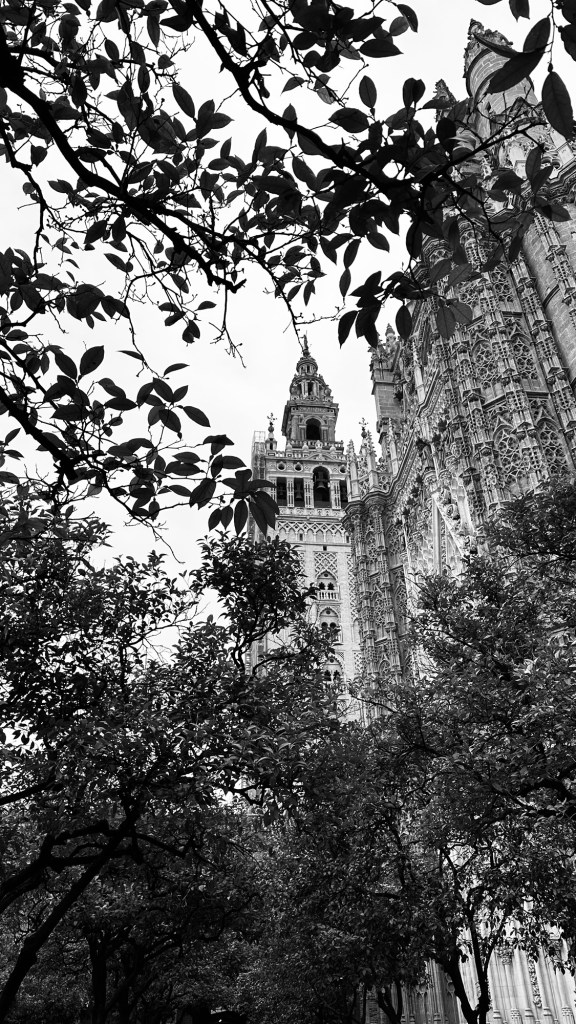
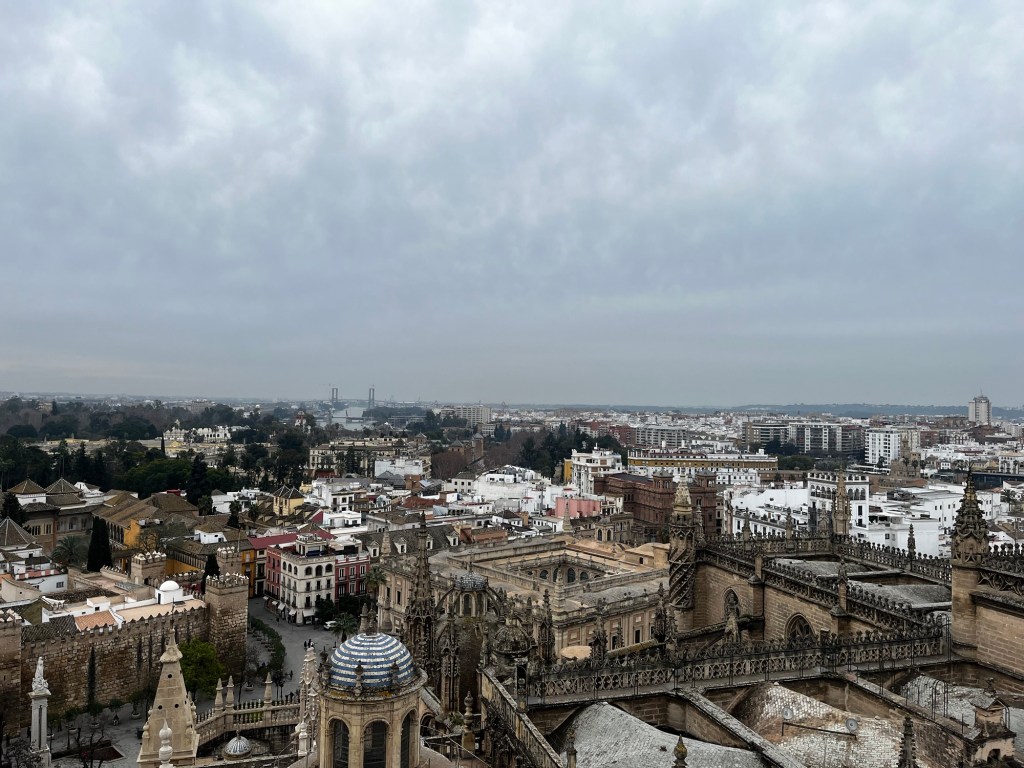
We left the Cathedral and made our way to the Giralda Bell Tower. When it served the local Muslim population of al–Andalus, the local Iman would make the trip to the top of the minaret 5 times a day to recite the call to prayer. The tower is roughly 100 meters high, and was designed with a series of 36 ramps to allow the Iman to make the journey on a donkey before climbing the final 17 steps. Having failed to secure a donkey in advance, we trudged our way up, pausing to admire the view along the way and at the top.
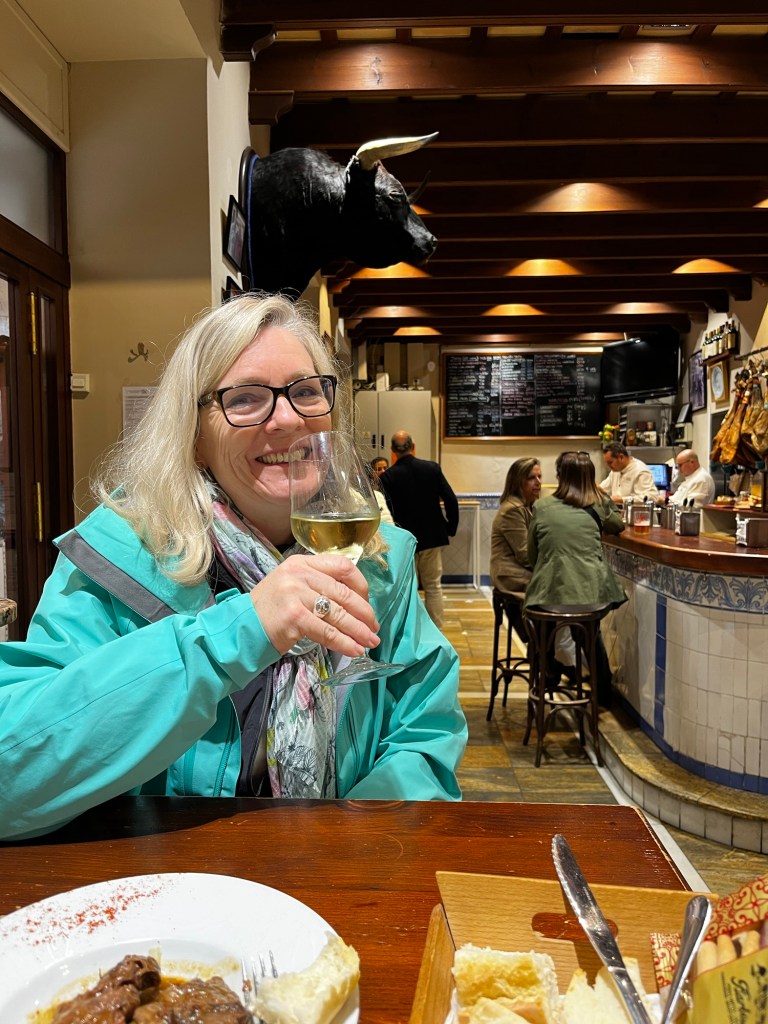
We finished the day with a stop for tapas at the Restaurante Barbiana. We secured a table and I went to the bar where I was faced with a daunting list of tapas options. Summoning Duolingo once again, I asked the bartender to help me choose a couple of vegetarian tapas that Robin might enjoy: “Tapas sin carne, sin pescado por favor?” He and a colleague spent a few minutes reviewing the menu and eliminating options before confidently deciding on two choices for us: chicken croquettes and tripe.
At least the wine was “sin pescado y sin carne.”


 MacsTravel Blog
Leave a reply to jangus86@rogers.com Cancel reply