We arrived to gathering plumes from the hills over West Kelowna.
We were preparing to meet up with Robin’s brother and family before heading off to explore Vancouver Island together. We had driven through haze since our time in Golden, and had heard that the Okanagan Valley was particularly smoky due to some new wildfire activity in the foothills.
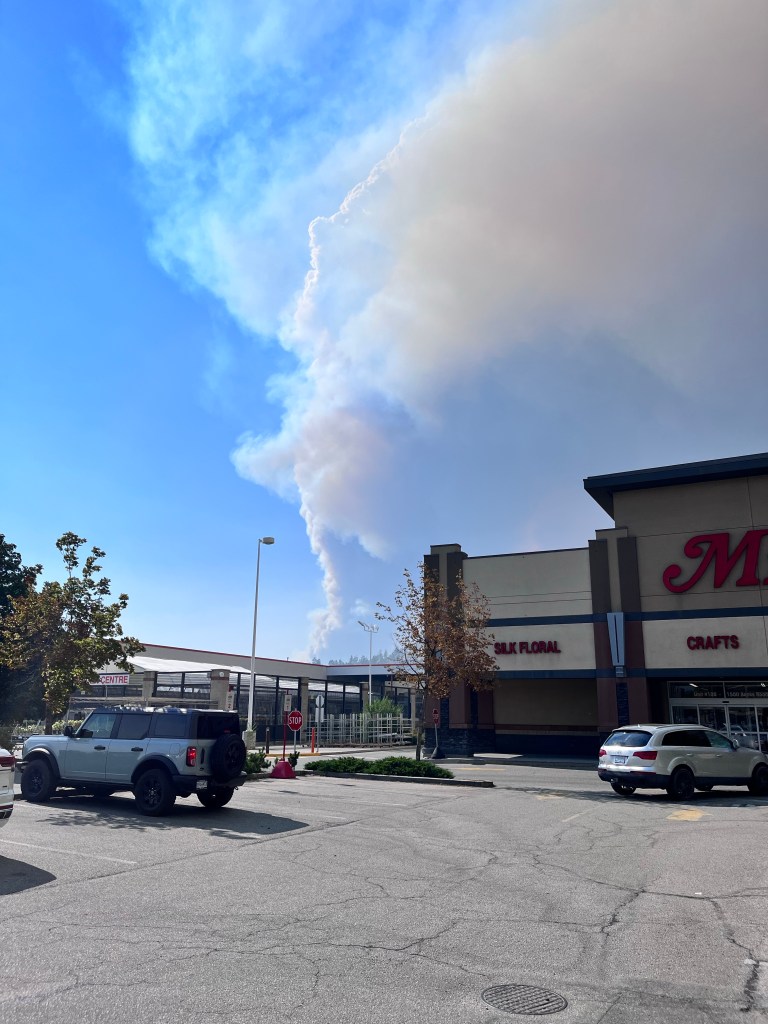
After a couple of quick stops in town we began the winding trek into the hills of Upper Mission to the south of (East) Kelowna, growing increasingly alarmed by the billowing, towering clouds of smoke which seemed to be coming from high in the tree dense hills over West Kelowna and Westbank First Nation.
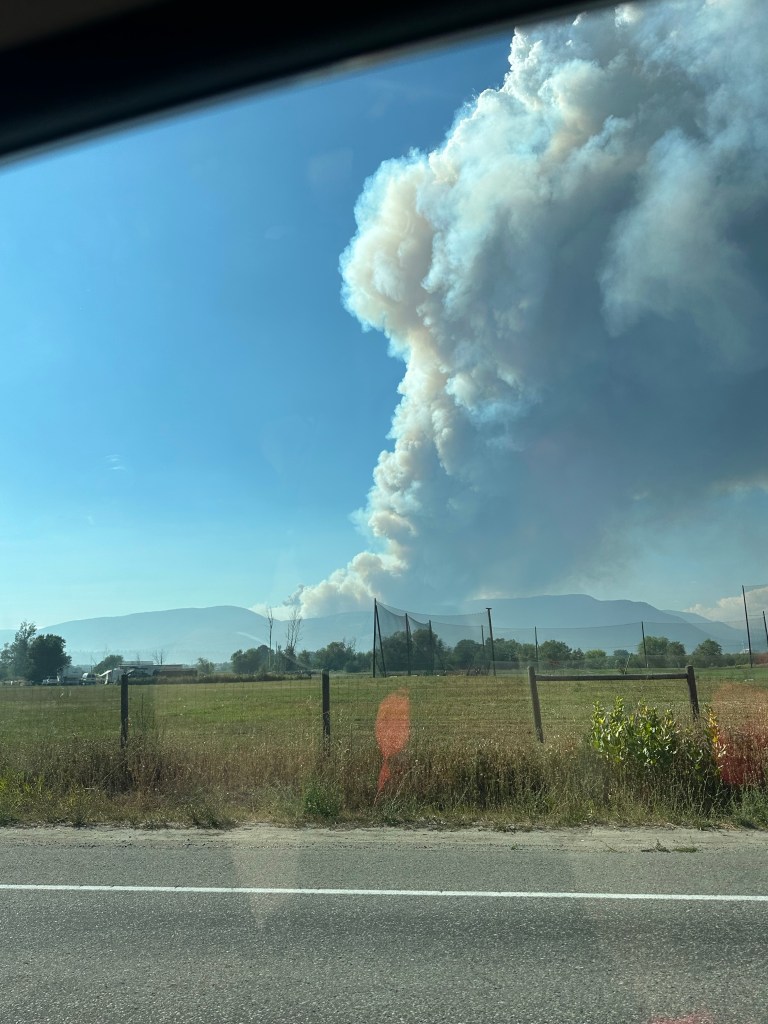
It was 20 years virtually to the day that East Kelowna and Upper Mission in particular had suffered the devastating wildfires in 2003. The hills above Stew and Betty’s place still bore blackened stumps and trunks from that event, although meadows and seedlings had greened the landscape somewhat. It was cold comfort that there was less chance of catastrophic fire in this area because of that event. Stew and Betty’s house is built on former crown land that was sold to developers after it burned in 2003. The irony of this did not escape any of us as we gazed down the valley and across the lake to West Kelowna.
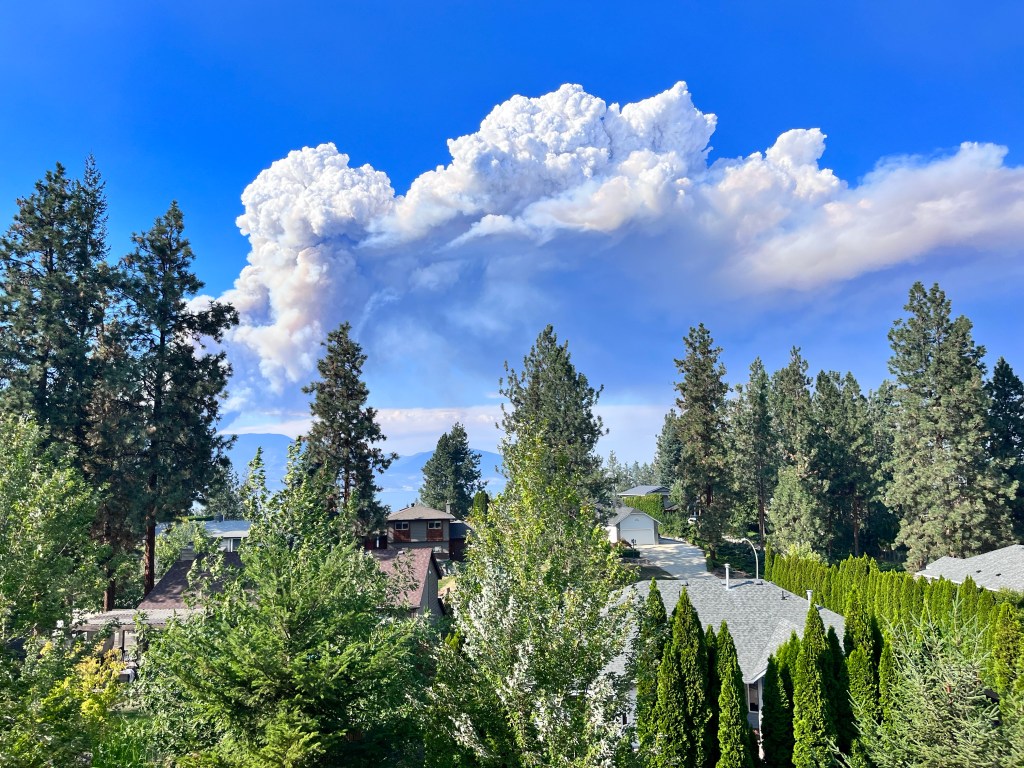
Evacuation Alerts (get ready to go) and Orders (get out now) were expanding throughout Thursday evening and overnight into the day on Friday as the shifting winds allowed the fire to “jump” the lake into the East Kelowna. Fires spread over to the east side of the lake in the northern areas of Kelowna up into Lake Country making the road north to Vernon problematic.
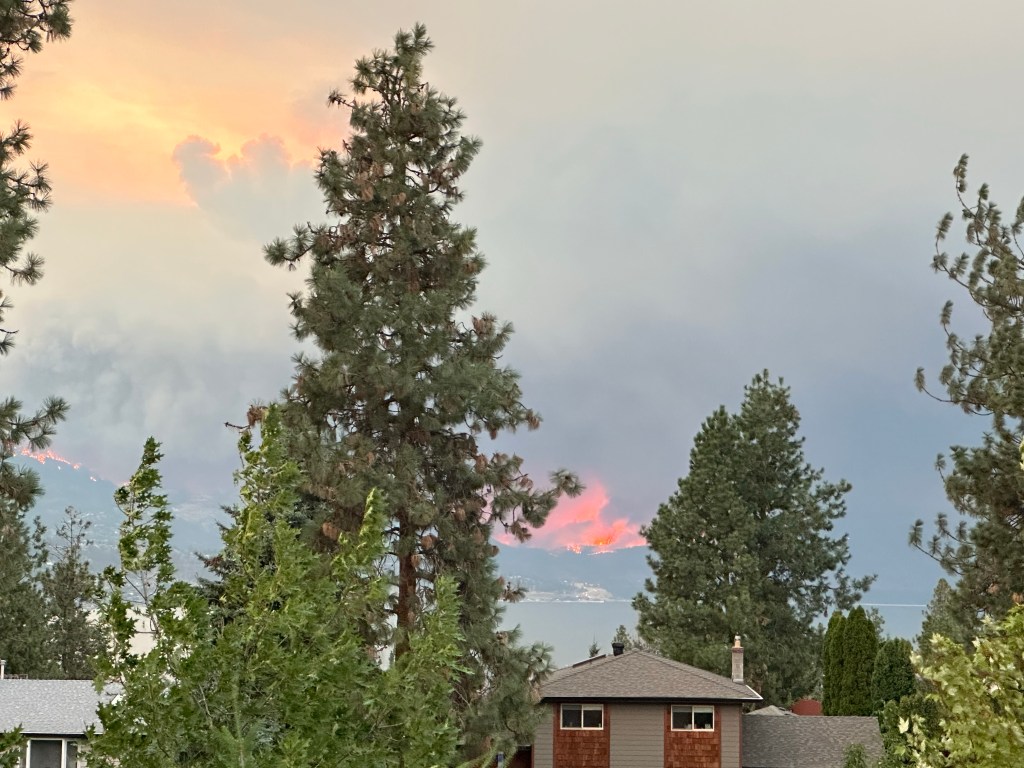
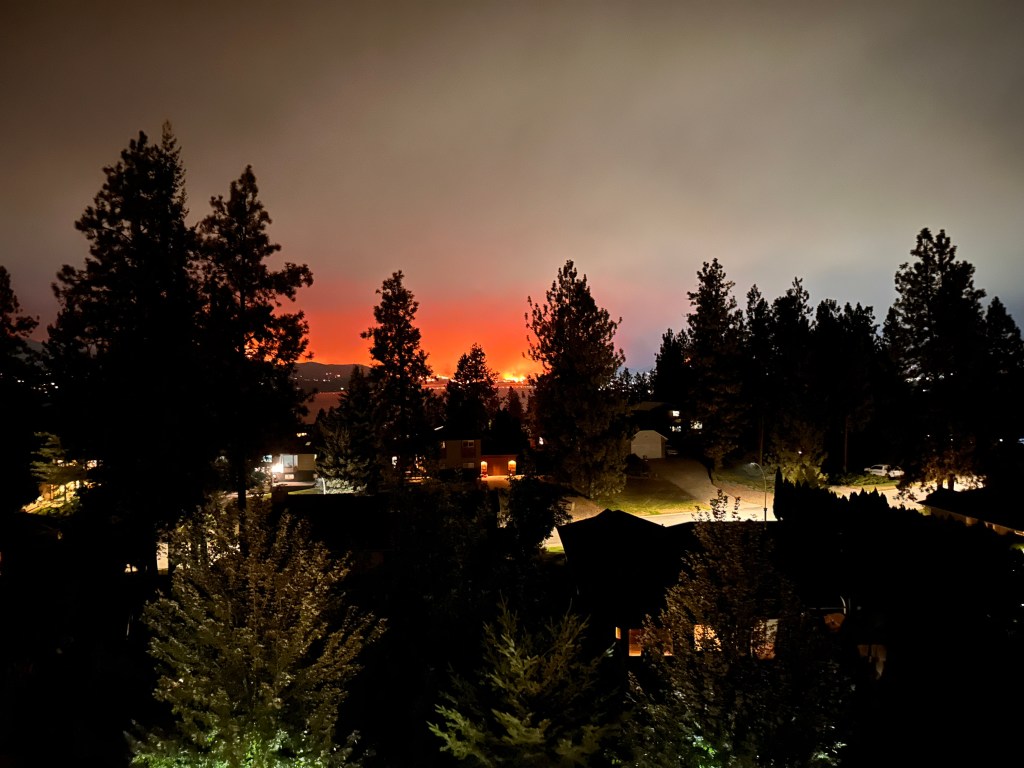
We had planned to leave for Vancouver Island first thing Friday, but sporadic road closures and the rapidly changing situation caused us to pause for a day. Friday was a very long and sobering day as the wind turned, blanketing all of Kelowna with smoke and making it difficult to have a clear sense of what was happening. It was certainly gutting to watch the news reports and interviews with first responders and evacuees. I’m sure it was surreal for Stew and Betty as they packed valuables into a “go box” and took video of the contents of their house.
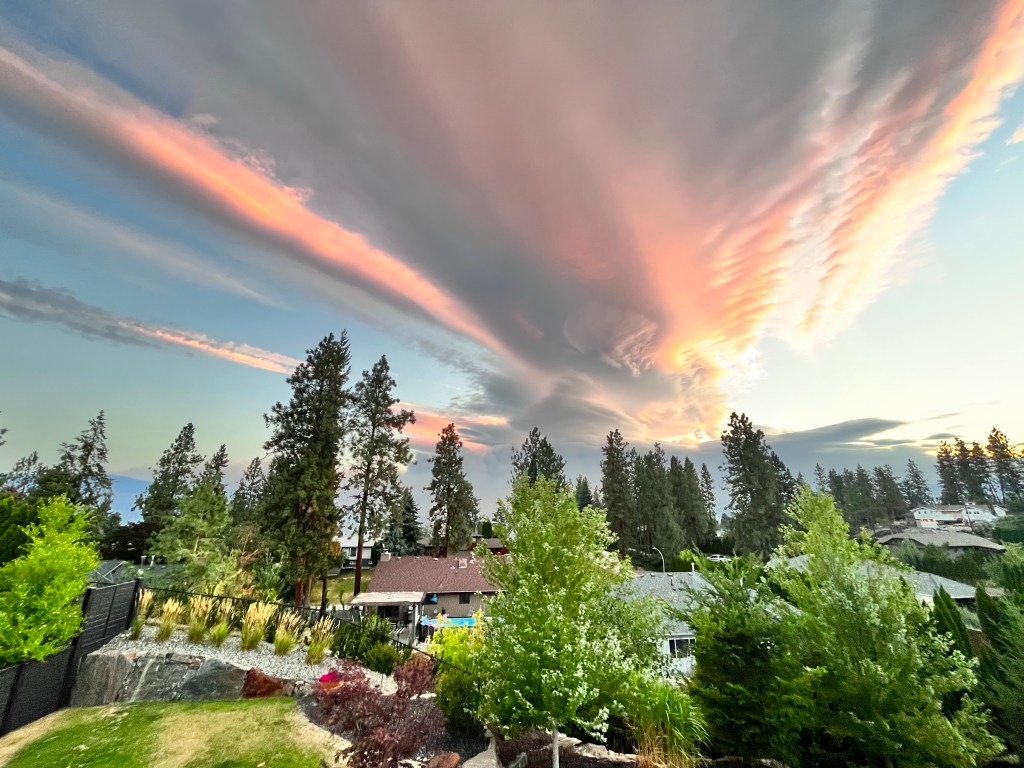
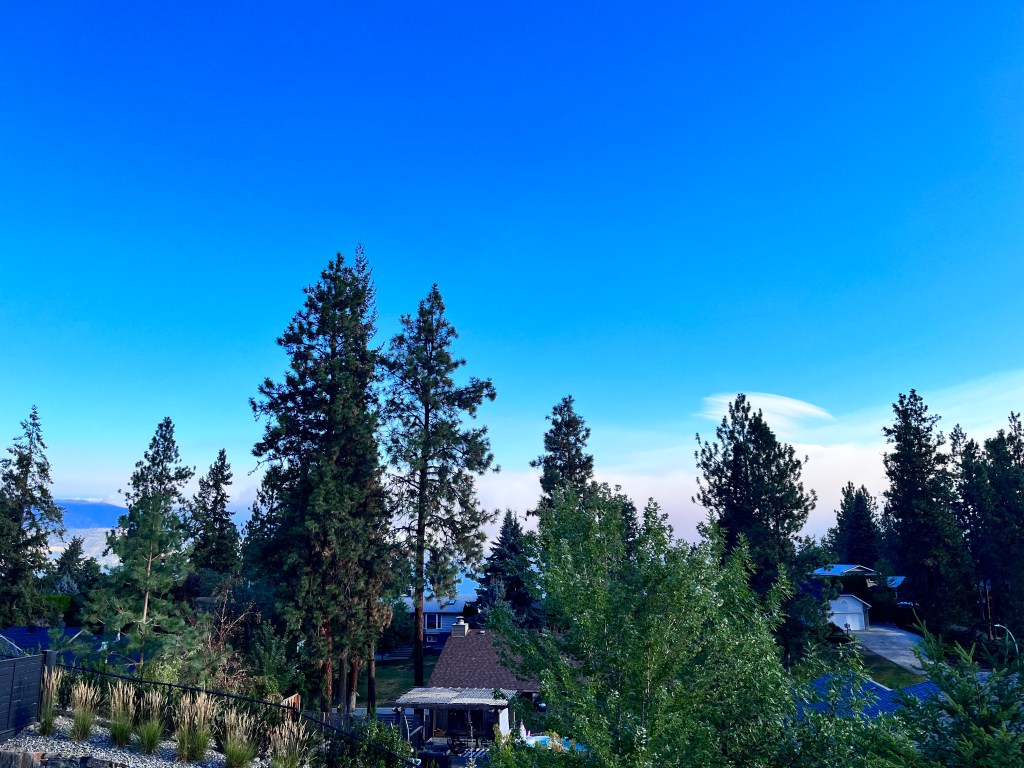
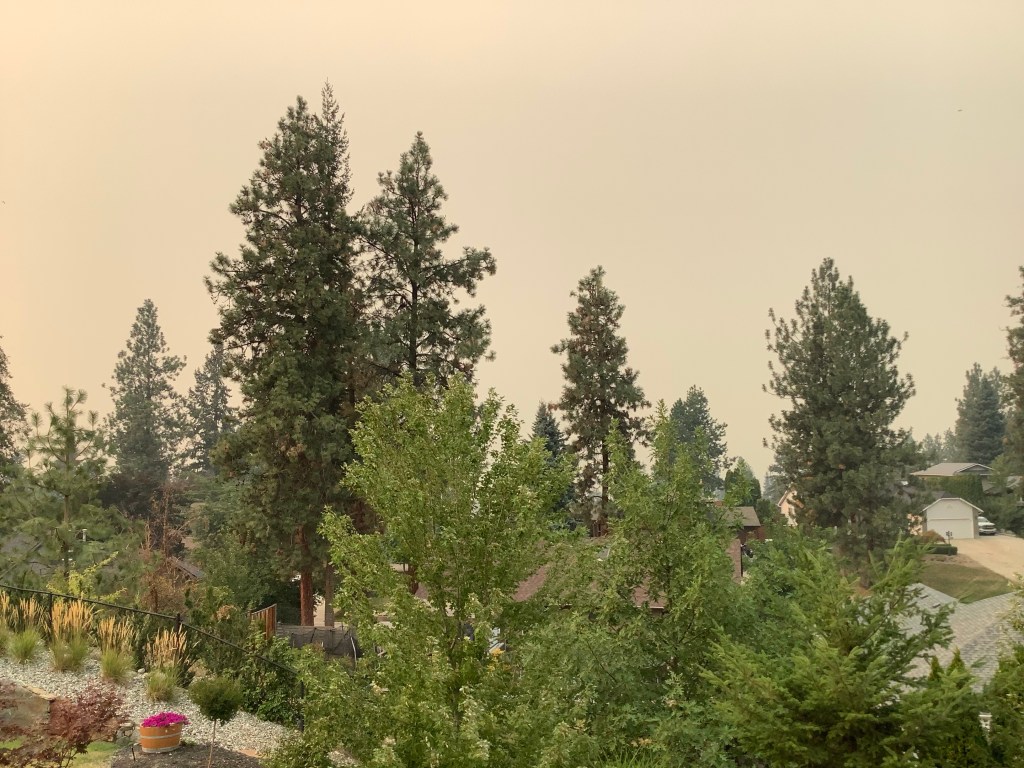
When we woke up Saturday it was to calmer winds and a sense that the alerts and orders had stabilized to some degree. We had decided to head out that morning, if road closures allowed.
The hope was that we would be able to take the bridge across to West Kelowna and take 97 which skirted around the city. As we drove across we turned sharply down 97 away from where the fires had reached the shores of Lake Okanagan in West Kelowna, and away from Westbank First Nation which had also been evacuated. Other than the absence of traffic and the road closures on routes leading off the highway there was little to indicate the magnitude of what had happened, and nothing in the way of obvious damage or destruction visible from the main road. Still, it was a quiet drive as we turned west from Kelowna and climbed into the mountains towards Vancouver.
This has been the summer of fire in Canada, and there will be lots to discuss in the coming months and years about climate change and wildfire mitigation, about improvements in emergency response and about building more climate resistant communities. For this moment, as we think about all of the communities and individuals impacted by this year’s fires, and the loss of priceless ecosystems, I think I’ll follow Emily Dickinson’s advice, and send my thoughts to those that “hovered there awhile” in the ashes of the summer of 2023.
Ashes denote that fire was;
From “Fire”, by Emily Dickinson
Respect the grayest pile
For the departed creature’s sake
That hovered there awhile.


 MacsTravel Blog
Leave a reply to Elaine Straw Cancel reply