The drive from Fort Frances to the Manitoba boarder is incredible: empty roads rise and dip through shield rock, bending around jewel blue lakes and crossing dancing rivers. As you turn west at Kenora, along Highway 17, the topography relents and the road begins to slowly straighten until you find yourself in Manitoba on a ramrod-straight road heading through a tunnel of black spruce and boggy wetlands. These recede as you approach Winnipeg, replaced by a web of overhead hydro wires and checkerboard fields.
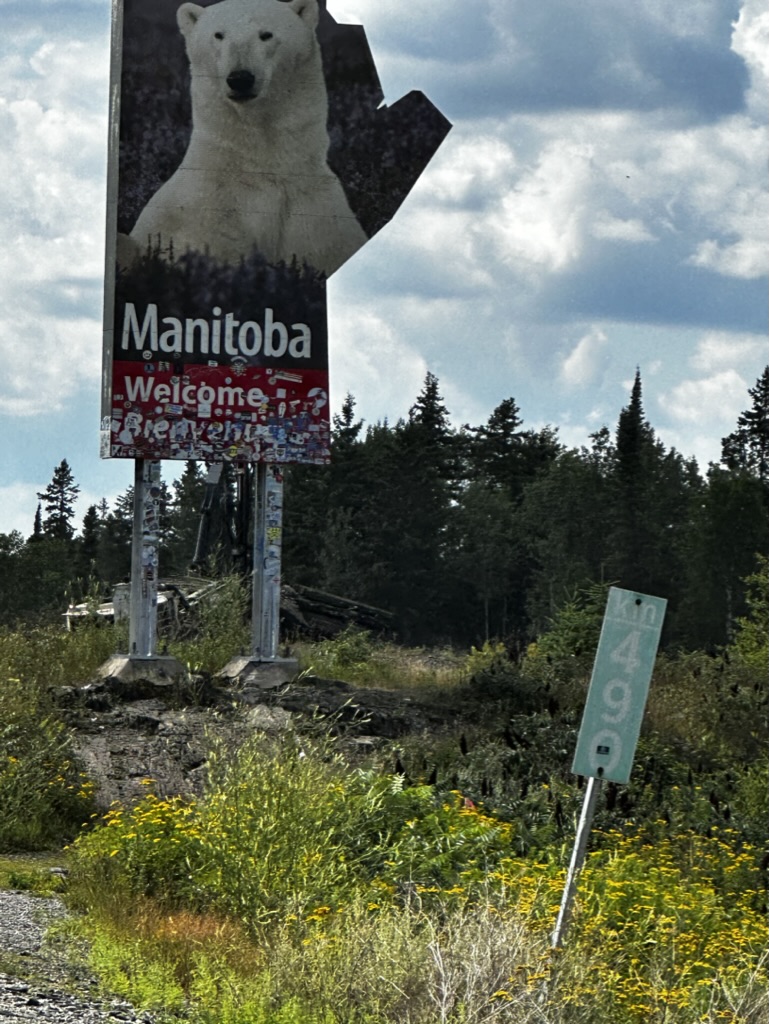
We were heading south from Winnipeg to a small town in the far reaches of the Pimbina valley called Winkler, which provided a convenient break before stopping at our next campground, Spruce Woods Provincial Park near Glenboro, Manitoba.
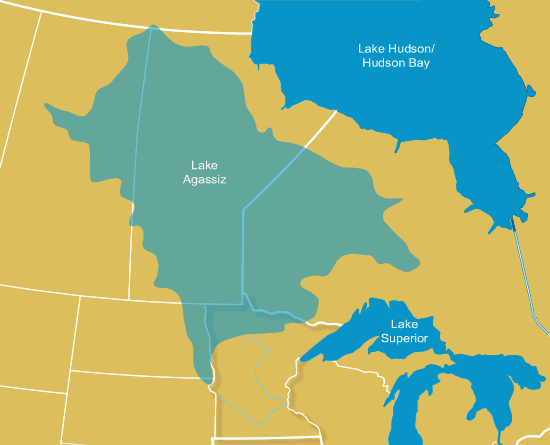
The Pimbina valley is a massive area in southern Manitoba that extends into the Dakotas, the watershed of the Assiniboine and Red Rivers, and the remnant of Glacial Lake Agassiz which was formed by retreating glaciers 11,500 years ago.
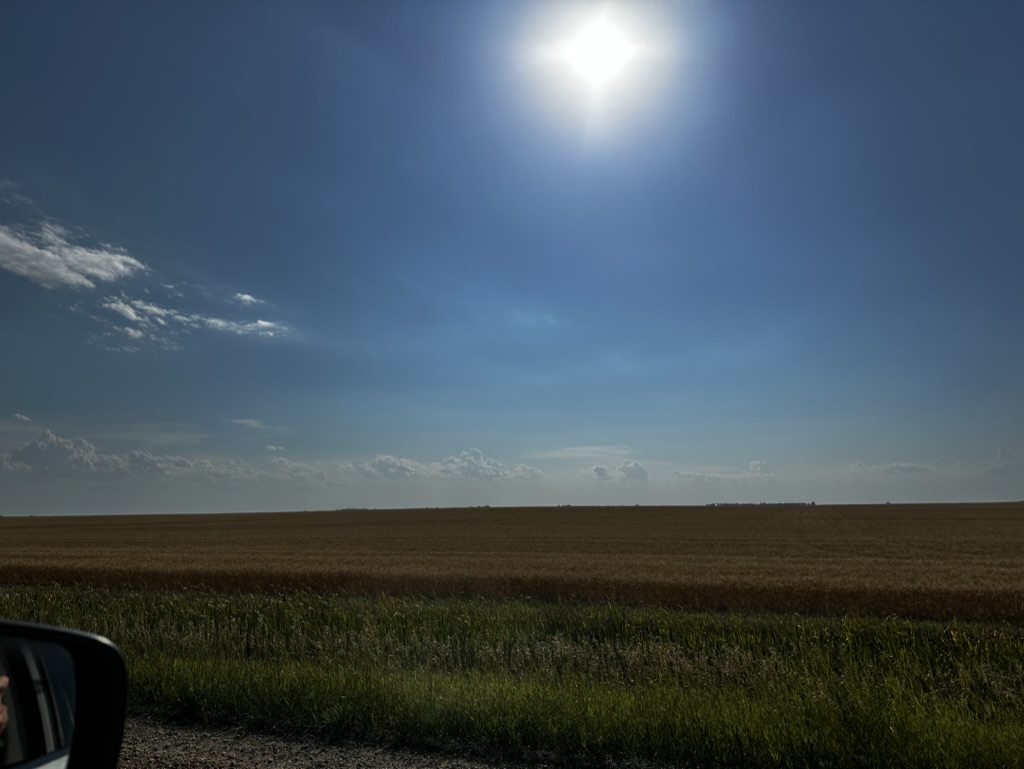
The predominant feature of the Pimbina valley is that it is flat. Flat flat. The rivers in early August run weakly along a portion of ominously wide river beds: the entire valley is one massive flood plain in the spring time. Fields of rye, wheat and canola flew by.
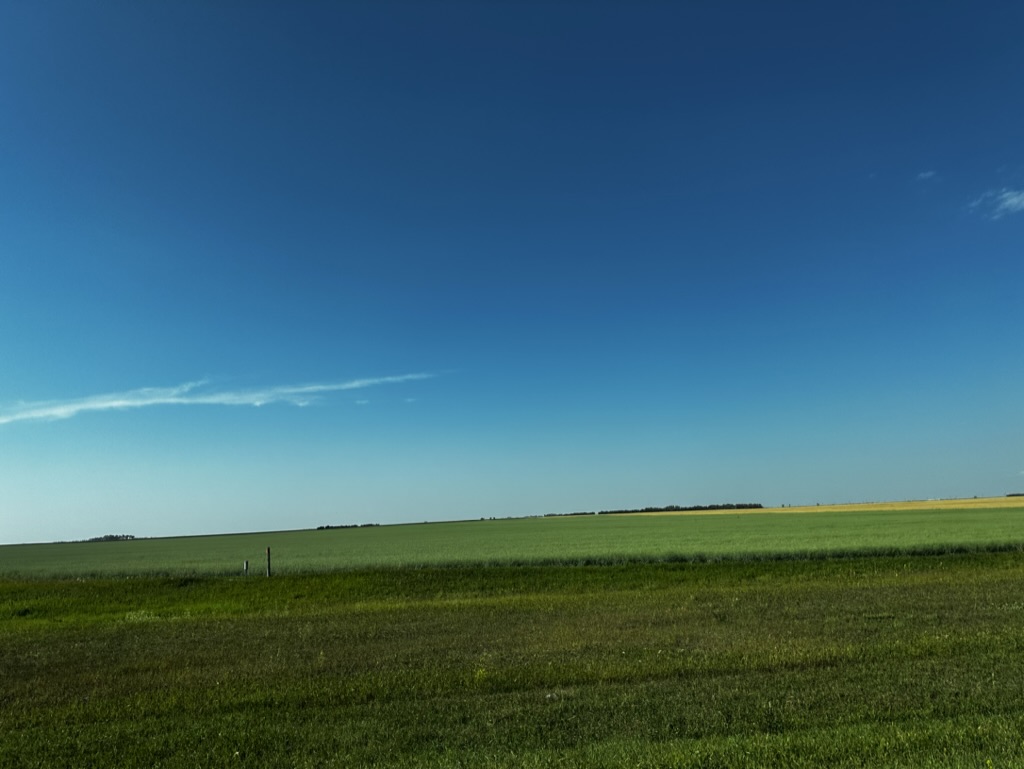
After an overnight in Winkler (not much of a night life there, although “Ralph’s German Restaurant and Cafe” was surprisingly good!) we headed north-west, slowly rising out of the valley and into Western Manitoba, home of elevated wooded “benches” left behind by Agassiz, and increasingly open prairie. Fields of sunflowers popped up on occasion: they were in peak condition!
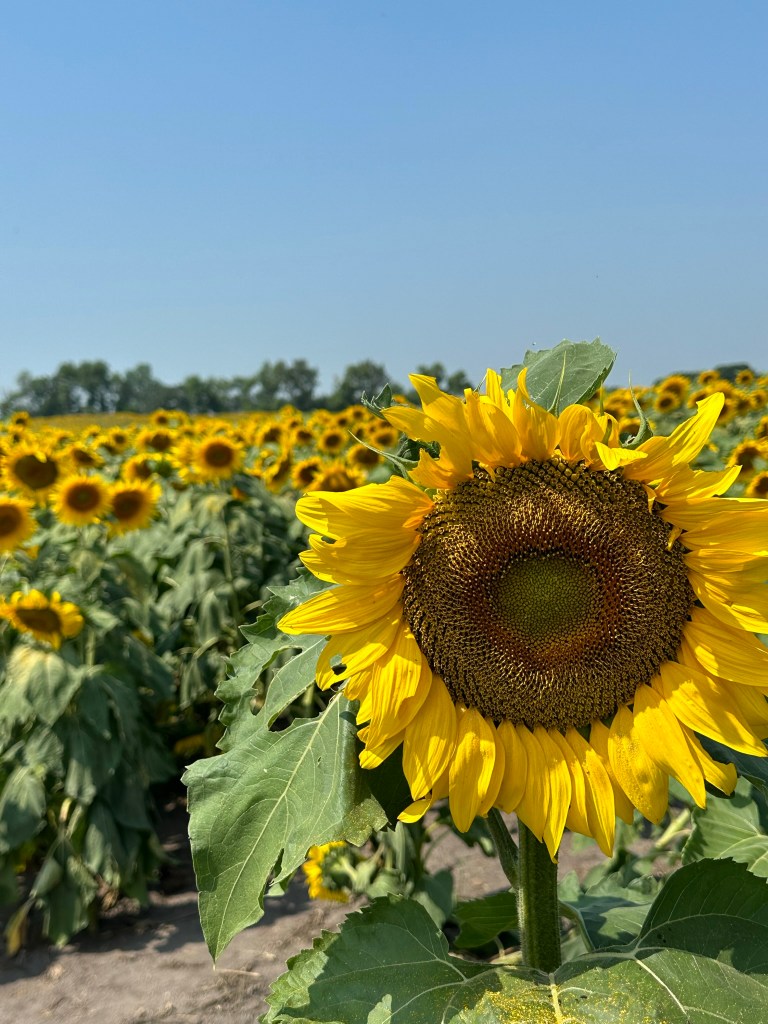
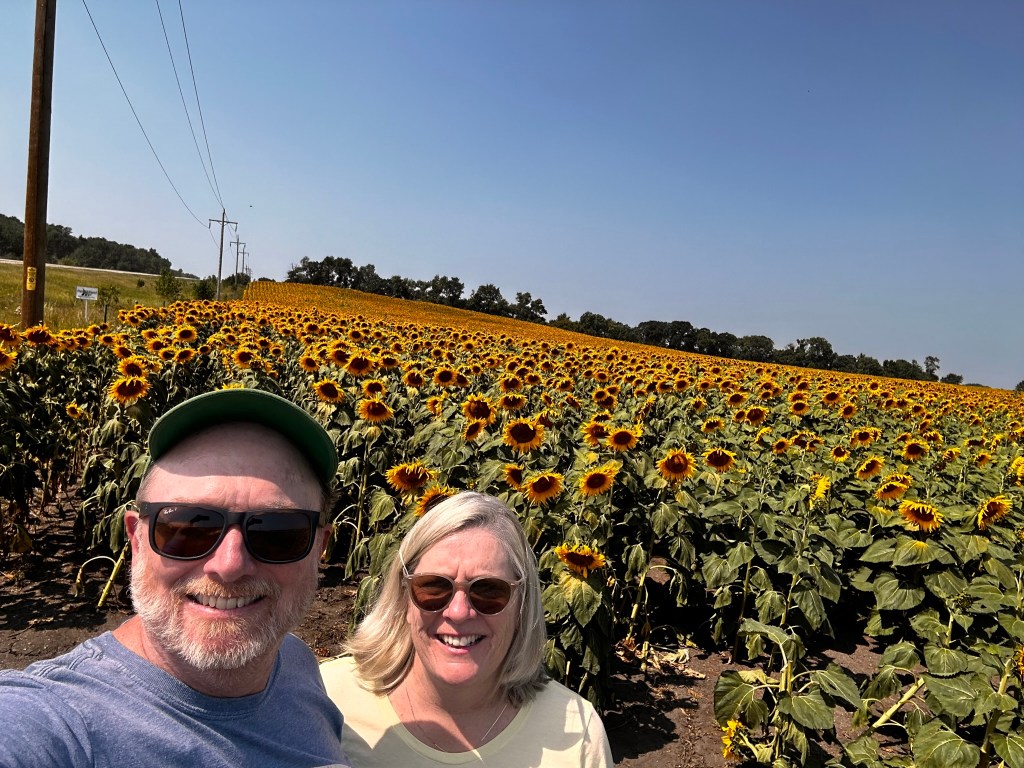
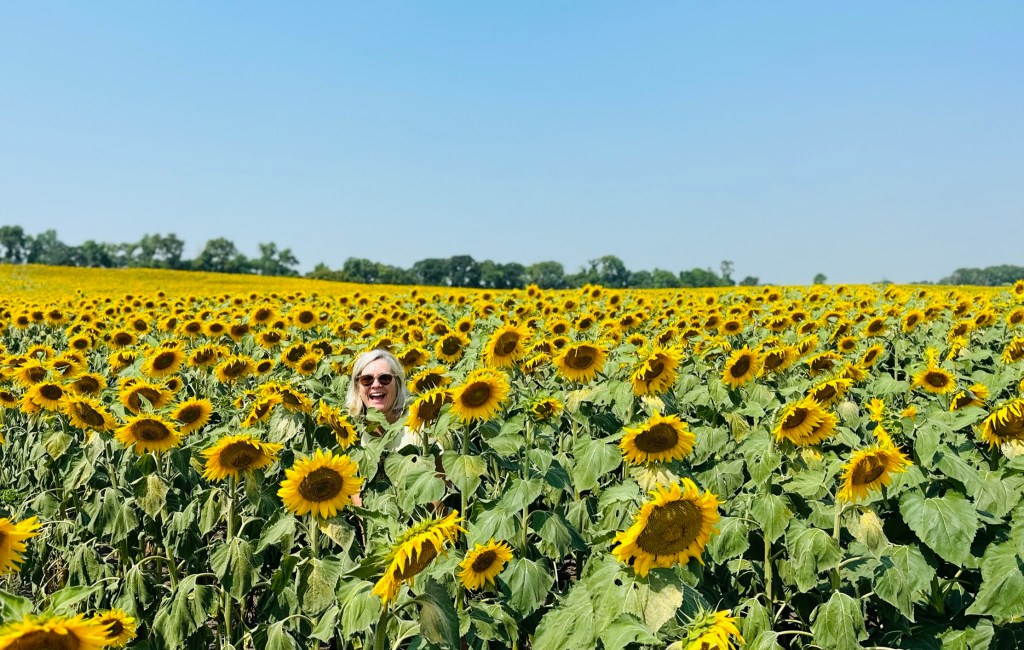
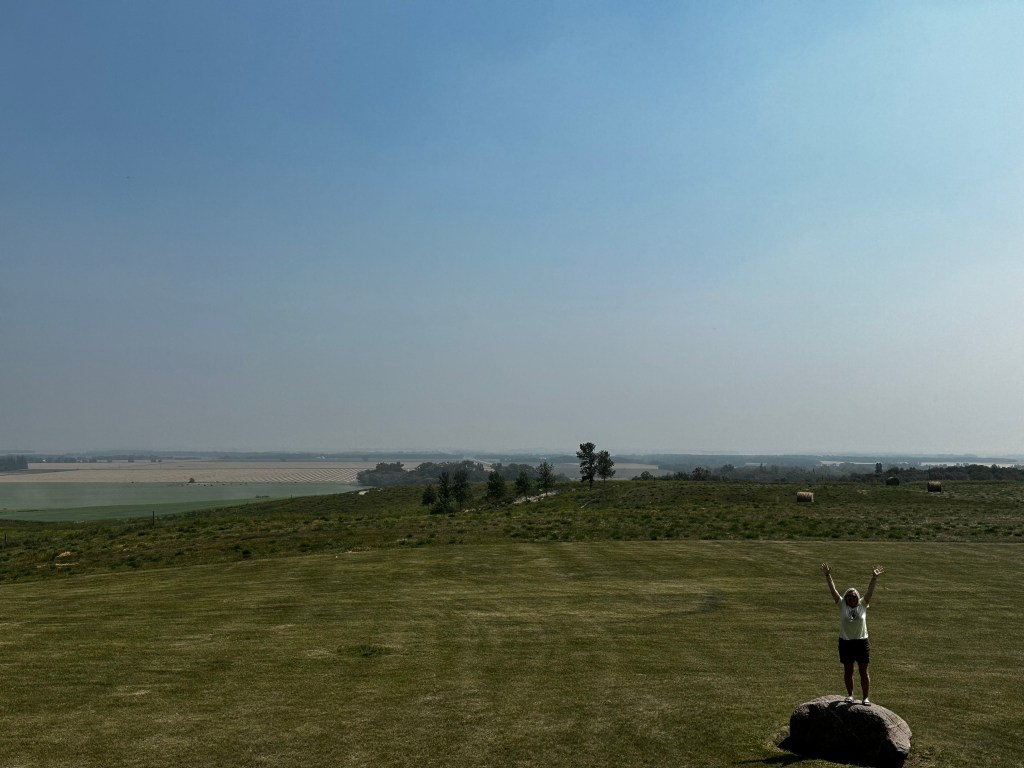
At one point we pulled over to a lookout on one of these benches back over the valley. The local township had installed a viewing platform in the shape of a lighthouse to memorialize glacial Lake Agassiz, a gesture which seems either strangely anachronistic (was there a need for lighthouses 10,000 years ago in Manitoba?) or fearfully prescient.
Spruce Woods Provincial Park hugs the shore of the Assiniboine River, and features the Spirit Sands, a massive series of dunes in the midst of the park that are the largest in Manitoba. They are ecologically unique as a habitat for the hognose snake and prairie skink, and have cultural and spiritual significance for the Assiniboine and Anishinaabe who have historical, traditional and contemporary connections to this land.
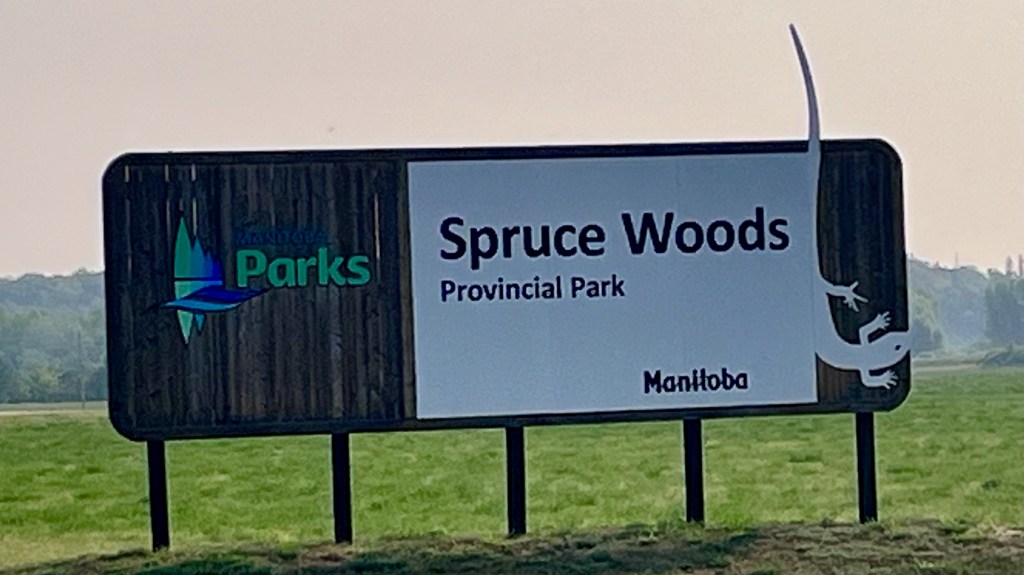
As we pulled into Spruce Woods we couldn’t help notice the prominent branding provided by the image of the prairie skink, a reptile listed as endangered due the small range of its habitat. Apparently the local skink population was healthy! This impression was confirmed by the friendly park warden as I checked into the park, who advised us to tackle the Spirit Sands hike in the early morning or evening to best avoid the heat and have the best chance of seeing skinks (emphasis on the plural) in action!
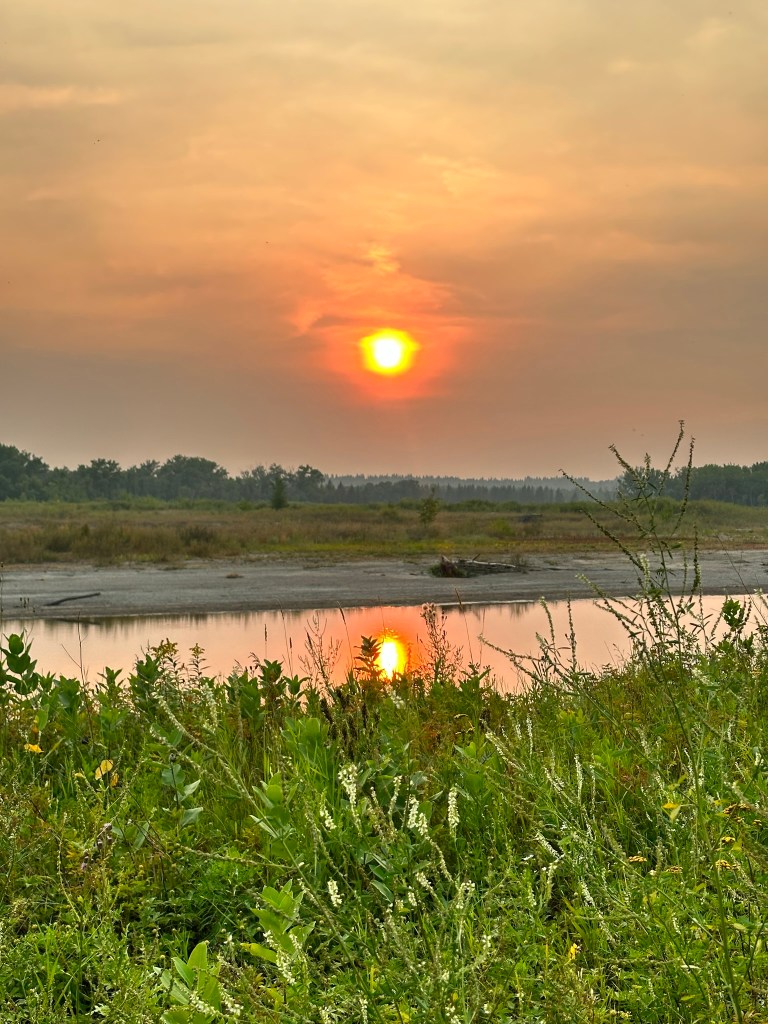
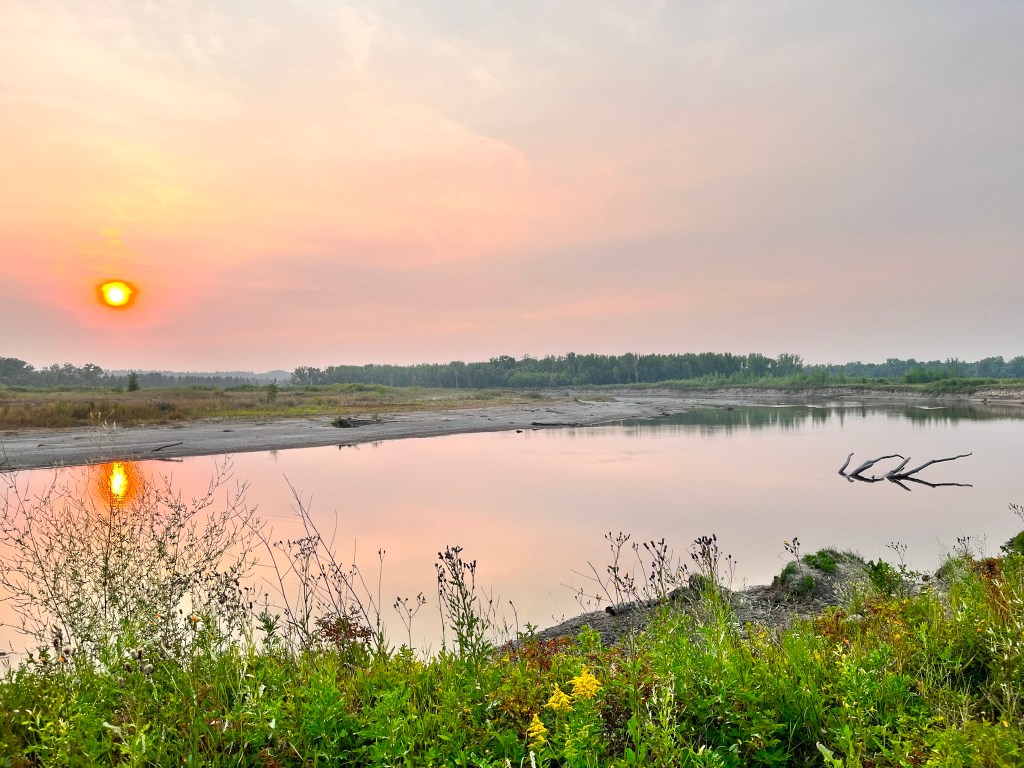
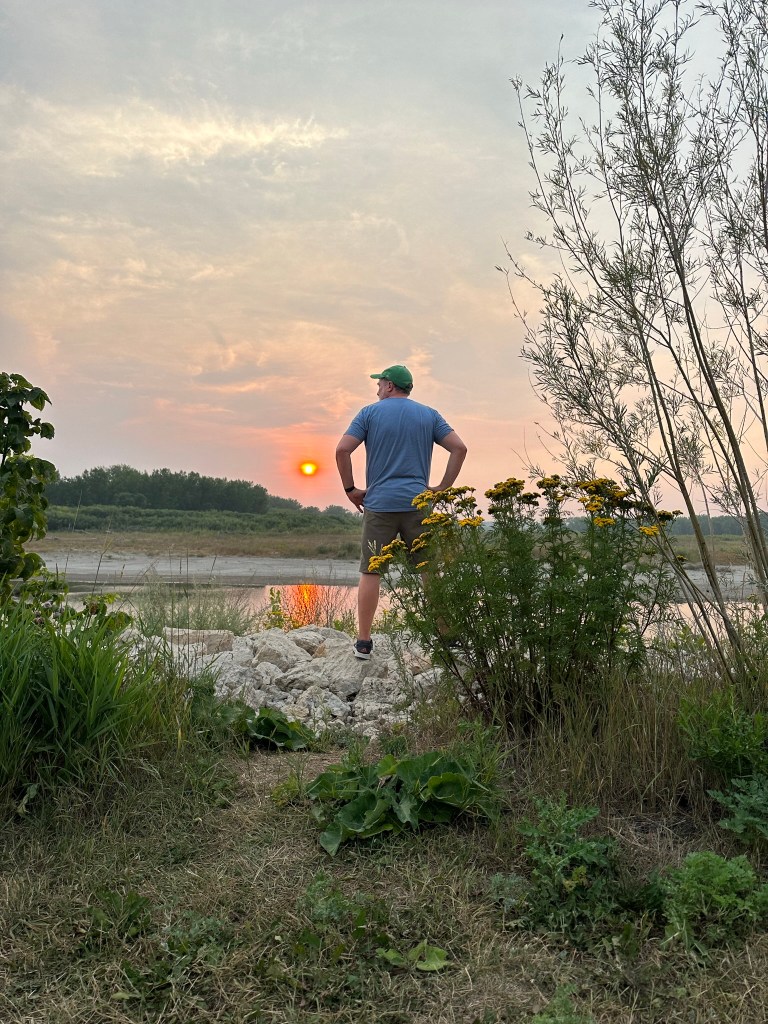
We took that afternoon and evening to explore the area around our campsite and take in sunset on the shores of the Assiniboine River.
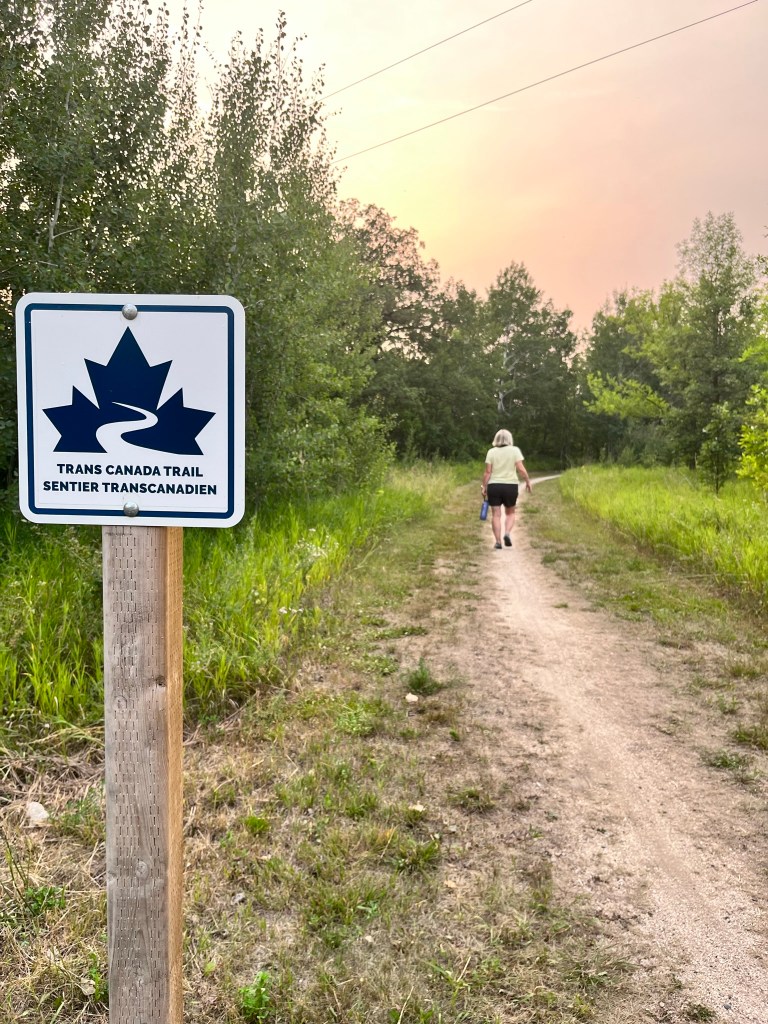
The next morning we woke up ready to hike! I will digress and say that Robin had developed a small blister on one heel in Quetico having decided to wear one of the two new pairs of hiking boots she had brought on the trip instead of the third pair (which were also in the car, and which were broken in), on an multi-hour trek through the bush. The back of our Subaru had taken on the appearance of the footwear section at Sporting Life.
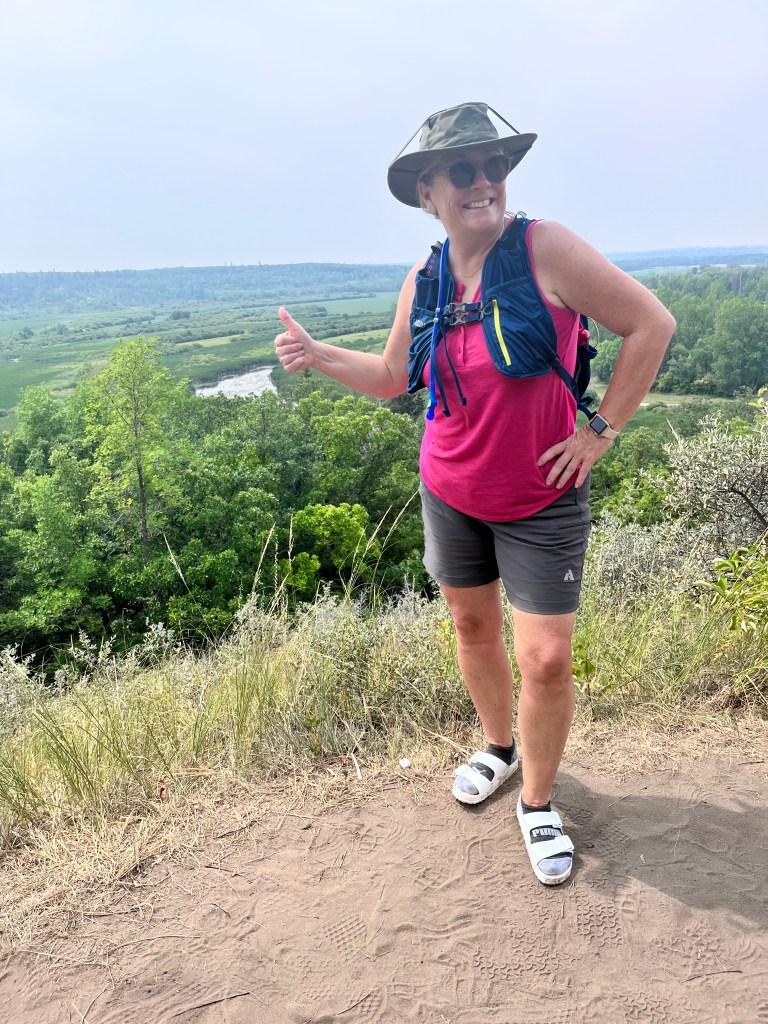
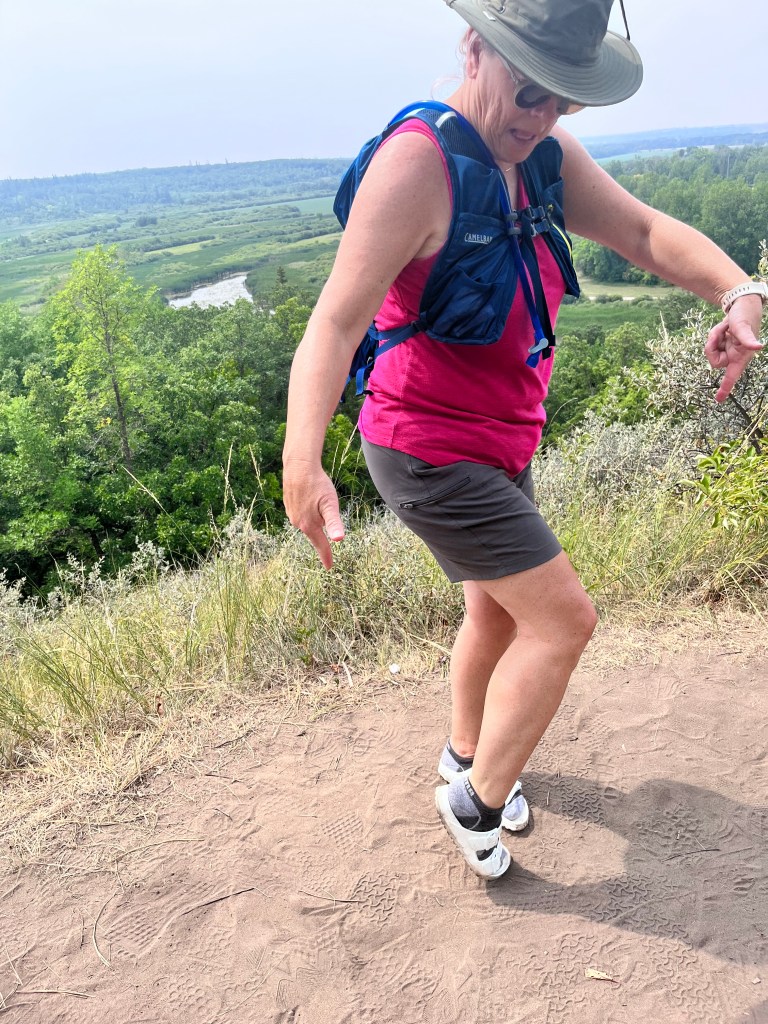
Taking the blister into account, we decided on the short “Interpretive Hike” for the morning, followed by an evening hike in the Spirit Sands in search of skinks. Robin decided to wear her white plastic Birkenstocks in lieu of hiking boots for the morning hike! Good for the blister, but not great for her “woodsy” credibility.
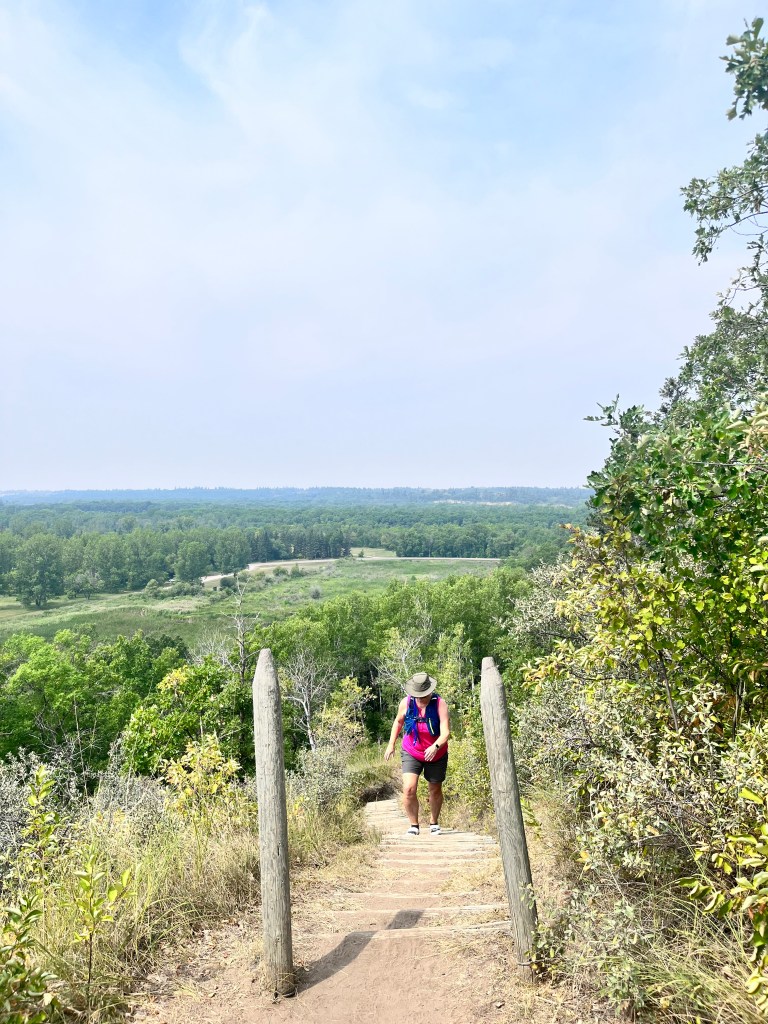
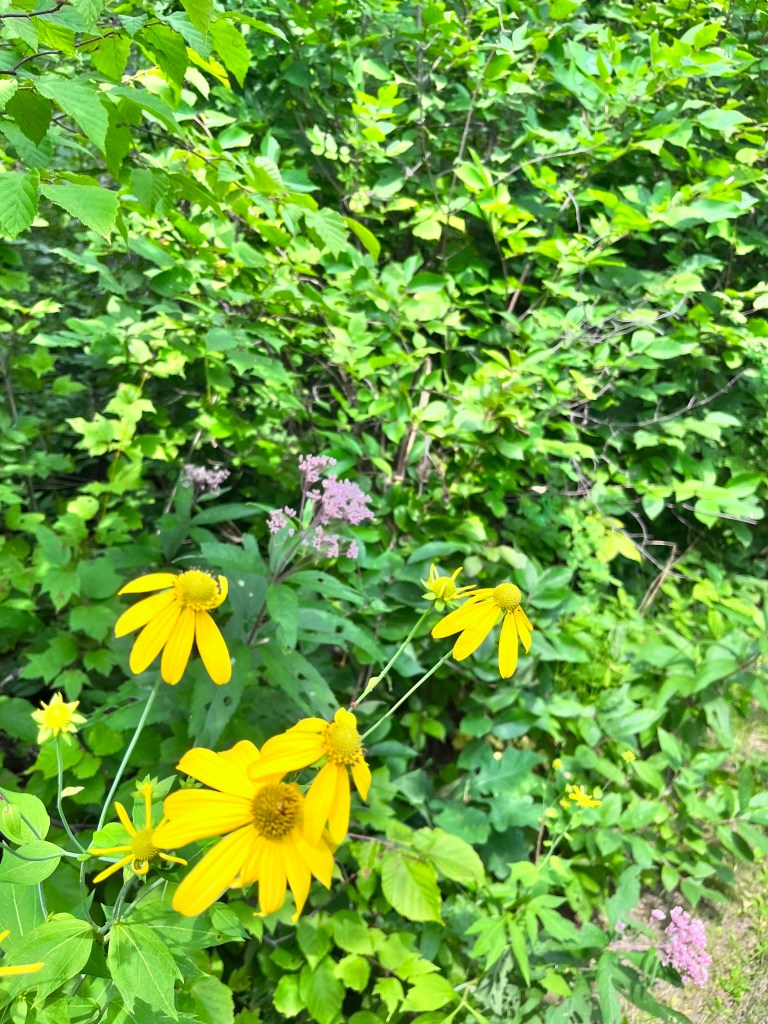
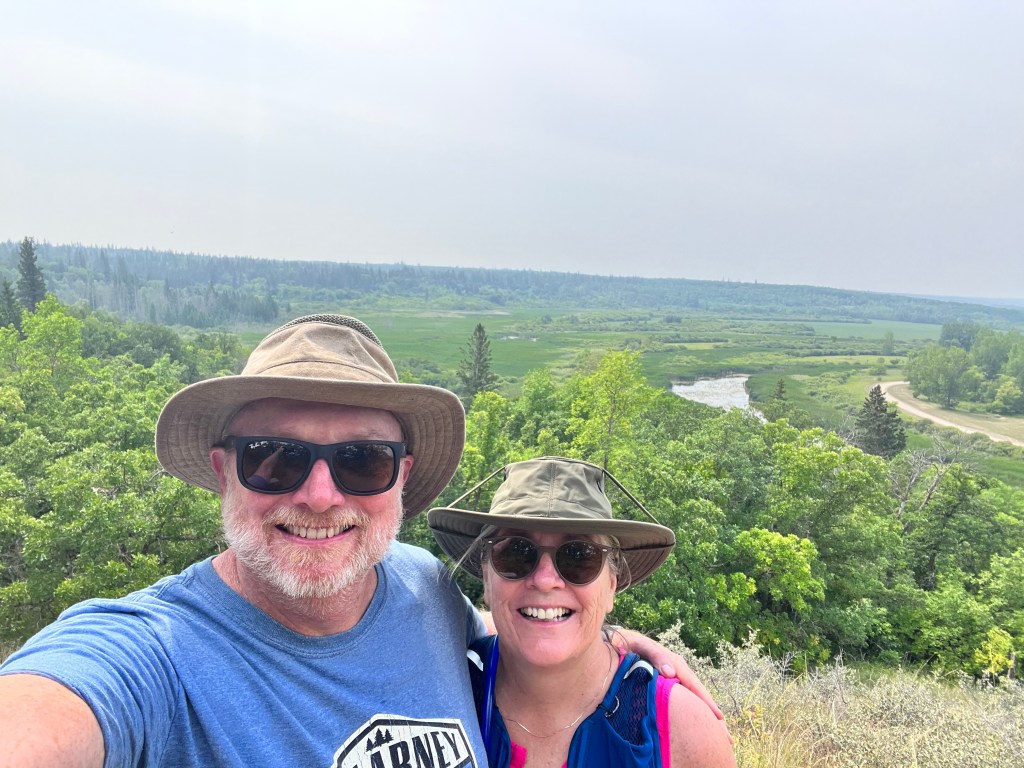
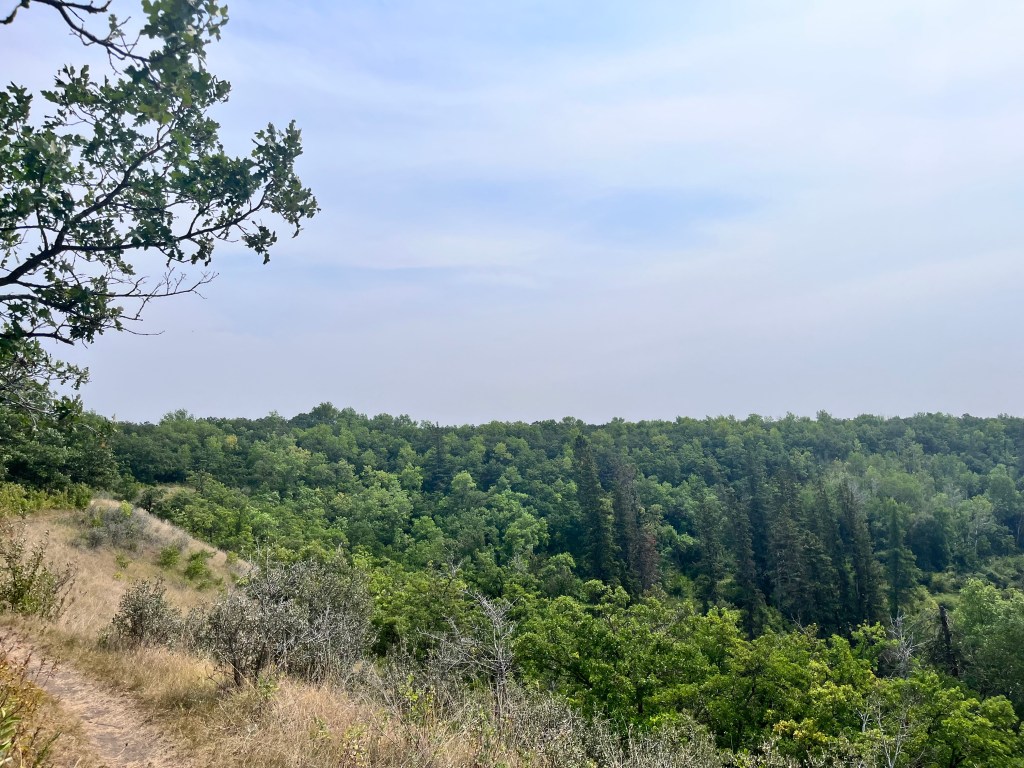
After taking a break from the heat for the bulk of the afternoon, we headed to the Spirit Sands for our evening hike. The temperature had cooled and a breeze had picked up. Robin had abandoned the “Birks” for running shoes, and we both grabbed our hiking poles knowing that there would be hilly stretches.
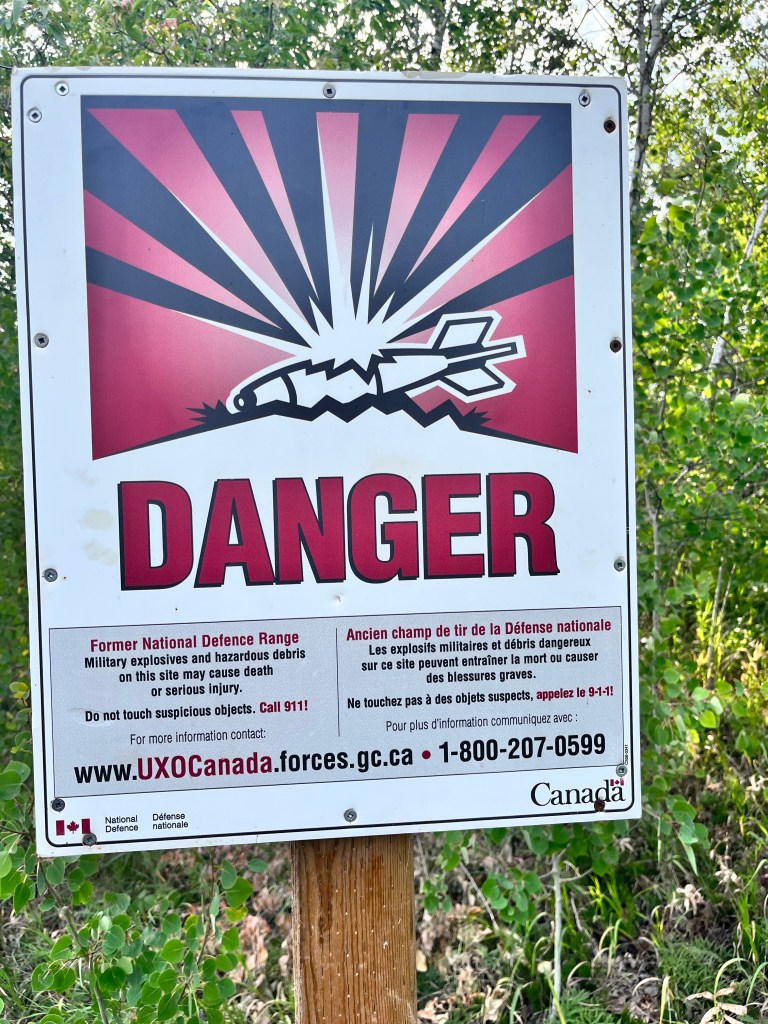
We were greeted by one of the more bizarre warning signs I’ve seen in a park setting: apparently this area was a former National Defence artillery range. This was effective motivation to stay on the marked trails!
The dunes were certainly magnificent: they were also an oven. The sands had been absorbing heat in the 30+ degree temperatures all day and this radiated back as we trudged along the trails, winding through areas where the vegetation was consuming the sandy terrain and climbing high into the dunes along deep, sandy paths. I felt like an out of shape (this was true) athlete (perhaps a stretch) being put through a particularly gruelling off-season workout by a sadistic personal trainer.
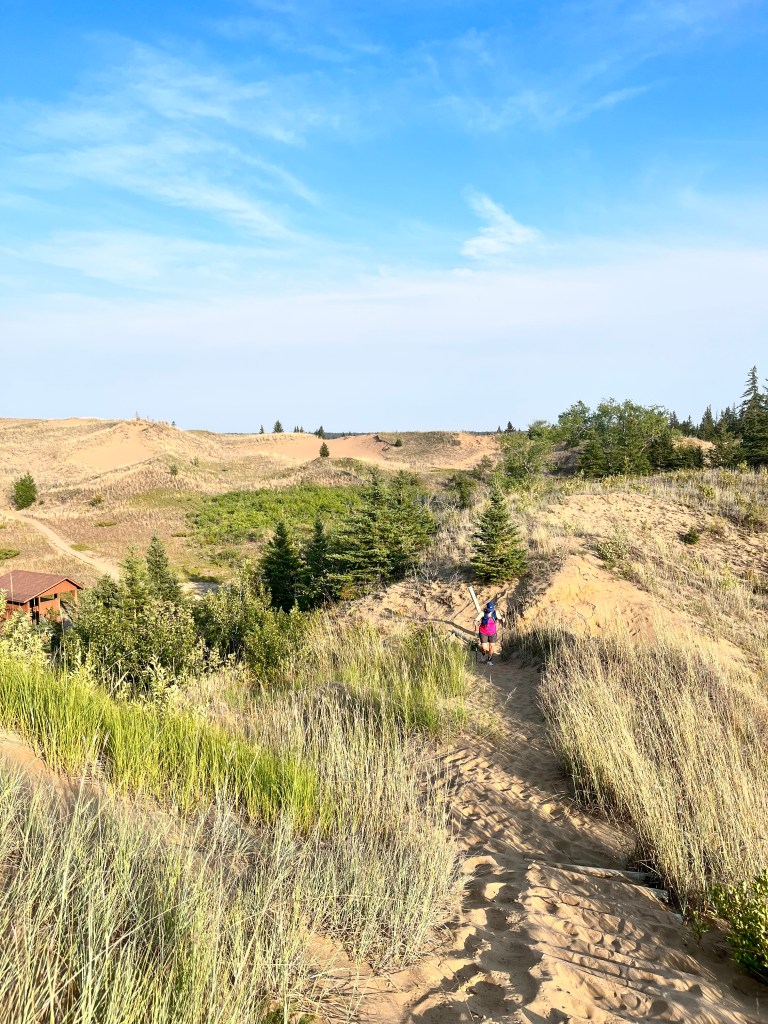
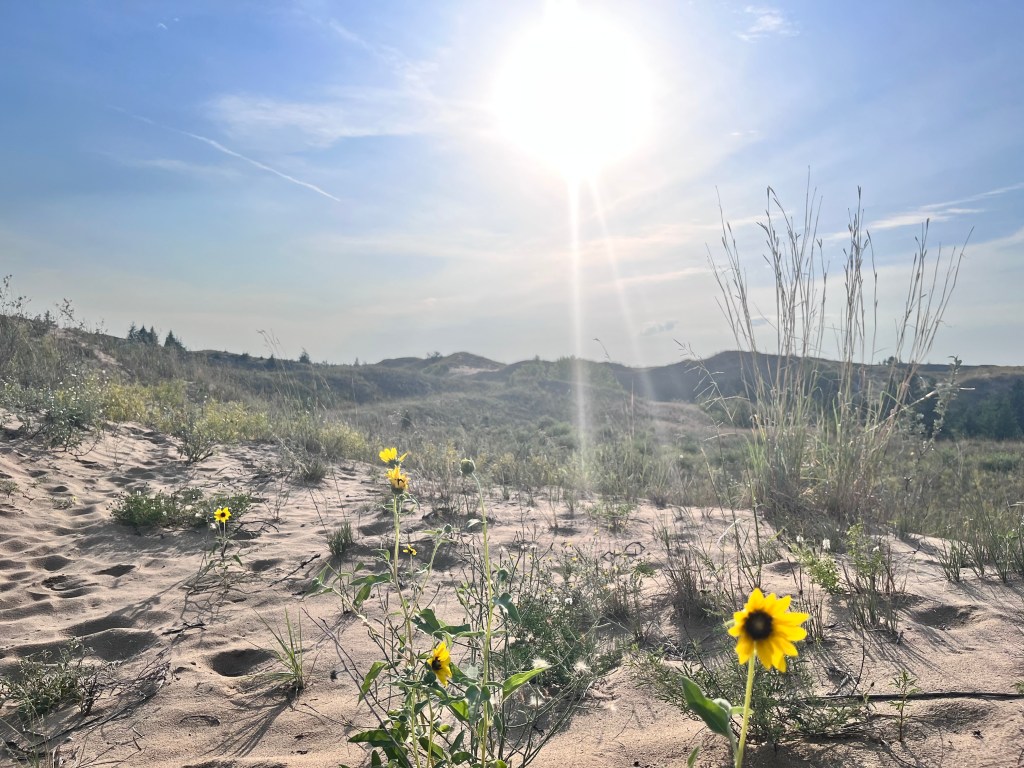
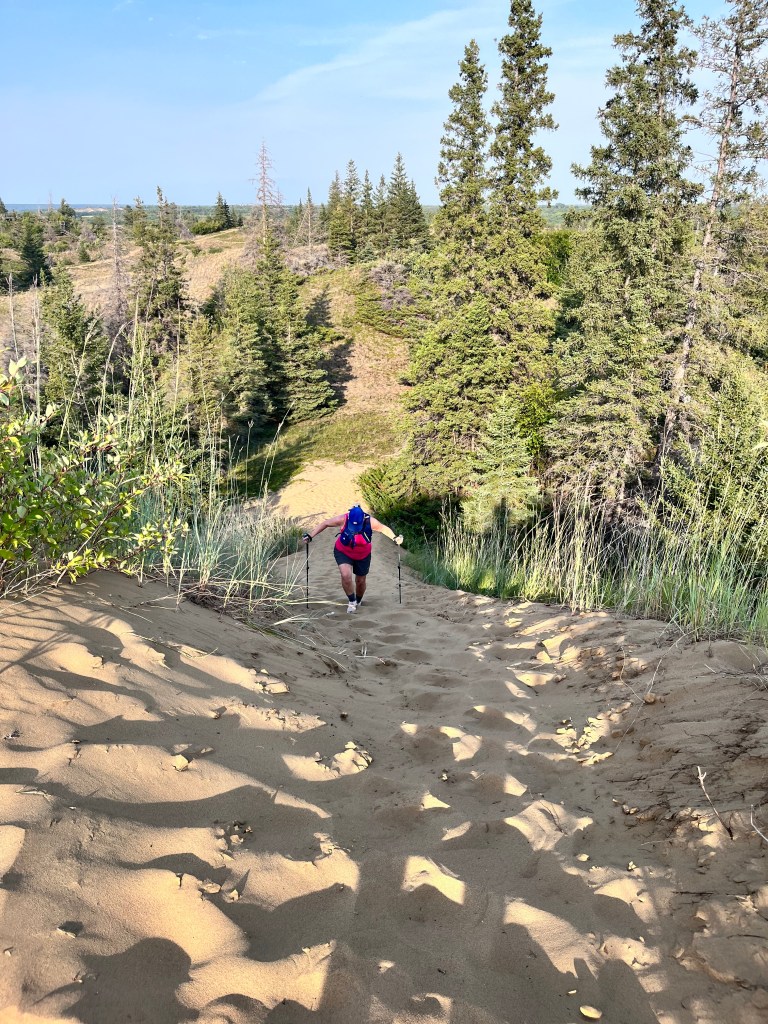
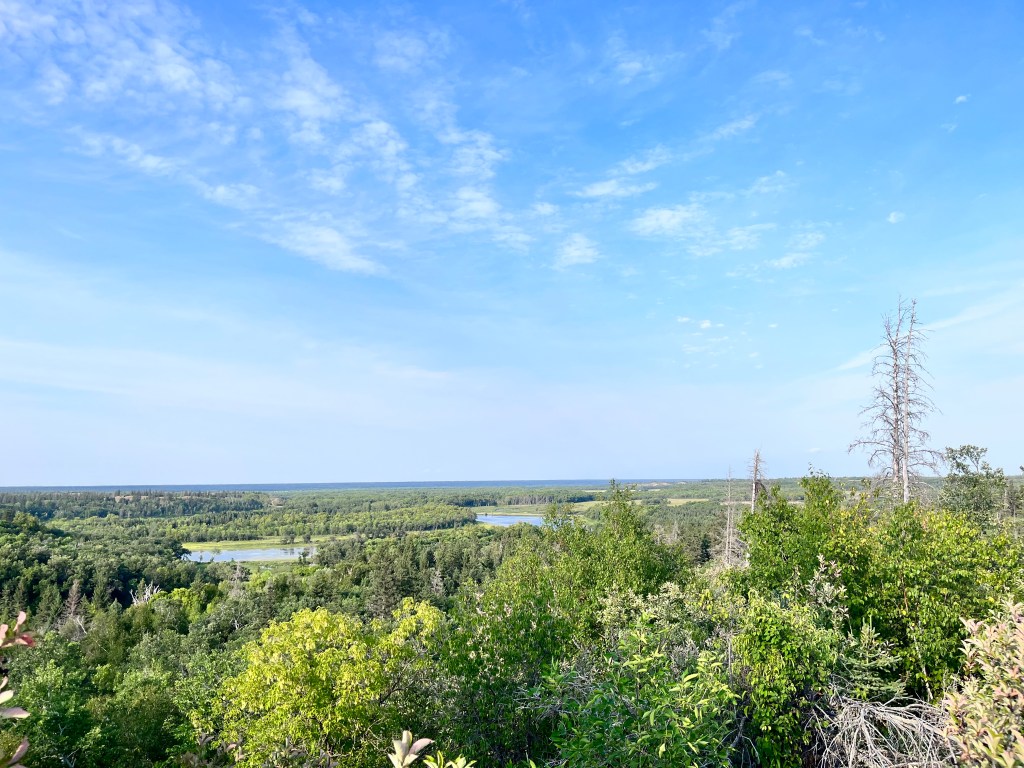
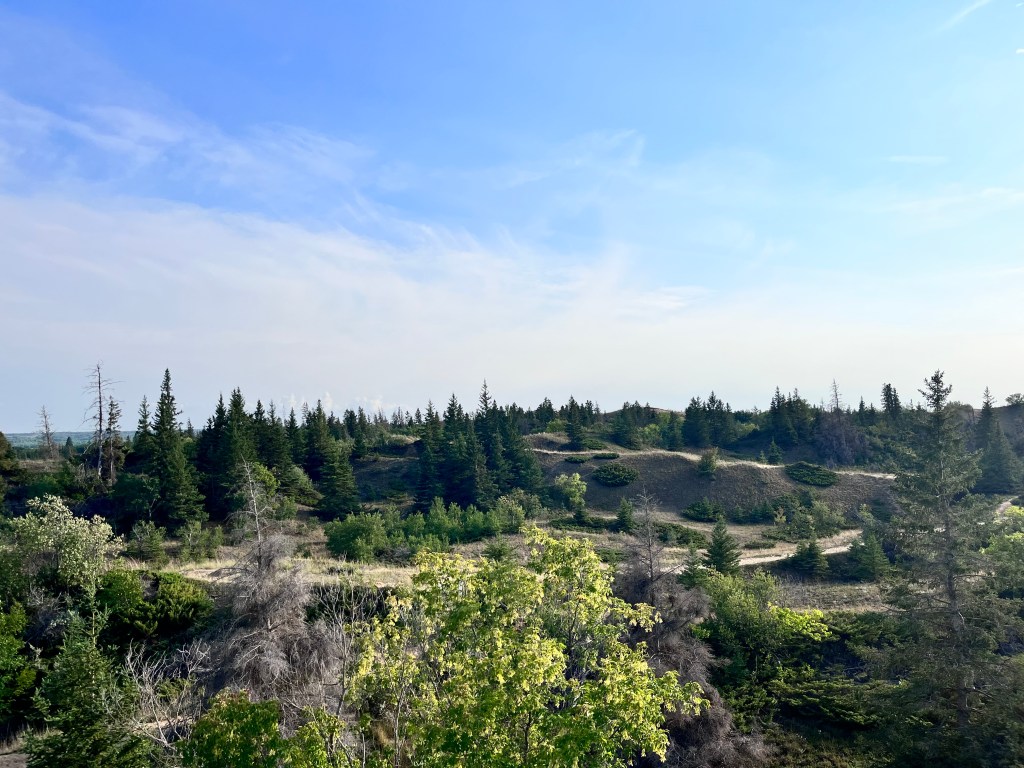
These “Spirit Sands” do have deep cultural and spiritual significance to Indigenous communities past and present. In fact the topography of the sands themselves is reminiscent of the Anishinaabe “medicine wheel”. There was some signage on the trail which made an attempt to provide a context for the “Aboriginal” significance of the park, but these fell far short of offering a full picture, and there was little transparent evidence of any collaboration or consultation with local First Nations communities. National and Provincial Parks have such enormous potential to be hubs for Reconciliation: we have a very long way to go.
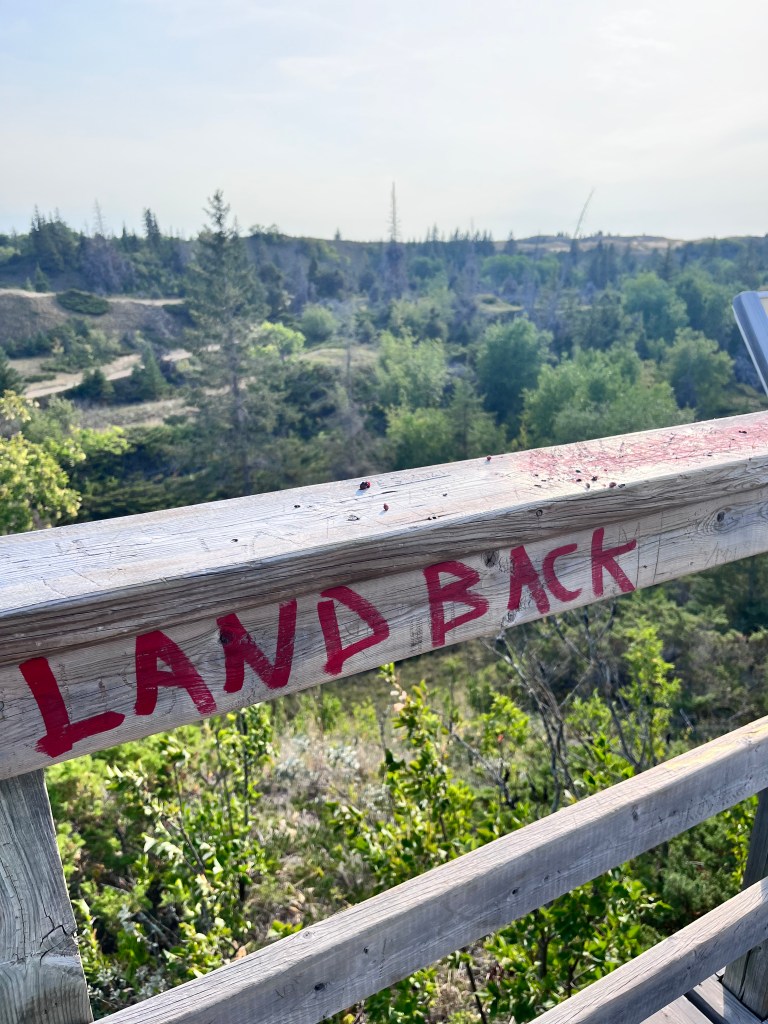
As we chugged our way back along the trails and back to our car we saw lots of skink information, but no actual skinks. For two hours and six and a half kilometres we had kept our eyes peeled to no avail. The skinks obviously had more sense than we did.
As we left Spruce Woods Provincial Park the next day, on our way west towards the Saskatchewan border, we drove through the nearby town of Glenboro. Spotting what appeared to be a giant camel statue on the roadside, I pulled over. As the impressive plaque which accompanied the camel explained, this was an attempt by the good citizens of Glenboro in the late 70’s to capitalize on the “desert” vibe of the Spirit Sands and lure impressionable tourists to their community. The story of why the camel was named “Sara” remains a mystery.
There is no indication that there was ever an actual camel in Glenboro. Presumably, the committee that was struck to decide on a symbol were determined to shift the Spruce Woods brand away from the elusive and undependable prairie skink.


 MacsTravel Blog
Leave a reply to Kim Nelson Cancel reply