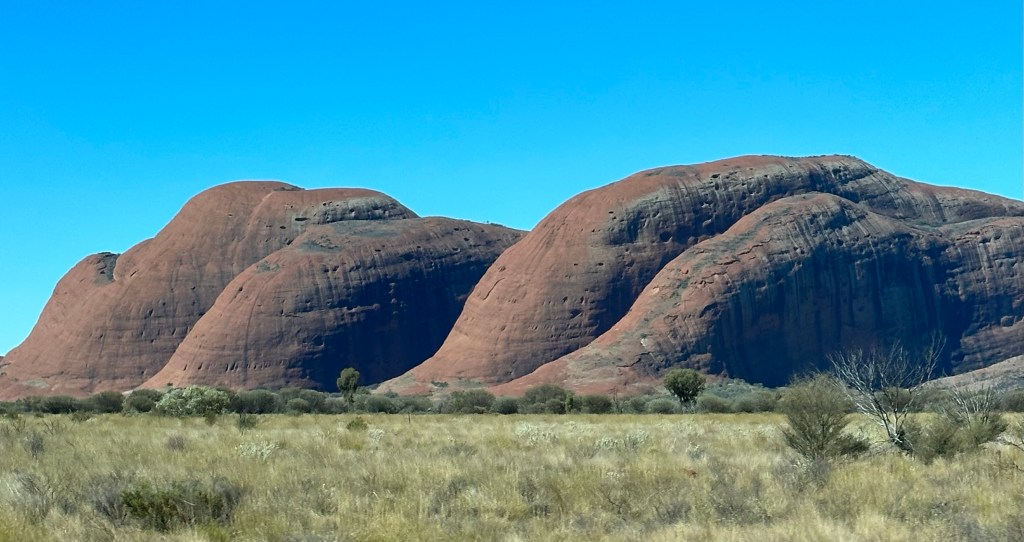
Like its counterpart Ularu, the Kata Tjuṯa domes are both culturally significant and physically impressive.
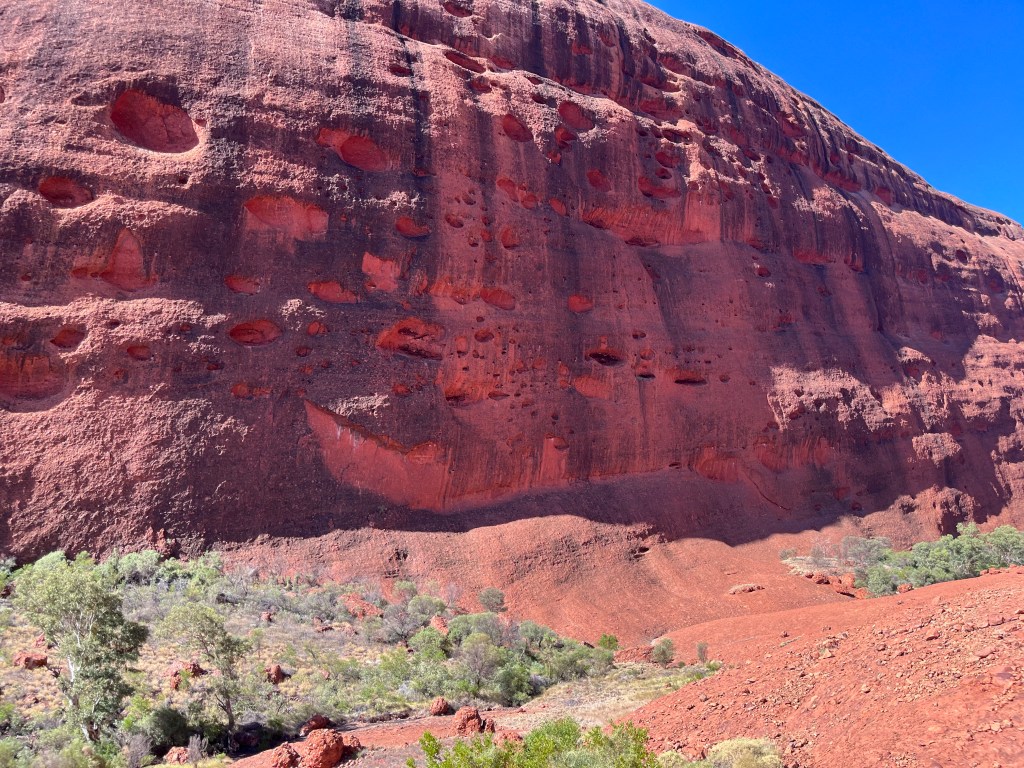
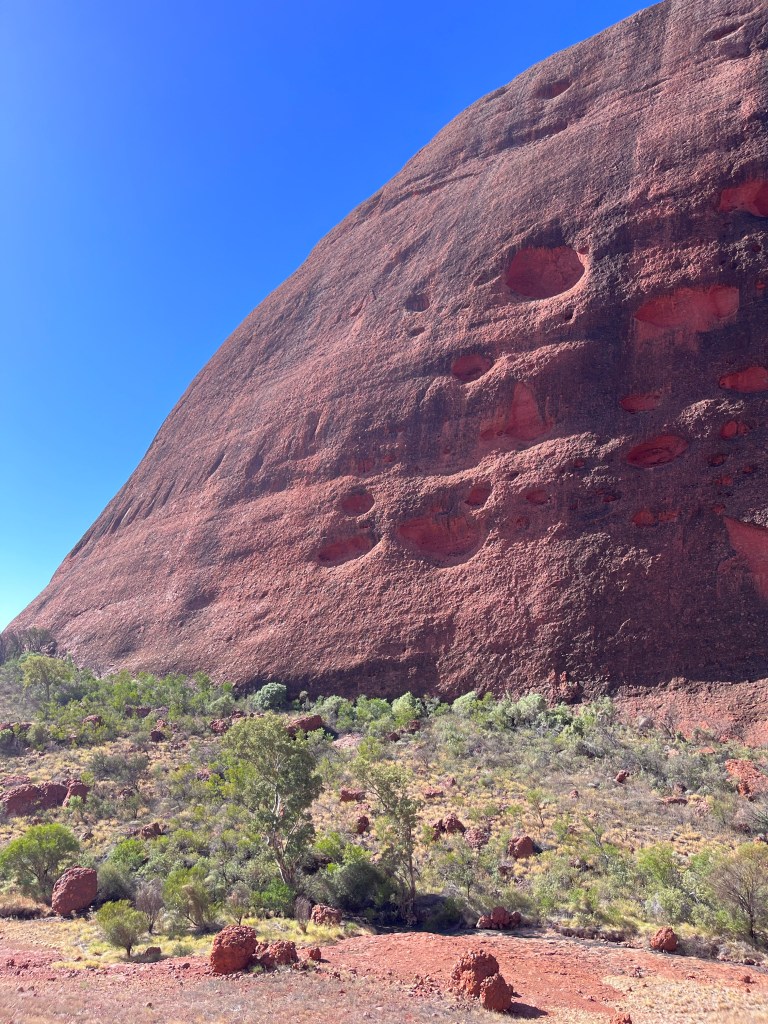
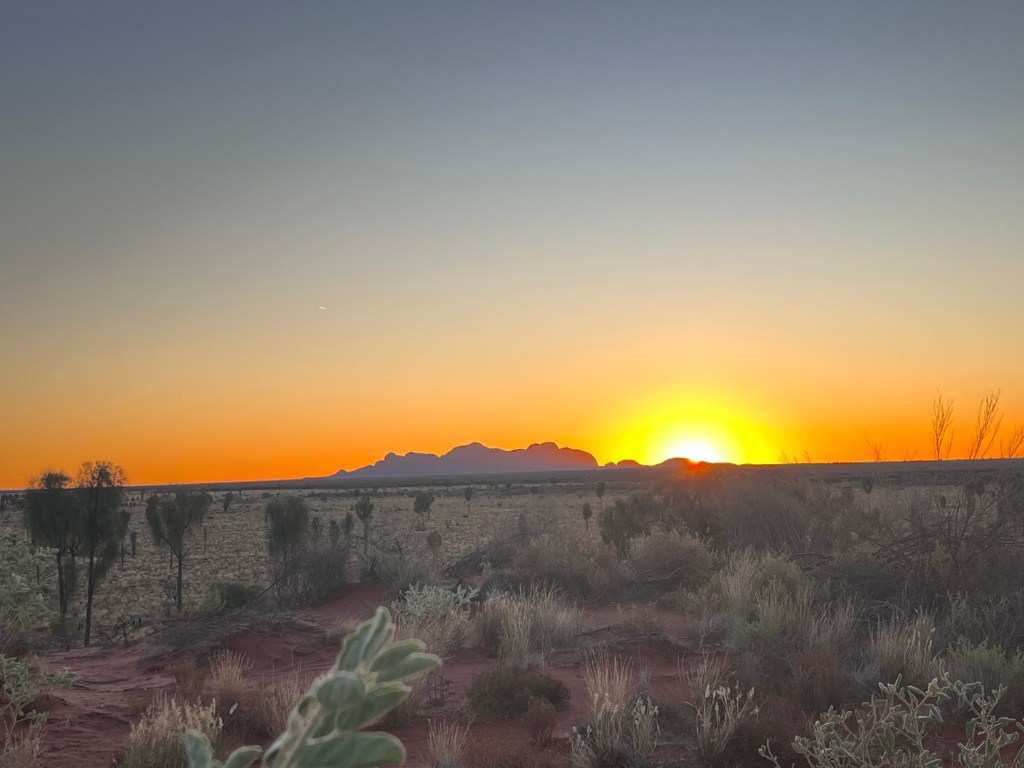
In the late 1800s these domes were named the Olgas after a German benefactor who sponsored colonial exploration in this area, which is a ridiculous name when you learn a little about the reclaimed name Kata Tjuta. Kata (heads) and Tjuta (many) literally means many heads. Look at it! Do you see any Olgas?
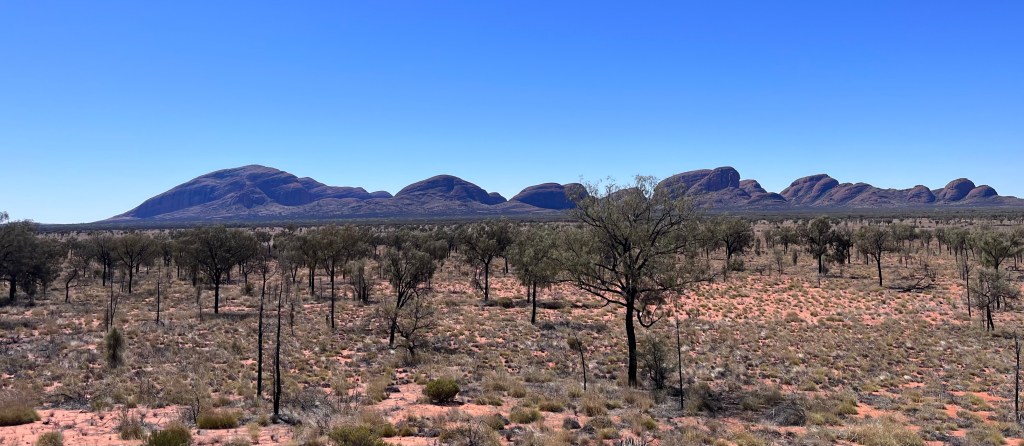
Located at Walpa (wind) Gorge, the 36 conglomerate domes that make up this space represent a sacred location for Anangu men. In fact the cultural sensitivity is such that local guides do not share details- it is not their story to tell. This certainly speaks to a spirit of reconciliation that is at work in this particular place.
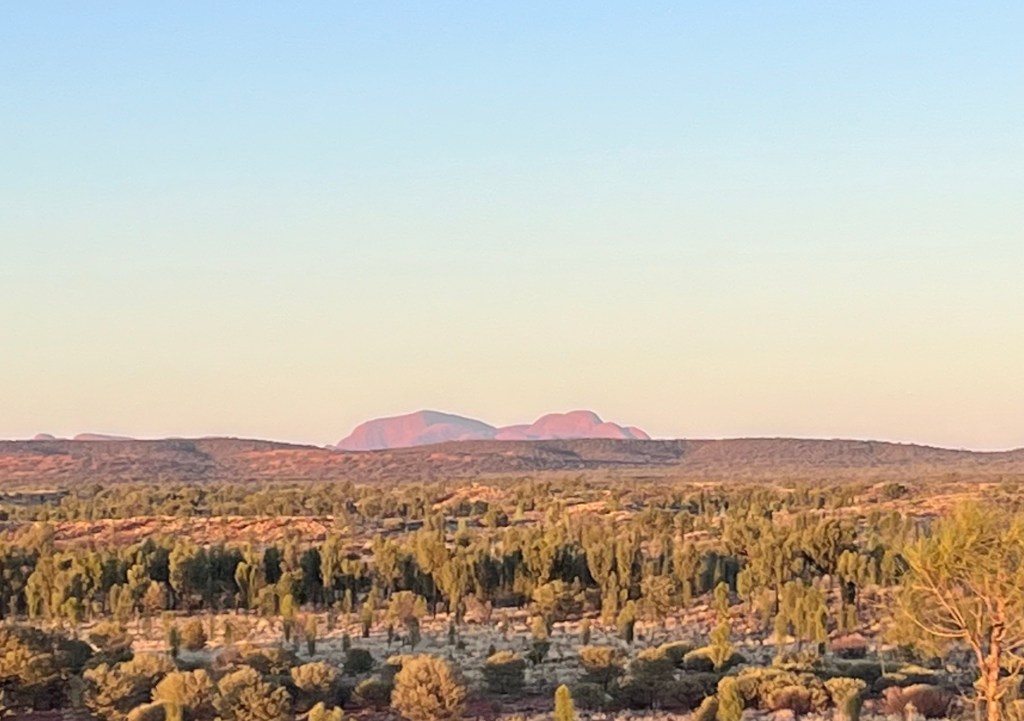
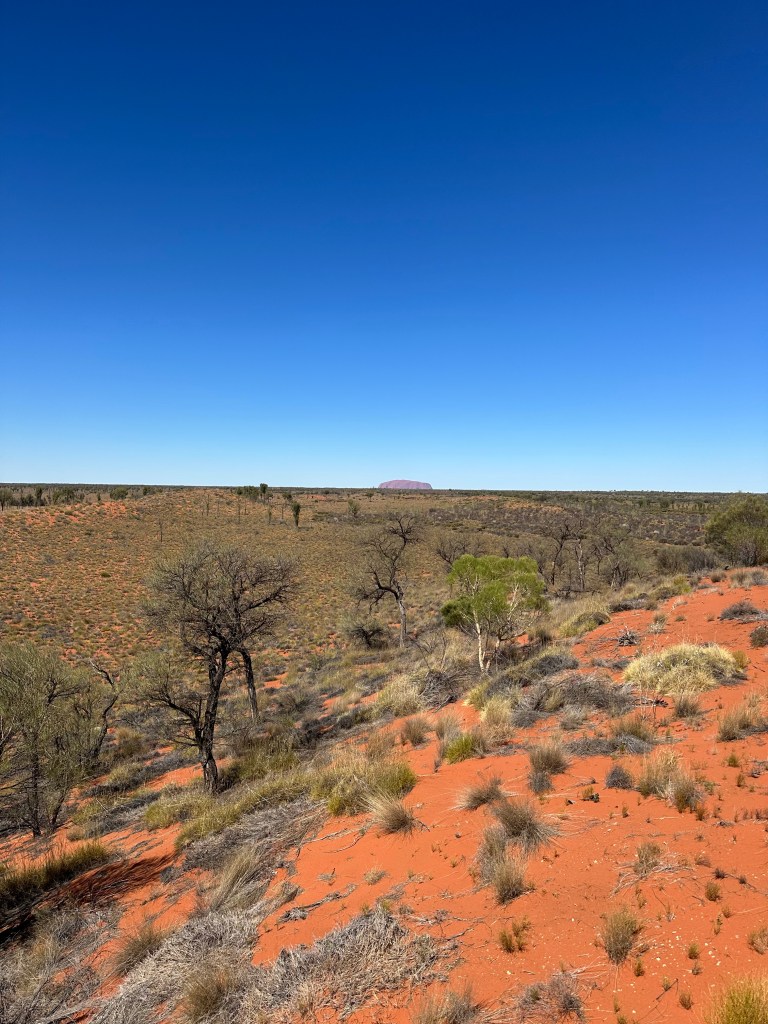
Kata Tjuṯa is massive. Like Uluru it is the product of seismic tectonic shifts as the continents shifted and moved over hundreds of millions of years. The conglomerate rock that makes up the domes is of harder stuff than the sandstone at Uluru. In terms of scale, Kata Tjuṯa has a circumference of 44km, over four times that of Uluru, and it’s highest point is 550 meters, significantly higher than Uluru. The two landmarks are separated by 75km, a distance that appears much shorter in the flat semi arid desert that is the Outback.
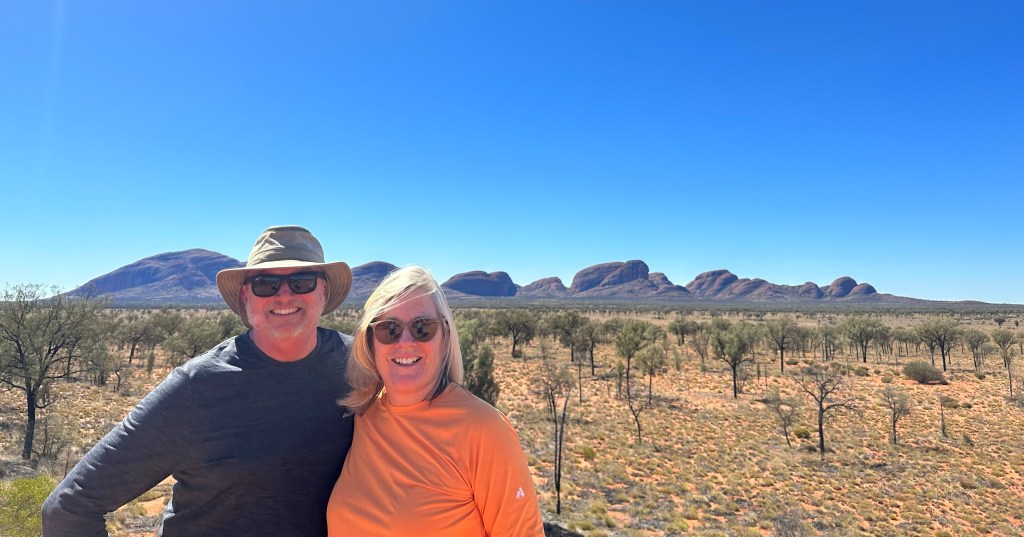
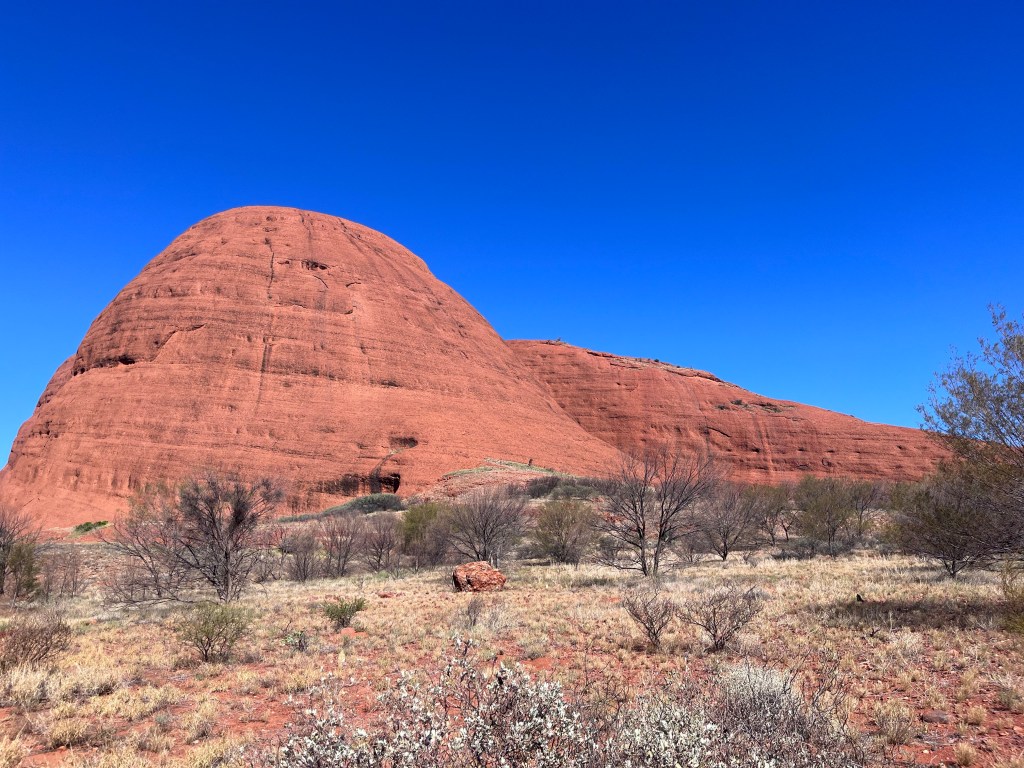
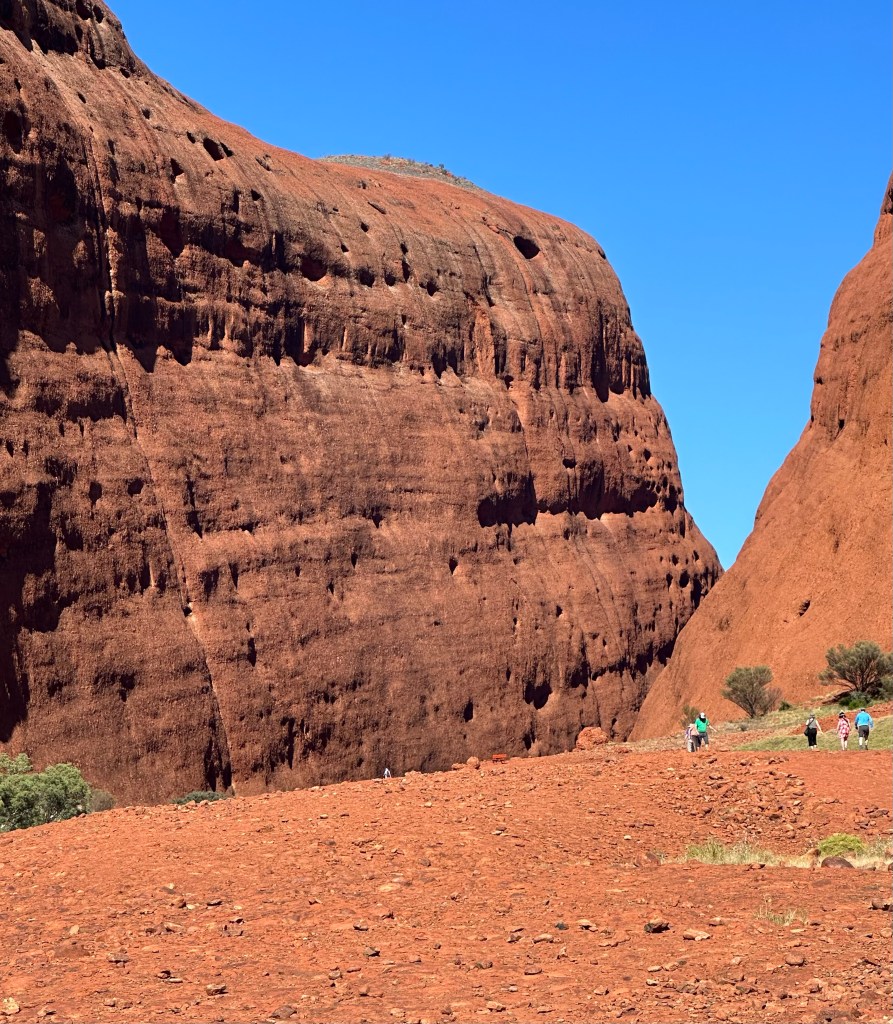
We visited late afternoon as the temperature was reaching 38 degrees. With the heat radiating from the rocks we were easily into the 40s. It was hot. Hot hot. We only explored the area for about 45 minutes and went through almost two litres of water between us.
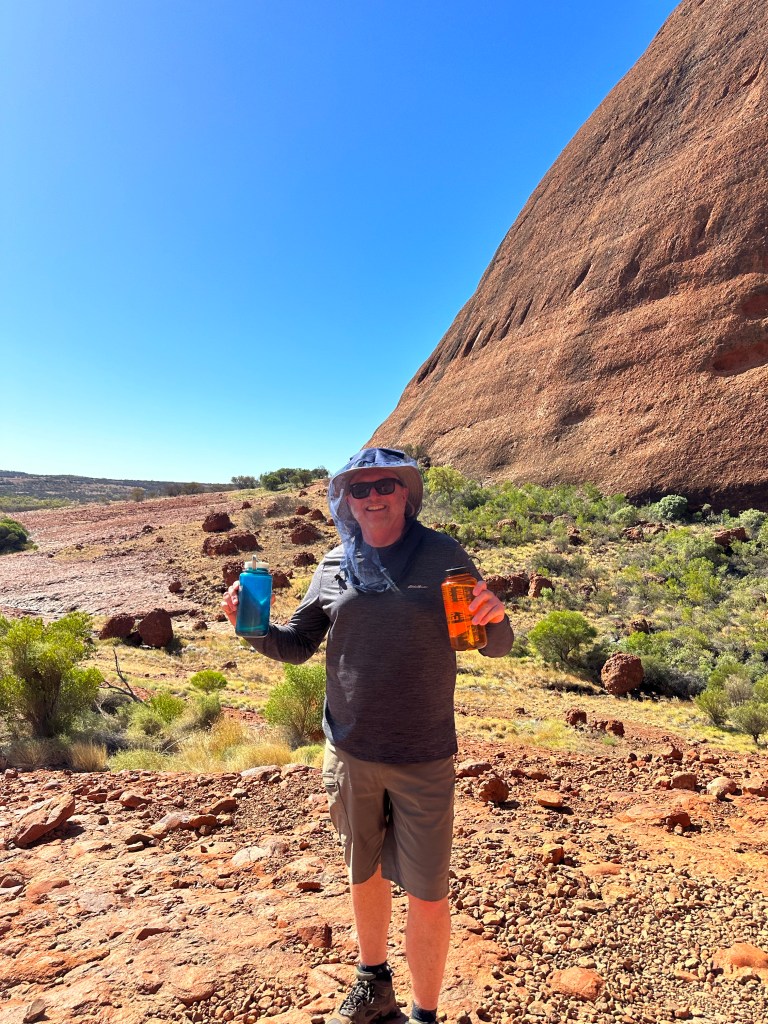
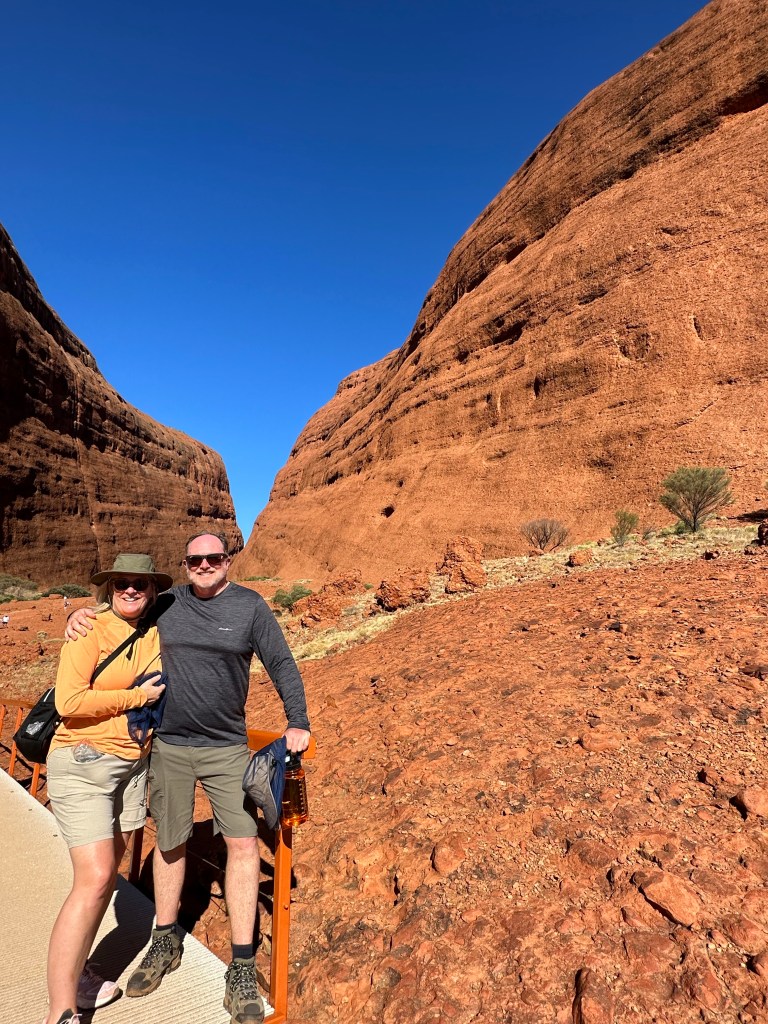

The flies were pretty ferocious as well. If we ever come back we will do this hike in the early morning!


 MacsTravel Blog
Leave a reply to Truus Cancel reply