
One of our great hopes for our visit to Heron was that we would have the opportunity to see the nesting green turtles. We had read that we were nearing the end of nesting season but held out some hope that we might get lucky. Boy did we get lucky.
Upon our arrival at the island we were given a stern talk about the need to give turtles space and to limit our lights at night. Bright lights can attract the hatchlings away from the ocean and can also repel female turtles from coming up on shore to lay their eggs.
Later that first evening we decided to attend a talk by one of the naturalists at the resort entitled The Top Ten Deadly Creatures at Heron Island. The talk included the usual suspects (sharks), but also lion fish jellies, worms and cone shells. Each creature promised intense pain and sometimes death! Sarah and Ian sat patiently through the talk, their minds elsewhere: this was old news for them. Lisa and Robin sat jaws agape, obviously feeling apprehension and perhaps even regret about the next 72 hours. The enthusiastic naturalist, sensing she was reaching her audience, finished the talk with the helpful adage that you were never more than 10 meters from something that could kill you in Australia.
After a late dinner we resolved to go for a short walk. We had missed the start of the guided turtle walk but thought we might get lucky and spot something. Keeping in mind the horrors of the information session and the warnings about disturbing nesting turtles or crushing hatchlings we crept tentatively along the beach.
Sarah spotted tracks almost immediately- they look like someone has ridden a snowmobile out of the ocean up into the dunes and then back again. The tracks were huge and you could see the imprint of the flippers in the sand pushing a 200kg turtle up into the dunes. It was dark, so there were stars but the moon was new so there was very little light. Lisa and Pete, fatigued by jet lag and worrying about crushing hoards of hatchlings beat a retreat to their accommodations.
The remaining four of us crept along and before too long we spotted a light up on the dunes which illuminated a small cluster of people. This was the tail end of an evening turtle walk and the group were gathered around one of the research center volunteers perched beside a turtle who seemed intent on spraying sand everywhere in the vicinity.
The tour group moved on but we stuck around and introduced ourselves to Katrina, a generous and knowledgeable guide who led us for the next 2 hours up and down the beach as she investigated turtles in various stages of the nesting process. It was incredible.
As we neared the top end of the island she asked us if we had seen the “turtle cage”
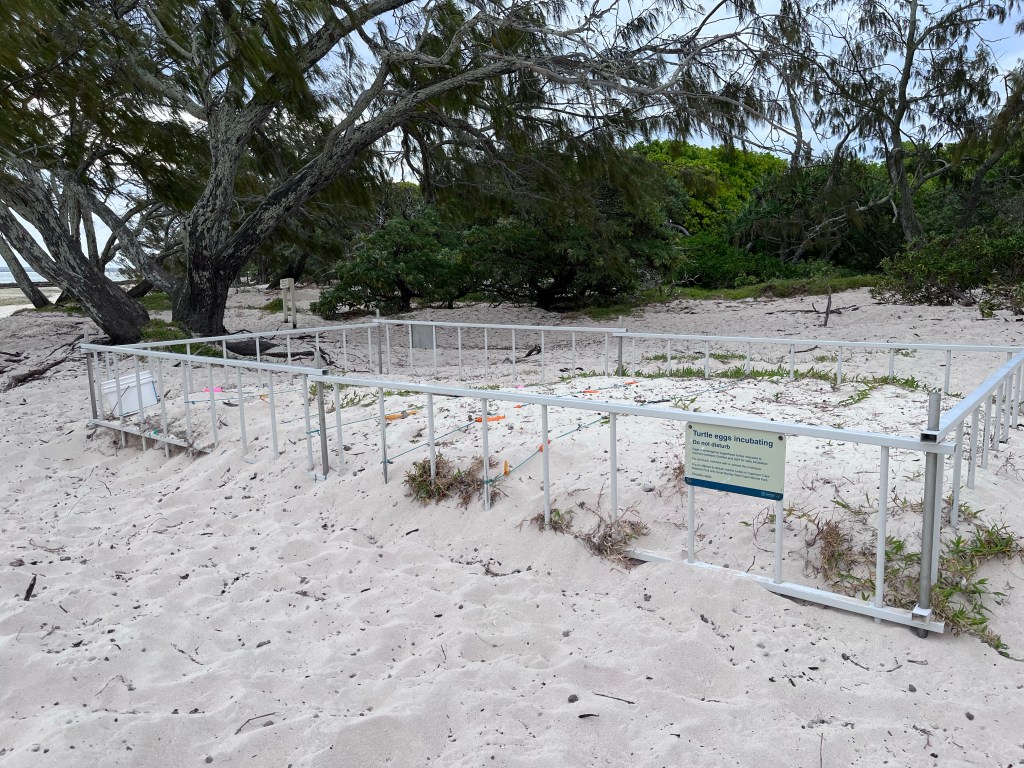
This turned out to be a loosely penned area high in the dunes where the rangers re-bury any loggerhead eggs they find if they witness a loggerhead laying eggs. Loggerheads are endangered while the green turtles are not, and have a bad habit of laying eggs in places where the high tide can swamp the nests. If the tide doesn’t get the eggs the green turtles likely will. Green turtles have a bad habit of indiscriminately laying their eggs on other nests and as there are far more greens laying eggs, this poses a real threat to the loggerheads.
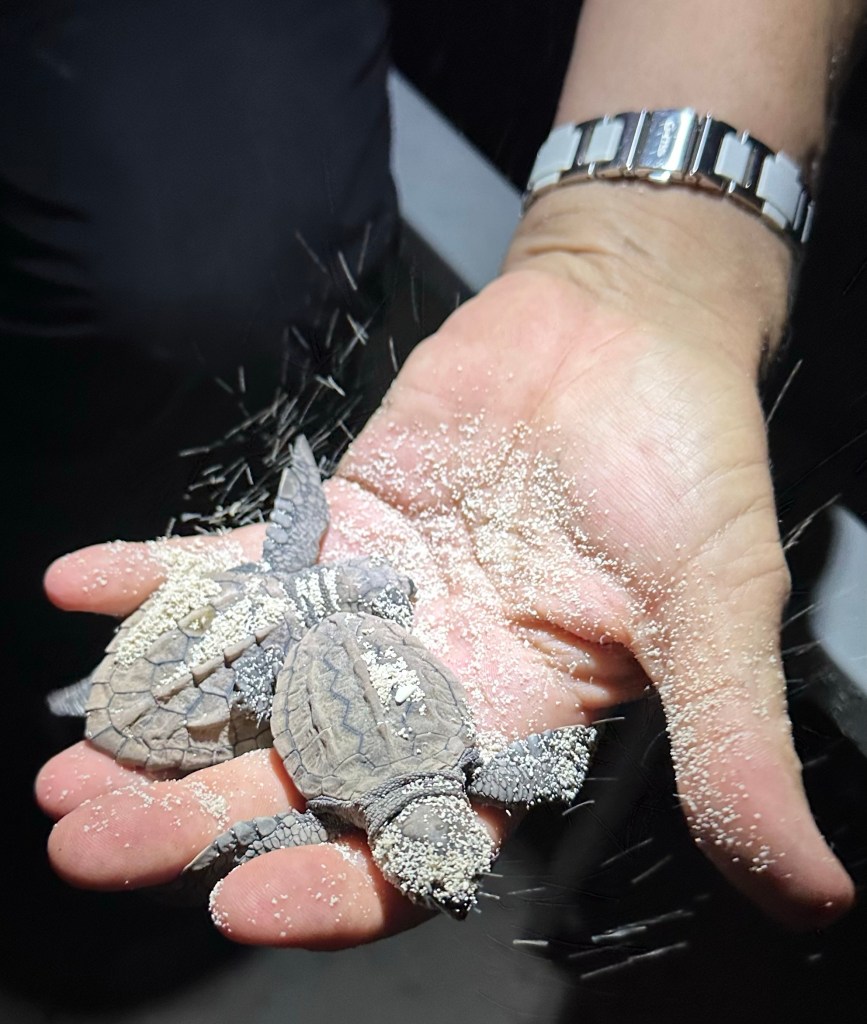
We approached the cage and Katrina knelt and began gently scooping away the sand in an area where eggs were most likely to be ready to hatch. Sure enough she uncovered two small loggerhead hatchlings. Incredible. After letting them scramble about a bit she decided to return them to the nest reasoning that they weren’t quite ready to make the epic trip from the nest to the oceans edge on their own
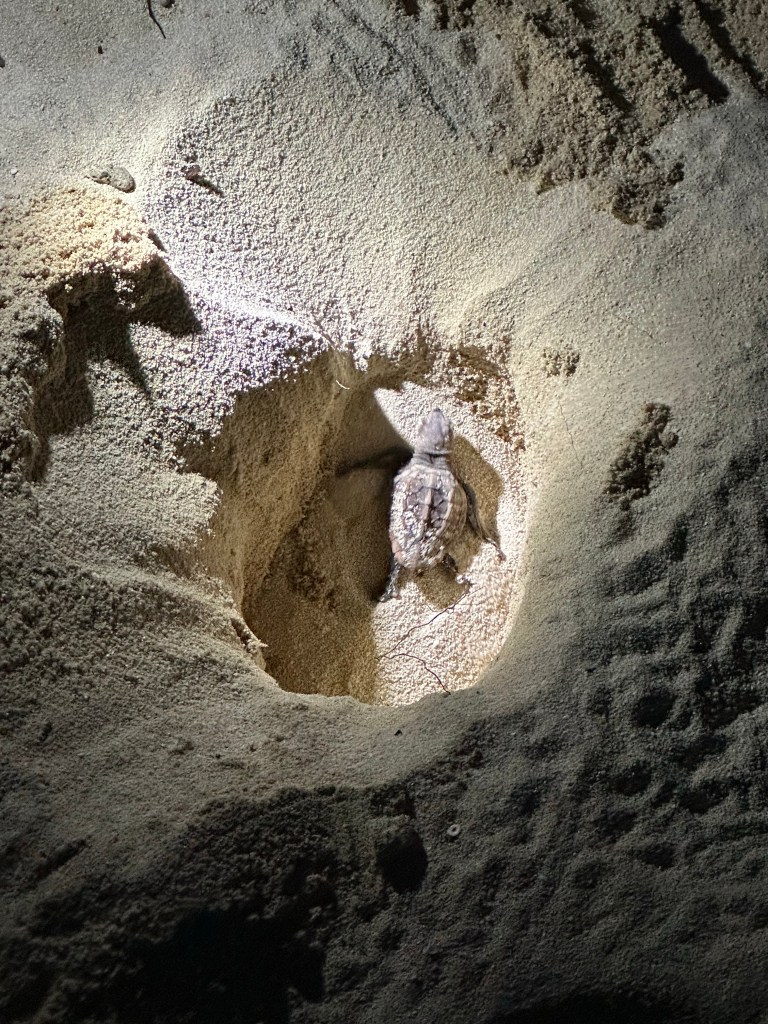
As we moved away from the beach congratulating us on our good fortune another ranger released a couple of green hatchlings that he had found encouraging them to head for the beach by shining a light to the ocean.
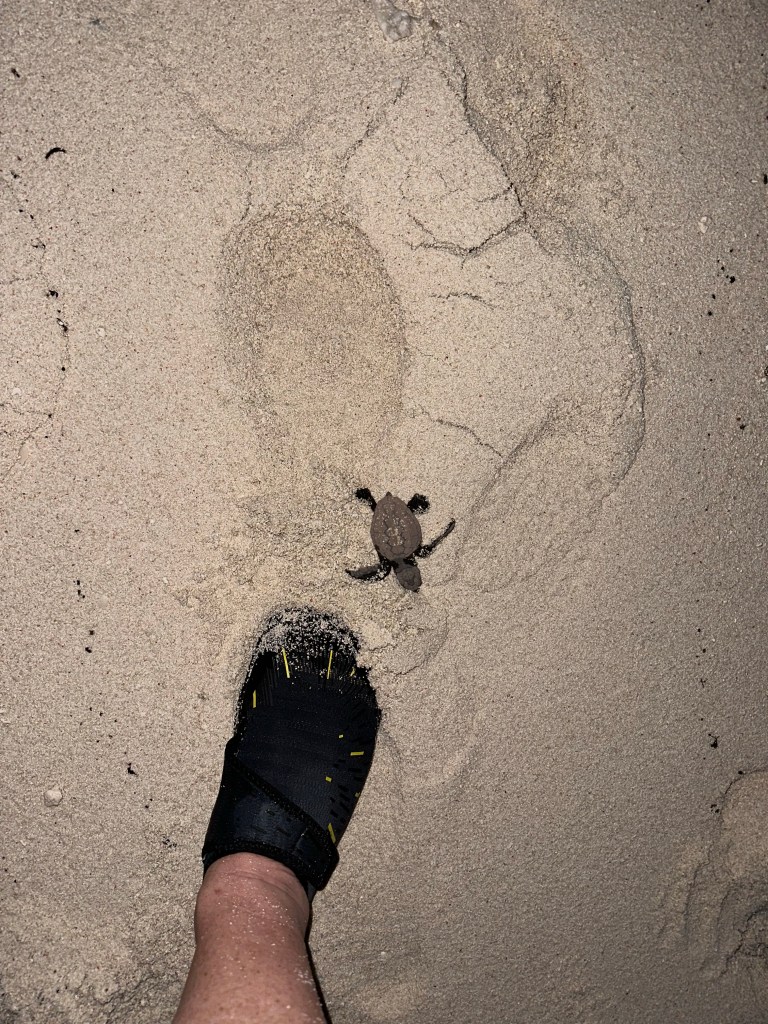
It was at that moment we noticed the ground seemed to be moving. Hatchlings were everywhere. Loggerhead hatchlings. It seemed there was a run from another undiscovered loggerhead nest in the area. Katrina had just told us how rare it was to see a run of loggerheads and that in her 8 years of volunteering at the research station she had never witnessed it. And here we were on our first night standing in the middle of one.
The next night we joined a guided turtle walk with Andre, another naturalist from the resort. Lisa and Pete also came along. We were feeling guilty over the incredible experience of the night before and hoped that they wouldn’t feel disappointed. No fear. Within minutes we had found a nesting turtle run into a researcher from the island who was observing a turtle in the process of laying eggs. Watching this moment was another experience that most visitors never see. There were also eggs scattered around the nest that the researcher was collecting- in laying this nest the turtle had disrupted a previous nest and disturbed the eggs buried there as she dug her own pit. We were allowed to handle one of these as the disturbance of the eggs make it highly unlikely if not impossible for the turtles to hatch. They were about the size of a chicken egg but heavier.
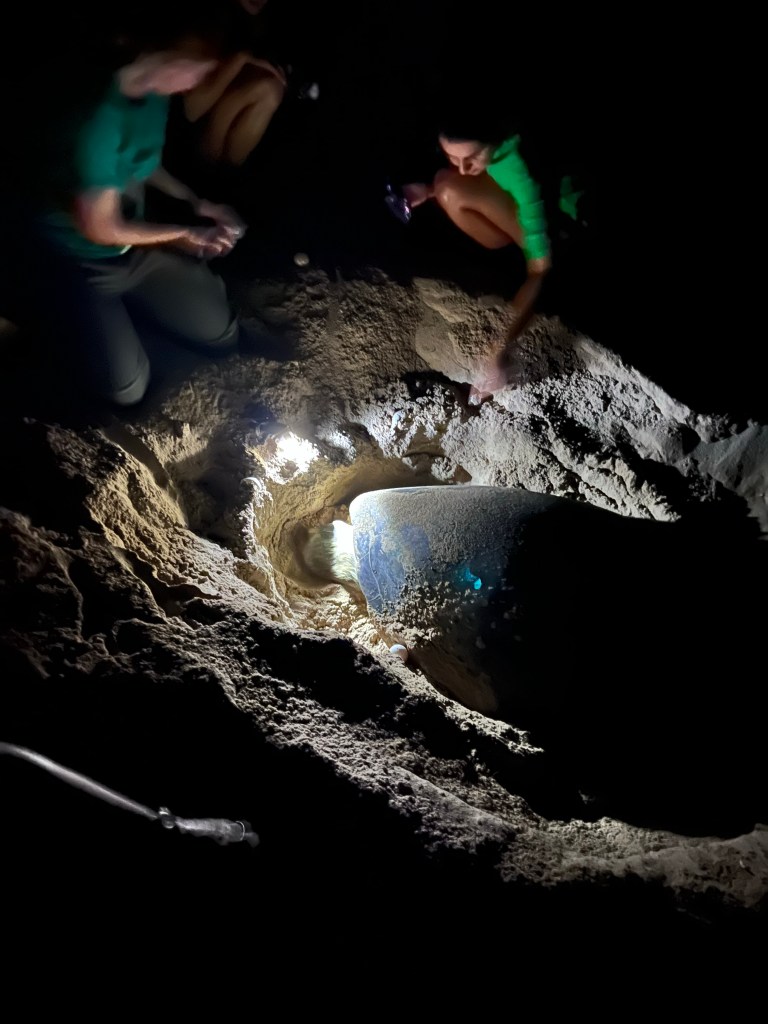
As we continued up the beach we ran into turtle after turtle making their way up into the dunes or down to the ocean. At one point as we crouched motionless waiting as a turtle laboured up the beach into the dunes in front of us one of our group noticed a small hatchling weaving its way down to the shore. Before long they were everywhere- another run, this time of green turtles. We couldn’t see sharks this time but Andre said they were certainly there. He had shone his light out on a previous night and had counted twenty sets of fins waiting on a hatchling run
Our last night there was more of the same. No hatchlings this time but a number of turtle sightings and a reunion with Katrina the volunteer who laughed and told us to that we wouldn’t be able to replicate our first night’s experience.
The morning of our last day started with a tap on our door. Pete had been out for an early walk on the beach and had run into a turtle pulling itself along the shoreline as it sought a way around the sandstone to get to the ocean. The tide was not yet high so the distance was longer and the obstacles more significant. Robin and Ian took some photos from a respectful distance and we happy to see that the turtle was nearing the end of the run of sandstone and that the tide was steadily coming in. Another incredible turtle moment.
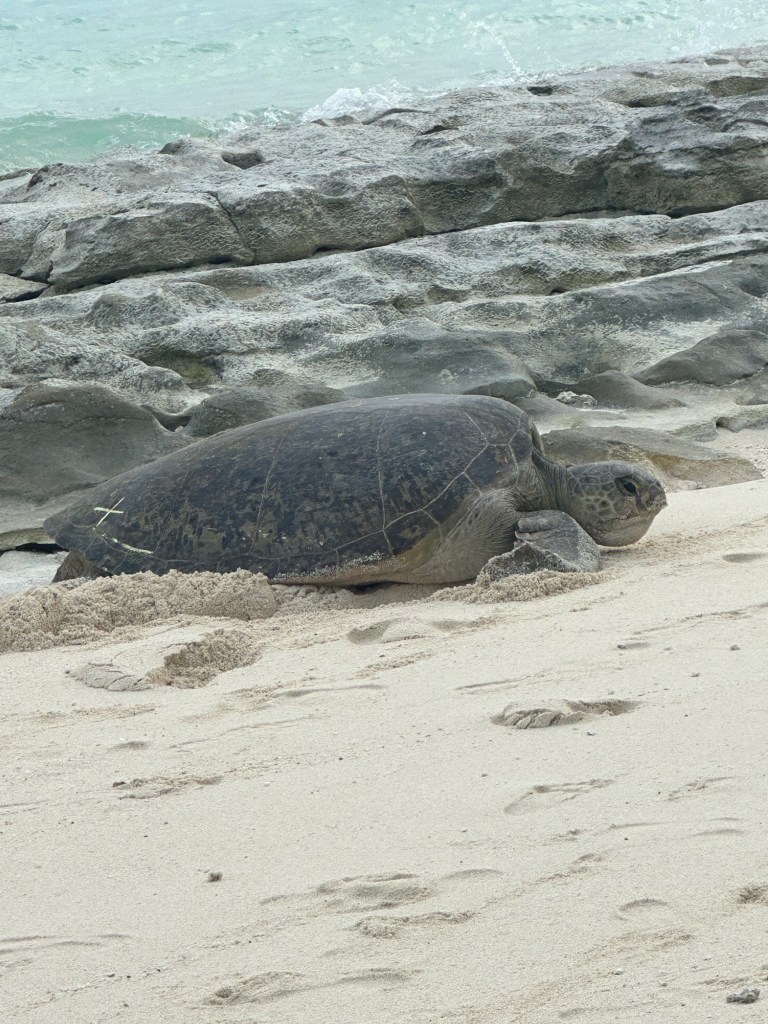
The Green Turtles and Loggerheads of Heron Island gave us some incredible moments I’m sure none of us will forget.


 MacsTravel Blog
Leave a reply to ML Cancel reply