Our four weeks in Spain overlapped a little with our friends Mary Lynn and Garth’s stay here, so we decided to take a couple of days to do a little touring with them. Our first day saw us visit the white hill towns of Setinel de Bodegas and Ronda.
We decided to stop in Setinel first, which is a straight shot up from the Mijas coast for about an hour and a half through the Sierra de las Nieves. It is a slow and long climb, a little scary in the daylight but probably terrifying at night, and we all decided that we would be taking the decidedly less “vertical” route out to Malaga and back along the coast on our return later that evening.
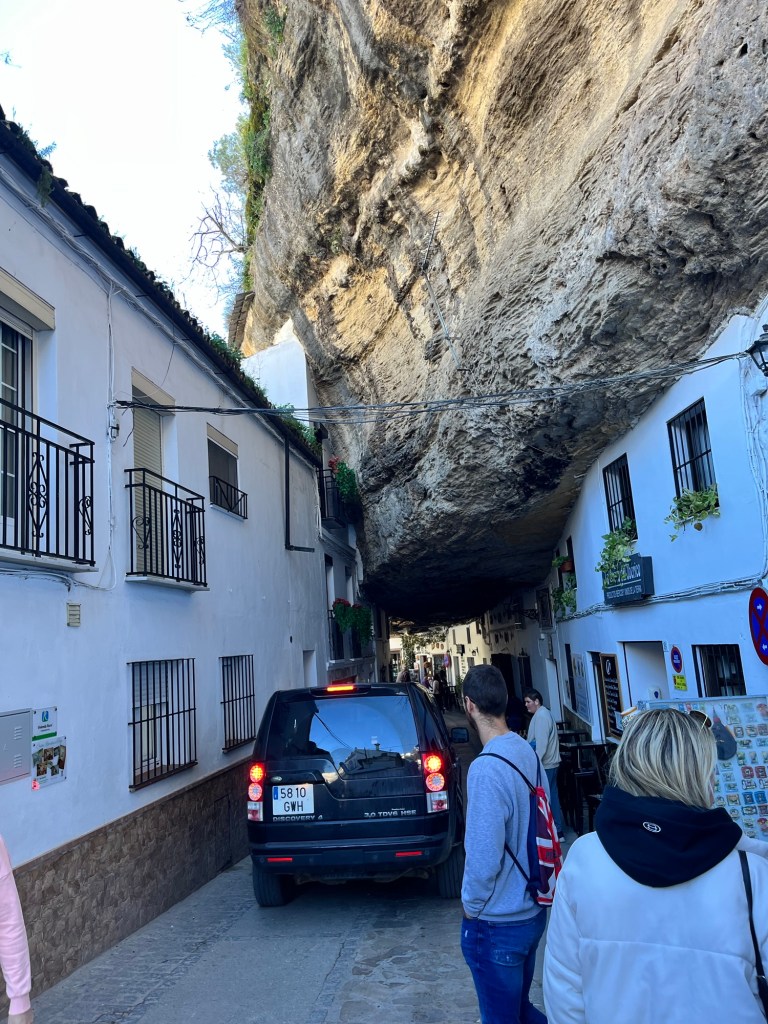
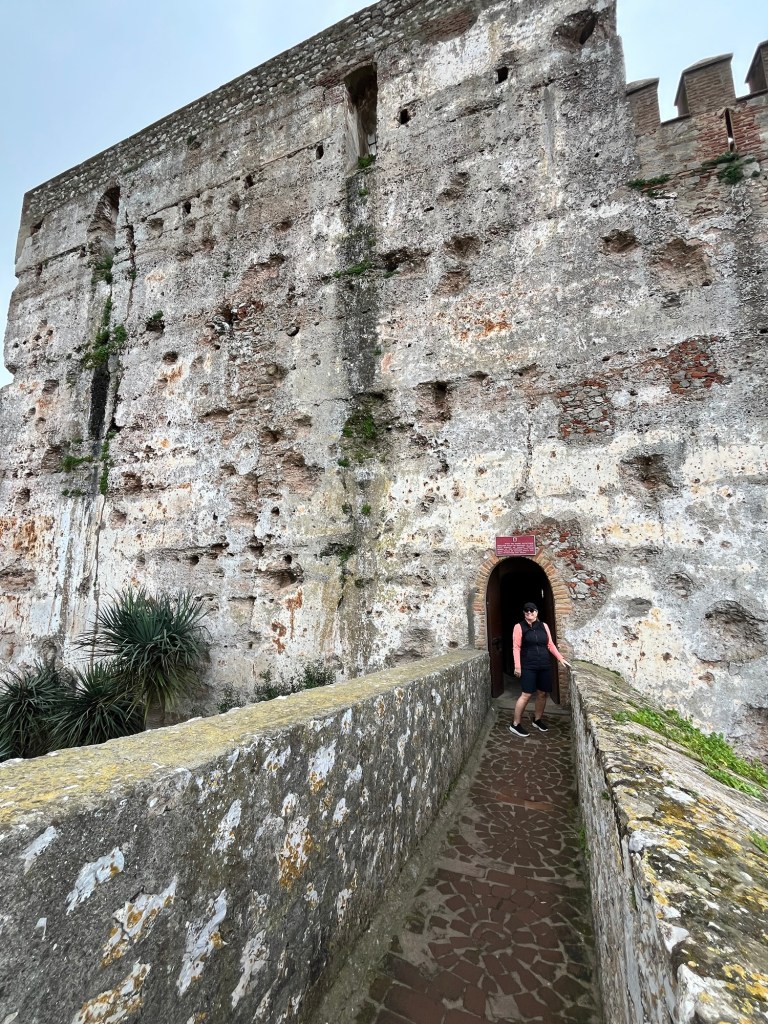
Setinel de las Bodegas is also known as the Cave Village of Andalusia. It is an ancient place with early cave people populating the region long before the usual contingent of Moors and Spaniards. The Moors first fortified the town, and the remains of the tower sits overlooking the village. The main feature, however, are the incredible streets with houses and shops tucked into the cliffside.

We parked at Los Canos, a shockingly good underground parking lot with wide spaces, located right near the heart of the action. The route to the parking lot is a wild one, but once you are there, you are set for the day.

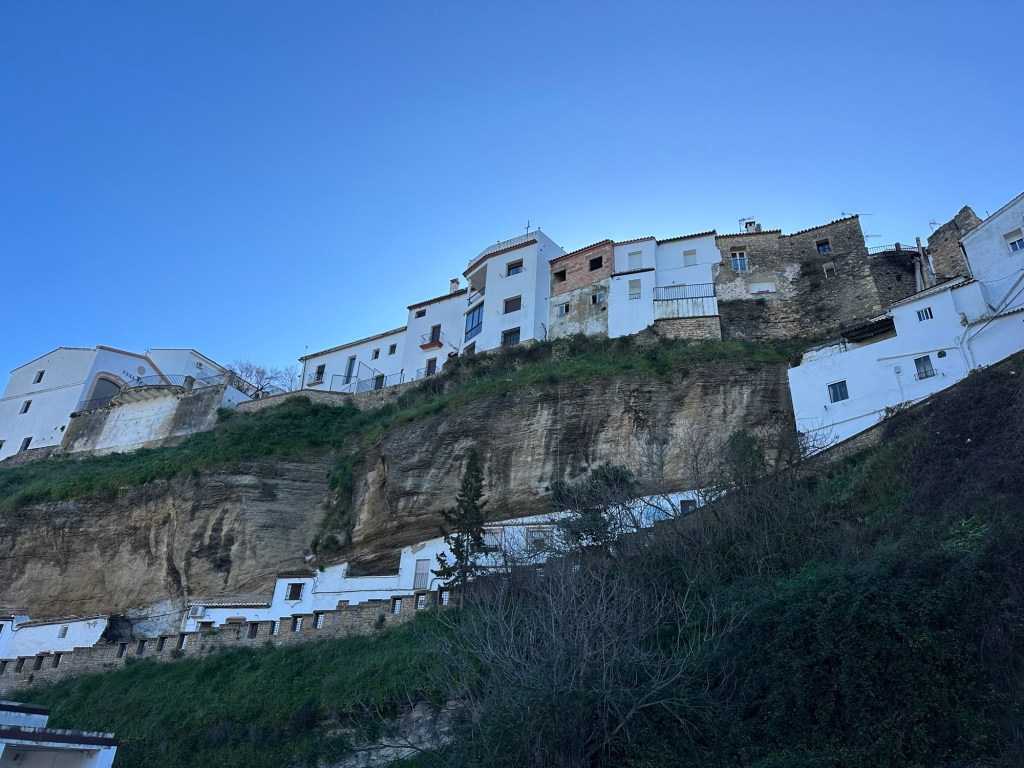
You can visit Setinel in a morning (preferably) or afternoon (be prepared to battle hordes of tourist groups). The highlights are two spectacular streets, Cuevas del Sol (sun street) and Cuevas de la Sombra (Shade Street). In both cases the buildings are flush to the cliffside, but in the case of the latter, the cliff overhangs the street itself.
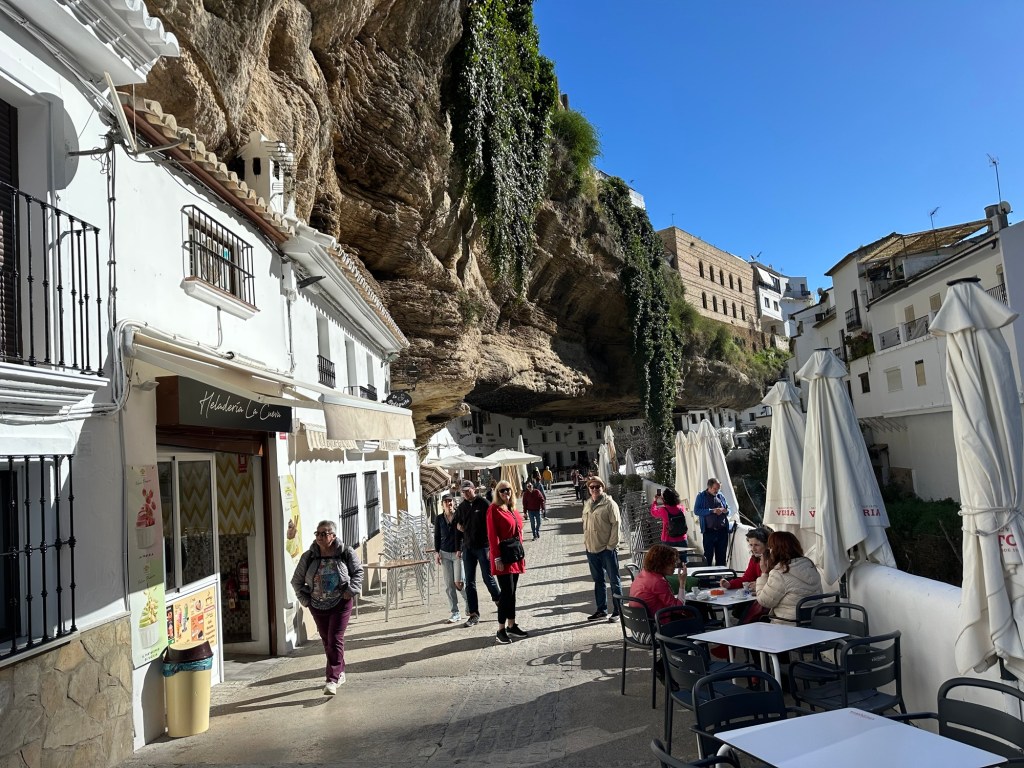
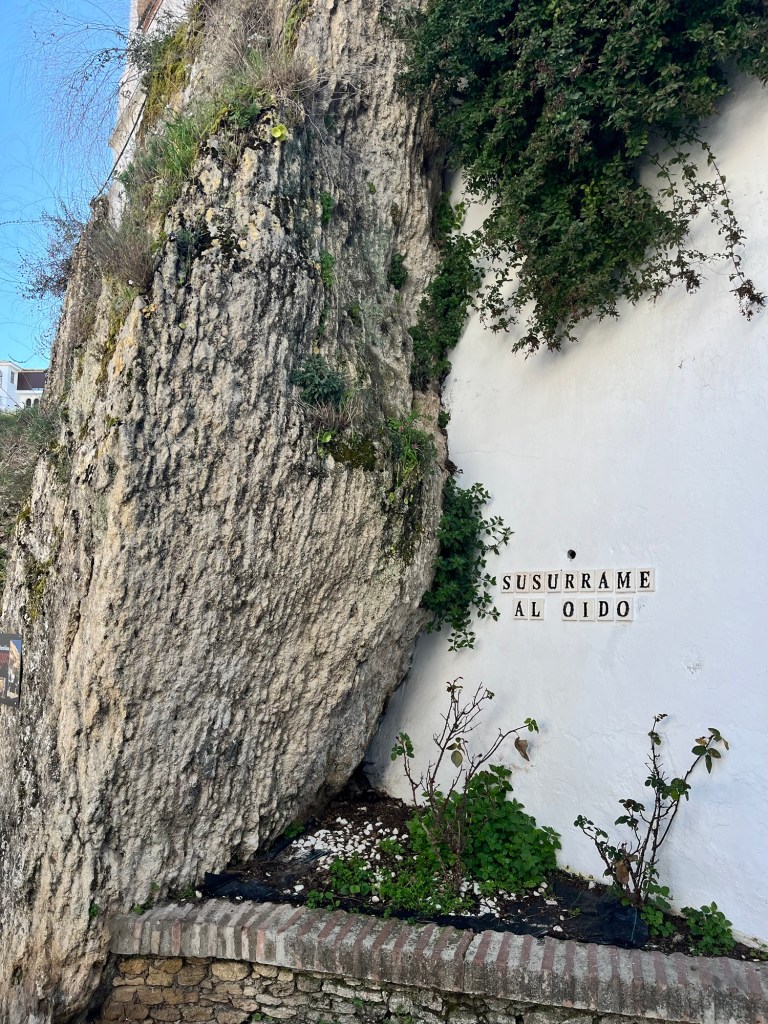
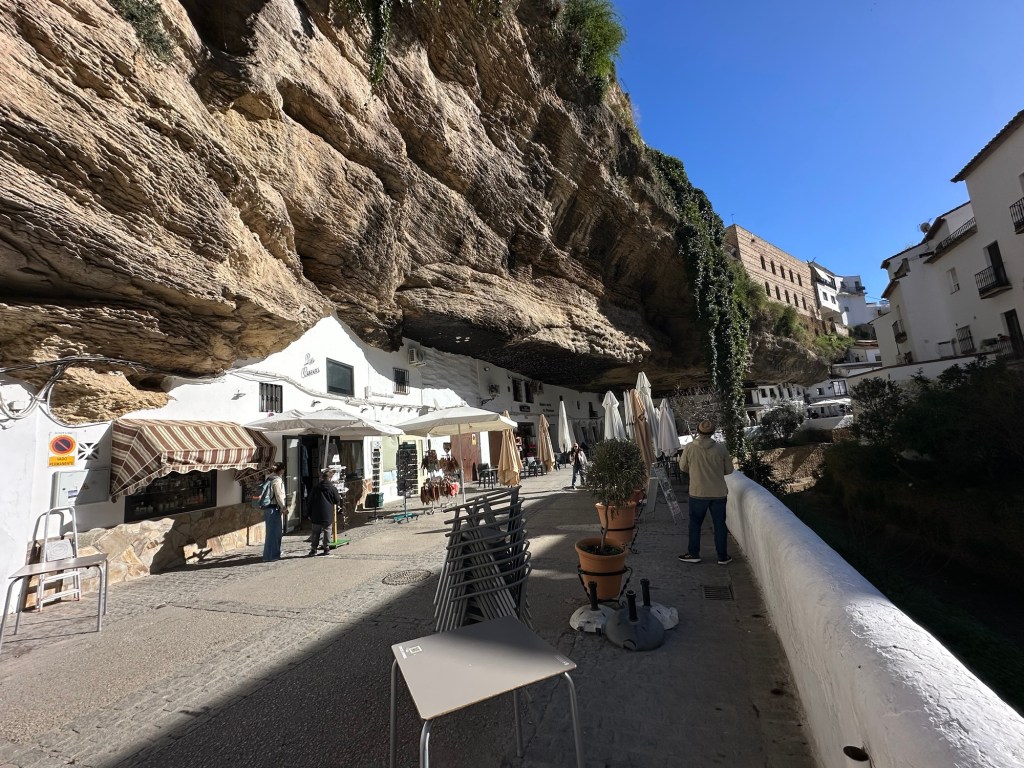
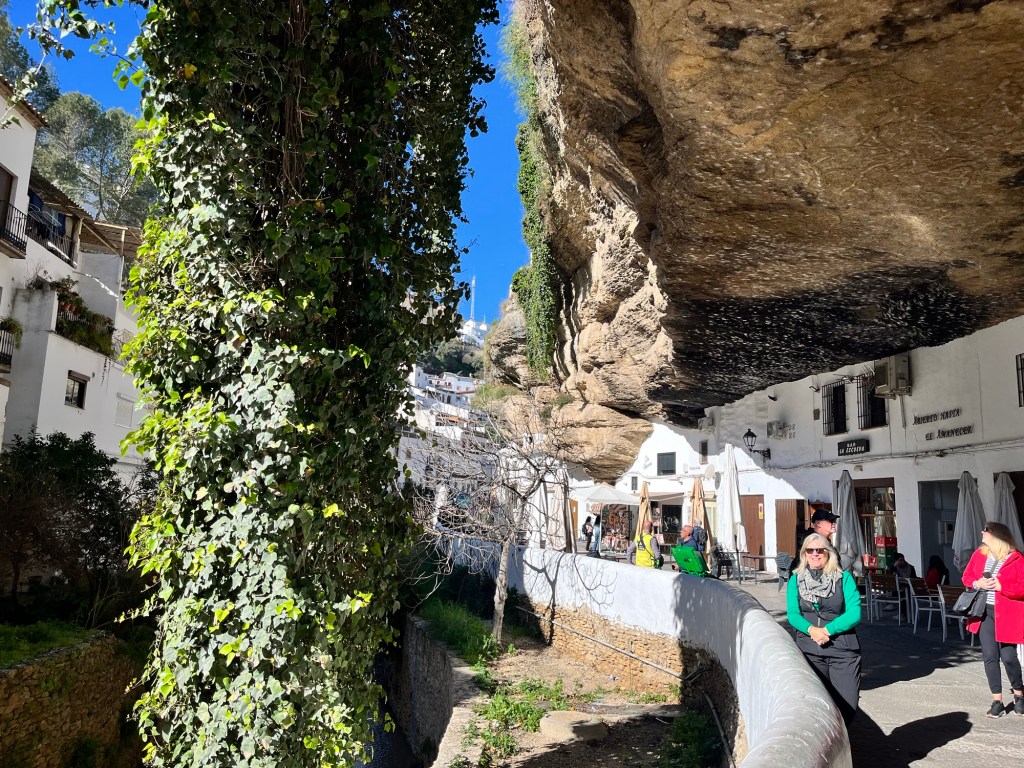
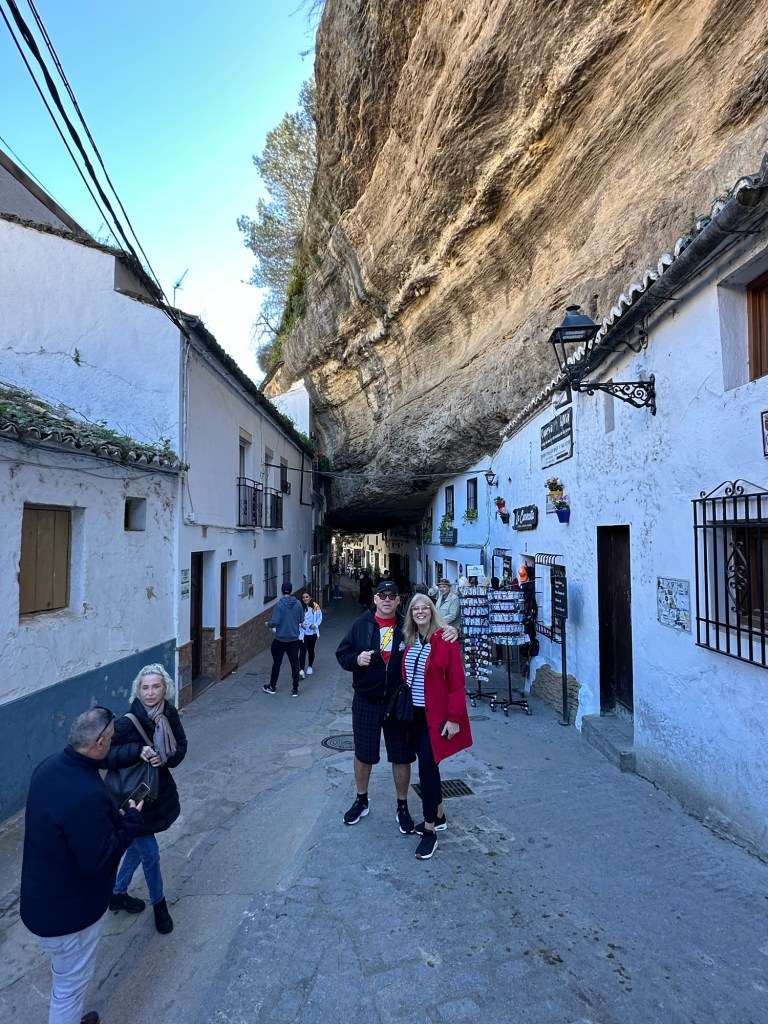
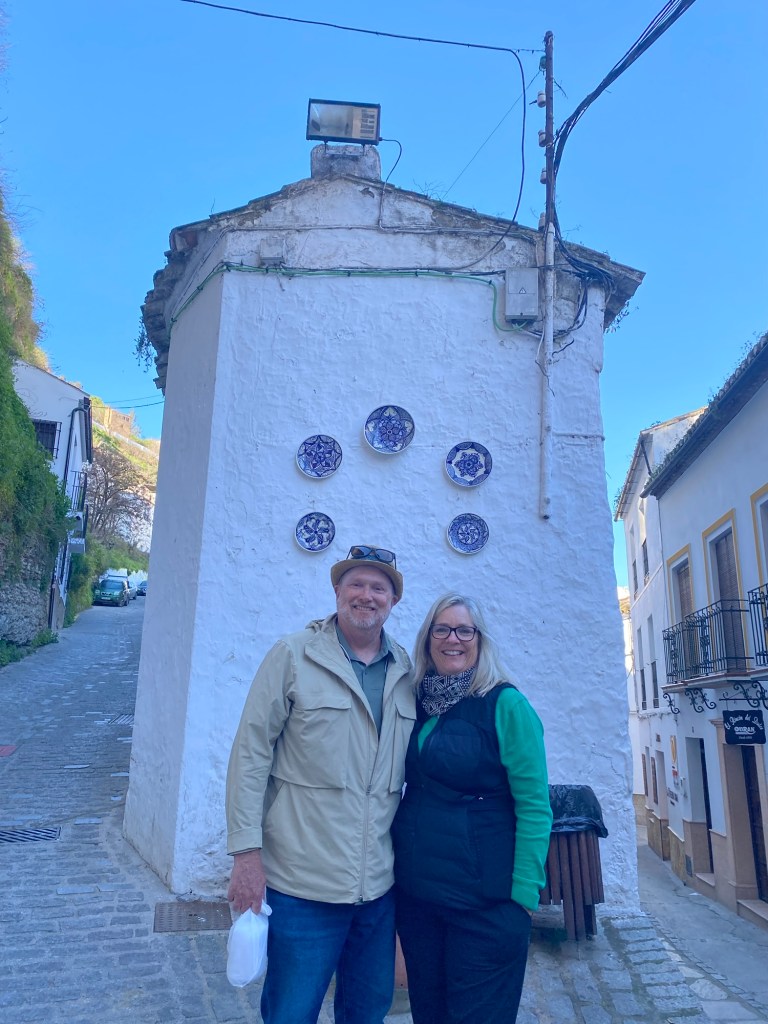
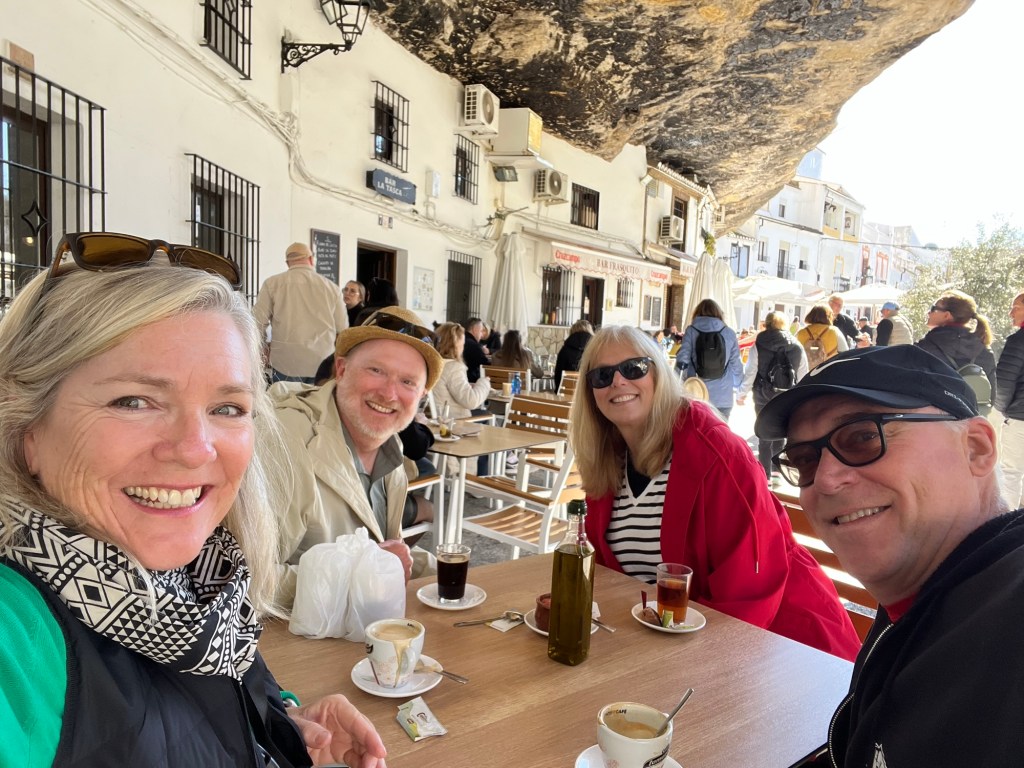
The narrow streets are full of oblivious pedestrian tourists, backfiring motorcycles, frustrated locals trying to weave their way home and very lost tourists in cars much too wide for the streets, desperately trying to navigate their way out.
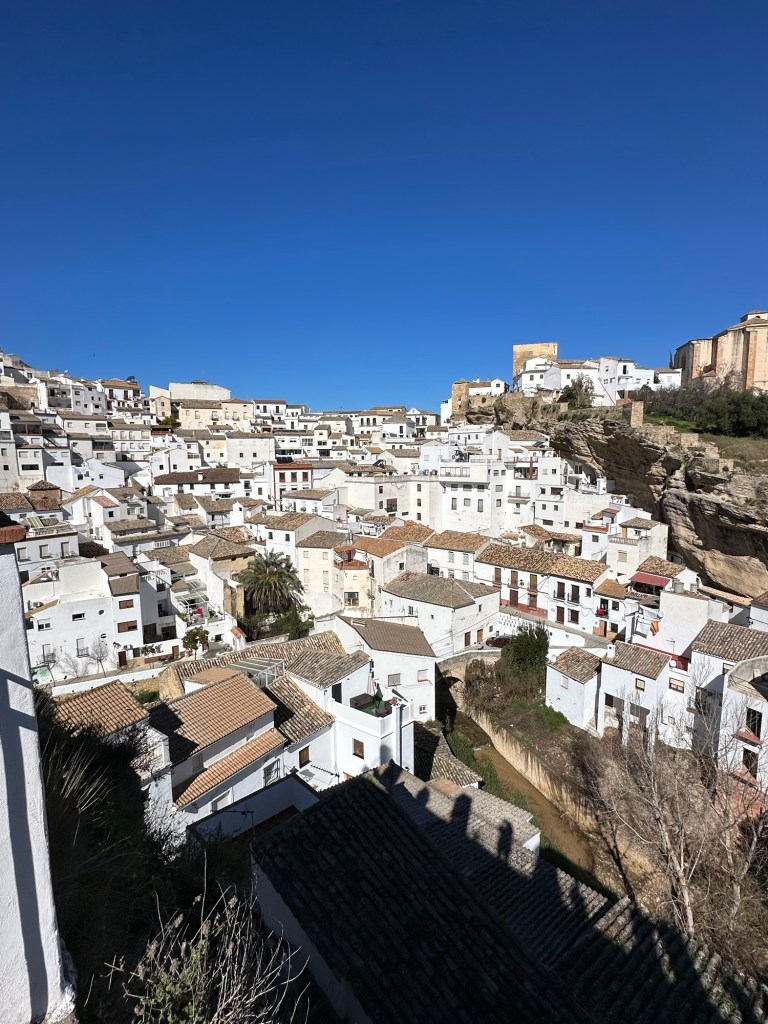
To avoid being run over, we climbed up a series of steps to one of the numerous lookout points in the town, and were favoured with wonderful views down into the town and across to the ridge where the remains of the Moorish tower sits.
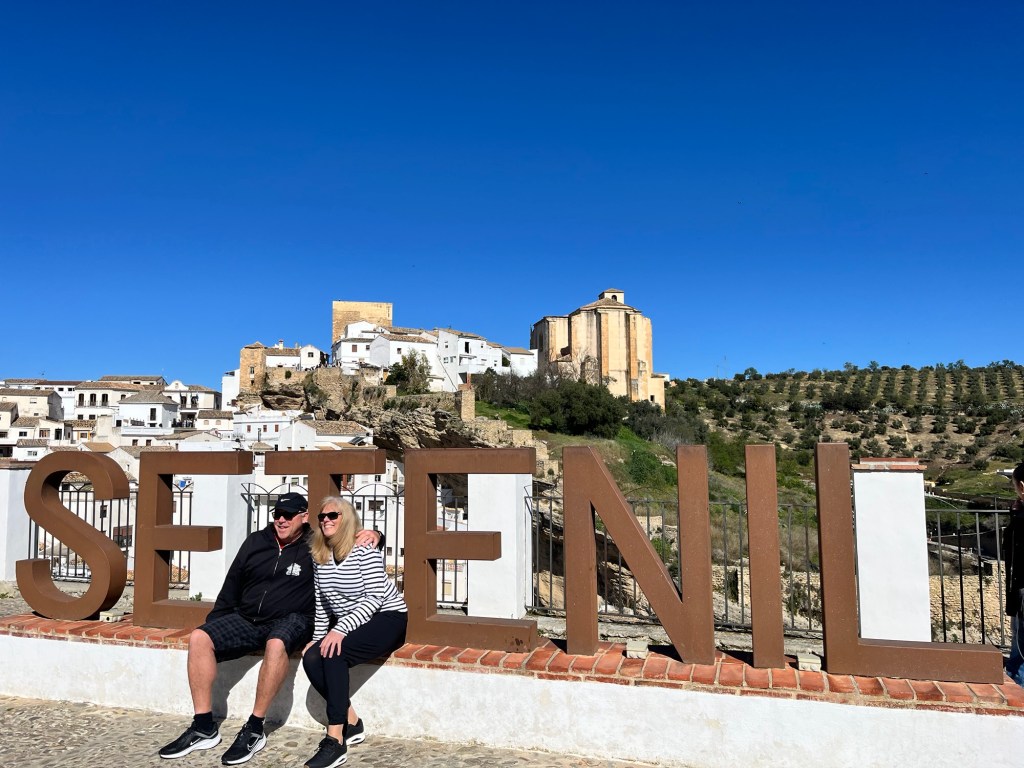
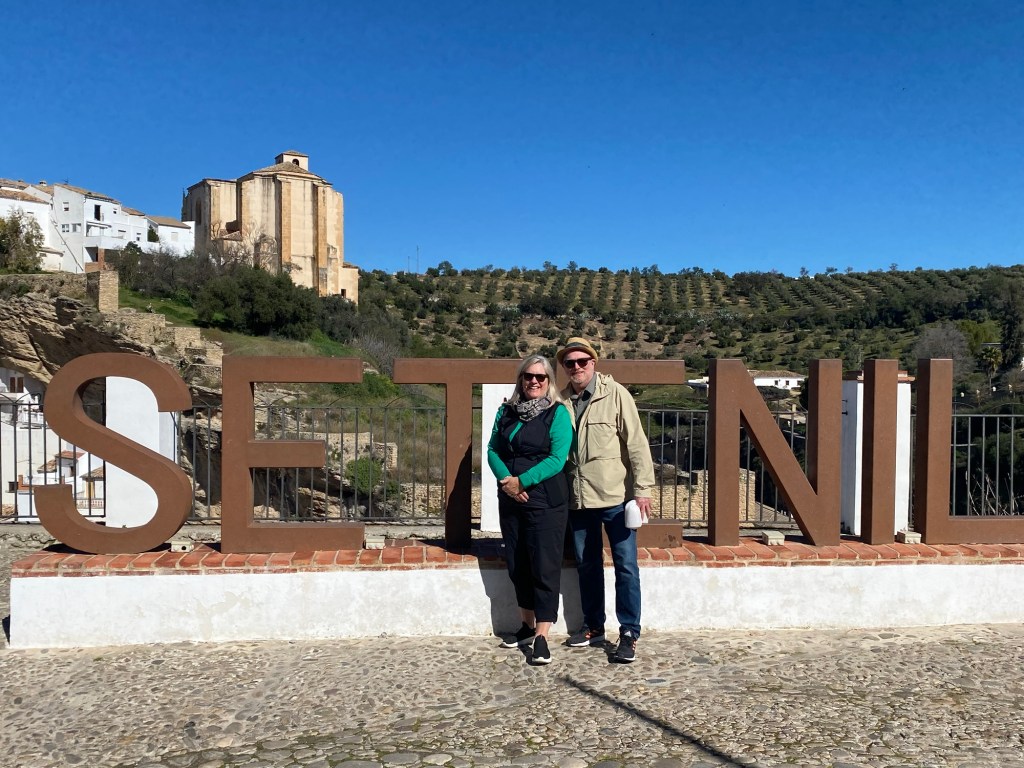
Setinel was certainly worth seeing. Would I go back again? Probably not, but it is an impressive spot to visit.
Our second stop was the beautiful town of Ronda. We had the pleasure of staying in Ronda in 2024 for a few days, a trip I enjoyed enormously and one only marred by a 24 hour episode of food poisoning that Robin suffered. Needless to say she enjoyed this opportunity to wander around without desperately keeping an eye out for the nearest washroom.
Ronda is absolutely spectacular and well worth a return visit. It occupies a majestic position on the landscape and offers incredible views, both of and from the town. It has some beautiful lookouts, gardens, an ancient bull-ring and lots of little side streets where you can happily lose yourself.
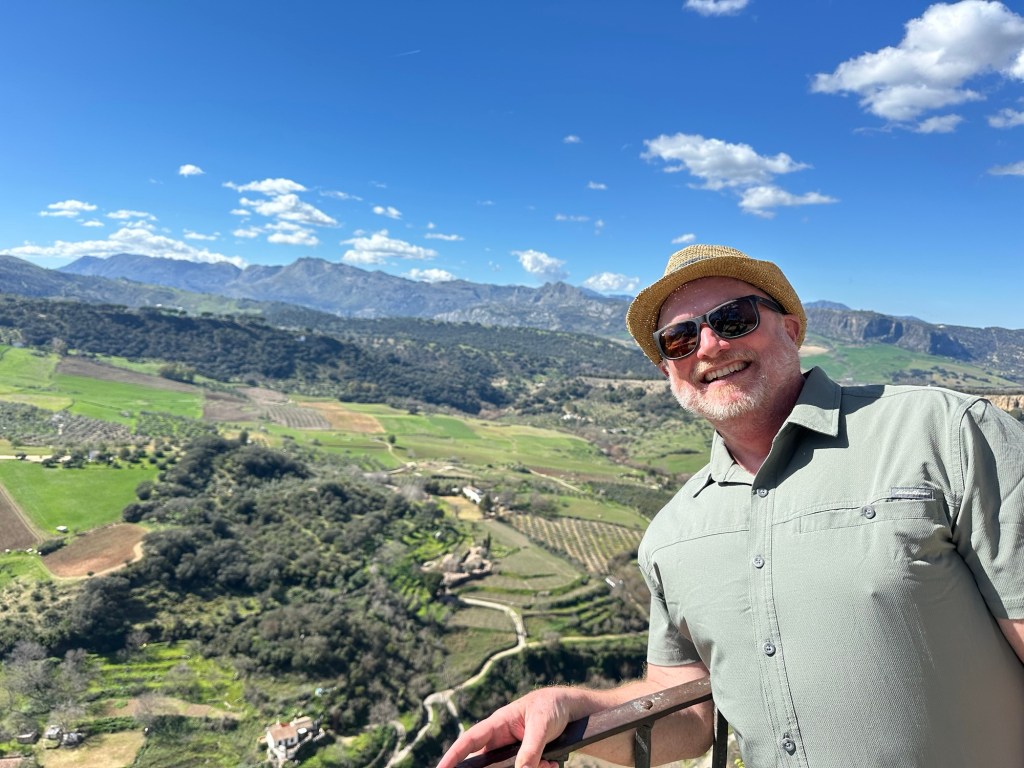
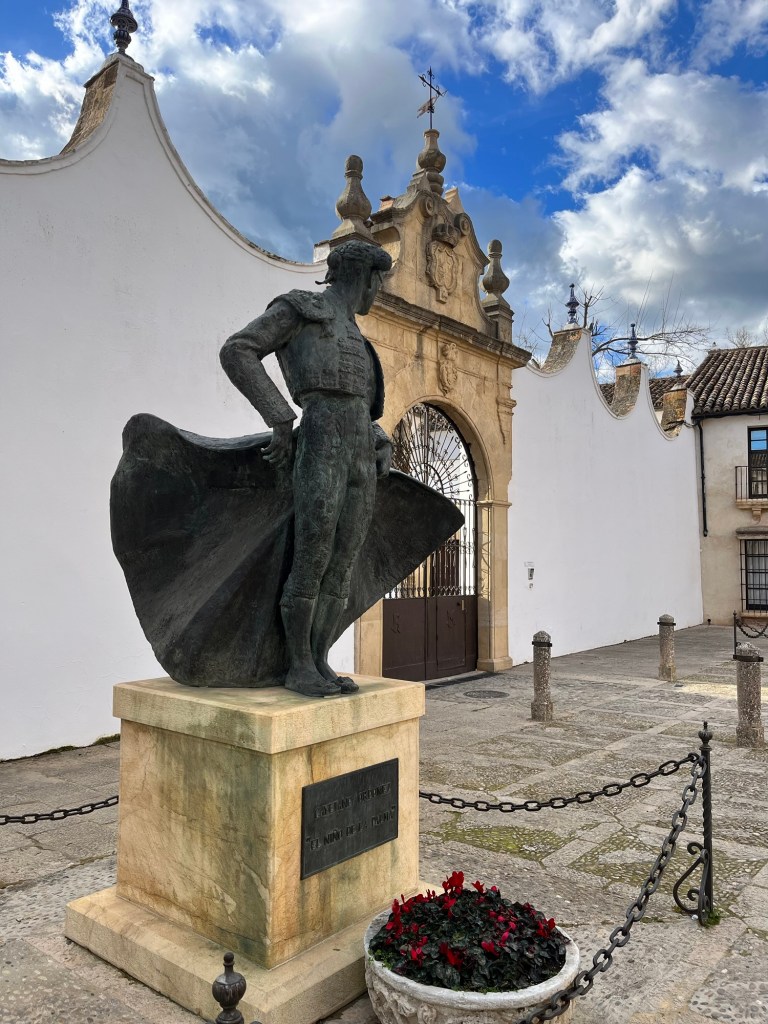
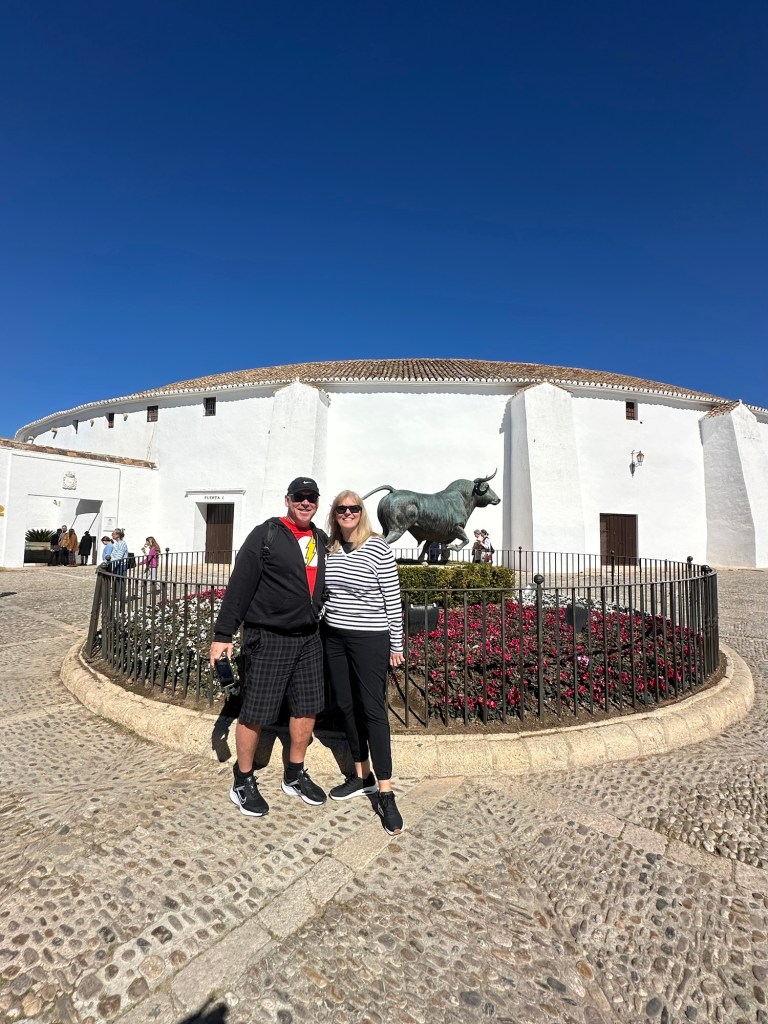
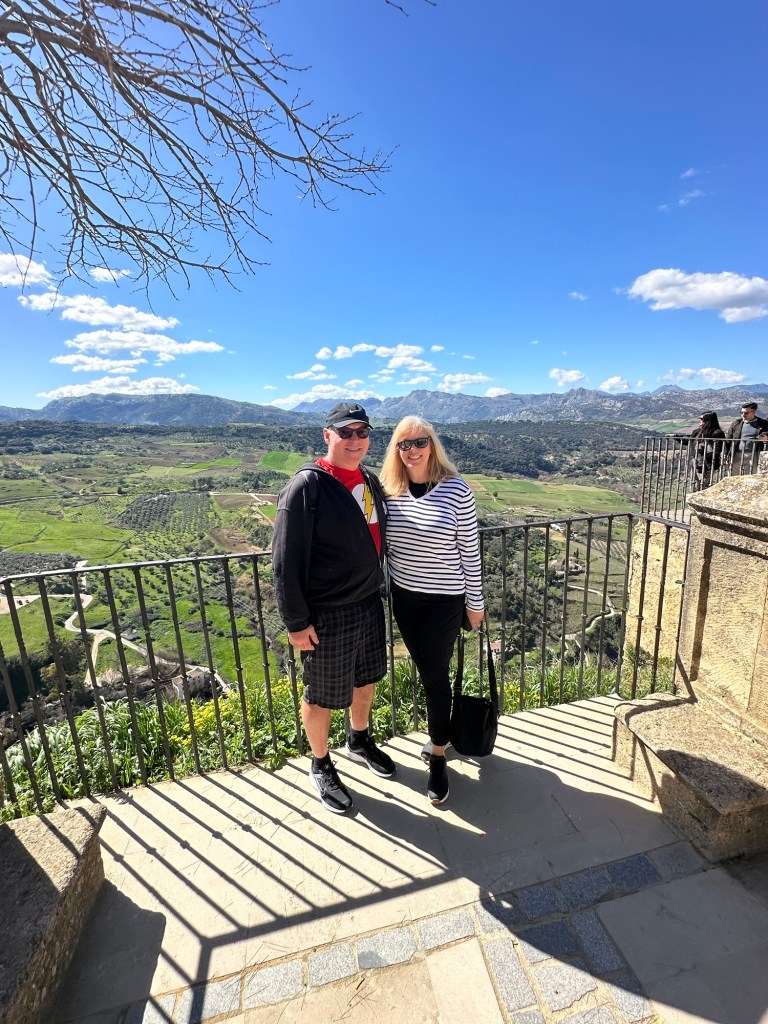
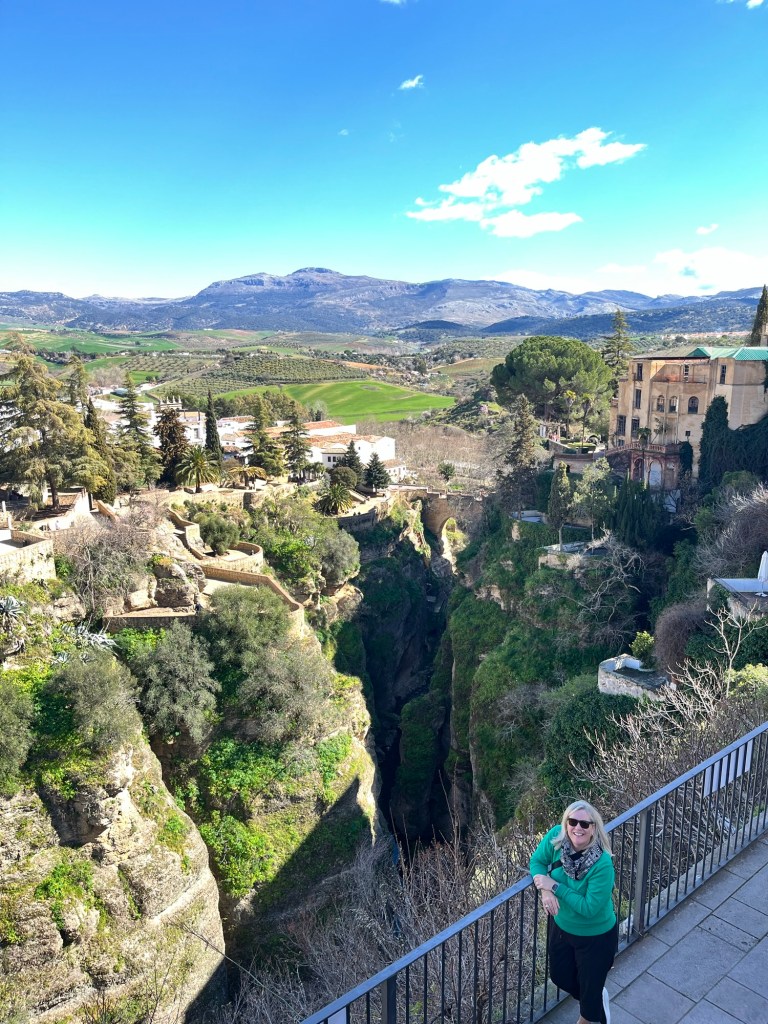
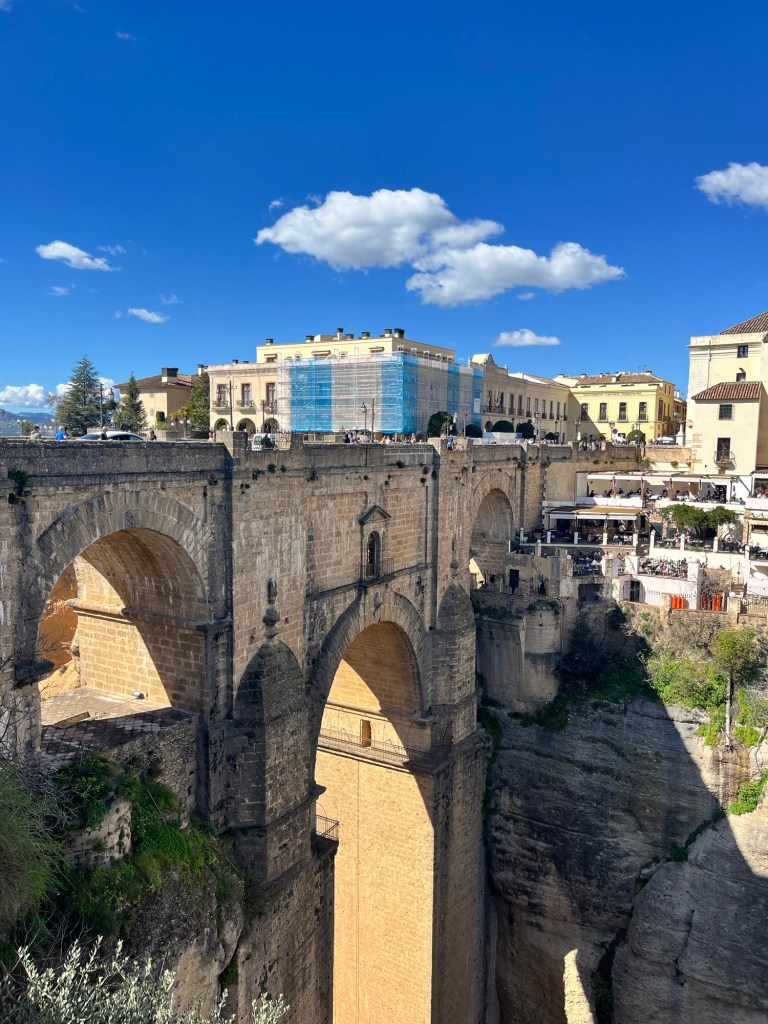
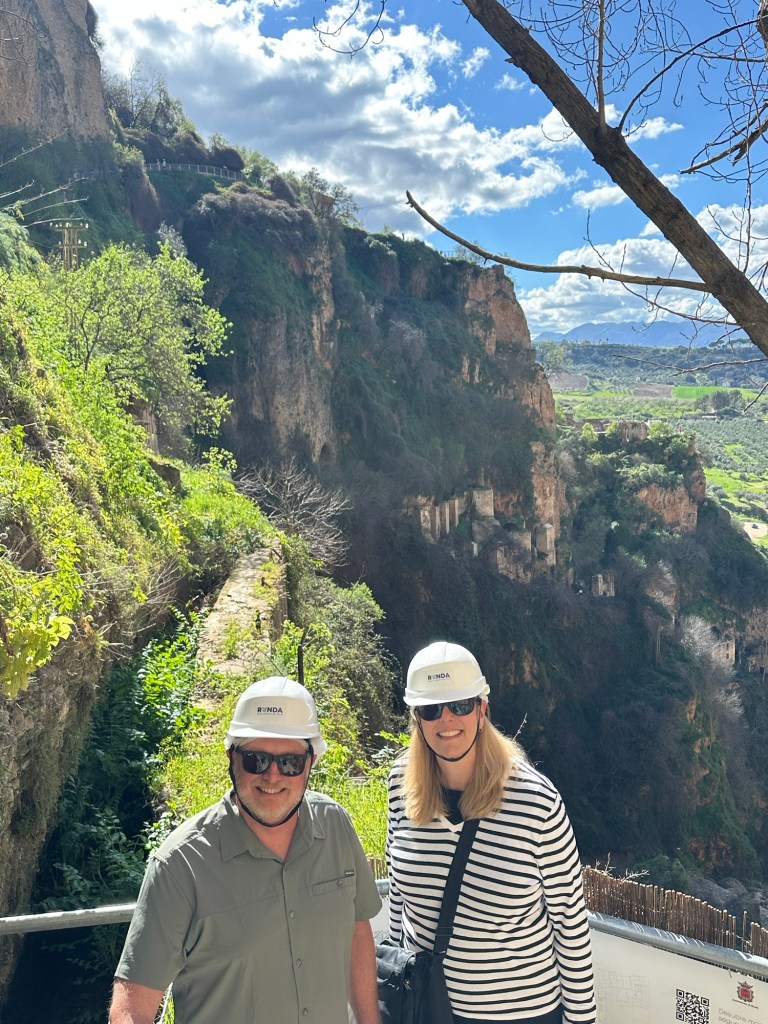
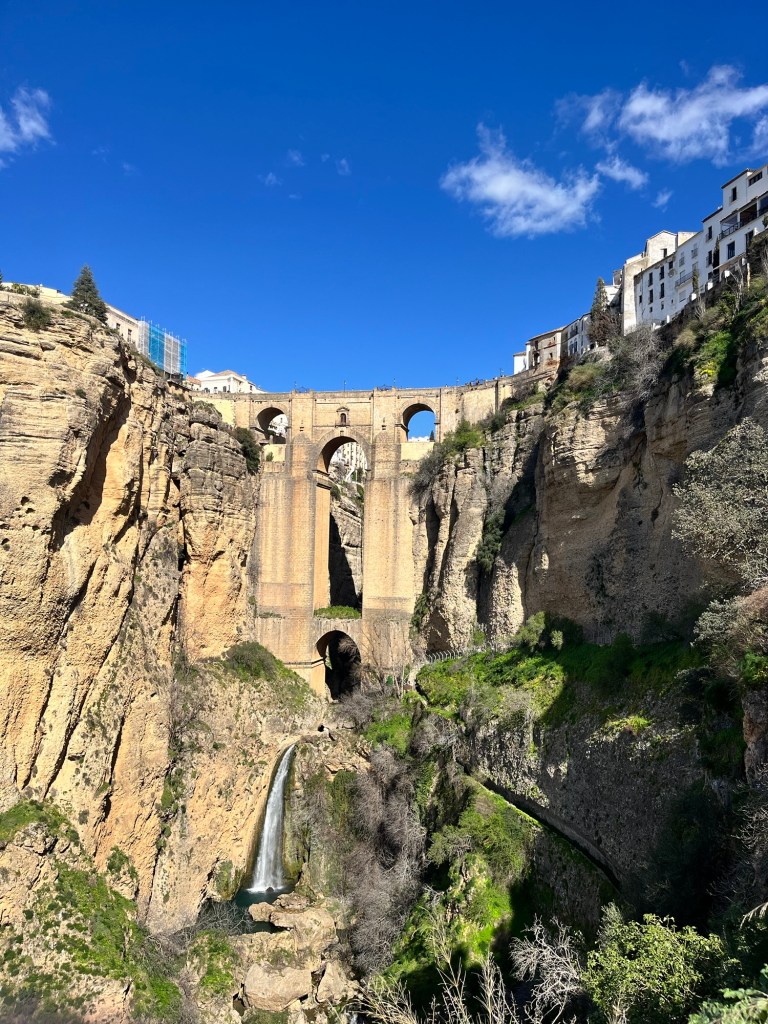
A new feature is the recently opened section of the Camino del Desfiladero del Tajo Gorge walk, which curves around the cliffside down into the gorge directly under Ronda’s famous Puenta Nuevo bridge. The new walkway has a million euro price tag, and at 5 euros to access it, it seems a bargain. However, Ronda apparently gets over 1.7 million visitors a year, which leads me to assume that this addition will pay for itself.

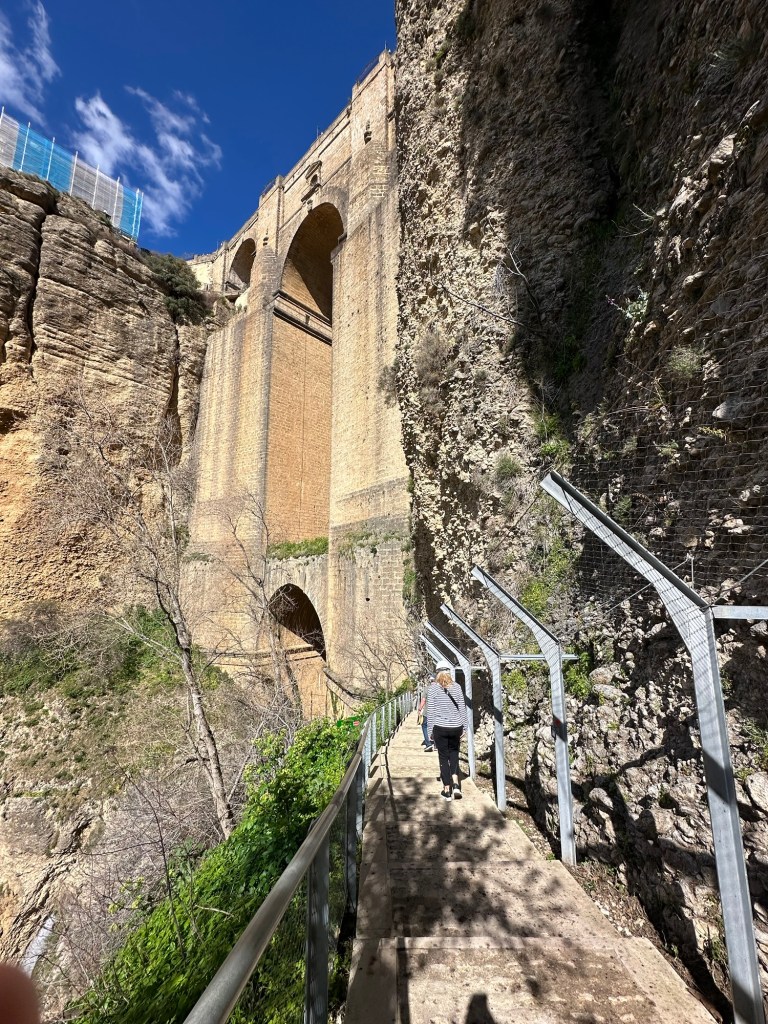
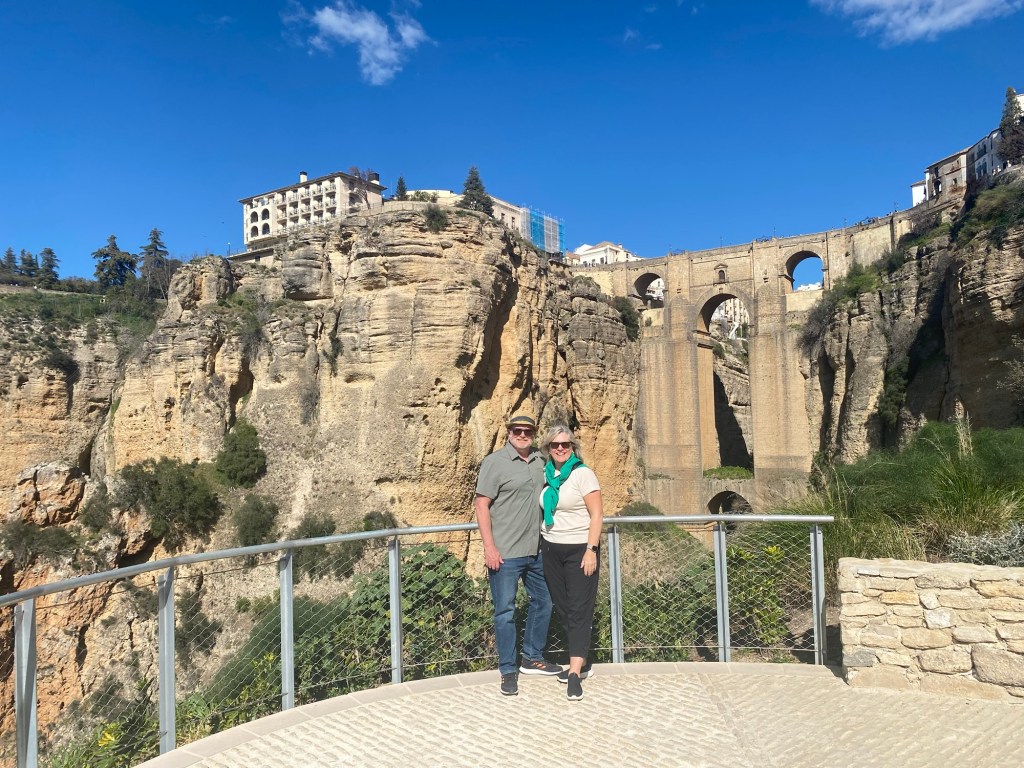
One of the best things to do in Ronda is get away from the main tourist areas and find a spot to sit and have a drink and a bite to eat. We found a terrific terrace which overlooked the countryside to the north west.
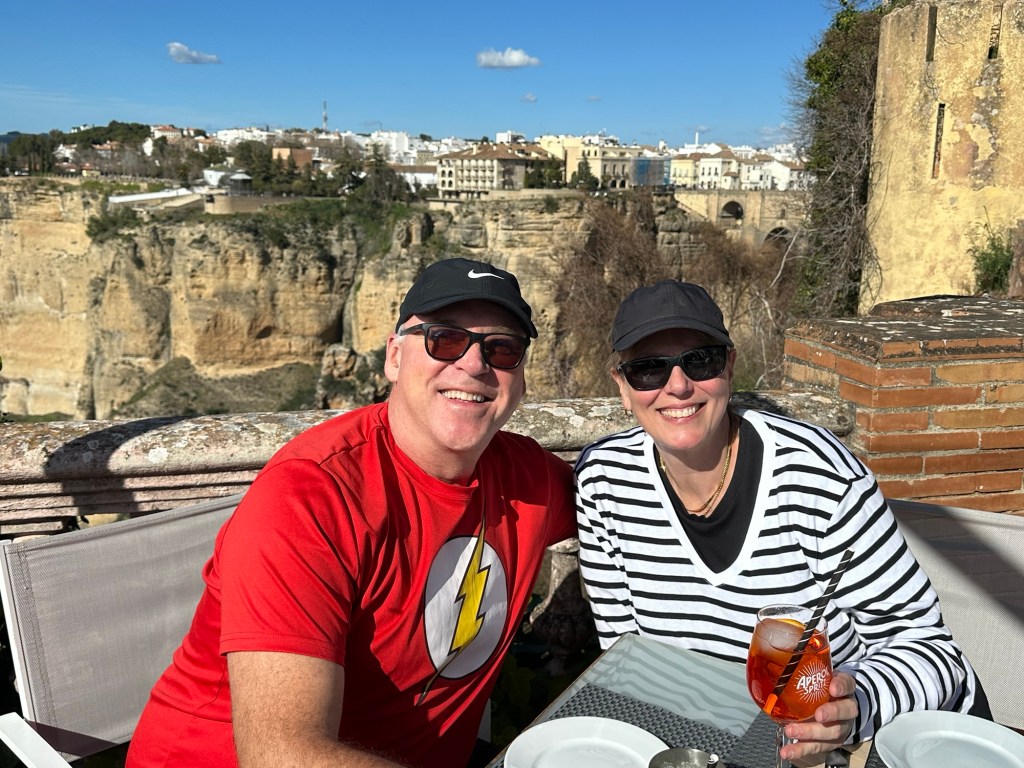
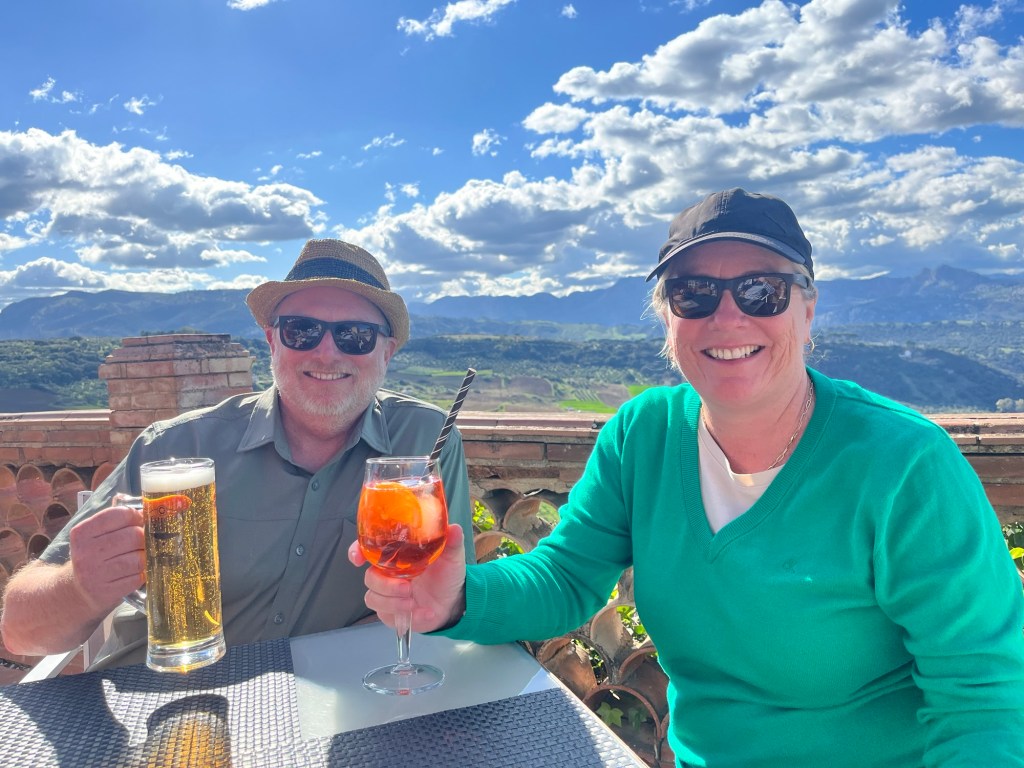
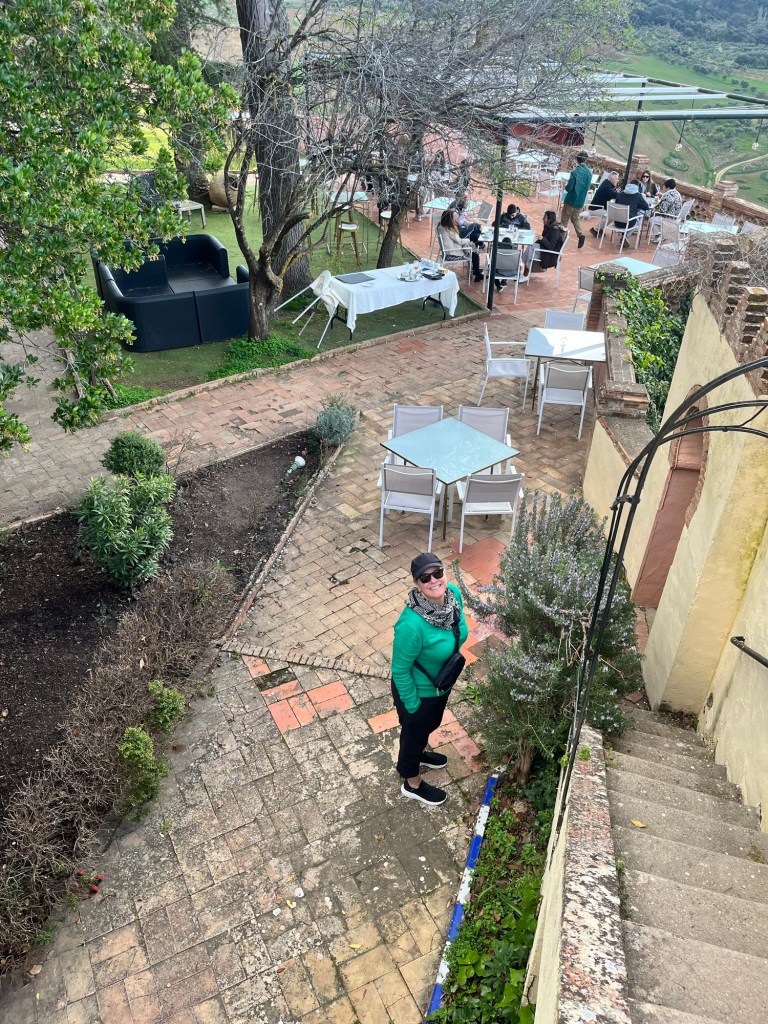
I don’t think this will be our last visit to Ronda.
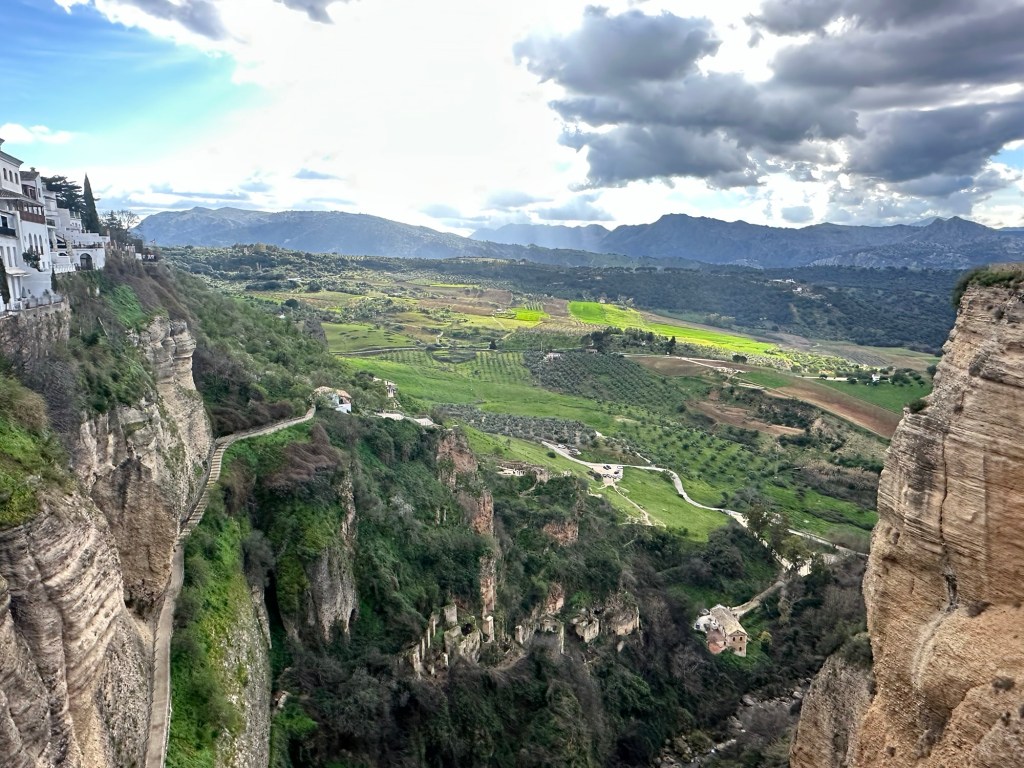
The next day we visited the British Overseas Territory of Gibraltar, a strategic piece of land at the narrow strait (20 km) between Africa and Spain that has been of strategic and military importance since the Moors first fortified the famous “Rock of Gibraltar” in the 1300’s.
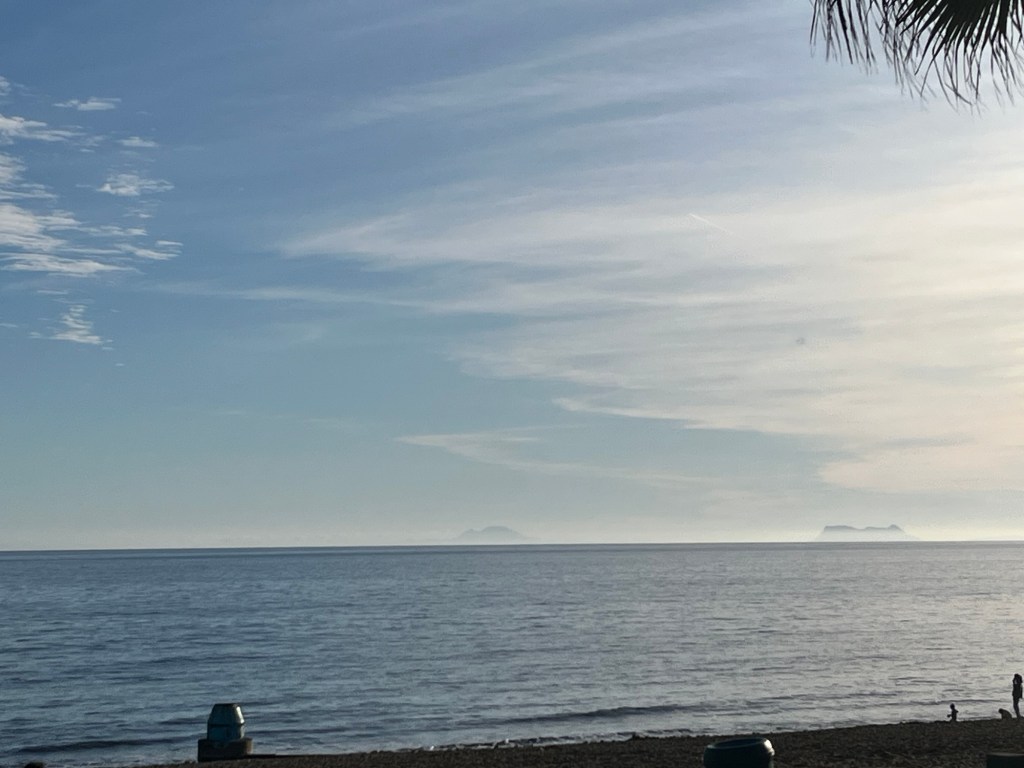
A last “outpost” of the British Empire, the territory’s 38,000 plus residents are fiercely independent and patriotic. Wandering around the town you could imagine yourself in England, from the quintessential red phone booths to the typically British pubs.
From the Spanish side of the border, there is a decidedly different sentiment. La Linea is the name of the town on the Spanish side, and while you can find lots of road signs on the local highways telling you how to get to La Linea, you will not find a sign indicating that Gibraltar even exists until you are in La Linea itself. Of course the 10 square kilometer rock that dominates the skyline in this region is enough of a landmark to let you know where you are going.
The best way to visit the territory is to park in La Linea near the border and walk across. Walking towards the border, we were greeted by this patriotic mural, featuring Picasso’s Don Quixote, a sketch of the Spanish literary hero and his sidekick, Sancho Panza, in this instance staring disapprovingly at the territory of Gibraltar.
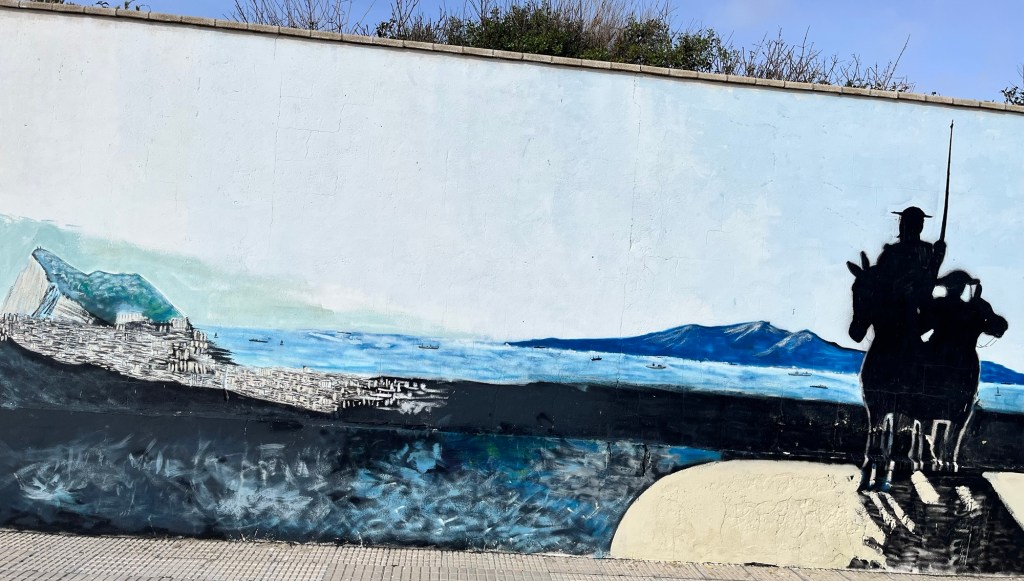
Customs takes no time at all. The main reason for coming is to visit the rock and its various attractions, including the incredible view points, the monkeys, the fortifications and tunnel systems, the caves, the Moorish castle and all of the other historical and geological peculiarities that make this monolith such an impressive place. You can walk or bike up, but that would be incredibly challenging physically and would take the better part of a day. The cable car is frequently out of service, and only gets you to two spots. We settled on the taxi tours: small 8 person mini-vans with knowledgeable and personable guides that rocket up the tiny, windy, cliff hugging “roads” to the various stops.
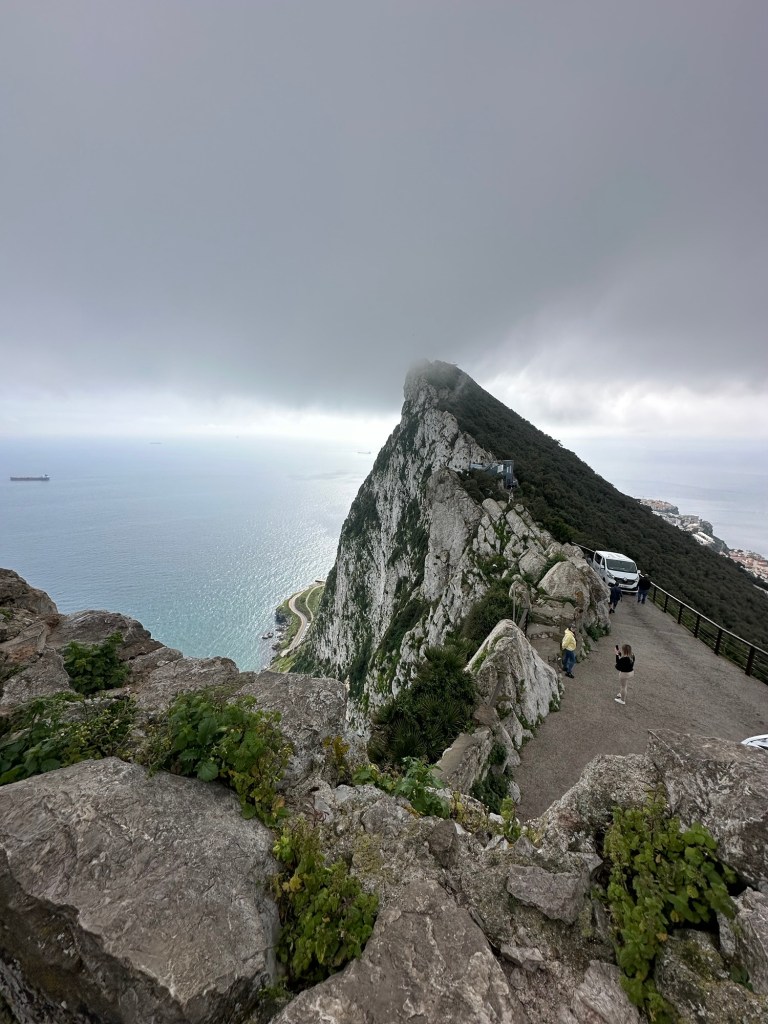
You typically had 20 minutes or so at a given stop to check your pulse to see if you were indeed still alive before getting back in the van for another assault on the laws of physics. Along the way you see the coastlines of Spain and Africa, monkeys, incredible caves, monkeys, historic British military fortifications and monkeys.
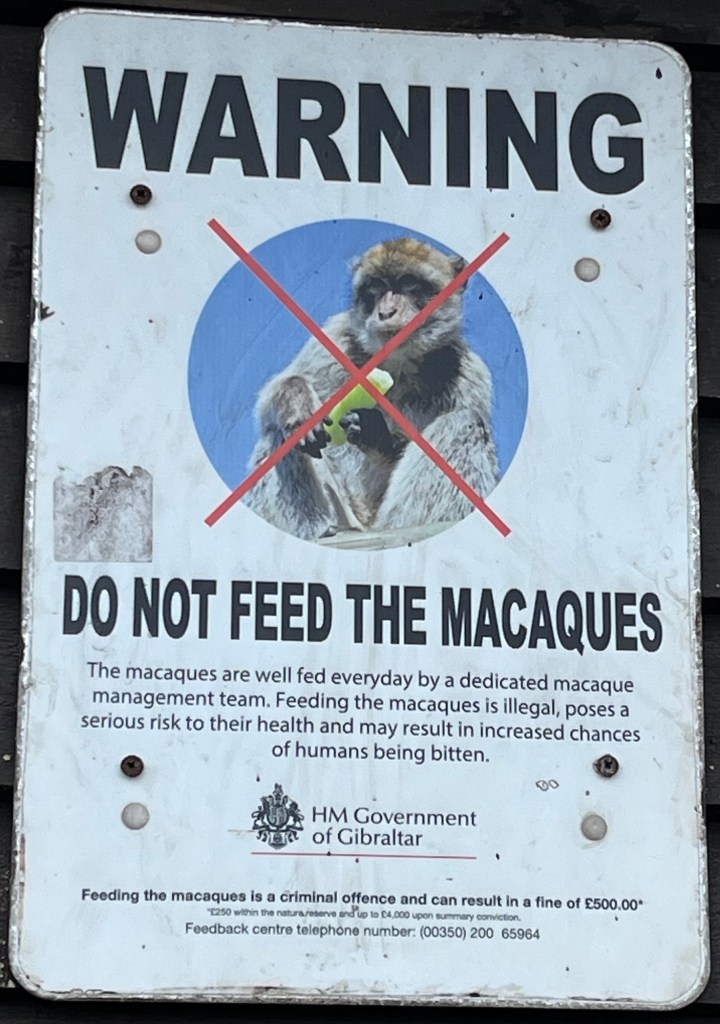
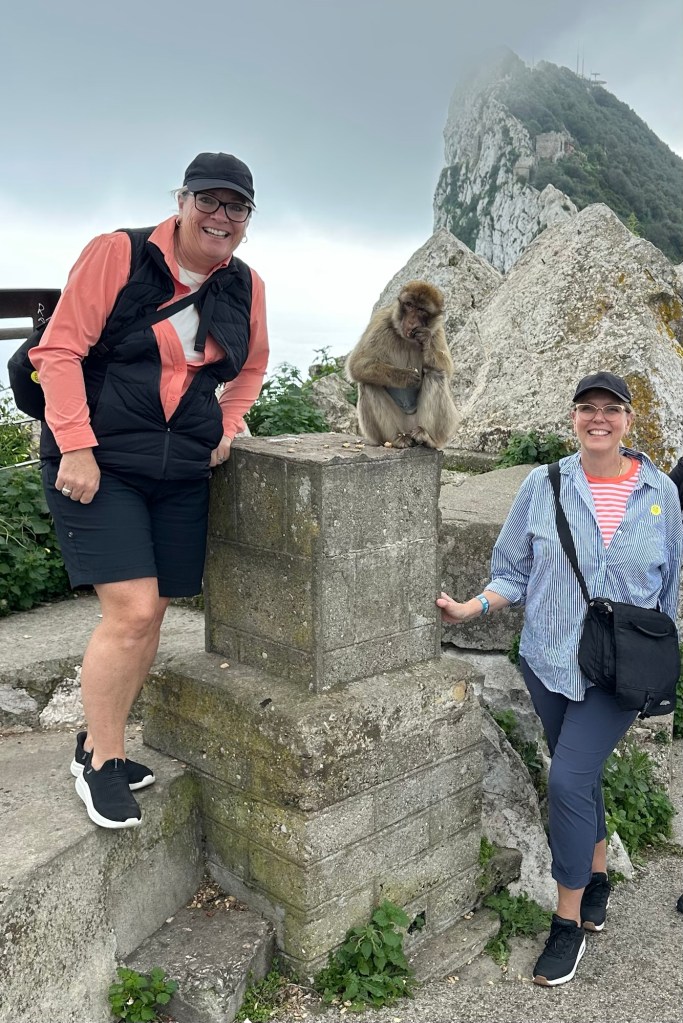

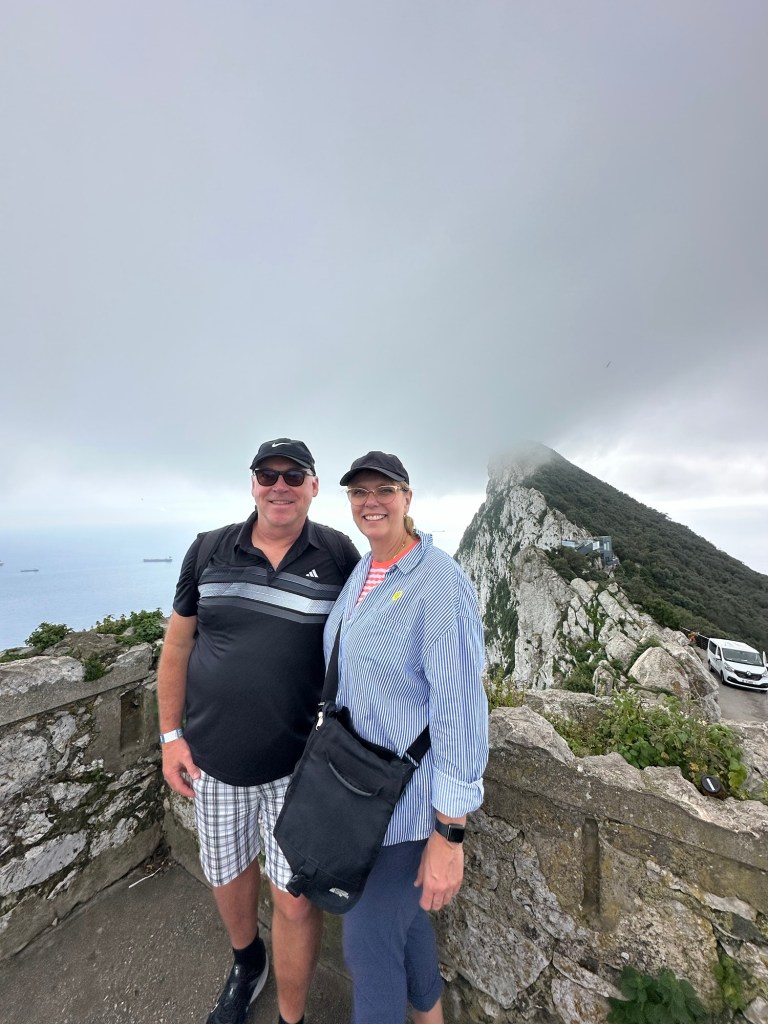

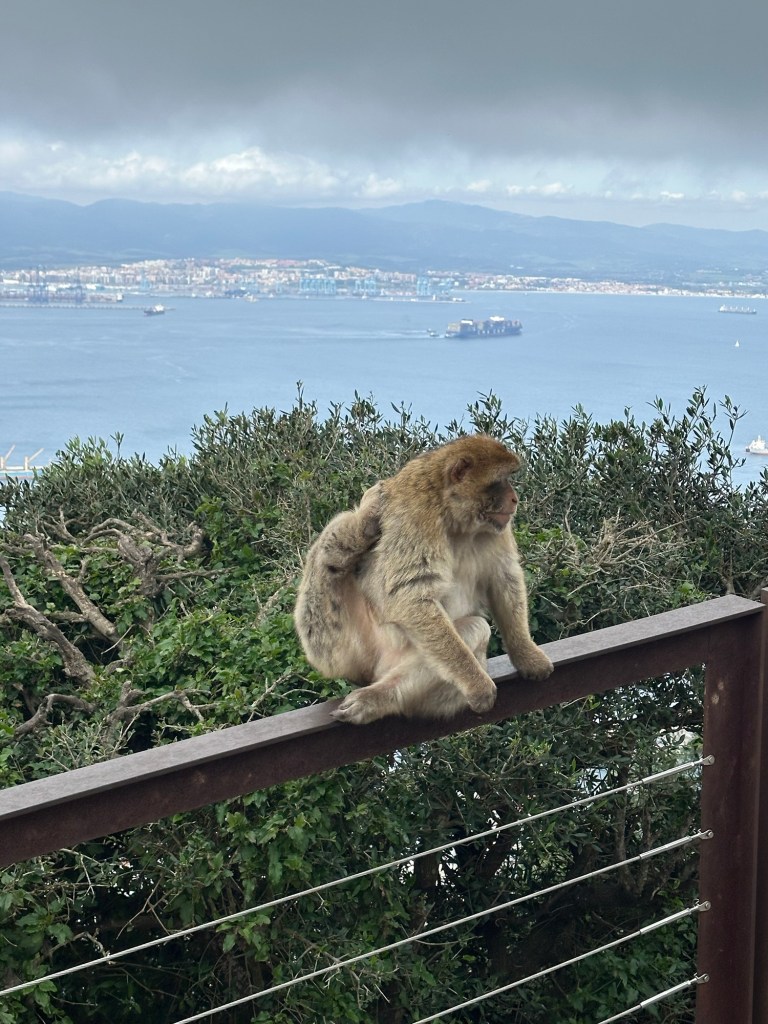
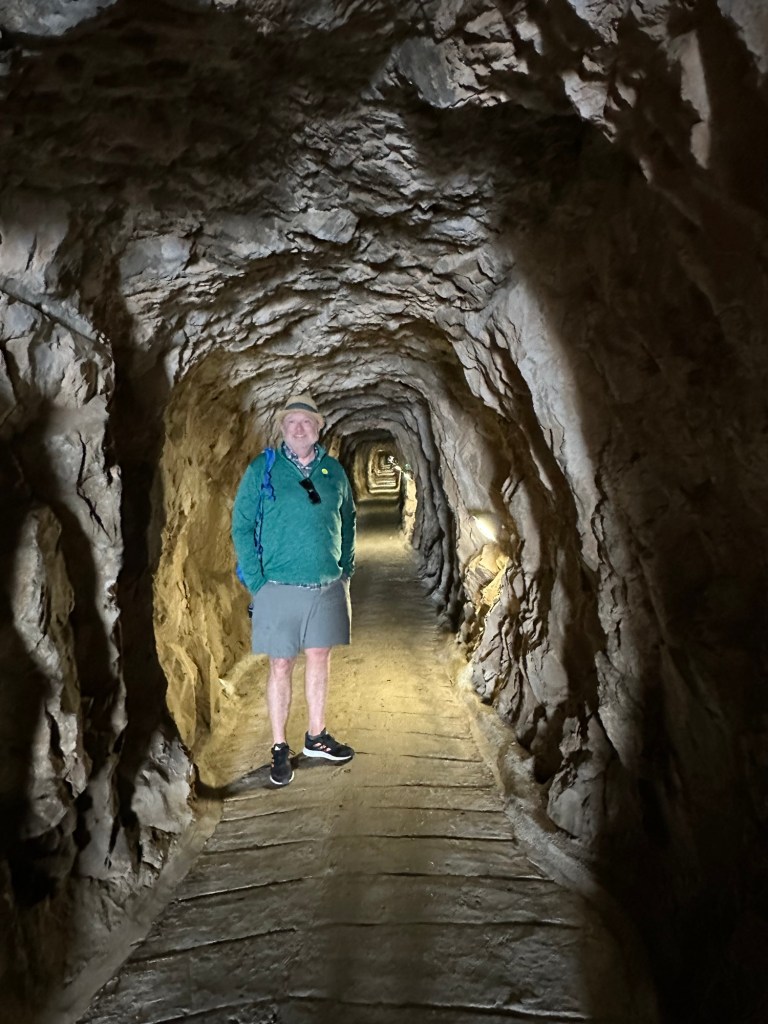
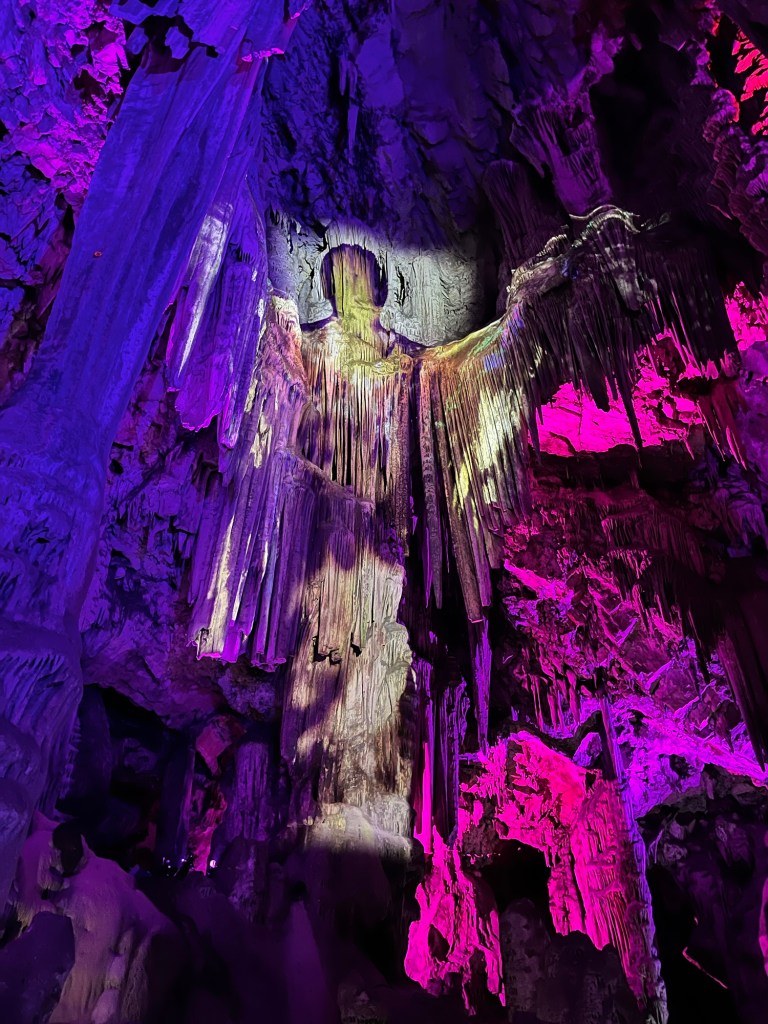
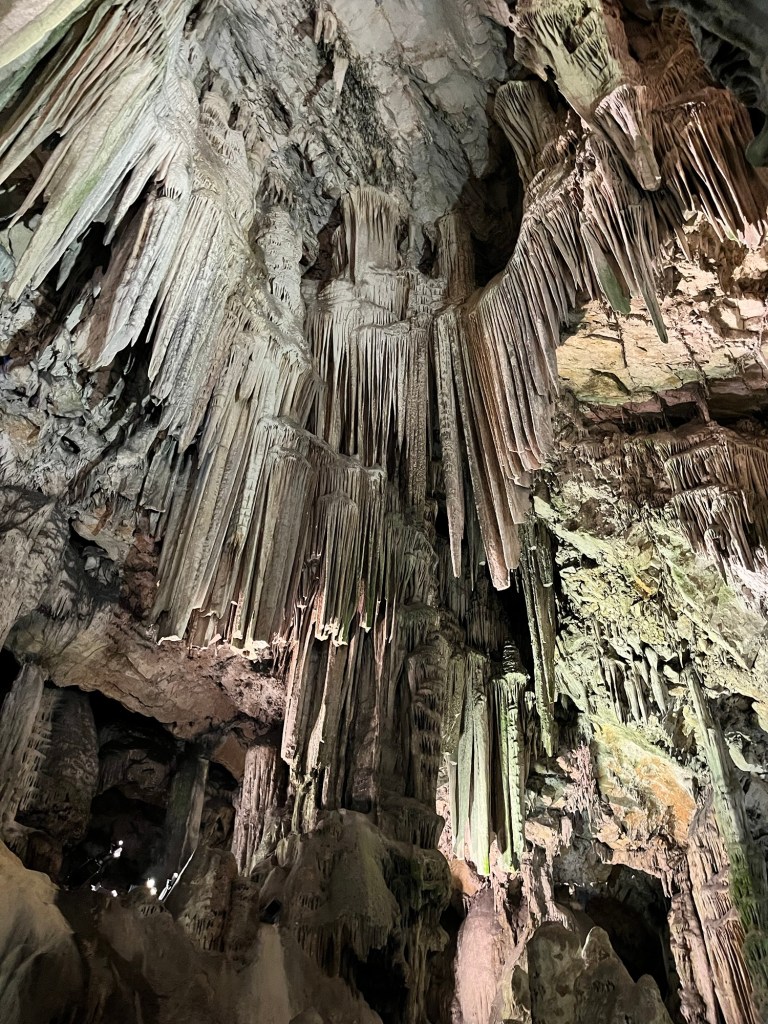
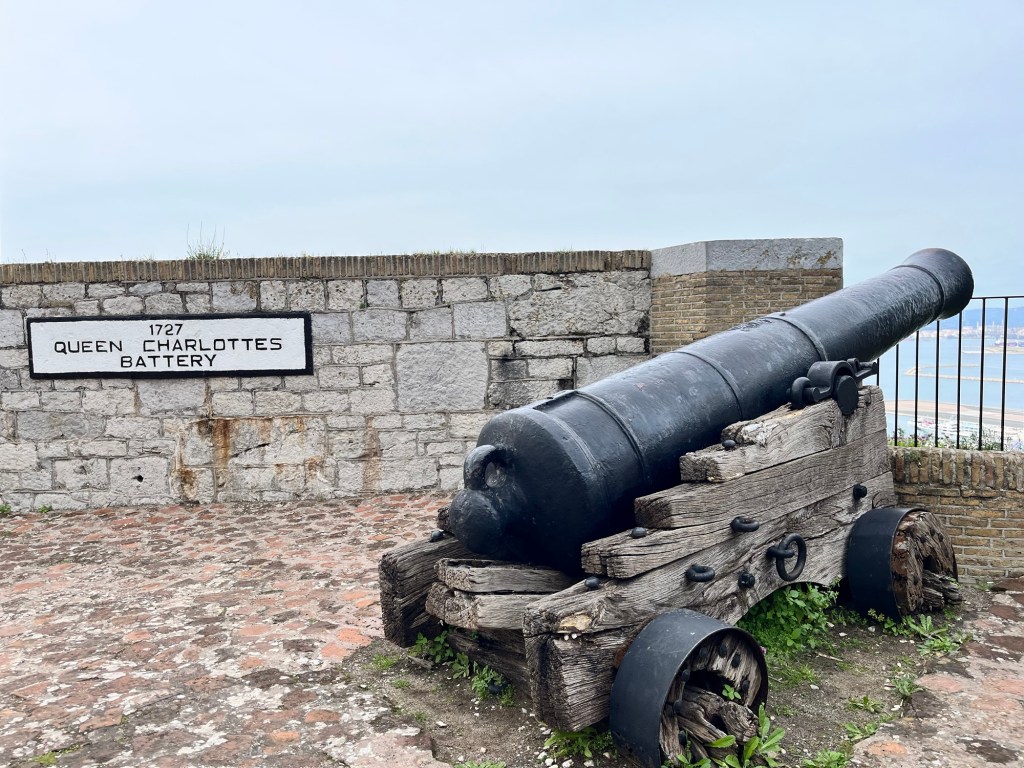
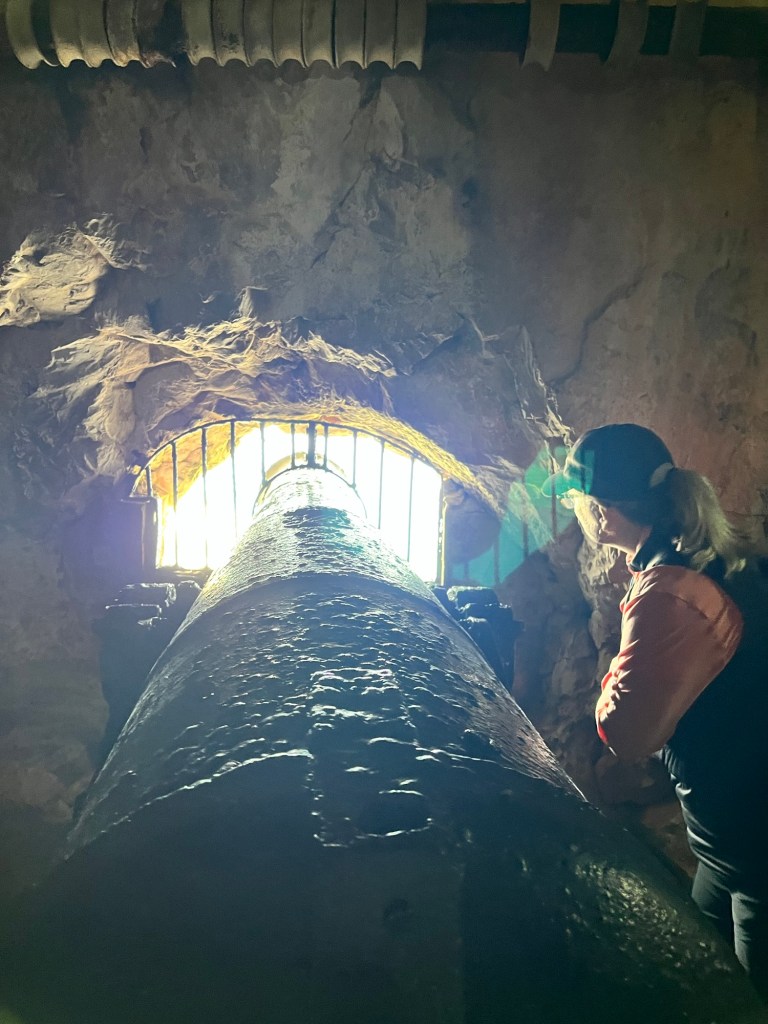
It was was terrific.
The tour ends at the fortifications site and you can choose to be shuttled down to the main street or walk there yourself and take in a few additional stops, including the very impressive WWII Tunnel systems and museum.
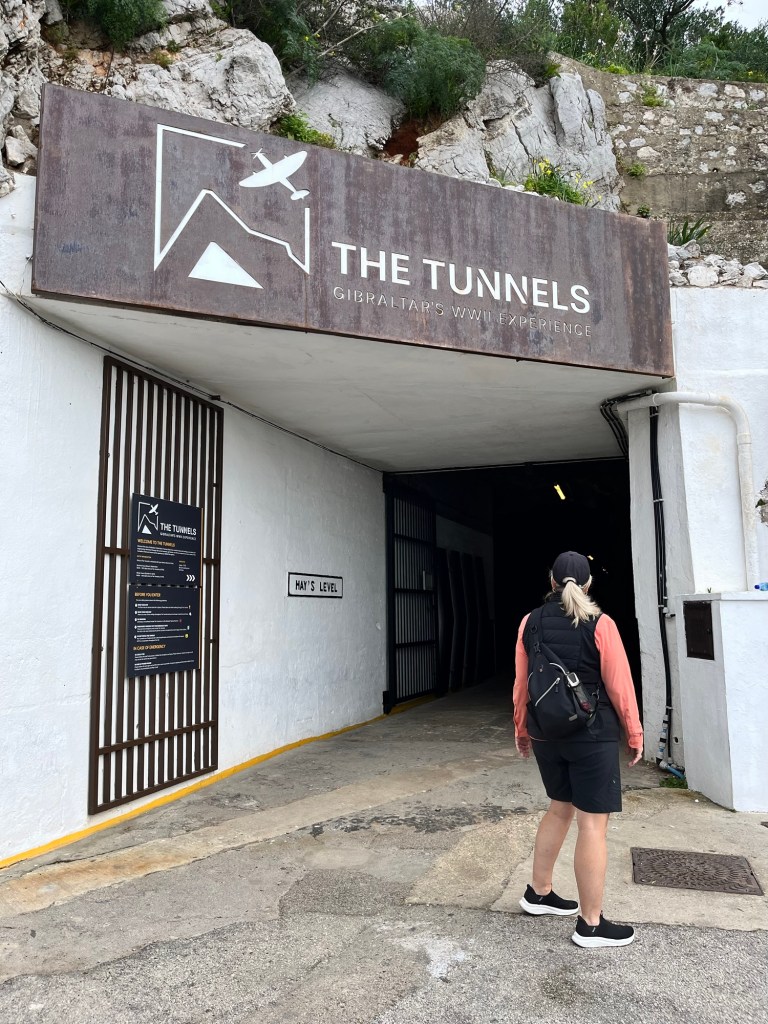
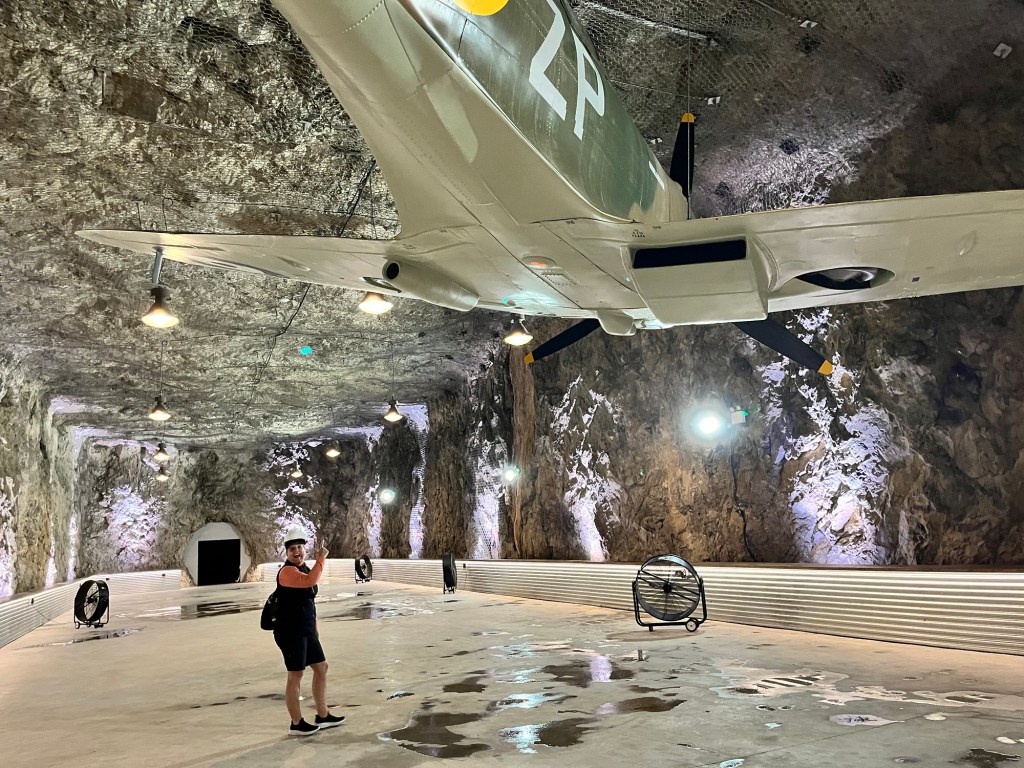
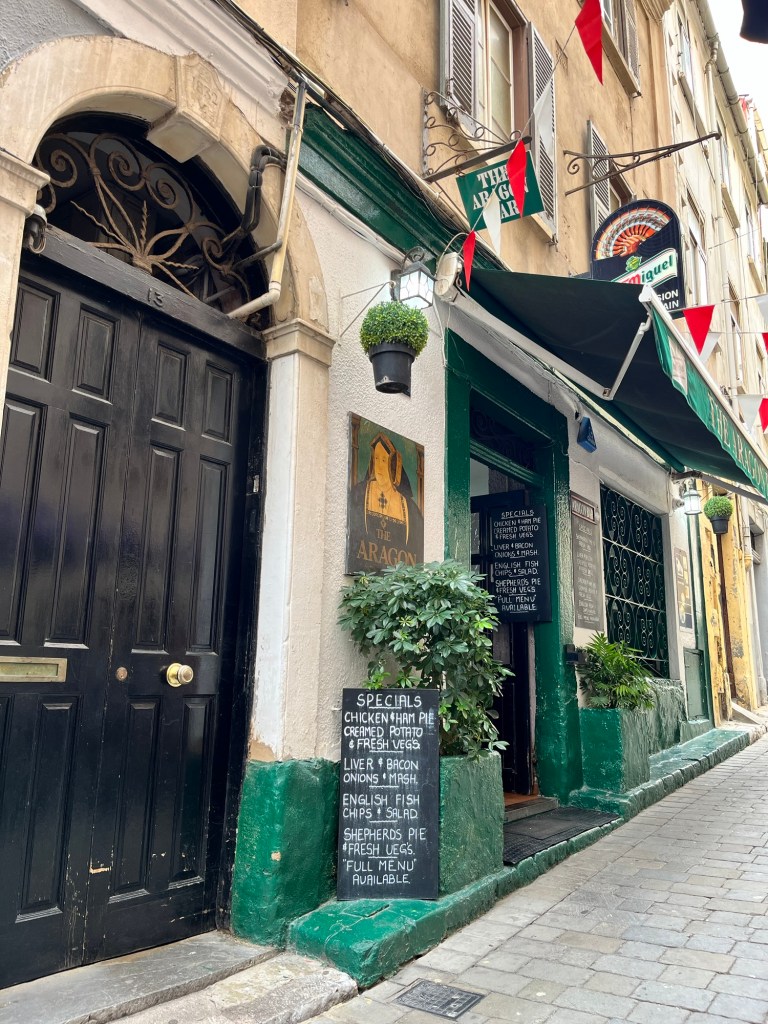
While it was a steady, steep climb down a series of stairs, we were rewarded at the bottom with a nice pub lunch. Lots of the side streets seemed to have a wide range of charming little pubs with very traditionally English menus. The main strip is very touristy and very crowded: not really worth the trip on its own.
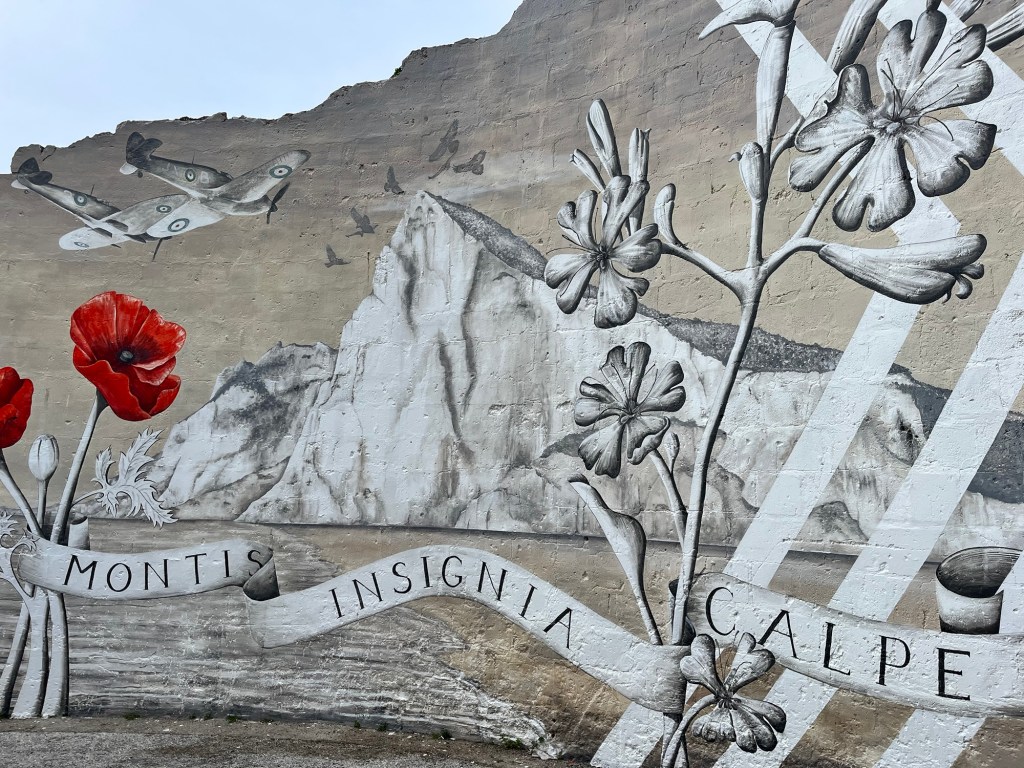
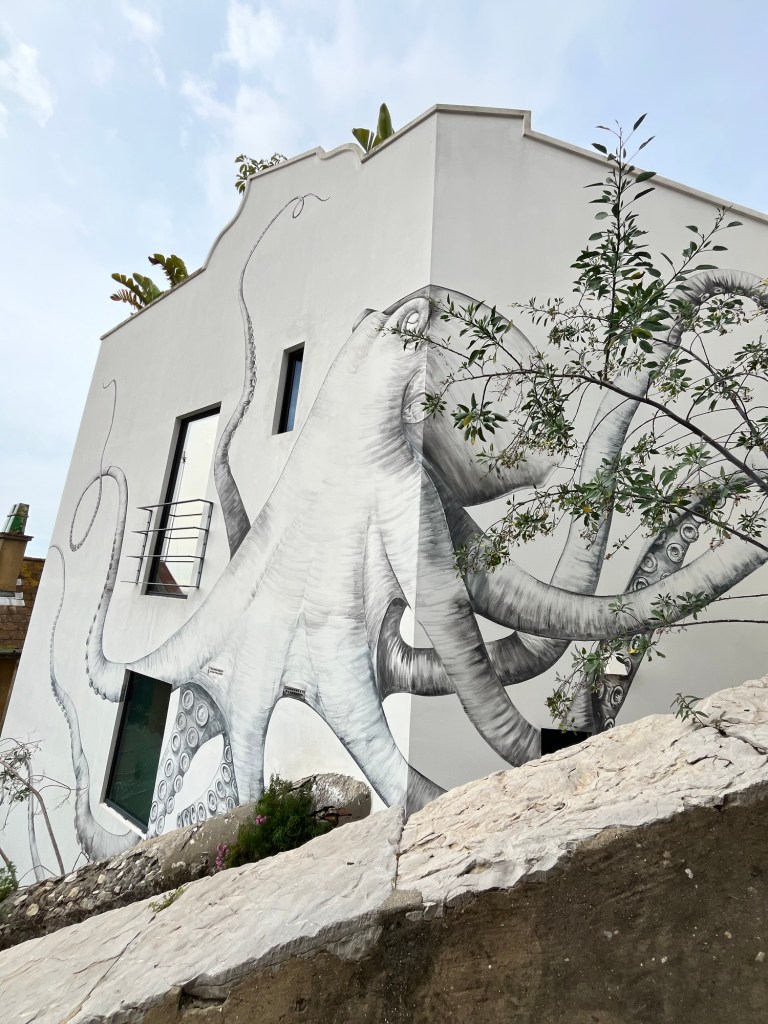
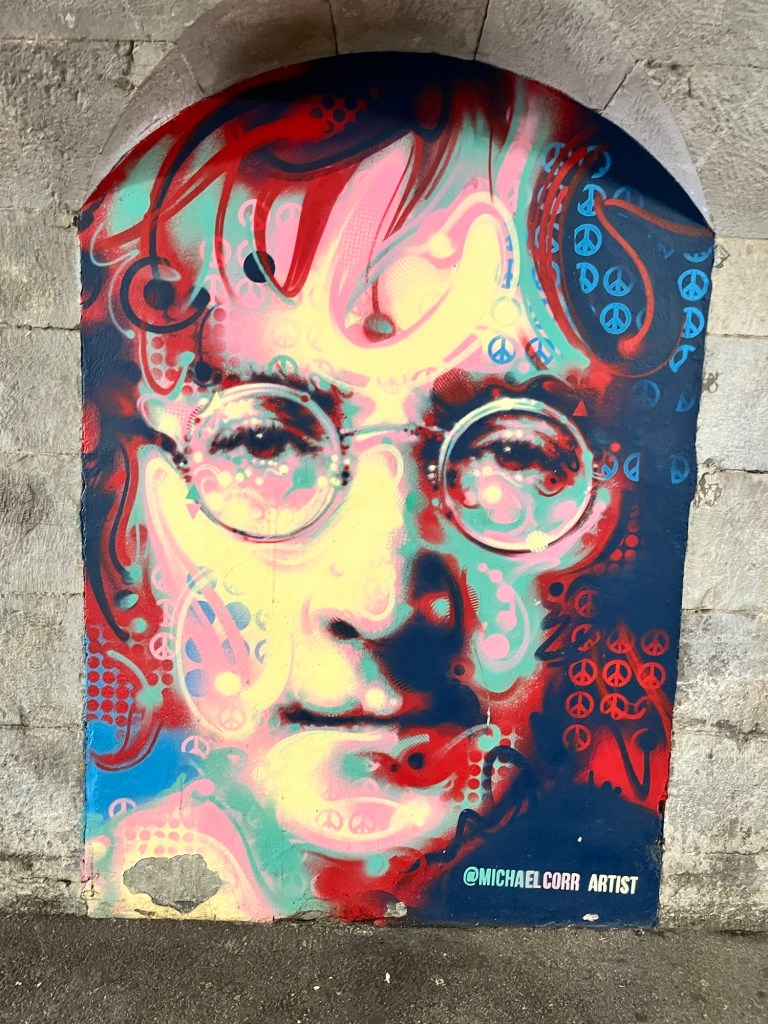
While the architecture of the town is not particularly interesting the many creative murals do liven things up.

As we were walking back to the board control point we had to cross the runway of the Gibraltar airport. We were joined by numerous pedestrians, people on scooters and bikes, tourist and commuters from La Linea returning home from work.
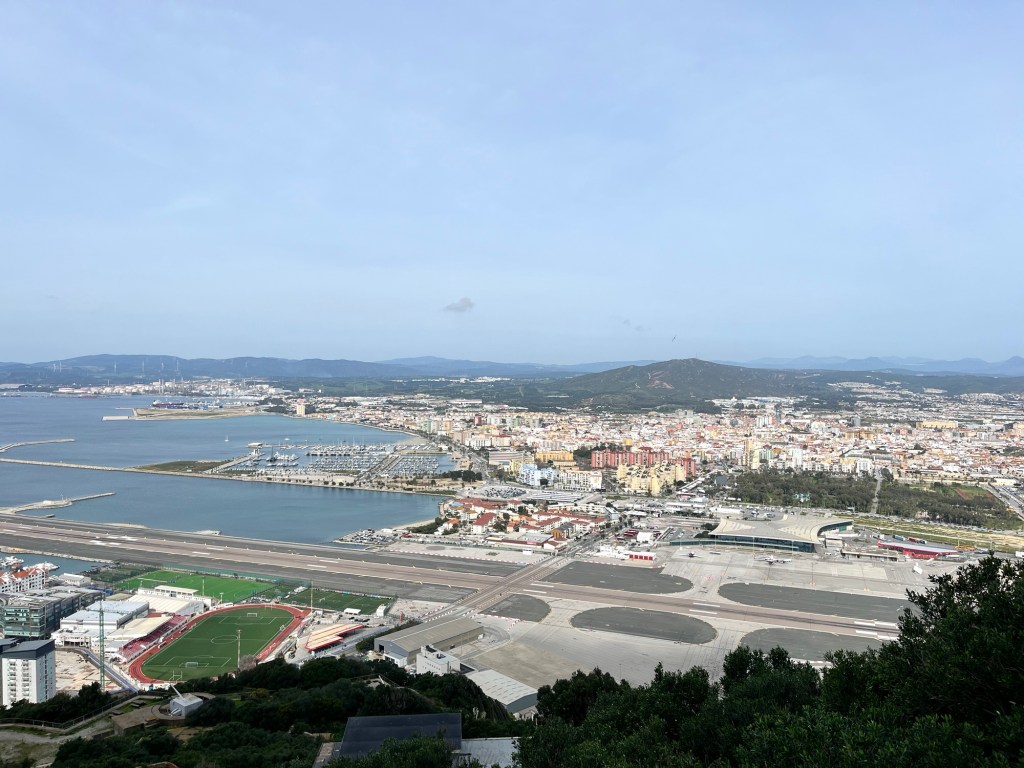
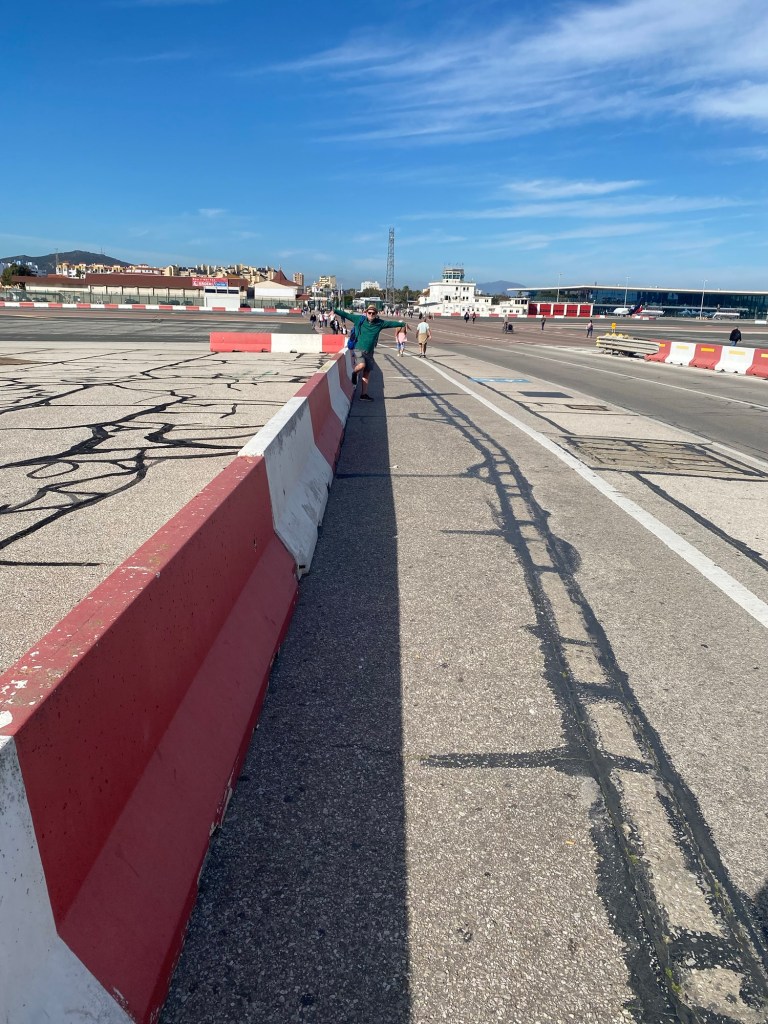
All in all, a great day. I don’t think I’d return to Gibraltar, but it was fascinating to tour the rock. One can’t help but wonder what alternative narratives of the history of this place would have been shared if Spain owned this territory.
Robin and I love to travel, and we certainly love each other’s company, but it is always a treat to share these kinds of experiences with good friends. It was a pleasure to spend time exploring this area with Mary Lynn and Garth: hope to do it again folks!

 MacsTravel Blog
Leave a comment