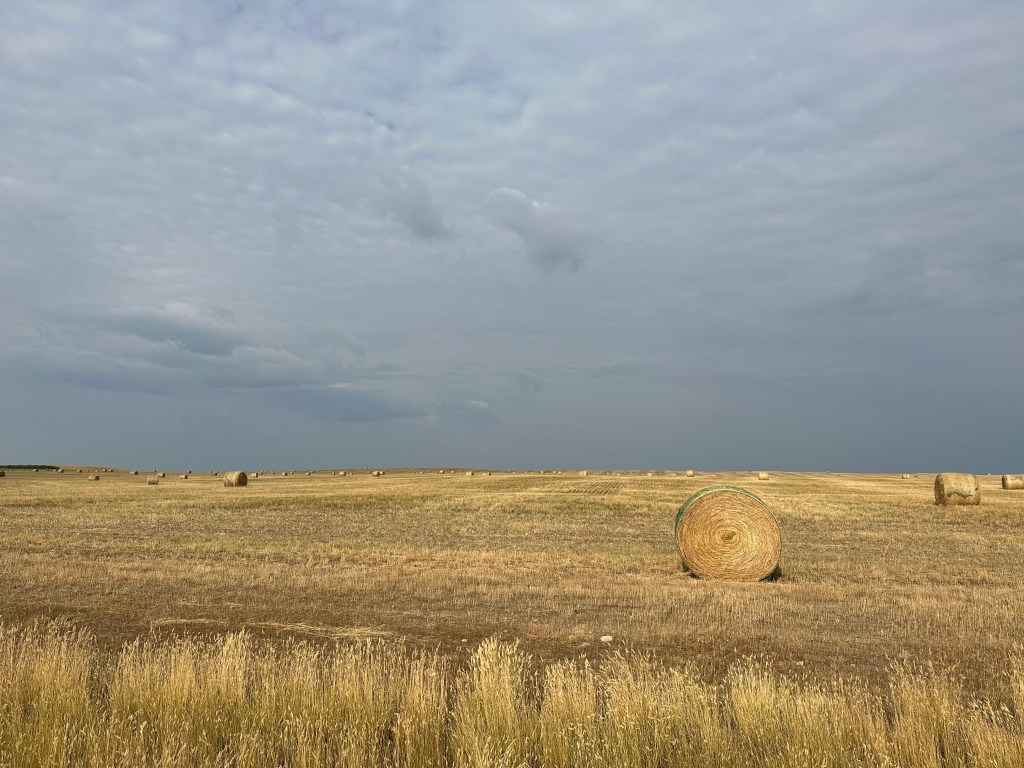
We pulled into Regina for a hotel stop before our next six days of camping in Grasslands National Park in Saskatchewan followed by Dinosaur Provincial Park in Alberta. The drive from Spruce Woods Provincial Park was mainly notable for the increasingly flat landscape and the kamikaze white moths who hurled themselves at the grill of our car by the thousands.
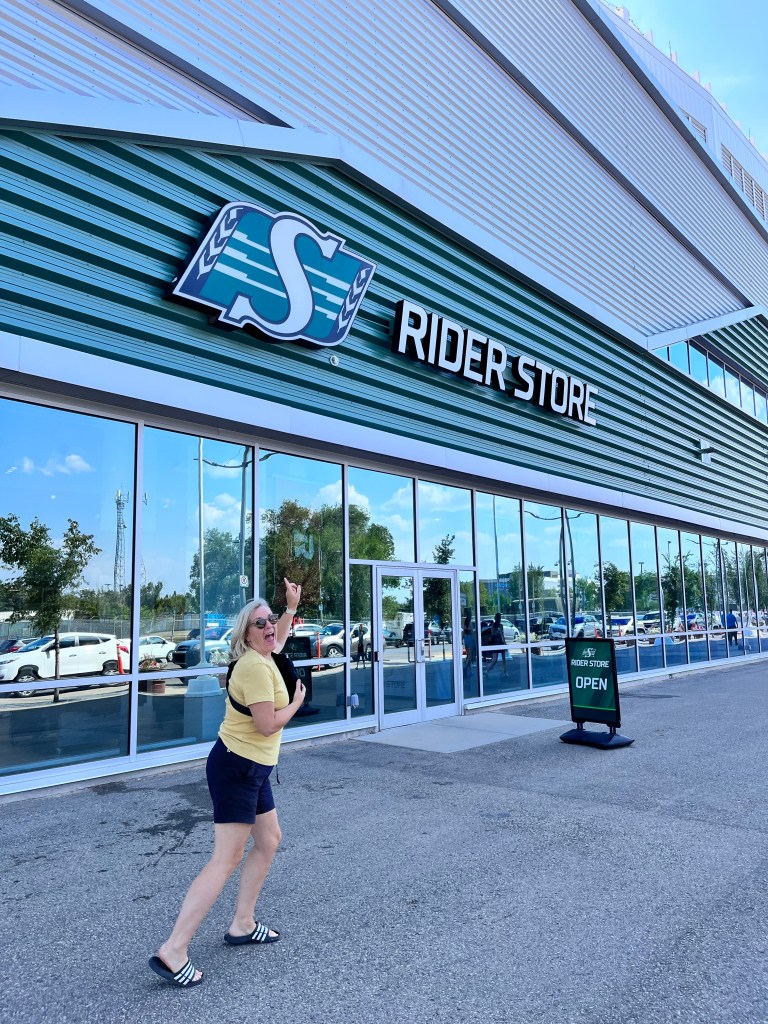
Regina. Job one was to find a car wash and power wash the entomologist’s nightmare off the front of the car. Job two was to check in to our hotel and do a quick load of laundry. We tried to check in early but were told our room wasn’t ready until 3, so we decided on a bite at a restaurant the desk clerk recommended (not great). Feeling a little pressed for time I suggested checking out a brew pub I’d read about followed by a trip to Mosaic Stadium, home of the CFL’s Saskatchewan Roughriders! Robin, still traumatized by the moth episode, surprisingly agreed to this plan.
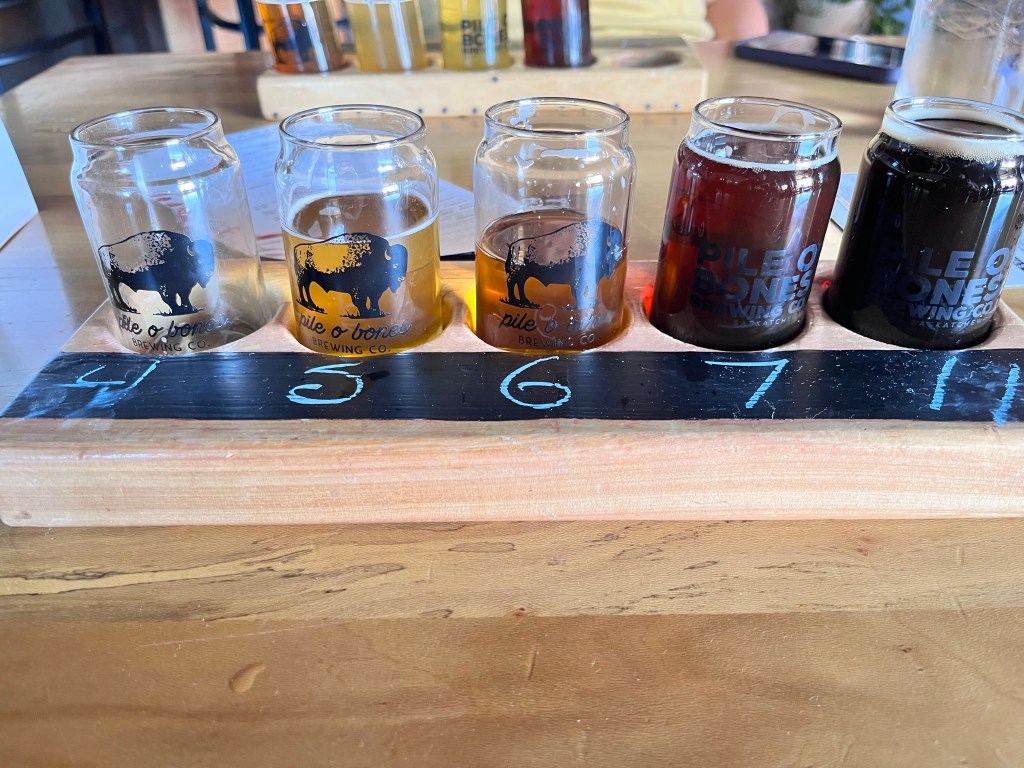
Pile of Bones Brewery was terrific. It is located just down the road from the stadium and its patio and interior were both full of happy customers, many of whom were sporting Rider jerseys. It had a little cantina pumping out Mexican and Cuban food (making us all the more remorseful about our lunch stop). We settled for a flight of beer and took in the atmosphere.
The Roughriders are the premier team in the CFL based on the feverousy support they receive from their fan base. Coming from Toronto where the reigning Grey Cup Champs are a distant 4th or 5th in terms of support from the fan base it was energizing to be in a place where the support for the local CFL franchise is paramount.
The stadium itself is no bland multipurpose facility. It is football first: spacious and full of character it reminds you of architectural and cultural status of a soccer stadium in smaller English cities where residence are born to follow the local side.
We visited the Rider store, wandered the grounds and then went back to the hotel to do laundry and prepare for the next leg of the trip.
Grassland’s National Park is located in the south west corner of the province and hugs the Montana border. It is divided up into two massive blocks— the East Block and the West Block — which are about two hours apart. The drive to the East Block takes about 3 hours. Two hours of that drive heads due south from Moose Jaw, dropping from the Trans Canada south through incredible landscapes: vast fields of crops, rolling hills with grazing cattle and increasingly deserted spaces. The white moths had been replaced by a hailstorm of grasshoppers, flying into the front of our car with noisy abandon.

This is not the Saskatchewan of the popular imagination. It is a wilder, more varied and beautiful landscape than we had expected.
As we pulled into the East Block of the park we still had almost 30 minutes of driving to get to our campsite. It felt like we were the only people in this massive space. Periodically we would pass by a stoic and menacing Ferruginous Hawk perched on a fence post. Dozens of furtive and skittering prairie squirrels and prairie dogs dashing back and forth in front of our car no doubt, with one eye on the sky.
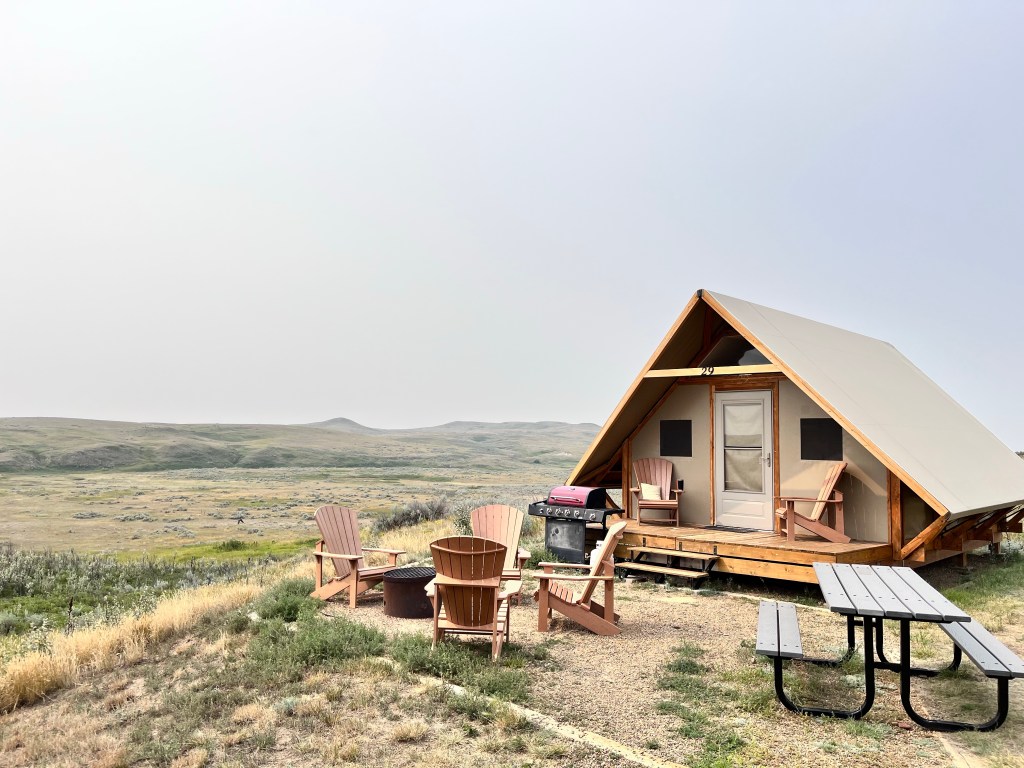
As we finally descended into the Rock Creek campground we were stunned at how few sites occupied this huge space. There were maybe 30 sites in total and we were staying in one of the 8 oTENTiks— essentially spacious A-frame platform tents with vinyl sides. The setting was breathtaking with natural prairie, hills and the encroaching badlands framing the spot.
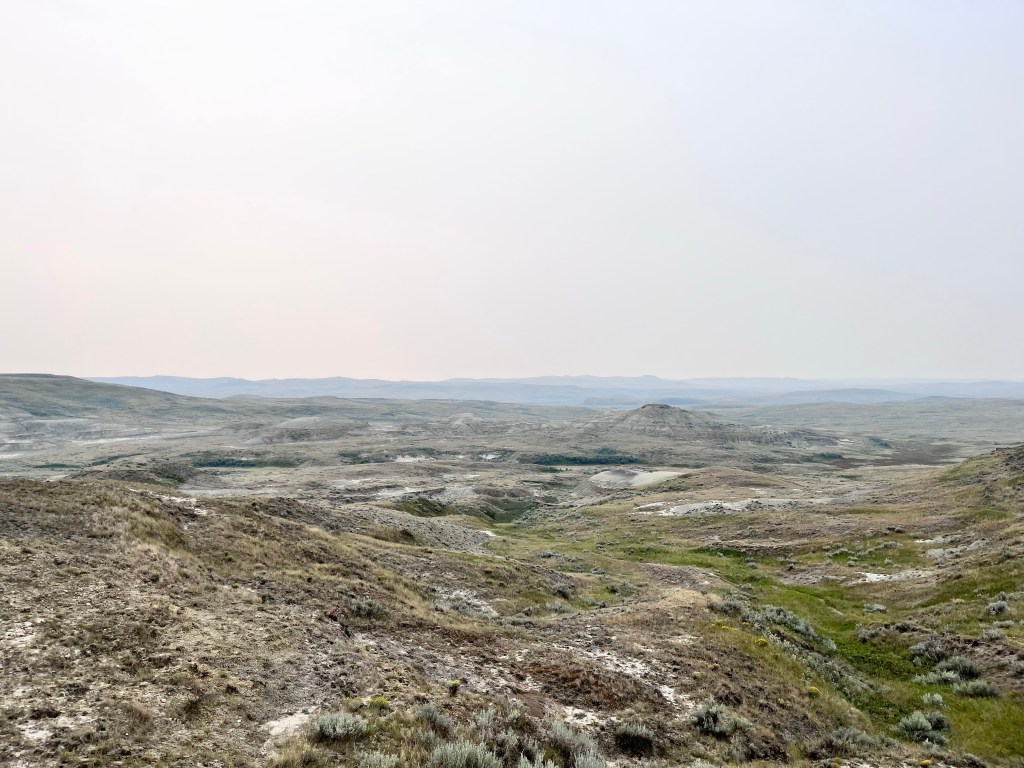
We unloaded the essentials into our oTENTik and drove off to explore the Badlands Parkway, a one lane road that hugs the cliff alongside the aforementioned badlands. The park ranger had told us we were free to wander off trail (on foot) and that if we ended up in Montana they’d probably send us back. The amazing thing about this drive is that it includes 7 or 8 spots where you can pull over and hike to a viewpoint which usually includes some really interesting interpretive signage. Then, if the spirit moves you (and you are well prepared) you can hike on down into the massive and incredible landscape you are looking at.
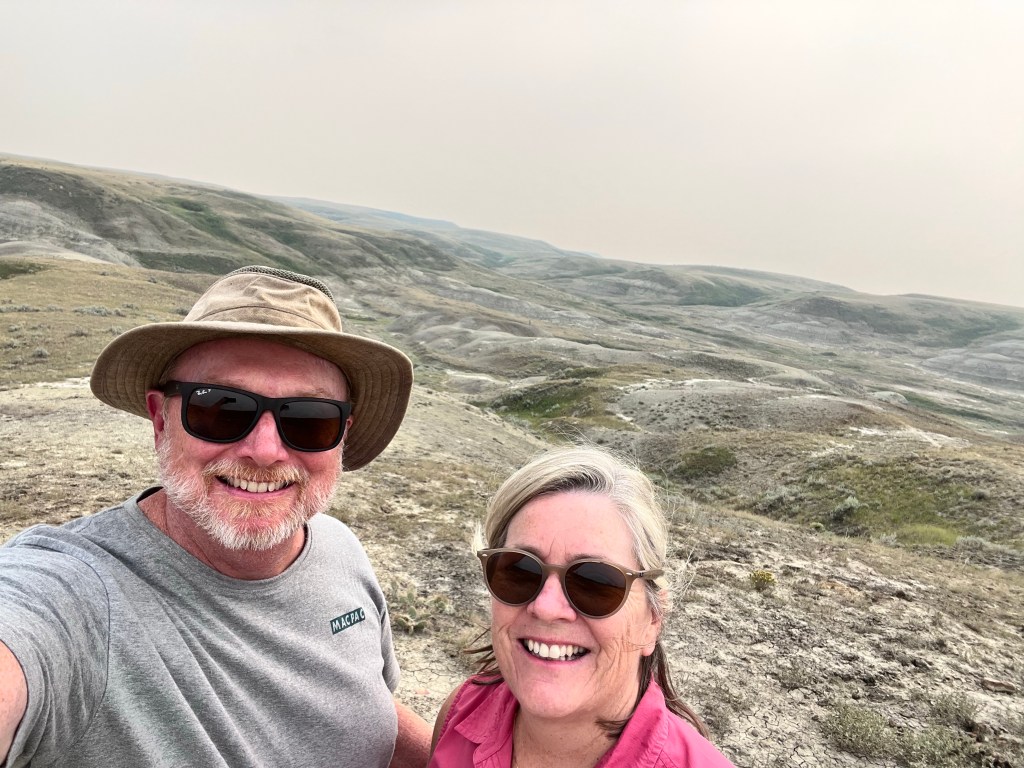
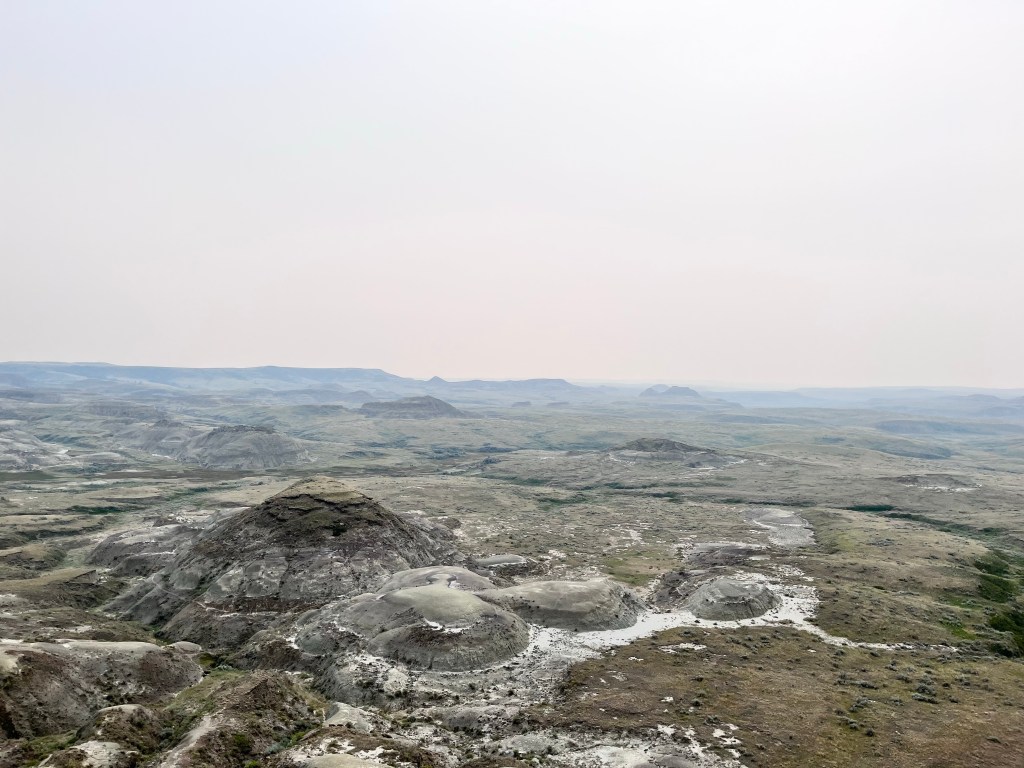
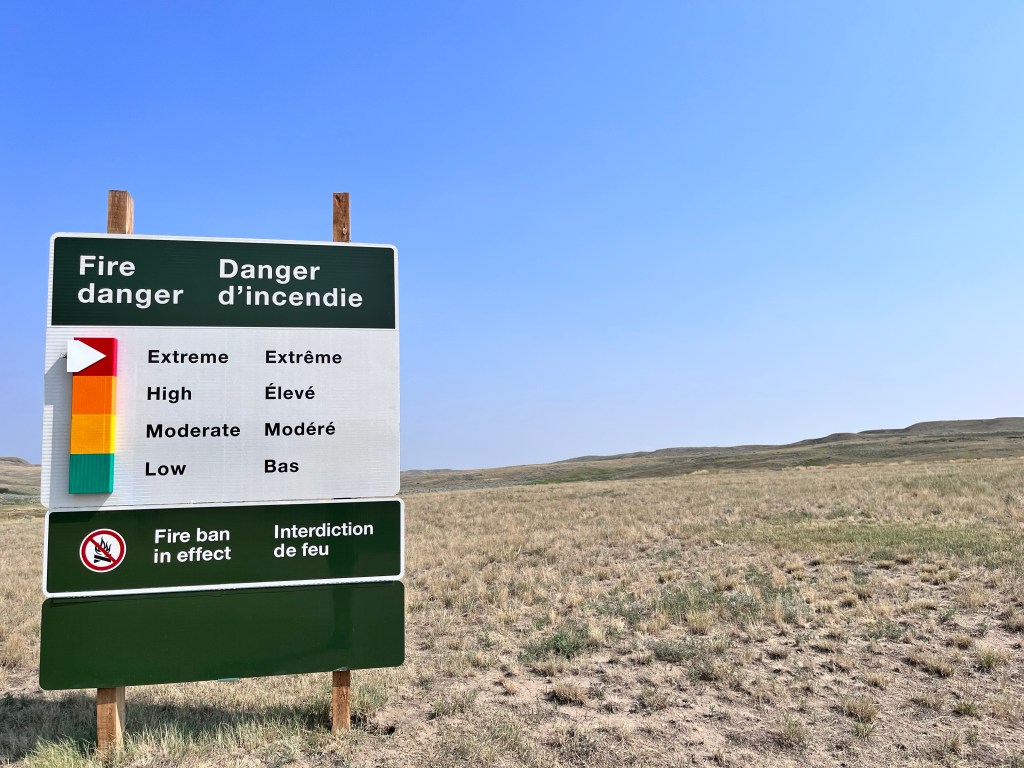
The sky on our drive to Grasslands had the sepia tinge of wildfire smoke, but day two dawned bright and blue. We decided to use the morning to explore a few of the formal hikes which led off from the campground.
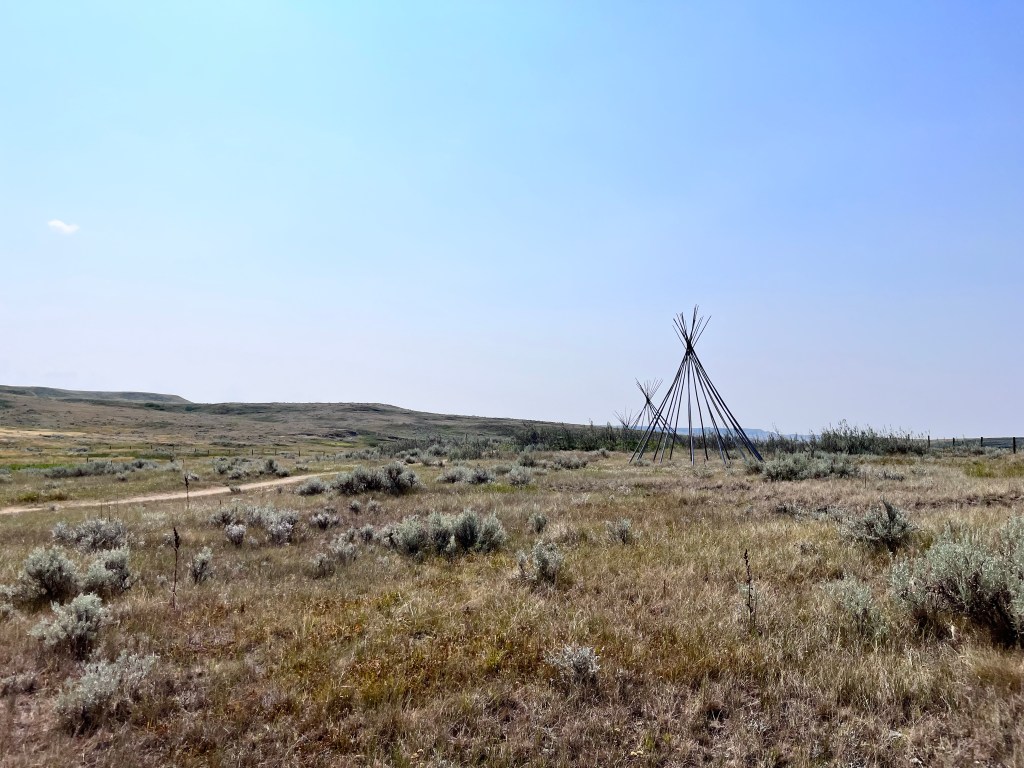
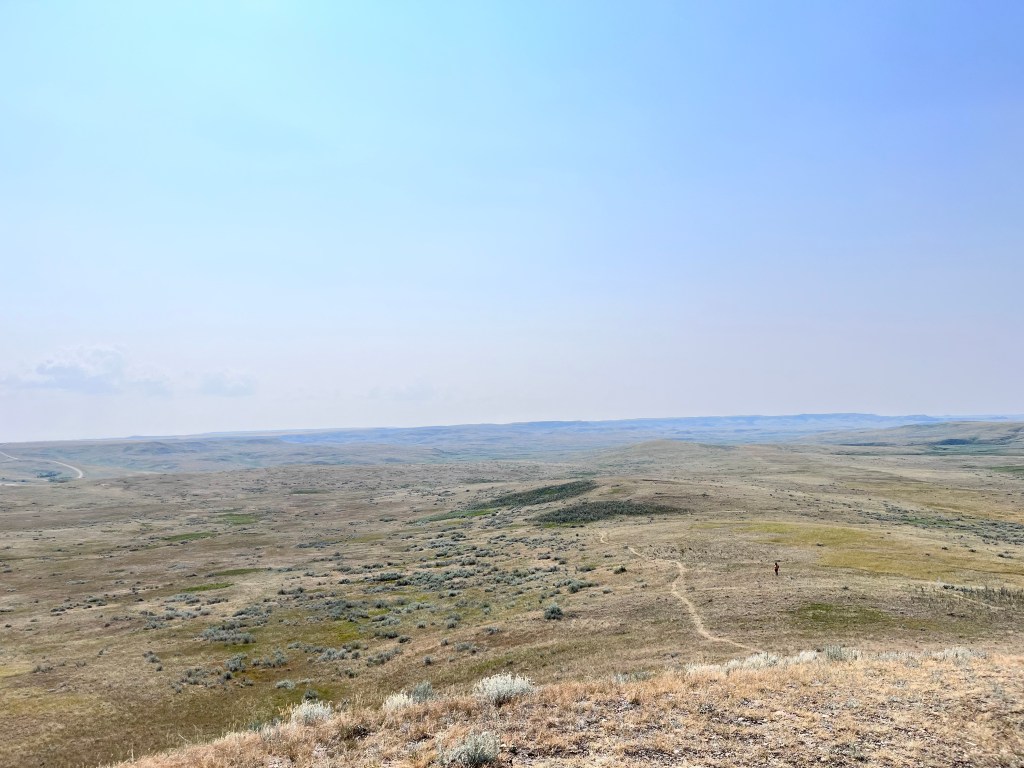
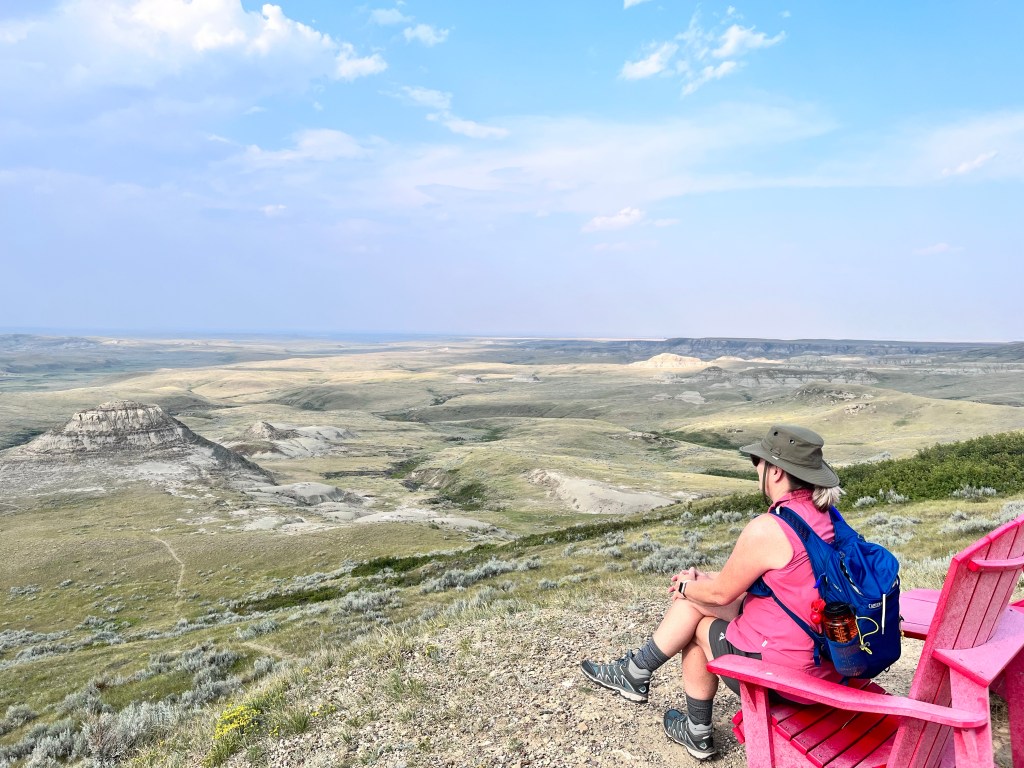
After lunch we headed back up the Badlands Parkway to the final viewing point where we had spotted an inviting path into the valley the day before. These lands were nicknamed les mauvaises terres by French voyaguers, but of course they have been lands of cultural importance to a range of Indigenous groups over the years. Indigenous peoples, including the Nakoda (Assiniboine), Nehiyawak (Plains Cree), Niitsitapi (Blackfoot), Dakota and Lakota (Sioux) have left their mark here over time. Sitting Bull and the Sioux retreated here after the Battle of Little Big Horn as one vivid example. We saw stone circles on our hike which were indications that Indigenous peoples had raised tee-pees on specific sites.
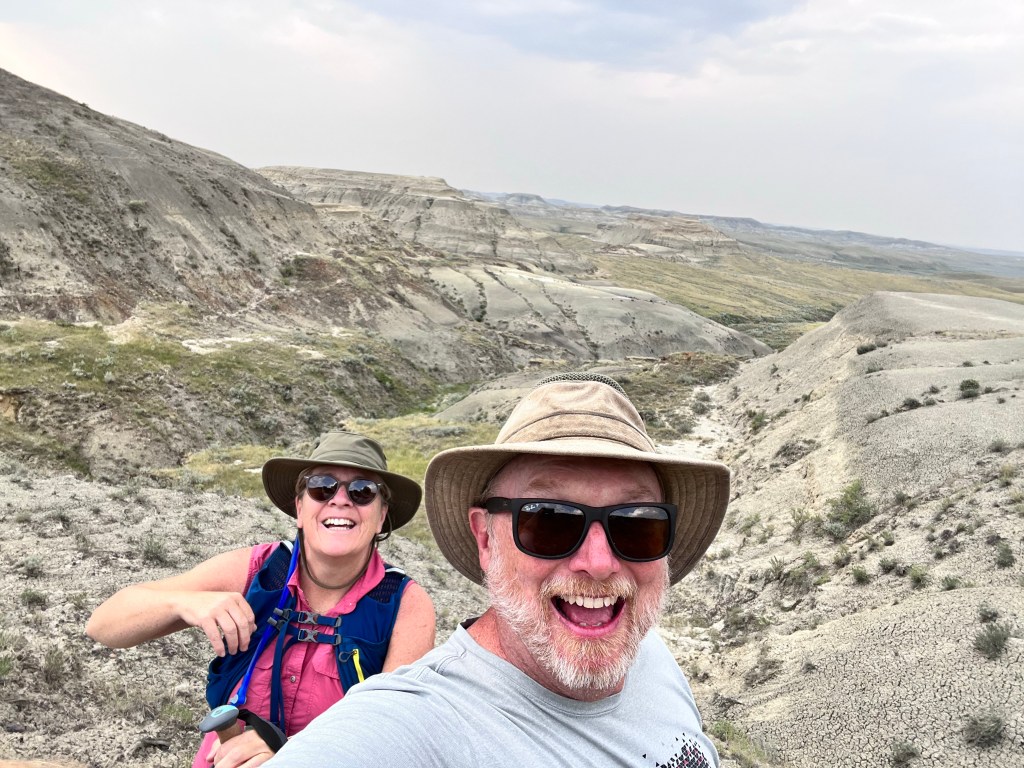
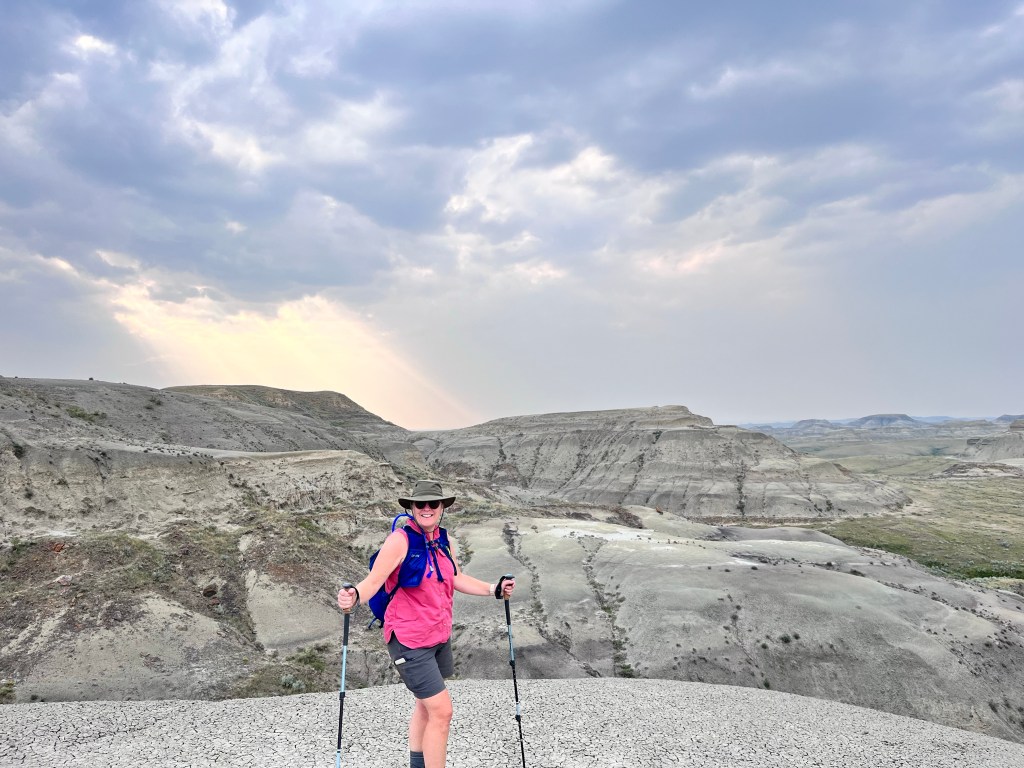
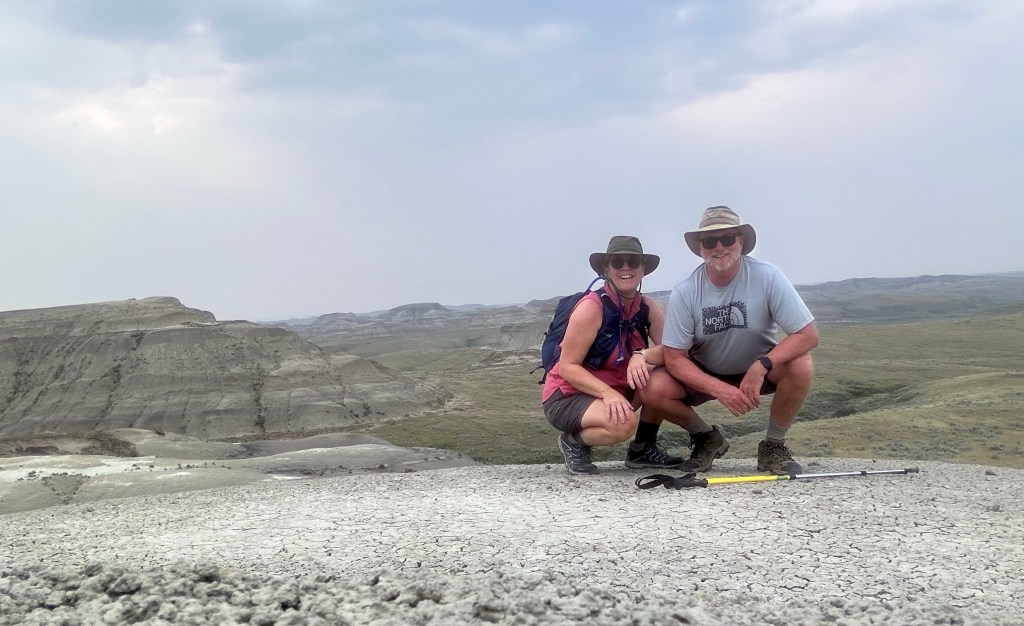

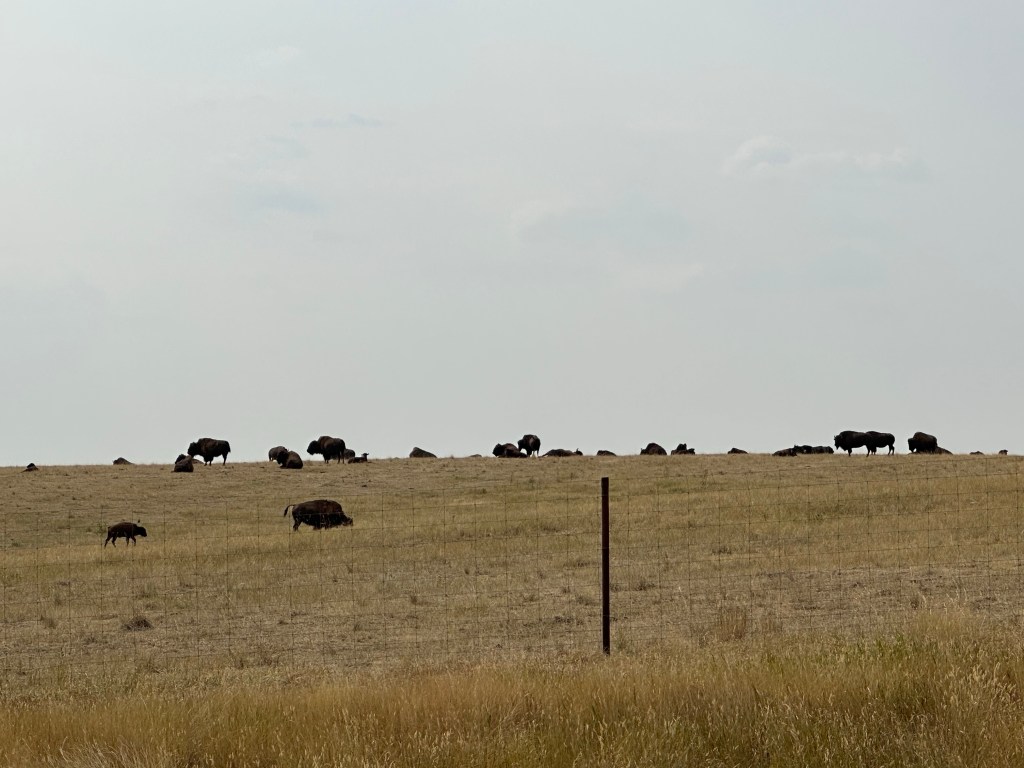
In chatting with a few couples that we had met on the trails we decided to try and spend some time in the West Block on our way to Alberta. Although we had seen many birds and heard the coyotes at night we had not seen any of the 600 plus Bison that had been reintroduced to Grasslands where they have reassumed an incredibly important role in the park’s ecosystem. They were, we were assured, easy to spot in the West Block.
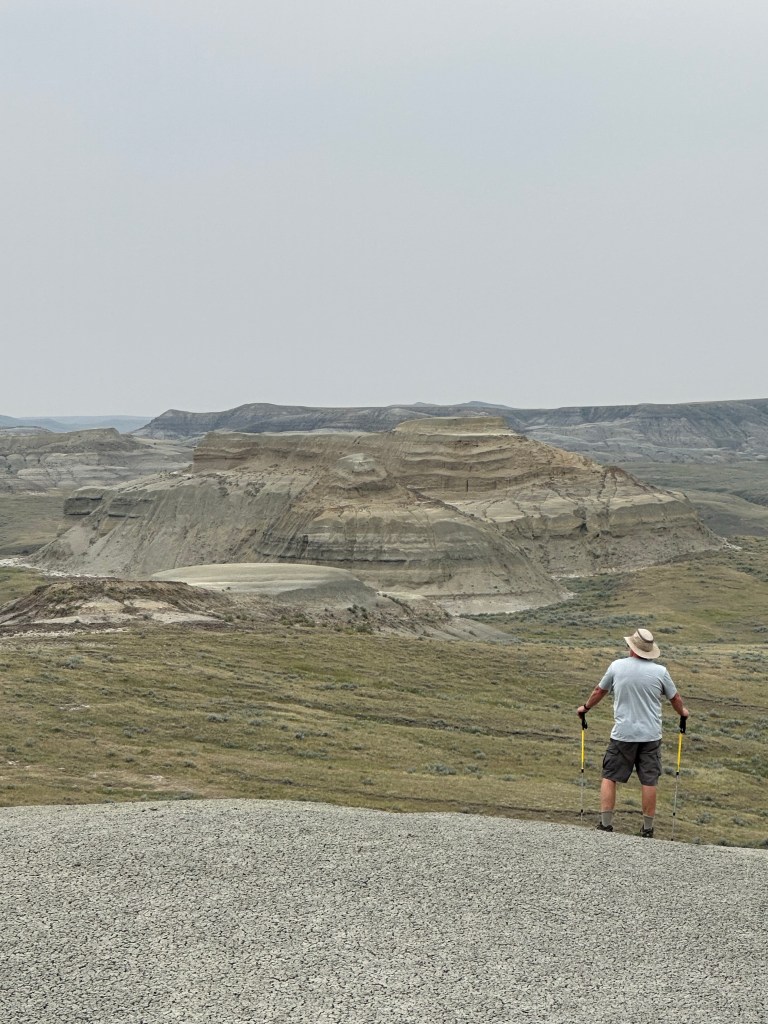
We probably passed four vehicles on our way to the West Block on a route that was mostly on gravel roads that Google Maps failed to recognize. We were gassed up (lesson learned) and ready for bison!
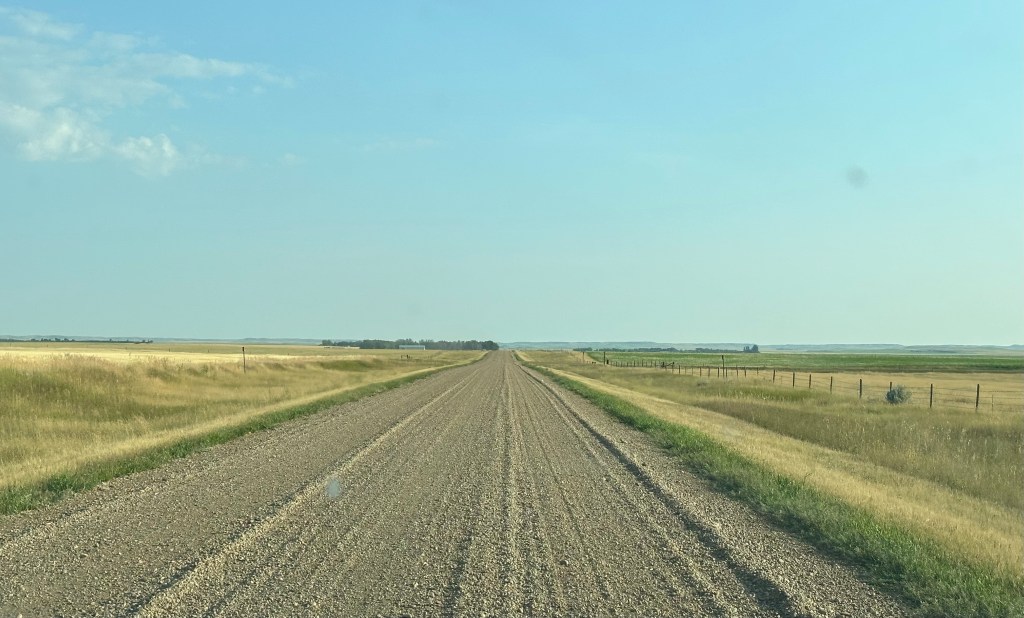
The West Block is similar to the East in its vastness and in the very small number of campsites and visitors. We did the “eco drive”: unlike the “badlands” of the East Block this drive took us through natural prairie and hilly terrain with lots of spots to stop and explore.
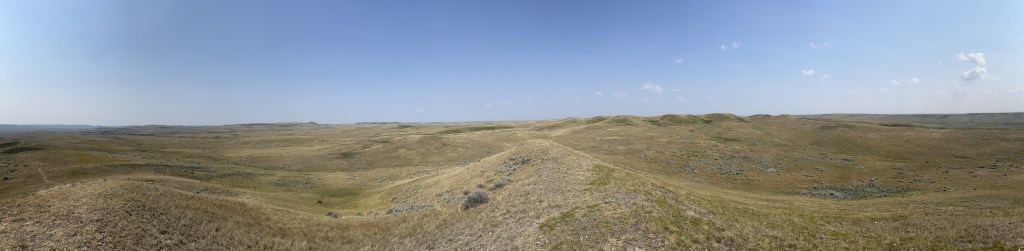
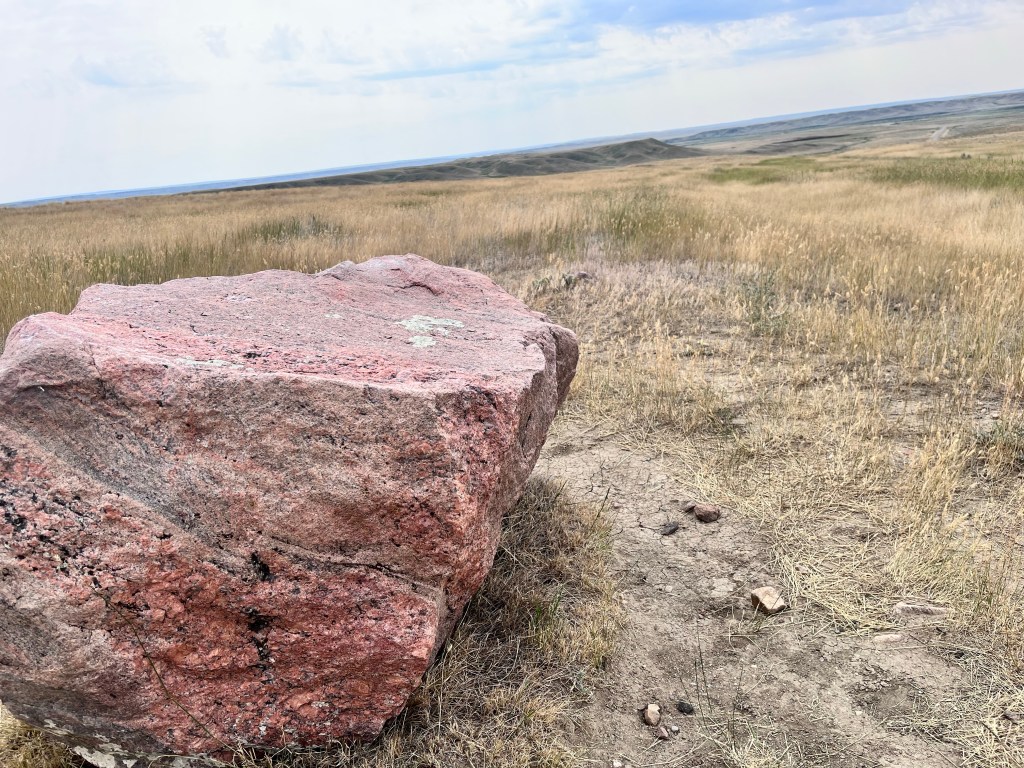
We saw one sleepy, or perhaps sickly, bison. He was across a creek from us, nestled into the growth and aside from his a mouth head and twitching tail, there wasn’t much to distinguish him from the hedges alongside the bank of the creek. The other 599 bison were apparently up in the hills looking after their newborn calves.
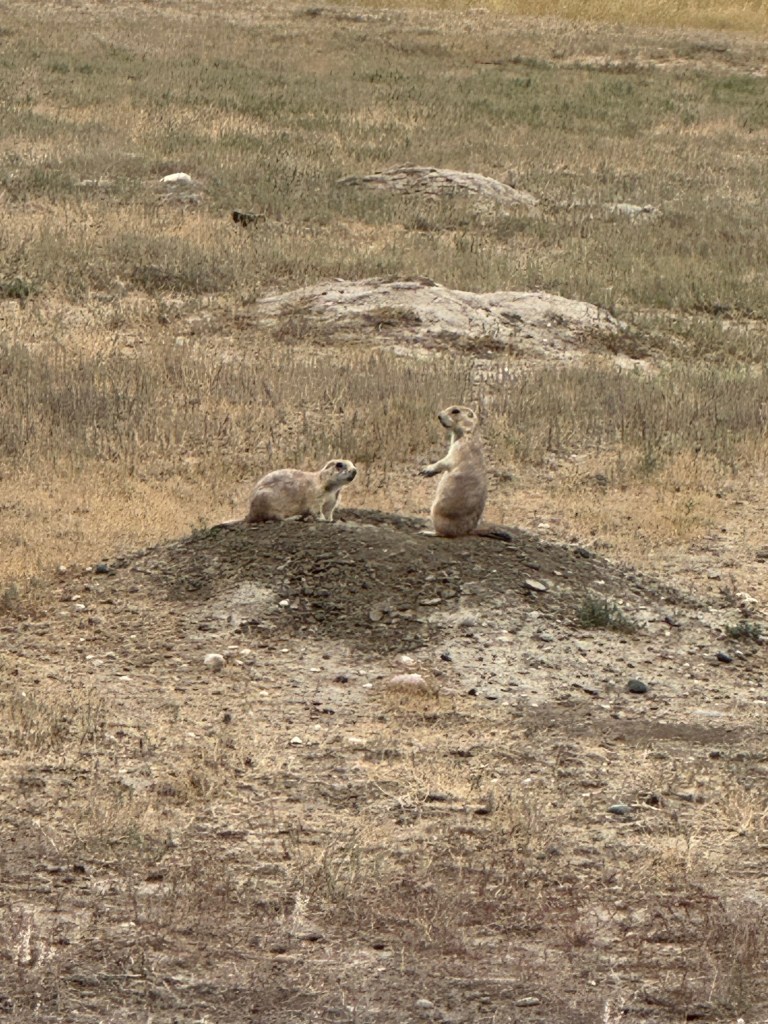
Our disappointment in not seeing herds of bison was somewhat tempered by the numerous sightings of black tailed prairie dogs. These little rodents are only found in Grasslands in Canada, but they’ve clearly found a home and a receptive audience in those who come to this out of the way park.
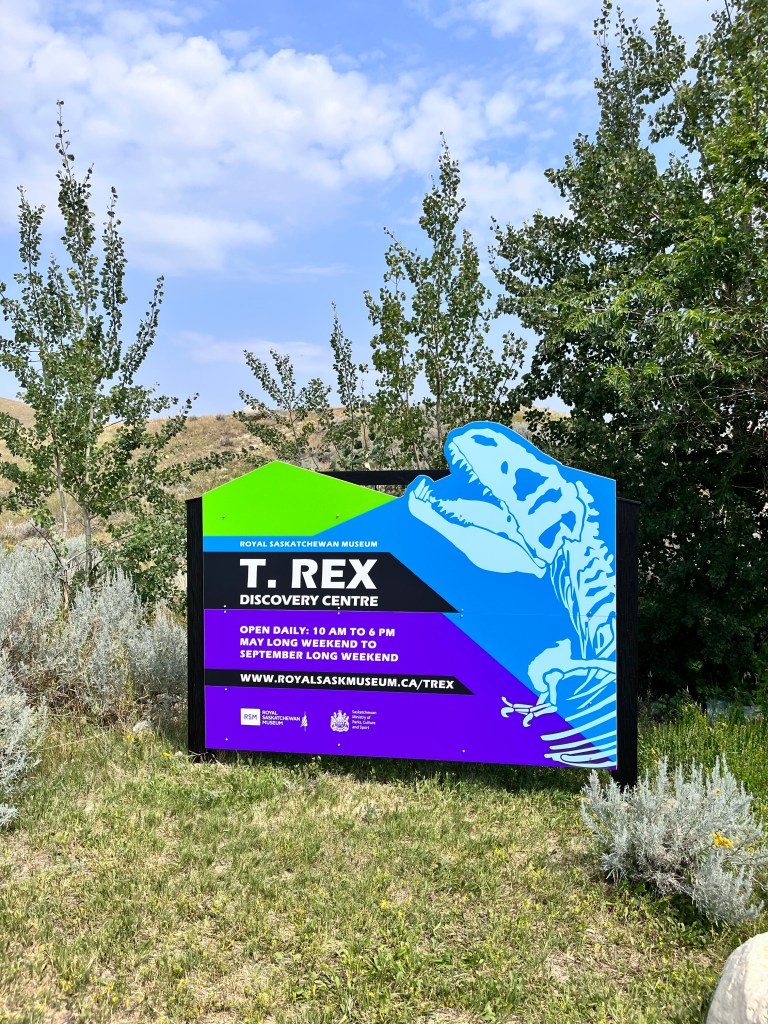
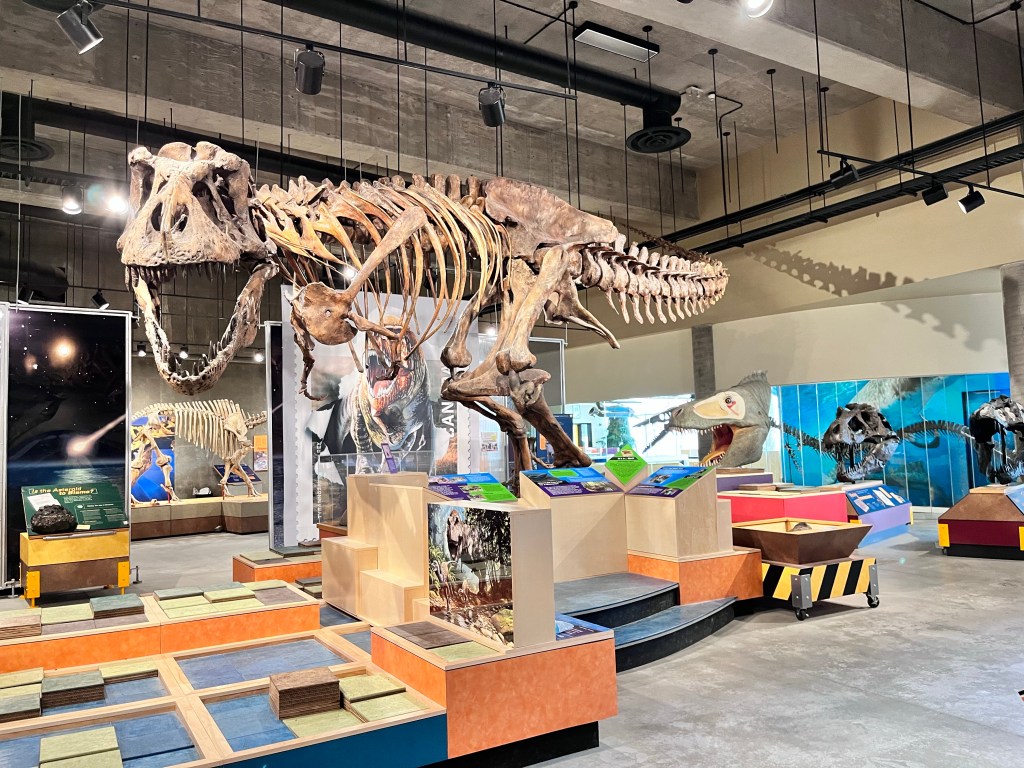
We had planned our route to Dinosaur Provincial Park on the advice of the park ranger at Grasslands who said we should avoid the Trans Canada for as long as possible before heading north to a place called East End which had its own museum dedicated to the discovery of a Tyrannosaurus Rex discovered in the same valley area that included the West Block. This involved several hours of driving on gravel roads from Val Marie (home of Bryan Trottier!) to East End, which ironically and not surprisingly is located at the west end of the province.
The museum, of course, is really impressive!
As we left East End heading north-west to Alberta and Dinosaur Provincial Park, the only regret we had was that we didn’t see more bison at Grasslands. Minutes later…
On to Dinosaur Provincial Park!


 MacsTravel Blog
Leave a comment